Iroko or teak? How they differ and where to use each
Murat Şen · Published:
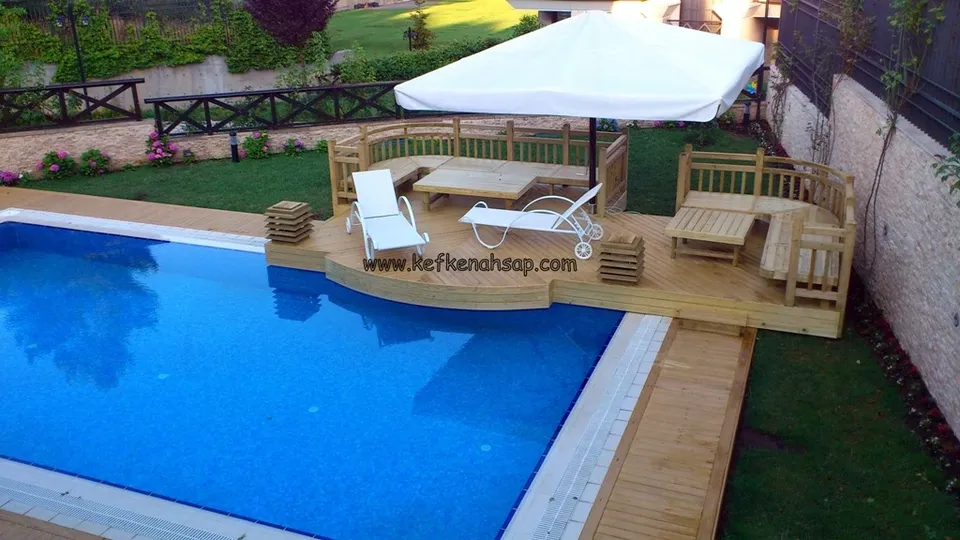
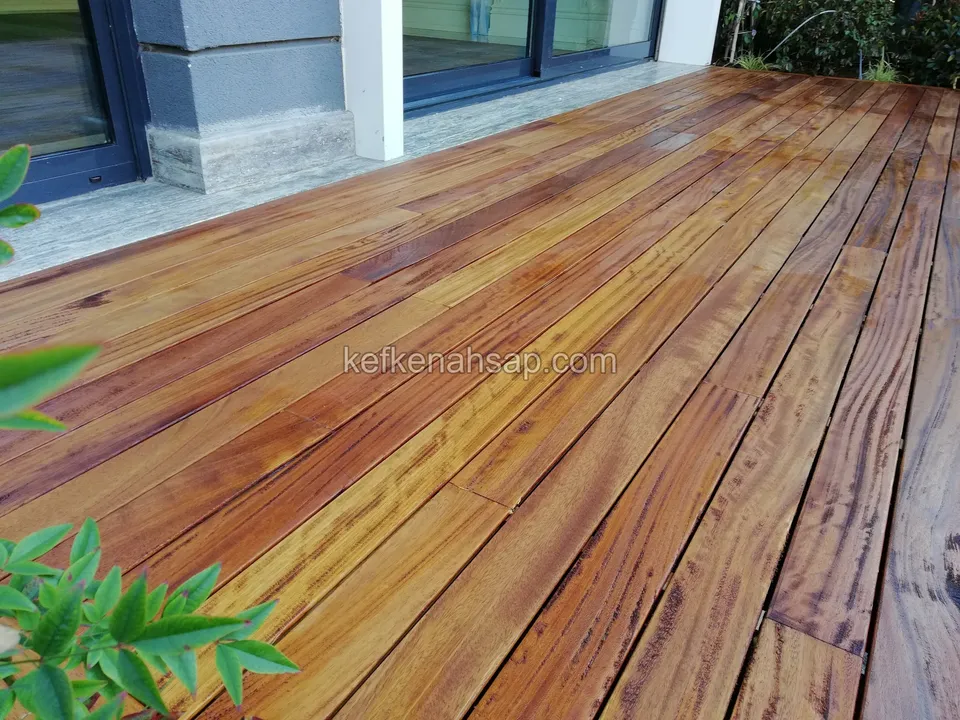
Iroko and teak are both tropical hardwoods with high natural durability, and both suit outdoor use. Teak is oilier and is the traditional choice for surfaces that stay wet, such as boat decks; it also costs more. Iroko comes close to teak in durability and looks, and usually costs less, so it is often a good balance for garden decks, pool surrounds and garden furniture. Left without care, both weather to a silver grey; keeping their natural colour takes regular oiling.
In this guide · 6 sections
What are iroko and teak?
Iroko grows in tropical Africa, teak in South and Southeast Asia. Both are broadleaved trees and both are hardwoods. Their botanical names are Milicia excelsa (iroko) and Tectona grandis (teak).
Their outdoor durability comes from natural extractives in the heartwood (the inner, darker part of the log), which resist rot and insects; the outer sapwood does not share it. That is why neither needs pressure treatment for outdoor use. Teak is also very oily, which is why it sheds water so well and has long been used in boatbuilding.
How do iroko and teak differ?
Property | Iroko | Teak |
|---|---|---|
Origin | Africa | South and Southeast Asia |
Colour (freshly cut) | Yellowish brown, darkens over time | Golden honey |
Oiliness | Low | Very oily |
Water resistance | High | Very high |
Cost | Usually lower | Higher |
Typical use | Decking, garden furniture, cladding | Boat decks, surfaces that stay wet, furniture |
These are general characteristics. Colour and grain vary within each species with growing conditions and the part of the log.
Which one should you choose for which job?
The choice usually comes down to how often the wood gets wet, and to budget.
- Boat decks, cabin interiors, surfaces that stay wet: teak. Its oily structure copes best with constant water.
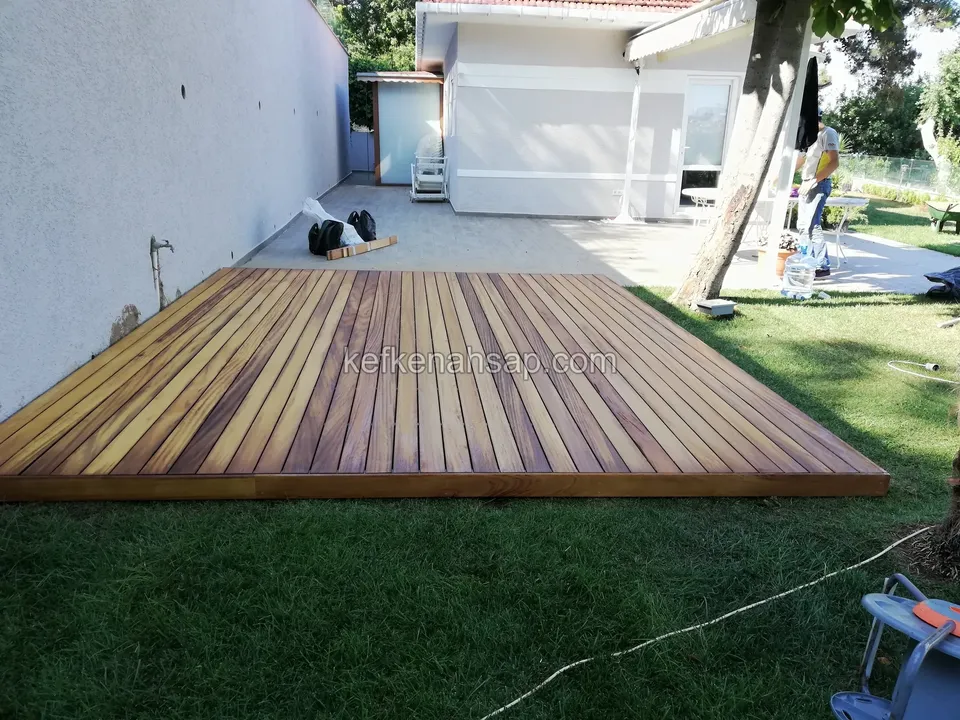
- Garden and terrace decks, pool and hot tub surrounds: iroko is usually enough. It comes close to teak in durability at a lower cost.
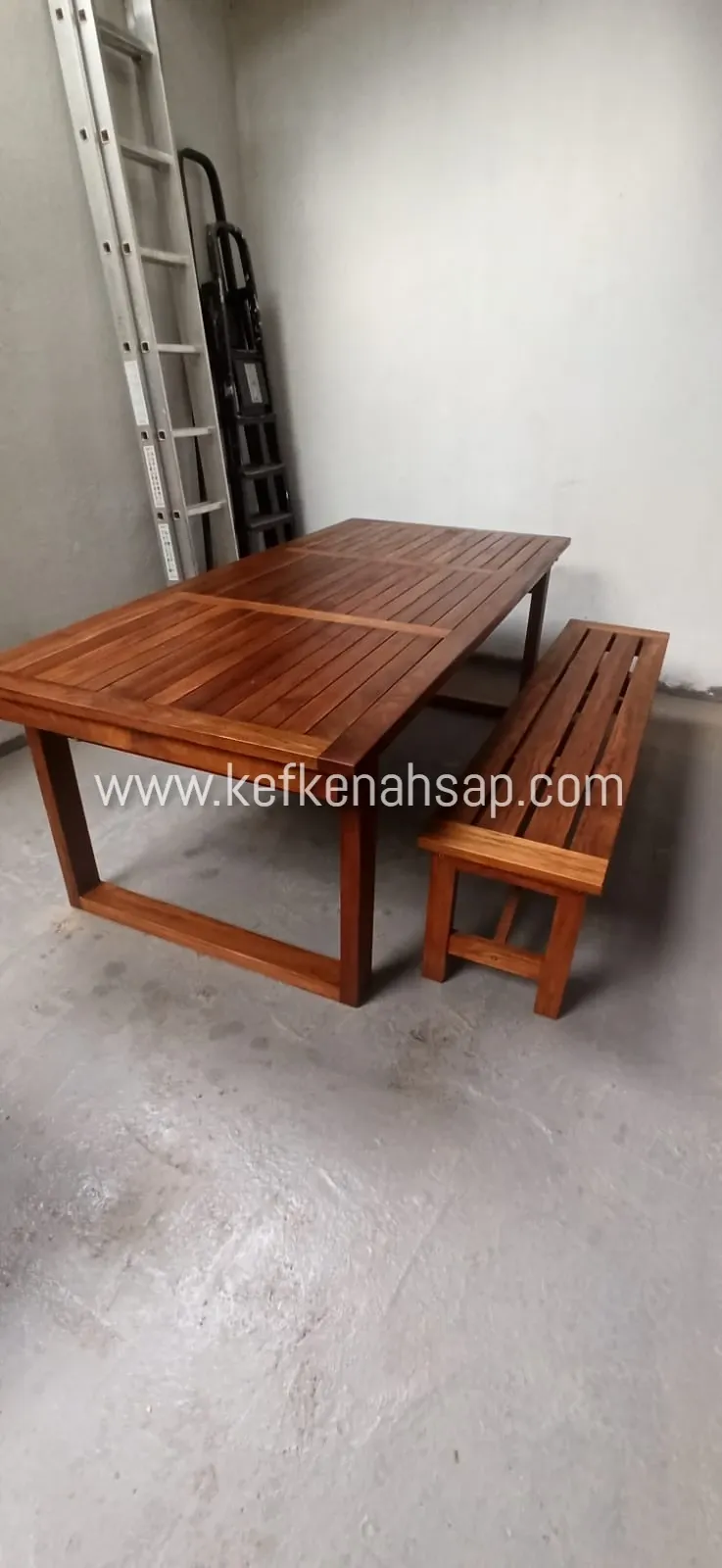
- Garden tables, benches, sun loungers: either works. Teak's oily surface feels softer where hands touch it often.
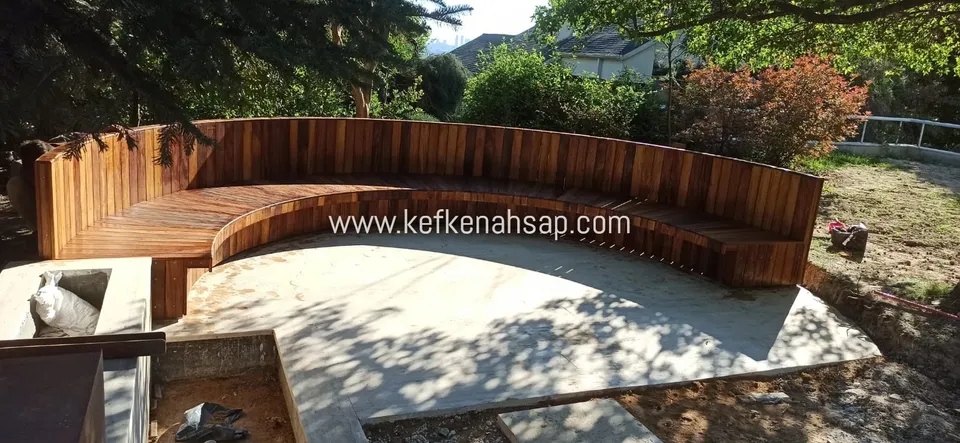
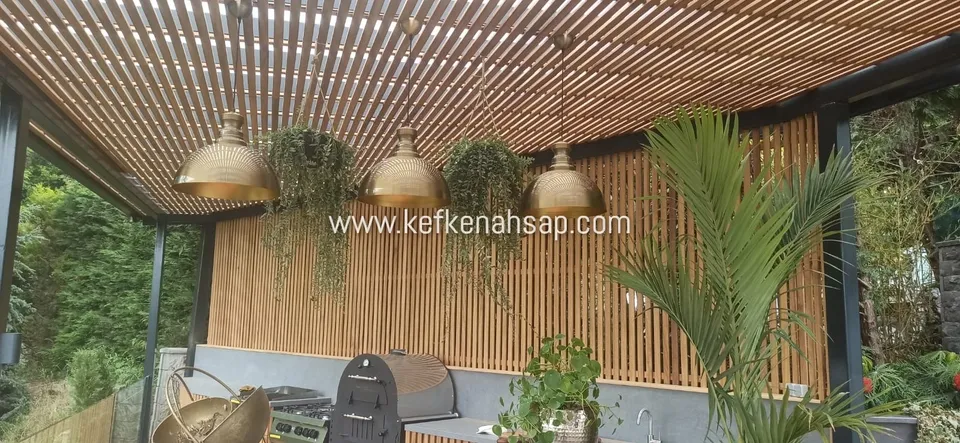
- Wall and ceiling cladding: where the wood is not directly exposed to water, iroko is enough.
On a tight budget, and where the wood is not in water, pressure-treated pine is another option. Pine is a softwood and needs more frequent care; see the wood types guide.
Why do iroko and teak turn grey?
Ultraviolet light bleaches the surface colour and rain washes extractives out of the surface. Untreated iroko and teak turn silver grey within a few seasons. This is not rot; it is natural weathering, and the wood under the grey layer is sound. Some owners prefer the grey look.
To keep the natural colour you need to oil the surface regularly. A greyed surface can be sanded and oiled back to its original colour.
How do you look after iroko and teak?
- Wash: use a soft brush and plenty of water. Keep a pressure washer well away from the surface; it can raise the grain.
- Dry: oil goes on fully dry wood, so let the surface dry thoroughly after washing.
- Oil: apply a hardwood oil in thin coats and wipe off the excess with a cloth. Oil left on the surface turns sticky.
The interval depends on the product used and how much sun the surface gets; most manufacturers recommend one or two coats a year on surfaces in full sun. Shaded surfaces need it less often. When water no longer beads on the surface but soaks in, it is time to oil.
Iroko and teak are usually not painted. Their extractives, and teak's oil, can stop paint from bonding. Tinted wood oils are a better way to add colour.
Why do iroko and teak cost more than pine?
Both are tropical timbers imported through a long supply chain. They are hard and dense, so they blunt cutting tools quickly and cutting, drilling and machining take longer. In return they need no pressure treatment and, with the right care, outlast pine outdoors. We can talk through which one suits you during the site visit.
Frequently asked questions
- Which is more durable, iroko or teak?
- Both have high natural durability. Teak is oilier, which gives it a slight edge on surfaces that stay wet. For gardens and terraces iroko is usually enough.
- Do iroko and teak need pressure treatment?
- No. Their durability comes from natural extractives in the heartwood. Regular oiling is enough to keep the colour.
- Can iroko be painted?
- It usually isn't. Its extractives can stop paint from bonding. For colour, a tinted wood oil is used.
- Can grey teak get its colour back?
- Yes. The grey layer is only on the surface. Light sanding and oiling bring back the natural colour.