How do you choose poolside decking?
Murat Şen · Published:
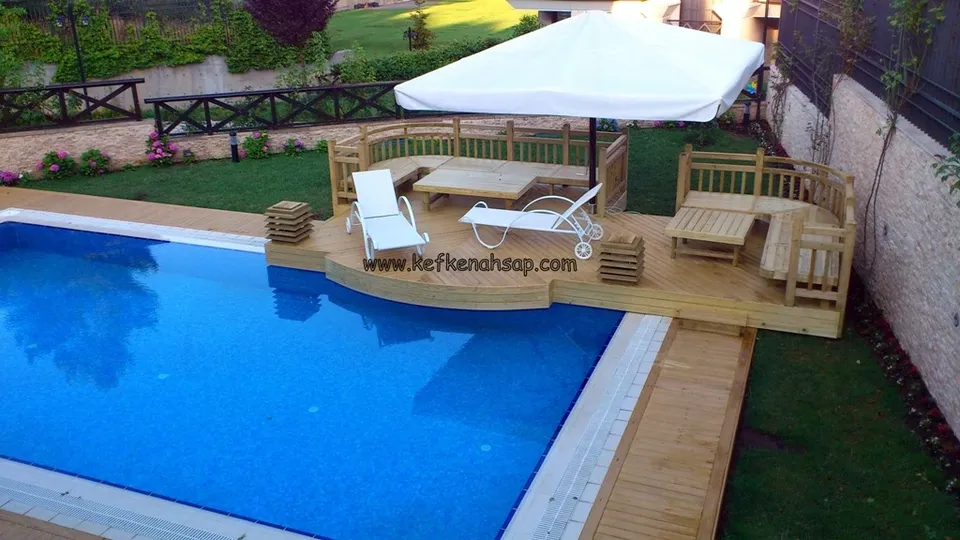
A poolside deck gets wet often, sits in the sun and is used barefoot. So three things matter: a wood with high resistance to water, a surface that does not splinter or get too slippery when wet, and a substructure where water does not collect underneath. Hardwoods with high natural durability, such as iroko or teak, are usually preferred by the pool. Pressure-treated pine is more economical but needs more frequent care. Chlorine or salt in pool water wears the surface, so regular rinsing and oiling are needed.
In this guide · 6 sections
Which wood is used around a pool?
Wood | Water resistance | Surface | Note |
|---|---|---|---|
Teak | Very high | Very oily, sheds water | Costs more. Traditionally used on boat decks. |
Iroko | High | Hard and even | Durability comes from the heartwood. Usually costs less than teak. |
Pressure-treated pine | With treatment | Soft; the grain lifts if neglected | Economical. The surface needs care more often. |
Thermowood | Stable in size | More brittle, sensitive to knocks | Only where there is no ground contact and no standing water. |
These are general assessments; even within one species, trees differ. By a pool, the surface your feet touch most is the top face of the boards. Splinters and raised grain are the most annoying problems here, which is why hardwoods are usually preferred. When choosing, weigh the time you can give to maintenance as well as the budget.
We explain the difference between iroko and teak in Iroko or teak? and heat-treated timber in What is thermowood?
Is a wet deck slippery?
Like any wet surface, wet timber can be slippery. What makes it worse is moss, dirt and sunscreen residue building up on the surface. A deck that is brushed and oiled regularly is less slippery than a neglected one.
- Film-forming finishes: varnish and lacquer are slippery when wet. Penetrating oil is usually preferred by a pool.
- Grooved boards: some deck boards have grooves running along the top face. The grooves can improve grip, but dirt and moss collect in them, so they need regular brushing.
- Cleaning: brushing with a cleaner made for timber once moss or dark patches appear reduces slipperiness.
What should you check in a poolside deck's substructure?
A deck's life depends on its joists as much as its boards. Beside a pool, water splashes onto the deck all the time and runs through the gaps to the space below.
- Board gaps: gaps are left between boards so water can drain.
- Ventilation: the space under the deck must be ventilated. Water trapped below keeps the joists damp and rots them.
- Ground fall: sloping the ground under the deck to carry water away is recommended.
- Fixings: near chlorinated or salt water, stainless screws and fixings are preferred. A rusting screw stains the wood.
- Level: if the deck surface sits level with the pool coping, nobody trips on the edge.
What needs discussing when planning a poolside deck?
The answers to these questions set the deck's size, substructure and the amount of timber:
- Will the deck run along one side of the pool or surround it completely?
- Where will loungers, umbrellas and planters go? Joists are spaced closer under heavy planters and umbrella bases.
- Will the pool's service hatches or cleaning connections end up under the deck? If so, a removable section needs to be left in the deck to reach them.
- Where will water from the deck go, and how will you get under the deck for maintenance?
These questions are talked through on a site visit, with the site in front of us.
Does pool water damage wood?
Rot comes from wood staying wet, not from chlorine. Chlorinated or salt pool water does wear the surface. It uses up the oil faster and bleaches the colour. That is why the boards right at the pool edge turn grey before the rest of the deck.
Rinsing the deck with fresh water now and then during the season removes salt and chlorine residue. In saltwater pools, dried salt can leave white marks on and between the boards; rinsing clears these too. The oiling interval is also usually shorter for boards close to the pool.
How do you maintain a poolside deck?
- At the start of the season: wash the deck, let it dry completely and oil it. If the grain has lifted, sand lightly first.
- During the season: rinse with fresh water now and then, sweep up leaves, keep the gaps between boards open.
- At the end of the season: tighten loose screws, sand any splintered spots, and note boards that have sagged or cracked.
Check the product instructions to make sure the oil is suitable for use by a pool. The maintenance steps are covered in detail in the deck maintenance guide.
You can see our work on the decking and flooring and iroko and teak pages, or send us a message about your poolside.
Frequently asked questions
- Which wood lasts longest by a pool?
- Among commonly used woods, teak and iroko stand out. Both get their natural durability from extractives in the heartwood; teak is also very oily.
- Is a poolside deck slippery?
- Wet timber can be slippery. Moss, dirt and sunscreen residue make it worse. A deck that is brushed and oiled regularly is less slippery.
- Can pressure-treated pine be used by a pool?
- Yes, and it is more economical. But its surface is softer than hardwood and needs oiling and sanding more often.
- Does chlorinated water rot wood?
- Rot comes from wood staying wet, not from chlorine. Chlorinated water does use up the surface oil faster and bleaches the colour. Rinsing with fresh water during the season reduces the effect.
- Should a poolside deck be varnished?
- Usually not. Varnish is slippery when wet and worn paths show. Penetrating oil is preferred by a pool.