What is thermowood and where is it used?
Murat Şen · Published: · Updated:
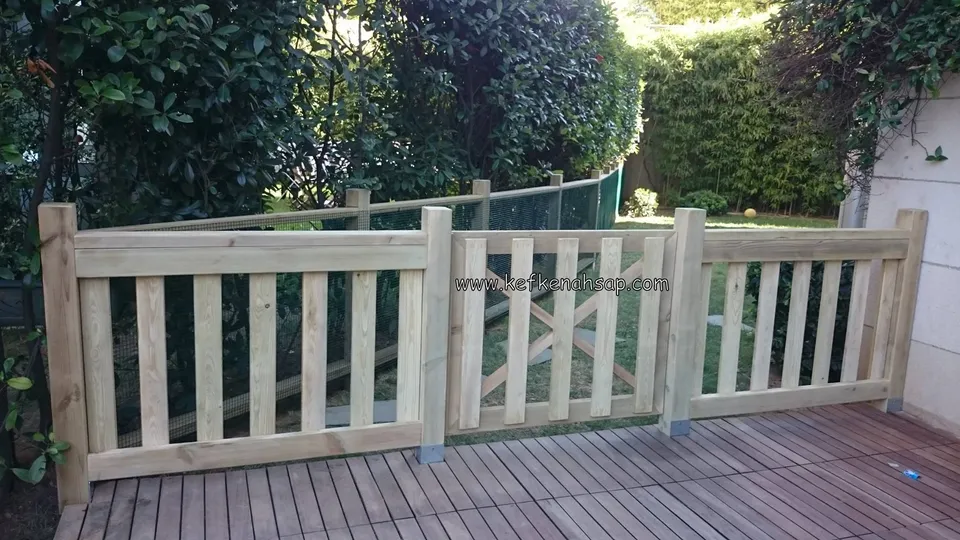
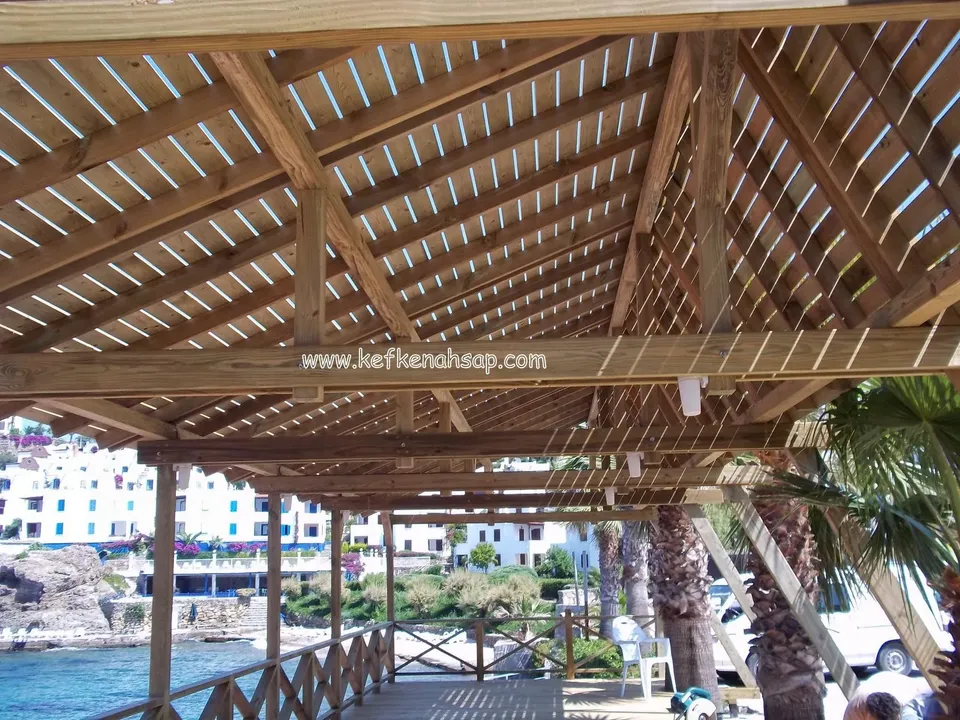
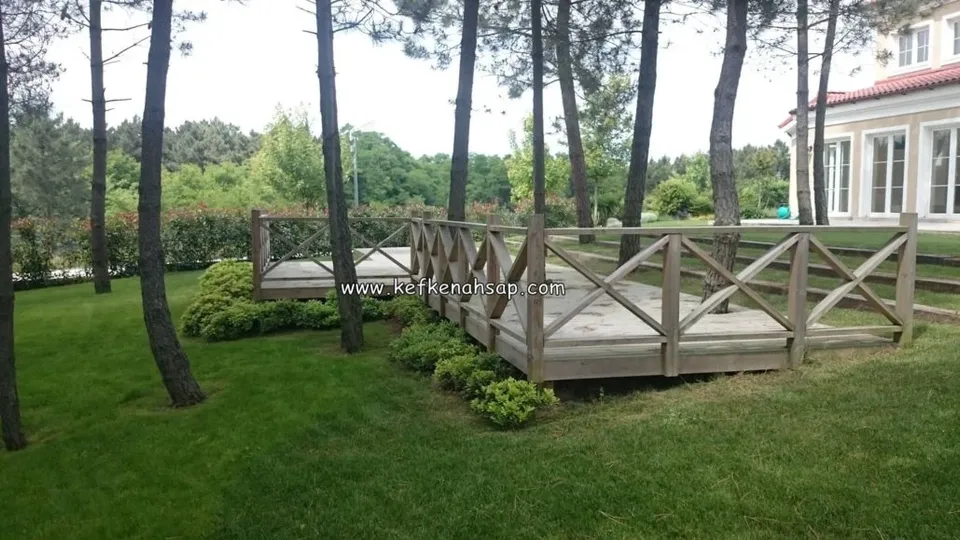
Thermowood is timber that has been heat-treated at high temperature in a controlled environment. No preservative is added; the wood is processed with heat and steam alone. The treatment reduces how much moisture the wood takes up and gives off, so thermowood swells and shrinks less and resists rot better. In return it becomes more brittle and loses bending strength. Sources generally recommend it for places with no ground contact, such as cladding, deck boards, fence panels and saunas. It is not recommended for load-bearing joists or for posts set into the ground.
In this guide · 6 sections
How is thermowood made?
Kiln-dried timber goes into a closed kiln with reduced oxygen. It is held at high temperature with steam for a period, then cooled slowly and brought back to a working moisture level. During the process some of the sugars and resins in the wood change or leave the wood. With less of the part that holds water, the wood takes up and gives off less moisture.
Thermowood is usually made from pine or spruce. Sources also describe heat-treated hardwoods such as ash. The temperature and length of the treatment set the product class. Wood treated at a higher temperature is darker and more stable in size, but also more brittle.
"ThermoWood®" is a trade name. The general term is thermally modified timber; in this guide we call it "thermowood".
What are the strengths of thermowood?
- Less movement: it swells less in damp weather and shrinks less in dry weather. Gaps between boards change less from season to season, and cupping and checking are reduced.
- Better rot resistance: it resists fungi and decay better than untreated pine or spruce.
- Less resin bleed: most of the resin leaves the wood during treatment, so knots weep less.
- Colour all the way through: the dark brown tone from the treatment is not just on the surface. Cut ends and sanded faces stay the same colour.
- No preservative: this is what sets it apart from pressure-treated timber.
What are the weaknesses of thermowood?
- Brittleness: bending strength drops. That is why it is generally not used for load-bearing parts such as joists, posts or railing posts.
- Splitting at screws and ends: screws near a board end can split it, so pre-drilling pilot holes is common.
- Ground contact: it is not recommended where it is buried in soil or stays wet all the time.
- Knocks and scratches: the surface is more sensitive to impact than untreated wood. Edges and corners chip easily.
- Greying in the sun: the dark brown colour fades and turns grey on surfaces in the sun.
Where is thermowood used?
Use | Suitable? | Note |
|---|---|---|
Cladding | Yes | Because it moves little, this is one of thermowood's most common uses. |
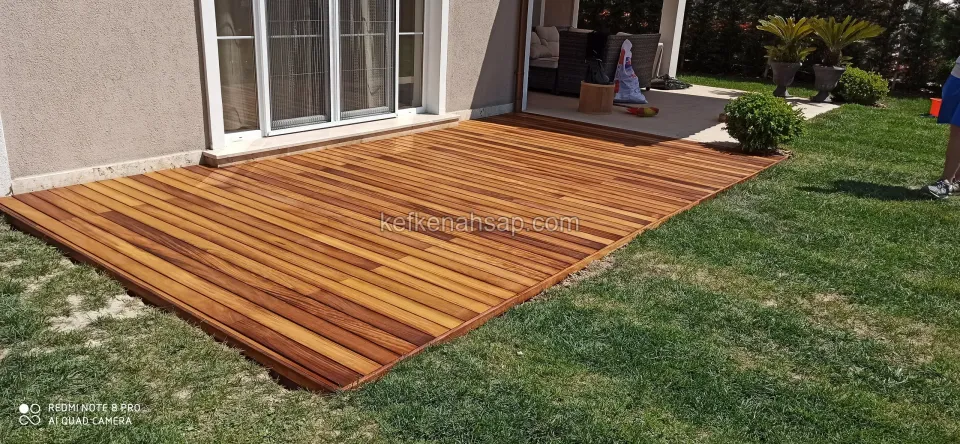
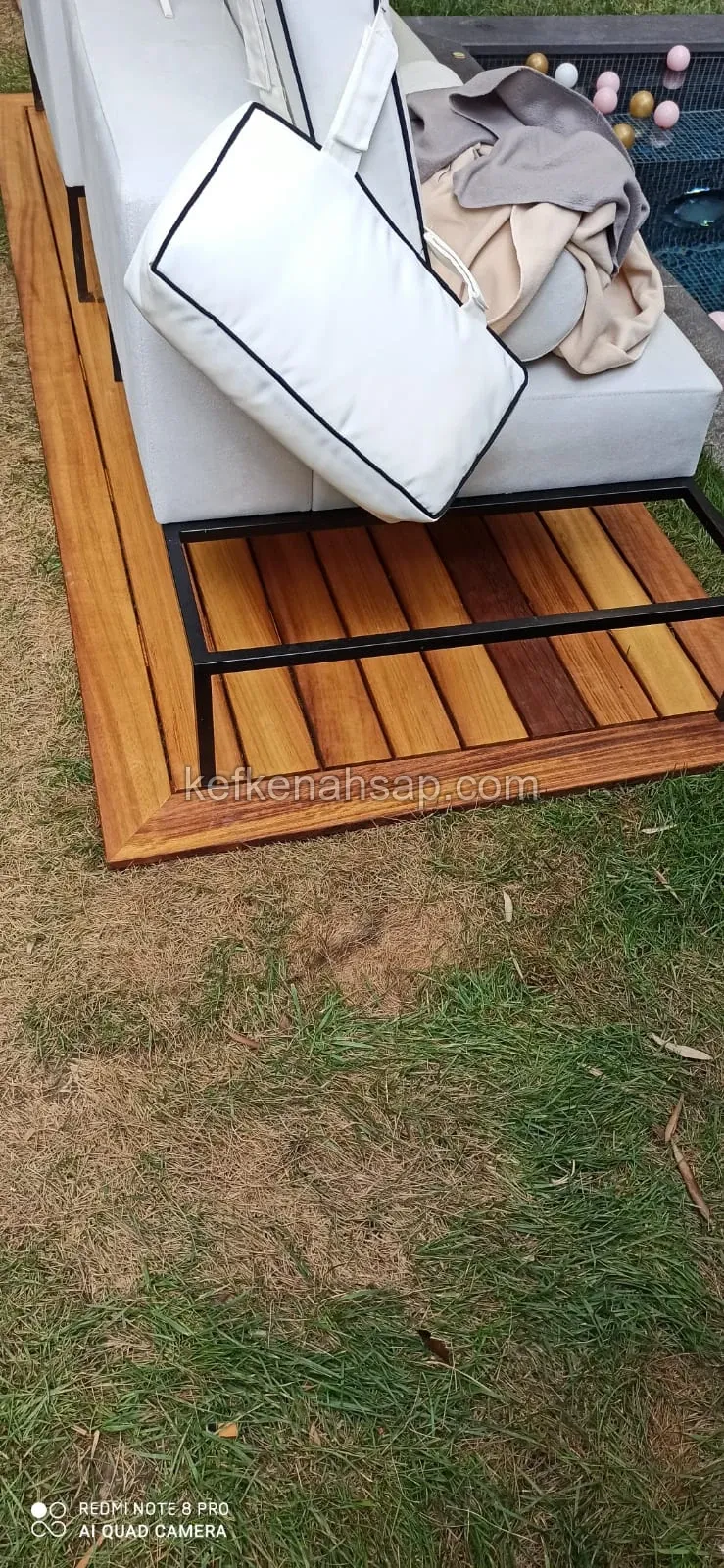
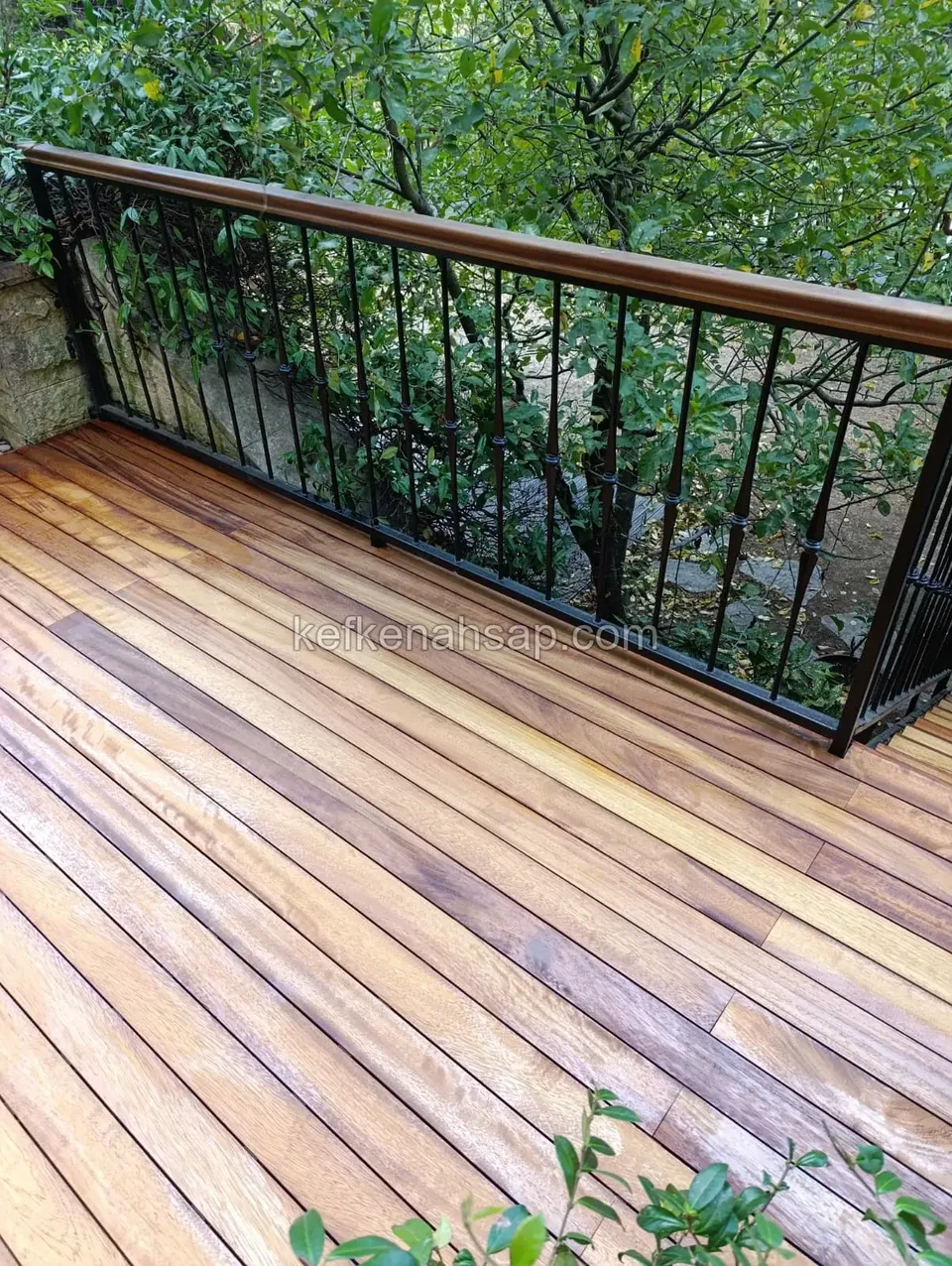
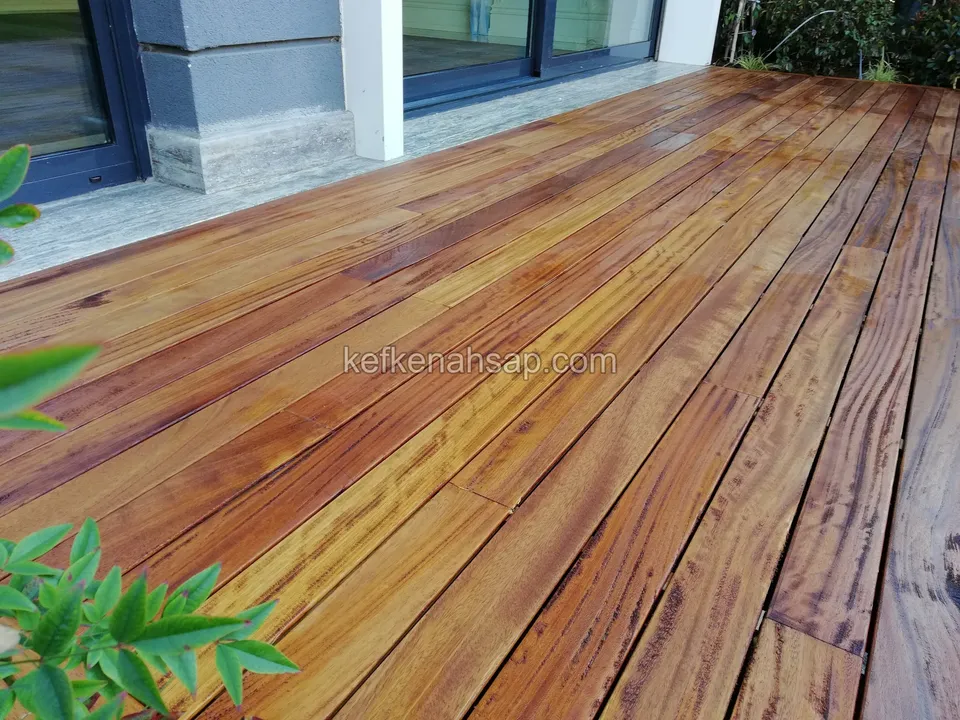
Deck boards | Yes | The joists and supports under the boards are made of another material. |
Fence and garden panels | Yes | Posts that go into the ground are made of another material. |
Sauna interiors | Yes | It moves little in heat and moisture and bleeds little resin. |
Joists, posts, structure | No | Bending strength is low. |
Posts set in the ground | No | Not recommended in ground contact. |
When thermowood is used on a deck, usually only the boards are thermowood; the joists underneath are often pressure-treated pine. Because the boards are more brittle, check the manufacturer's guidance for joist spacing and screw positions. On cladding, a ventilated gap behind the boards is recommended so both faces of the wood can dry.
Thermowood, pressure-treated pine or iroko?
| Thermowood | Pressure-treated pine | Iroko |
|---|---|---|---|
How is it protected? | By heat treatment | By preservative forced in under pressure | By natural extractives in the heartwood |
Structural parts | Not recommended | Widely used | Used |
Stability in size | High | Medium | High |
Colour | Dark brown, greys in the sun | Greenish or brownish, greys over time | Yellowish brown, darkens over time; greys in the sun outdoors |
Surface care | Oil or paint | Oil or paint | Usually oil |
These are general assessments; they vary with the product and the individual tree. For a fuller comparison see the wood types guide, and for how treatment works see What is pressure-treated timber?
Does thermowood need maintenance?
Yes. Heat treatment protects the wood against rot, but not against the sun. Thermowood in full sun turns grey over time, and fine surface checks can appear. If you like the grey look you can leave it as it is; the wood itself is not harmed.
To keep the dark colour, a pigmented wood oil is recommended. The interval depends on the product and how much sun the surface gets. The steps are the same as for deck maintenance: wash, let it dry completely, apply the oil in thin coats. We describe them in the deck maintenance guide.
We work with thermowood too. We are happy to look at your site and talk through which wood suits it.
Frequently asked questions
- Does thermowood contain chemicals?
- No. No chemical preservative is added; it is processed with heat and steam only.
- Can thermowood be used structurally?
- It is generally not recommended. Heat treatment lowers the bending strength of the wood. Pressure-treated pine or hardwoods are preferred for joists and posts.
- Can thermowood go into the ground?
- It is not recommended. Thermowood suits places with no ground contact. Posts and supports that go into the ground are made of another material.
- Does thermowood turn grey?
- Yes. On surfaces in the sun the dark brown colour fades and turns grey over time. A pigmented wood oil is recommended to keep the colour.
- What is the difference between thermowood and pressure-treated pine?
- Pressure treatment forces a preservative into the wood. Thermowood is only heat-treated; it is more stable in size but more brittle.