Pergola or gazebo?
Murat Şen · Published: · Updated:
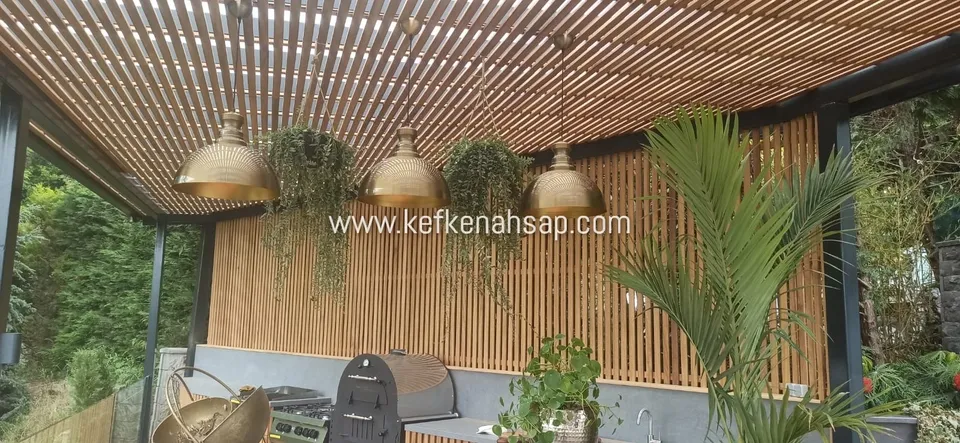
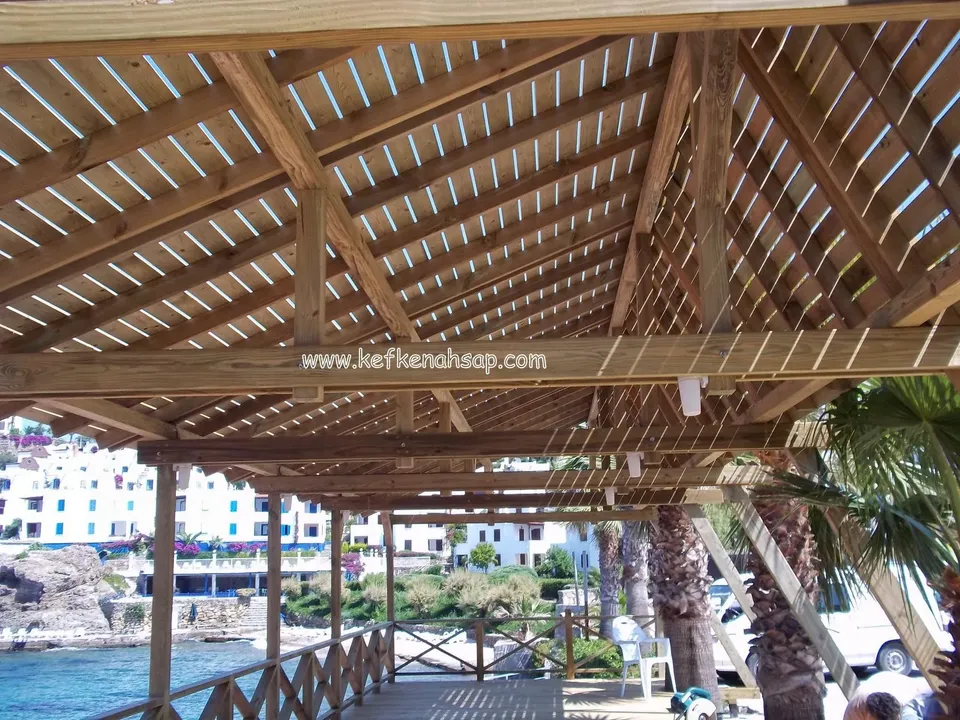
A pergola is a shade structure on posts, usually topped with open beams or spaced slats; it is often fixed to the side of the house or a wall. A gazebo is a garden structure with a closed roof that usually stands on its own. An open pergola breaks the sun but does not keep the rain off; a gazebo can be used in the rain too. If you want a shaded seating area in front of the house, a pergola suits better; if you want a corner in the garden you can sit in when it rains, a gazebo does. Because a gazebo has a roof and often a floor, it needs more material and labour.
In this guide · 7 sections
What is the difference between a pergola and a gazebo?
| Pergola | Gazebo |
|---|---|---|
Top | Open beams or spaced slats | Closed roof |
Stands | Often attached to the house or a wall; can also stand alone | Usually stands on its own |
Floor | Existing terrace, paving or deck | Often has its own floor |
In the rain | No protection if the top is open | Protects |
Typical place | Terrace in front of the house, entrance, path | Within the garden, a corner with a view |
Material and labour | Less | More, because of the roof and floor |
There is also the arbour. An arbour is a simpler, open structure; a vine or climber is often grown over it and the plant provides the shade.
When does a pergola suit better?
A pergola is used to shade the terrace in front of the house or a garden entrance. With an open top it does not block much light from glazed doors, so the rooms inside do not go dark.
- How much shade: the spacing and direction of the beams or slats set the shade. The closer the slats, the more shade.
- Plants: when a climber or vine grows over the beams, the plant completes the shade.
- Adding a cover later: a roof can often be added to a pergola later, but you need to check whether the beams can carry the extra load. For non-timber parts such as awnings, clear covers and gutters, we bring in the right specialist and hand the pergola over complete.
On a pergola attached to the house, the construction of the wall decides how it is fixed. That is why the wall is looked at on the site visit.
When does a gazebo suit better?
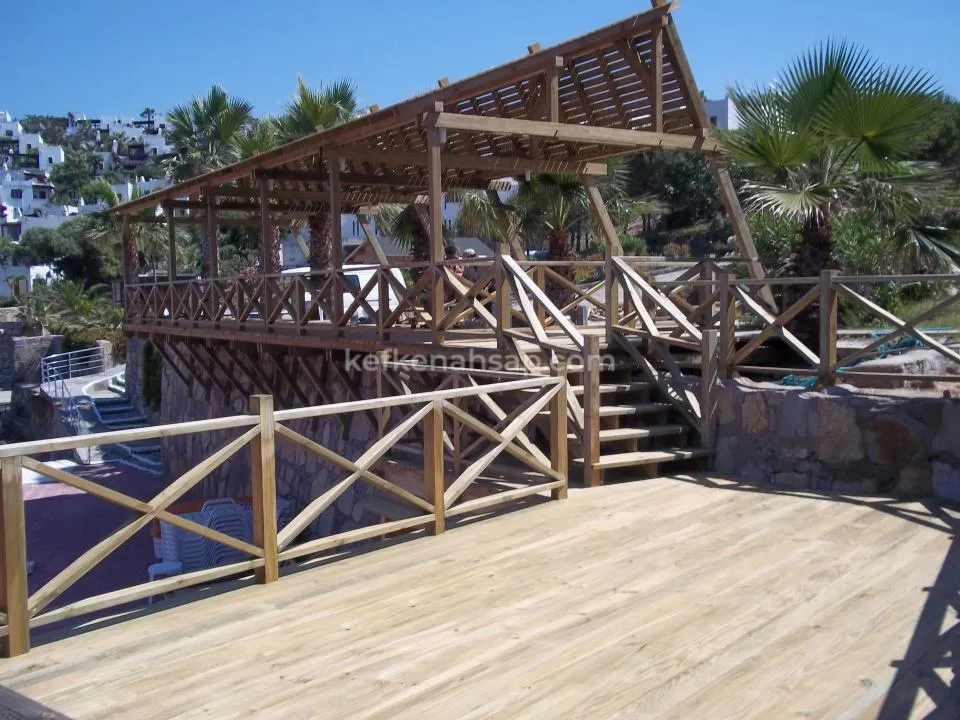
A gazebo is chosen when you want somewhere in the garden, away from the house, that you can sit in even when it rains. With a closed roof, a table, seating set or fixed benches stay out of the rain.
- Roof: a gazebo roof is often timber boarding with a covering on top. We arrange the right specialist for the roof covering, such as shingles, and hand the gazebo over complete. The roof load means the posts and beams have to be stronger than a pergola's.
- Floor: a gazebo is often built with its own timber floor, usually raised off the ground to keep it away from ground moisture.
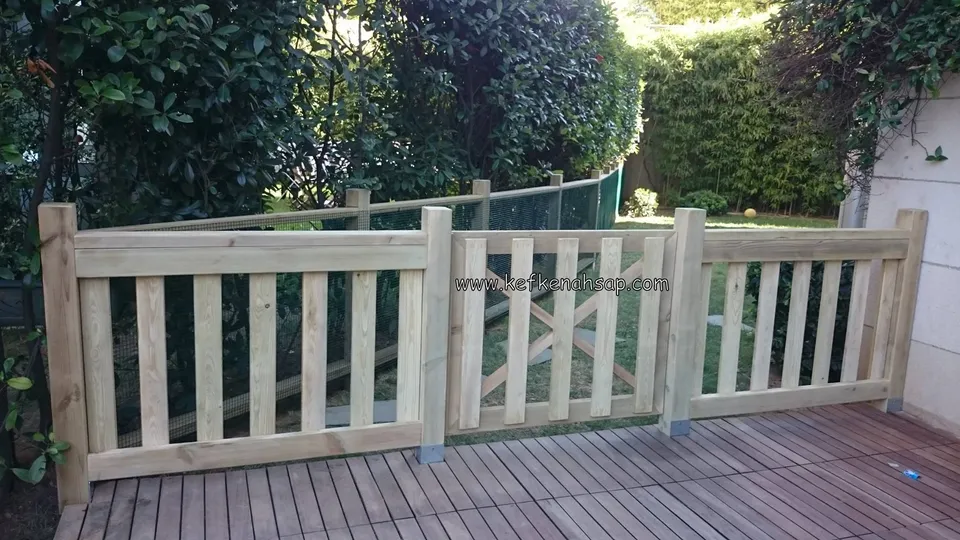
- Sides: if you wish, one side can be closed with a railing, fixed benches or half-height panels.
- Rainwater: where the water from the closed roof will run is planned from the start.
How do you choose where a pergola or gazebo goes?
The location is settled before choosing between the two. These are the things to look at:
- Sun direction: the position of the structure and the direction of the beams follow the time of day you want shade.
- Distance from the house: a structure close to the kitchen or living room gets used more often. For a corner far from the house, a gazebo with a closed roof suits better.
- Wind: in windy spots a closed roof catches the wind, so the post fixings matter even more.
- Ground: whether the posts stand on concrete, stone or soil changes the preparation.
- Outlook: the view from the structure and how it is seen from neighbouring houses are also discussed.
Which wood is used for pergolas and gazebos?
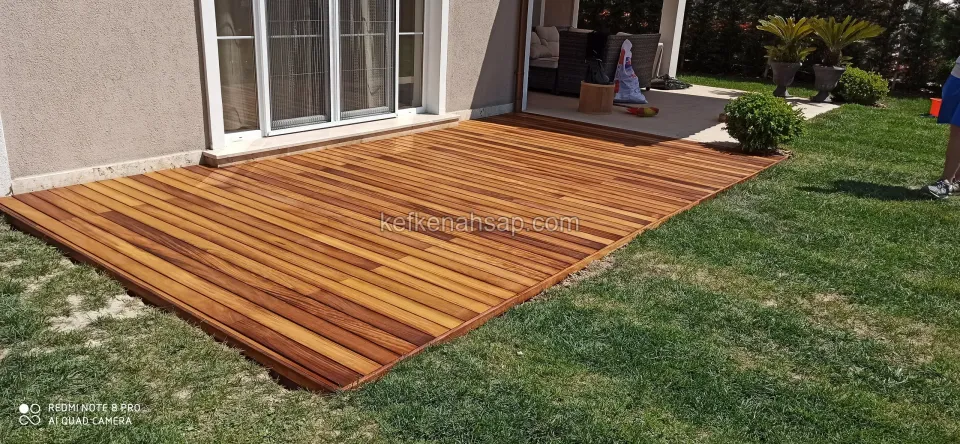
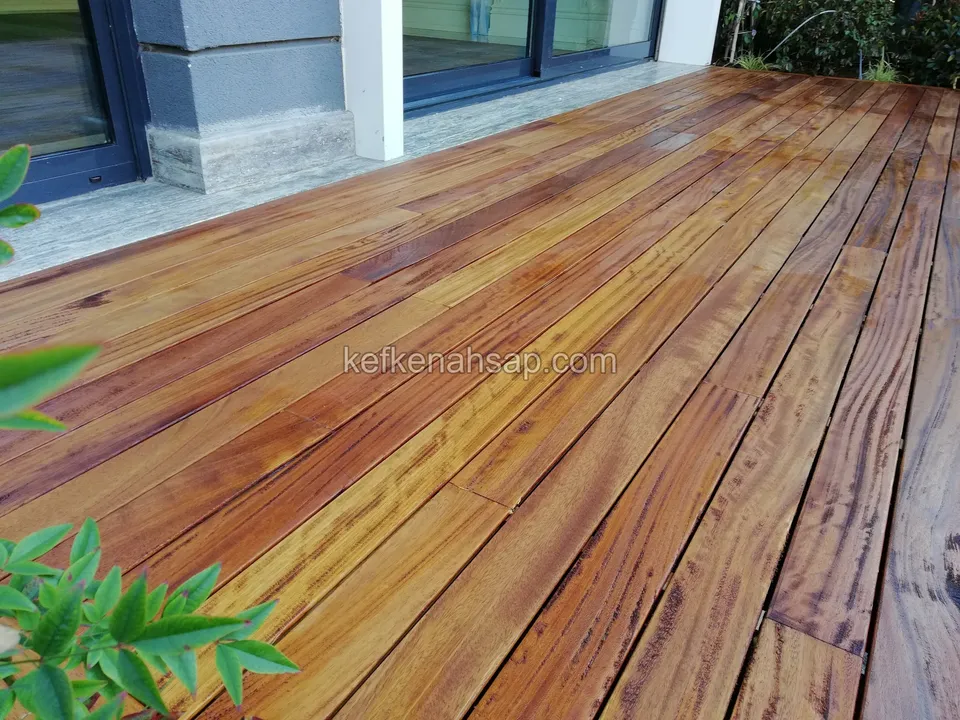
For both, pressure-treated pine is commonly used for the load-bearing posts and beams. It is economical and lasts well outdoors with regular care. Hardwoods such as iroko can also be chosen for visible surfaces or the floor.
We explain treatment in What is pressure-treated timber? and the differences between species in the wood types guide.
Is there a difference in maintenance?
A pergola's beams take sun and rain from every side. Their top faces wear fastest; renew the oil or paint when the colour fades. In a gazebo the roof protects the timber inside, so the posts and ceiling wear more slowly. In return, the roof covering and the places where rainwater runs need regular checks.
On both, the bolts can loosen as the wood dries. Check and tighten them every season.
Which costs more?
A gazebo covering the same area usually needs more material and labour than a pergola: a closed roof, stronger beams to carry it and often a floor. We explain what drives the price in What determines the price of a pergola?; the same factors apply to a gazebo.
We are happy to see your garden and talk through which one suits it. You can see our work on the pergolas and gazebos page.
Frequently asked questions
- Does a pergola keep the rain off?
- An open pergola does not; it breaks the sun. To keep the rain off, the top has to be covered.
- Can a roof be added to a pergola later?
- Often yes, but you need to check whether the beams can carry the extra load.
- Is a gazebo the same as an arbour?
- No. A gazebo has a closed roof. An arbour is a simpler, open structure; the shade usually comes from a plant grown over it.
- Which wood is used for pergolas and gazebos?
- Pressure-treated pine is commonly used for the load-bearing posts and beams. Hardwoods such as iroko can also be chosen for visible surfaces and the floor.
- Which costs more, a gazebo or a pergola?
- For the same area, a gazebo usually needs more material and labour; it adds a closed roof and often a floor.