Railings: timber or metal?
Murat Şen · Published: · Updated:
A timber railing gives a deck, timber terrace or garden staircase a warm, unified look. If the rest of the structure is timber, the match comes naturally. In return, a timber railing in the sun needs regular oil or paint. A metal railing blocks less of the view with its slim sections and usually needs less frequent care, but it heats up in the sun and has to be protected against rust. The choice usually comes down to where the railing goes, what the rest of the structure is made of and how much time you can give to maintenance. Mixed railings that combine both materials are also common.
In this guide · 6 sections
What are the differences between timber and metal railings?
| Timber railing | Metal railing |
|---|---|---|
Look | Warm and natural; reads as one with a timber deck or stair | Slim and plain; blocks less of the view |
To the touch | Heats up less than metal in the sun, feels warmer in the cold | Heats up in the sun, feels cold in the cold |
Upkeep | Surfaces in the sun need regular oil or paint | Scratches and rust spots on painted steel are watched |
Repair | A broken rail or post is replaced on its own | Welding and repainting often need workshop work |
Suits | Timber decks, terraces, pergolas, garden stairs | Modern facades, glass, stone and concrete |
These are general assessments. The wood species, the type of metal and its coating all change the outcome.
When does a timber railing work best?
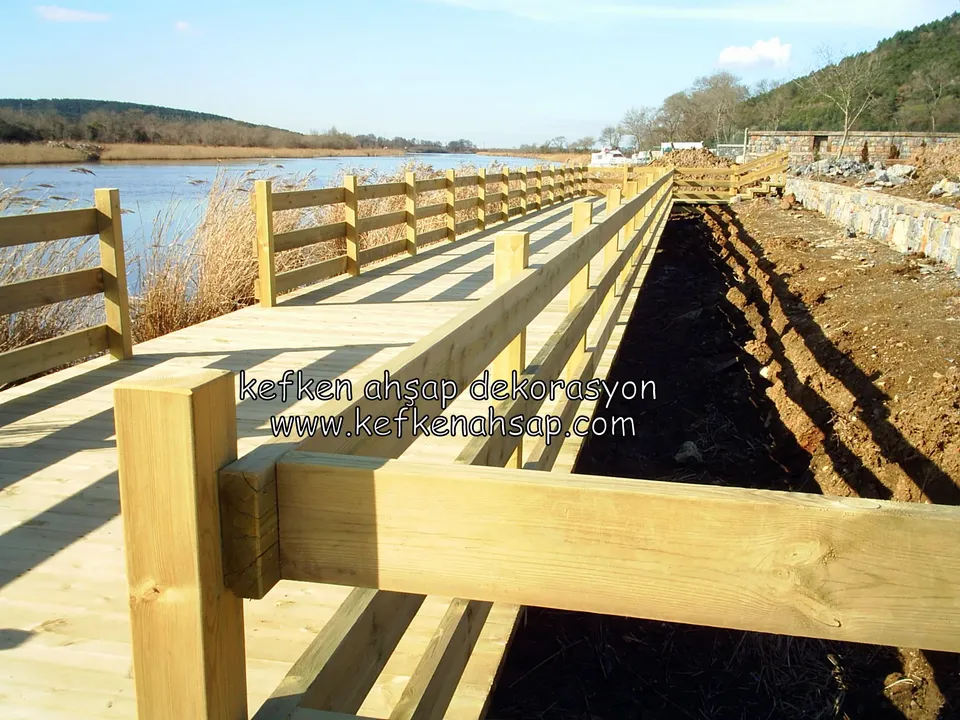
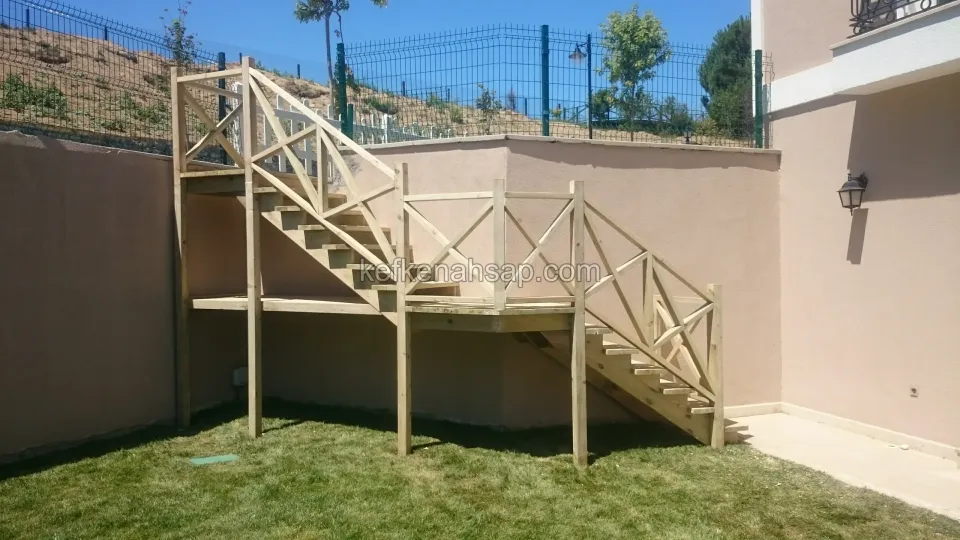
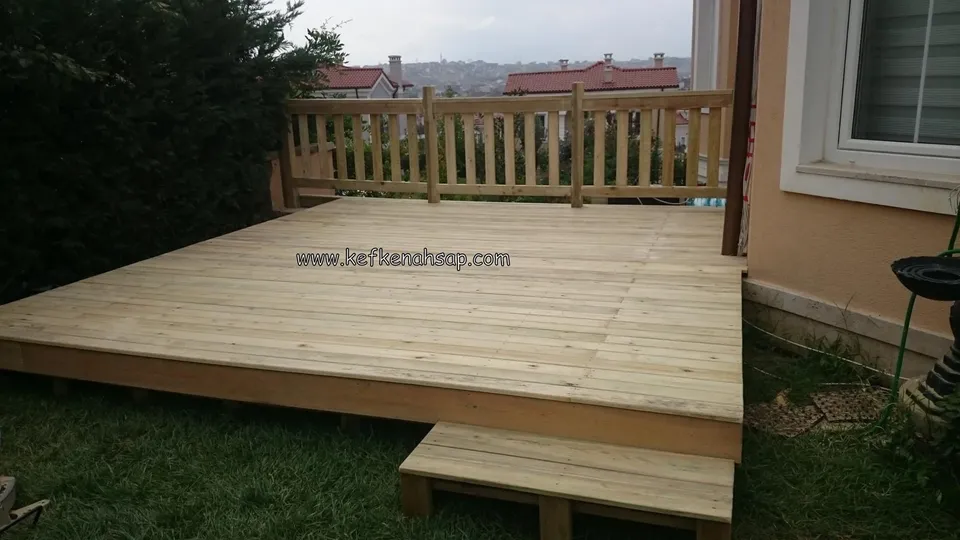
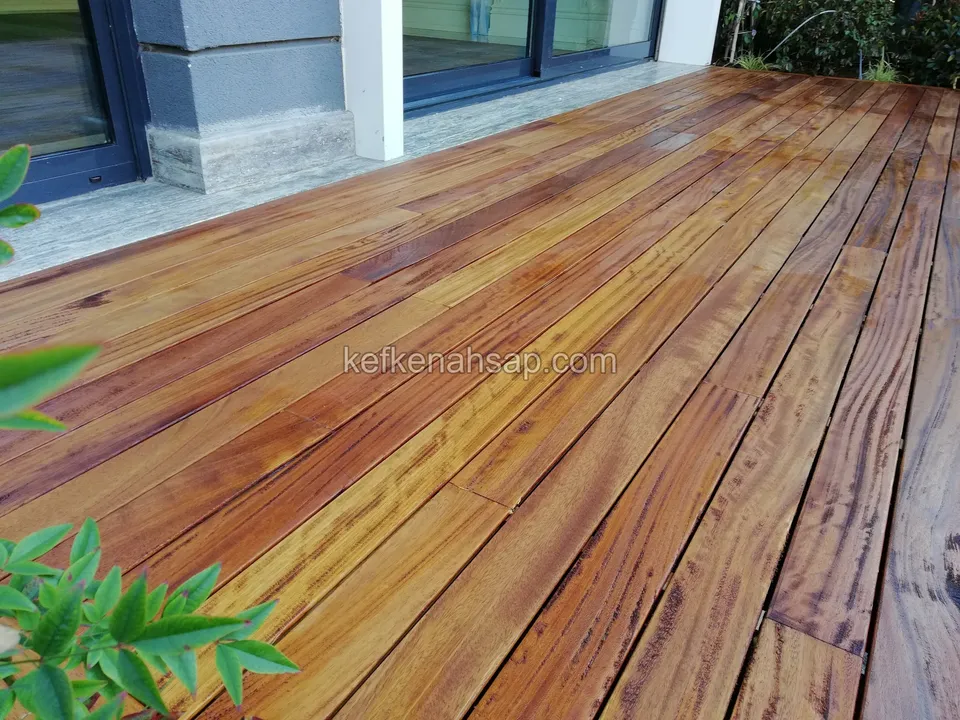
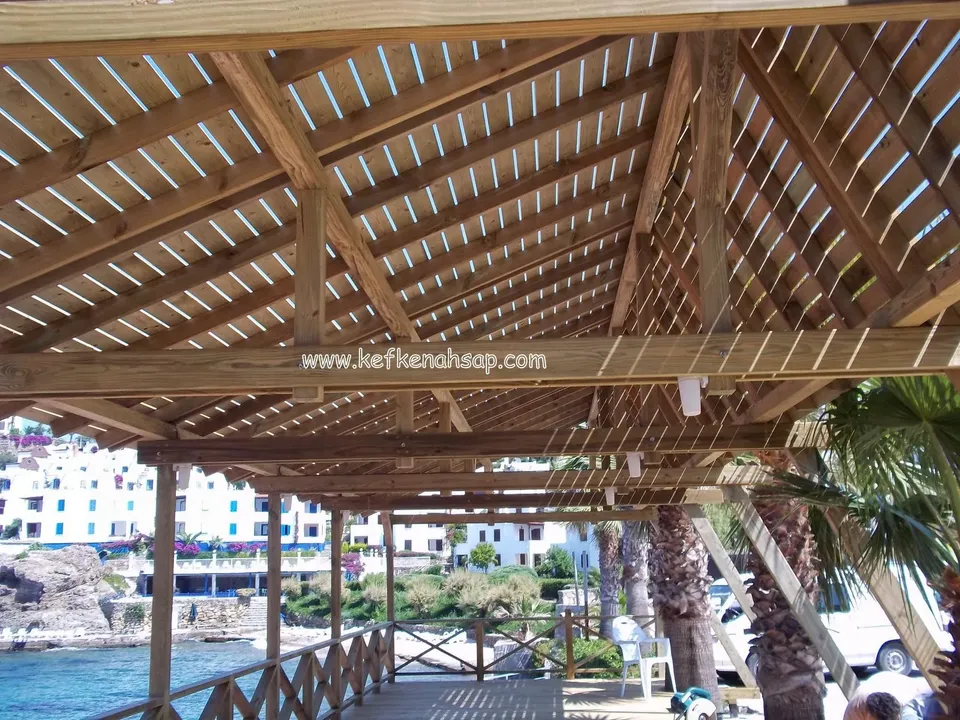
If the structure the railing fixes to is already timber, a timber railing is the natural choice: a garden deck, a timber terrace, garden stairs, a footbridge or a waterside walkway. The railing posts are usually bolted straight to the deck joists or the stair stringer. Material and colour match the rest of the structure.
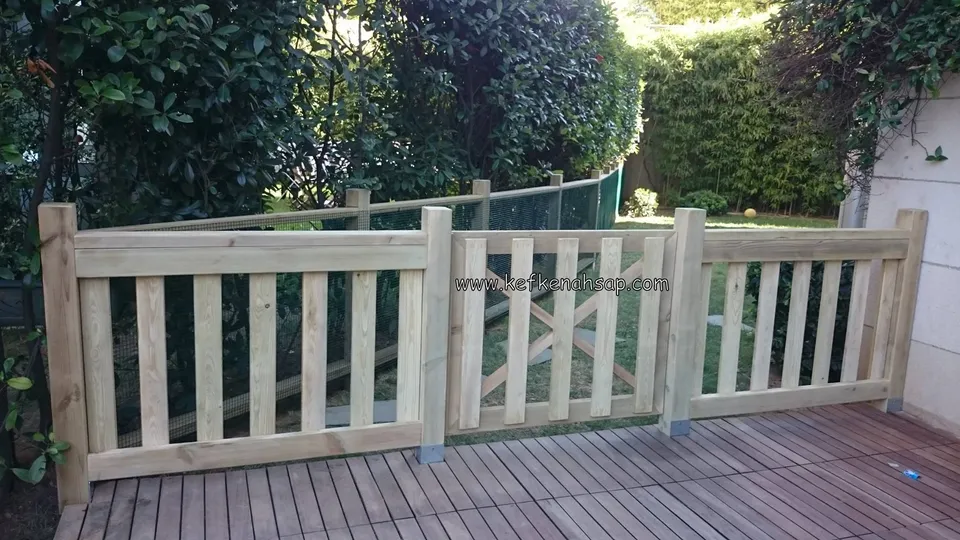
Timber railings come in many forms: cross-braced, vertical balusters, horizontal rails, or a timber frame with wire mesh infill. Outdoors, pressure-treated pine is commonly used; where the deck is iroko or teak, the railing can be made of the same wood. The handrail on top is usually planed and its edges rounded so it does not leave splinters in the hand.
Rainwater is what wears a timber railing most. The top of the handrail and the tops of the posts hold water longest. A slight slope on top of the handrail, or post tops cut at an angle, is recommended so water does not sit there.
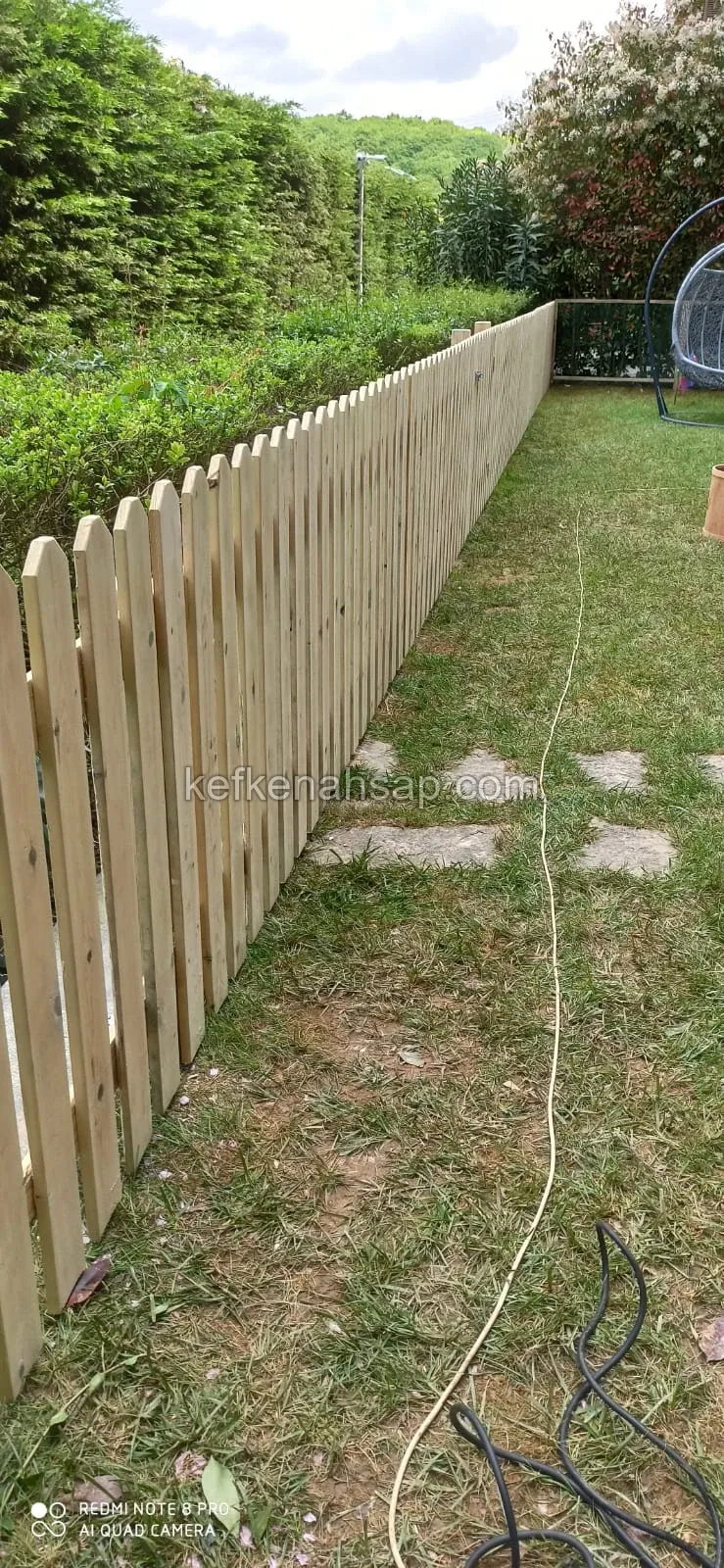
You can see our work on the railings and fences and stairs pages.
When does a metal railing work best?
Metal railings come into their own on balconies and terraces where the view should stay open, and on modern facades dominated by glass, concrete or stone. Glass panel railings usually have a metal structure too.
The main concern with metal is rust. Steel railings are usually galvanised or painted; welds and surfaces scratched during installation are where rust starts first. Salty air by the sea increases the upkeep a metal railing needs.
Can timber and metal be combined?
Yes. Mixed railings are common and combine the strengths of both materials:
- Metal posts and infill, timber handrail: the part your hand touches is timber, and slim metal infill keeps the view open.
- Timber posts and handrail, metal infill: thin metal bars or steel cable are used within a timber frame.
Where the two materials meet, make sure water cannot collect; water trapped where timber sits on metal rots the wood and rusts the metal. Copper-based preservatives in pressure-treated timber can speed up corrosion of some metals, so stainless or galvanised screws and bolts are preferred for the fixings. We also take on metal and mixed railings: we bring in the right specialist for the metalwork and hand the railing over complete.
What matters for railing safety?
- Height and gaps: the railing height and infill spacing are set by how the structure is used and by the applicable regulations. Where there are children, narrow gaps are recommended, and horizontal rails children could climb are best avoided.
- Post fixing: the post carries the railing. If it is not fixed firmly to a joist, concrete or a wall, even the best material will not help. A railing that flexes when you lean on it is not safe.
- Regular checks: in timber, bolts can loosen as the wood dries, so checking and tightening them every season is recommended. On metal, welds and post bases are watched for rust and cracks.
Which is easier to maintain?
A metal railing usually needs less frequent care. Stainless steel is washed; scratches on painted steel are touched up before rust starts.
Maintaining a timber railing is like maintaining a deck: wash, let it dry, apply oil or paint. Water collects most on the top of the handrail and at the foot of each post, so keep these spots dry. We describe the steps in the deck maintenance guide. We also maintain and repair timber railings built by other companies.
Frequently asked questions
- Is a timber or a metal railing more durable?
- Both last a long time outdoors with the right material and care. A timber railing's life depends on surface care, a metal railing's on rust protection.
- Which wood is used for timber railings?
- Outdoors, pressure-treated pine is commonly used. Where the deck is iroko or teak, the railing can be made of the same wood.
- Does a metal railing suit a timber deck?
- Yes. A metal railing with a timber handrail is a common pairing with timber decks; the part your hand touches stays timber.
- How often does a timber railing need maintenance?
- That depends on how much sun and water it gets. Renew the oil or paint when the colour fades or water starts to soak in.
- How high should a railing be?
- Height and infill spacing are set by how the structure is used and by the applicable regulations. The exact size is settled on a site visit.