
Guides
Short, plain guides on choosing timber, maintenance and what drives the price.
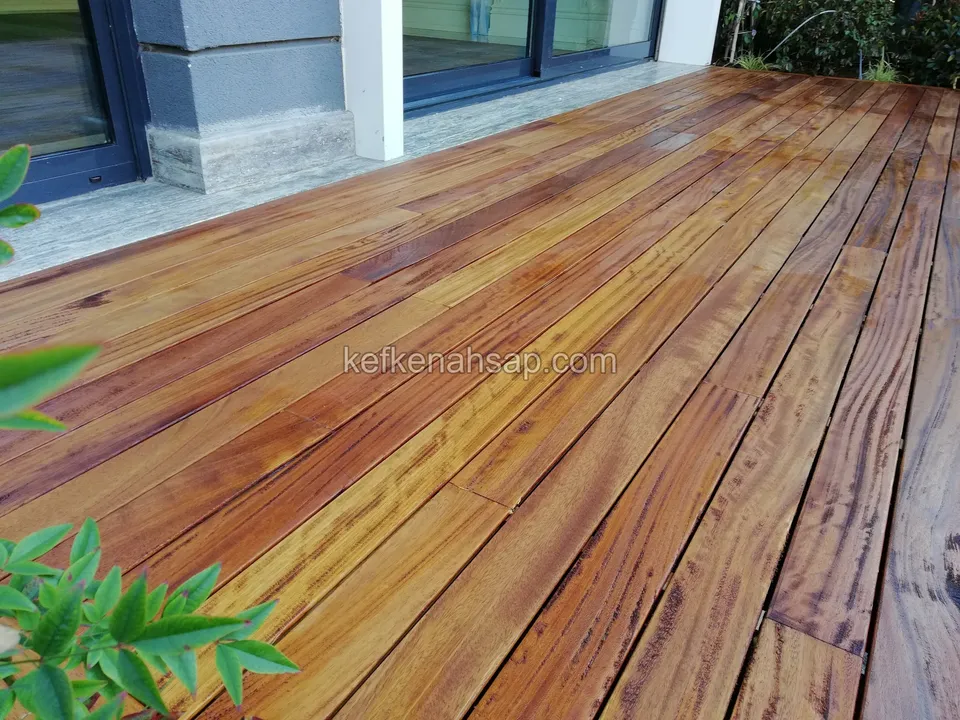
How do you maintain a timber deck?
Timber deck maintenance has three basic steps: wash the surface with a brush and water, let it dry completely, and apply a suitable wood oil. The interval depends on the product used and how much sun the surface gets; most manufacturers recommend one or two coats a year on surfaces in full sun. It is time when the colour has faded or water soaks in instead of beading on the surface. A deck's life depends on its substructure as much as its boards, so maintenance also means checking the joists and screws.
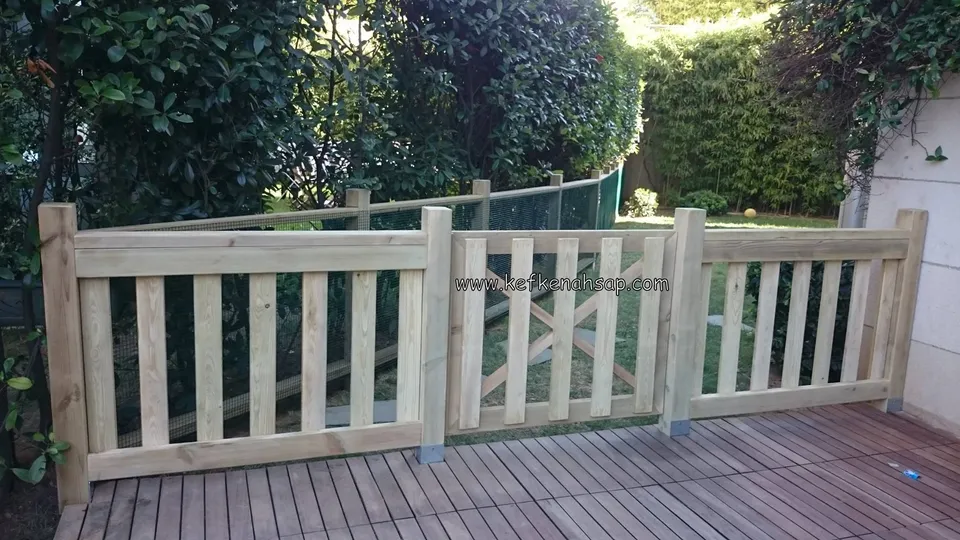
Railings: timber or metal?
A timber railing gives a deck, timber terrace or garden staircase a warm, unified look. If the rest of the structure is timber, the match comes naturally. In return, a timber railing in the sun needs regular oil or paint. A metal railing blocks less of the view with its slim sections and usually needs less frequent care, but it heats up in the sun and has to be protected against rust. The choice usually comes down to where the railing goes, what the rest of the structure is made of and how much time you can give to maintenance. Mixed railings that combine both materials are also common.
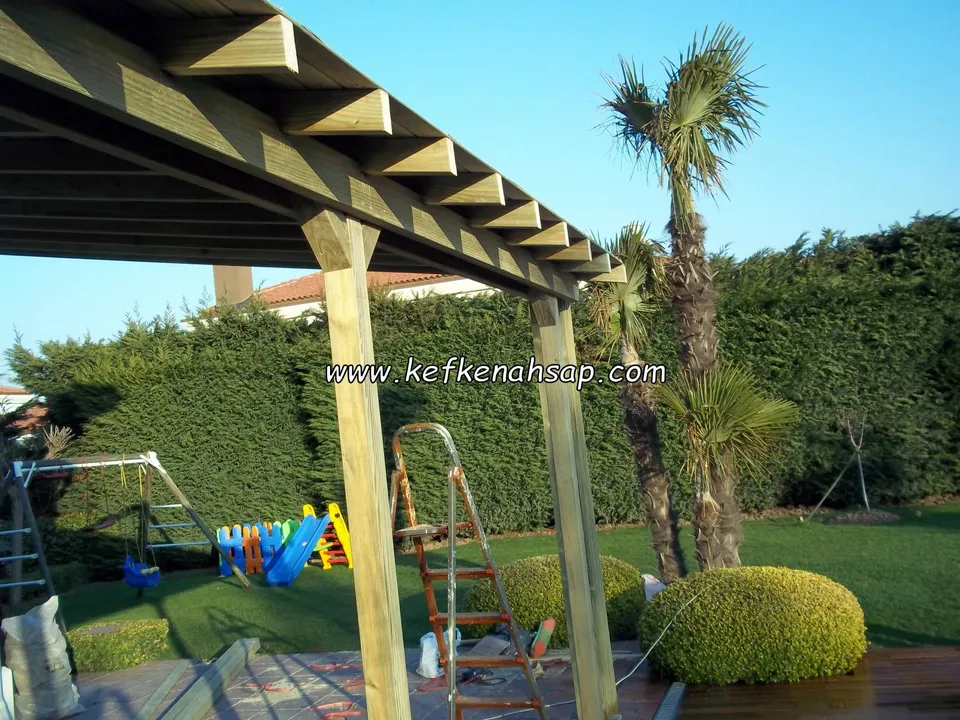
What determines the price of a pergola?
Four things drive the price of a timber pergola most: its size, the timber, the roof and the site. A larger area means more material and labour. Pressure-treated pine is the most economical option; hardwoods such as iroko cost more. Open rafters are the lightest solution; roof covering needs extra material and labour. The ground, the wall it fixes to, the colour and the details also change the price. Most of these factors only become clear once the site is seen and measured.
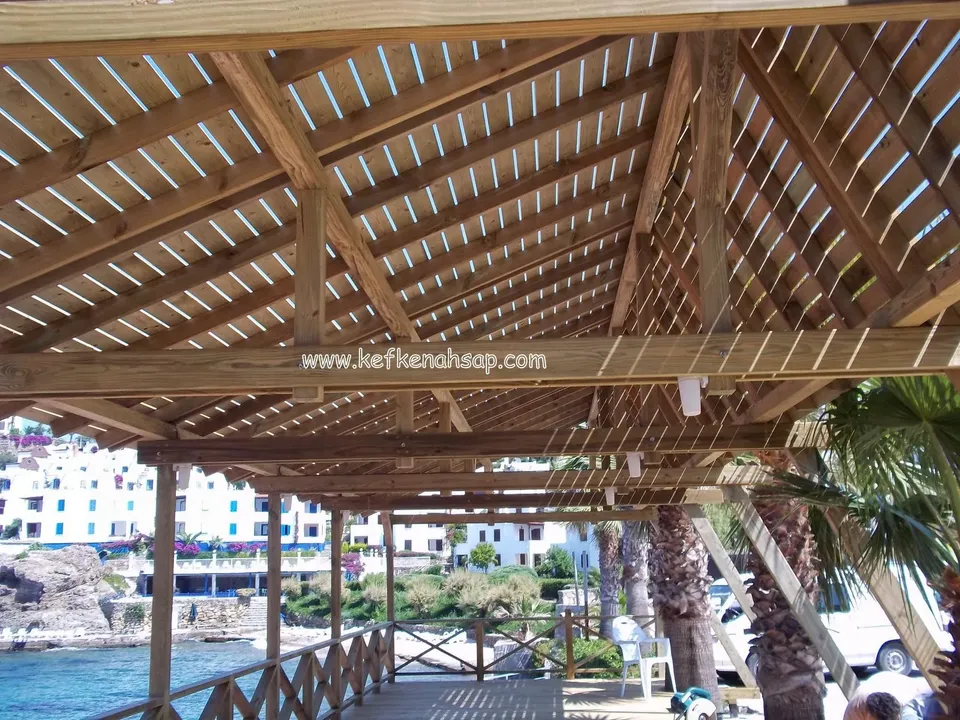
Pergola or gazebo?
A pergola is a shade structure on posts, usually topped with open beams or spaced slats; it is often fixed to the side of the house or a wall. A gazebo is a garden structure with a closed roof that usually stands on its own. An open pergola breaks the sun but does not keep the rain off; a gazebo can be used in the rain too. If you want a shaded seating area in front of the house, a pergola suits better; if you want a corner in the garden you can sit in when it rains, a gazebo does. Because a gazebo has a roof and often a floor, it needs more material and labour.
What is thermowood and where is it used?
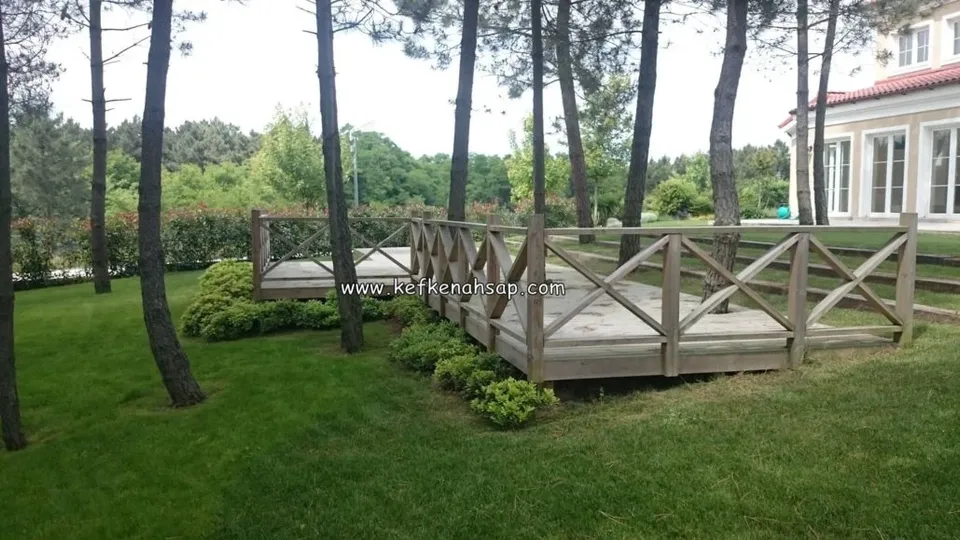
Thermowood is timber that has been heat-treated at high temperature in a controlled environment. No preservative is added; the wood is processed with heat and steam alone. The treatment reduces how much moisture the wood takes up and gives off, so thermowood swells and shrinks less and resists rot better. In return it becomes more brittle and loses bending strength. Sources generally recommend it for places with no ground contact, such as cladding, deck boards, fence panels and saunas. It is not recommended for load-bearing joists or for posts set into the ground.
Wood types: which timber for which job?
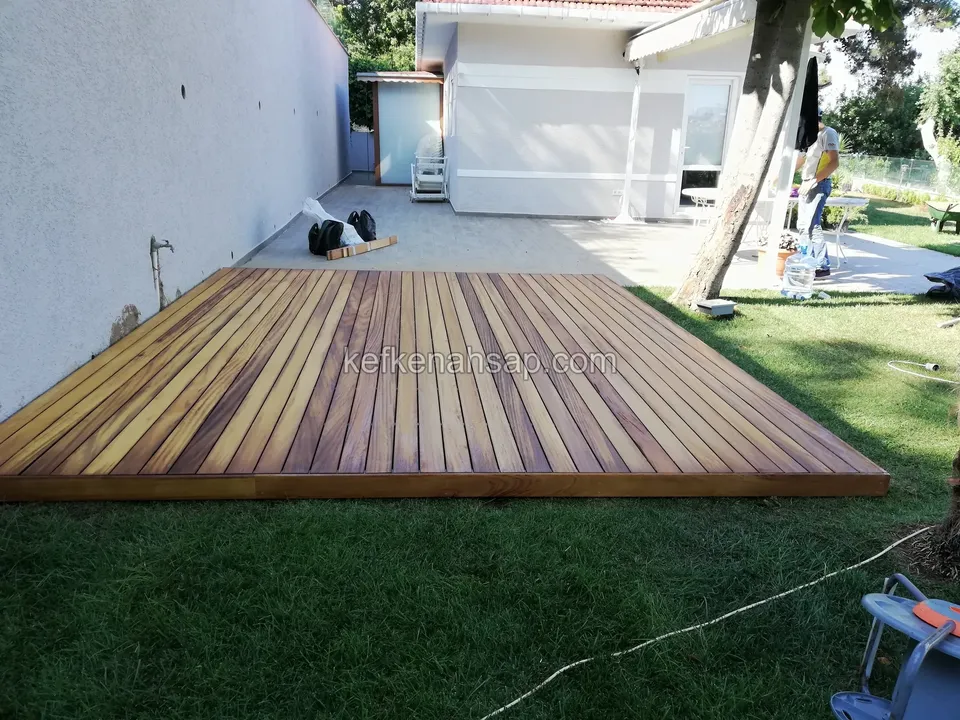
Timbers commonly used outdoors include pressure-treated pine, iroko, teak and thermowood. Pine is a softwood; outdoors it lasts only with pressure treatment and regular care, but it is the most economical option. Iroko and teak resist water and rot without treatment thanks to natural extractives in their heartwood. Thermowood is timber whose rot resistance has been improved by heat treatment. Indoors, hardwoods such as oak are also used for furniture, doors and stairs. The table below compares the common types.
How do you choose poolside decking?
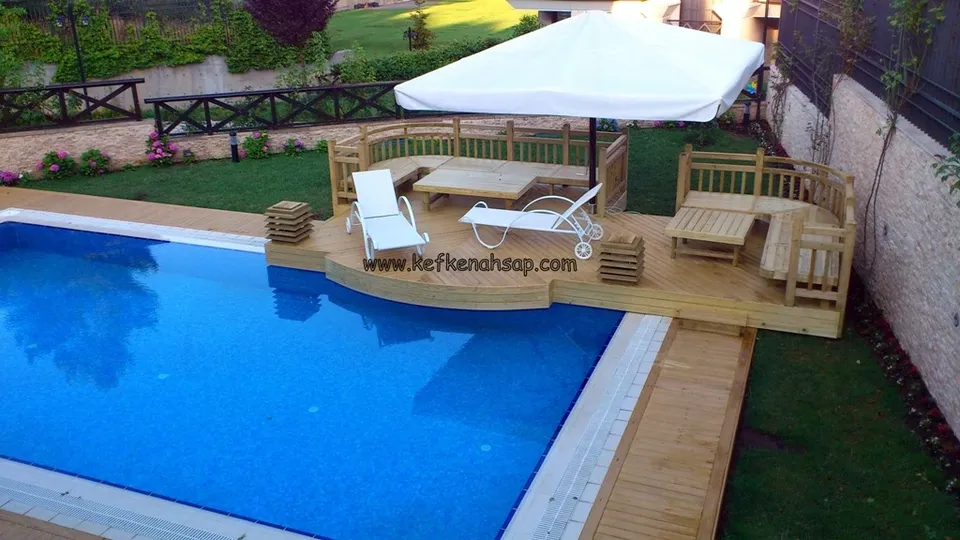
A poolside deck gets wet often, sits in the sun and is used barefoot. So three things matter: a wood with high resistance to water, a surface that does not splinter or get too slippery when wet, and a substructure where water does not collect underneath. Hardwoods with high natural durability, such as iroko or teak, are usually preferred by the pool. Pressure-treated pine is more economical but needs more frequent care. Chlorine or salt in pool water wears the surface, so regular rinsing and oiling are needed.
Iroko or teak? How they differ and where to use each
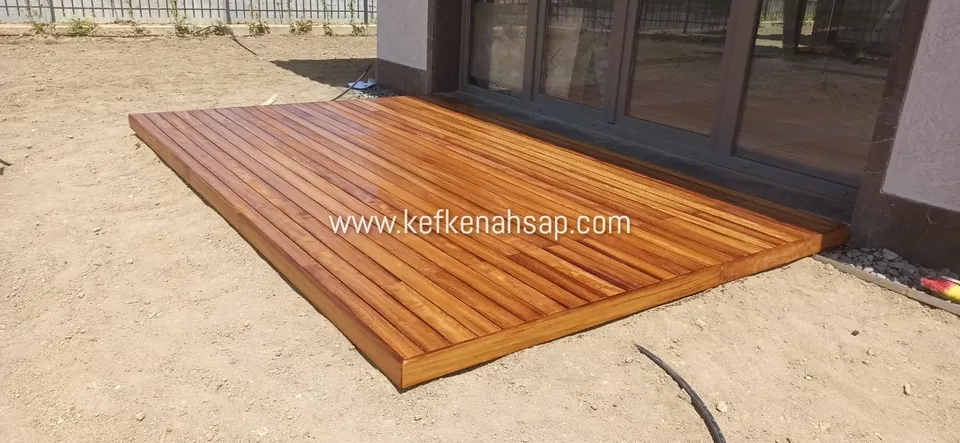
Iroko and teak are both tropical hardwoods with high natural durability, and both suit outdoor use. Teak is oilier and is the traditional choice for surfaces that stay wet, such as boat decks; it also costs more. Iroko comes close to teak in durability and looks, and usually costs less, so it is often a good balance for garden decks, pool surrounds and garden furniture. Left without care, both weather to a silver grey; keeping their natural colour takes regular oiling.
What is pressure-treated timber?
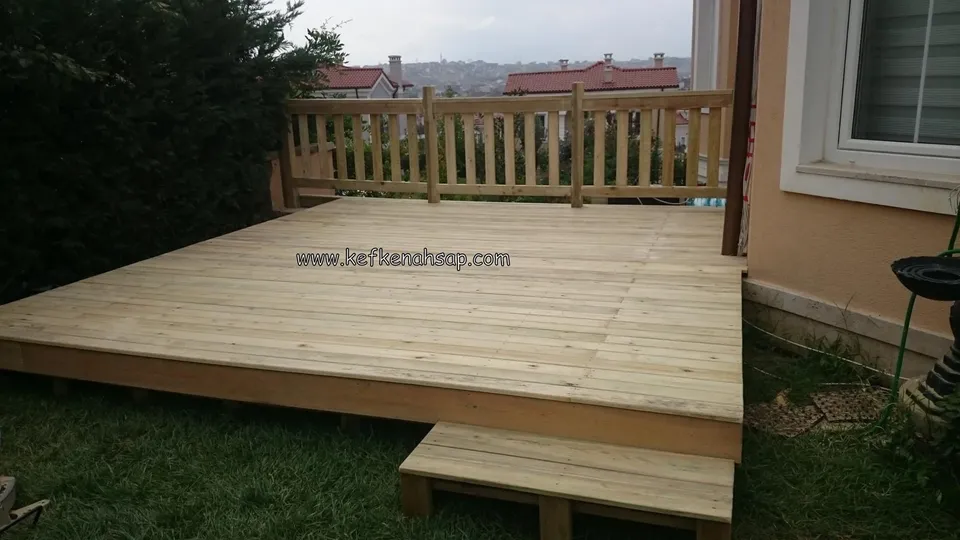
Pressure-treated timber is wood that has had a preservative forced into it under vacuum and pressure. The treatment protects woods with low natural durability, such as pine, against rot, fungi and insects. Outdoors, pressure-treated pine is commonly used for deck substructures, fences, railings, pergolas and gazebos. Treatment protects the inside of the wood, not the surface against the sun. So pressure-treated timber also greys and checks over time, and its surface needs regular oil or paint.