Wood types: which timber for which job?
Murat Şen · Published:
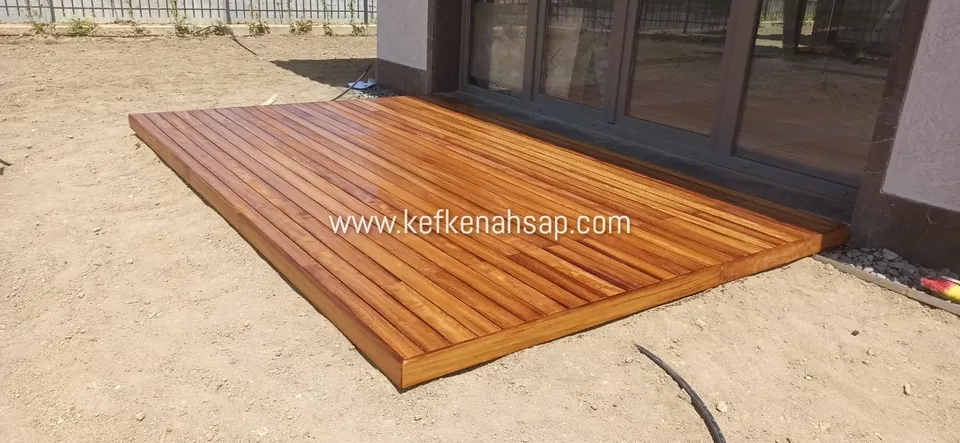
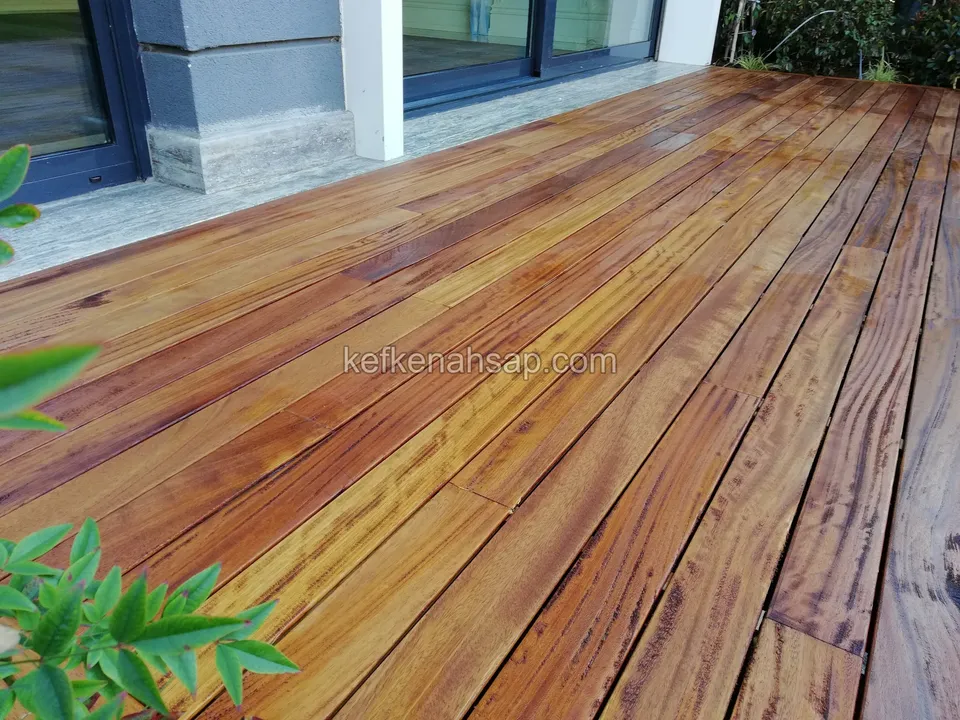
Timbers commonly used outdoors include pressure-treated pine, iroko, teak and thermowood. Pine is a softwood; outdoors it lasts only with pressure treatment and regular care, but it is the most economical option. Iroko and teak resist water and rot without treatment thanks to natural extractives in their heartwood. Thermowood is timber whose rot resistance has been improved by heat treatment. Indoors, hardwoods such as oak are also used for furniture, doors and stairs. The table below compares the common types.
In this guide · 6 sections
What is the difference between hardwood and softwood?
The split comes from the type of tree more than from how hard the wood is. Softwoods come from conifers: pine, spruce, cedar. Hardwoods come from broadleaved trees: oak, iroko, teak, meranti.
In general hardwoods are denser, heavier and harder to work. Softwoods are lighter, easier to work and more economical. The rule does not fit every species, but calling pine a hardwood is wrong.
How do wood types compare?
The values are averages from common references; they vary from tree to tree even within one species.
Species | Group | Outdoors | Approx. density (kg/m³) | Notes |
|---|---|---|---|---|
Scots pine (Pinus sylvestris) | Softwood | With treatment | 510 | Needs preservative treatment outdoors. Economical. |
Spruce (Picea abies) | Softwood | With treatment | 470 | Light, easy to work. Needs treatment outdoors. |
Cedar (Cedrus libani) | Softwood | Partly | 580 | High natural durability. Can be knotty; may cause problems with paint. |
Iroko (Milicia excelsa) | Hardwood | Yes | 660 | High natural durability. Usually oiled, not painted. |
Teak (Tectona grandis) | Hardwood | Yes | 660 | Very oily and highly water resistant. Its oil can stop paint from bonding. |
Oak (Quercus spp.) | Hardwood | Partly | 720 | Hard and heavy. Used for furniture, floors, stairs and doors. |
Meranti (Shorea spp.) | Hardwood | With treatment | 550–710 | Varies by species. Needs treatment outdoors. |
Sapele (Entandrophragma cylindricum) | Hardwood | Partly | 640 | Moderate natural durability. |
Thermowood | Heat-treated (mostly pine or spruce) | Yes (out of ground contact) | Depends on the base timber | More dimensionally stable. More brittle, with lower bending strength. |
"Partly" means the species can be used outdoors depending on conditions and care.
What is pressure treatment for?
Pressure treatment forces a preservative deep into the wood. It improves the resistance of low-durability timbers such as pine to rot and insects outdoors. The greenish tint of most treated pine comes from this process.
Treatment protects the inside of the wood, not the surface against sun. Treated pine still greys and cracks over time, so its surface needs regular oil or paint. "Pressure-treated timber needs no maintenance" is not true.
What is Thermowood?
Thermowood is made by heat-treating timber at high temperature in a controlled environment. "ThermoWood®" is a trade name; the general term is thermally modified timber, which this guide calls thermowood. It is usually made from pine or spruce.
Heat treatment reduces how much the wood takes up and releases moisture, so it swells and shrinks less, and its resistance to rot improves. The colour darkens during treatment. The trade-off is that the wood becomes more brittle and its bending strength drops. Thermowood also greys in the sun and is oiled to keep its colour.
Why does wood swell and crack?
Wood takes up and releases moisture from its surroundings. It swells as it takes up moisture and shrinks as it dries, mostly across the width of the board. That is why cracks open in wood that dries quickly and unevenly.
So outdoor boards are laid with gaps between them, and timber for indoor work must be well dried. Furniture or doors made from undried timber keep moving after fitting: doors stick and joints open.
Which timber should you choose for which job?
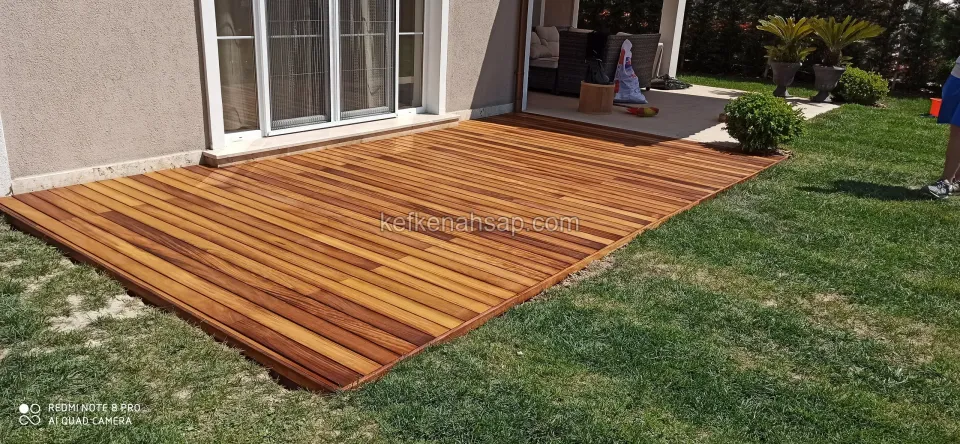
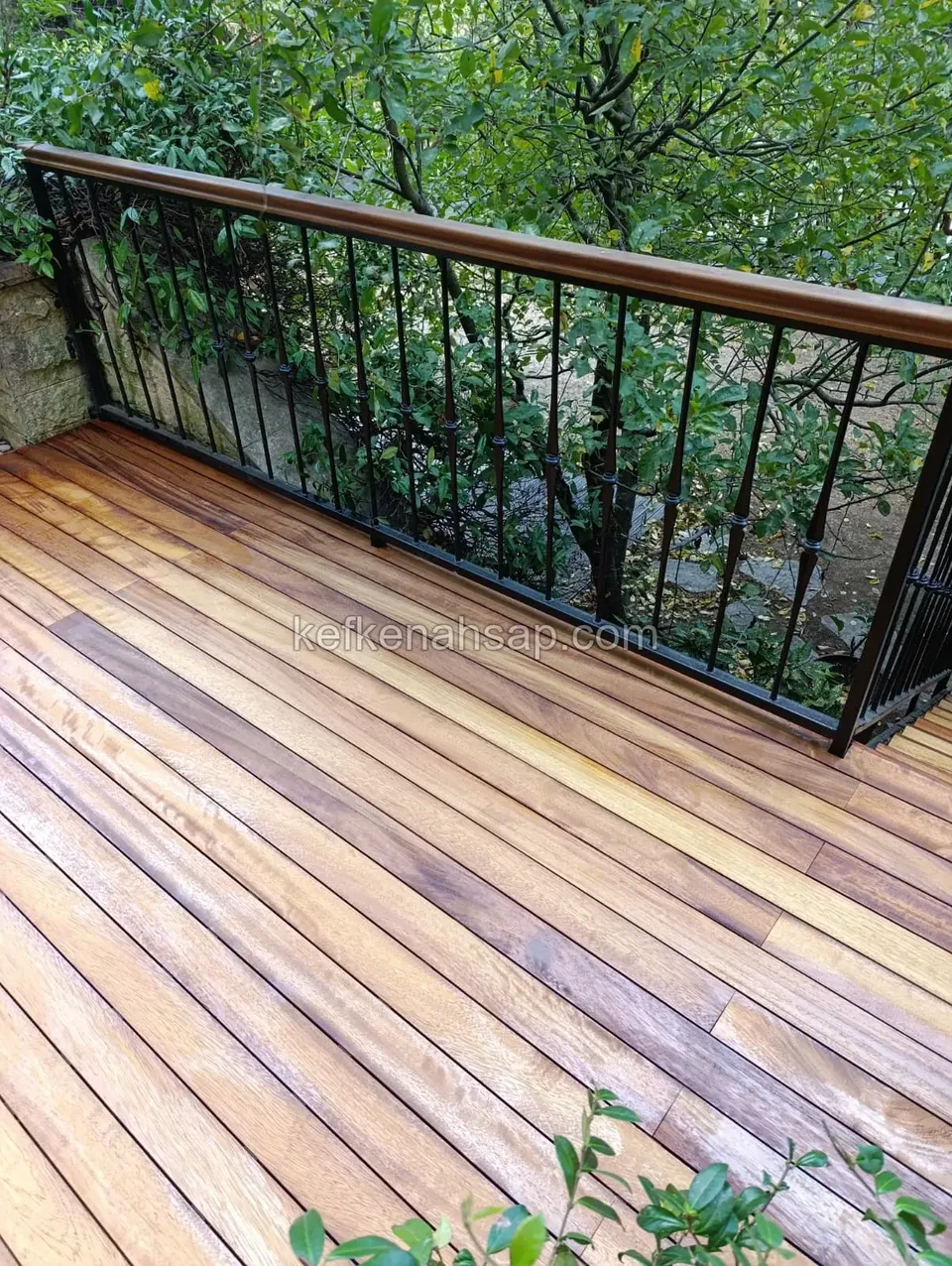
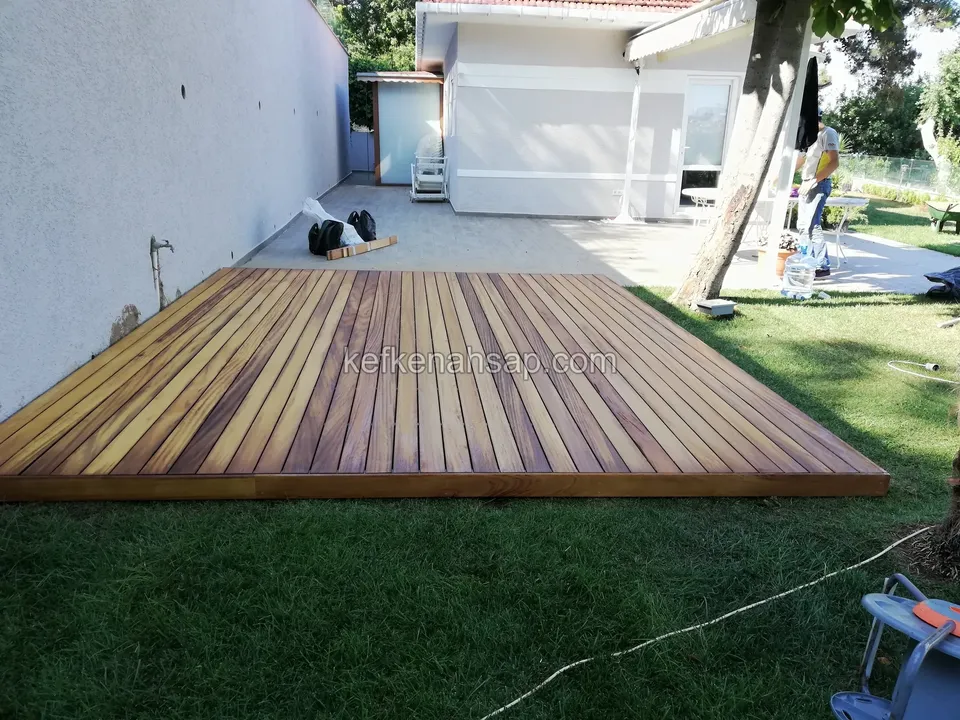
- Garden decks, terraces: pressure-treated pine (economical) or iroko (durable). More in Iroko or teak?
- Pergolas, gazebos, fences: usually pressure-treated pine.
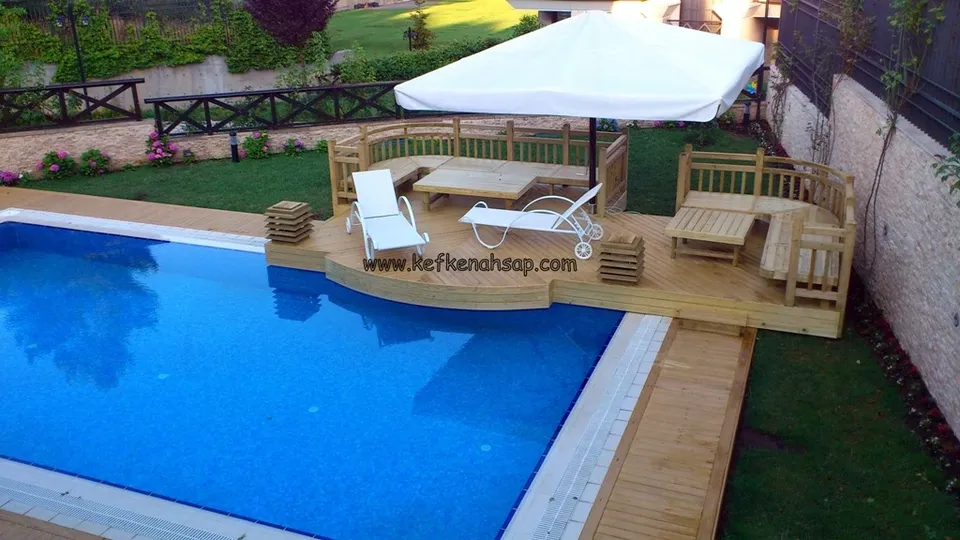
- Pool surrounds: iroko or teak.
- Boats: teak.
- Indoor furniture, doors, stairs: hardwoods such as oak, or well-dried pine.
The choice depends on how much sun and water the area gets, the expected life and the budget. We look at the site together during the visit and decide.
Frequently asked questions
- Is pine a hardwood?
- No. Pine is a conifer and counts as a softwood.
- Does pressure-treated timber need maintenance?
- Yes. Treatment protects the inside of the wood, not the surface. Oil or paint the surface regularly to limit greying and cracking.
- How does Thermowood differ from pressure-treated pine?
- Pressure treatment adds a preservative to the wood. Thermowood is only heat-treated, which makes it more dimensionally stable but more brittle.
- Which timber lasts longest outdoors?
- Among commonly used timbers, teak and iroko heartwood are among the most naturally durable. The right choice still depends on where it is used and on budget.