What is pressure-treated timber?
Murat Şen · Published:
Pressure-treated timber is wood that has had a preservative forced into it under vacuum and pressure. The treatment protects woods with low natural durability, such as pine, against rot, fungi and insects. Outdoors, pressure-treated pine is commonly used for deck substructures, fences, railings, pergolas and gazebos. Treatment protects the inside of the wood, not the surface against the sun. So pressure-treated timber also greys and checks over time, and its surface needs regular oil or paint.
In this guide · 7 sections
How is timber pressure-treated?
The common method uses vacuum and pressure:
- Dried timber is loaded into a large closed cylinder.
- A vacuum draws the air out of the cylinder and out of the wood cells.
- The cylinder is filled with preservative solution and pressure is applied. The solution works in between the fibres.
- The pressure is released, the excess solution is drawn back, and the timber is left to dry.
Brushing or dipping also protects wood, but the preservative stays close to the surface. Pressure treatment takes it deeper. The outer part of pine (sapwood) takes treatment well. The inner part of the tree (heartwood) and some species such as spruce take it less readily.
Why is pressure-treated timber green?
Most preservatives contain copper compounds. The greenish colour seen on most pressure-treated pine comes from them. Some products give a brown tone instead. The colour depends on the product. How dark the surface looks does not show how deep the treatment has gone; the colour in a cross-section does.
The green tint fades in the sun over time and the wood turns grey. Oil or paint can give the wood the colour you want.
Where is pressure-treated timber used?
Common outdoor uses are:
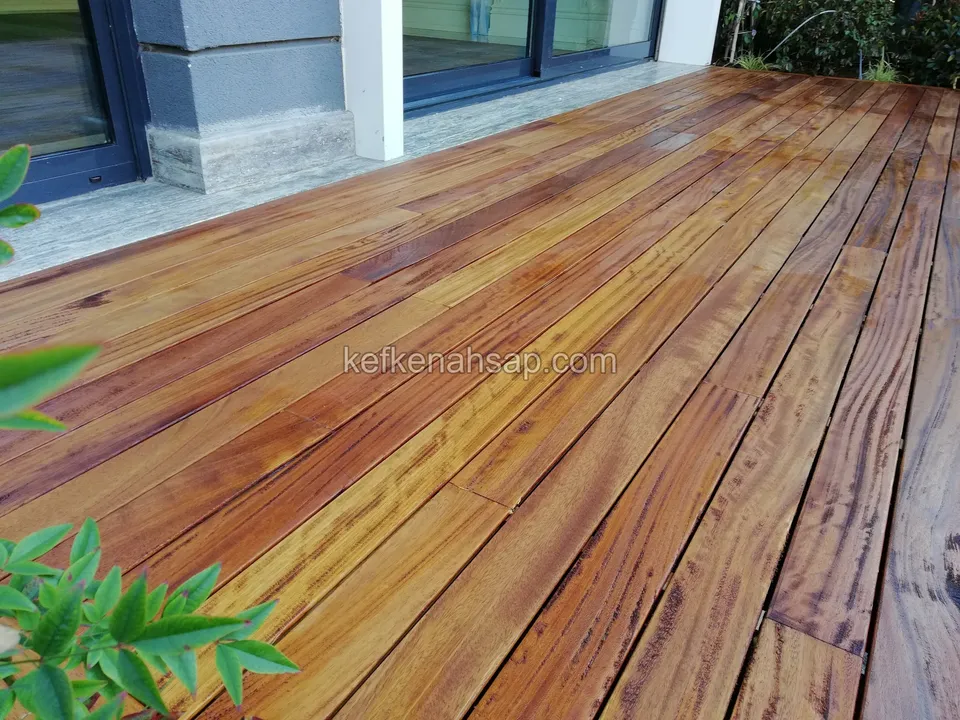
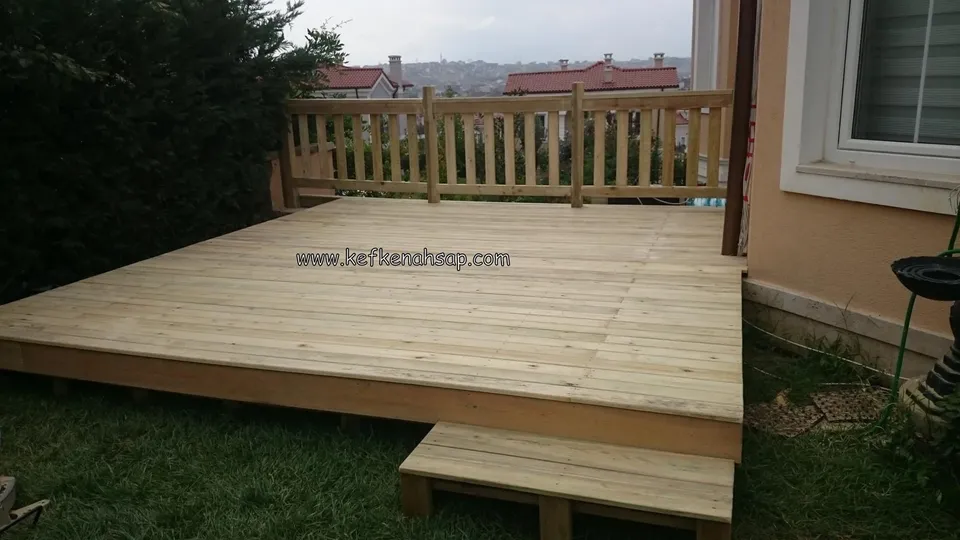
- Deck boards and the joists beneath them
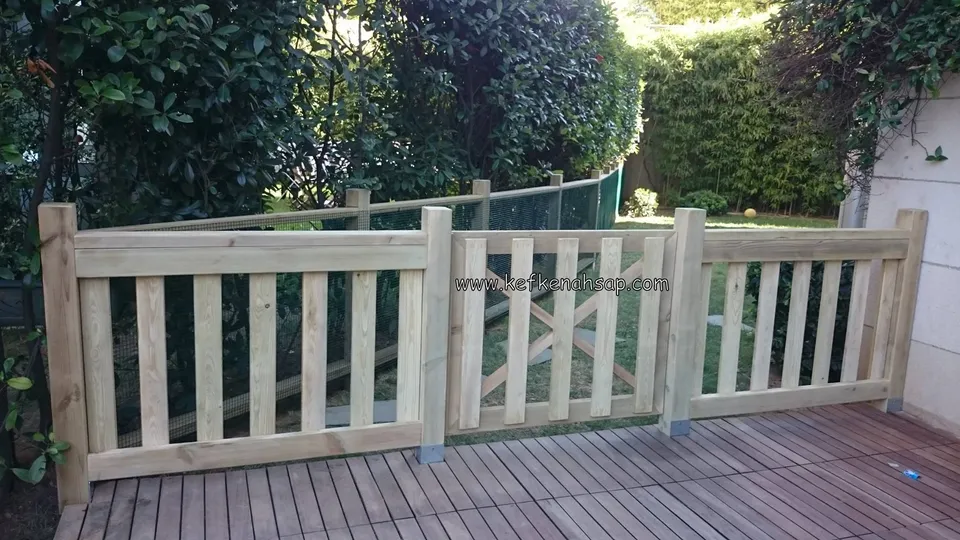
- Garden fences, railings and garden gates
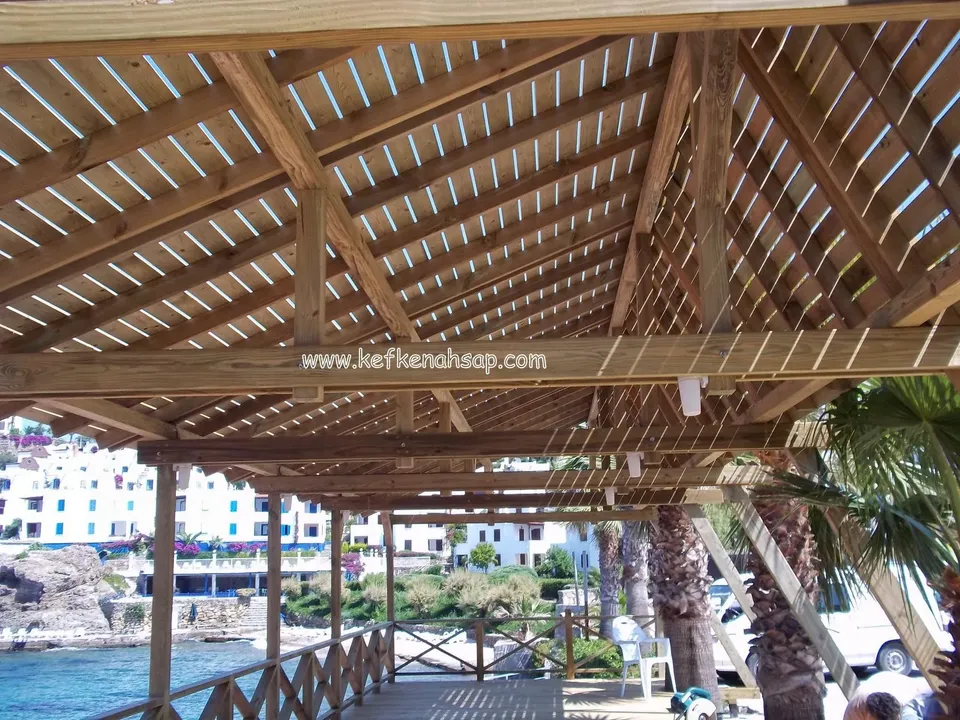
- Pergolas, gazebos and arbours
- Garden steps, planters and garden furniture
- Waterside walkways and footbridges
A post set into the ground and a railing board that never touches the ground are not in the same conditions. That is why treated timber comes in different levels of protection for different uses. For parts that go into the ground or water, choose a product stated to be suitable for that use.
Does pressure-treated timber need maintenance?
Yes. The saying that treated timber needs no maintenance is not true. Treatment protects the inside of the wood against rot and insects. The surface is still exposed to sun and water. Treated pine that is left without care turns grey, checks on the surface and raises its grain.
Oil or paint protects the surface. Horizontal surfaces in the sun need care more often than vertical ones. We describe the steps in the deck maintenance guide.
Cutting or drilling during installation exposes the inner wood that the treatment reached less. That is why applying an end-grain preservative to cut ends and holes is common practice.
How can you tell timber is well treated?
The quality of treatment is hard to judge from the outside. A few signs help:
- Cross-section: on a cut piece, the colour difference shows how deep the preservative has gone. If the colour runs through the sapwood, the treatment has penetrated well.
- Intended use: the surest way is to ask the supplier what use the product was treated for: ground contact or above ground?
- Dryness: timber that has not dried enough after treatment is heavy and damp, and shrinks a lot after installation.
- The timber itself: treatment does not fix cracked, warped or very knotty timber. It protects the wood; it does not change its quality.
What should you watch for when working with treated timber?
- Dust: wear a dust mask and gloves when cutting and sanding.
- Offcuts: offcuts and sawdust from treated timber are not burned in a stove or barbecue.
- Drying: new treated timber can arrive damp. As it dries it shrinks a little and the gaps between boards open up. Apply oil or paint once the wood is dry.
- Indoors: treated timber is generally not used indoors or on surfaces that touch food, such as chopping boards or kitchen worktops.
- Fixings: copper-based preservatives can speed up corrosion of some metals, so stainless or galvanised screws and fixings are preferred.
Pressure-treated pine or a hardwood?
Pressure-treated pine is economical and easy to work. With regular care it lasts well outdoors. Hardwoods such as iroko and teak get their durability from natural extractives in the heartwood; they need no treatment, but they cost more. Thermally modified timber is a third option.
For comparisons see the wood types, Iroko or teak? and What is thermowood? guides. You can see our work on the railings and fences and pergolas and gazebos pages.
Frequently asked questions
- Does pressure-treated timber need maintenance?
- Yes. Treatment protects the inside of the wood, not the surface against the sun. Regular oil or paint reduces greying and checking.
- Can pressure-treated timber be painted?
- Yes. Oil or paint goes on once the wood is completely dry. A coat applied to wet wood does not hold.
- Does the green colour go away?
- It fades in the sun over time and the wood turns grey. Oil or paint gives the colour you want.
- Can pressure-treated timber be used indoors?
- It generally is not. Treatment is mostly meant for outdoor and damp locations. In dry interiors, well-dried timber is enough.
- Should cut ends be treated?
- Cuts and drill holes expose inner wood that the treatment reached less, so applying an end-grain preservative there is common practice.