What determines the price of a pergola?
Murat Şen · Published: · Updated:
Four things drive the price of a timber pergola most: its size, the timber, the roof and the site. A larger area means more material and labour. Pressure-treated pine is the most economical option; hardwoods such as iroko cost more. Open rafters are the lightest solution; roof covering needs extra material and labour. The ground, the wall it fixes to, the colour and the details also change the price. Most of these factors only become clear once the site is seen and measured.
In this guide · 6 sections
How does size change the price?
The first factor is the area. A larger area needs more posts, beams and roofing. Span matters too: the further apart the posts, the deeper the beams must be. Covering a wide area with fewer posts can take more material than covering it with more posts.
Height matters as well. Non-standard heights need longer posts and sometimes scaffolding.
How does the timber affect the price?
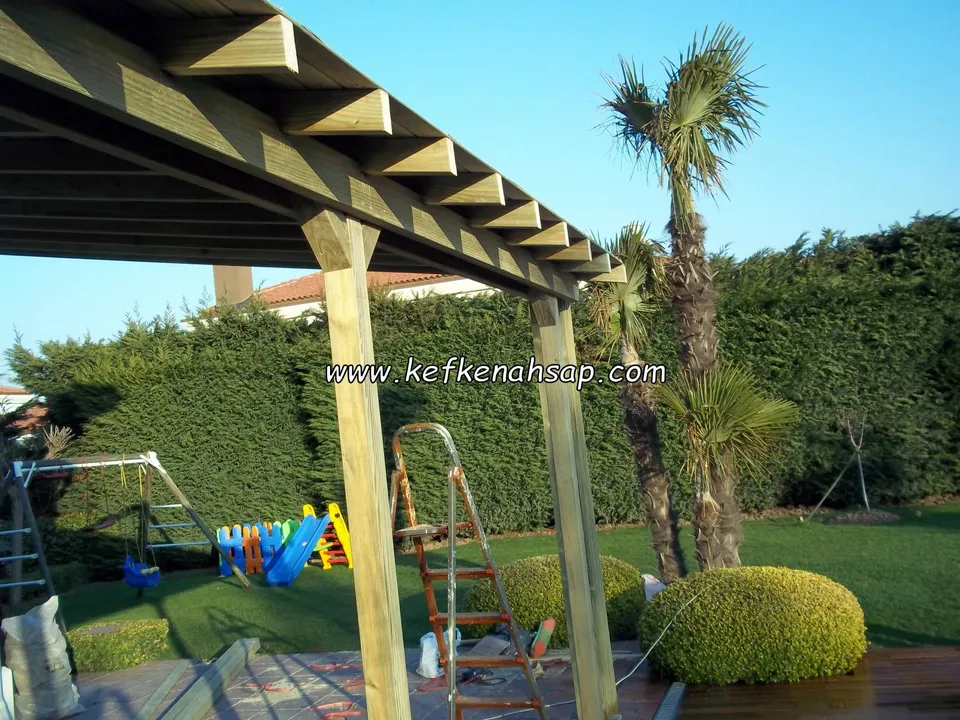
Pergola posts and beams are usually made from pressure-treated pine. It is economical and, with regular care, lasts well outdoors.
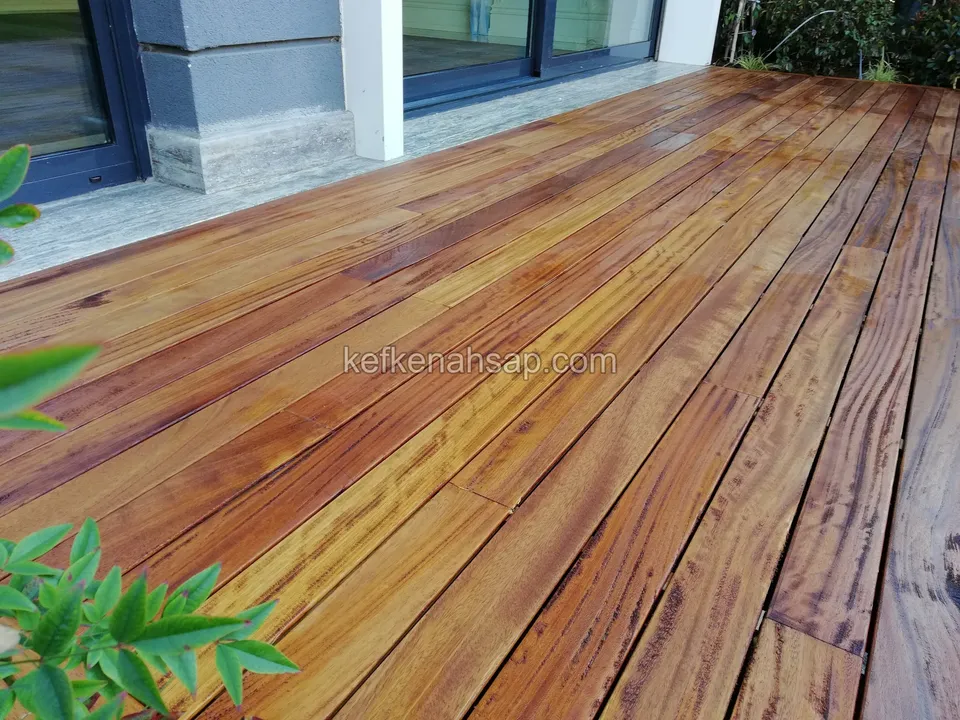
Hardwoods such as iroko or teak cost more. They are imported through a long supply chain, and being hard they blunt cutting tools quickly and take longer to work. In return they need no pressure treatment. See the wood types guide for the differences.
How does the roof change the price?
Top | What it gives | Effect on cost |
|---|---|---|
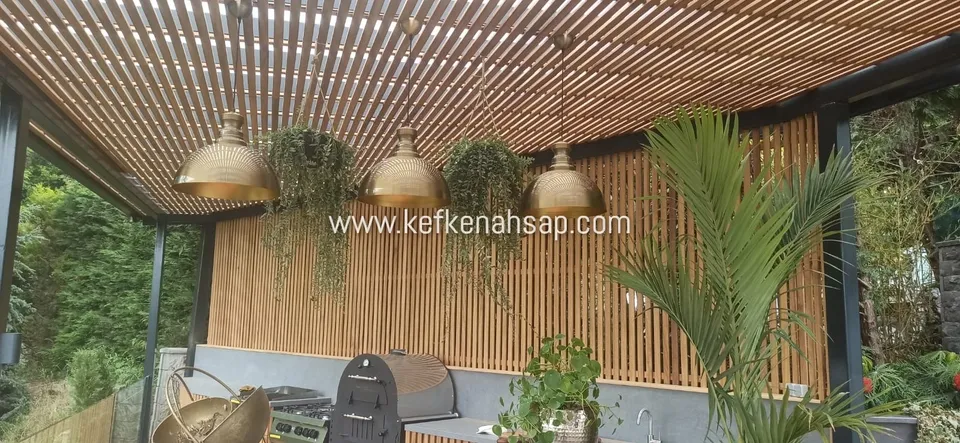
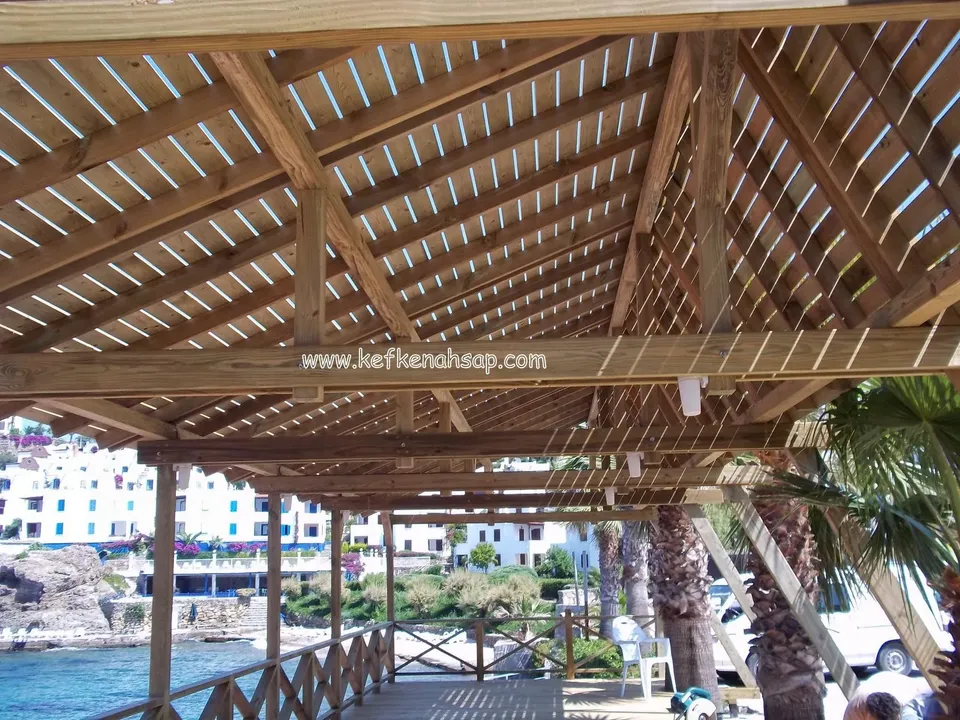
Open rafters | Shade from plants | Lightest solution |
Closed roof with timber boarding | Timber boarding under a covering such as shingles | More material and labour |
Non-timber parts such as awnings, clear roofing and gutters need separate materials and installation and are priced on top. We bring in the right specialist for this work and hand the pergola over complete. The more closed the top, the more load the structure carries and the more rainwater drainage has to be planned.
Why does the site affect the price?
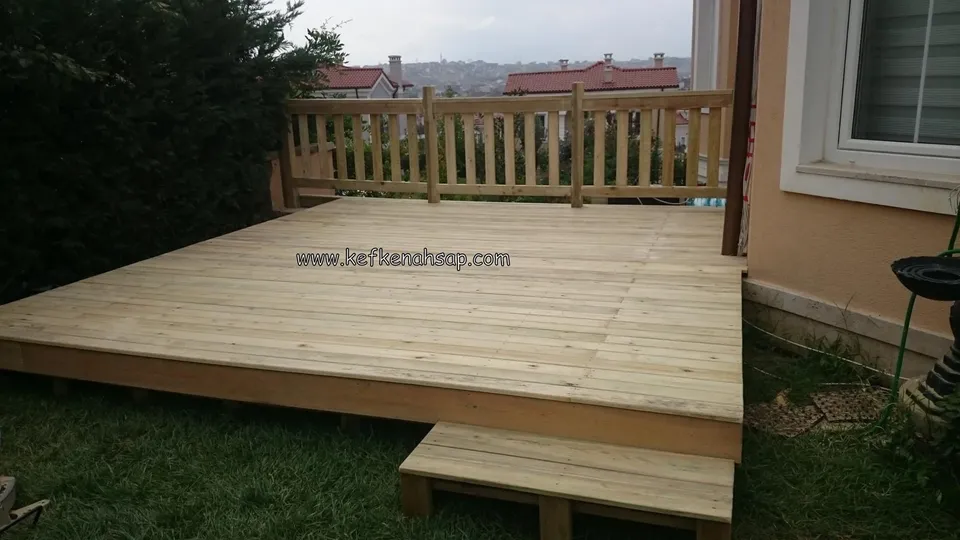
- Ground: posts can stand on concrete, stone, soil or a deck. On soil, fixing the posts needs extra preparation.
- Wall fixing: if the pergola attaches to the house, the wall construction decides how it is fixed.
- Access: the route for materials, floors and stairs can lengthen installation, especially for roof terraces.
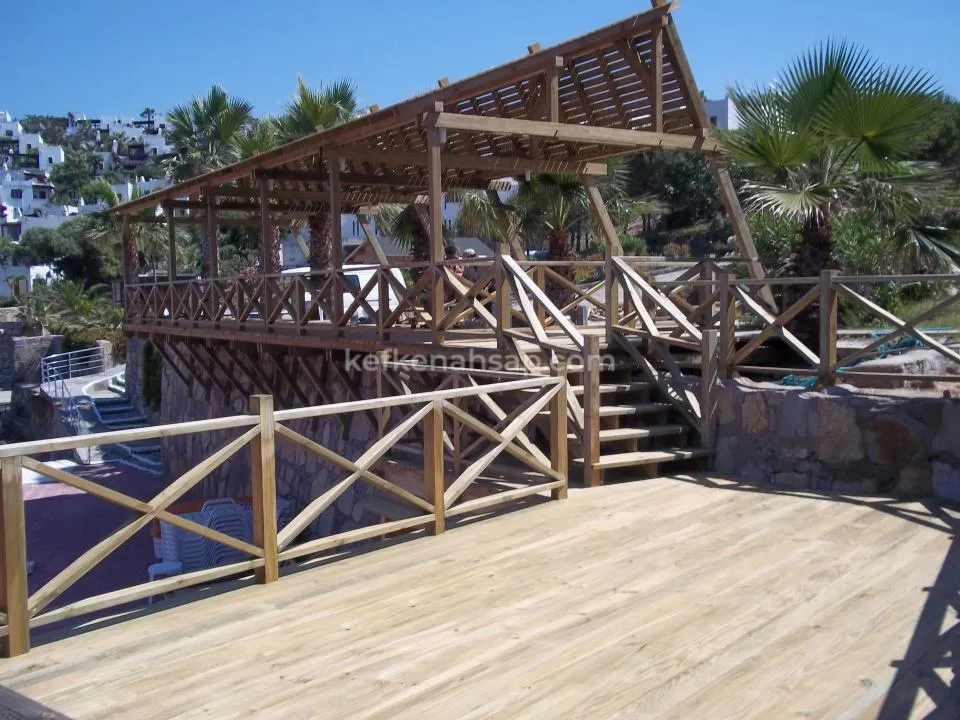
- Slope: on sloping ground the posts are cut to different lengths.
Do colour, paint and details affect the price?
They do. A clear oil that keeps the natural colour is the simplest option. Tinted oil and opaque paint take extra coats and labour; light colours such as white usually need more coats. Details such as shaped rafter ends, decorative brackets, side panels, built-in planters or seating add both material and labour.
What information is needed to firm up the price?
Most of the factors above cannot be settled without seeing the site. Size, ground, the wall it fixes to and access change the price directly; the timber and the choice of top also need to be decided.
When you ask about price, this information makes the conversation easier:
- The approximate size of the area and a few photos.
- Whether the pergola attaches to the house or stands alone.
- Whether the top is open or closed.
- Any colour preference and examples you like.
You can see our work on the pergolas and gazebos page.
Frequently asked questions
- Is pergola price calculated per square metre?
- Area is an important factor but not the only one. Span, height, timber, roof and the site also change the price.
- What is the most economical pergola?
- Usually an open-rafter pergola in pressure-treated pine. Cost rises with a closed roof and with hardwood.
- Which information changes the price most?
- The size of the area, the state of the ground and the wall it fixes to, access, the timber and whether the top is open or closed.
- Can a roof be added to a pergola later?
- Often yes, but the beams must be checked for the extra load. If a roof is likely later, it is better to say so from the start.