
Decking and Flooring
We fabricate and lay timber decking with its sub-frame for gardens, terraces and pool surrounds, made to measure.
Calculate your materialsWork out timber m³, extra items and the total with VAT.
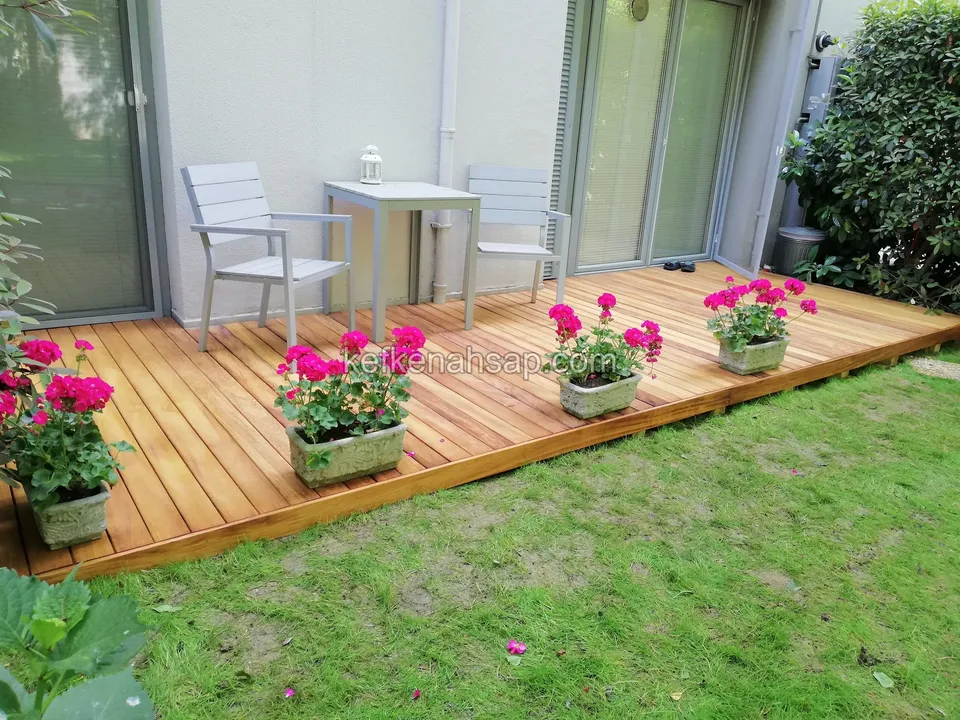
Our work
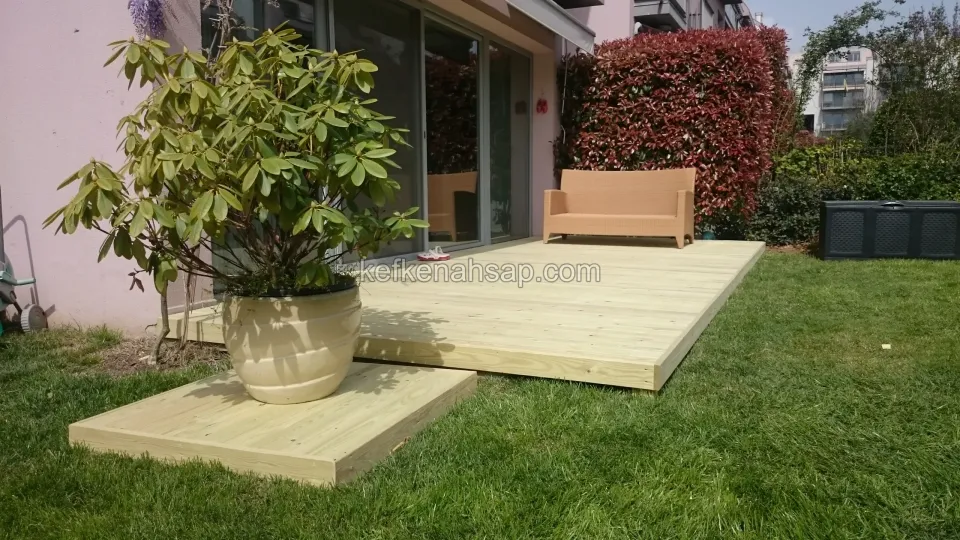
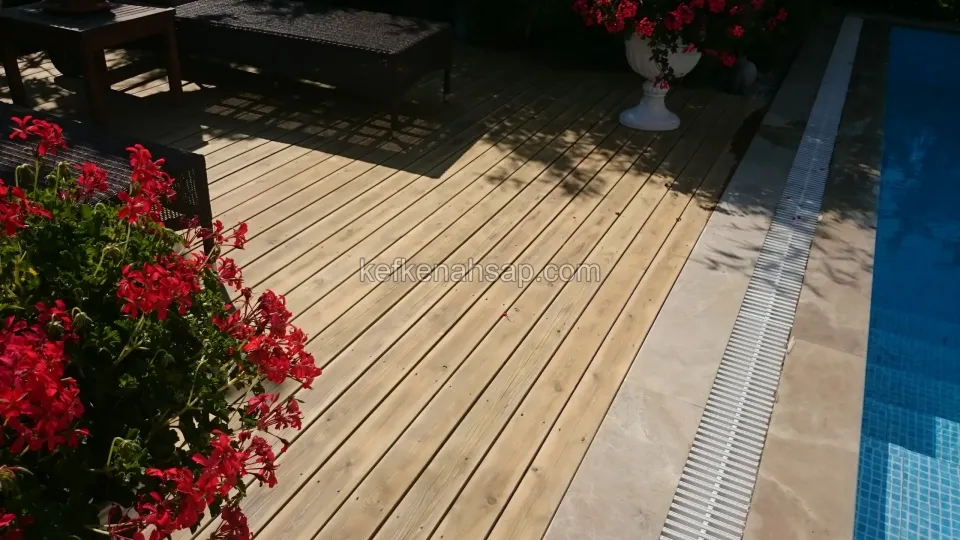
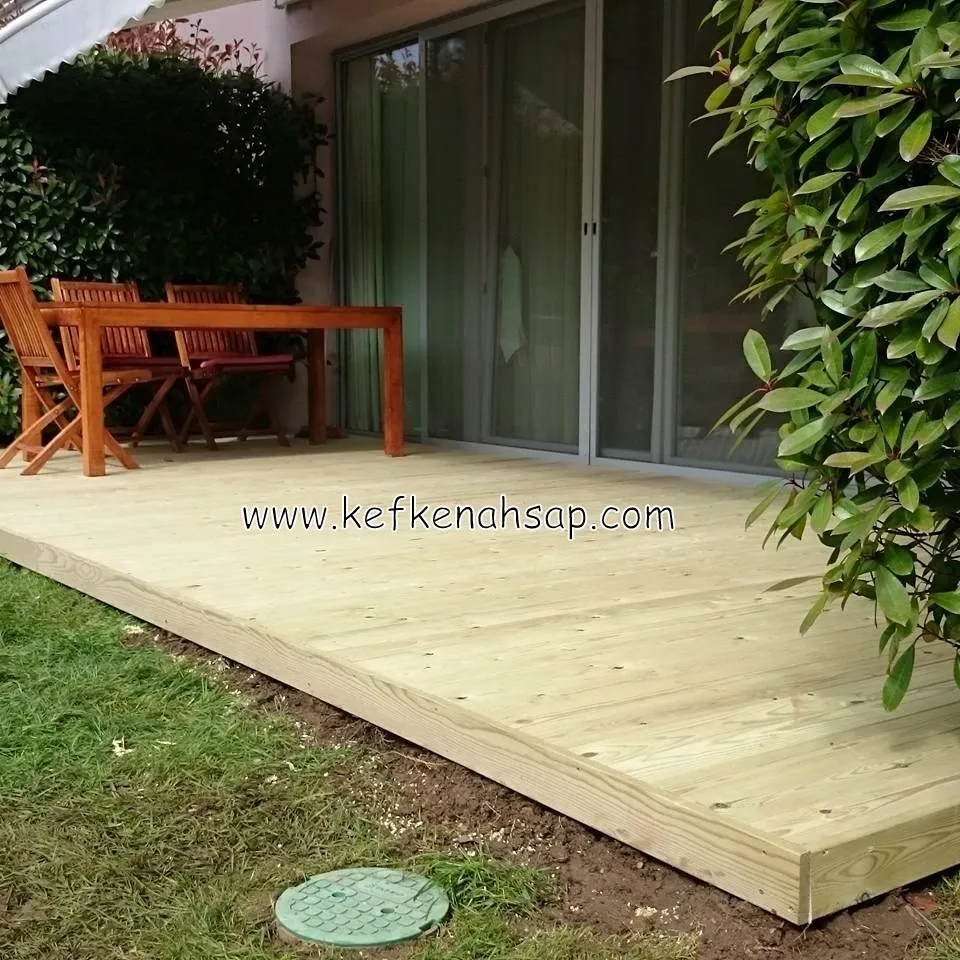
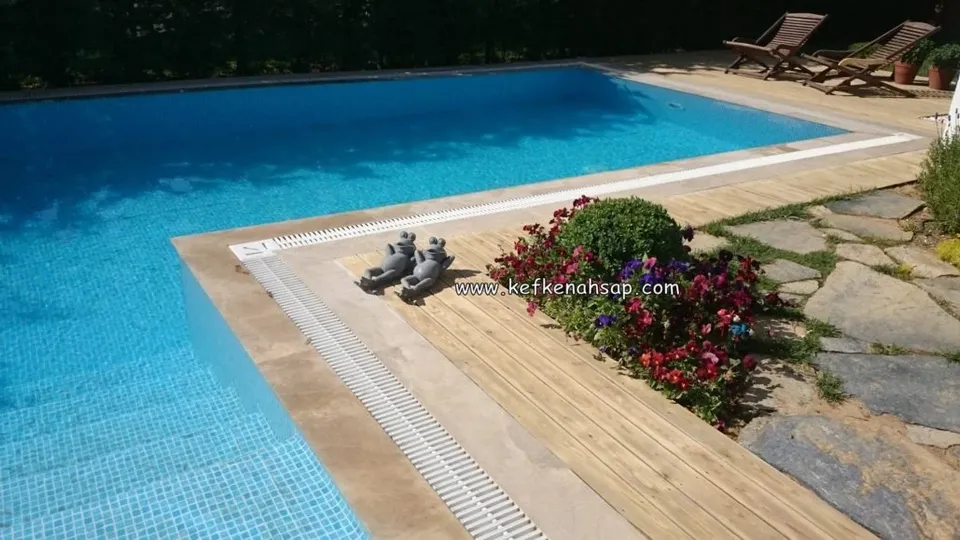
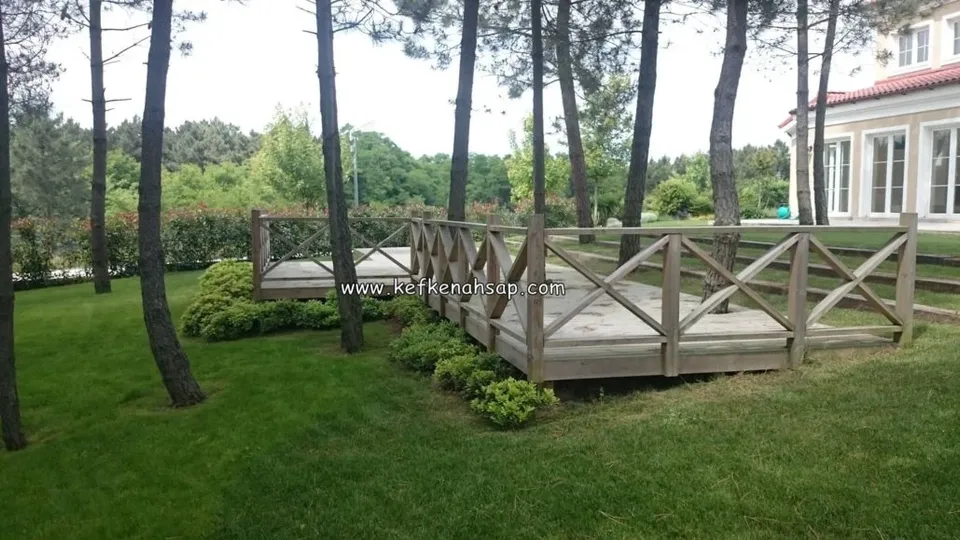
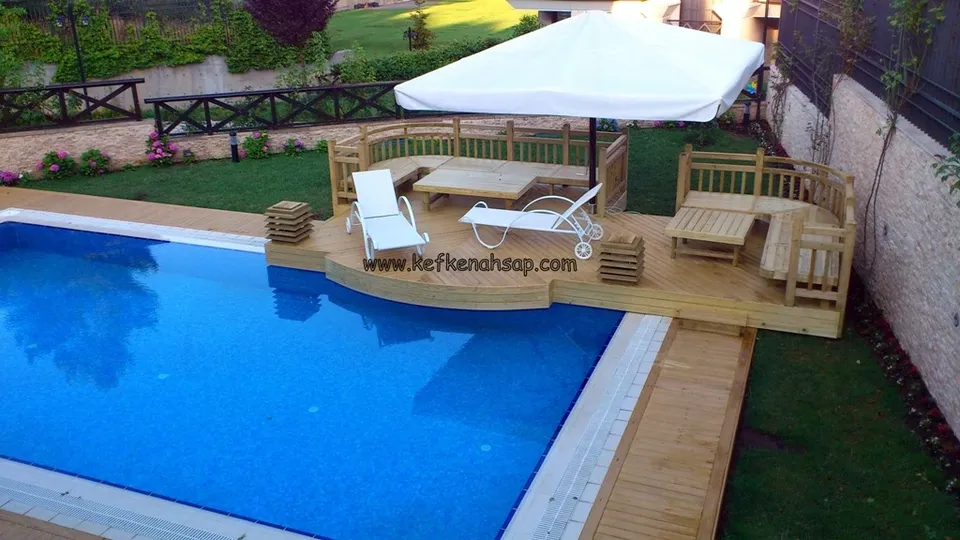
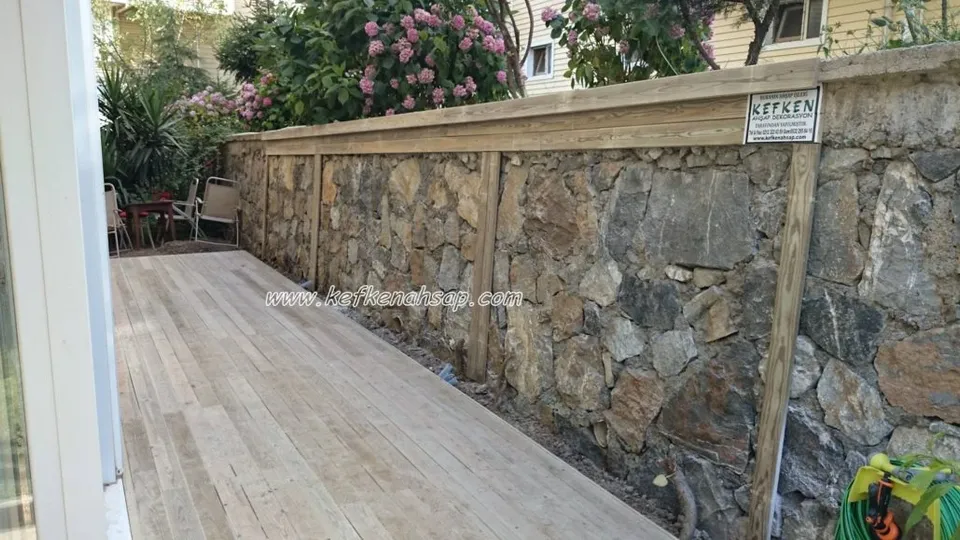
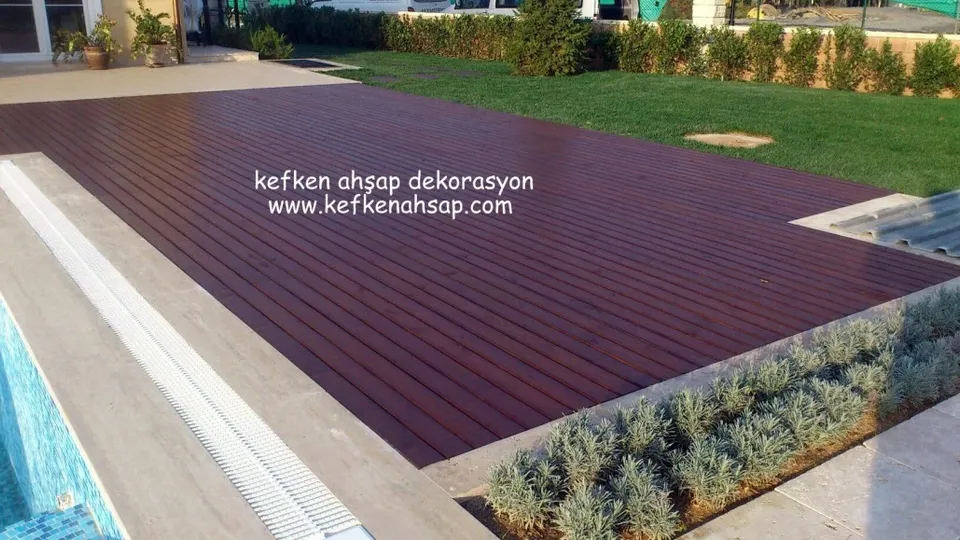
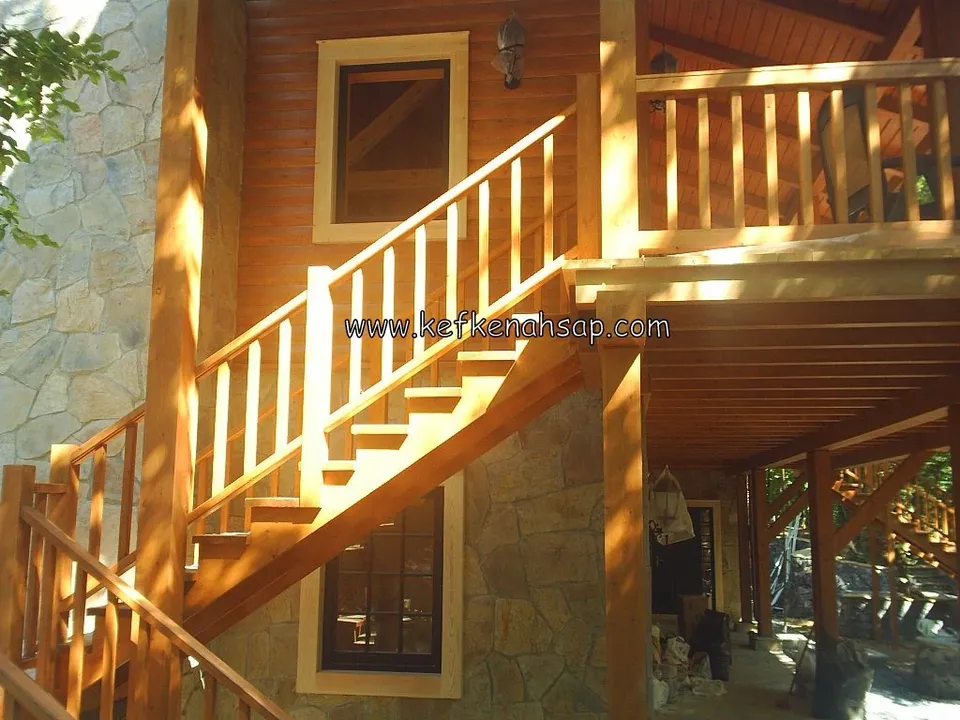
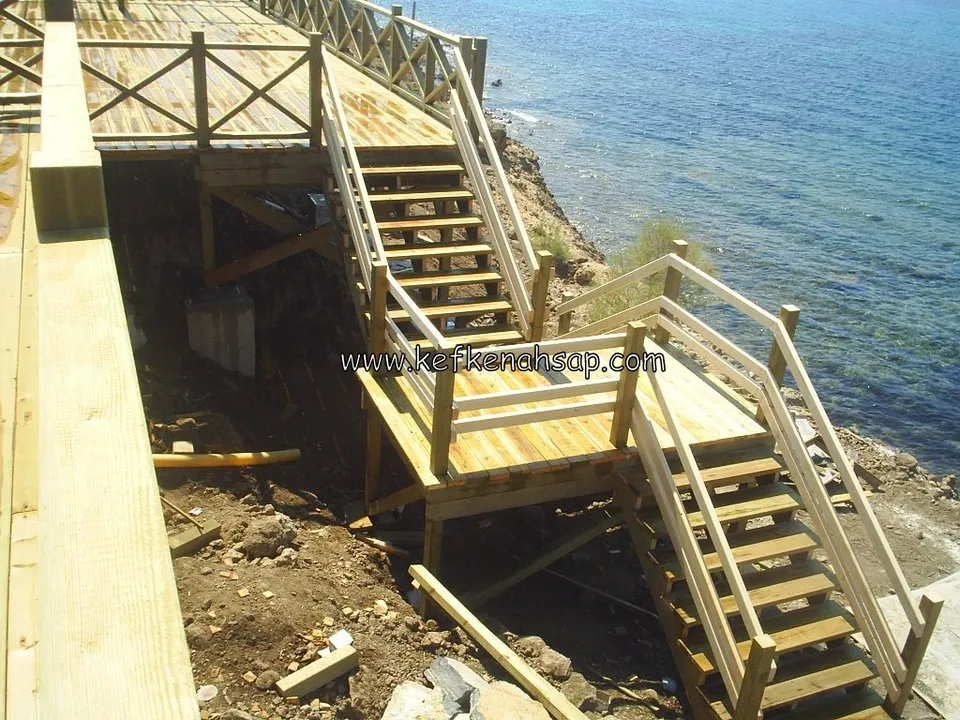
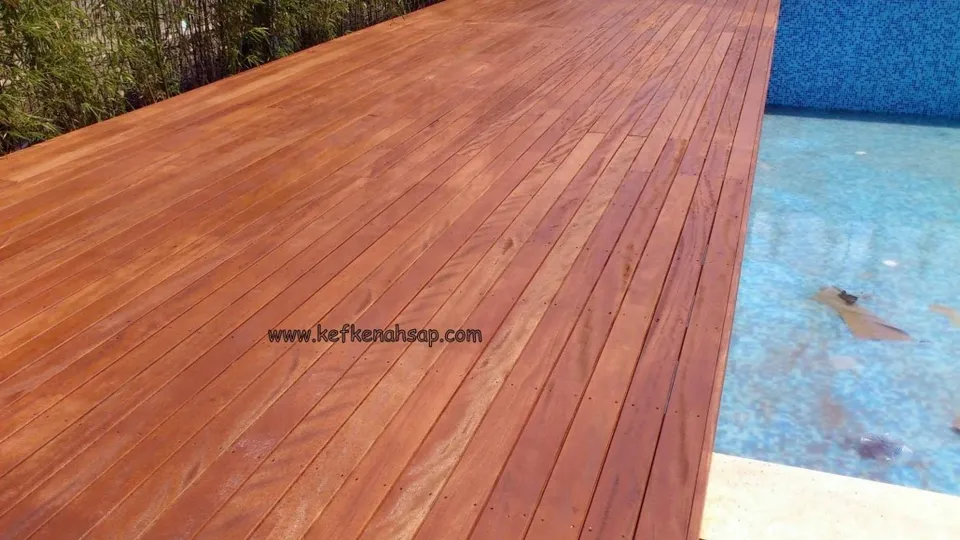
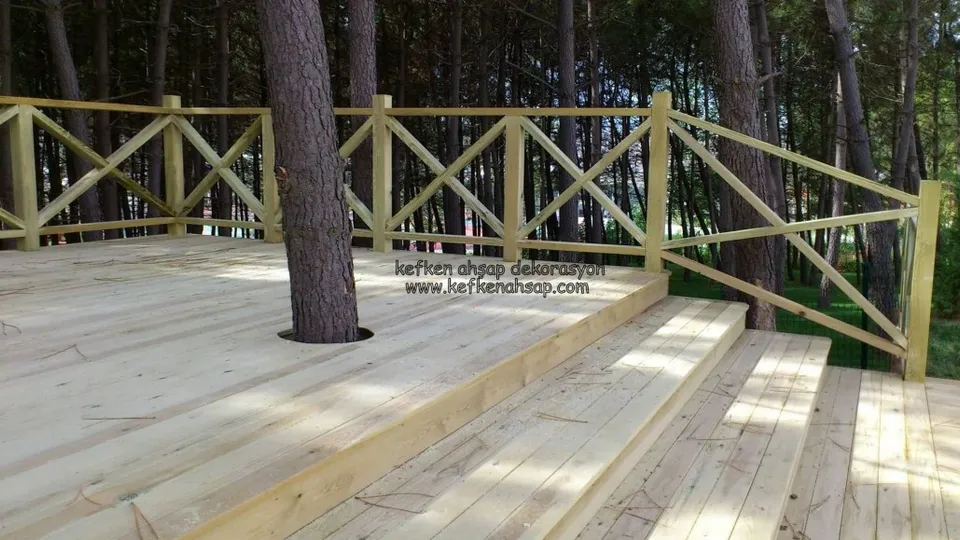
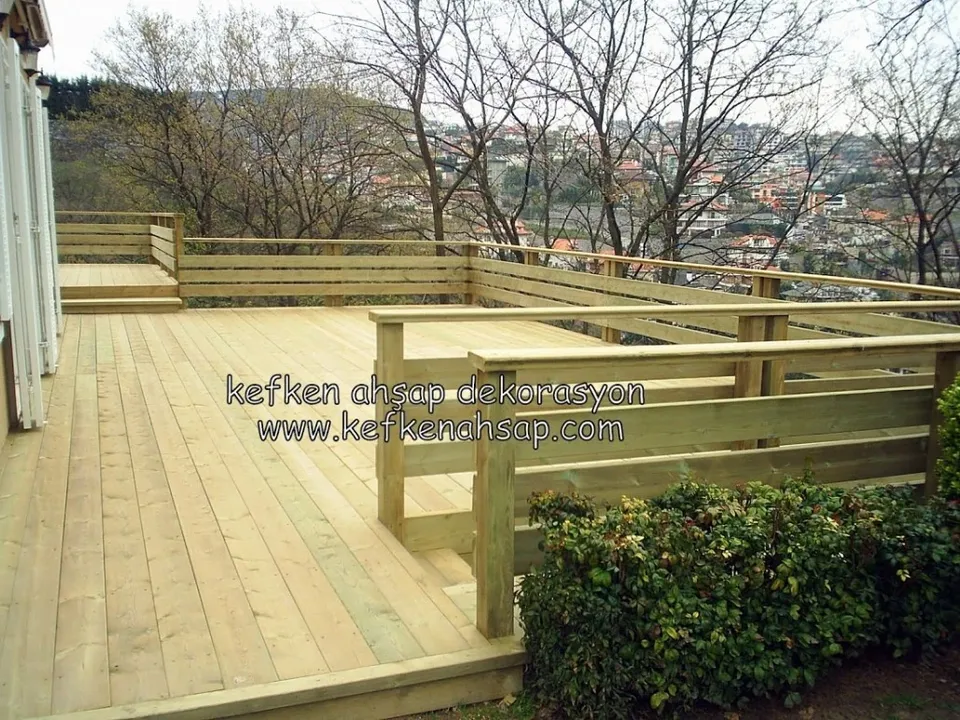
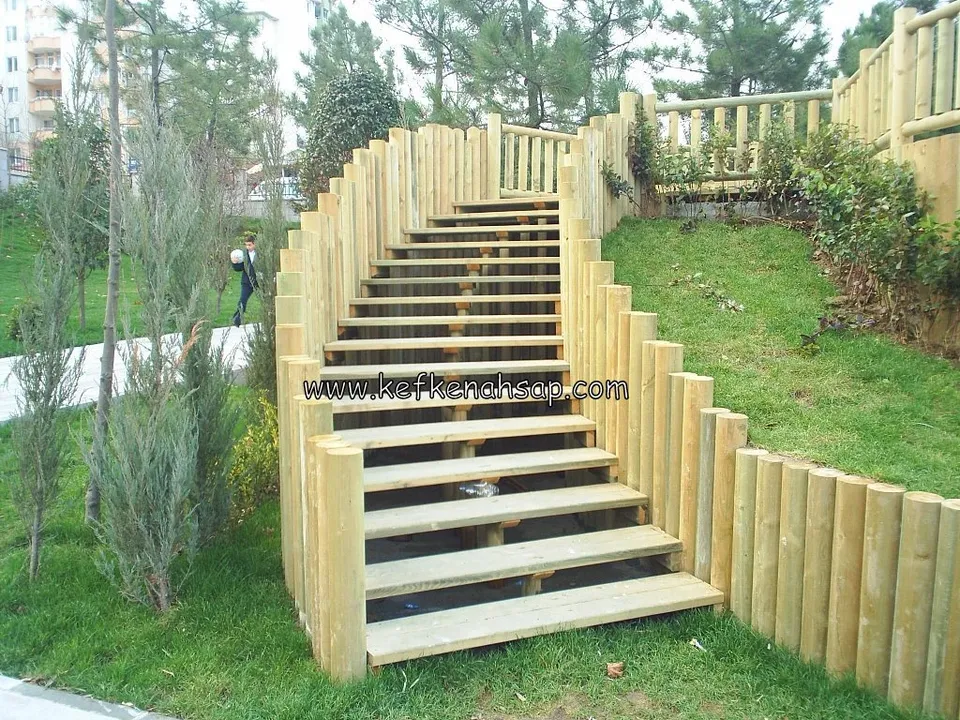
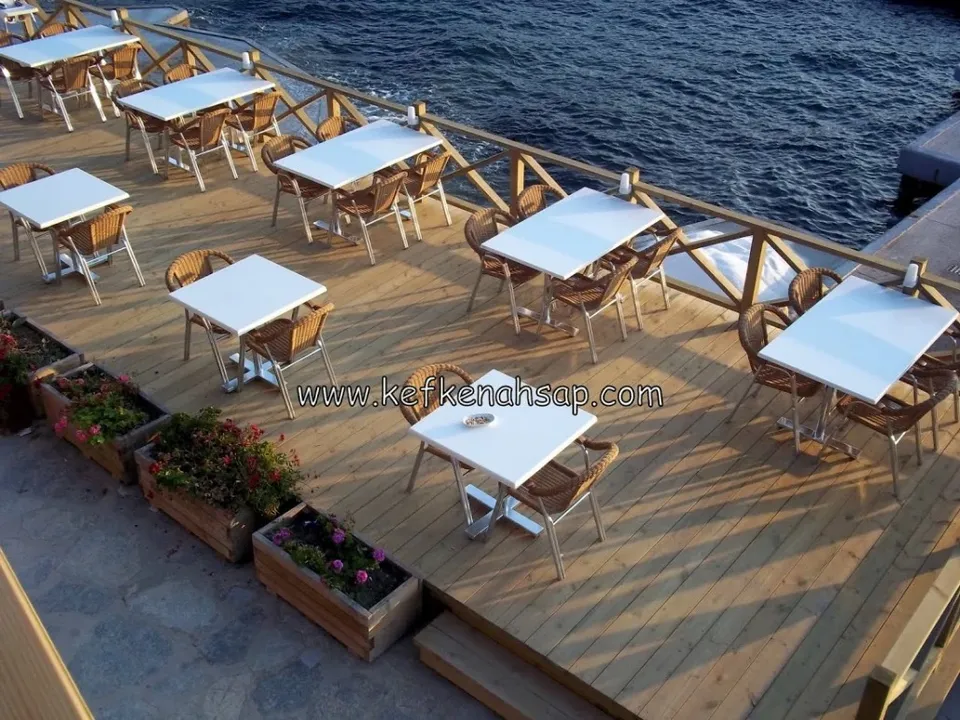
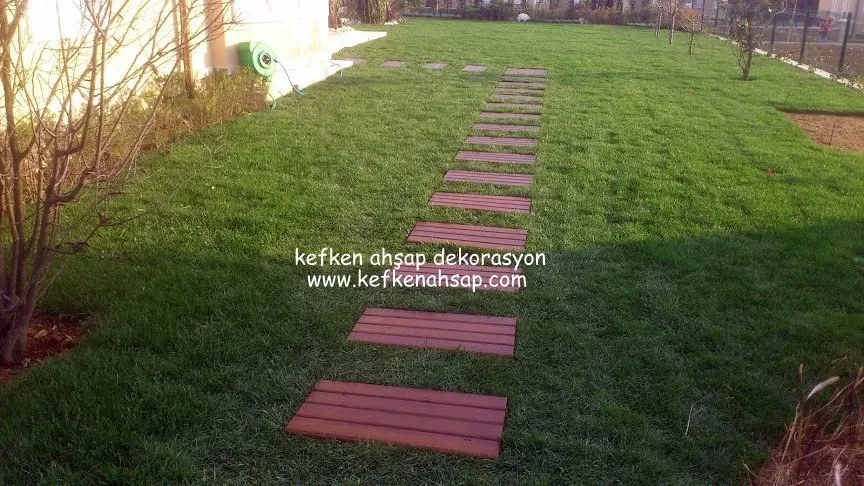
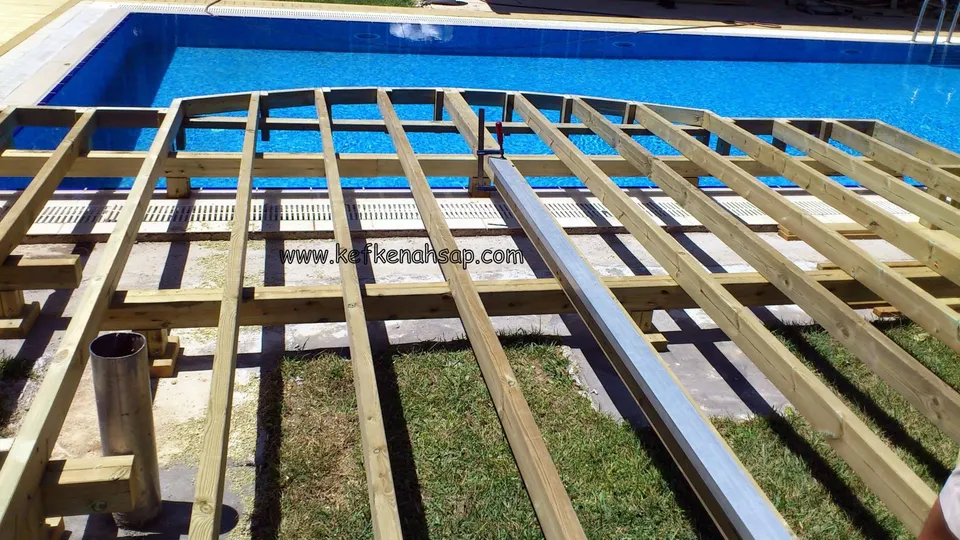
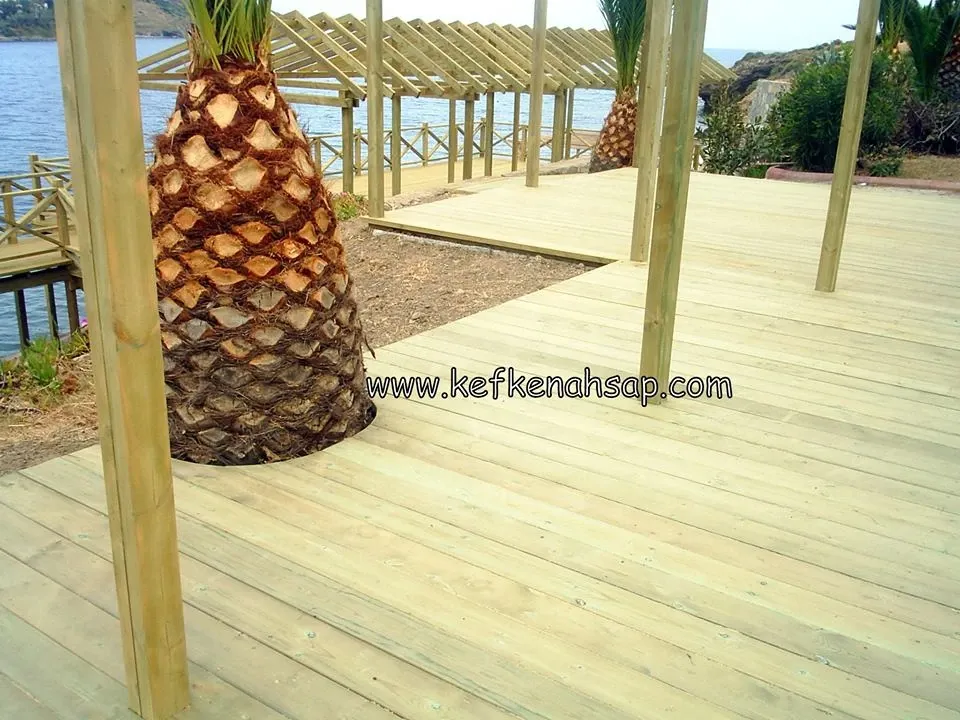
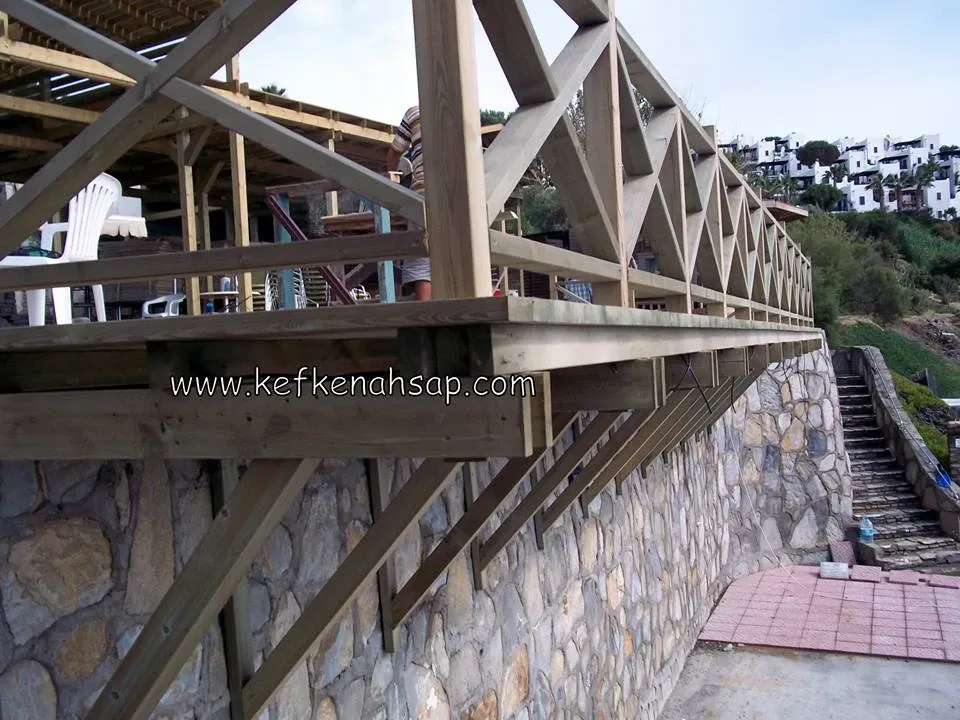
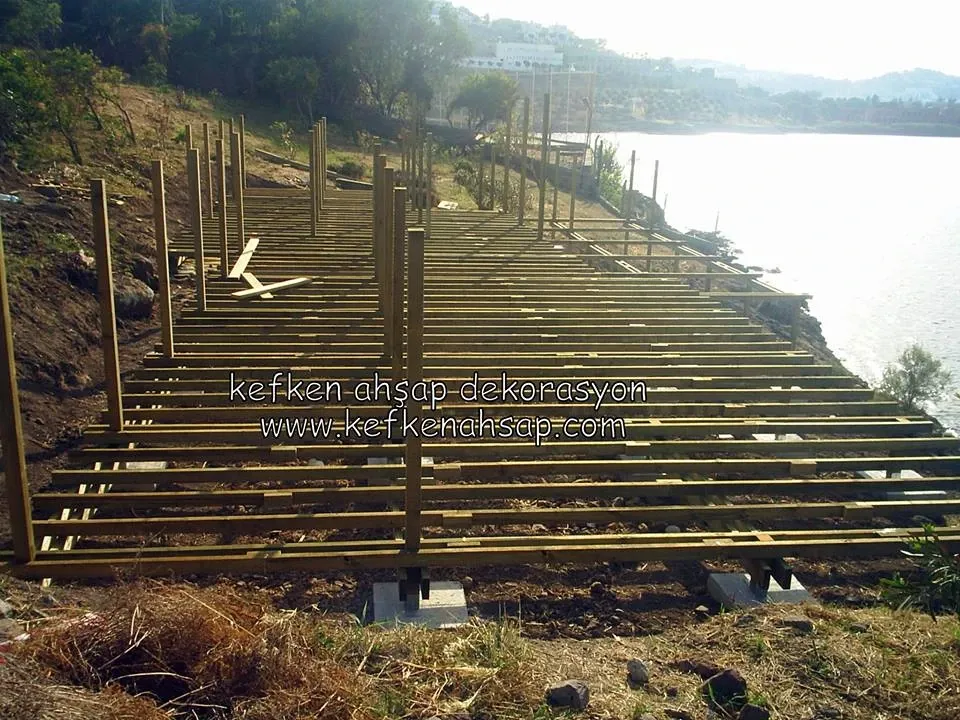
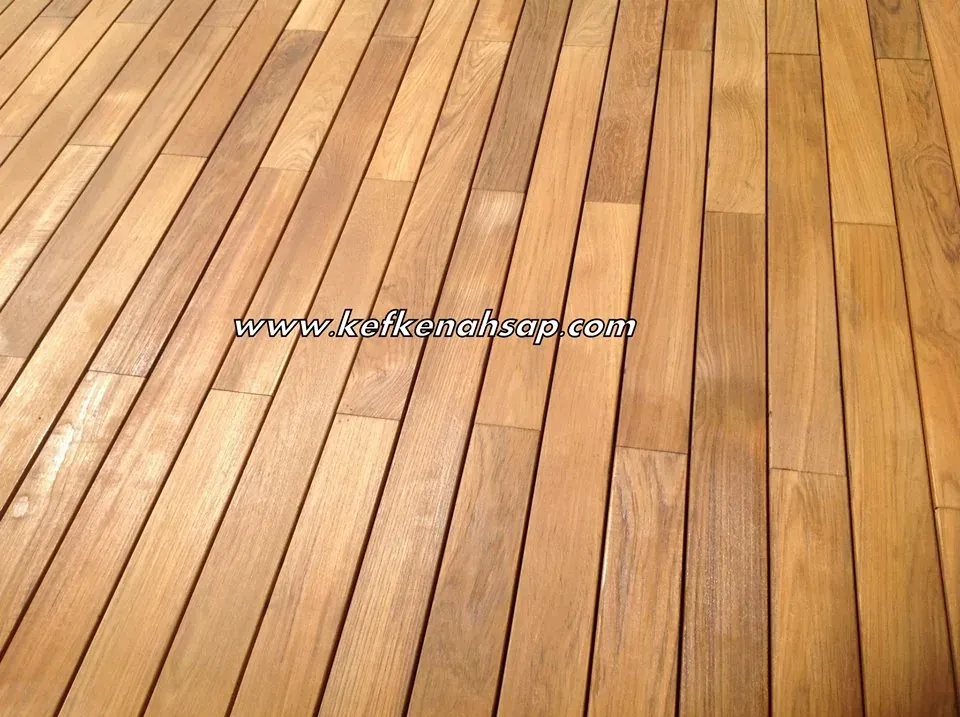
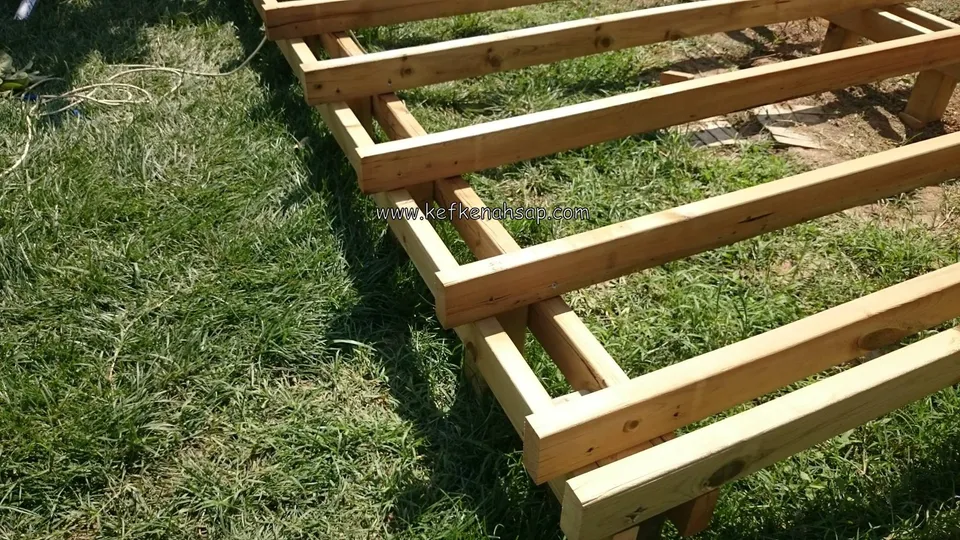
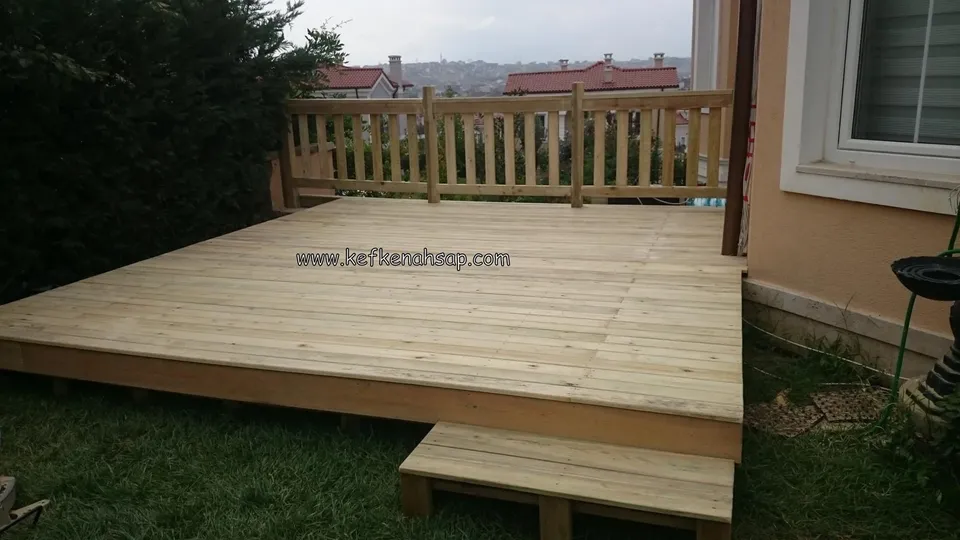
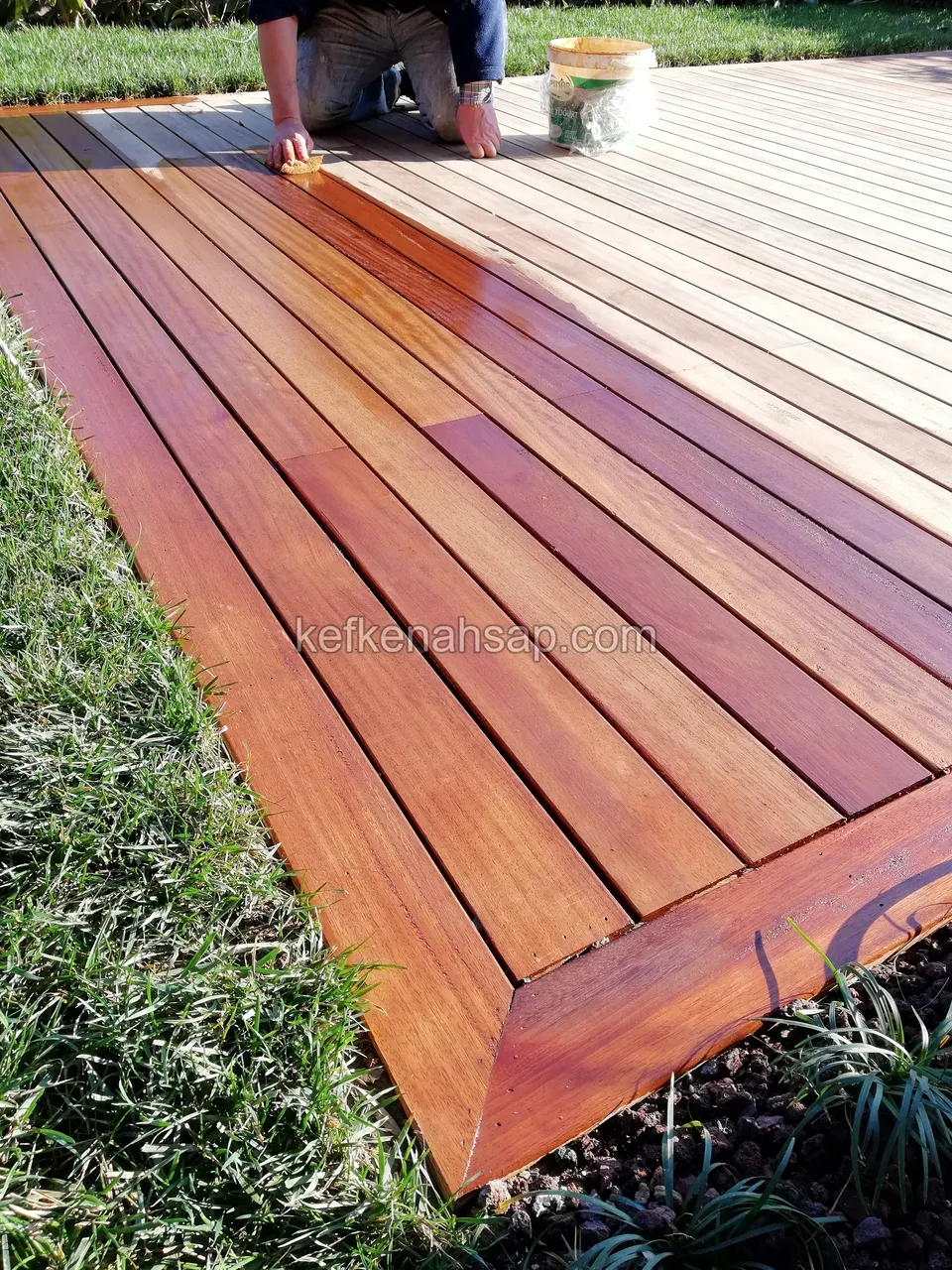
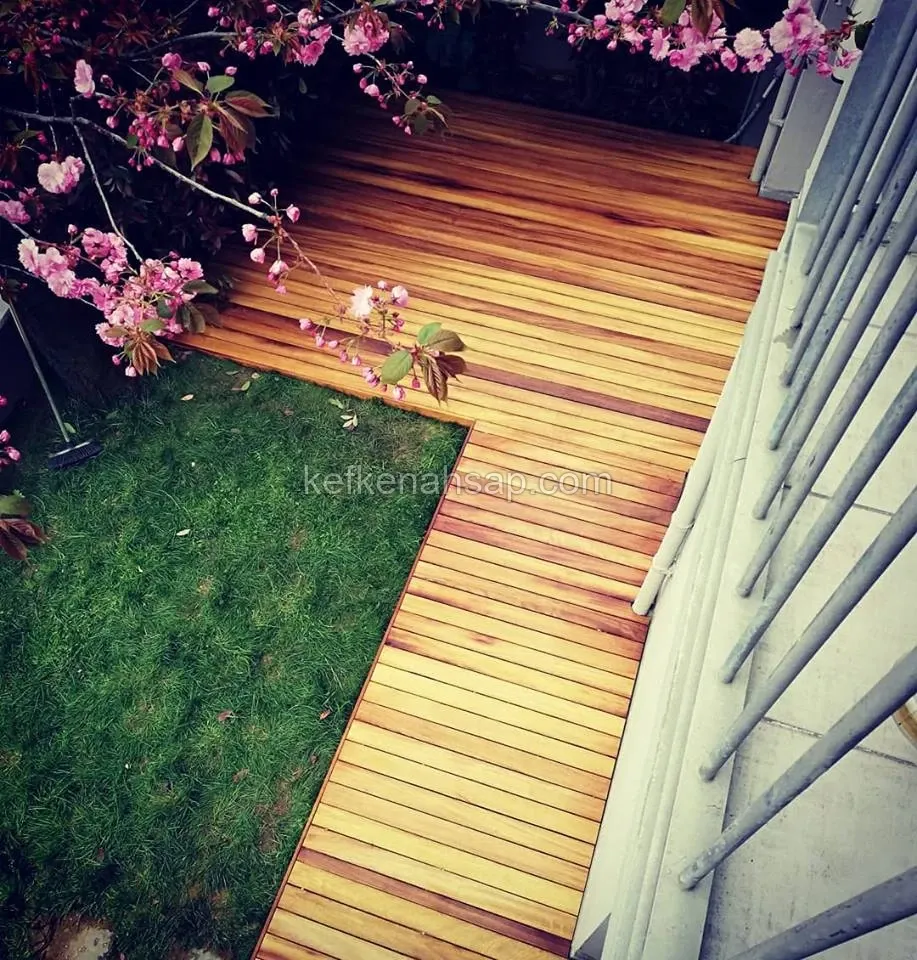
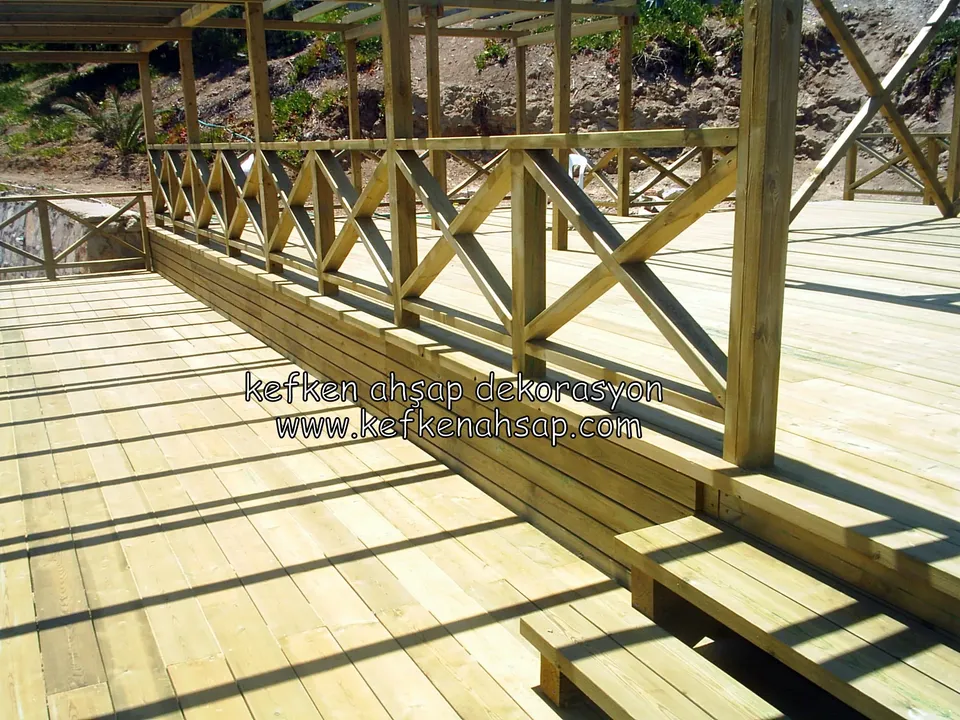
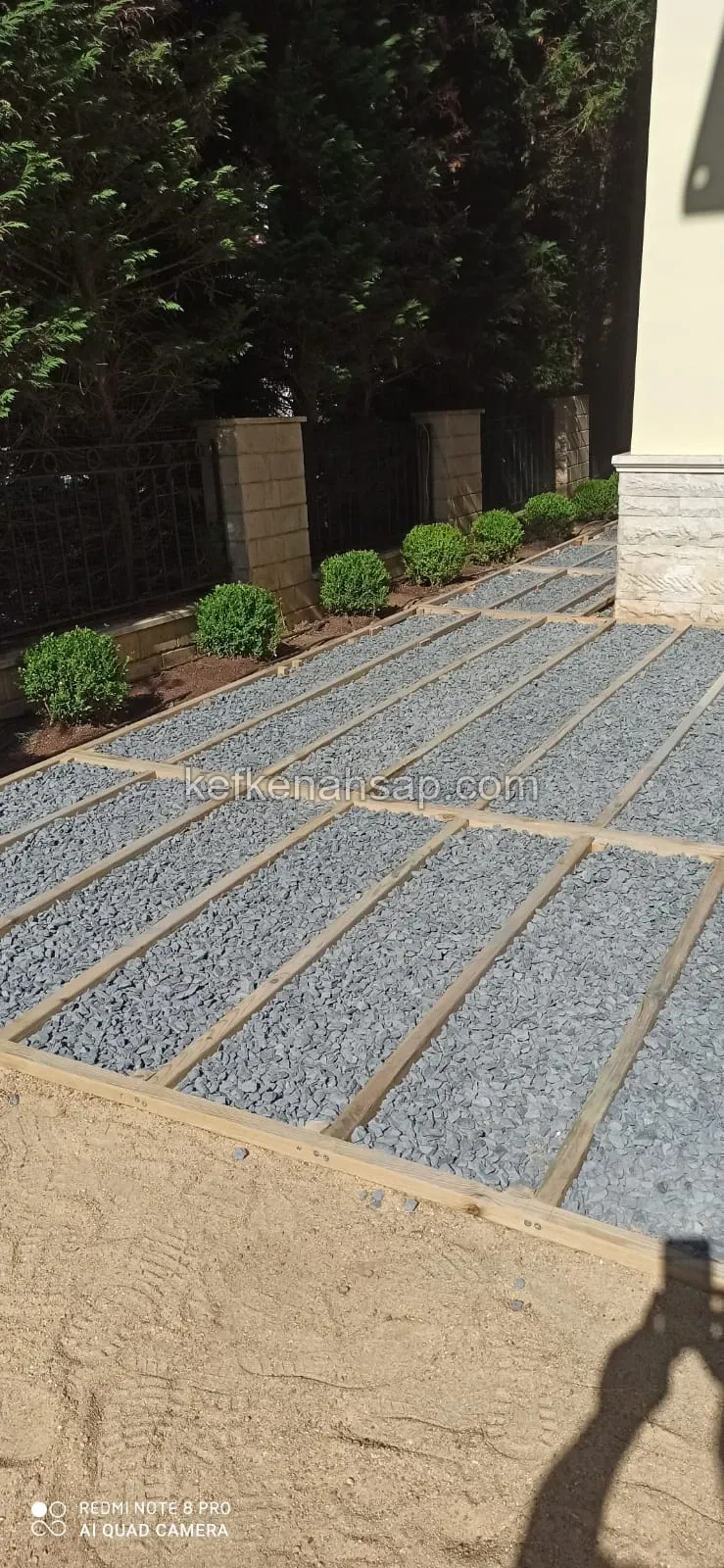
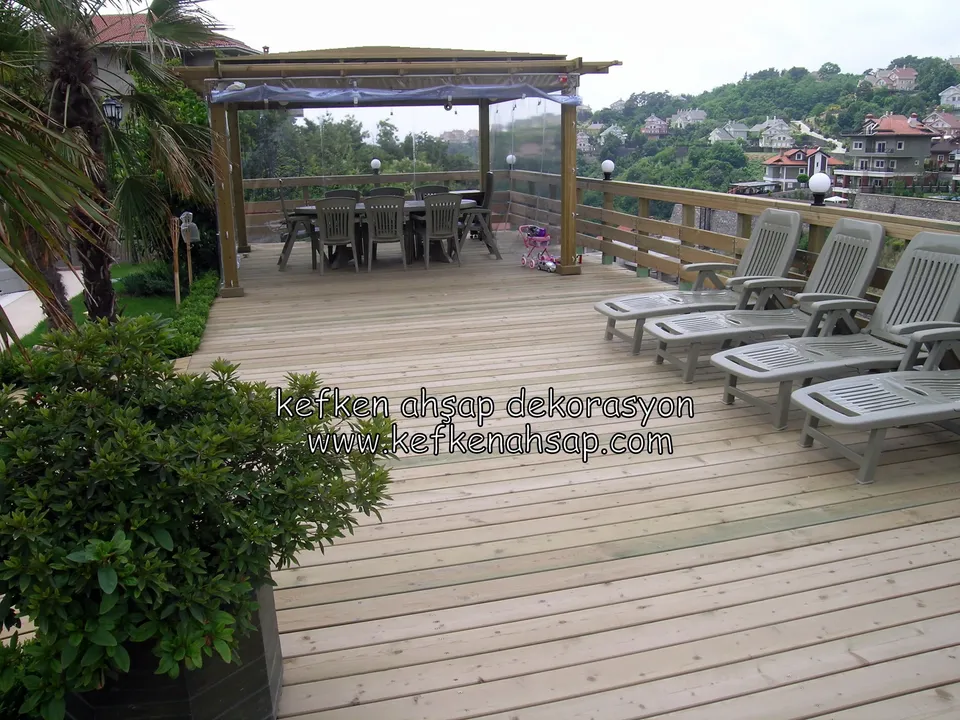
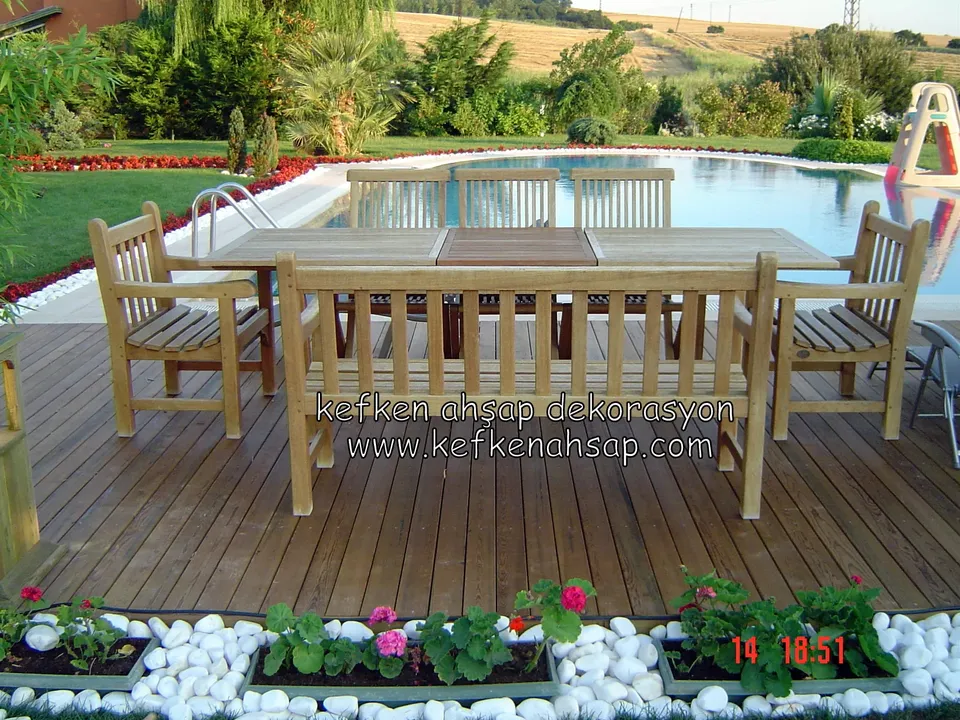
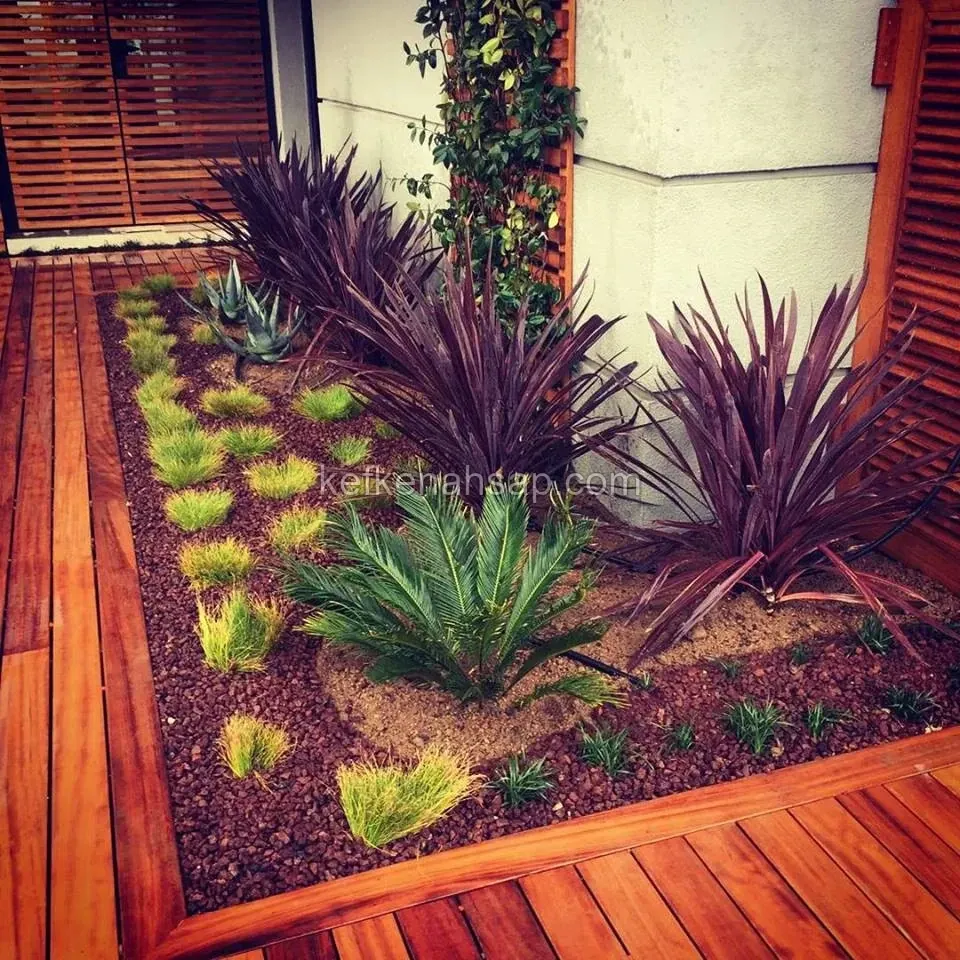
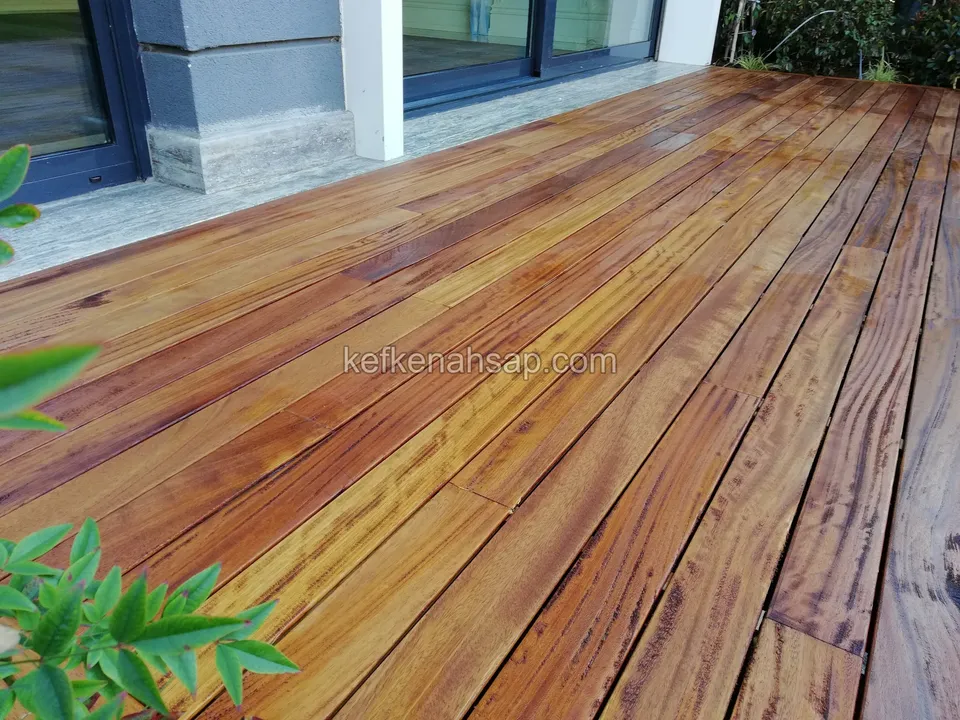
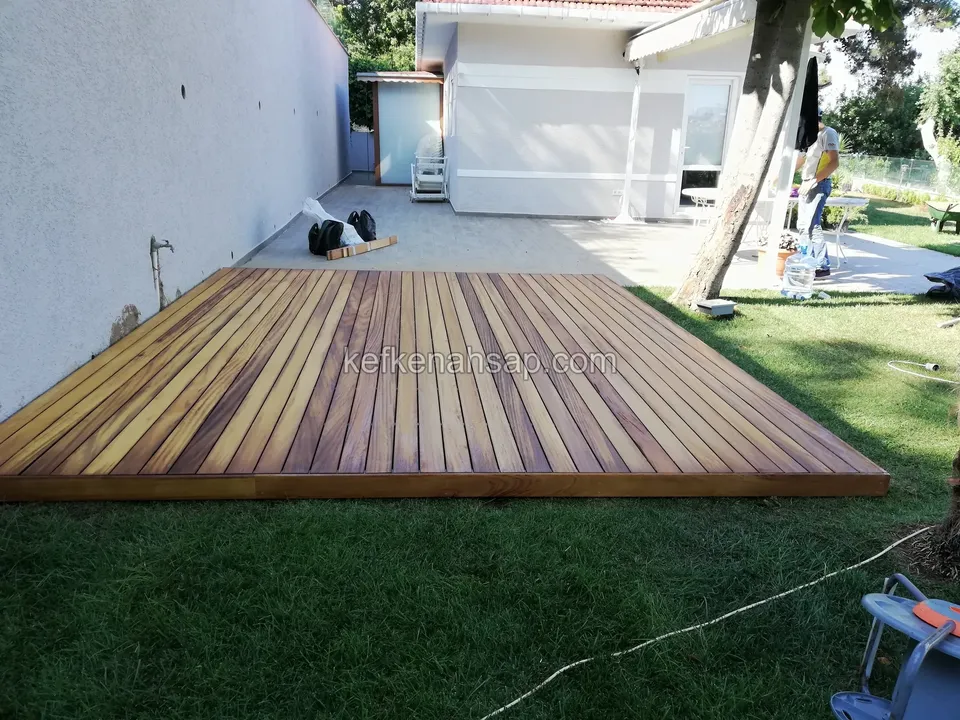
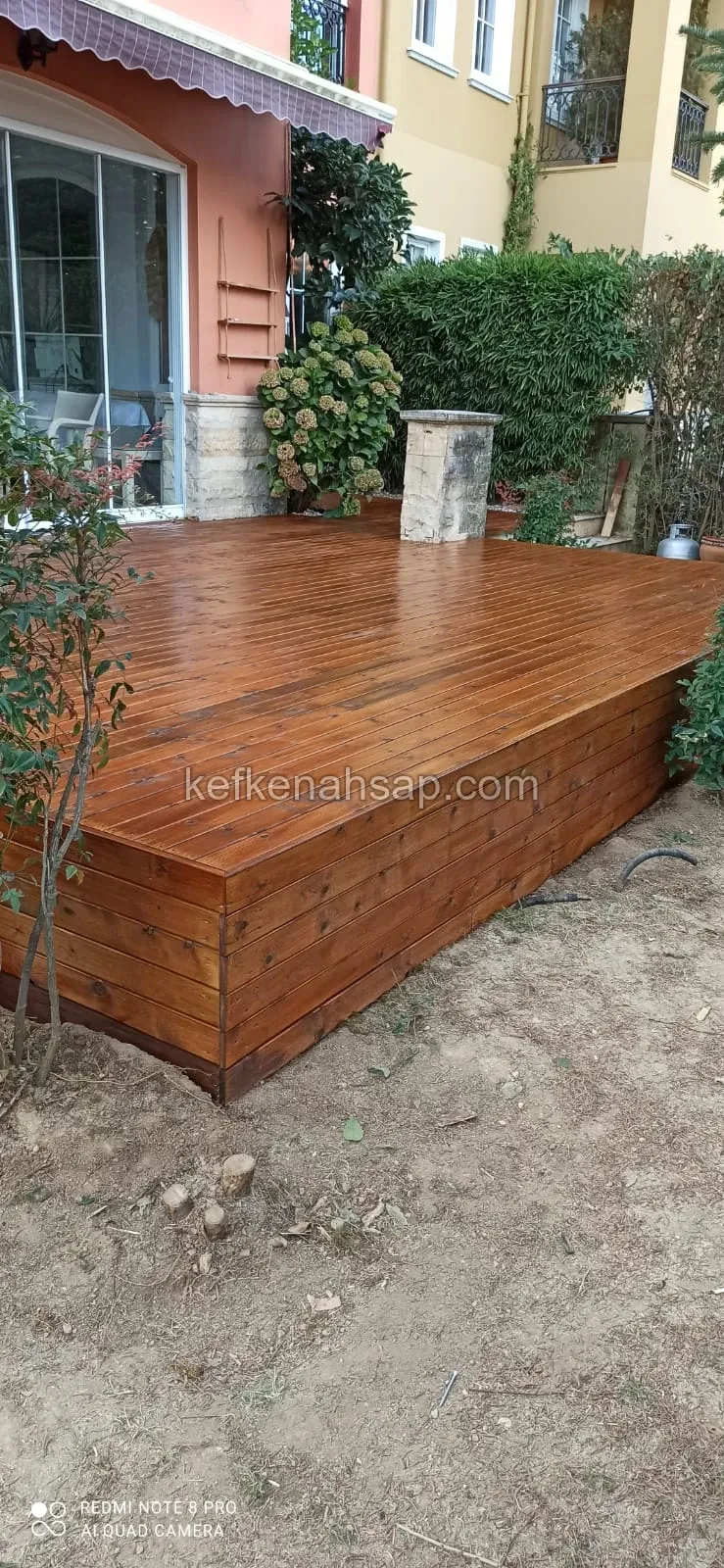
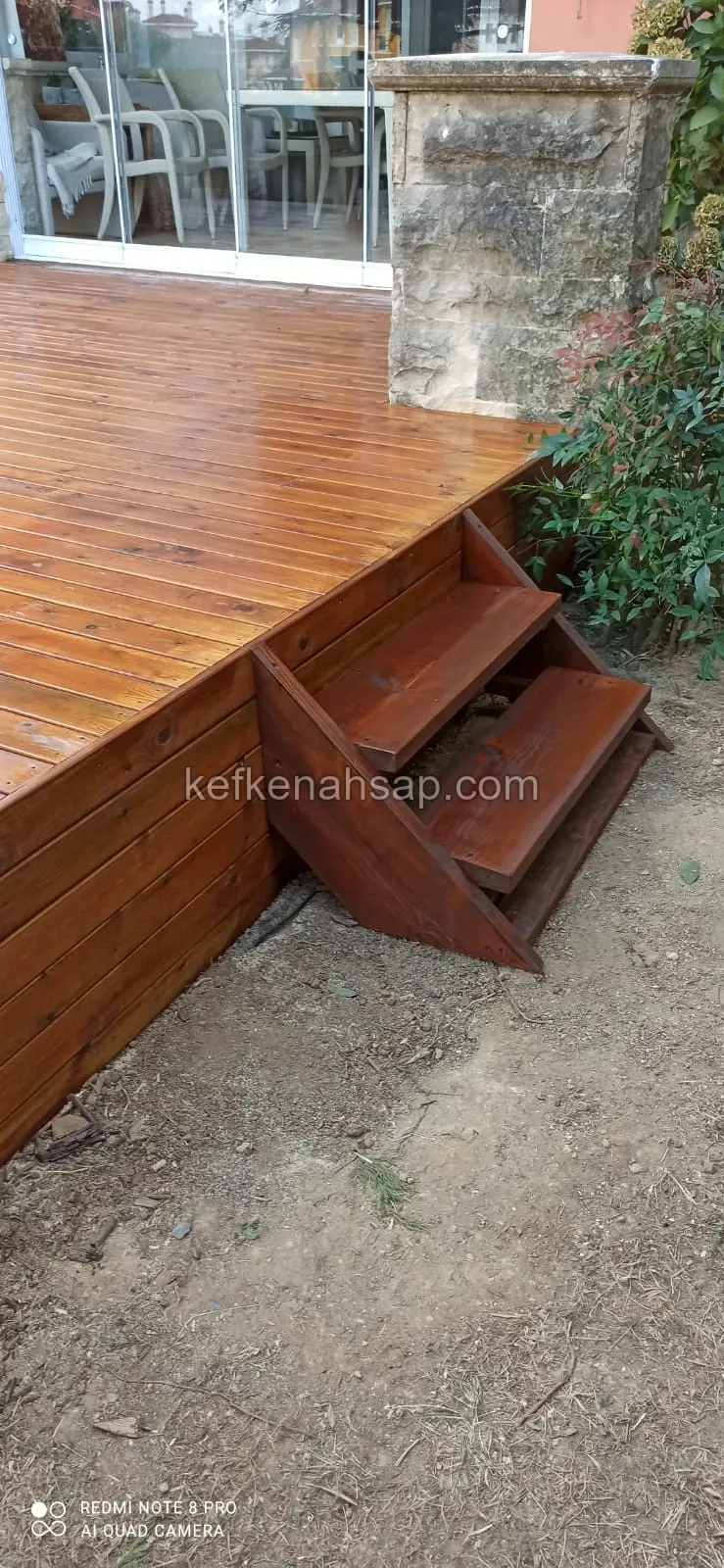
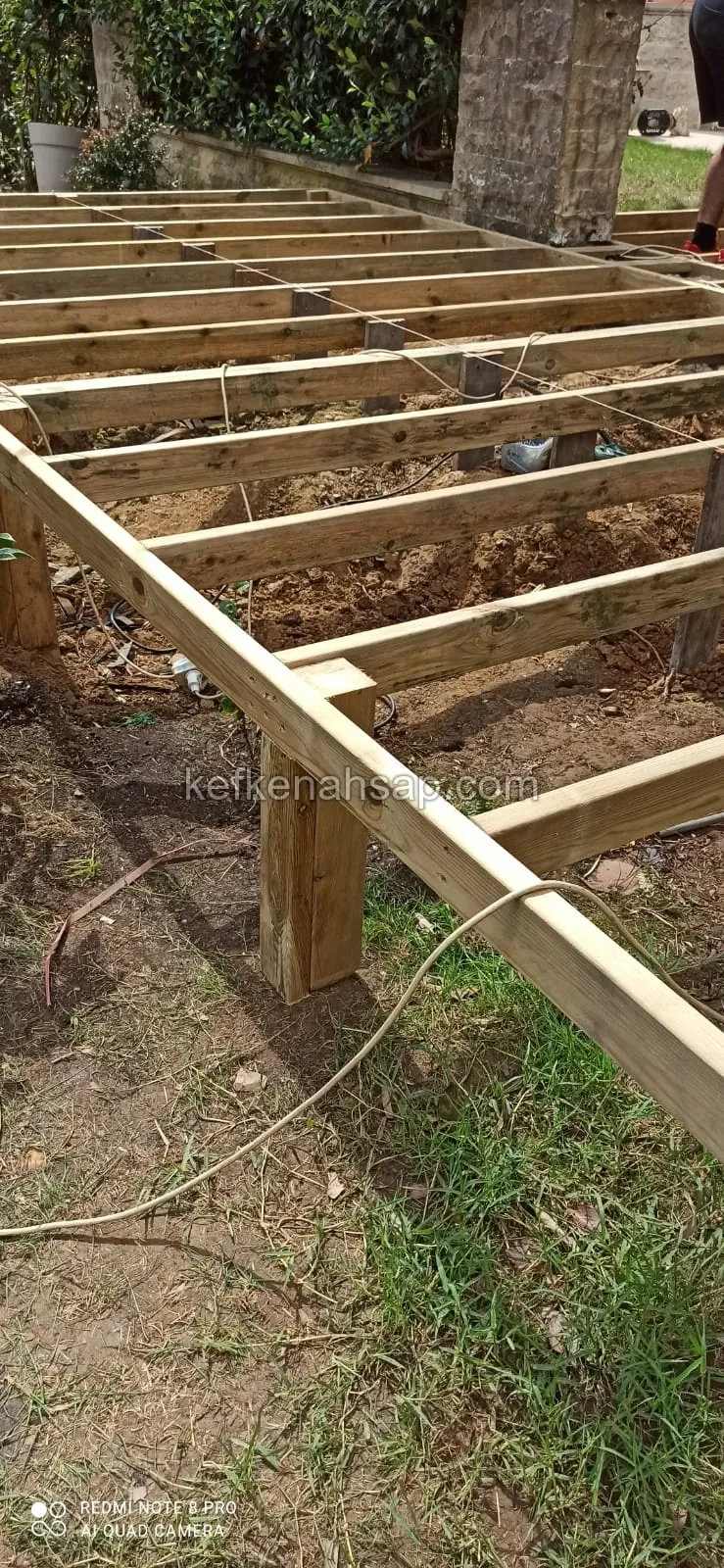
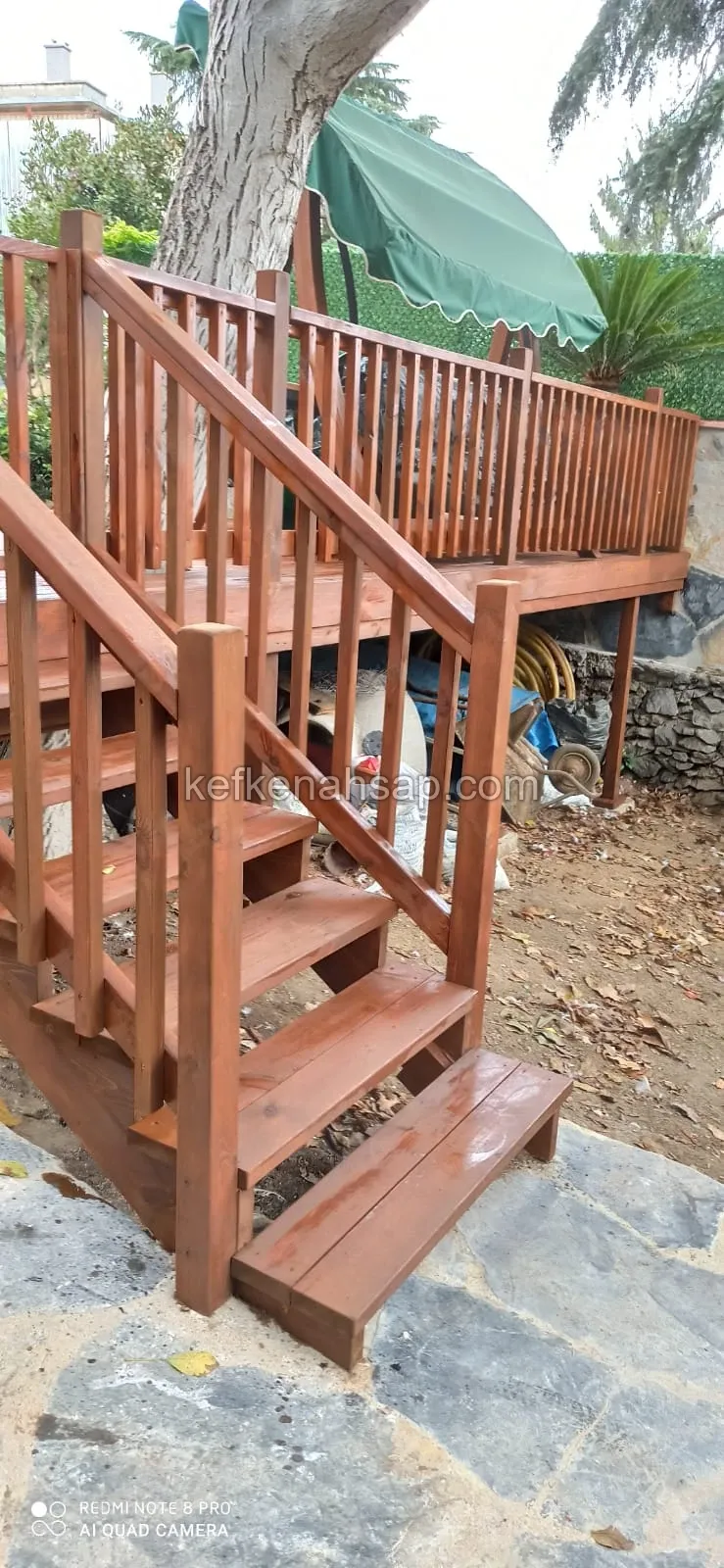
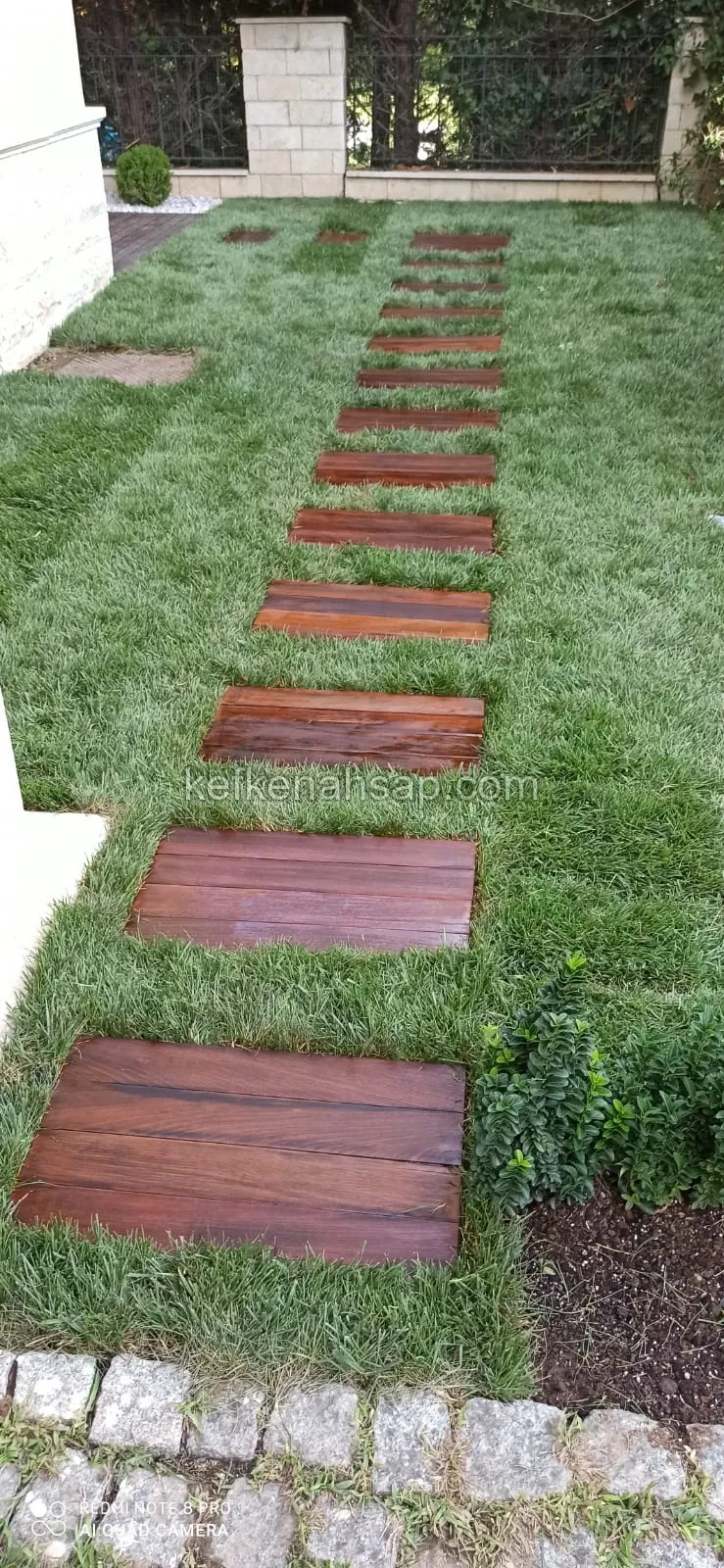
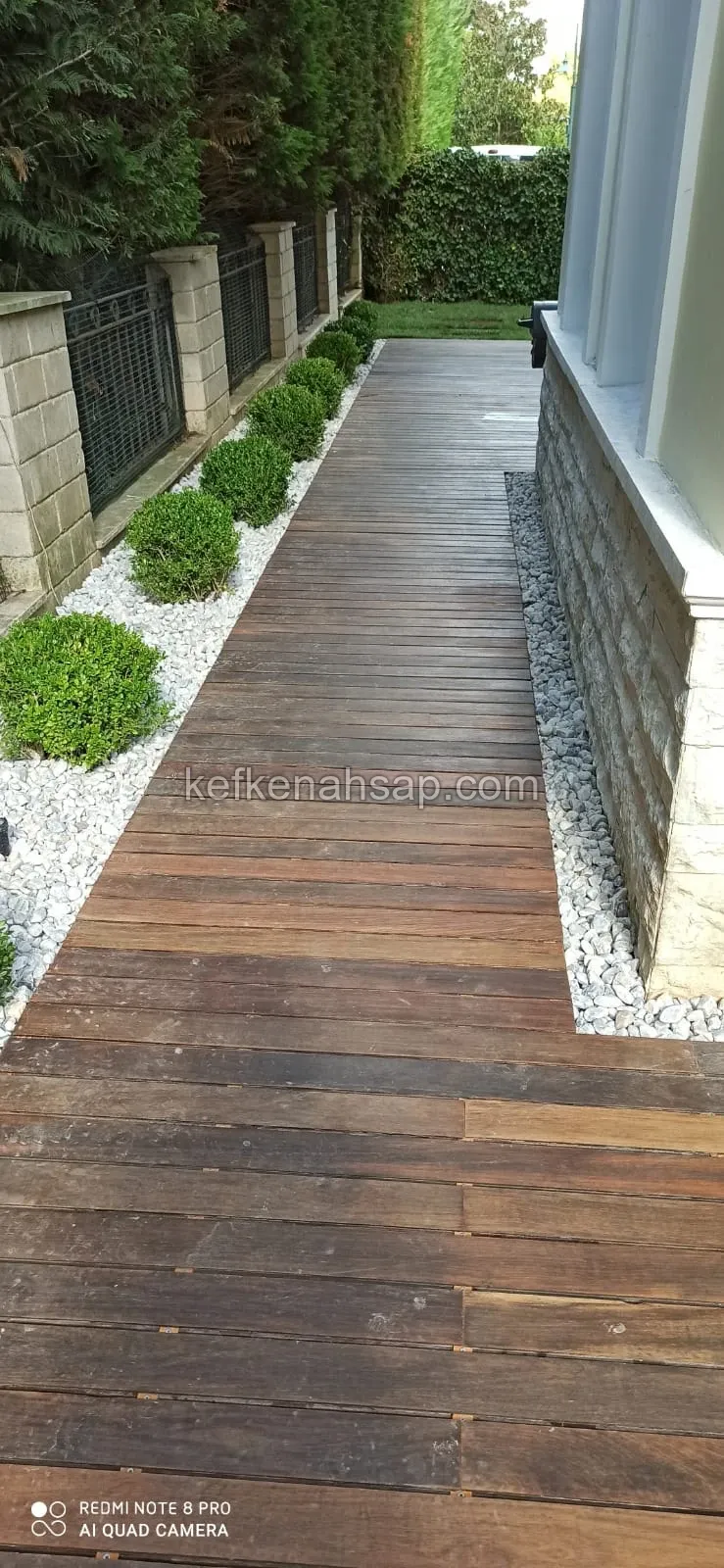
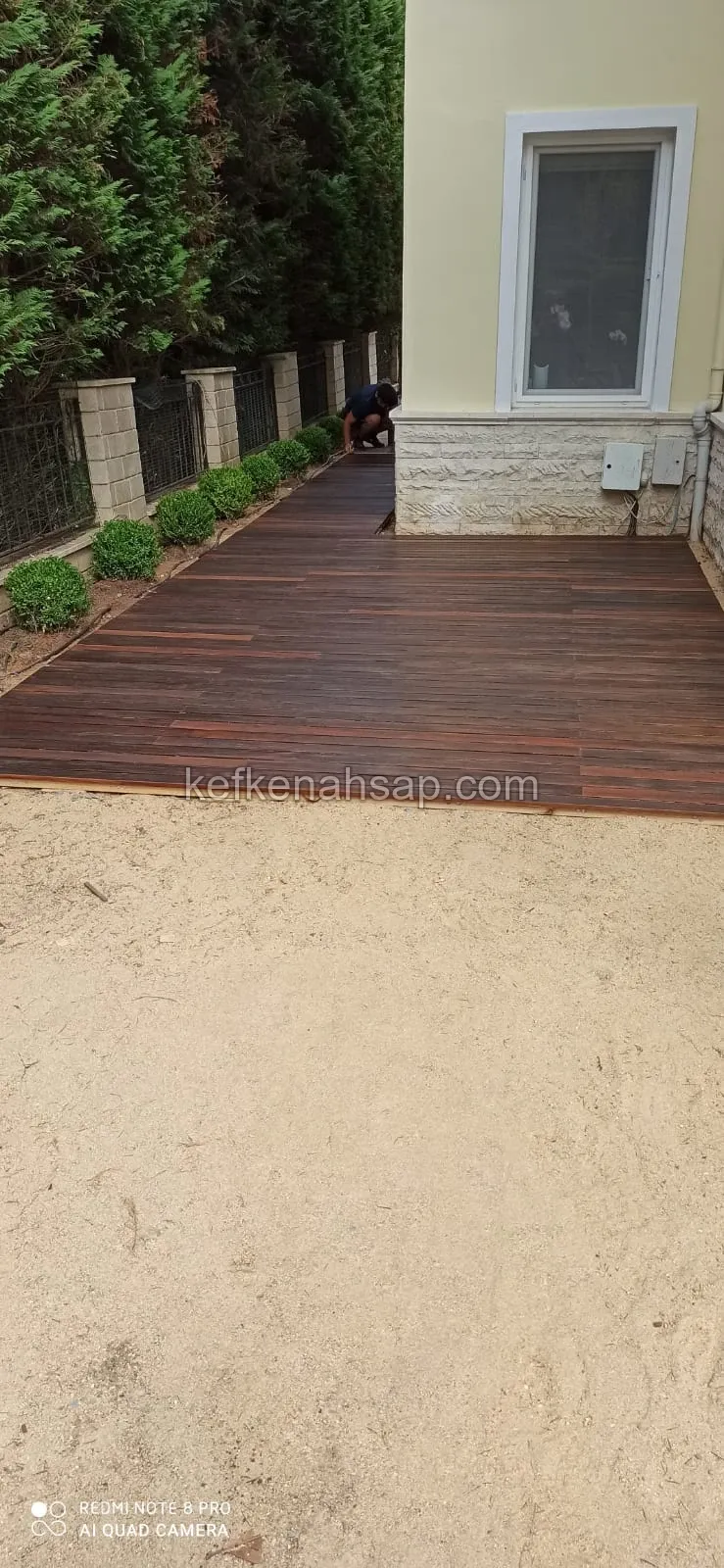
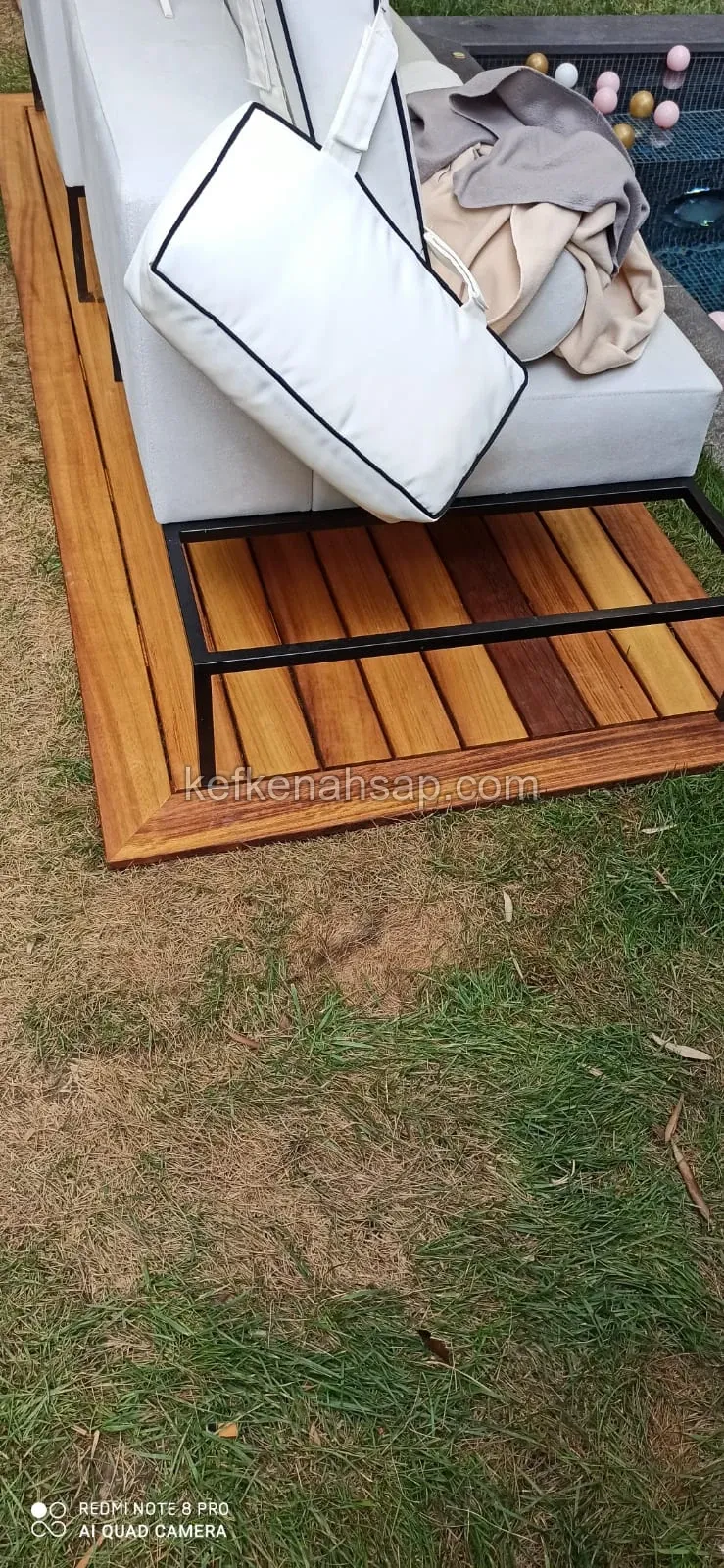
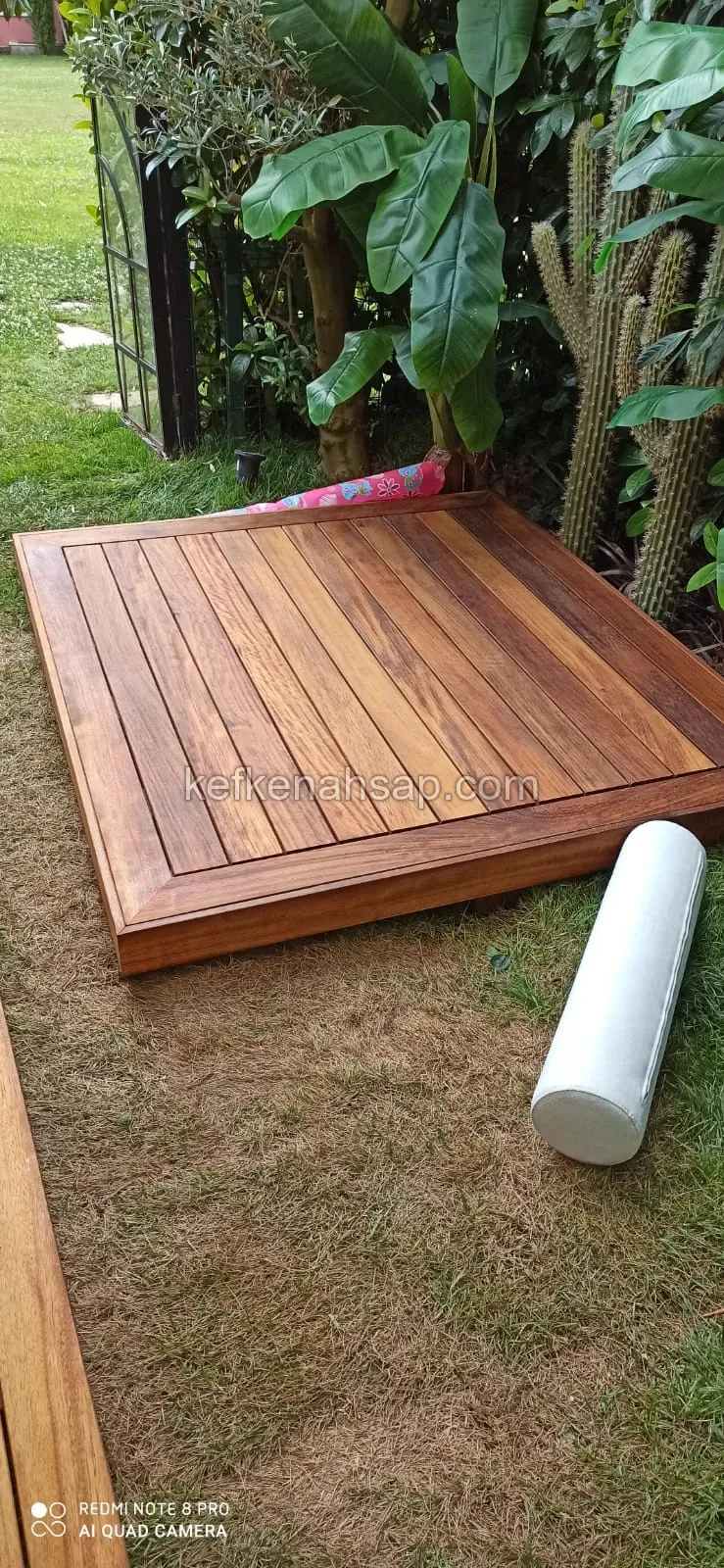
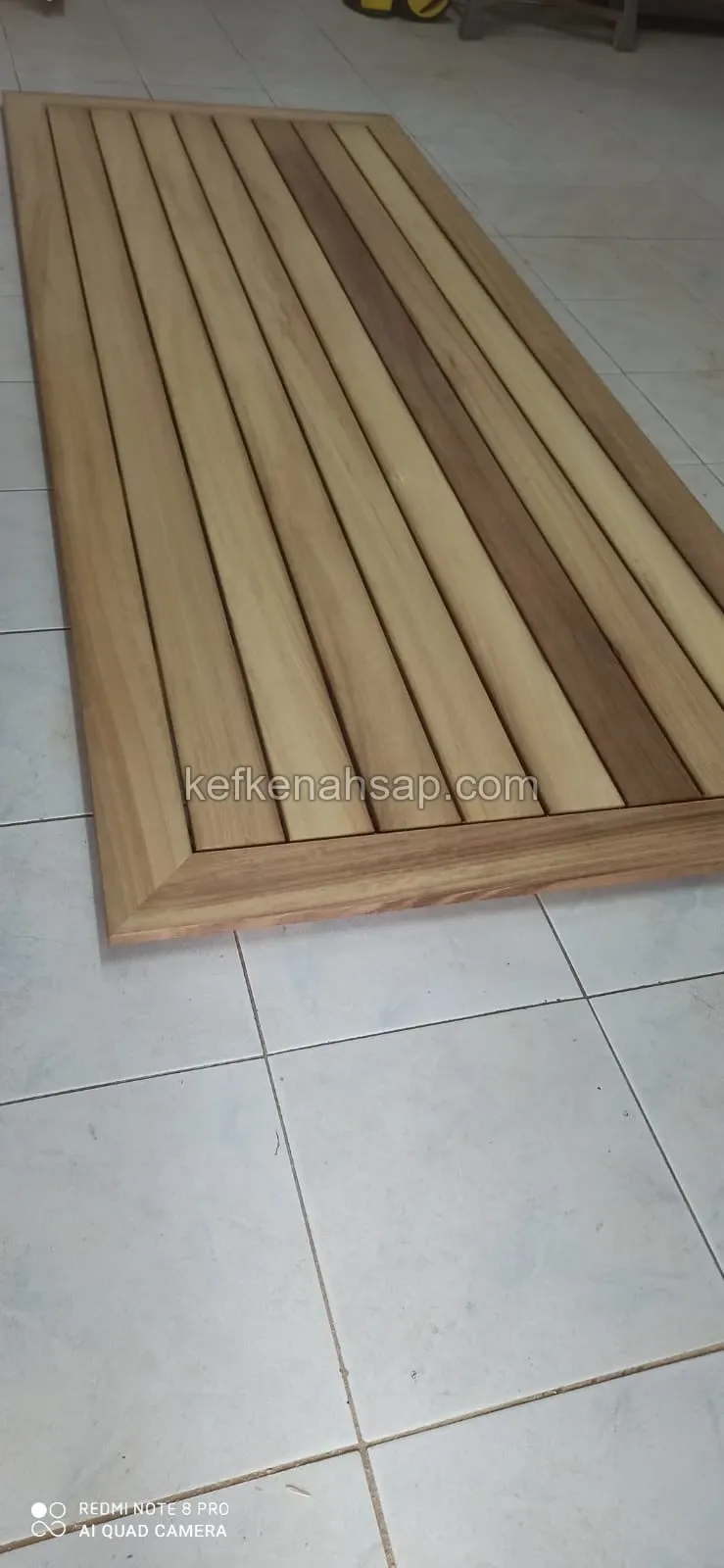
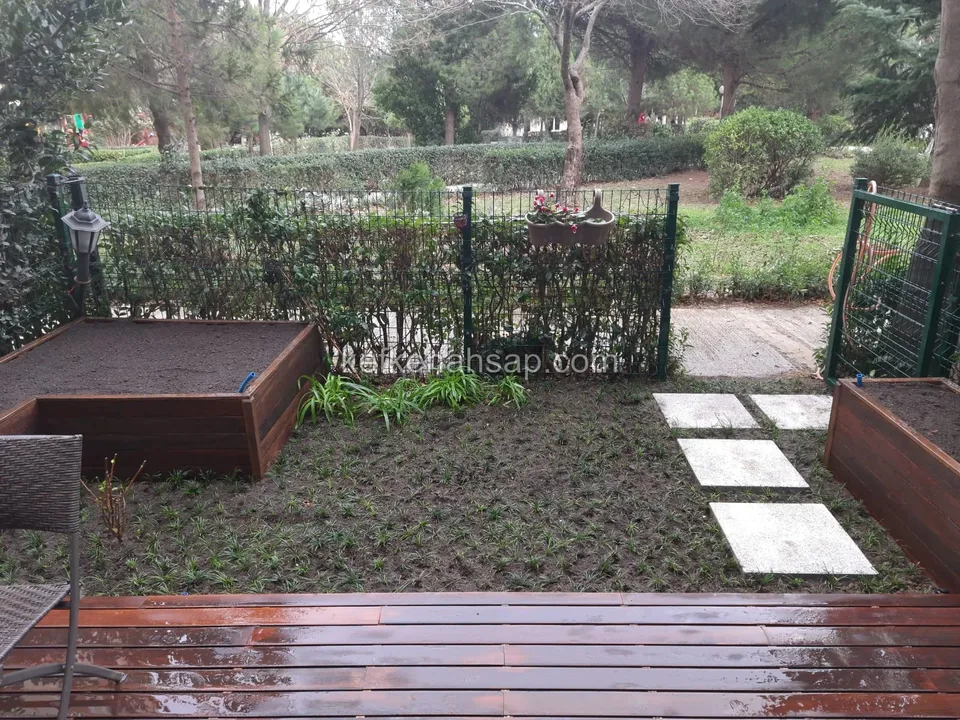
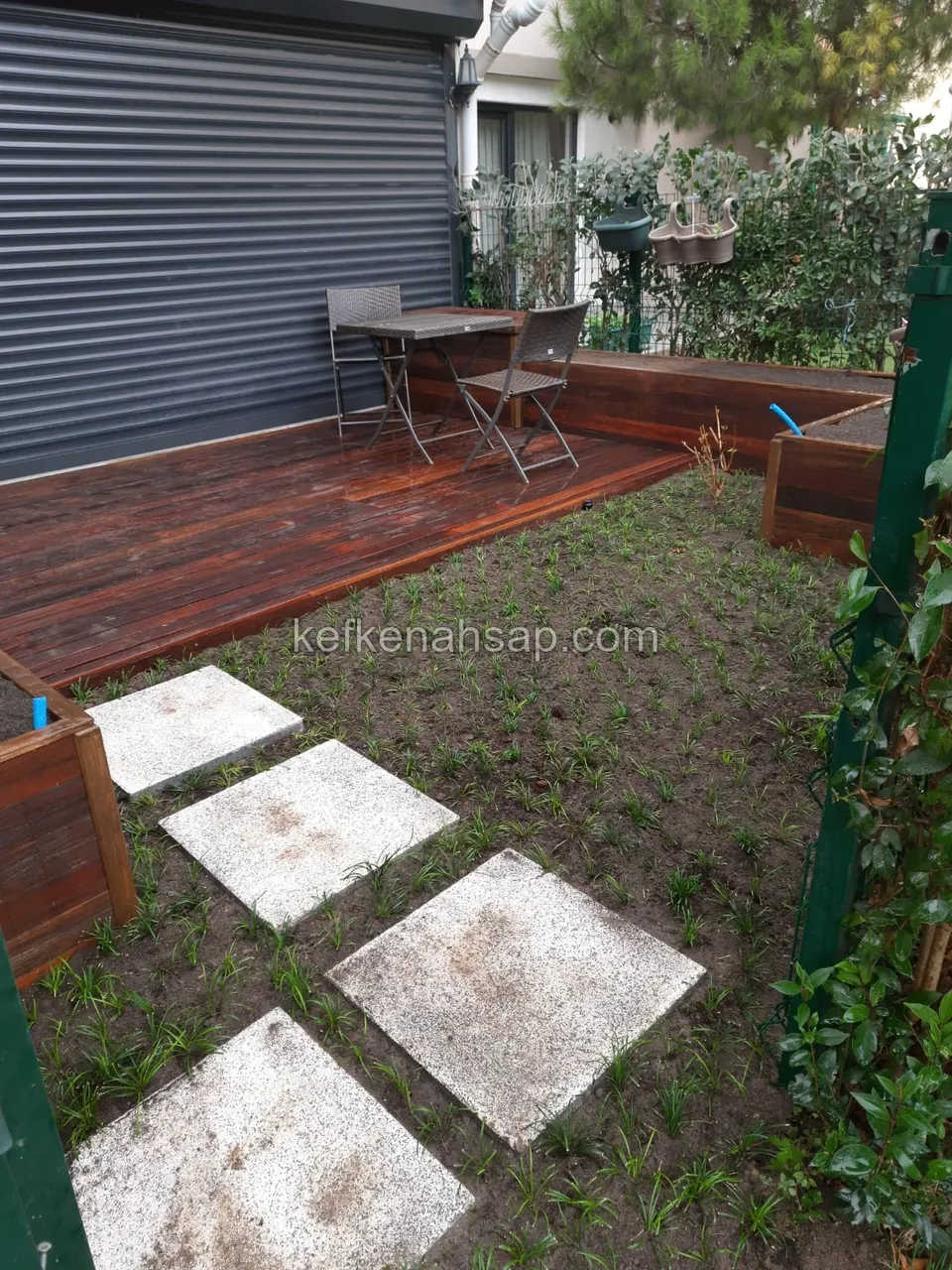
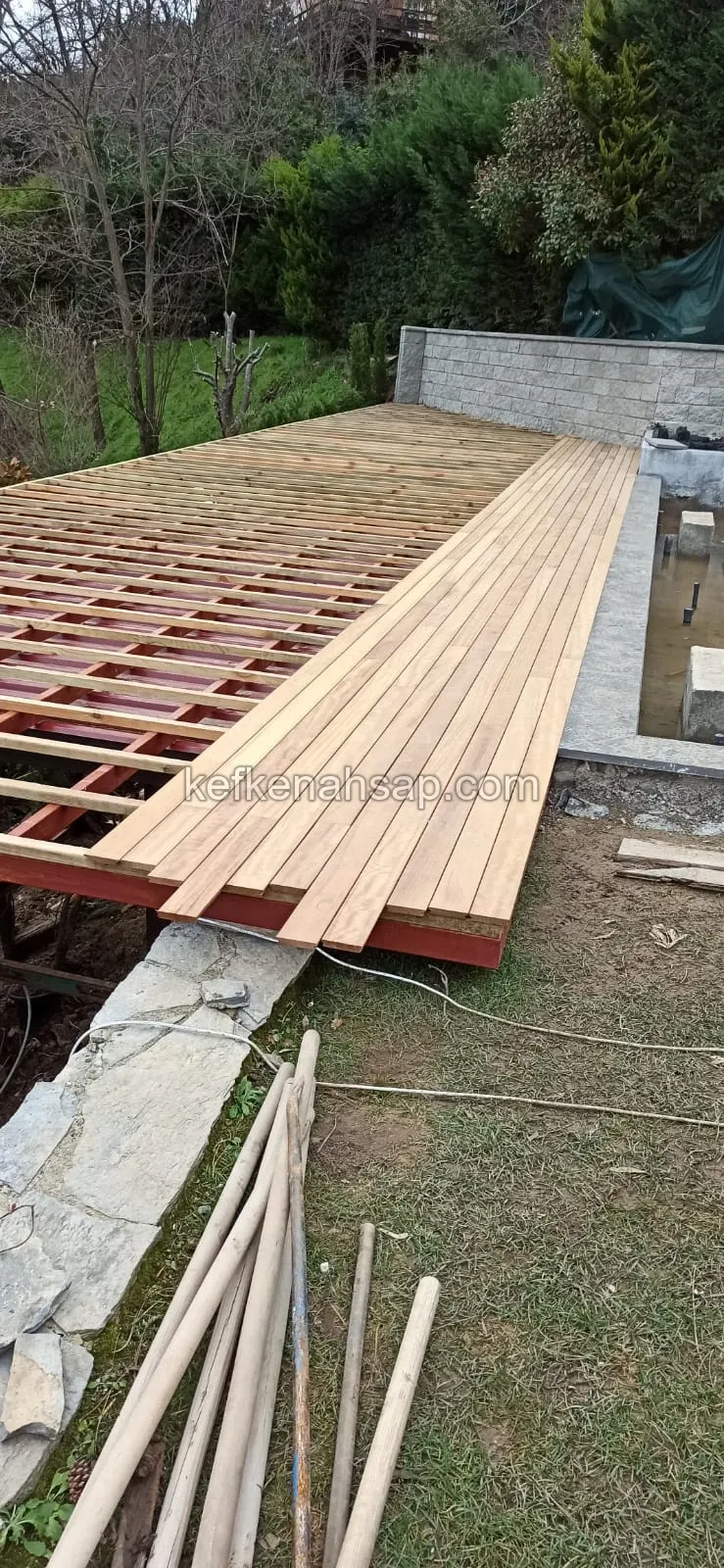
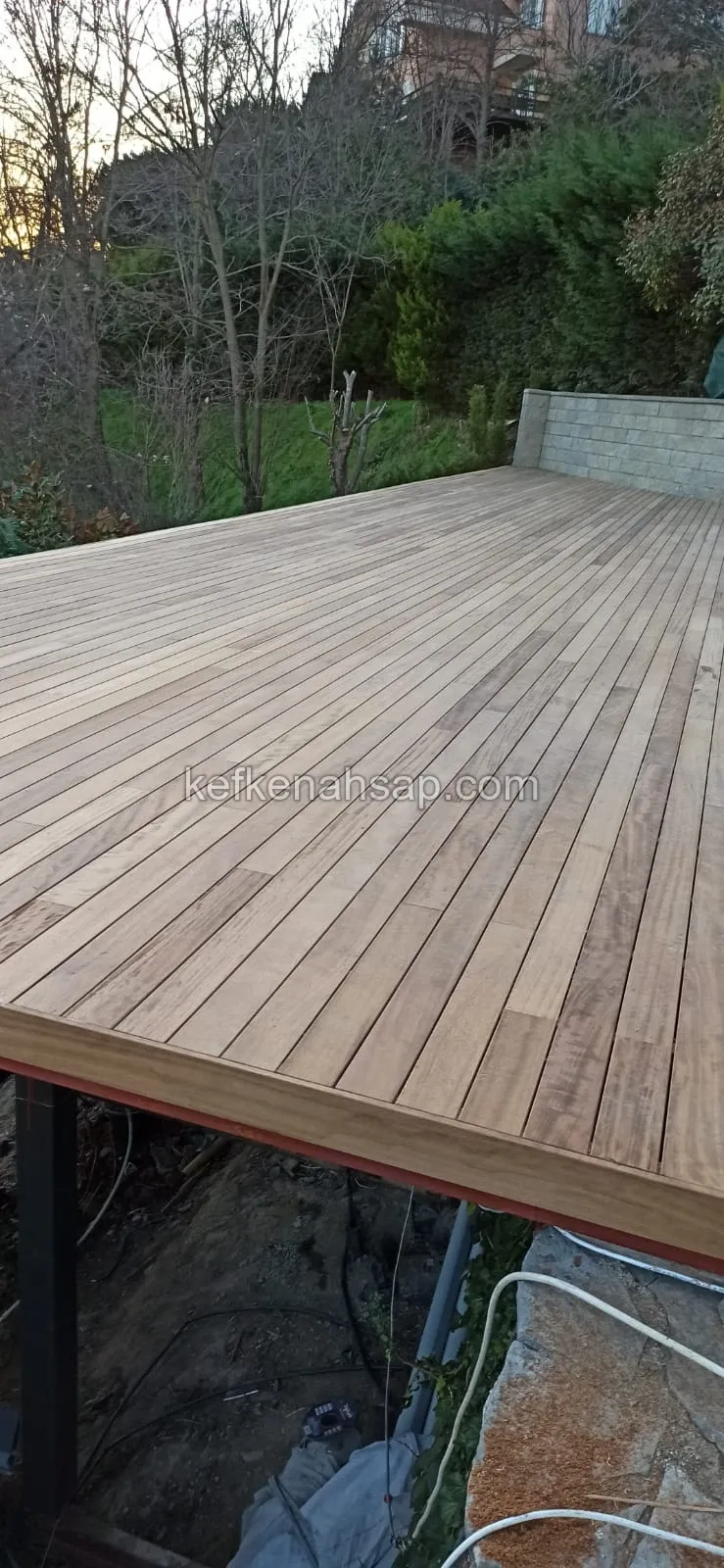
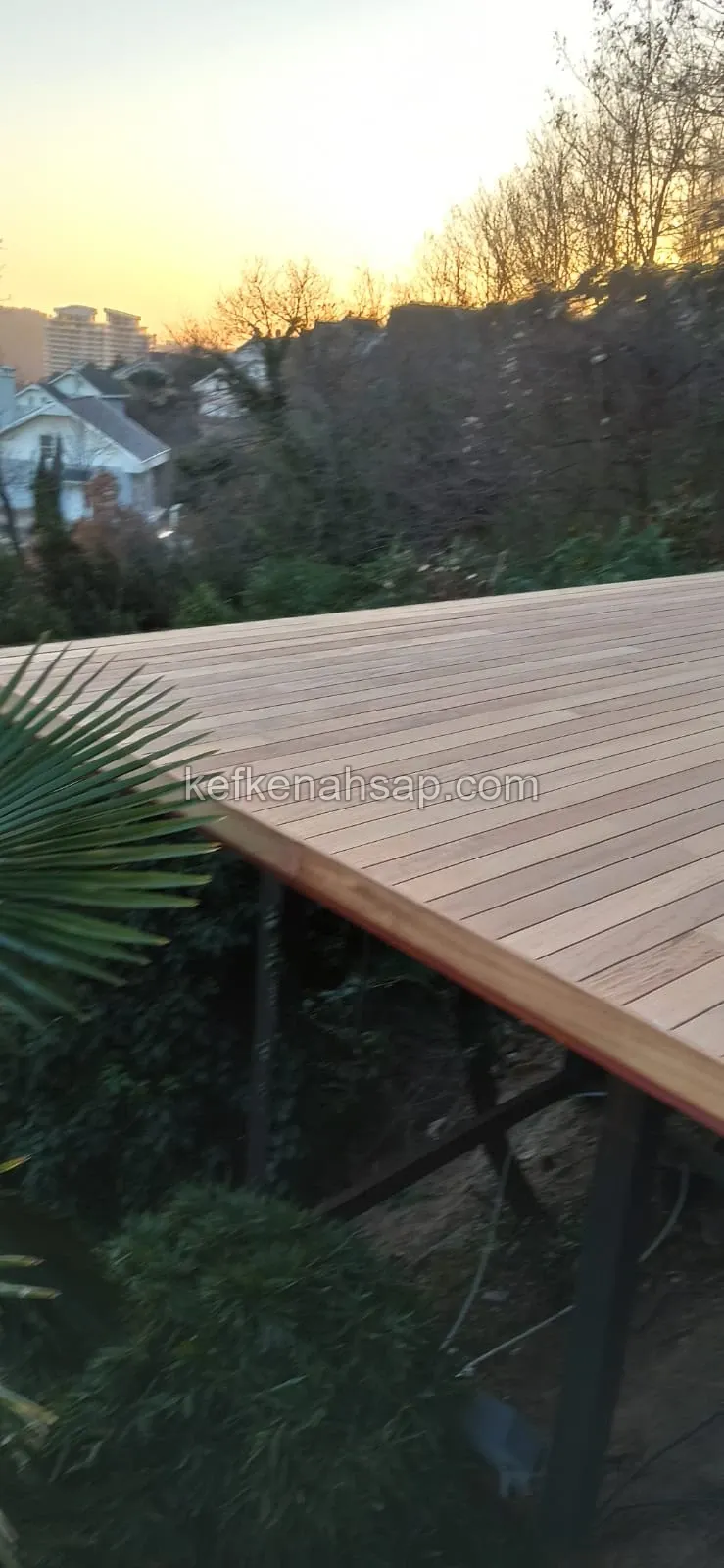
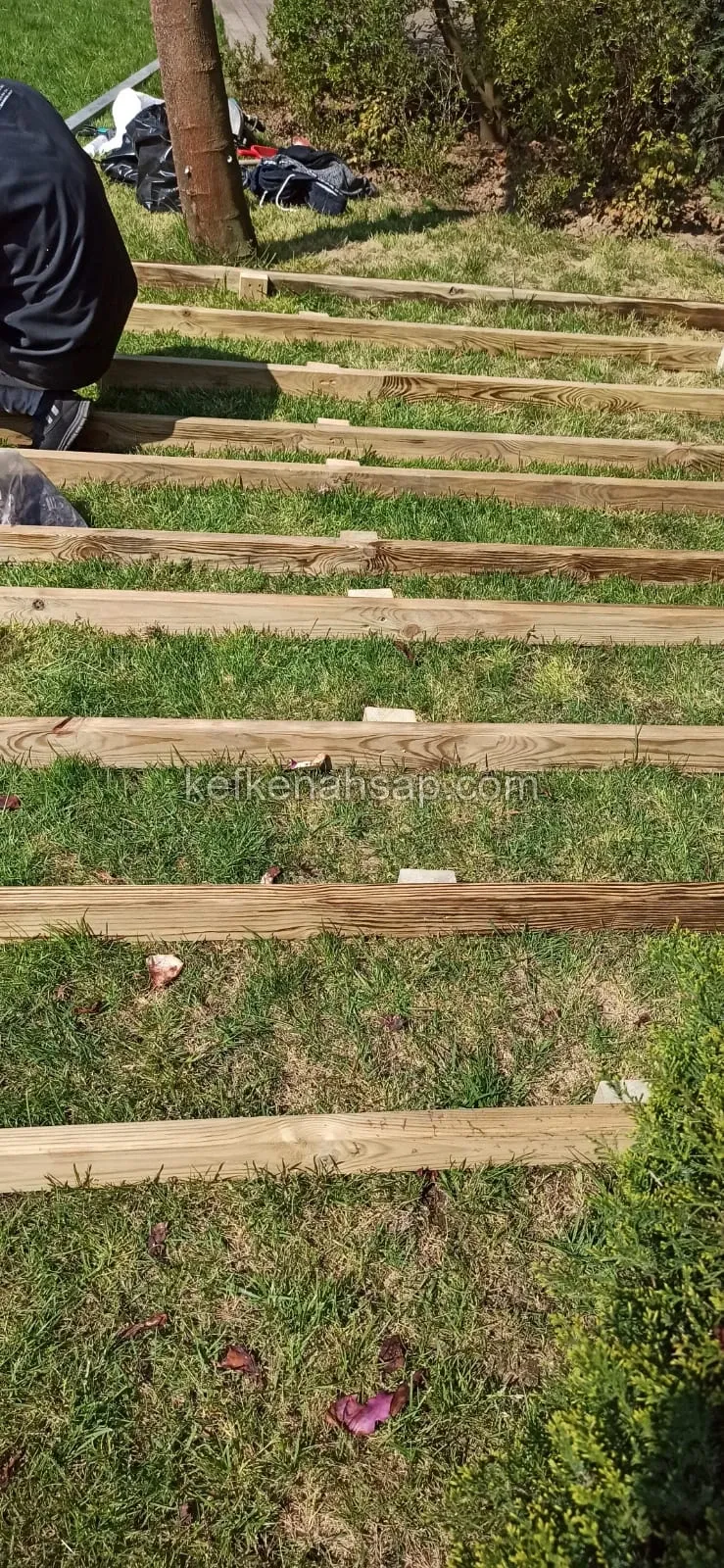
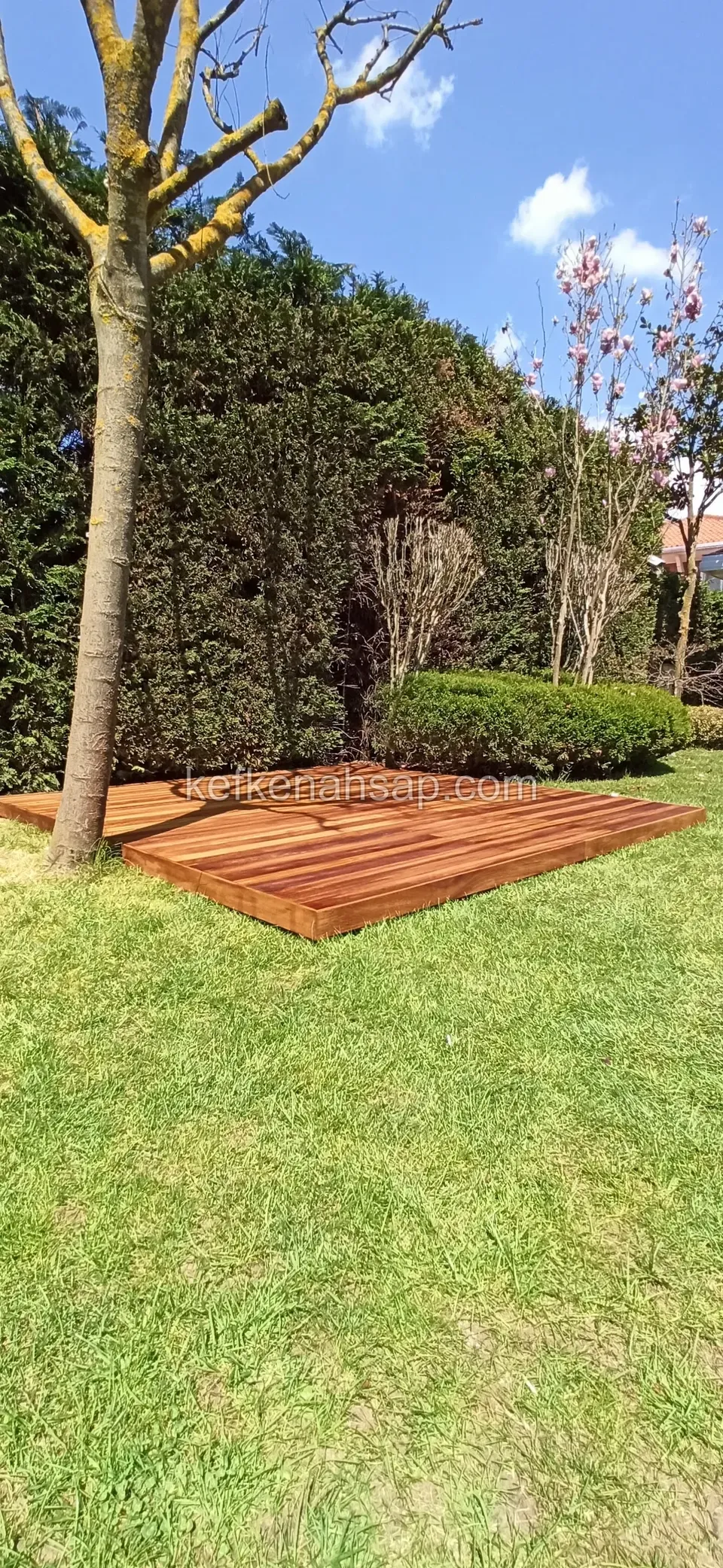
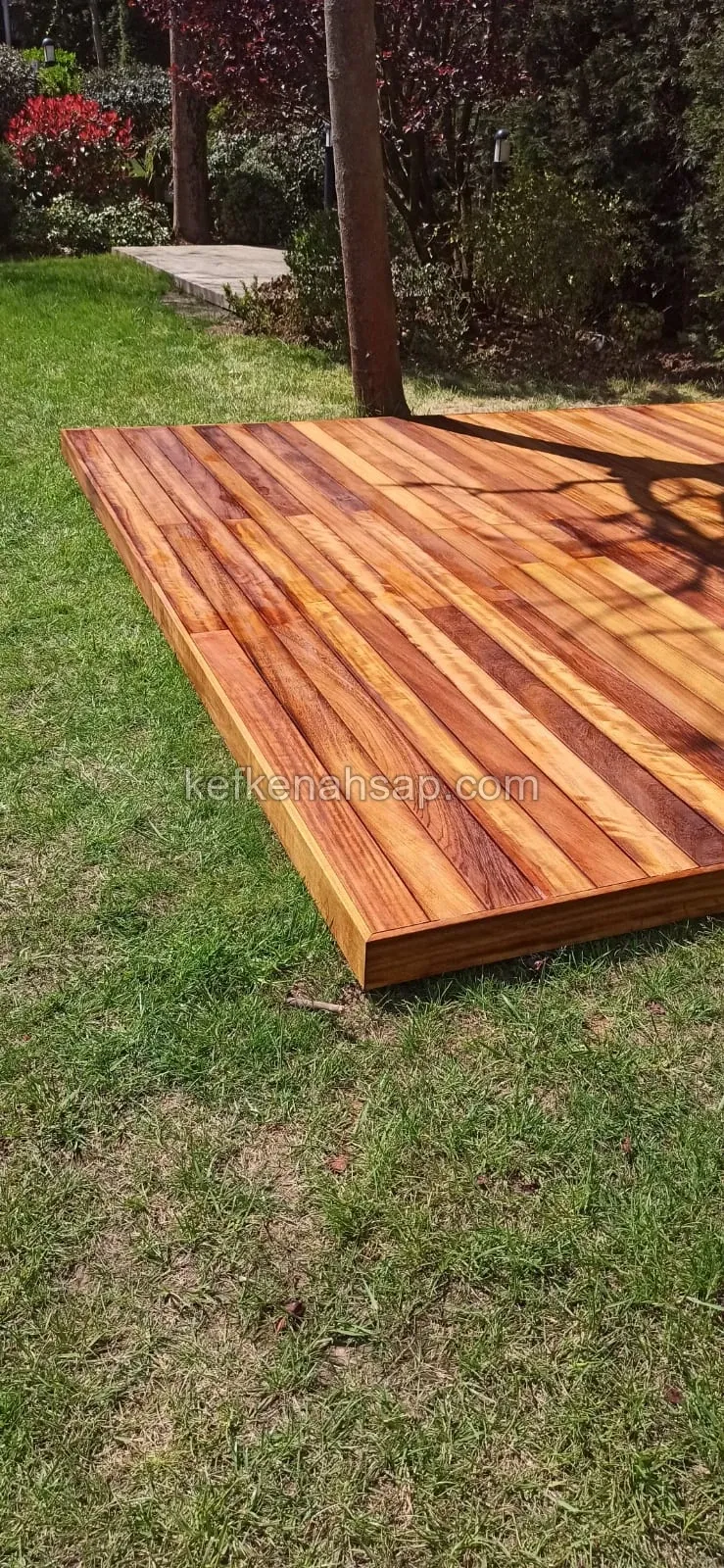
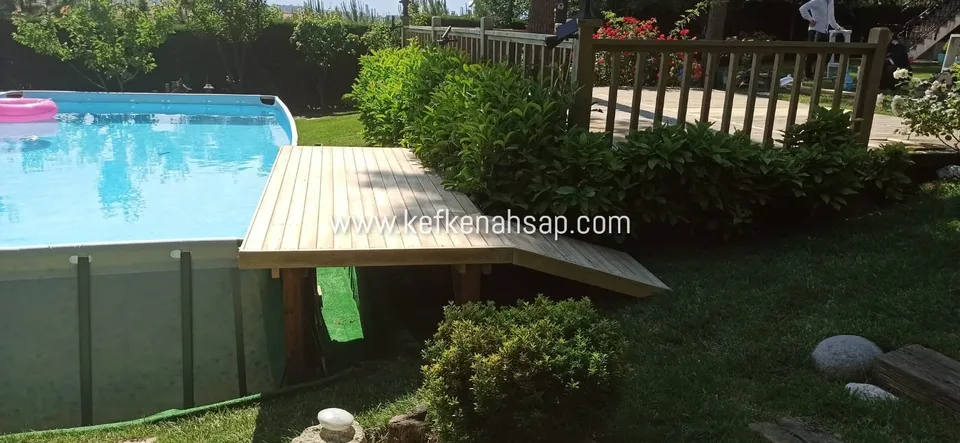
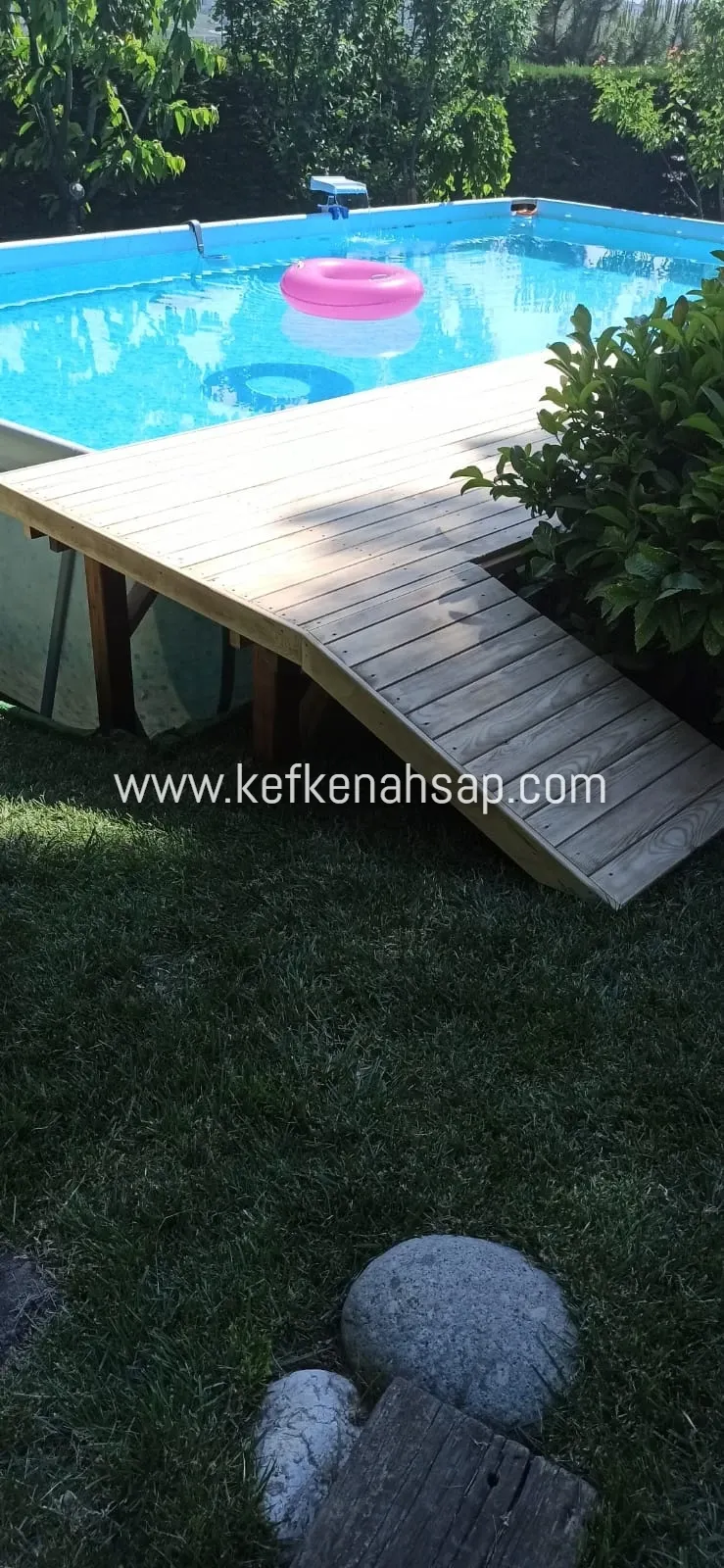
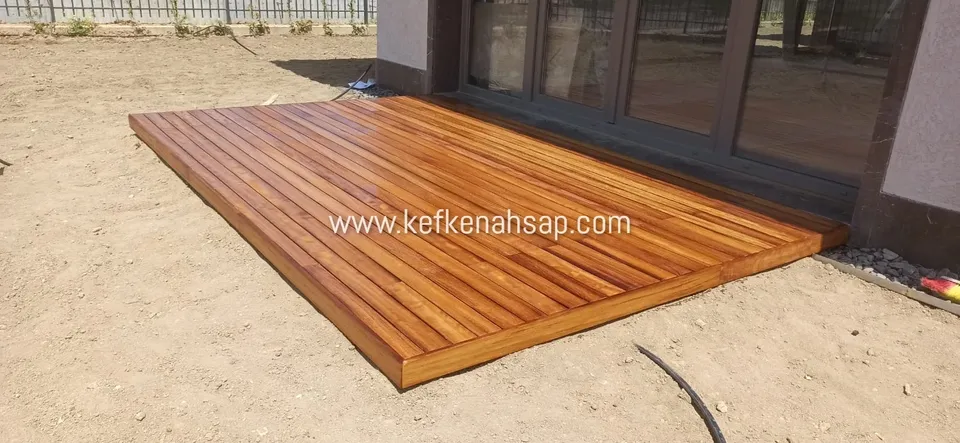
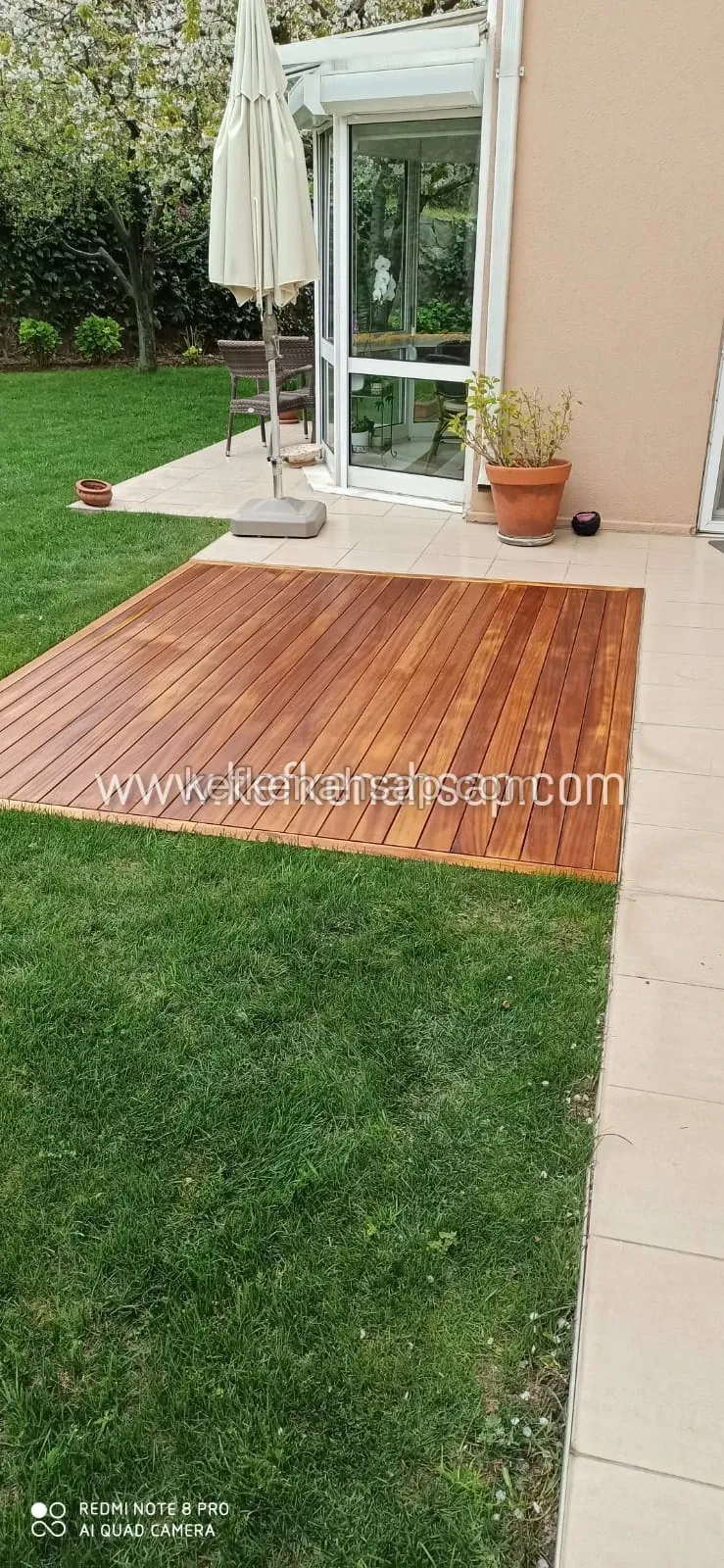
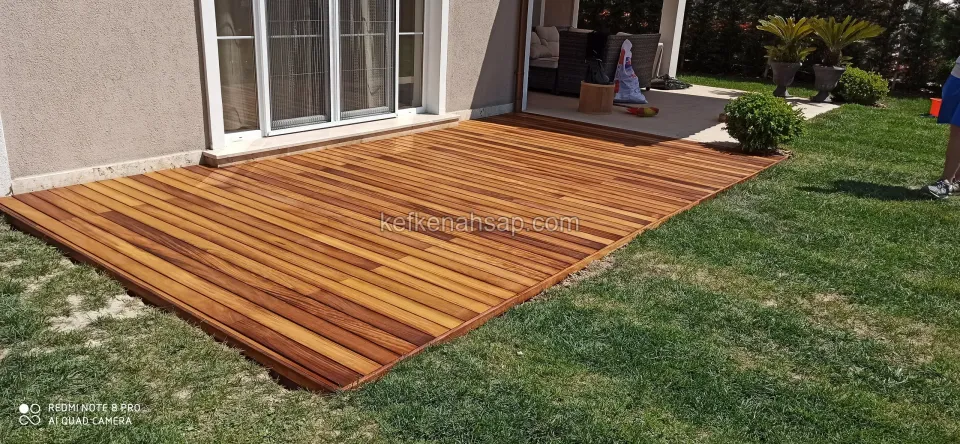
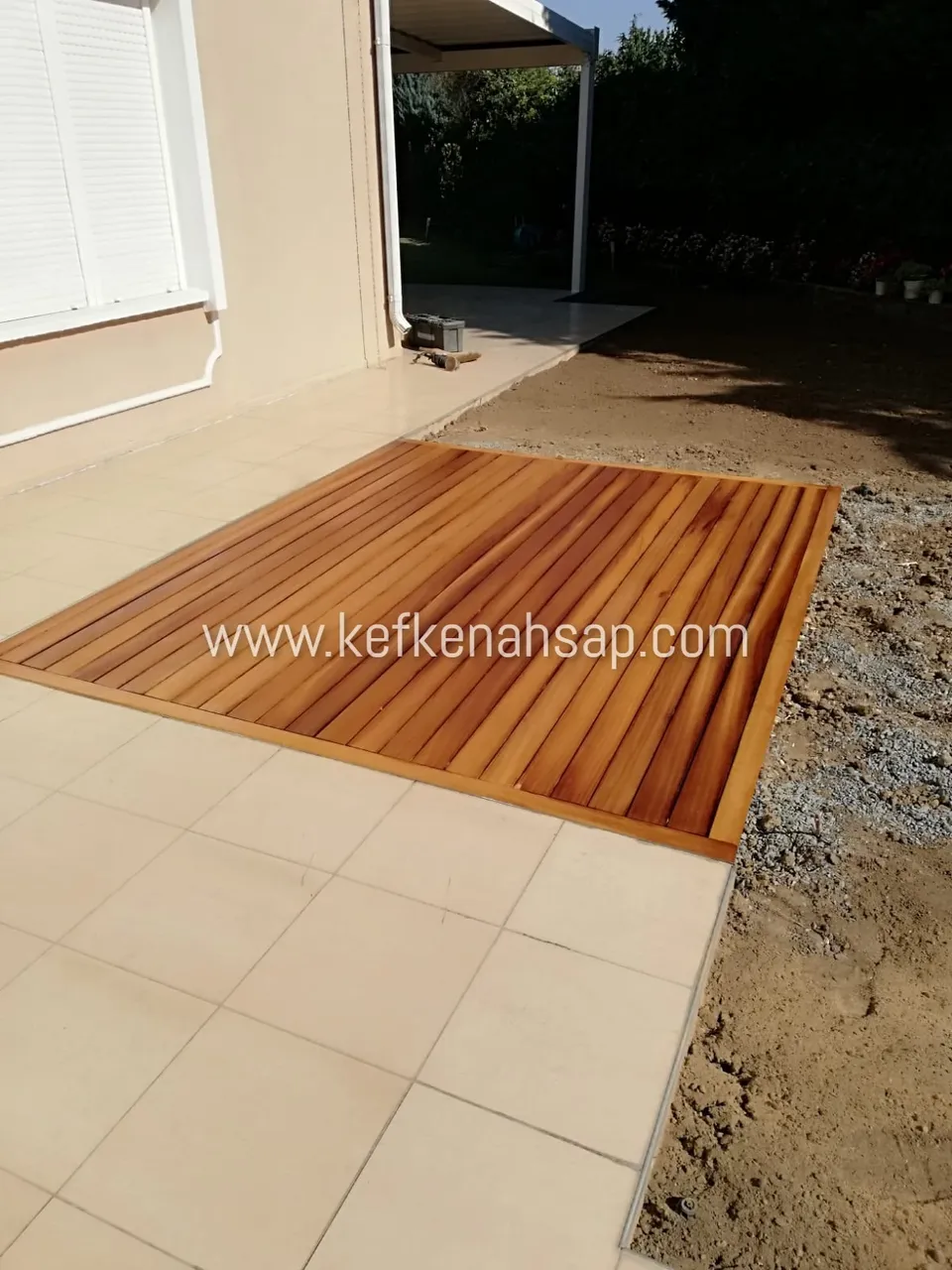
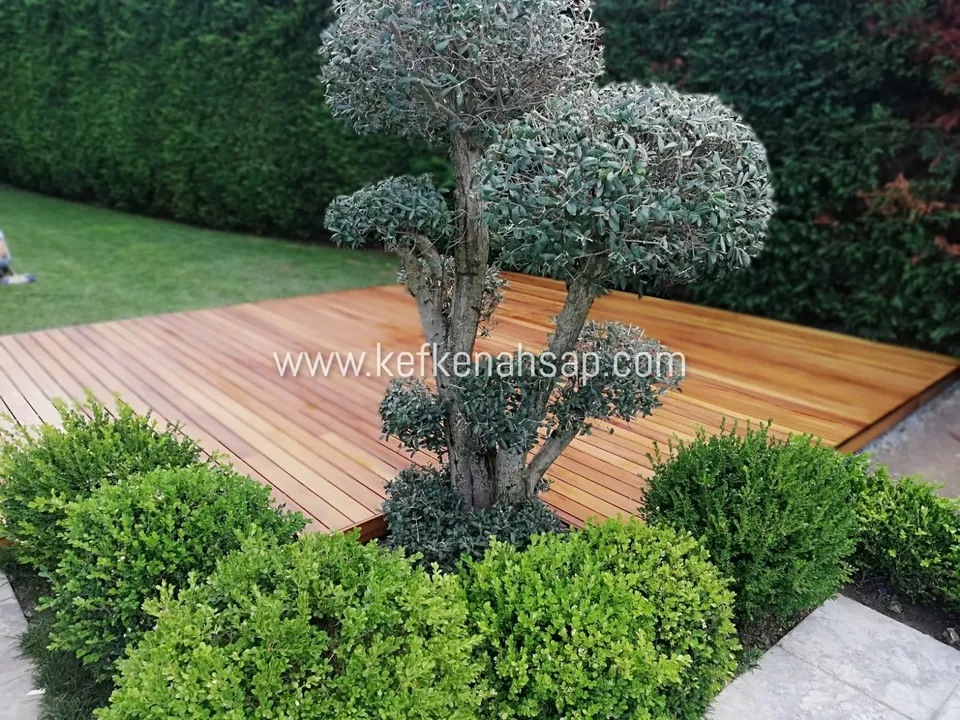
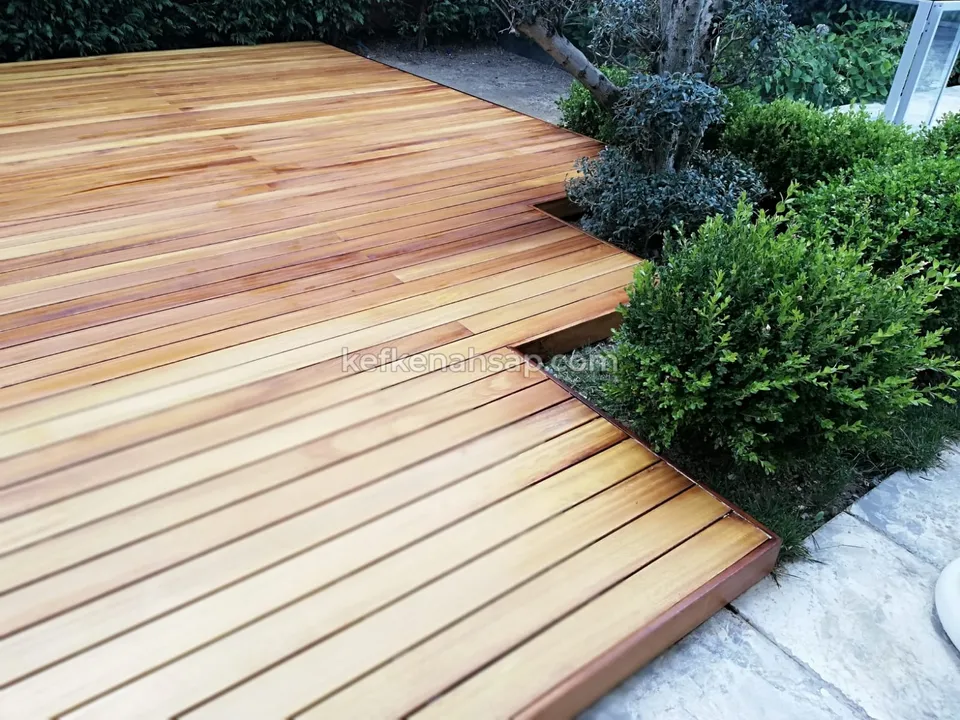
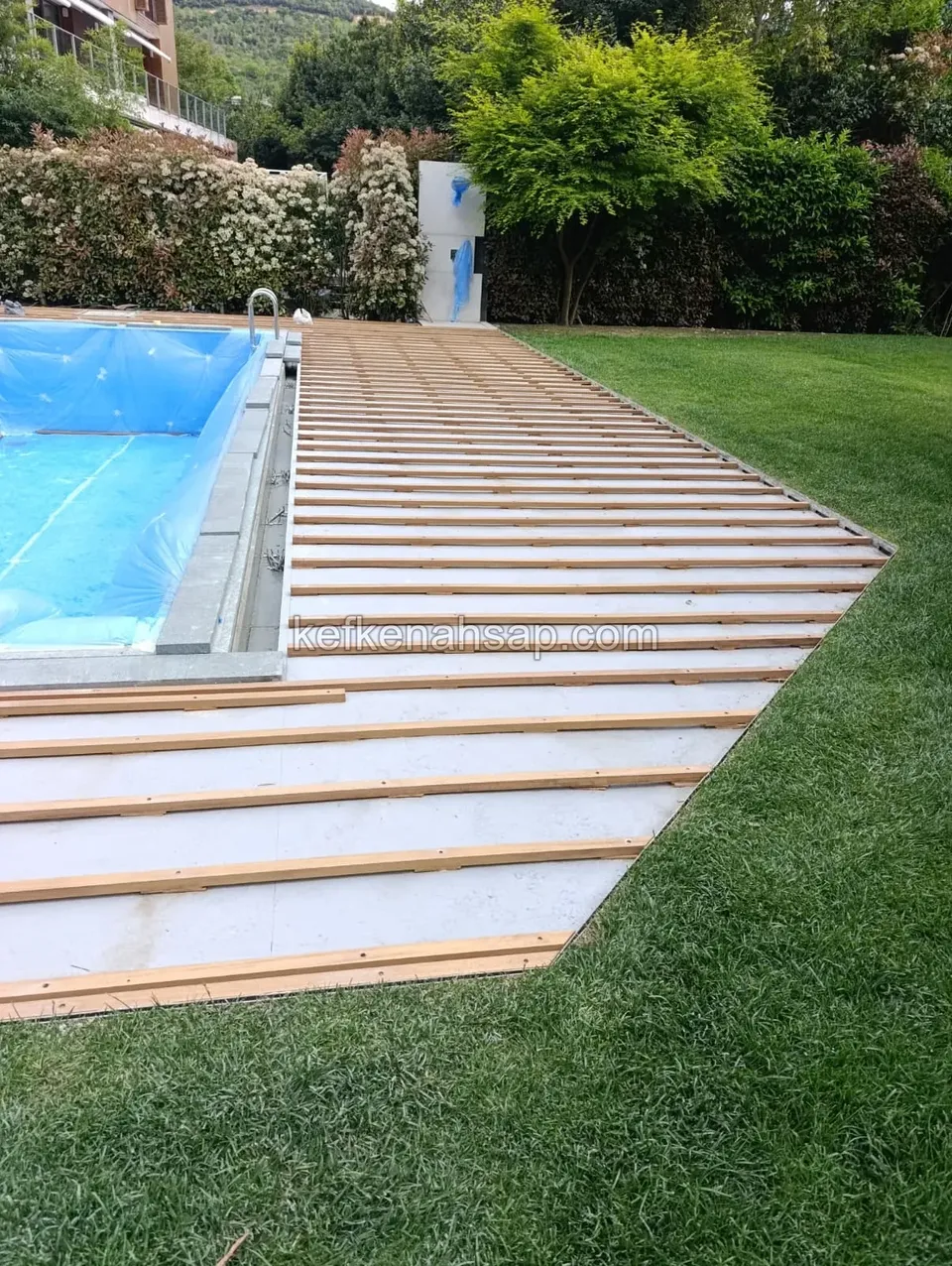
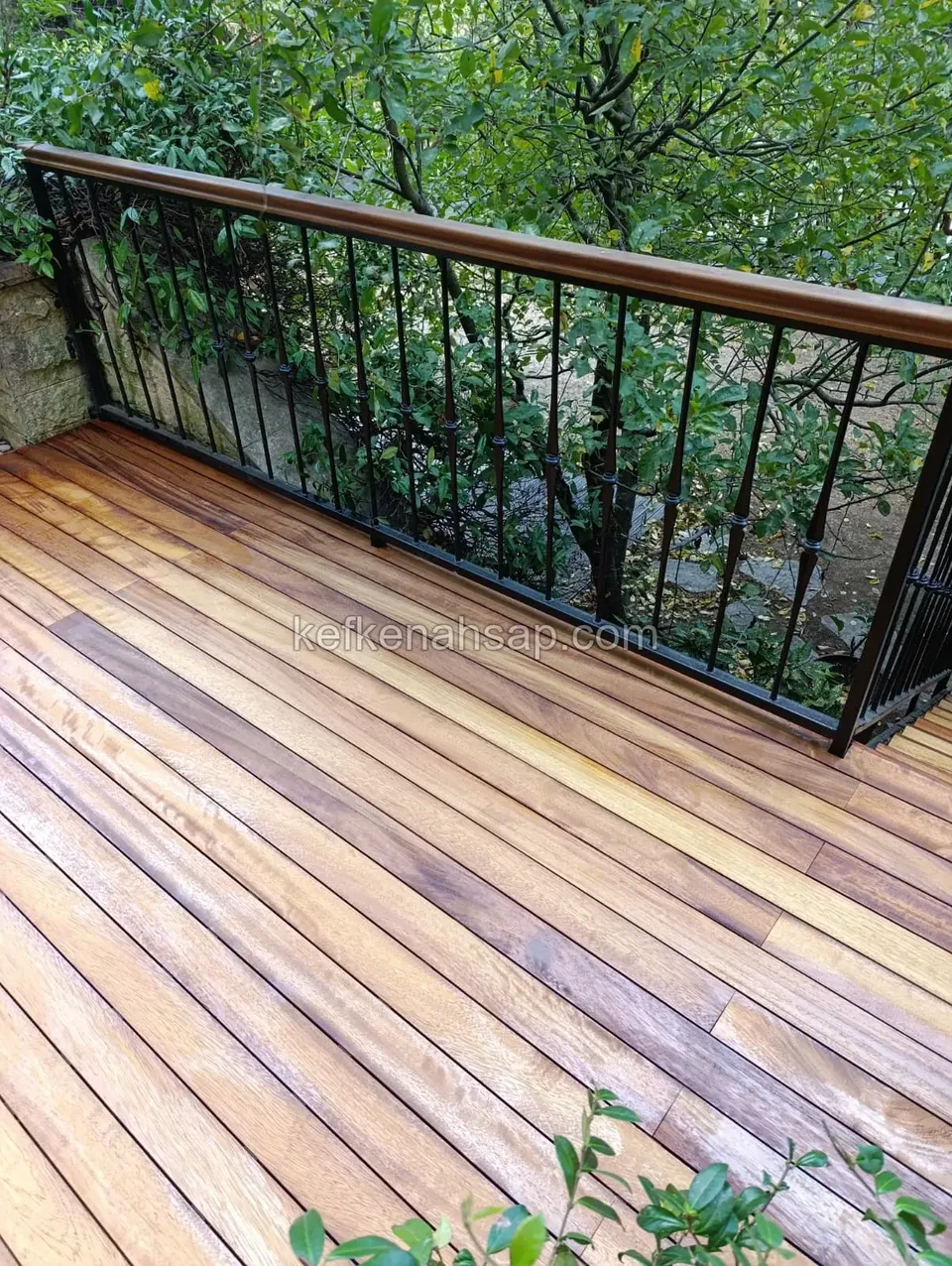
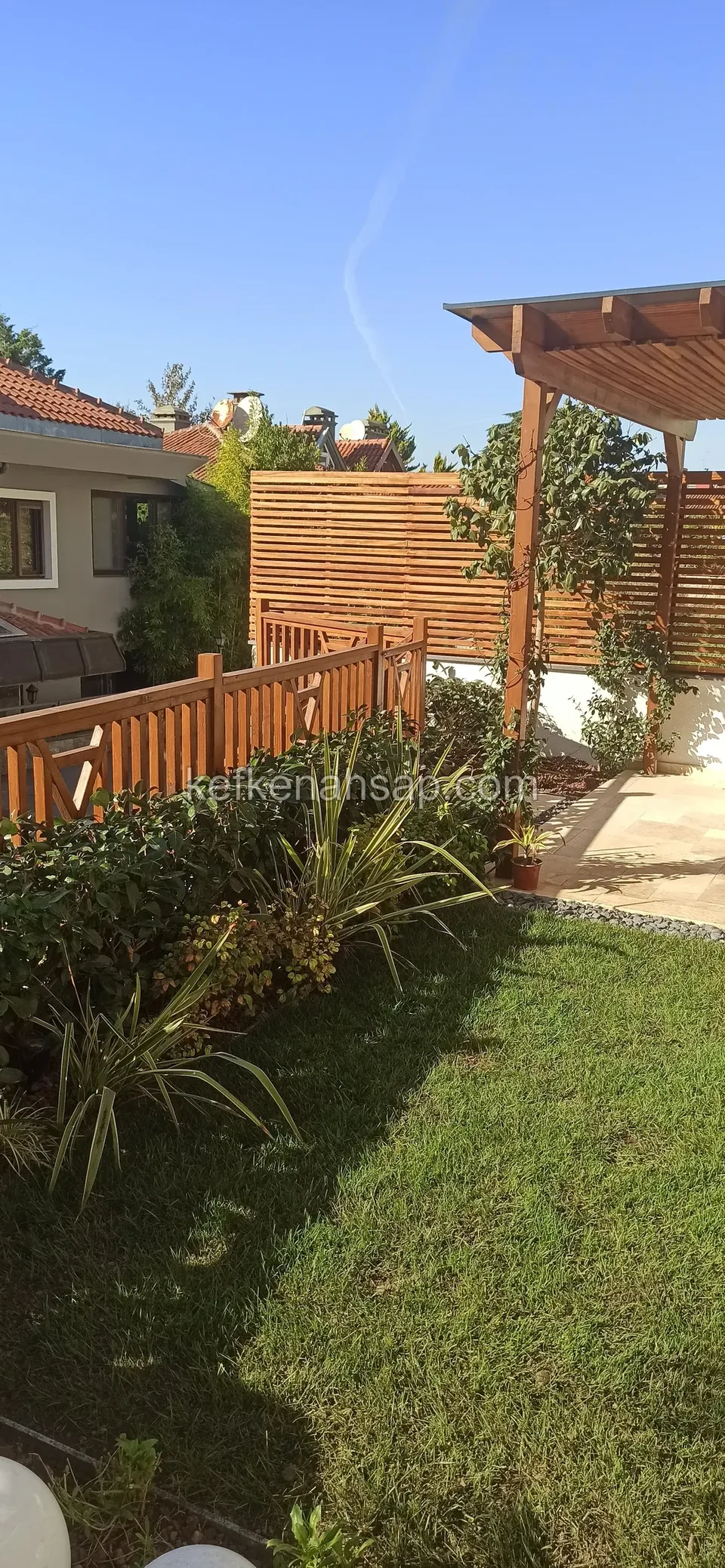
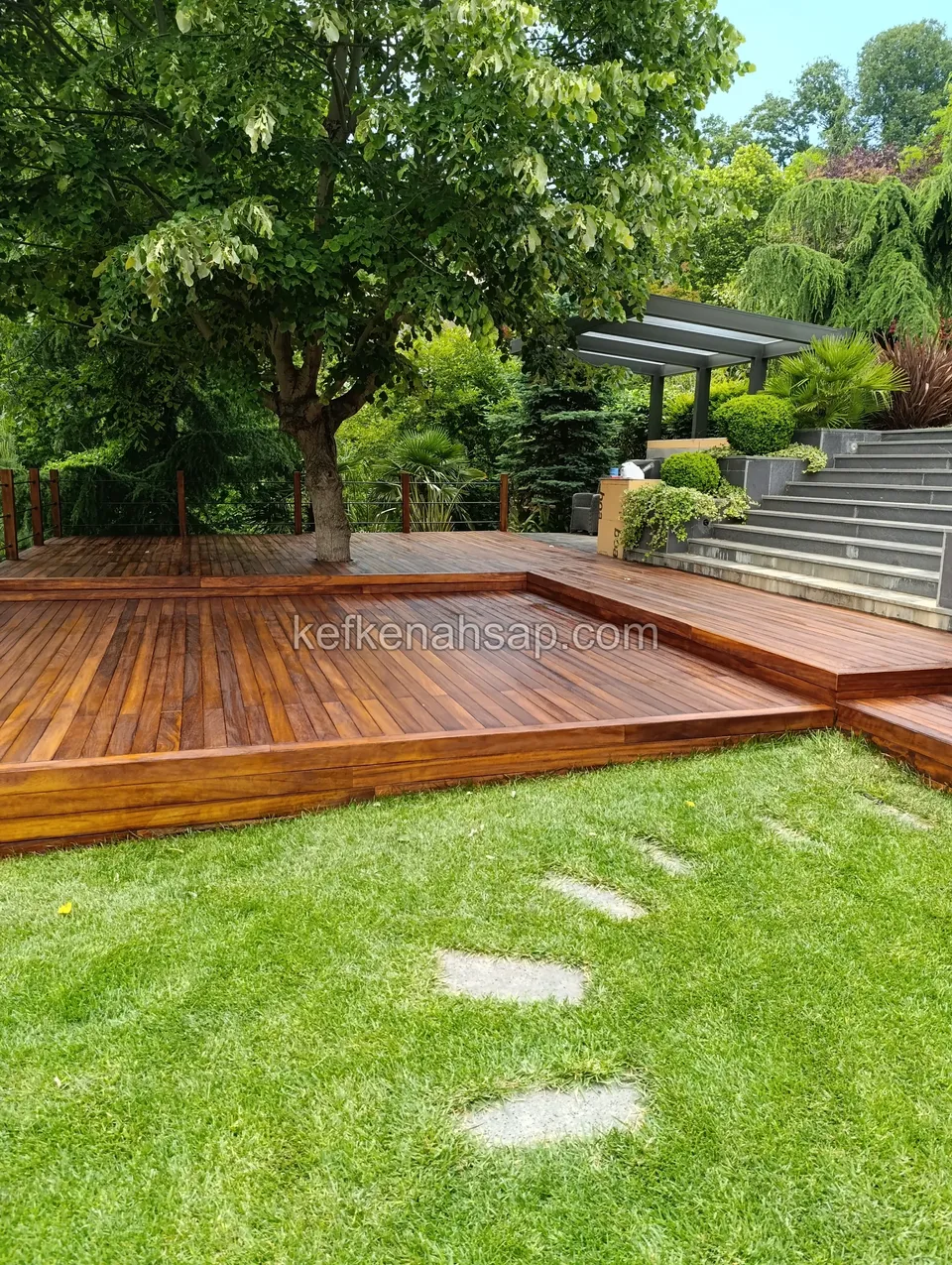
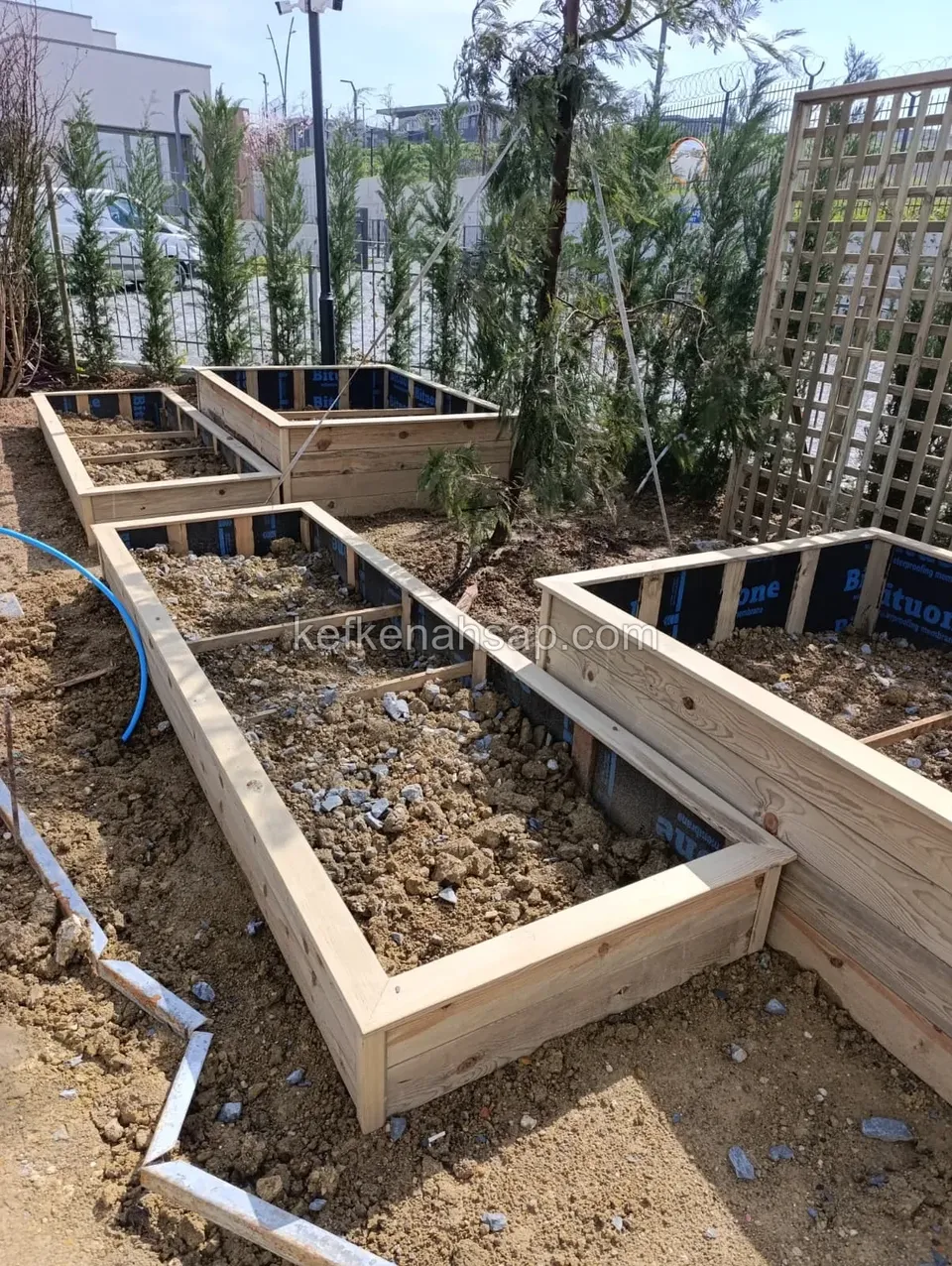
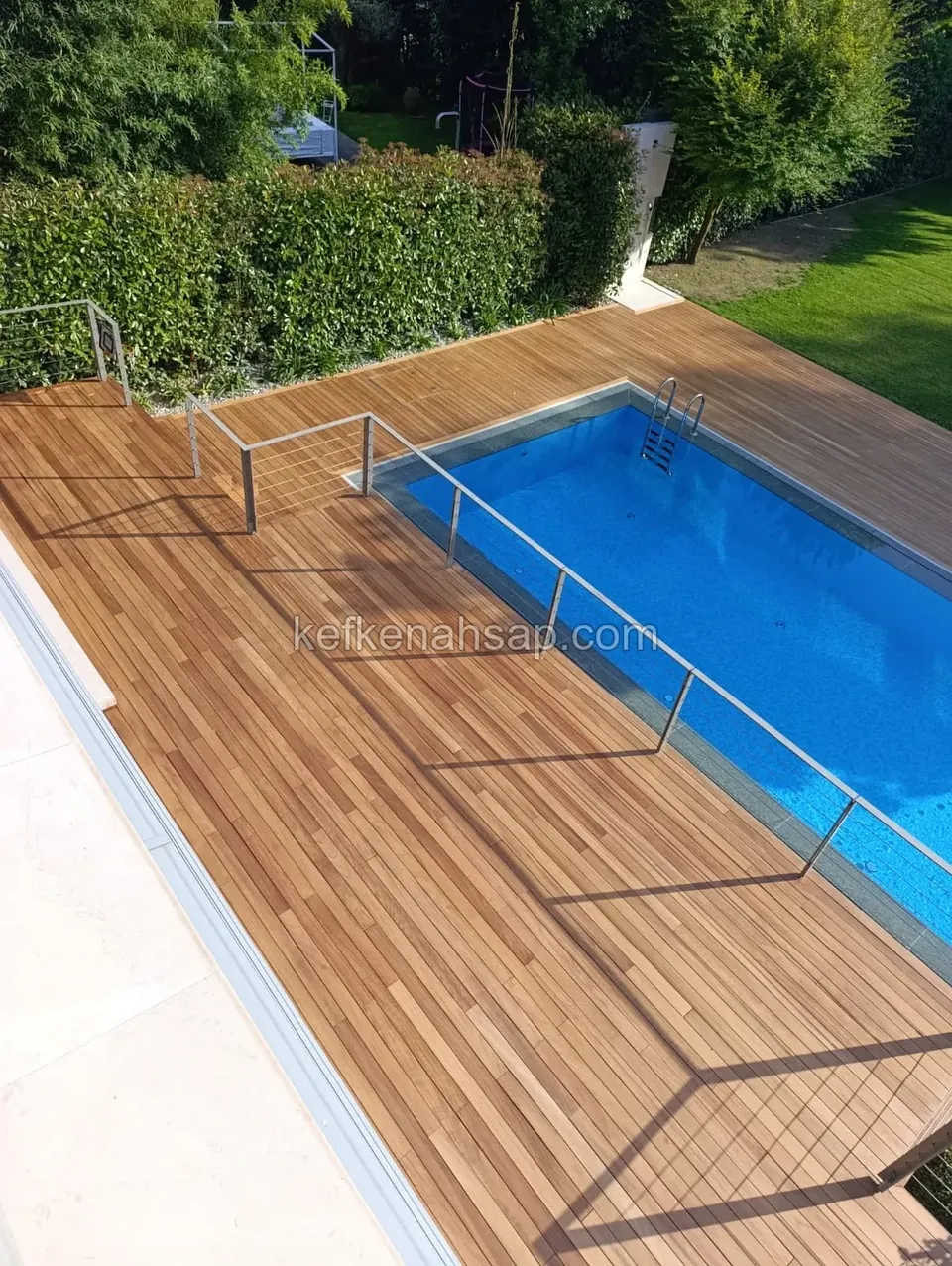
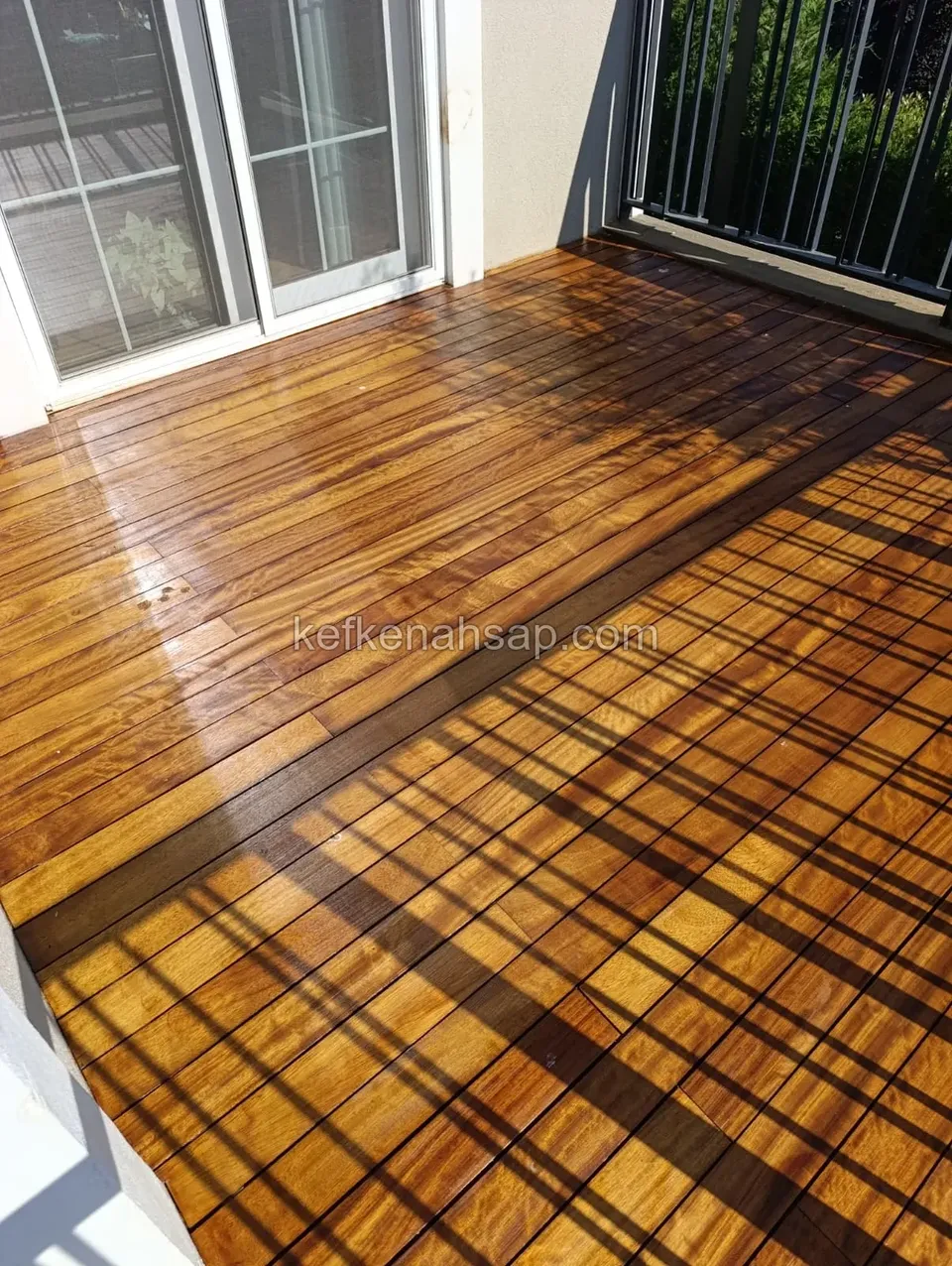
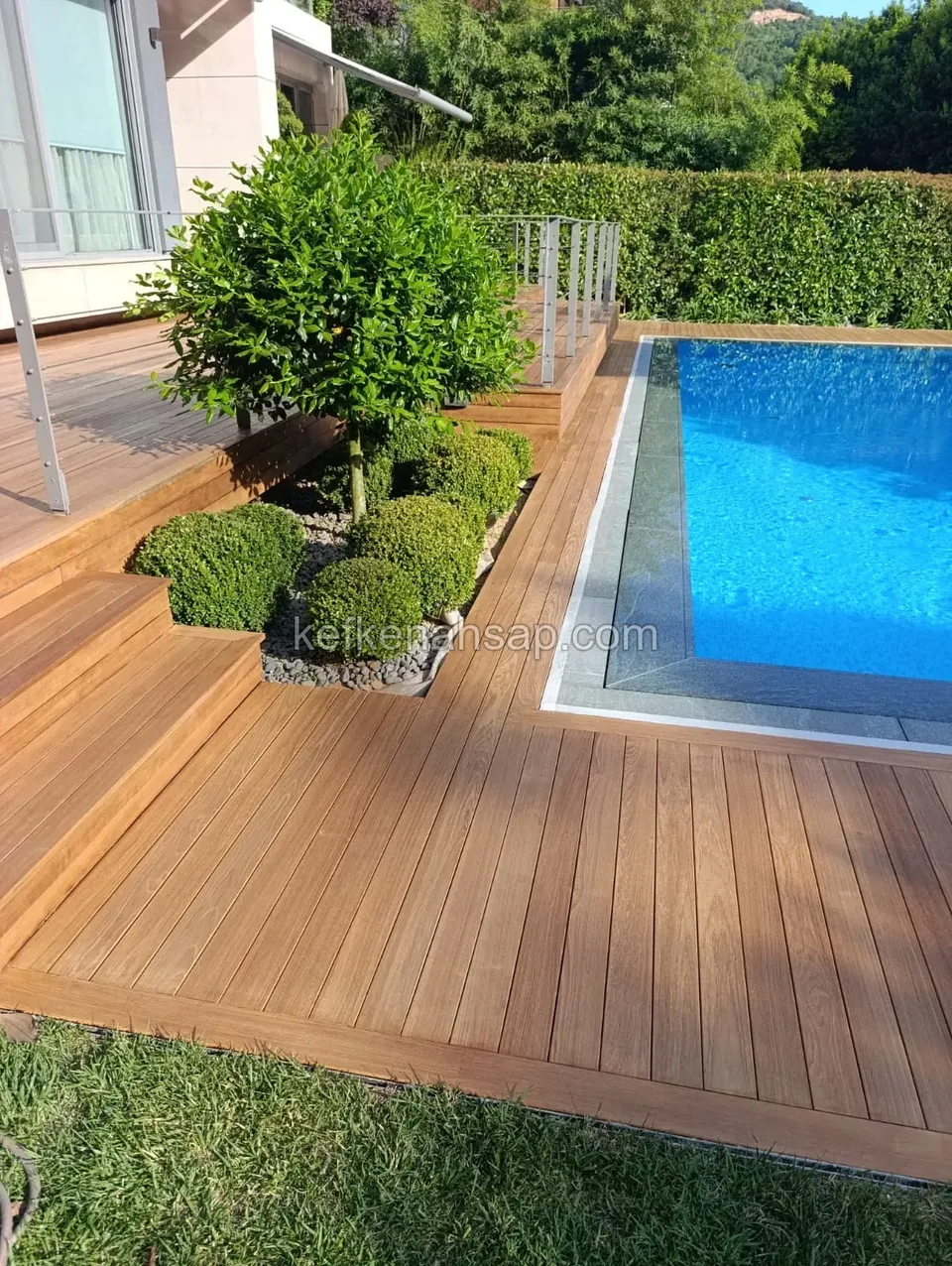
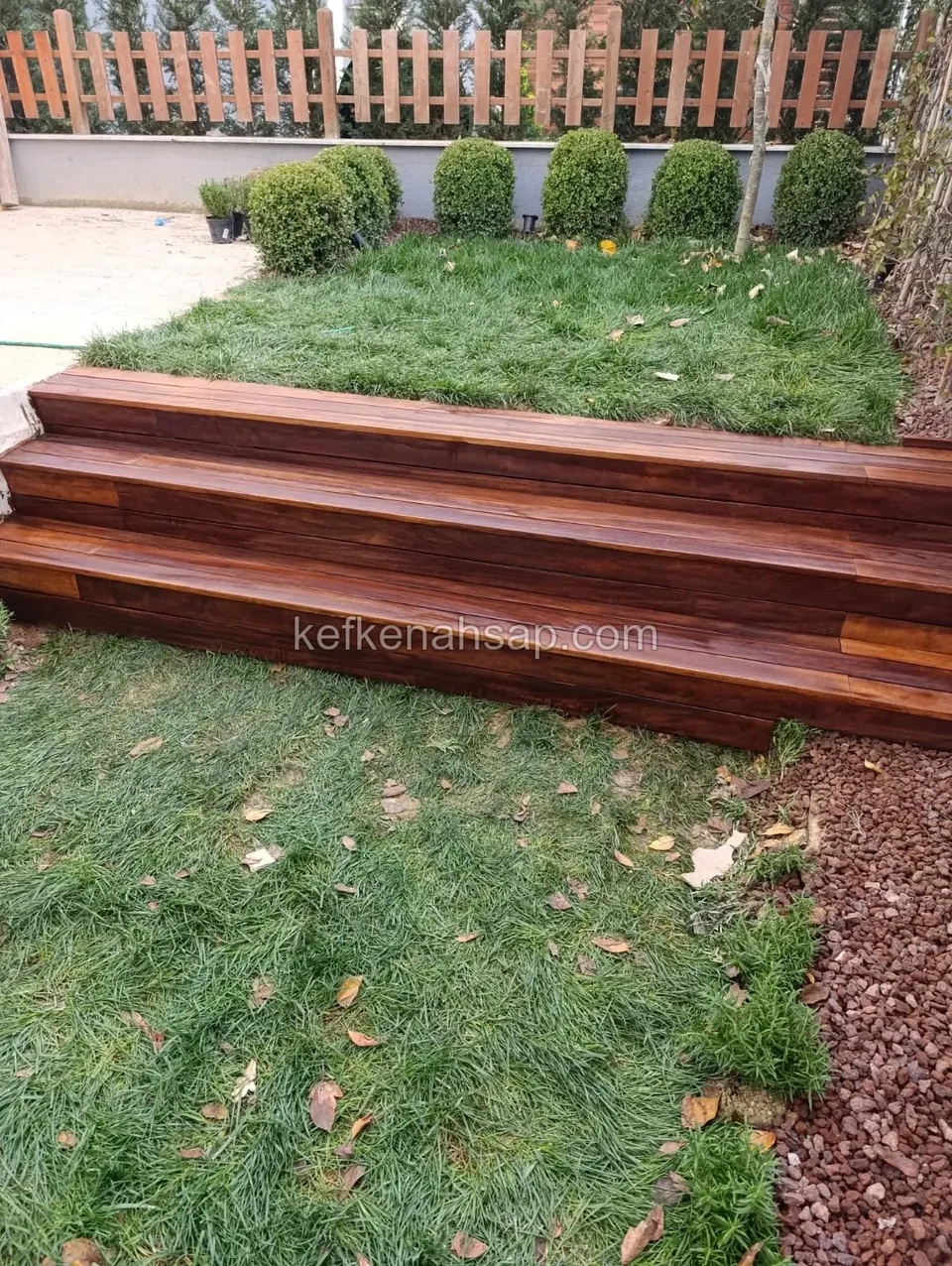
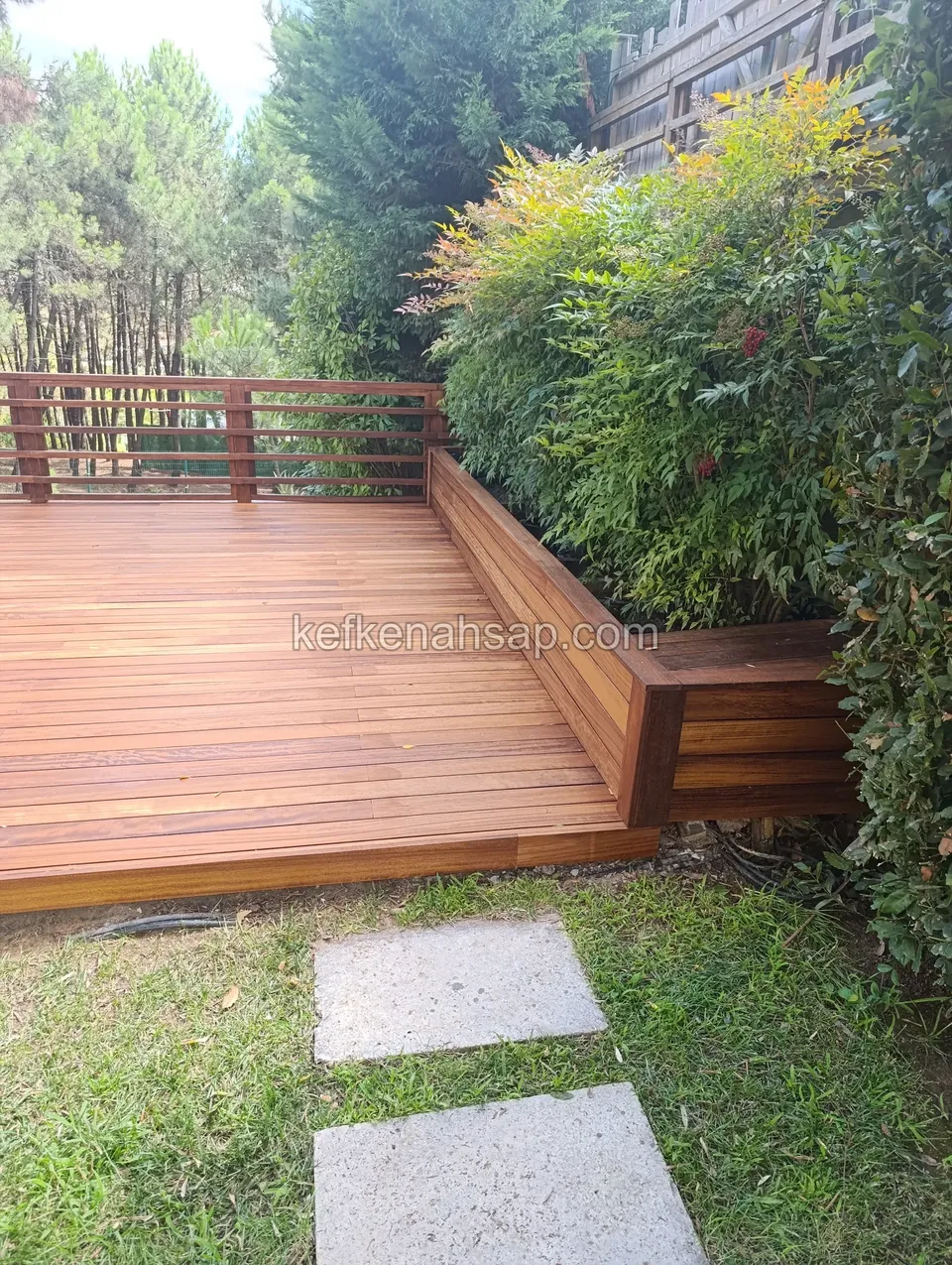
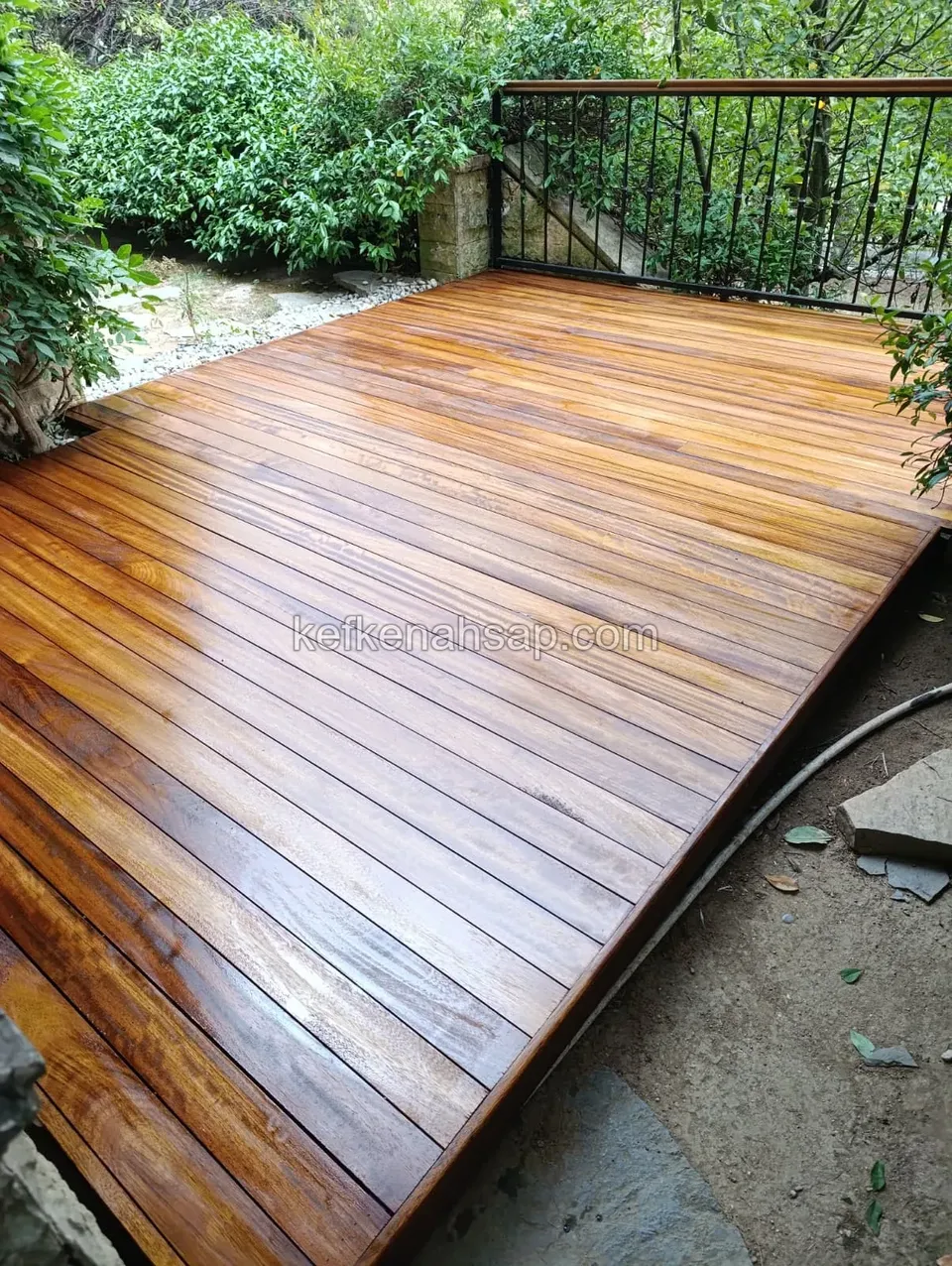
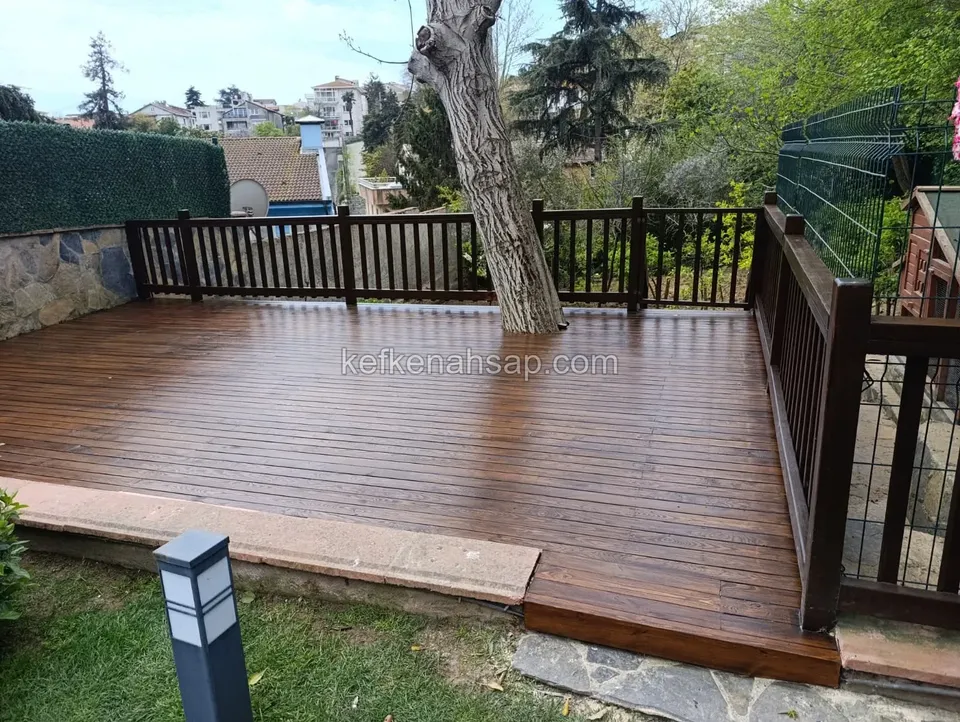
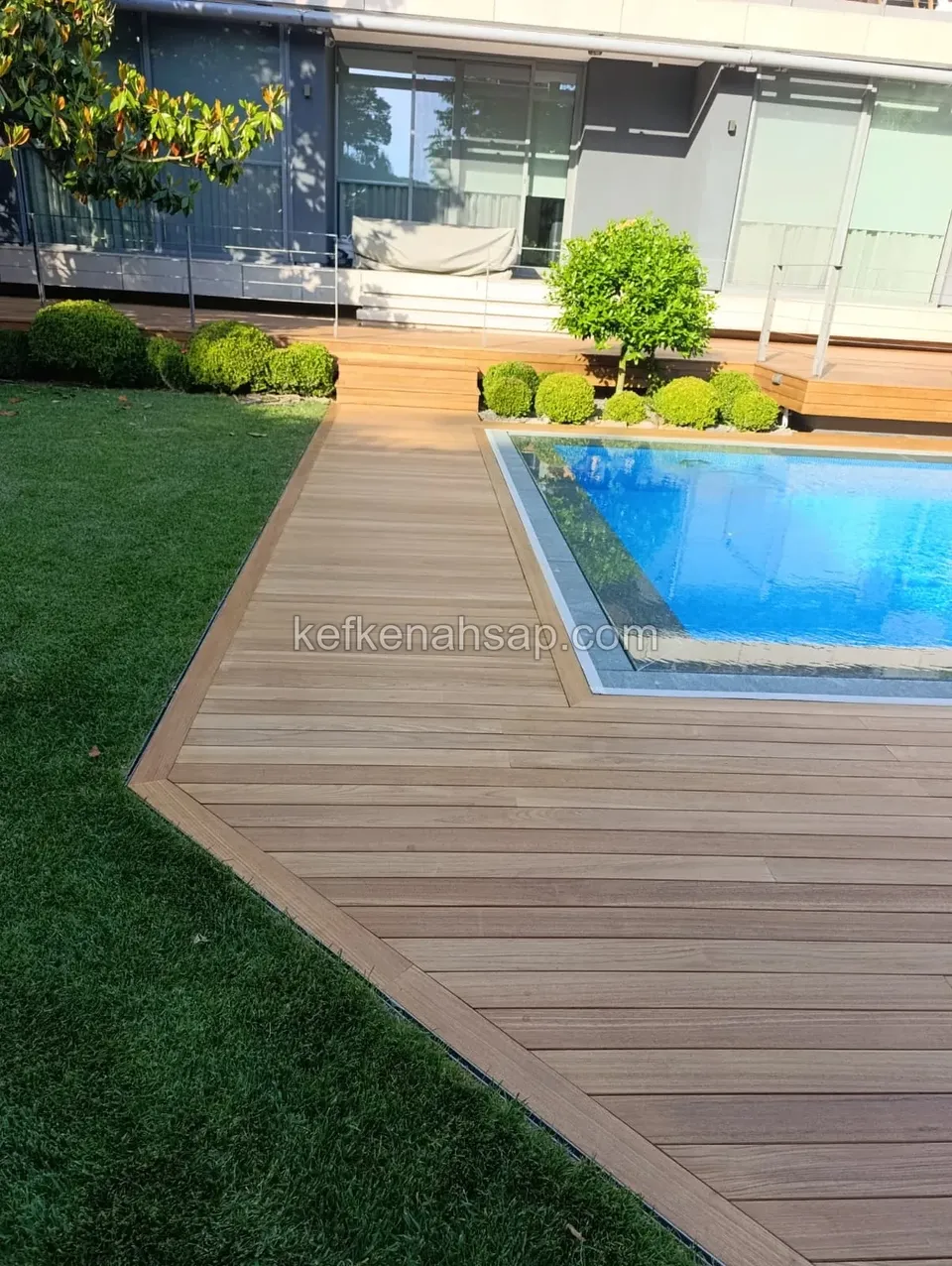
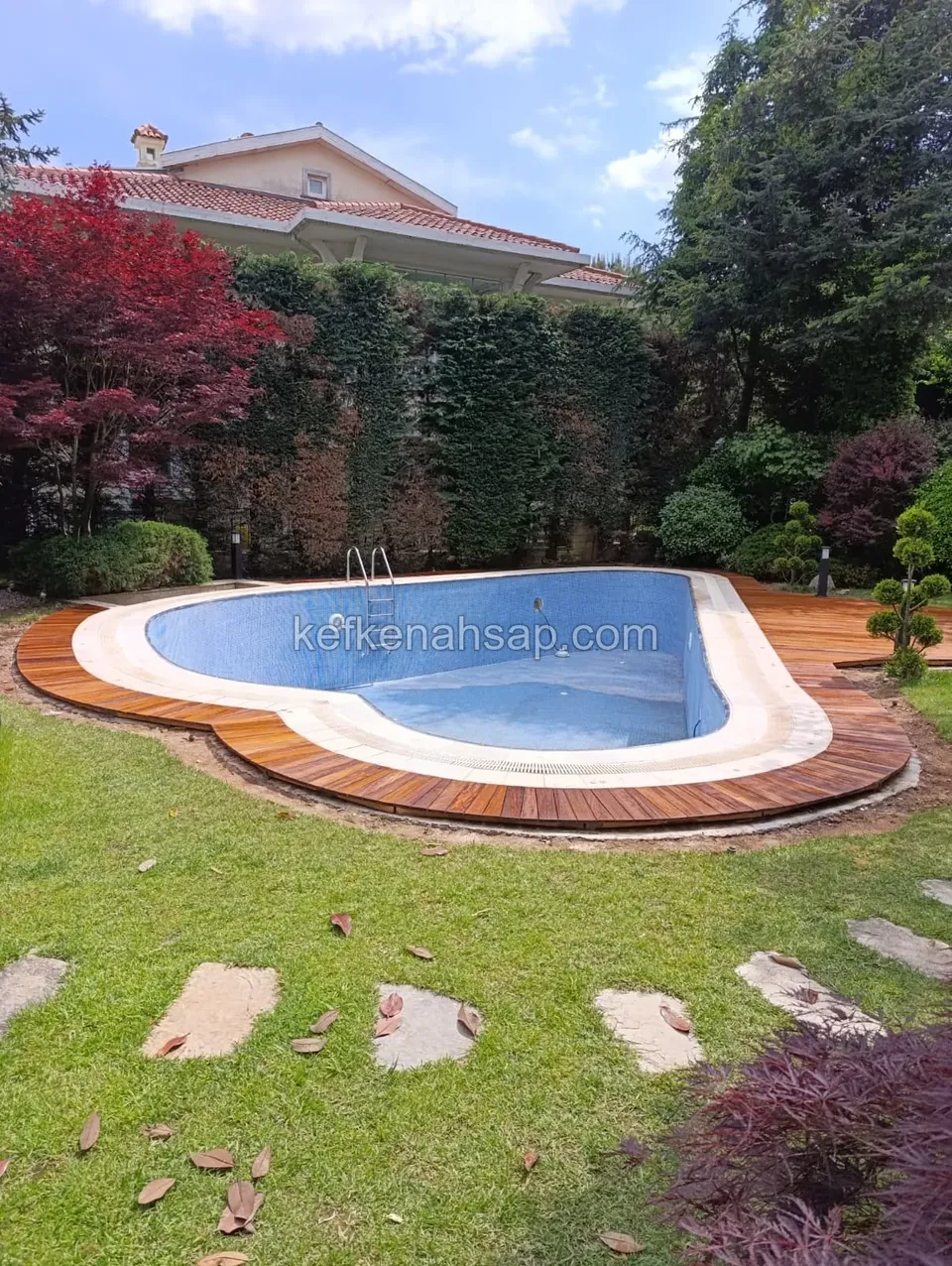
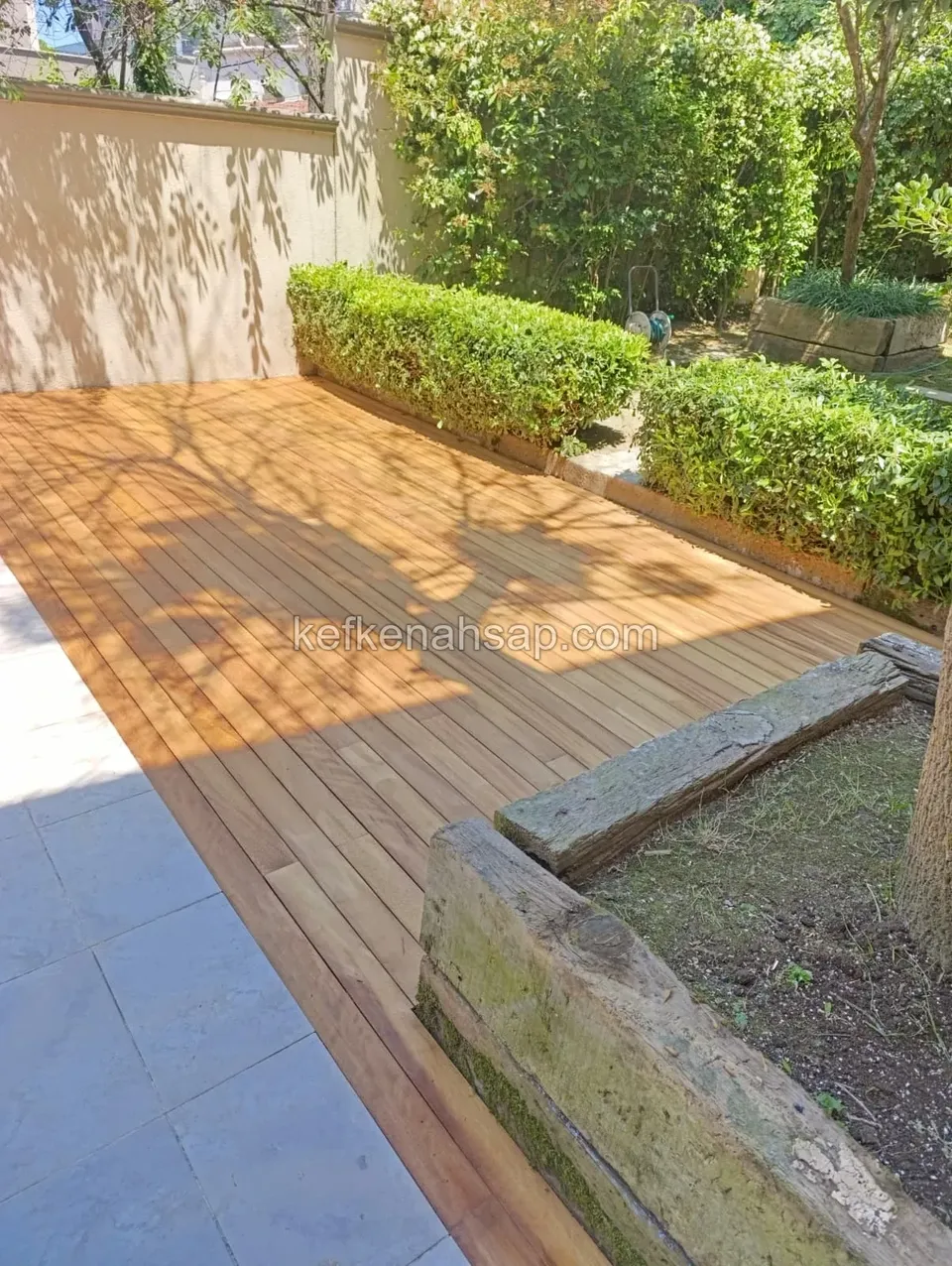
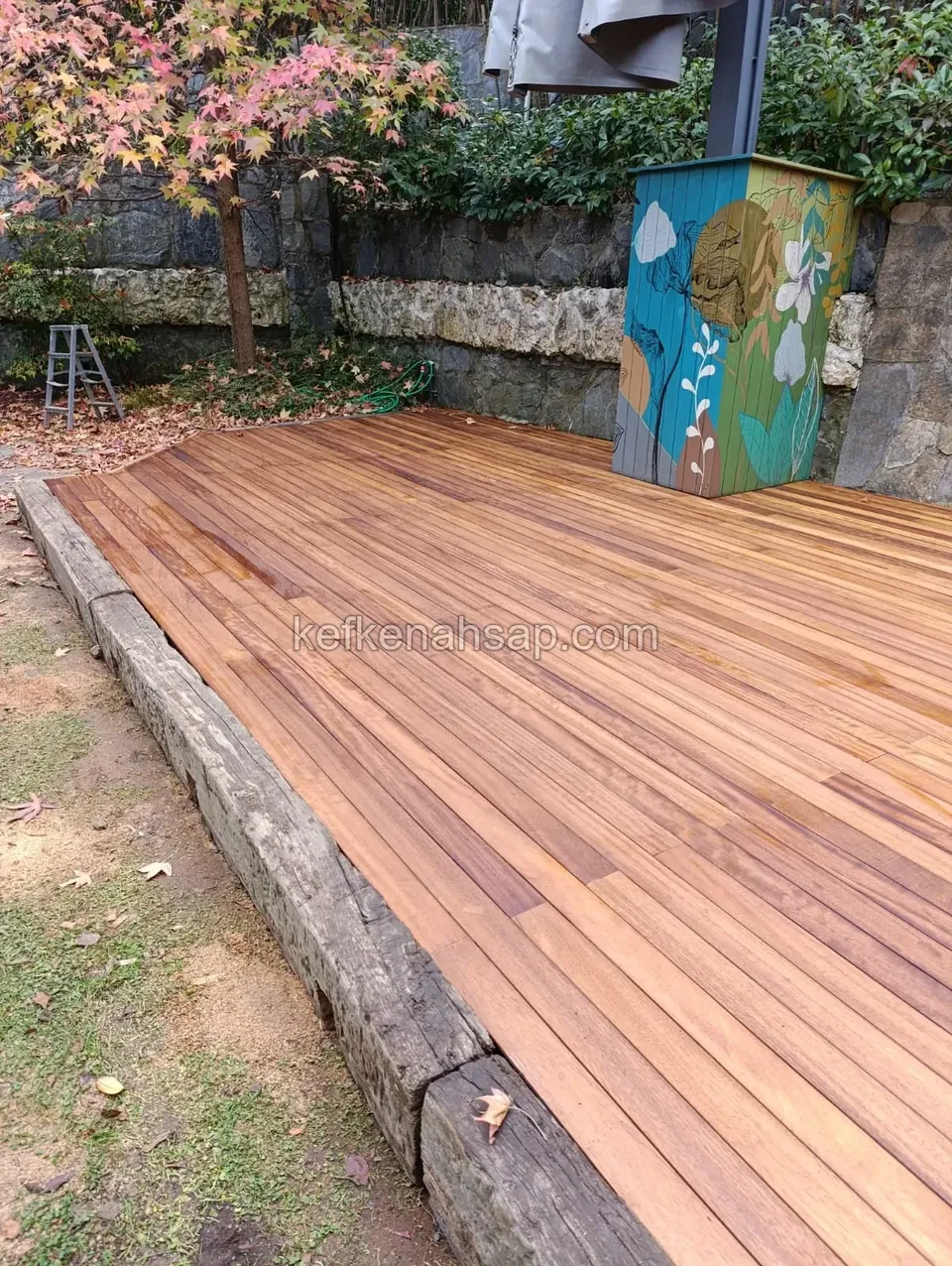
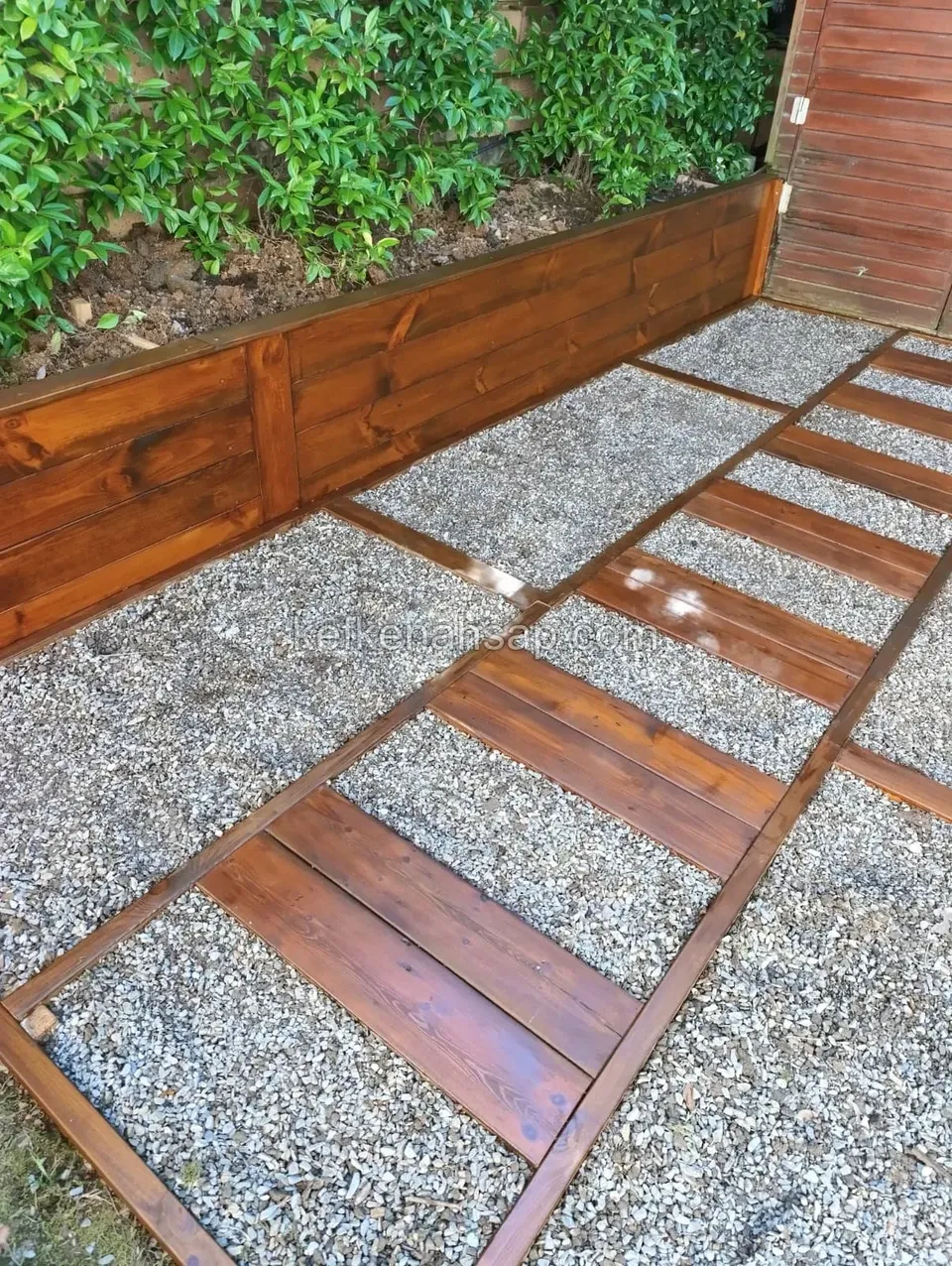
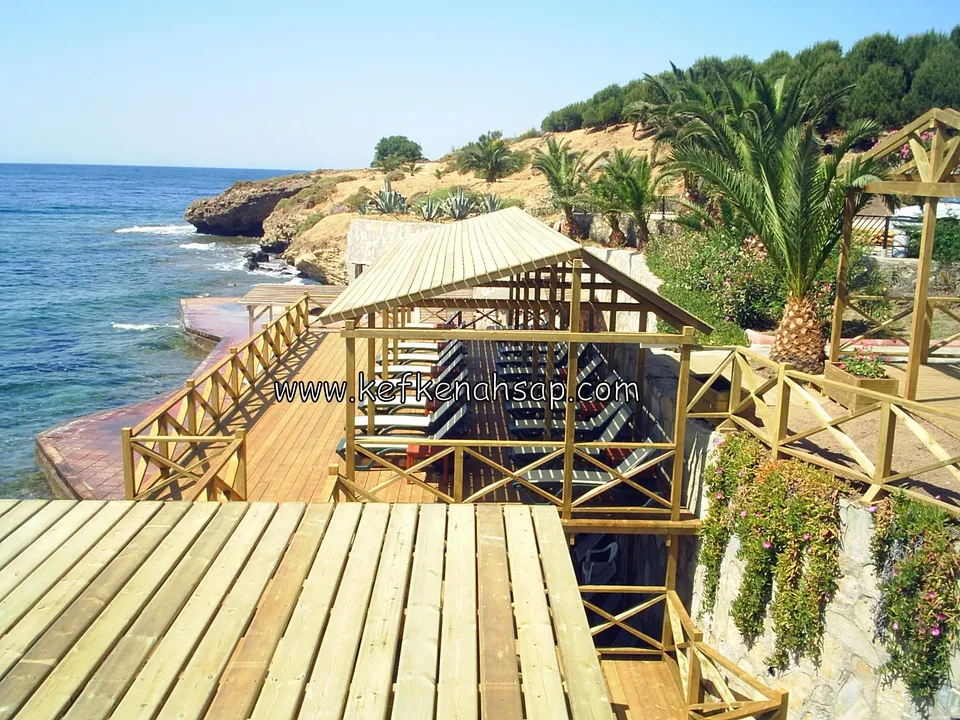
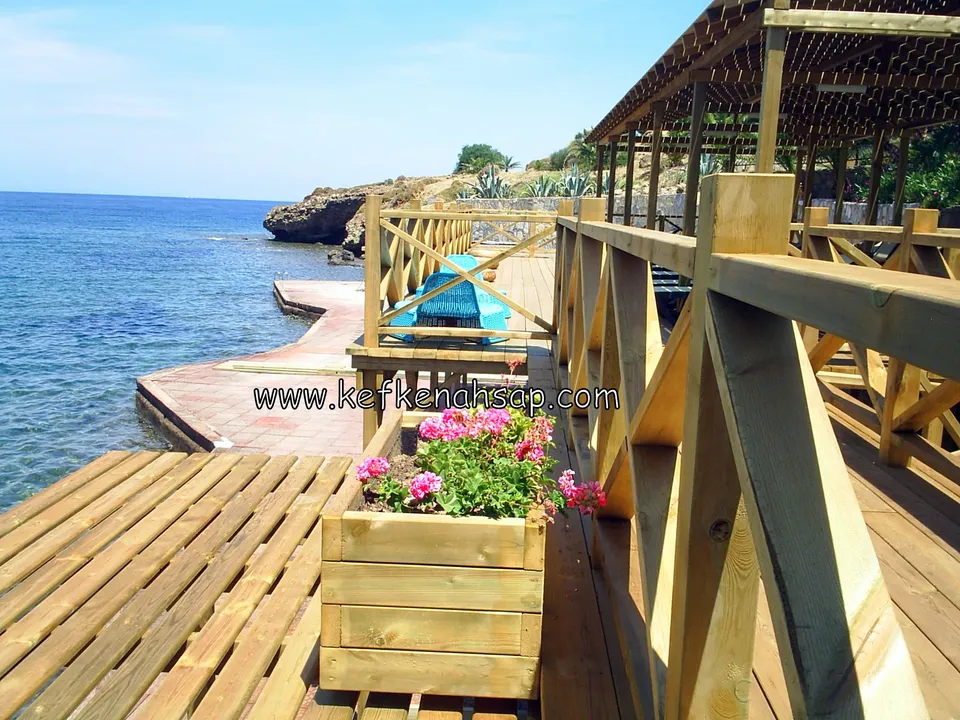
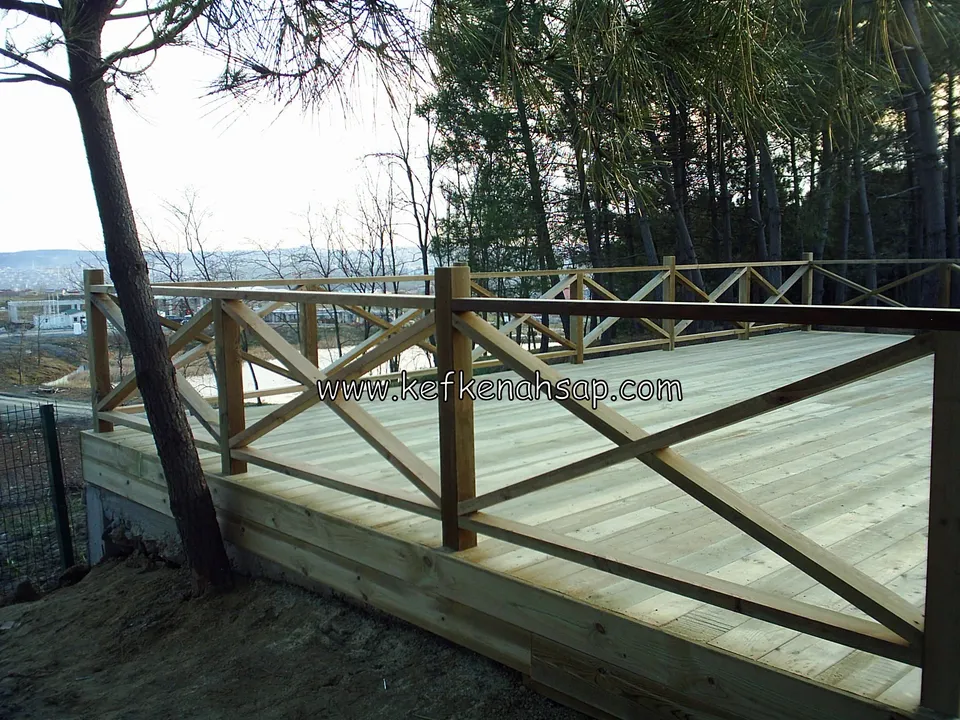
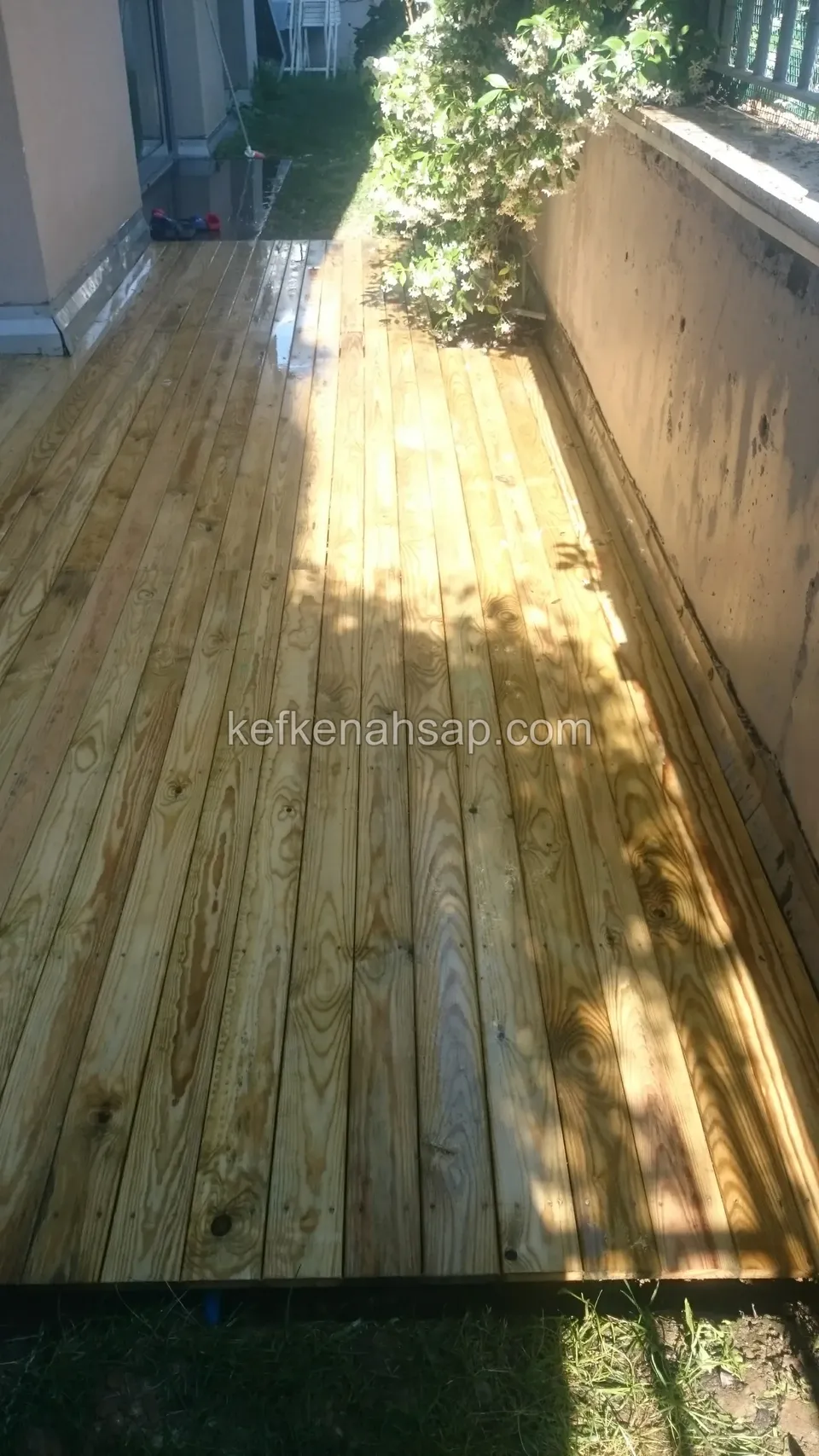
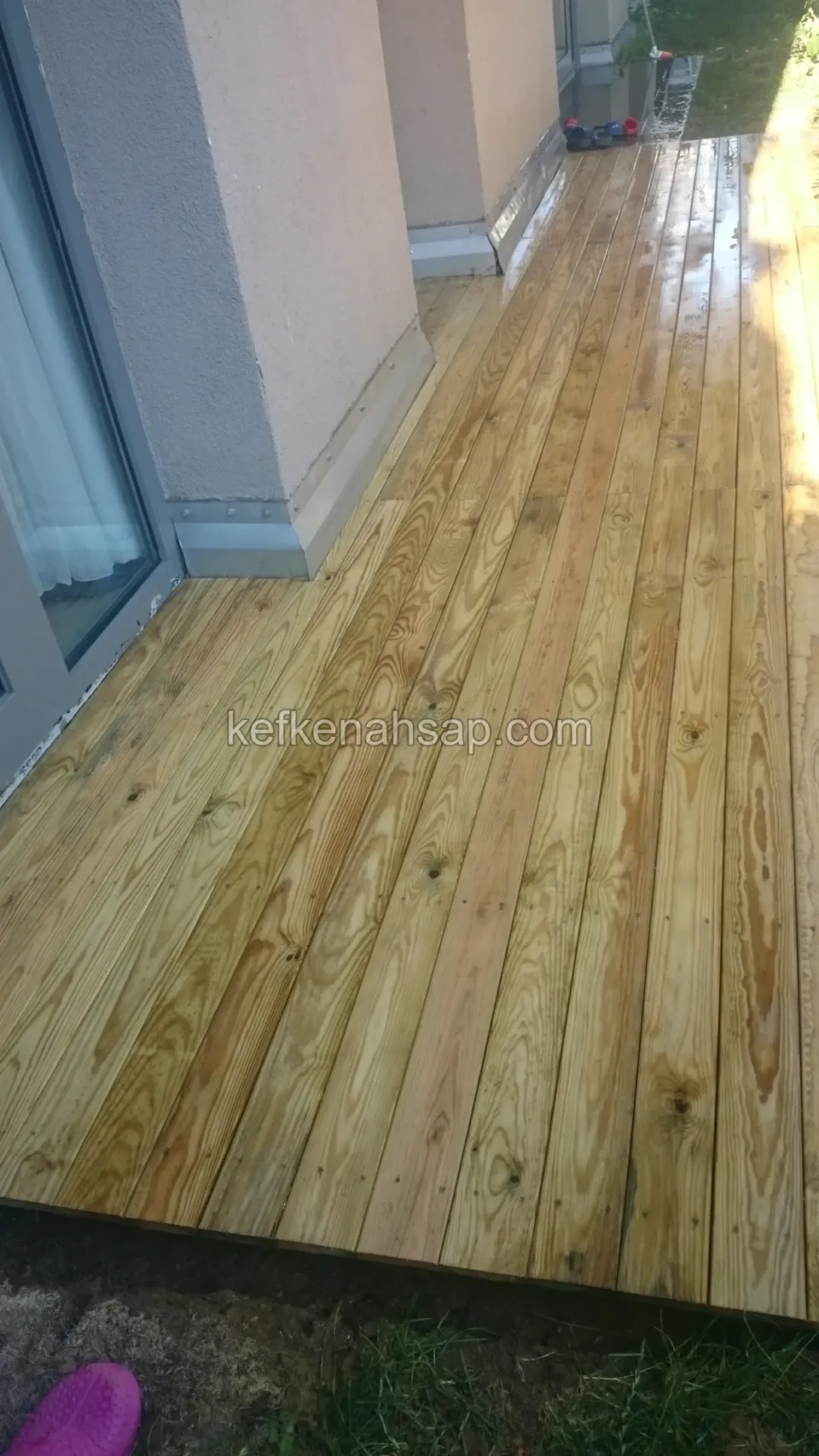
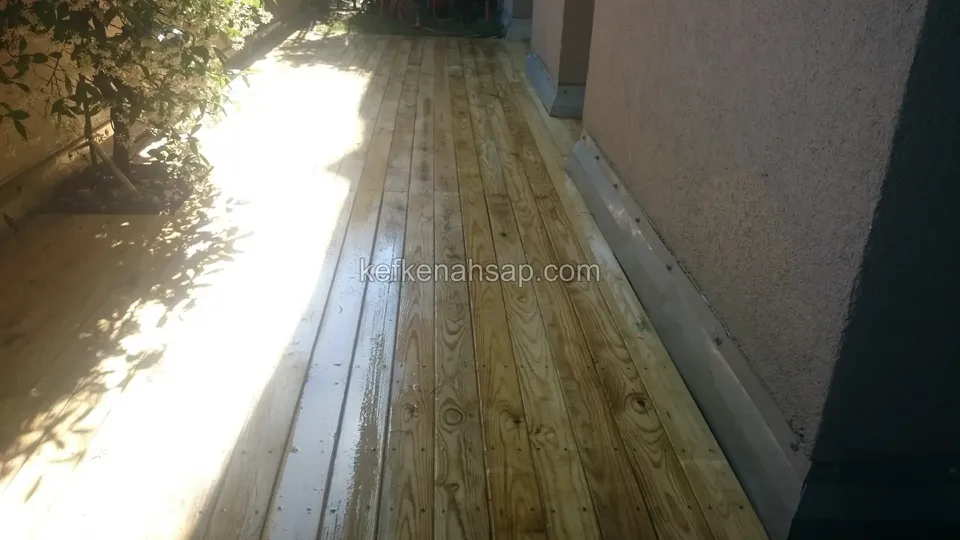
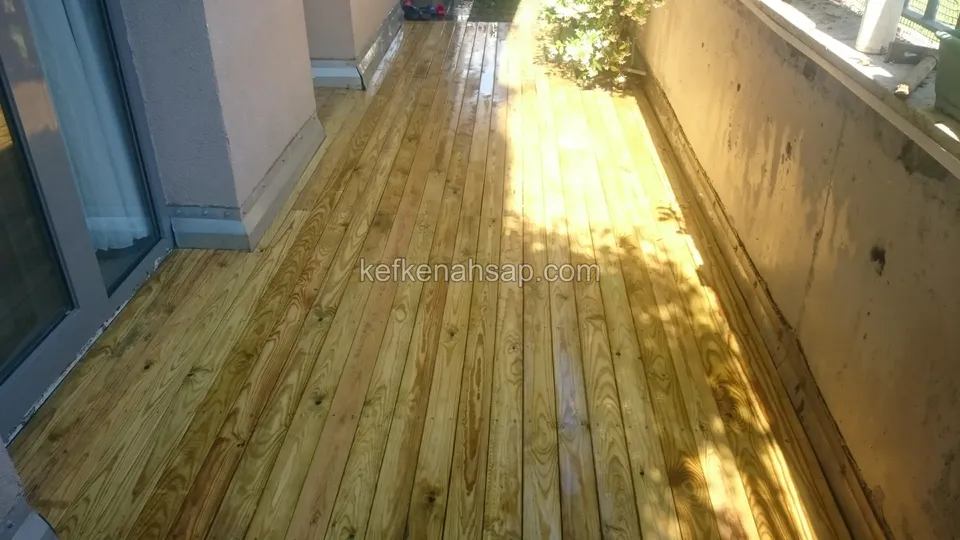
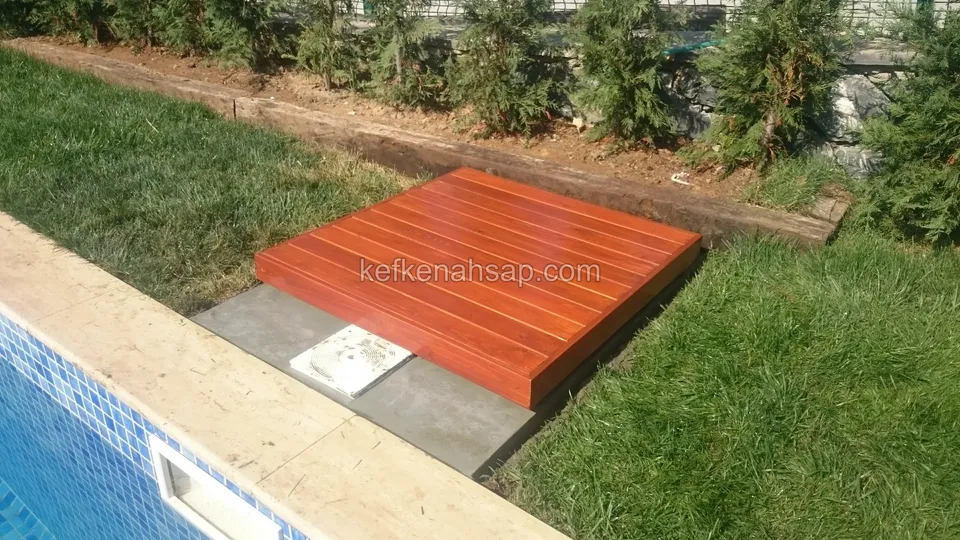
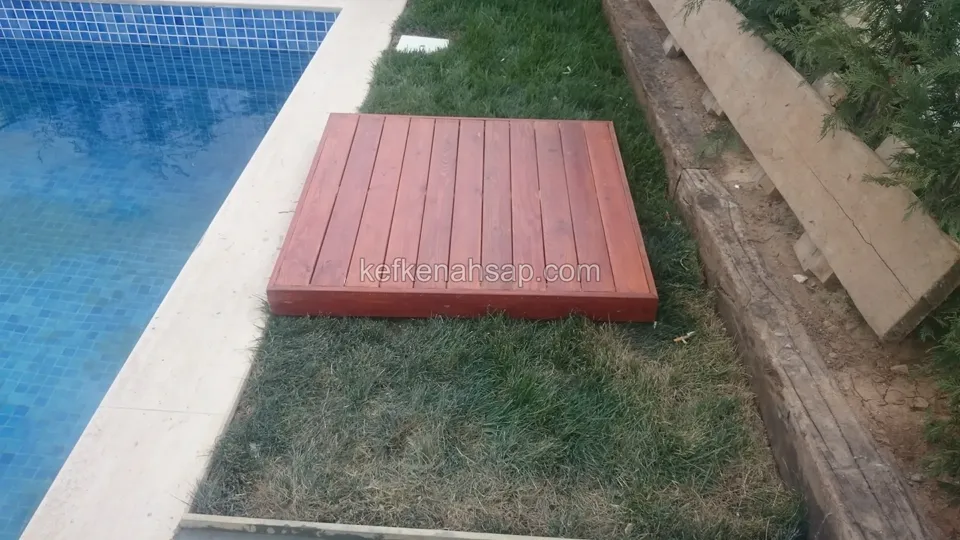
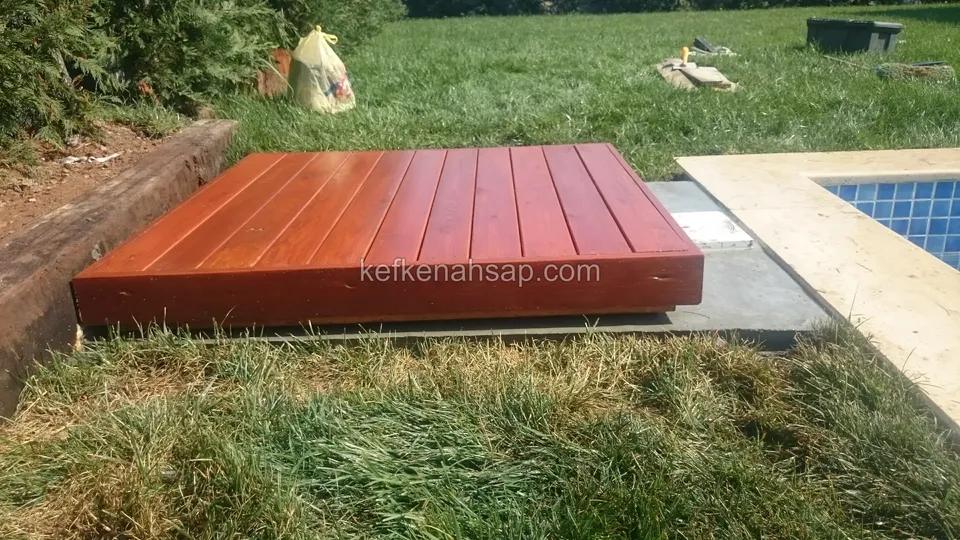
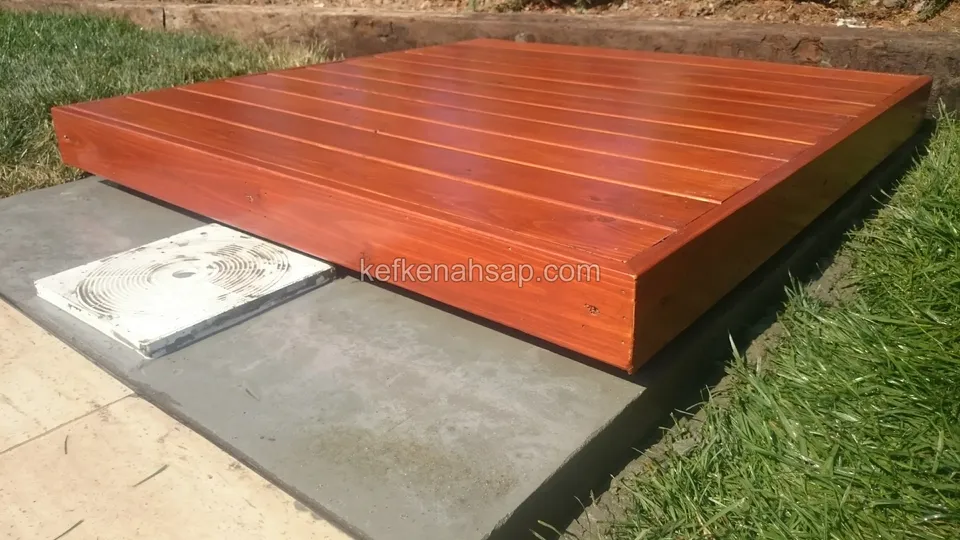
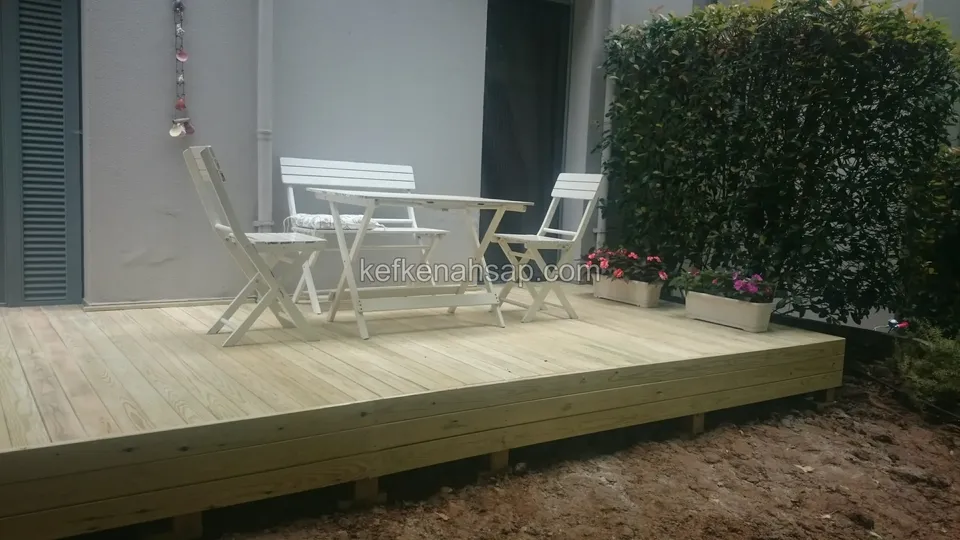
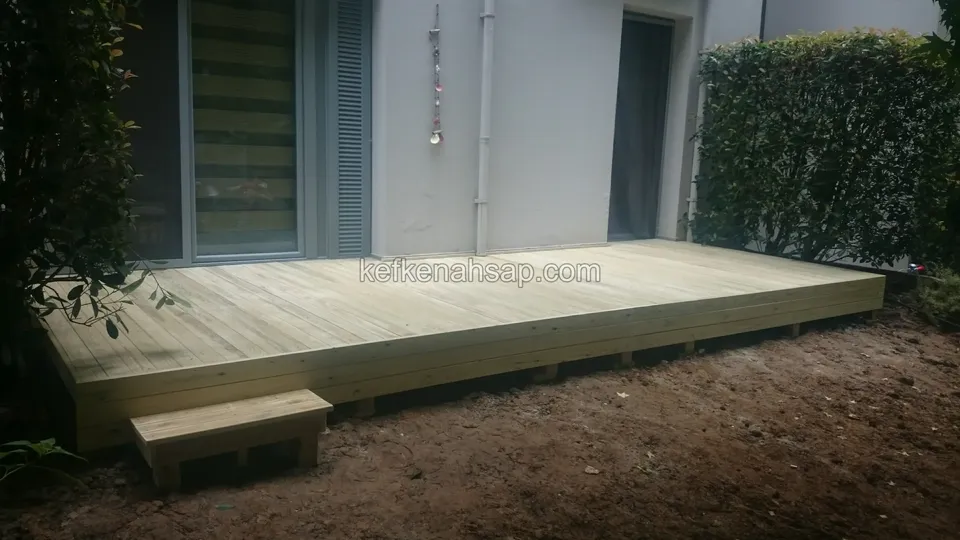
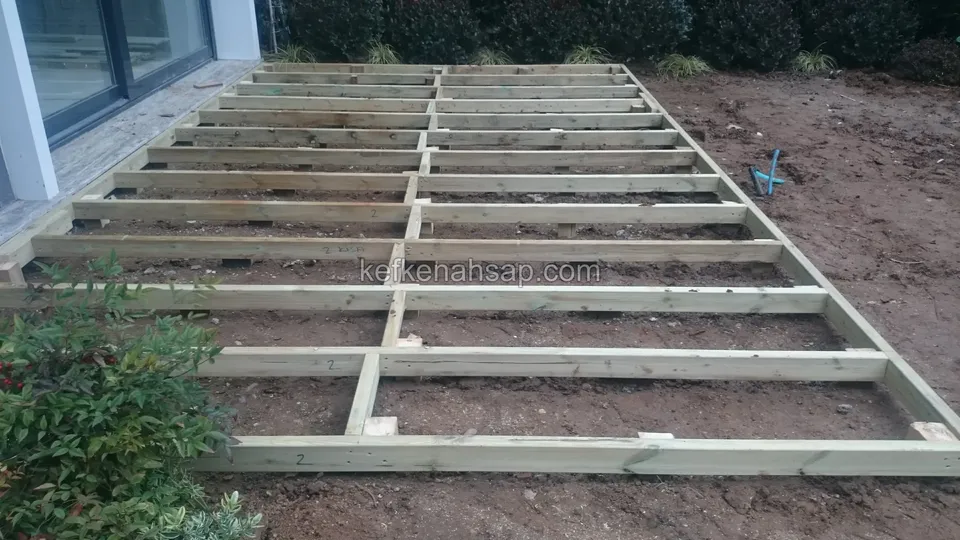
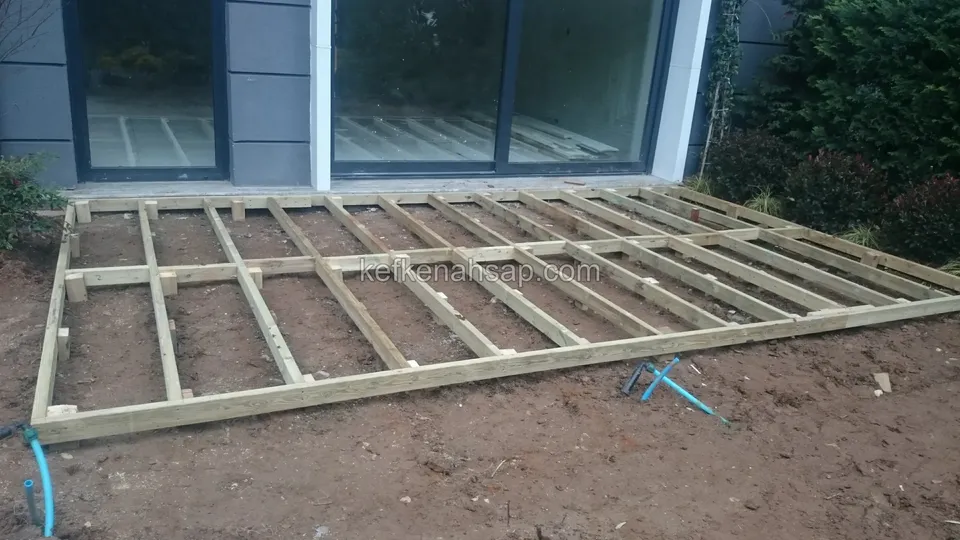
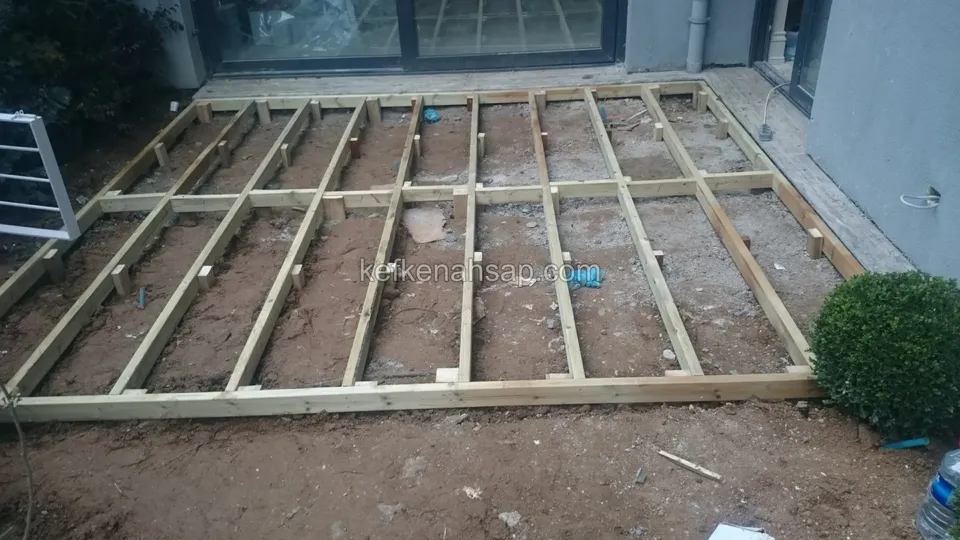
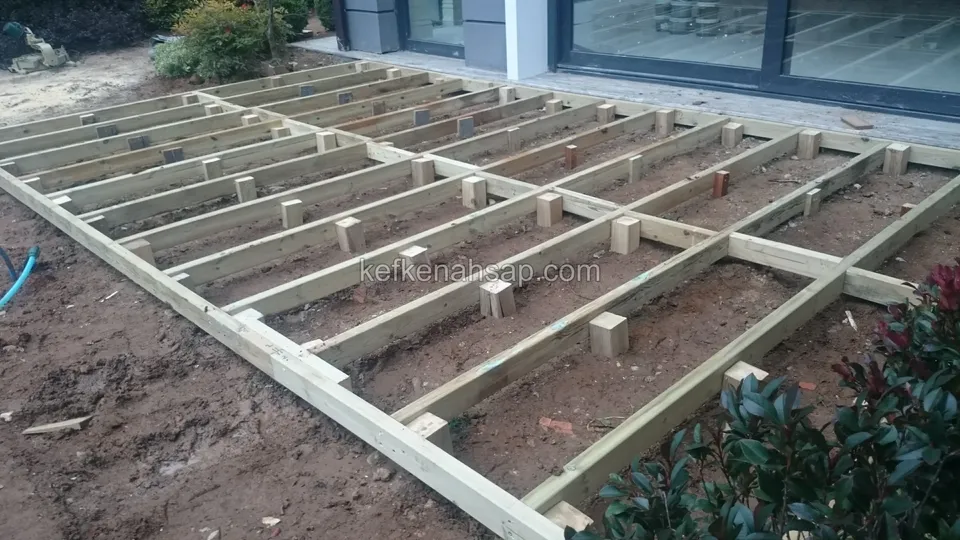
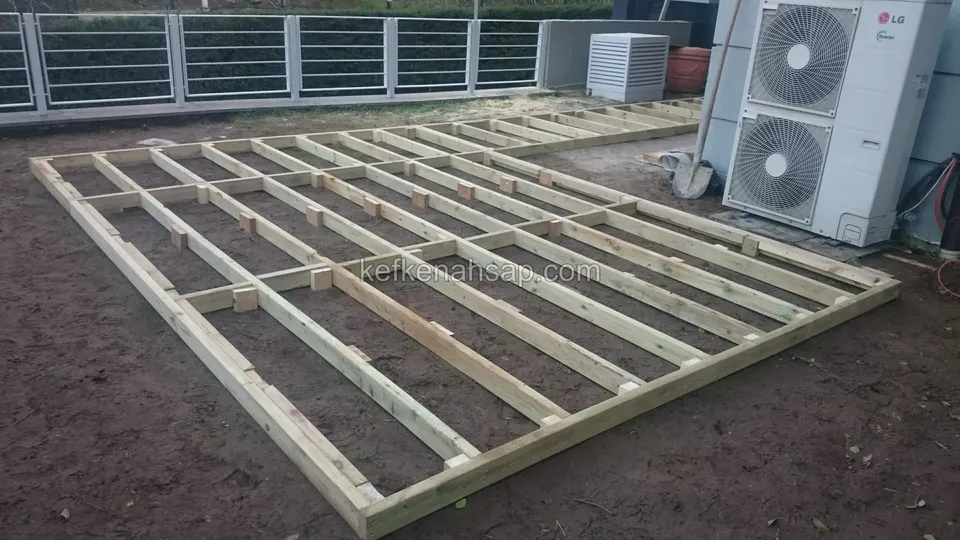
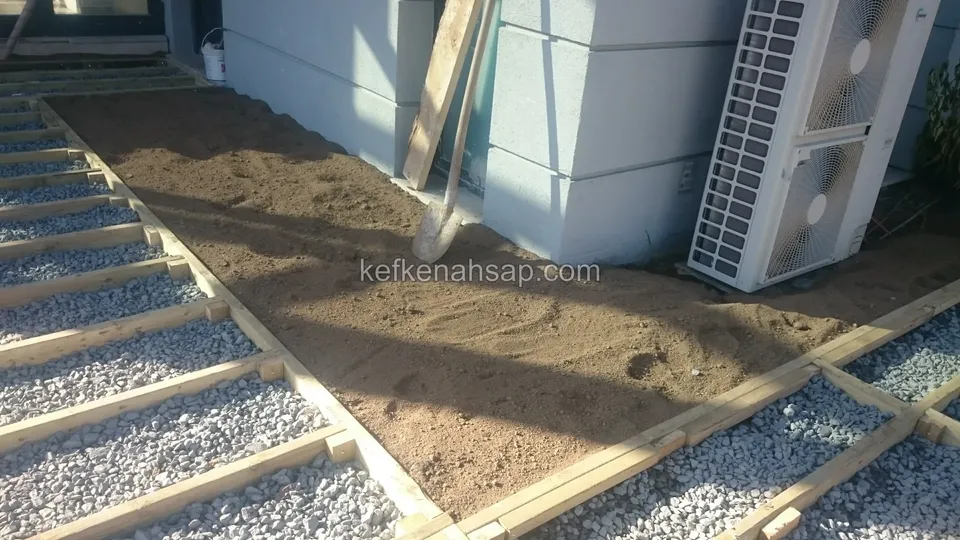
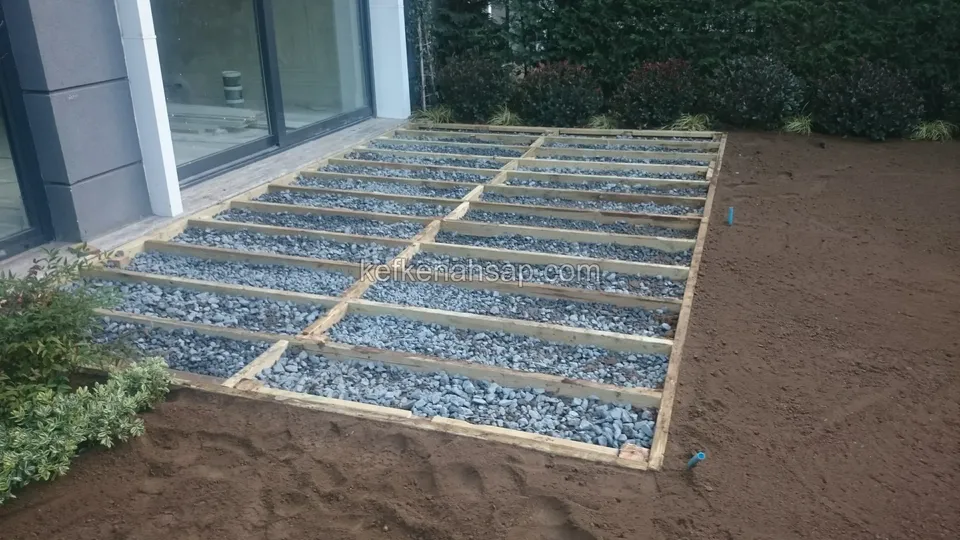
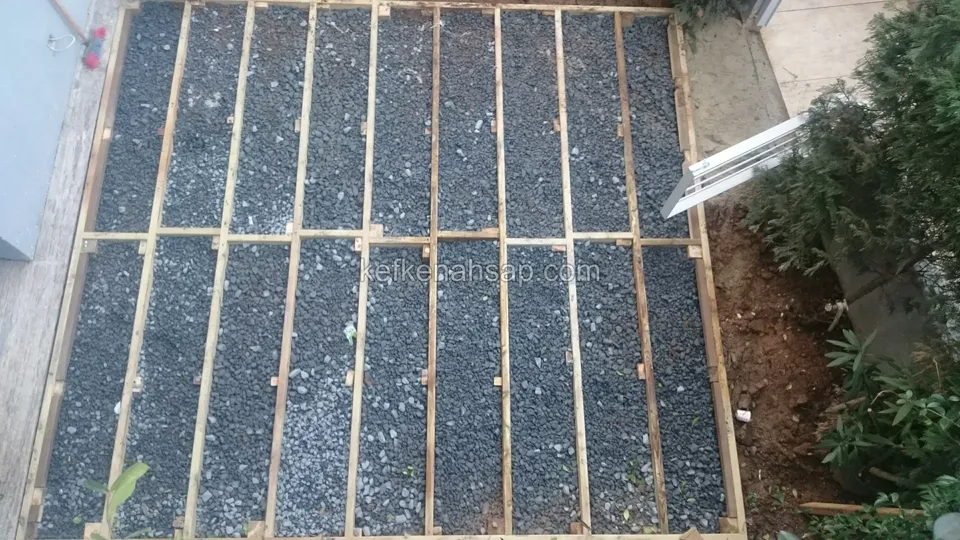
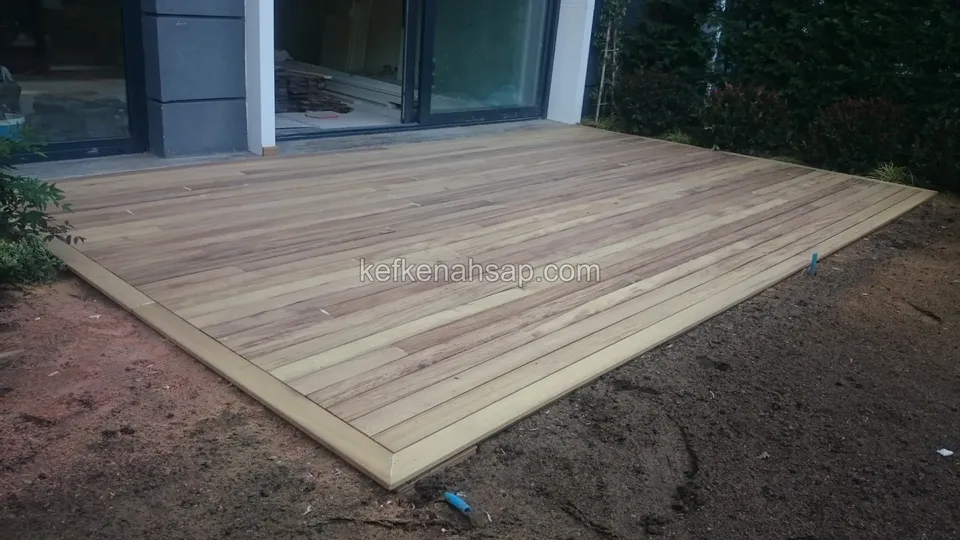
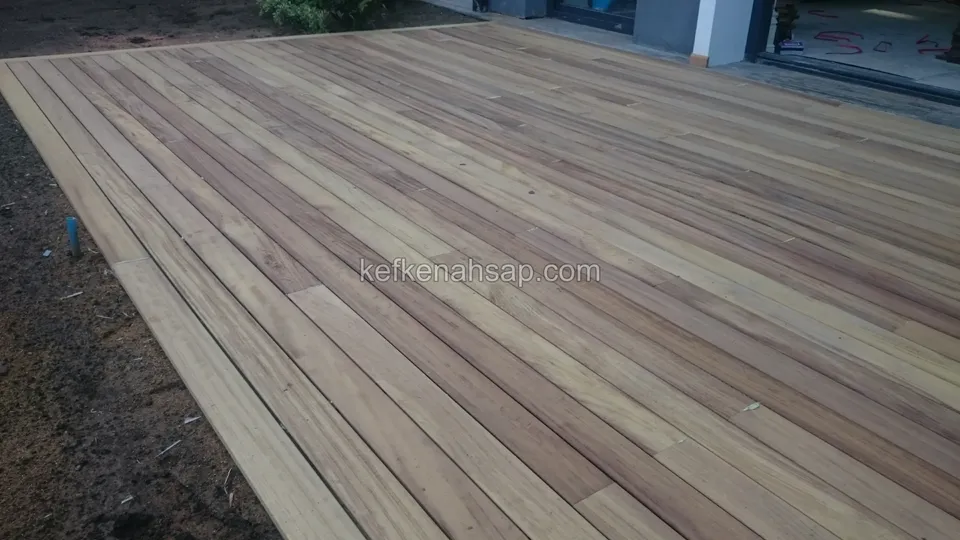
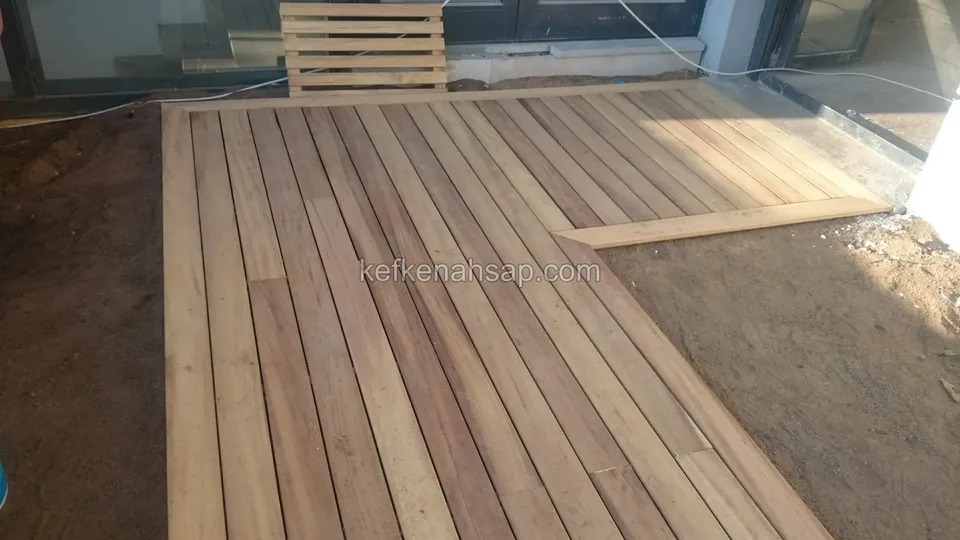
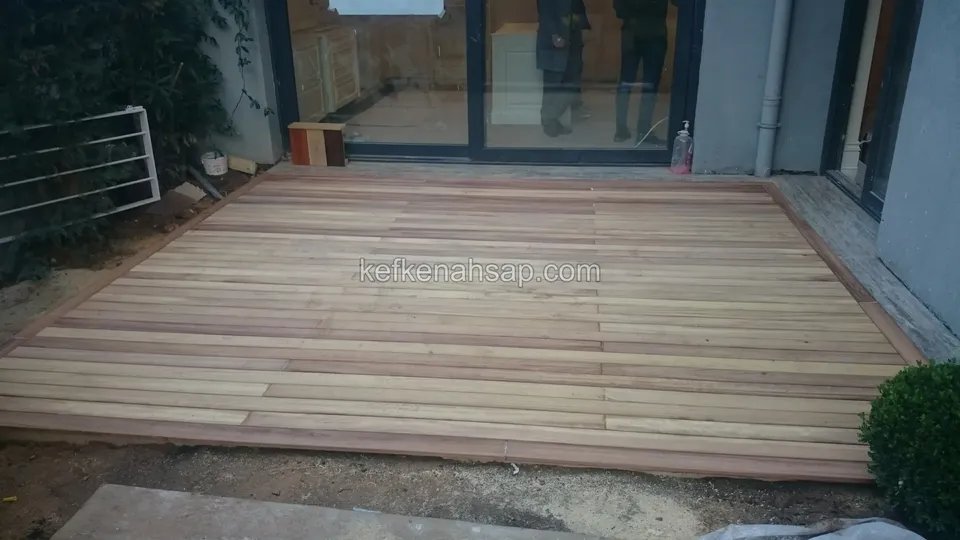
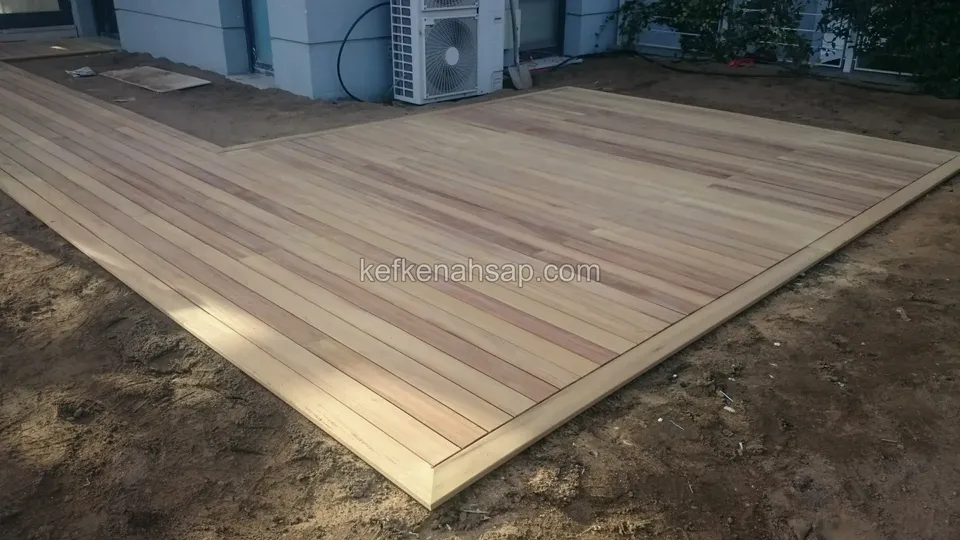
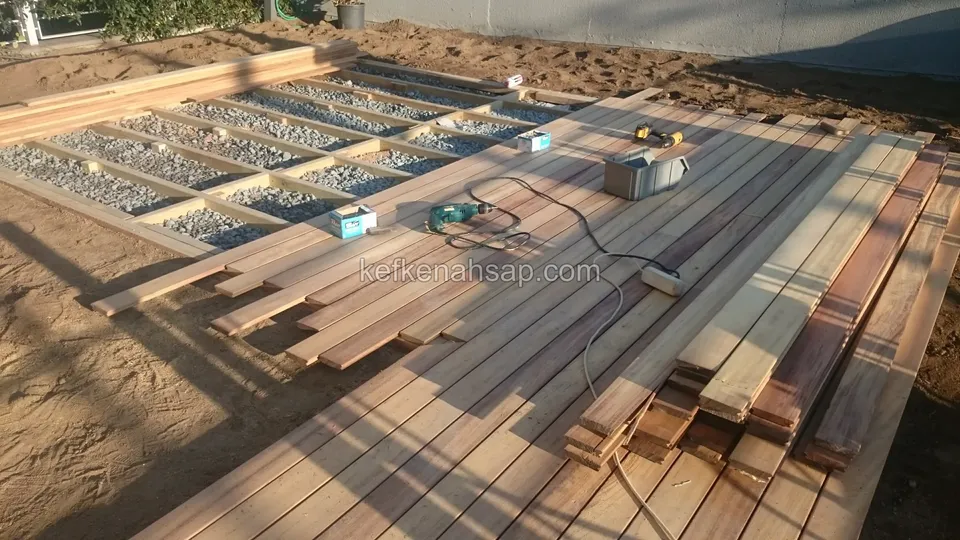
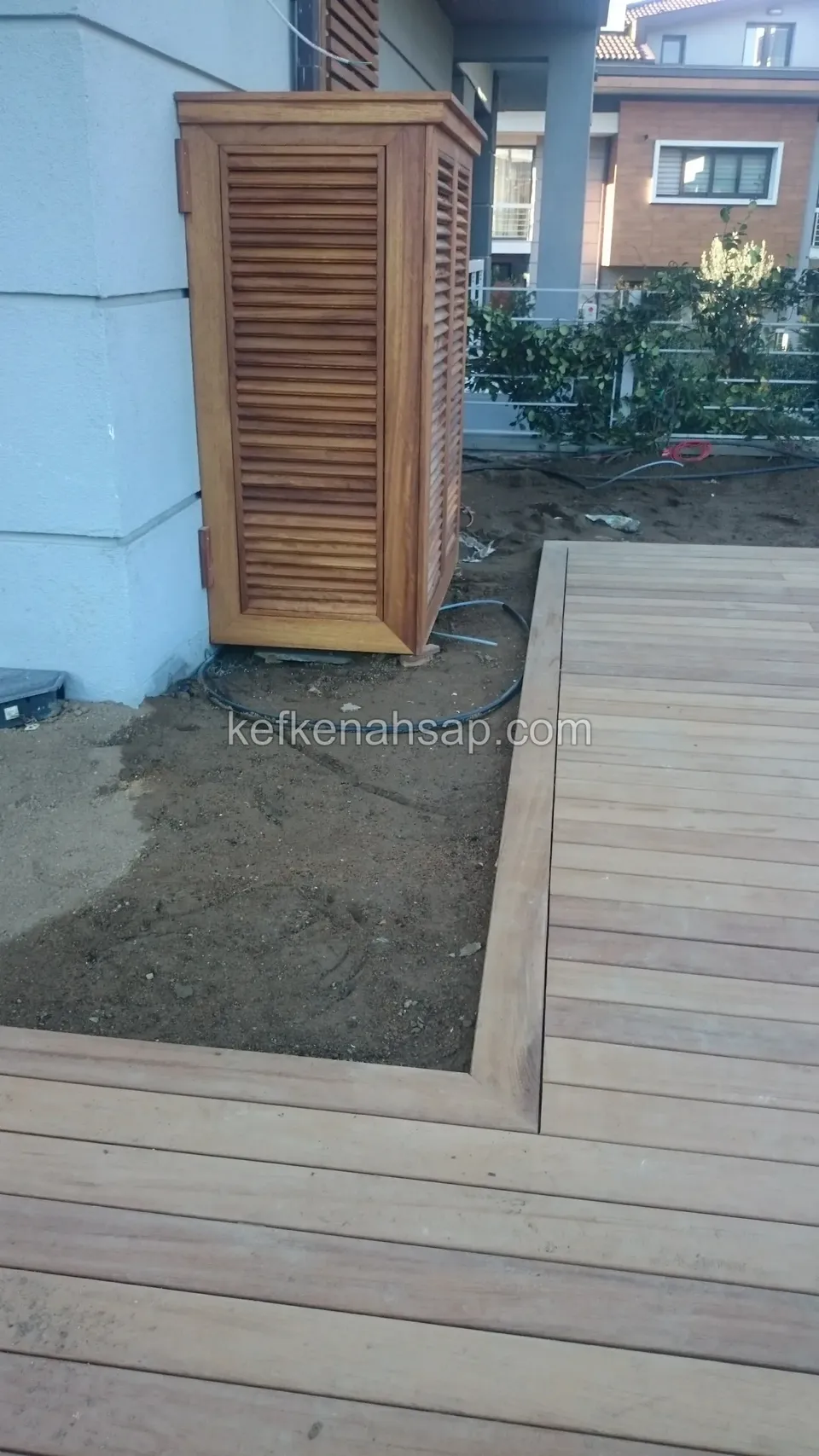
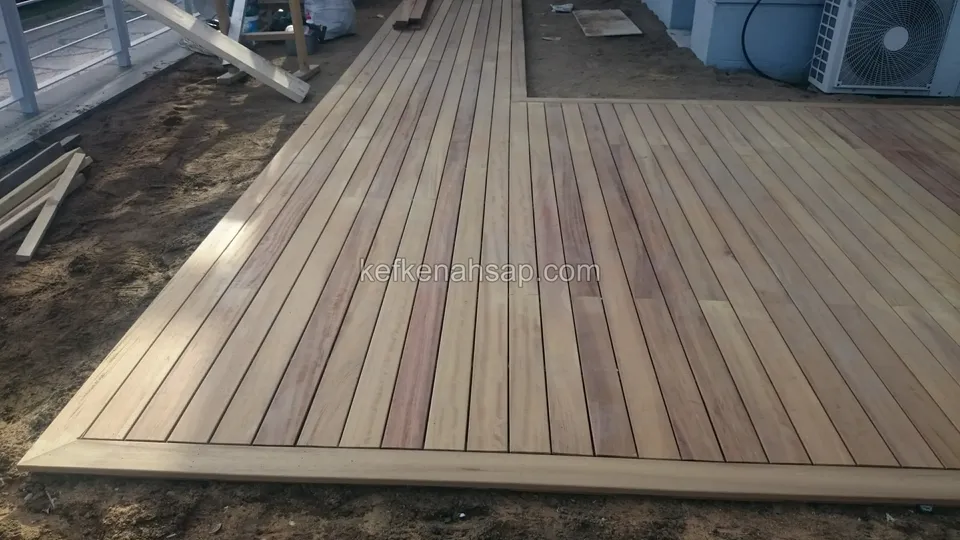
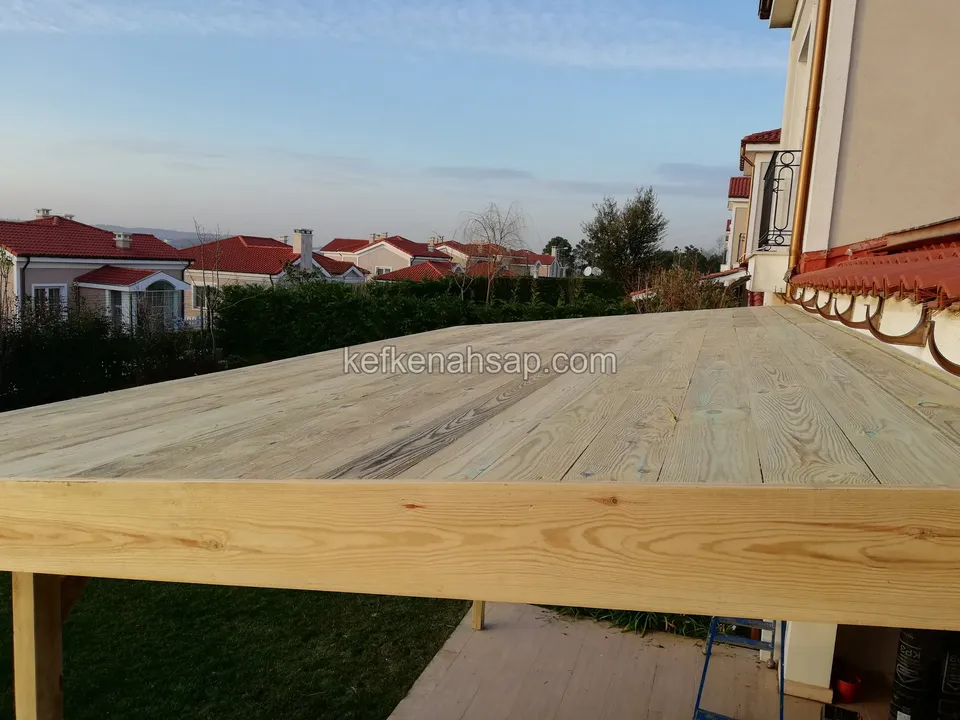
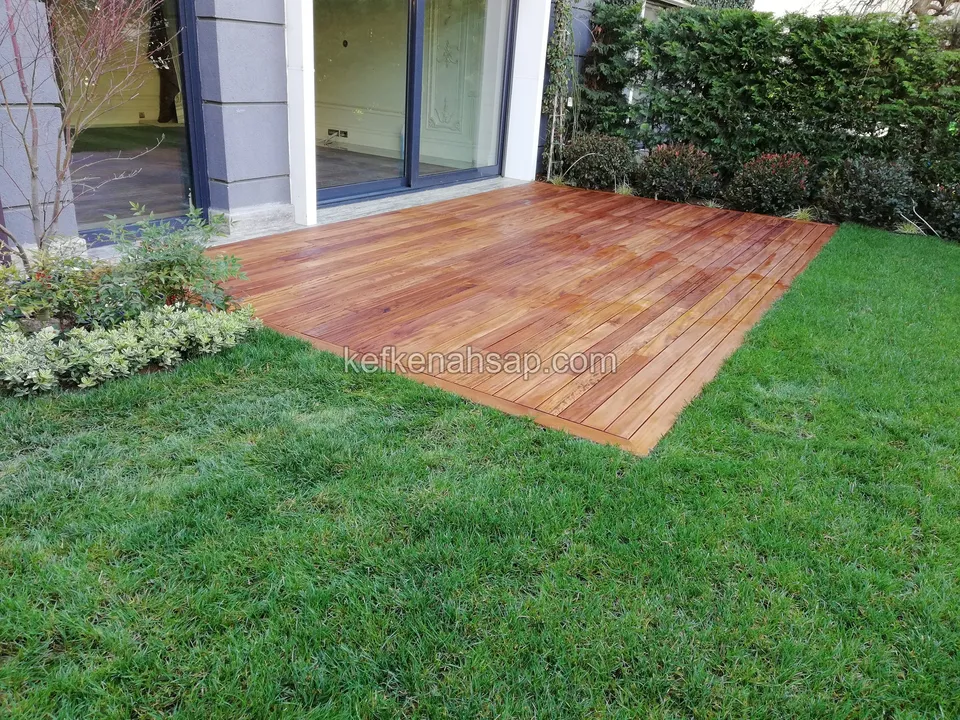
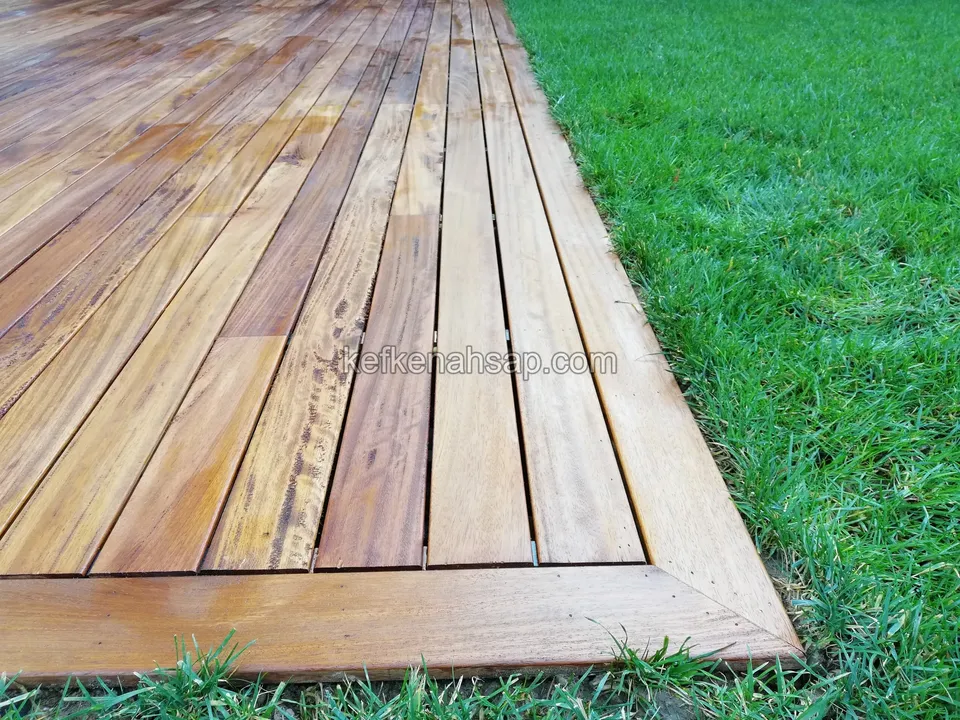
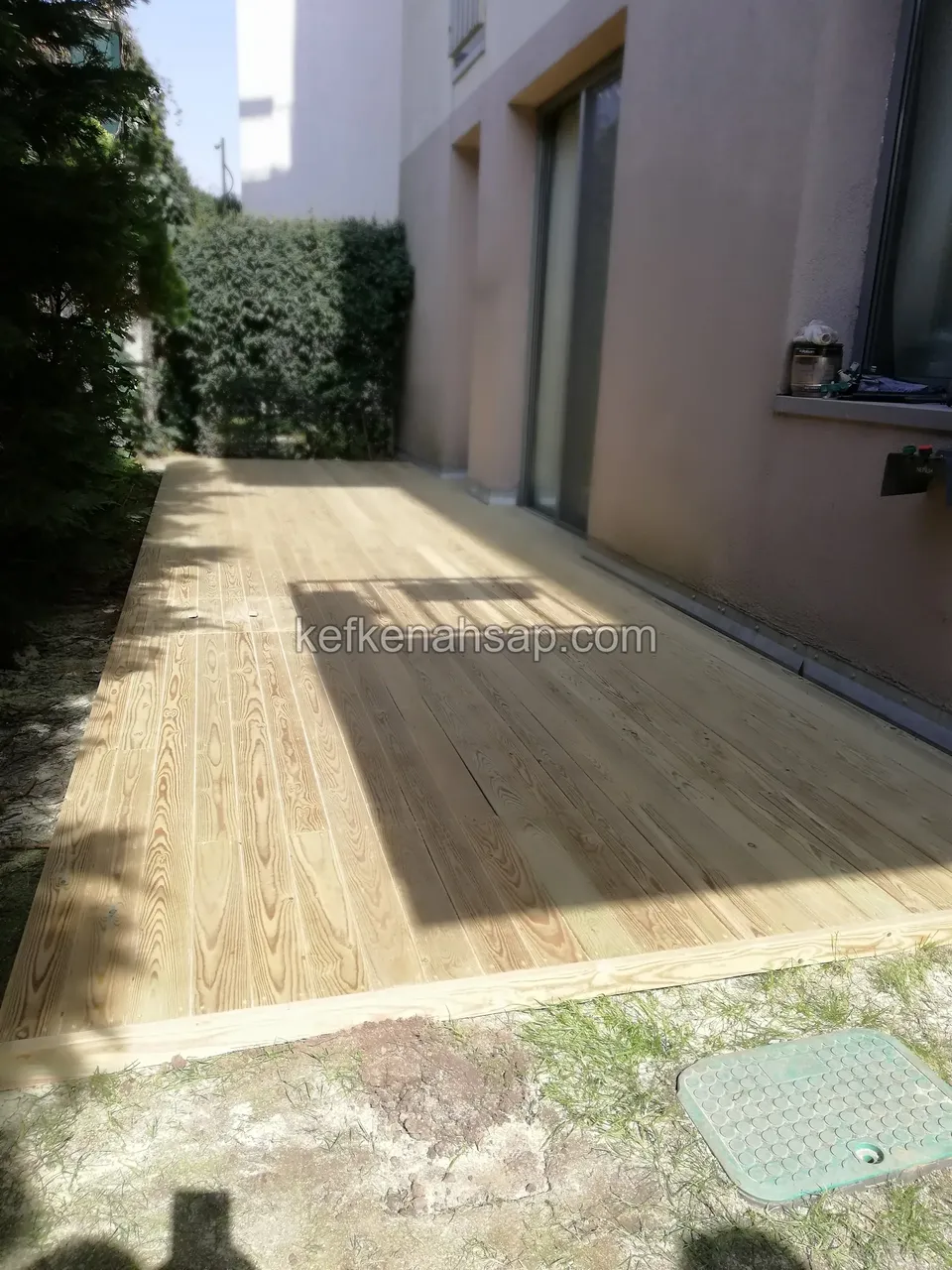
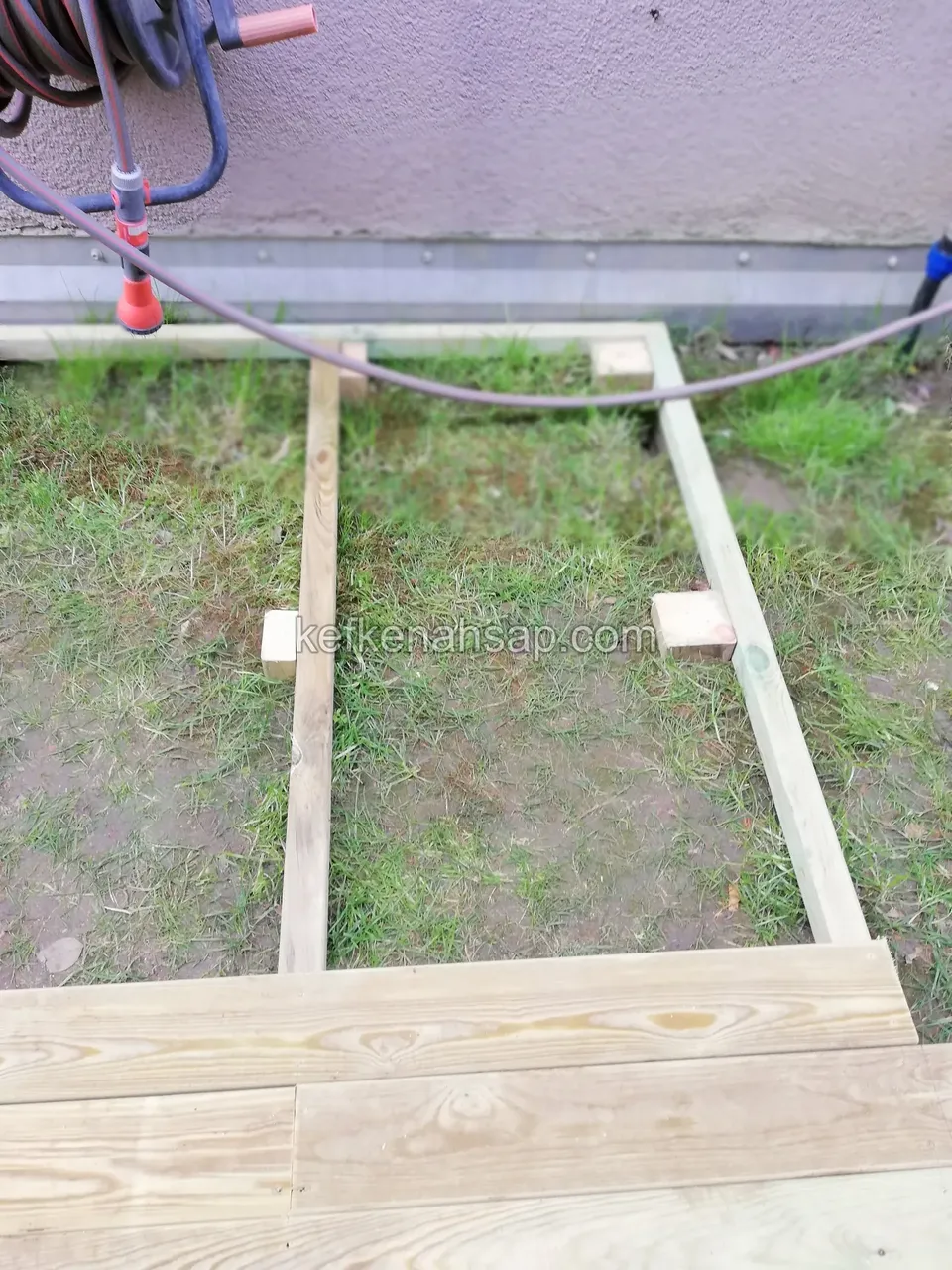
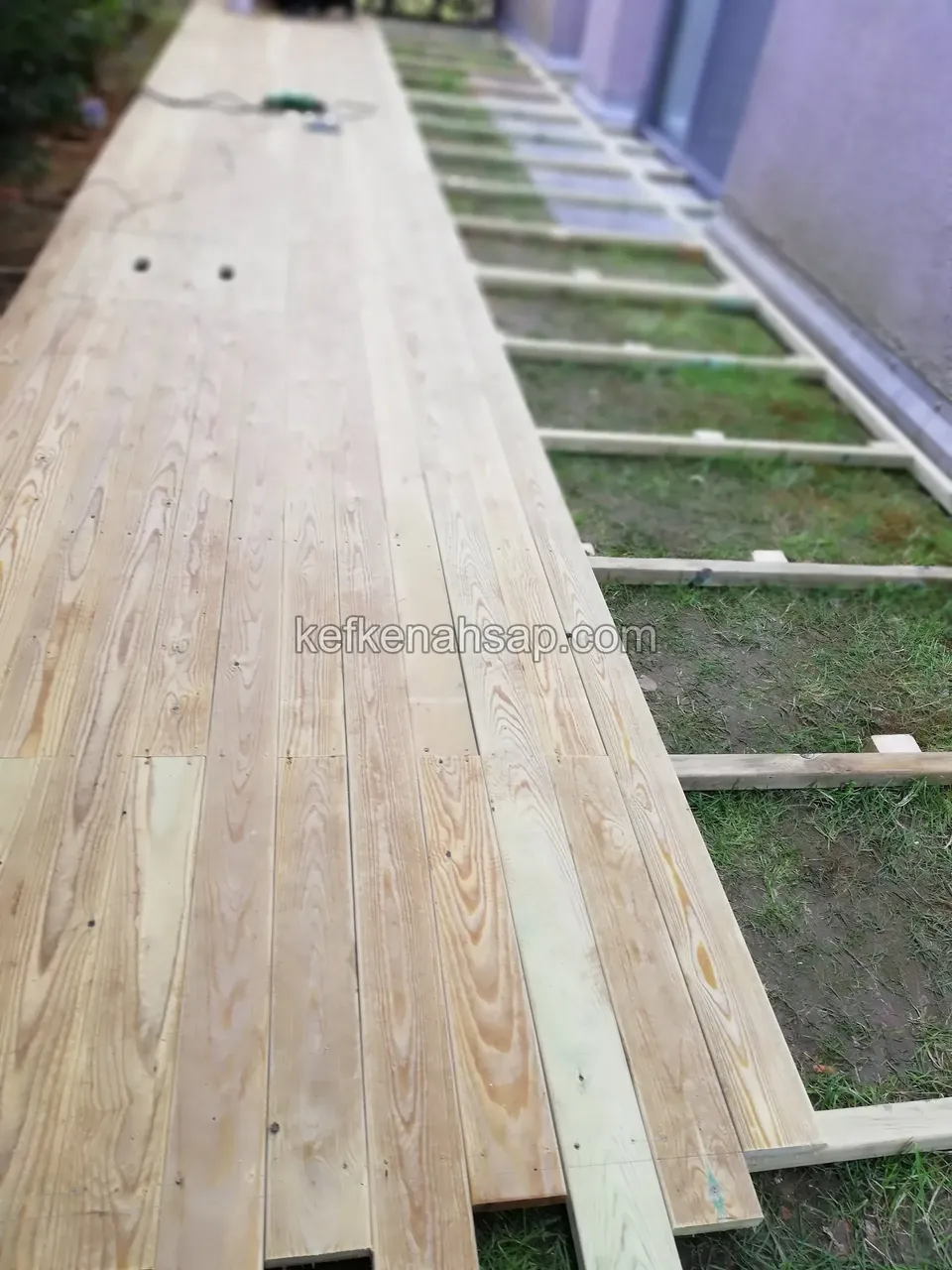
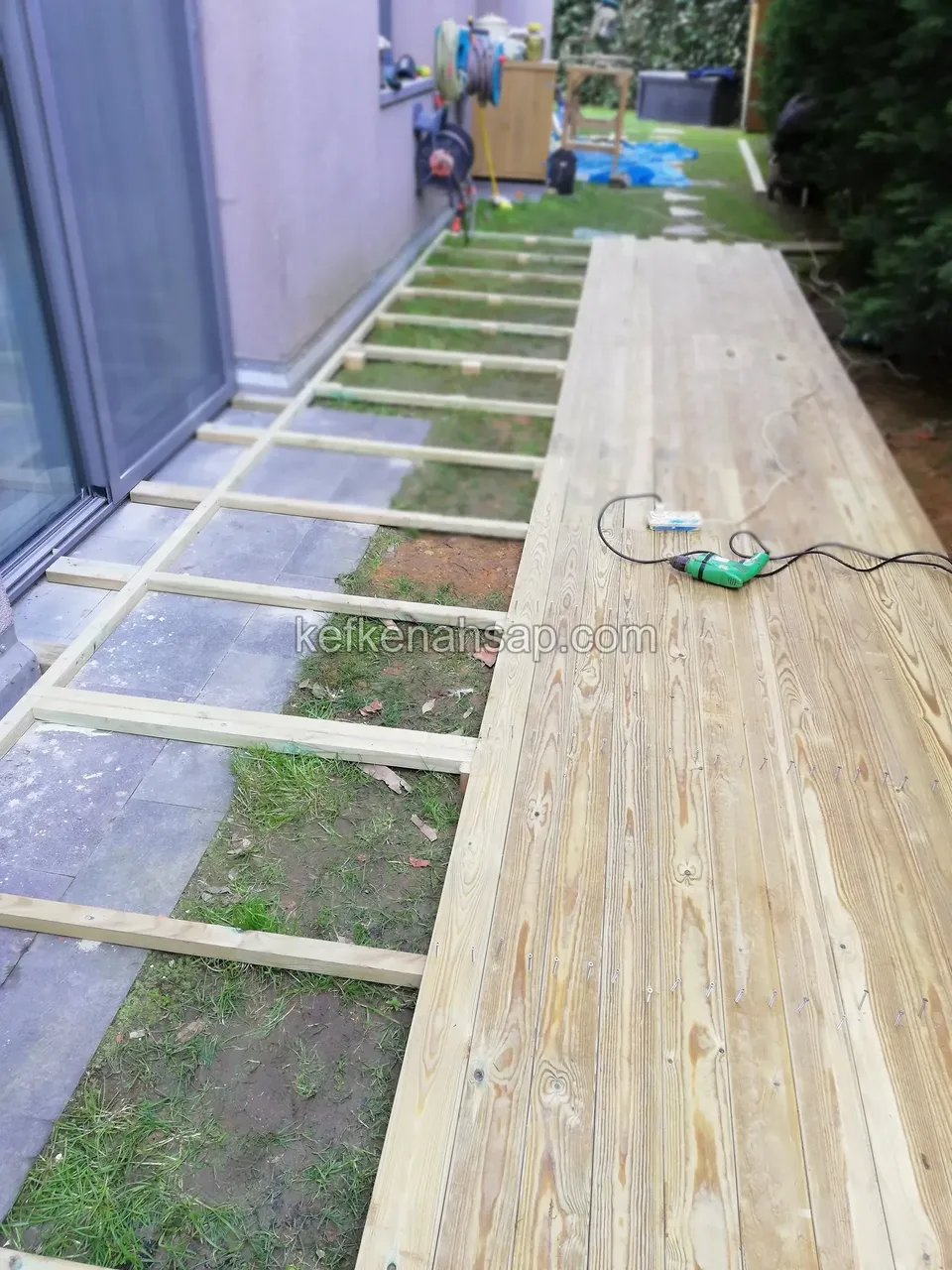
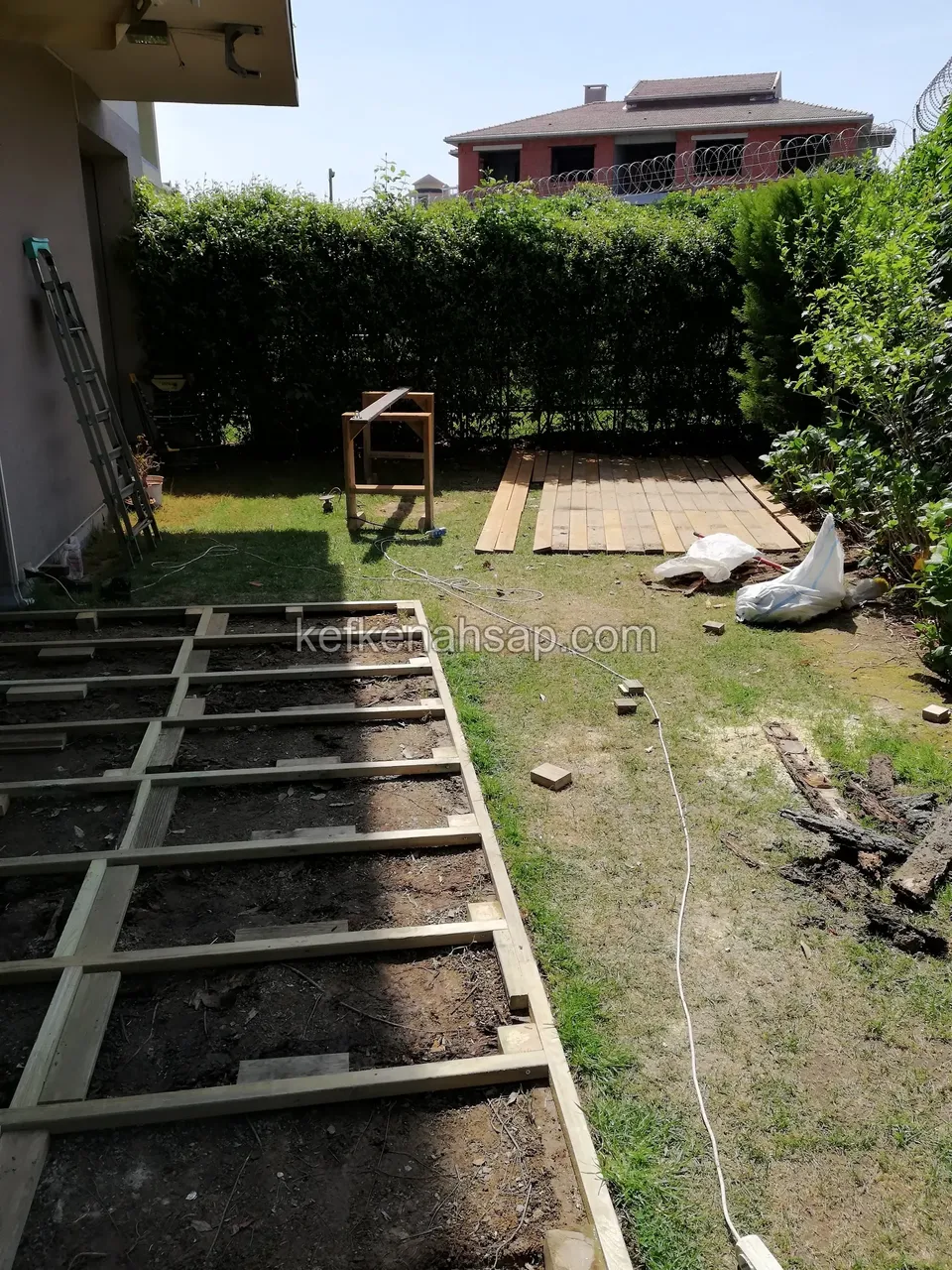
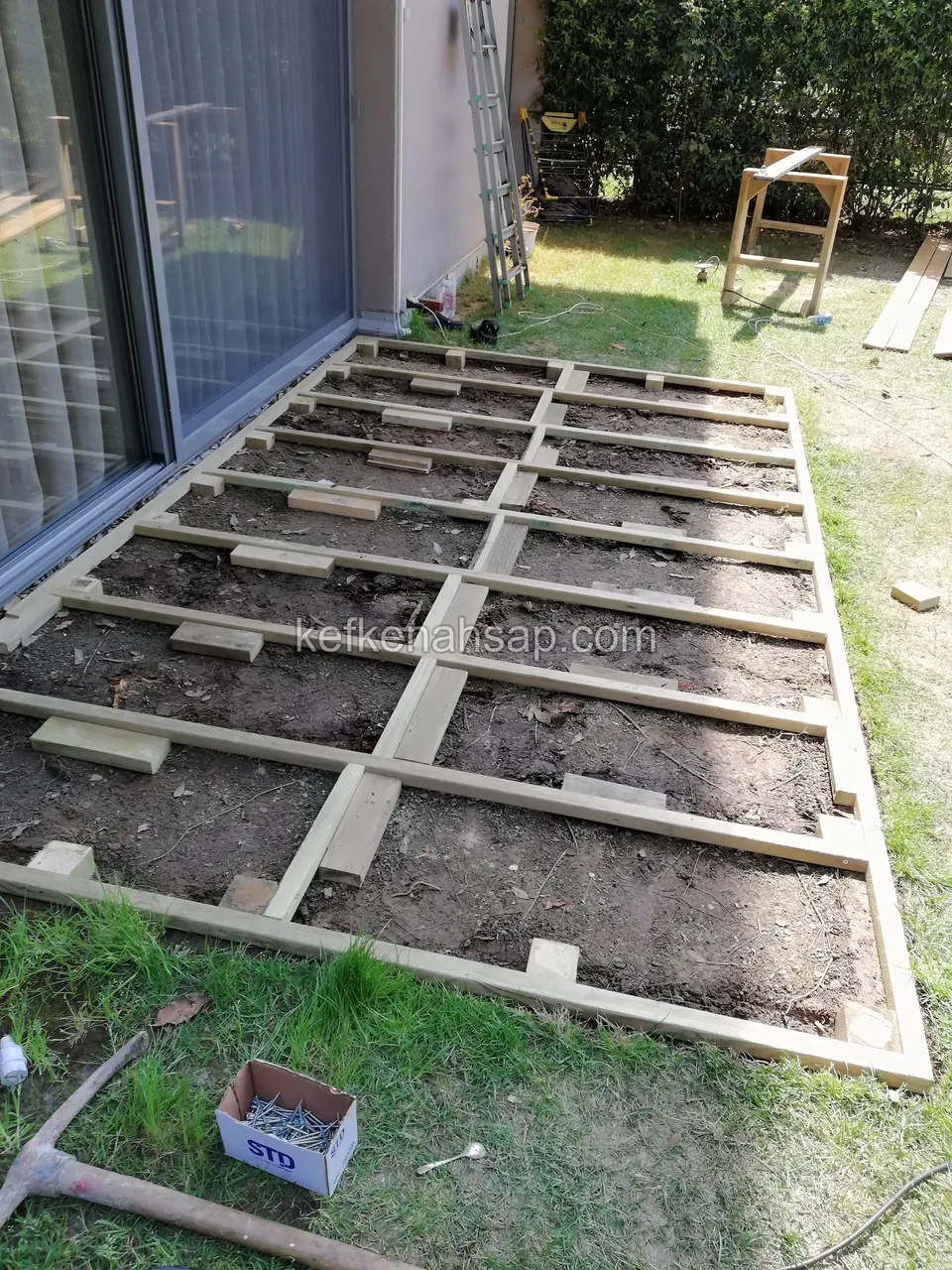
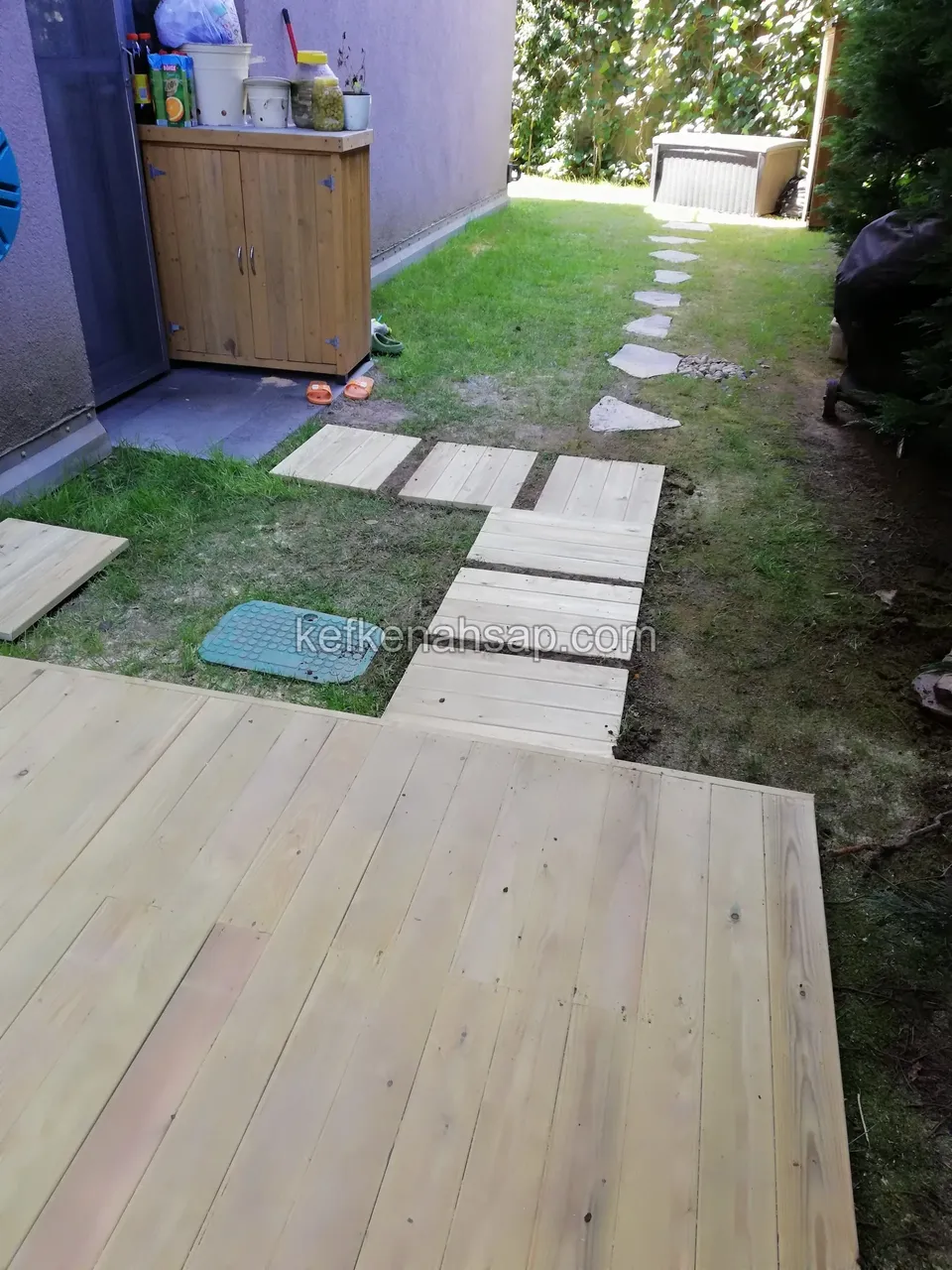
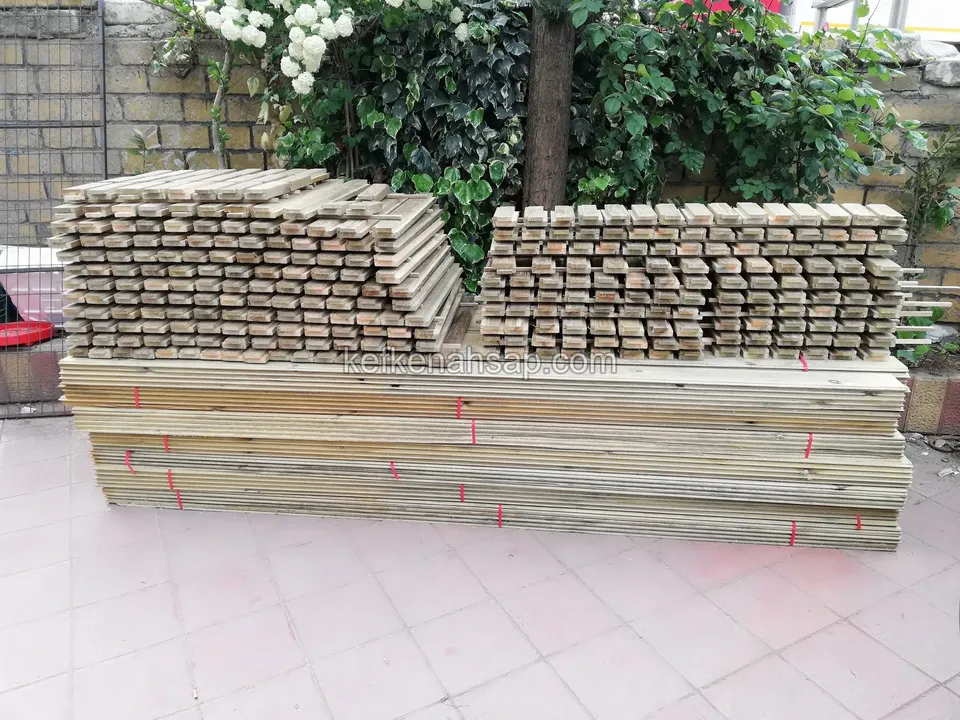
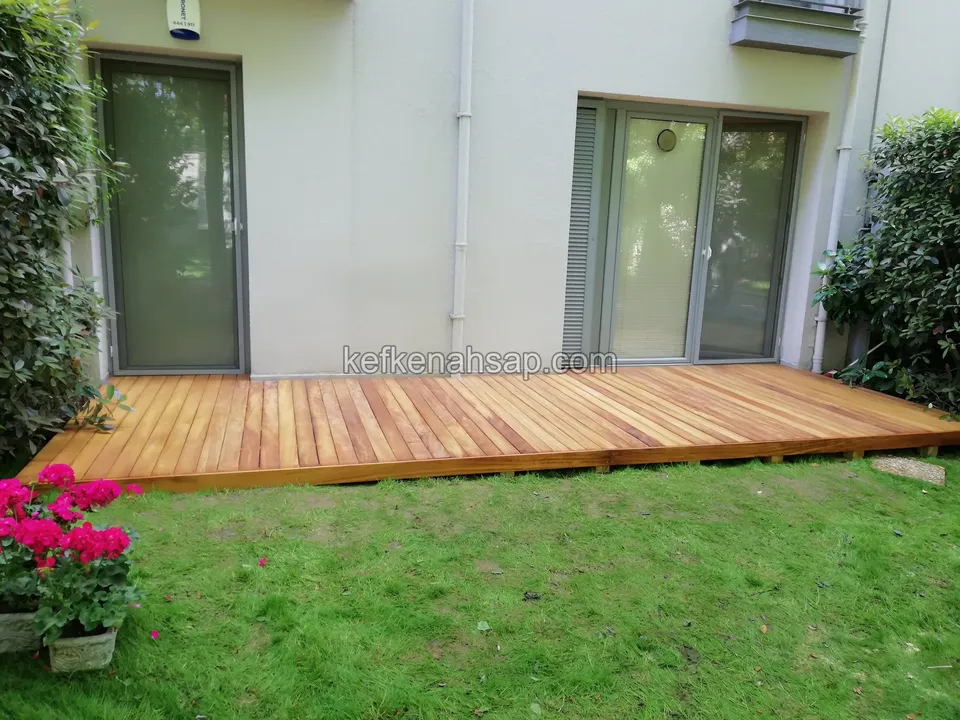
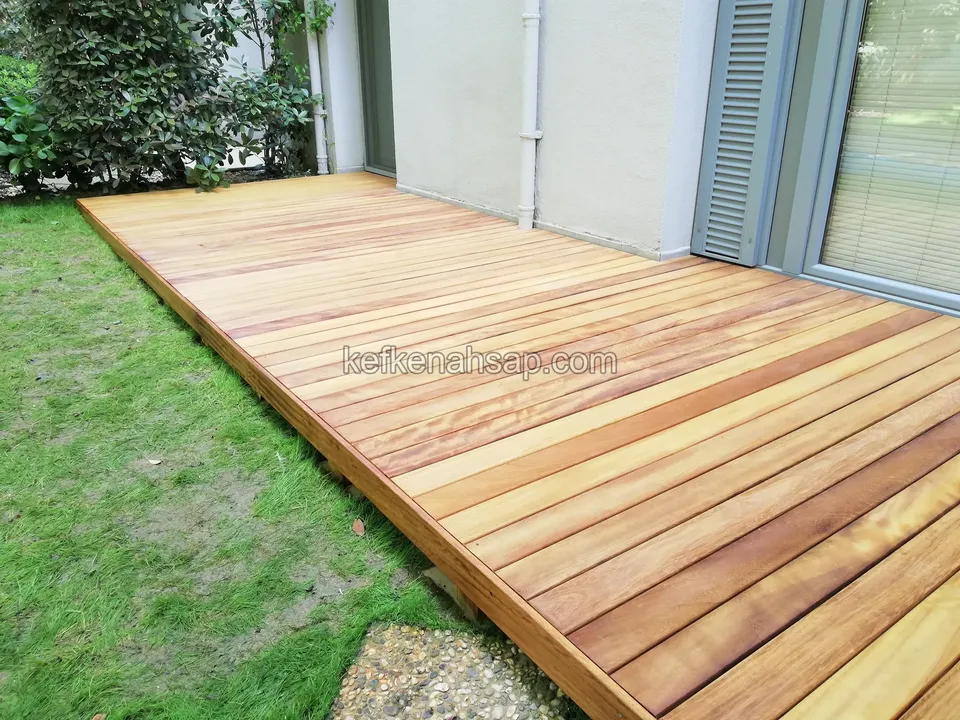
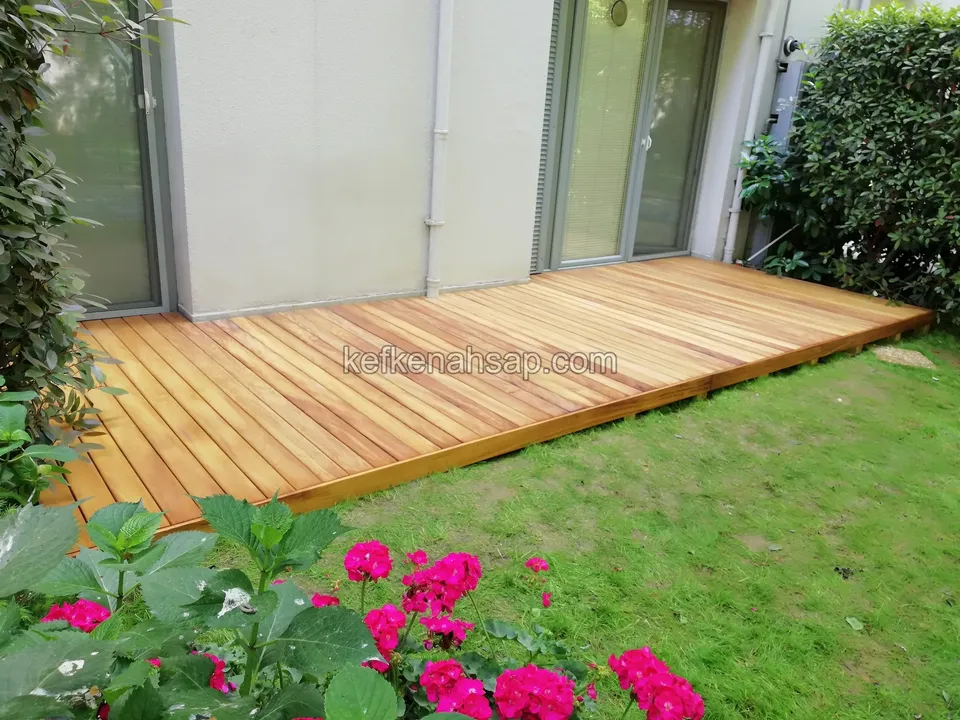
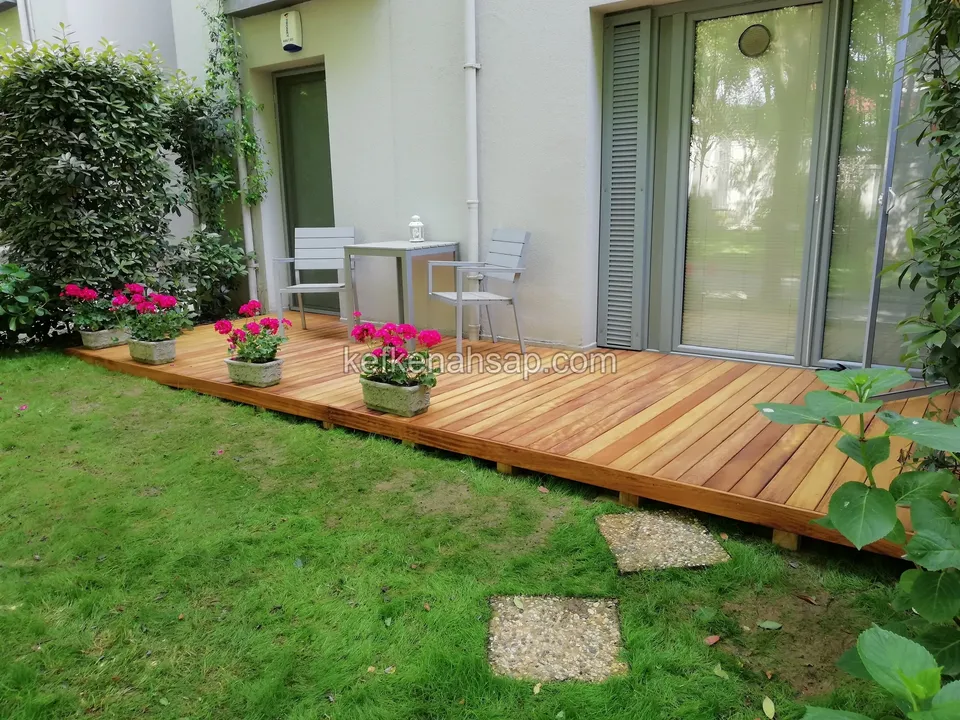
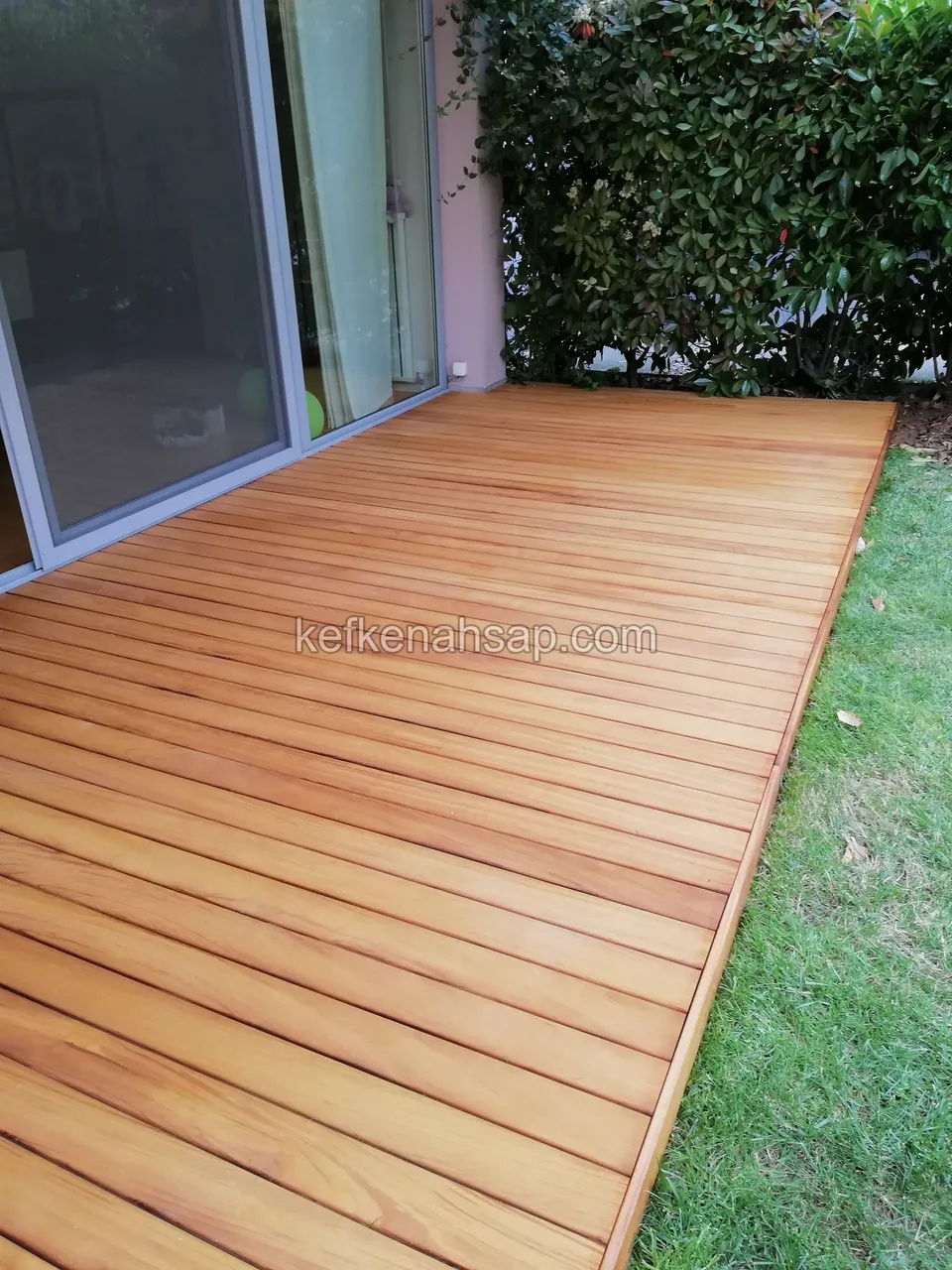
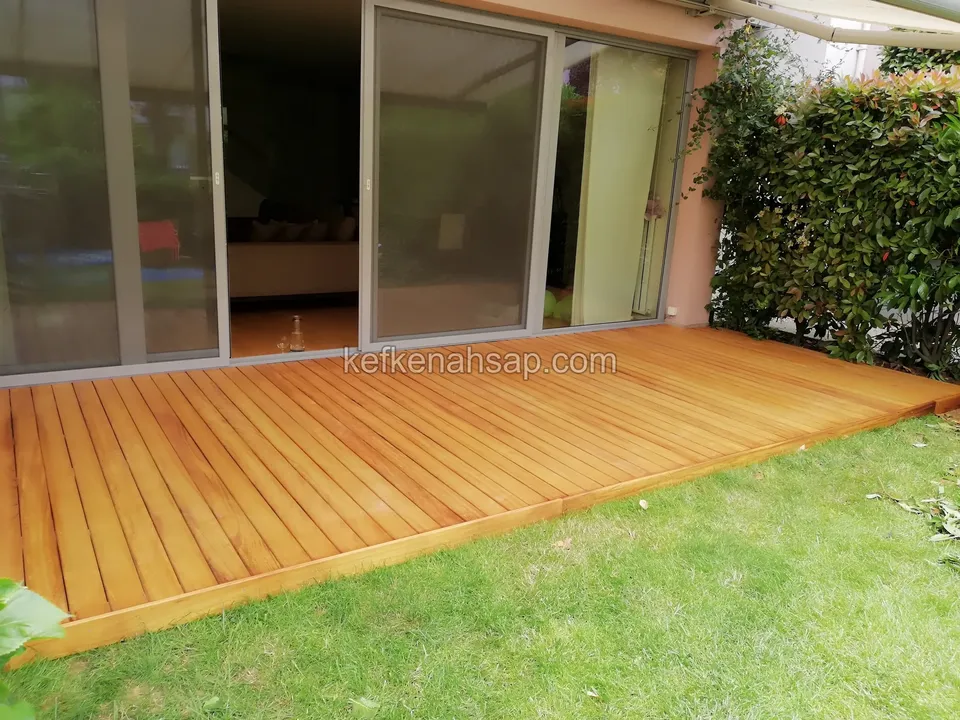
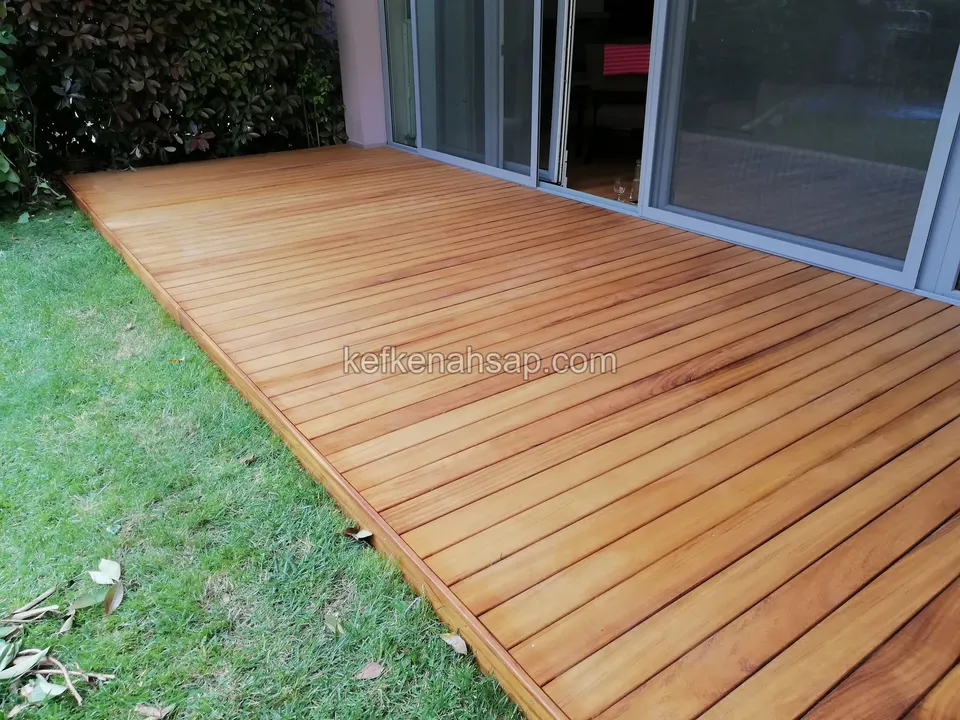
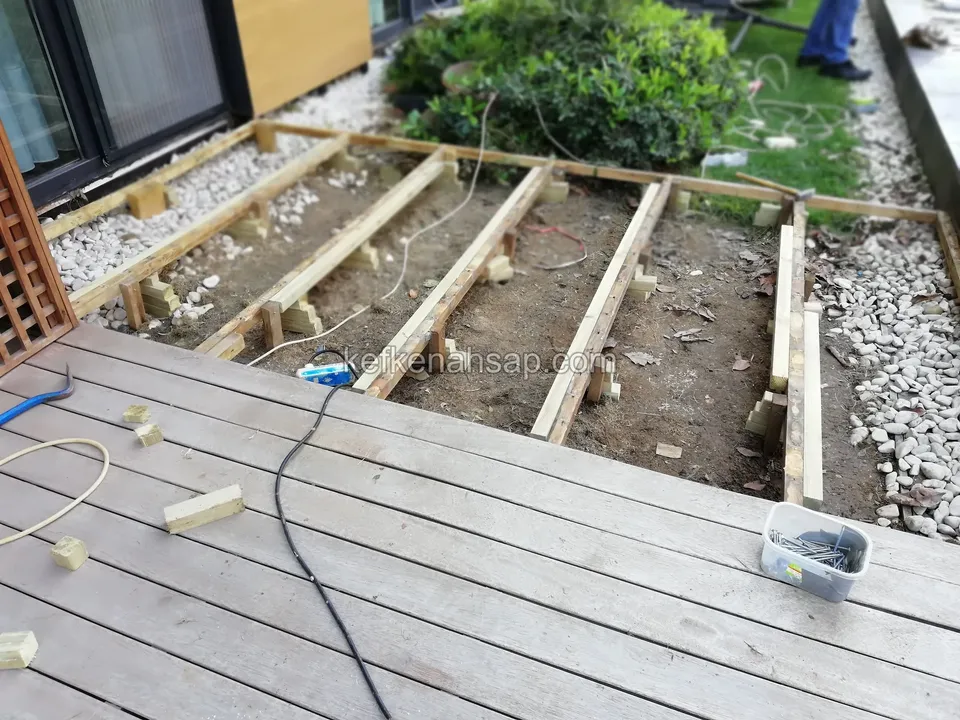
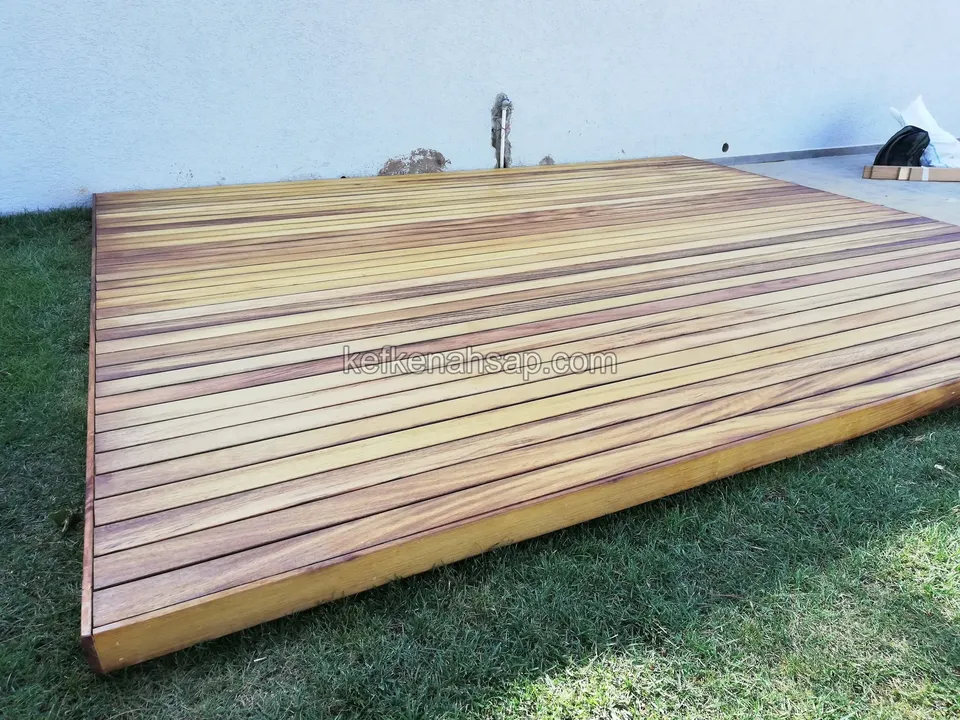
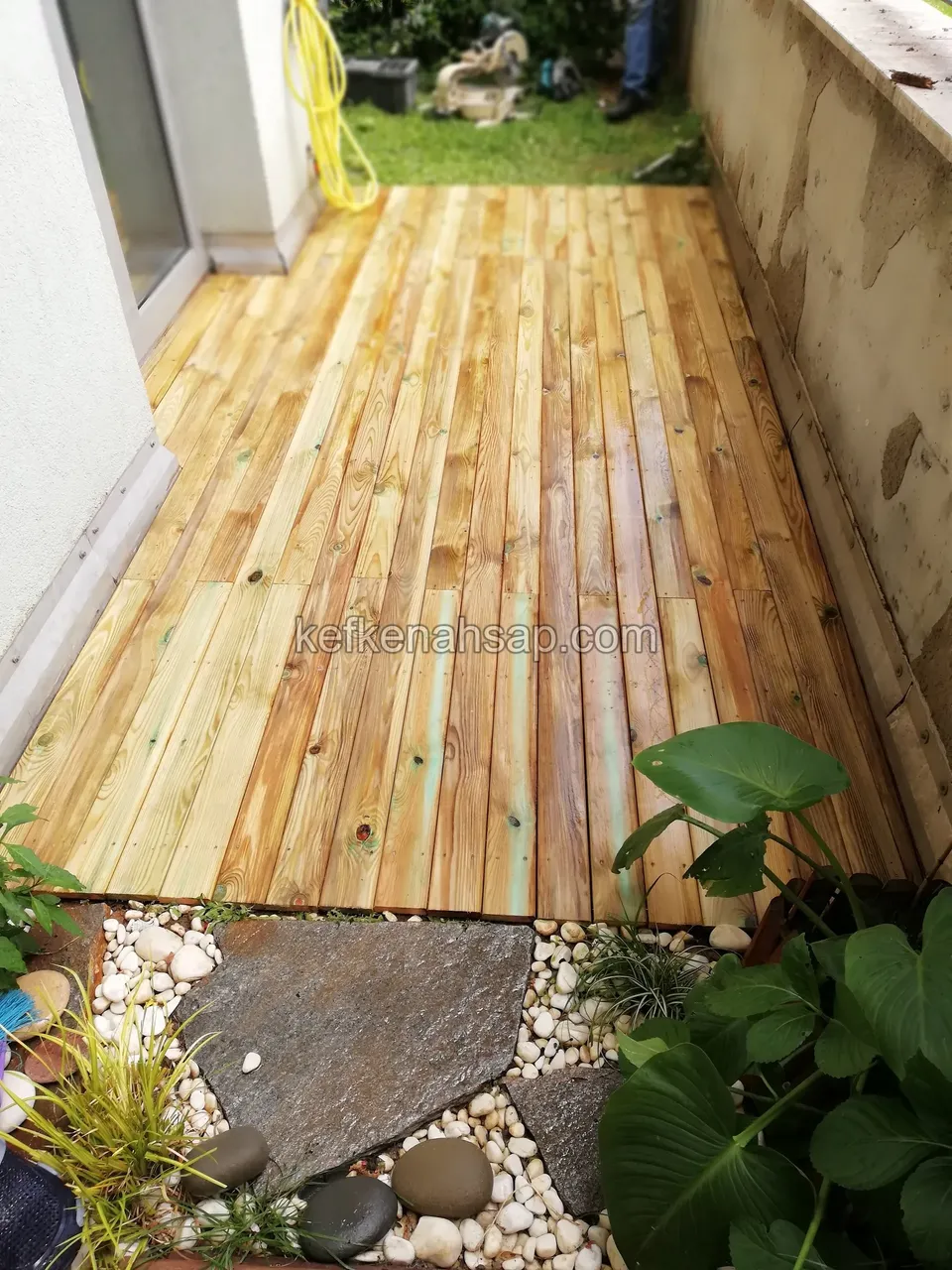
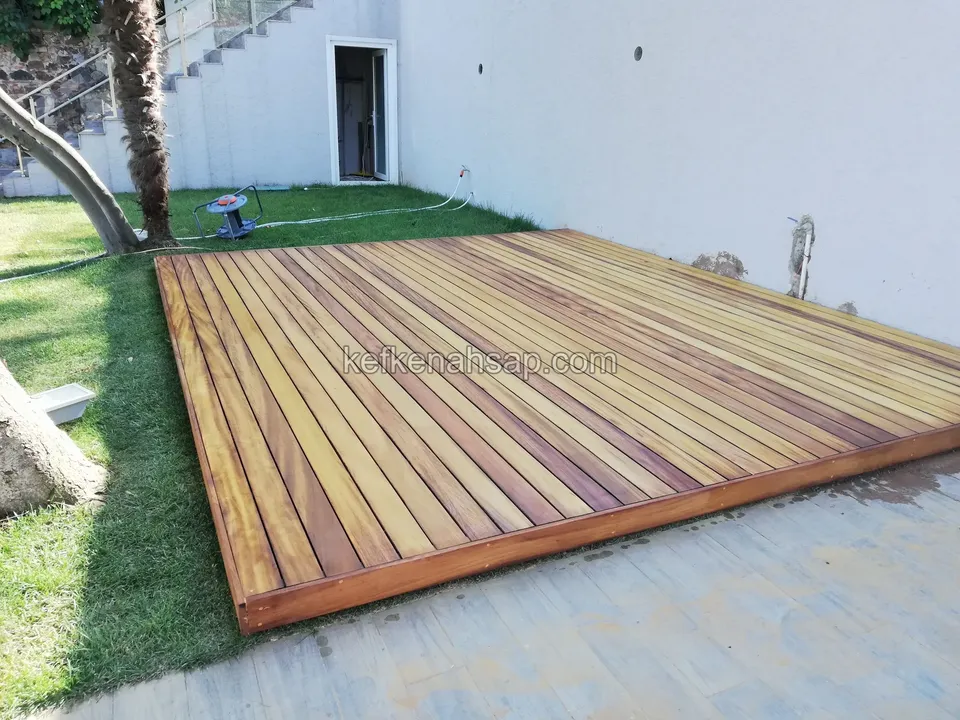
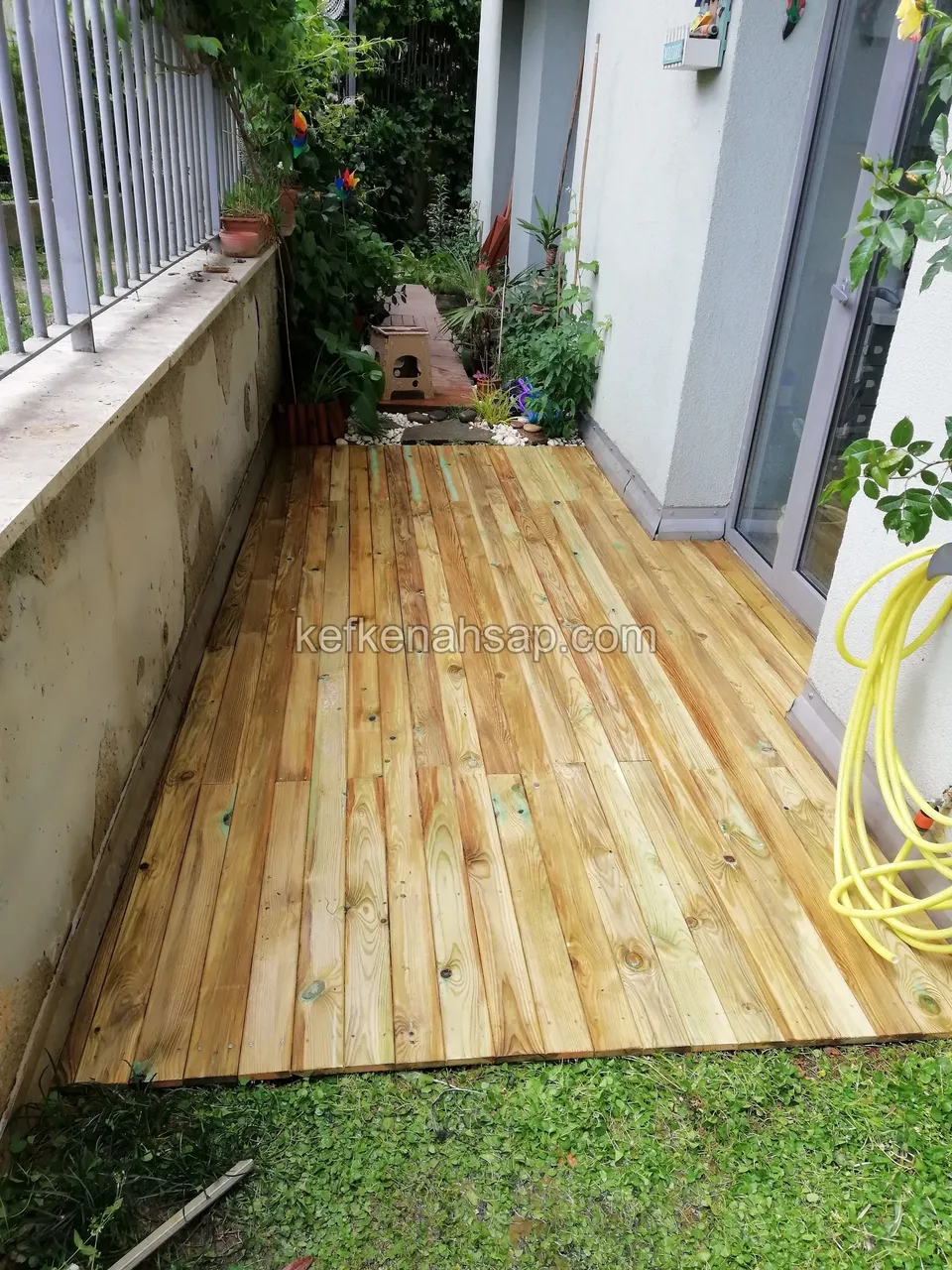
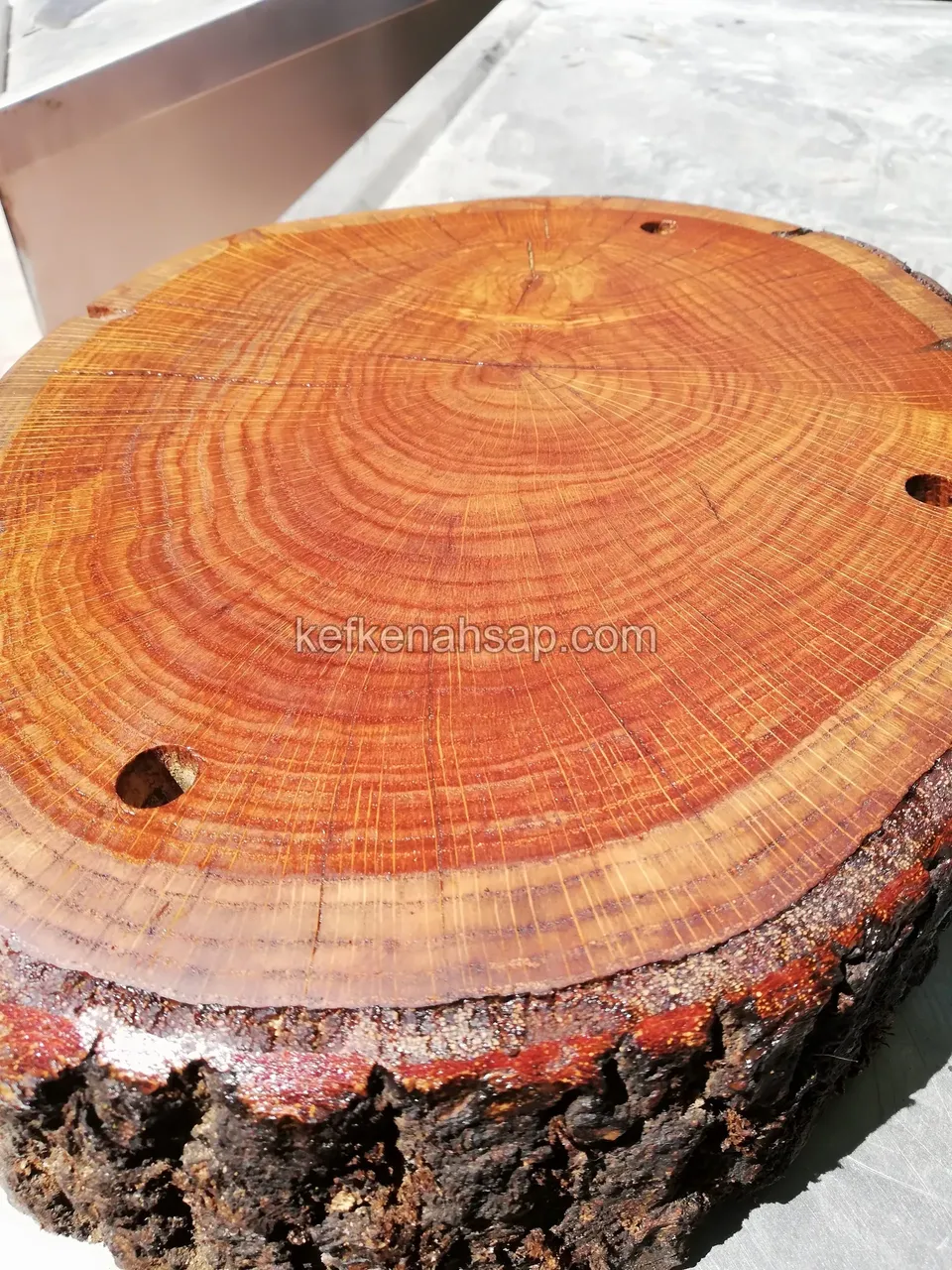
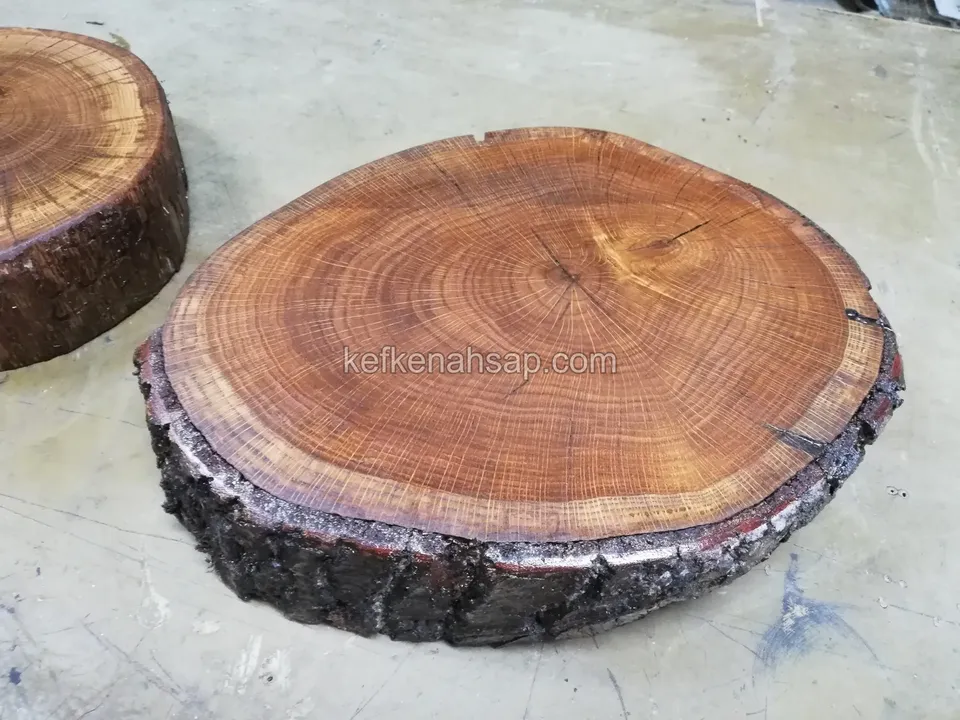
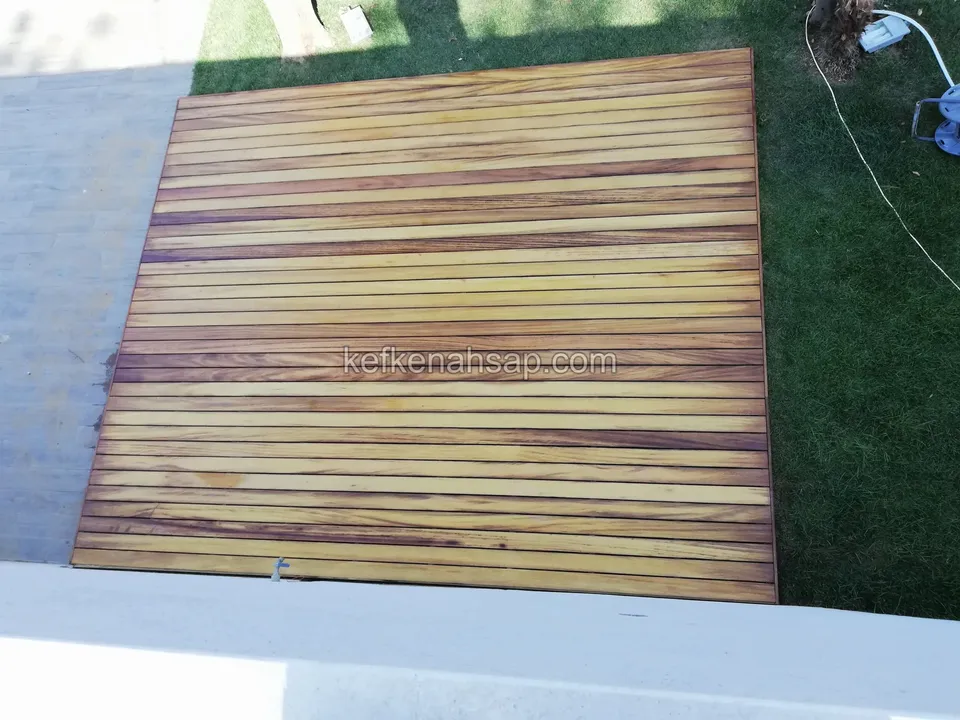
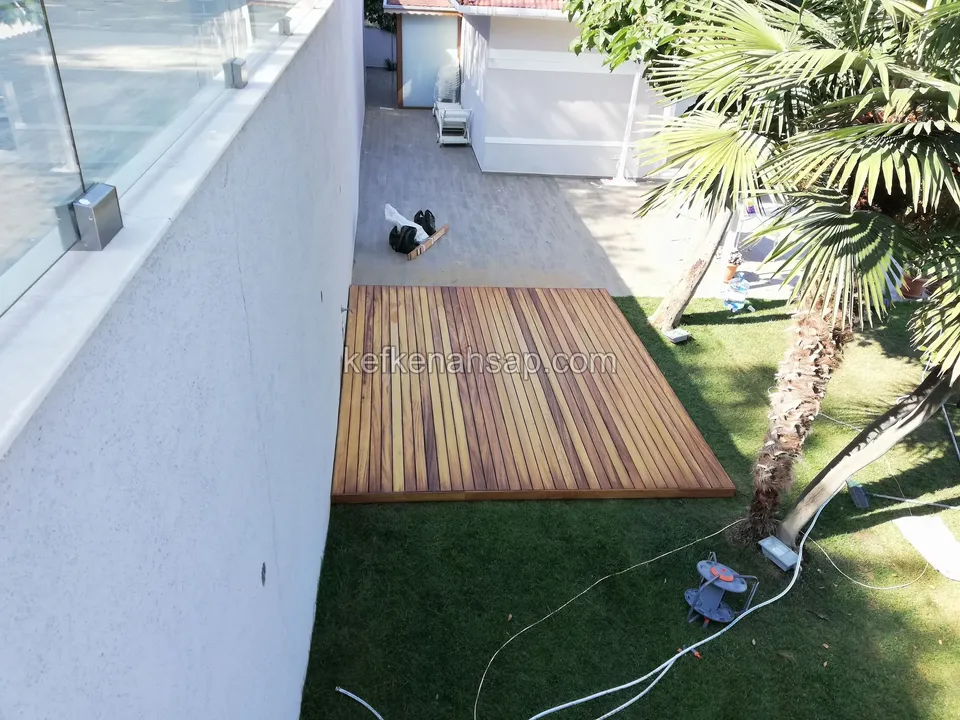
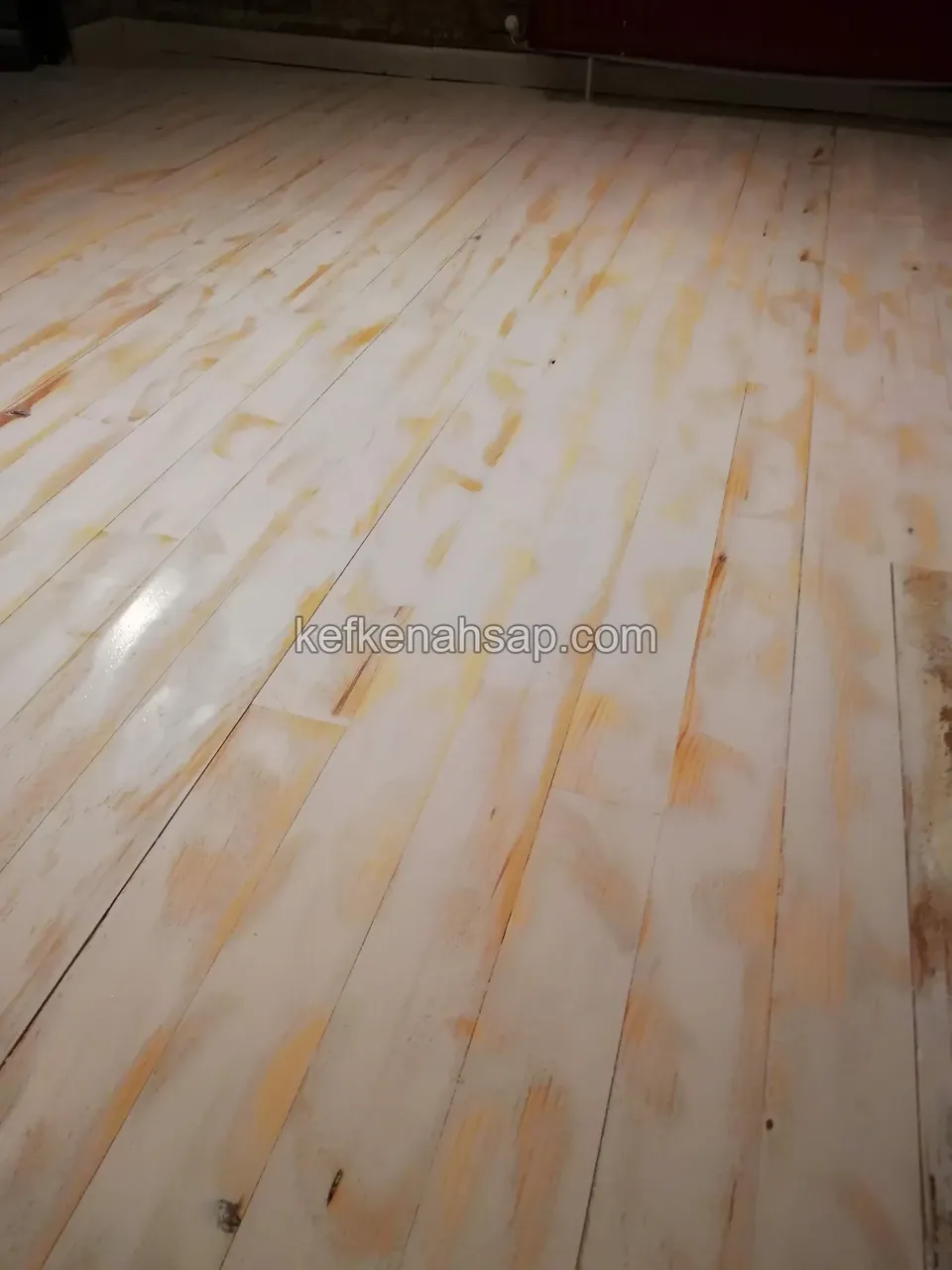
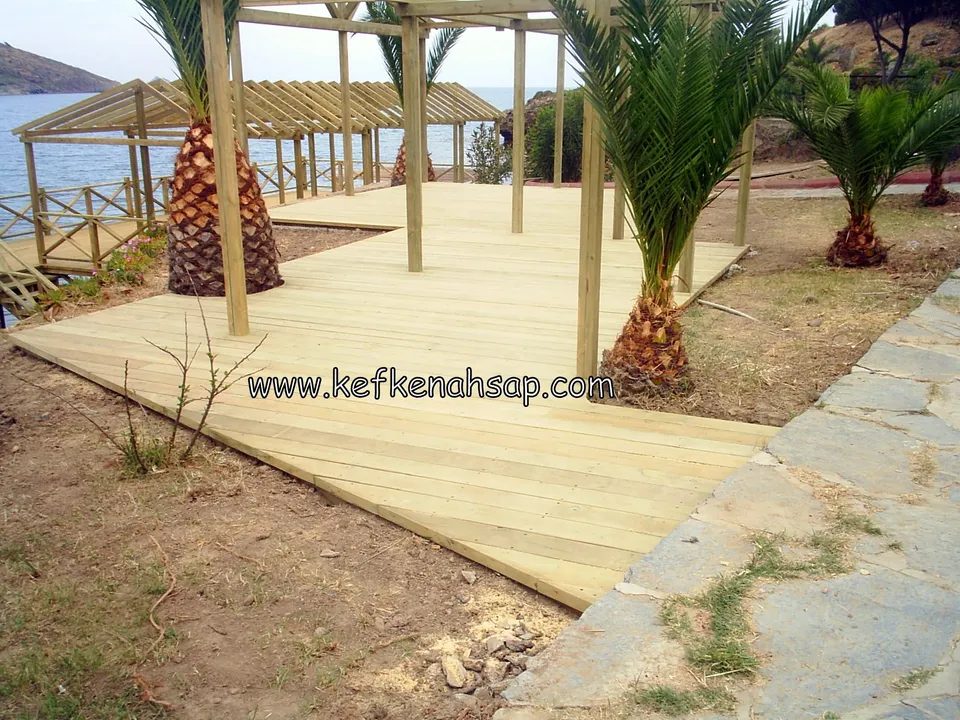
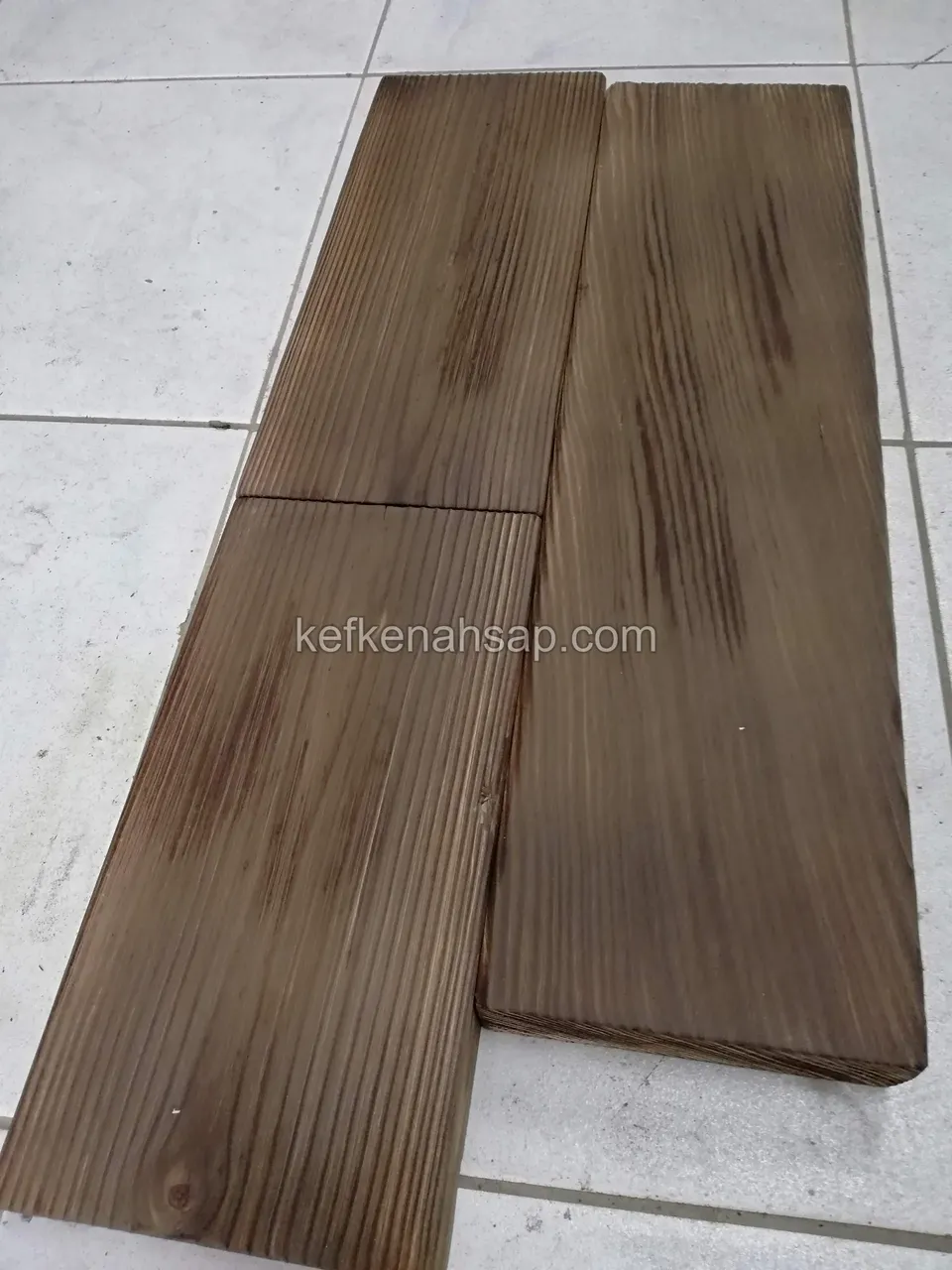
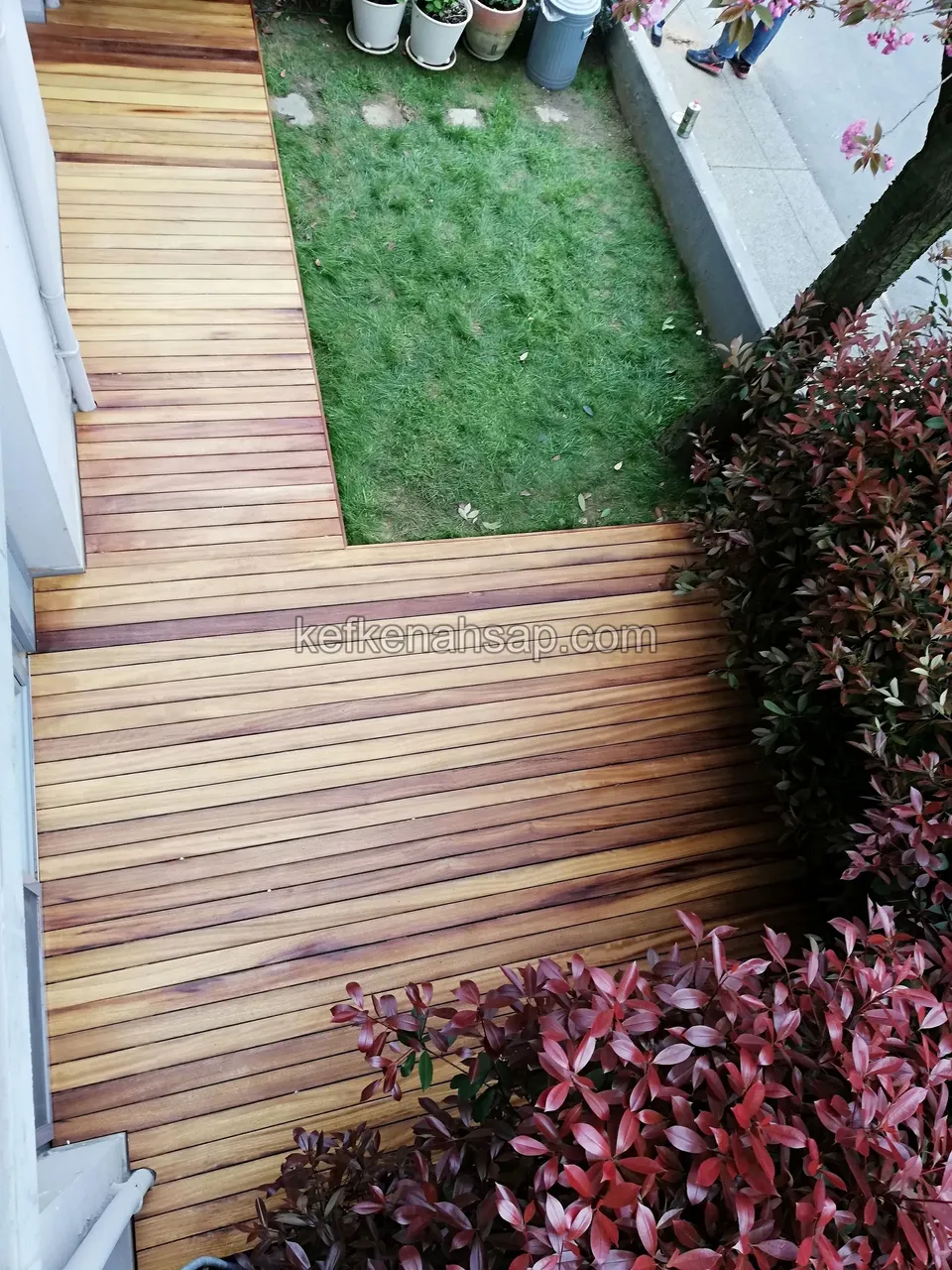
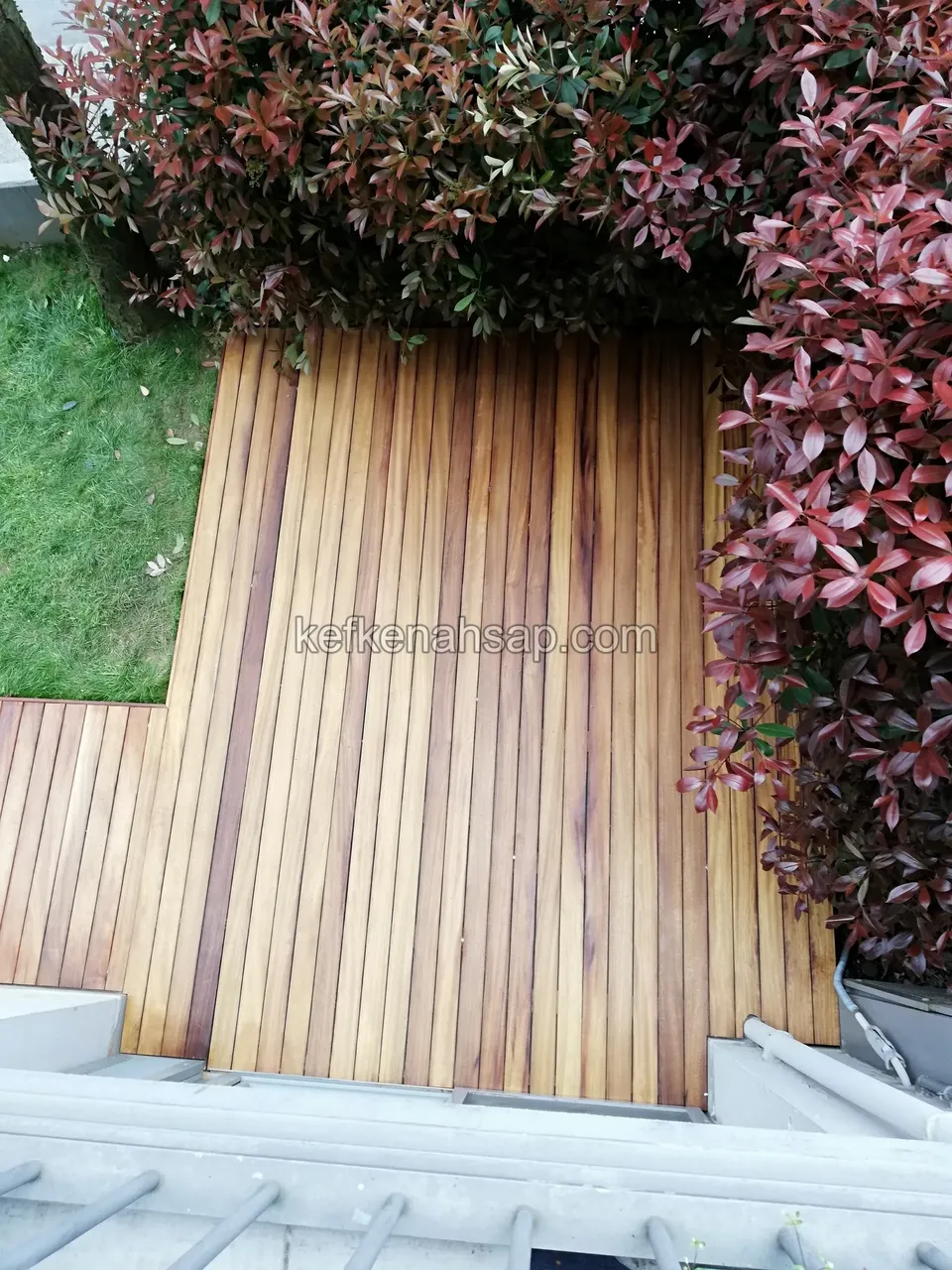
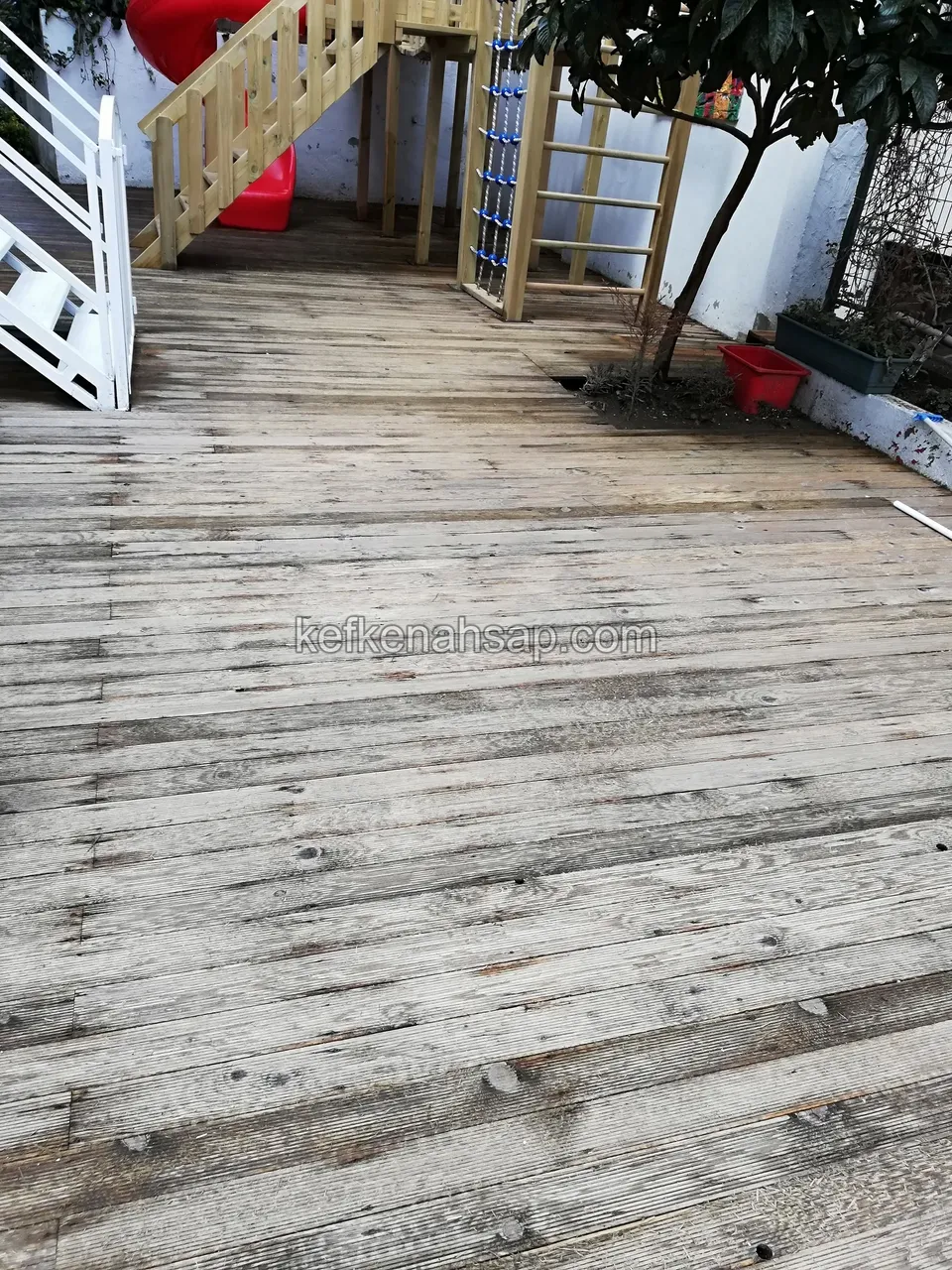
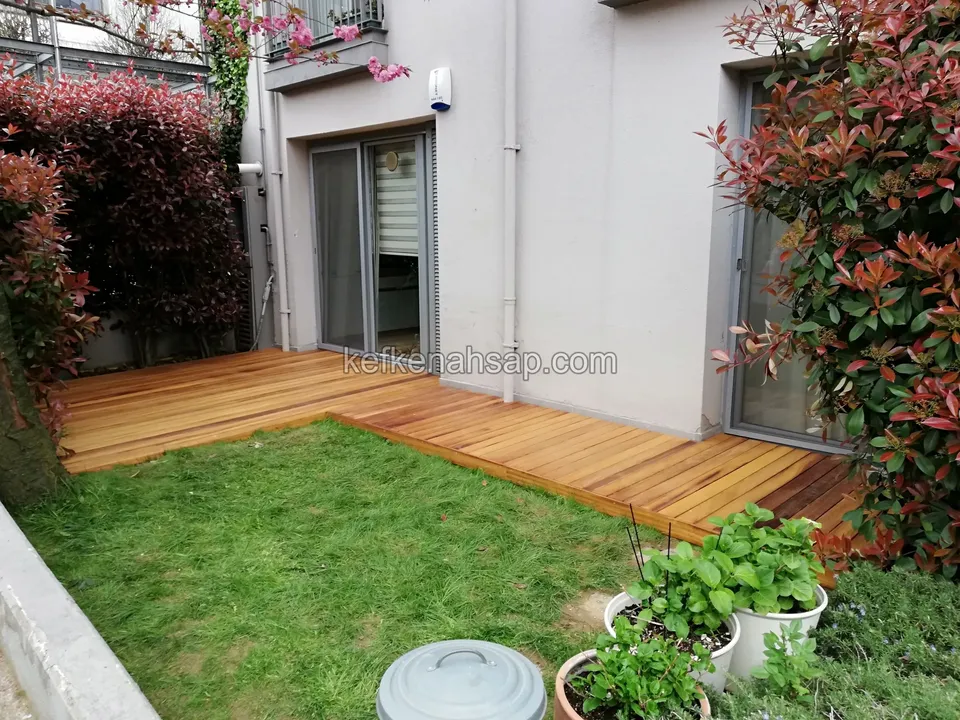
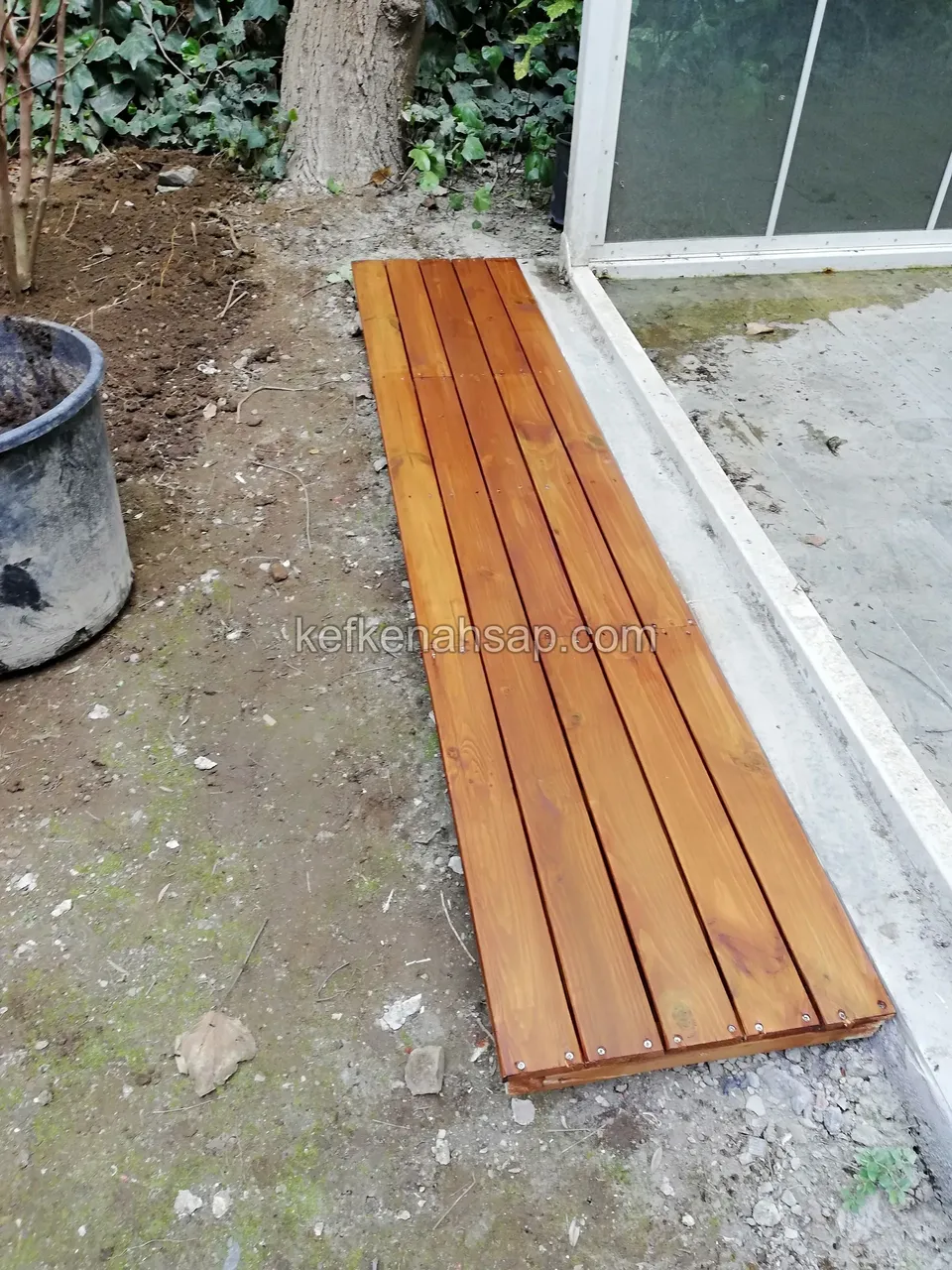
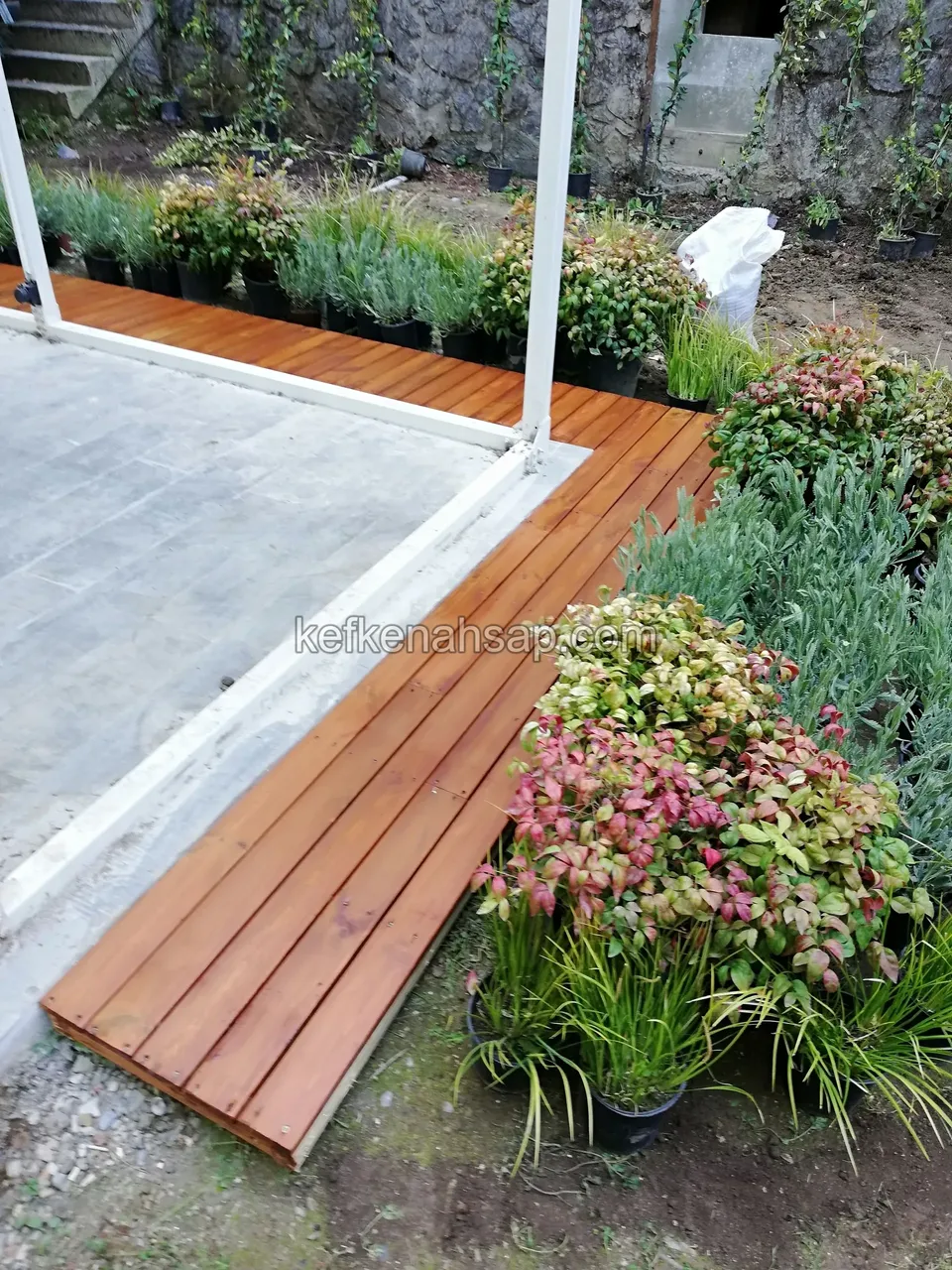
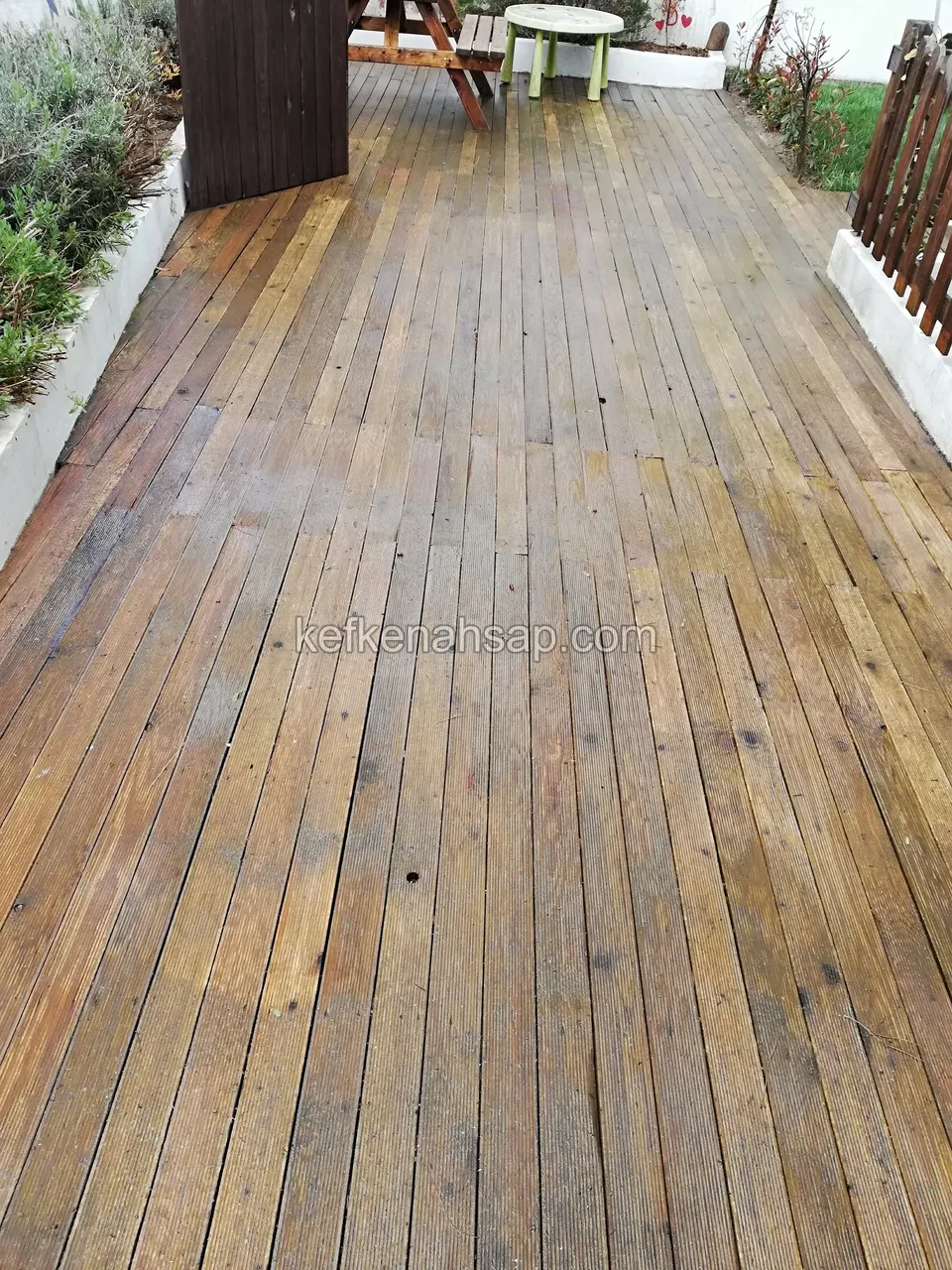
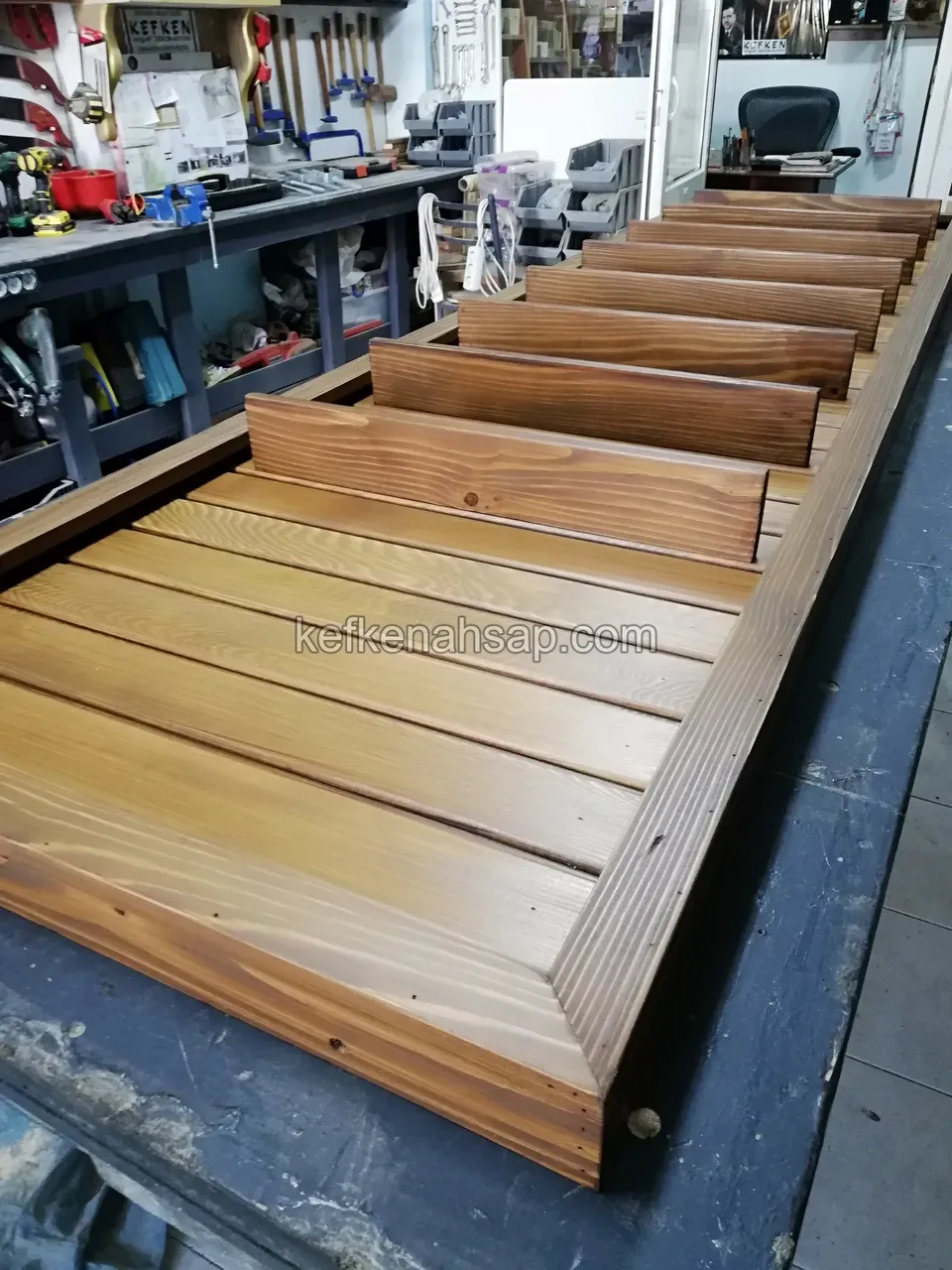
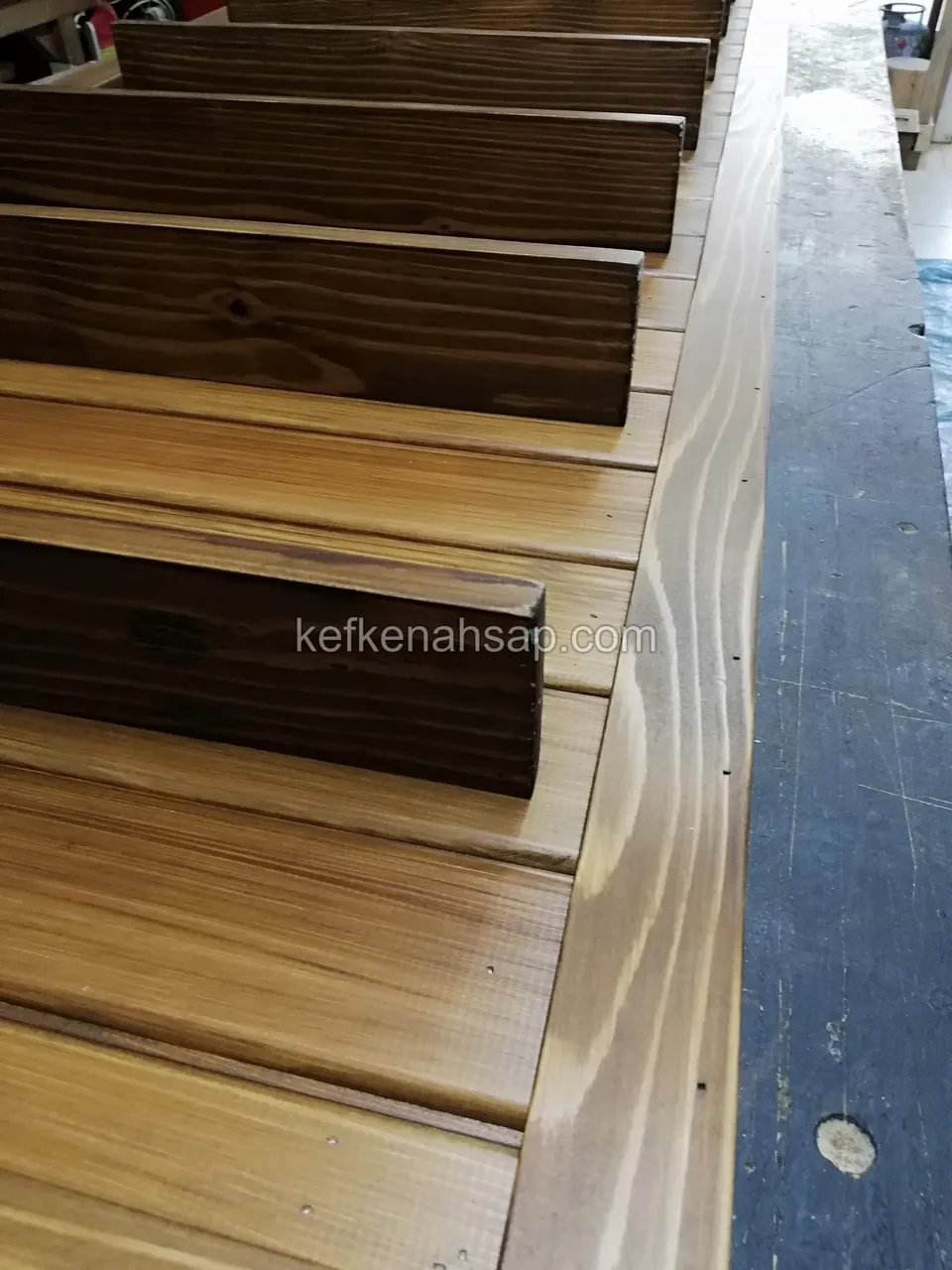
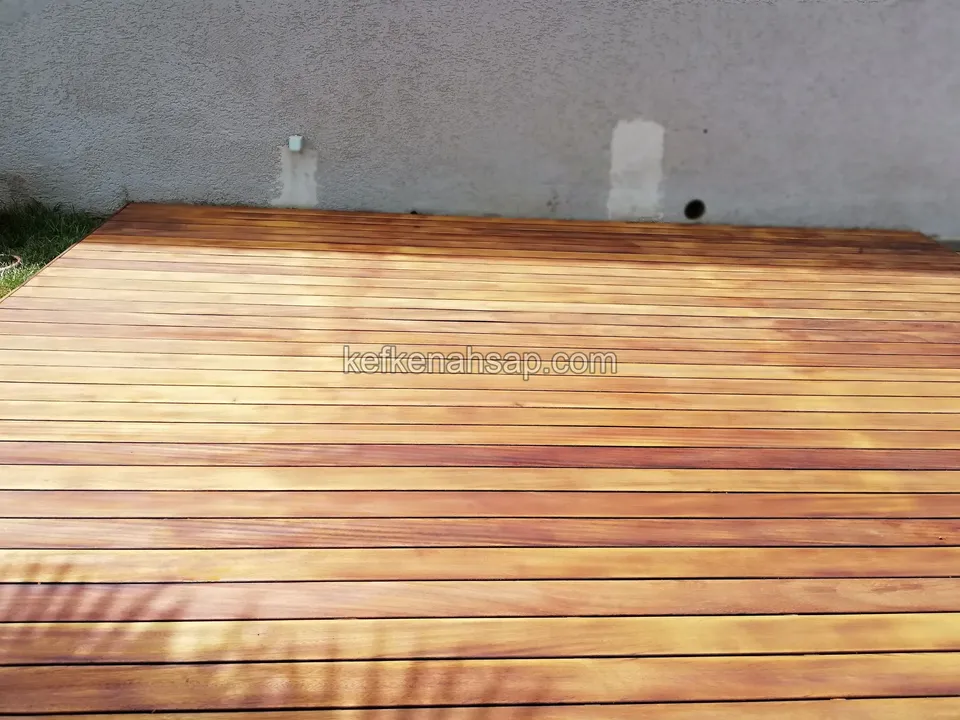
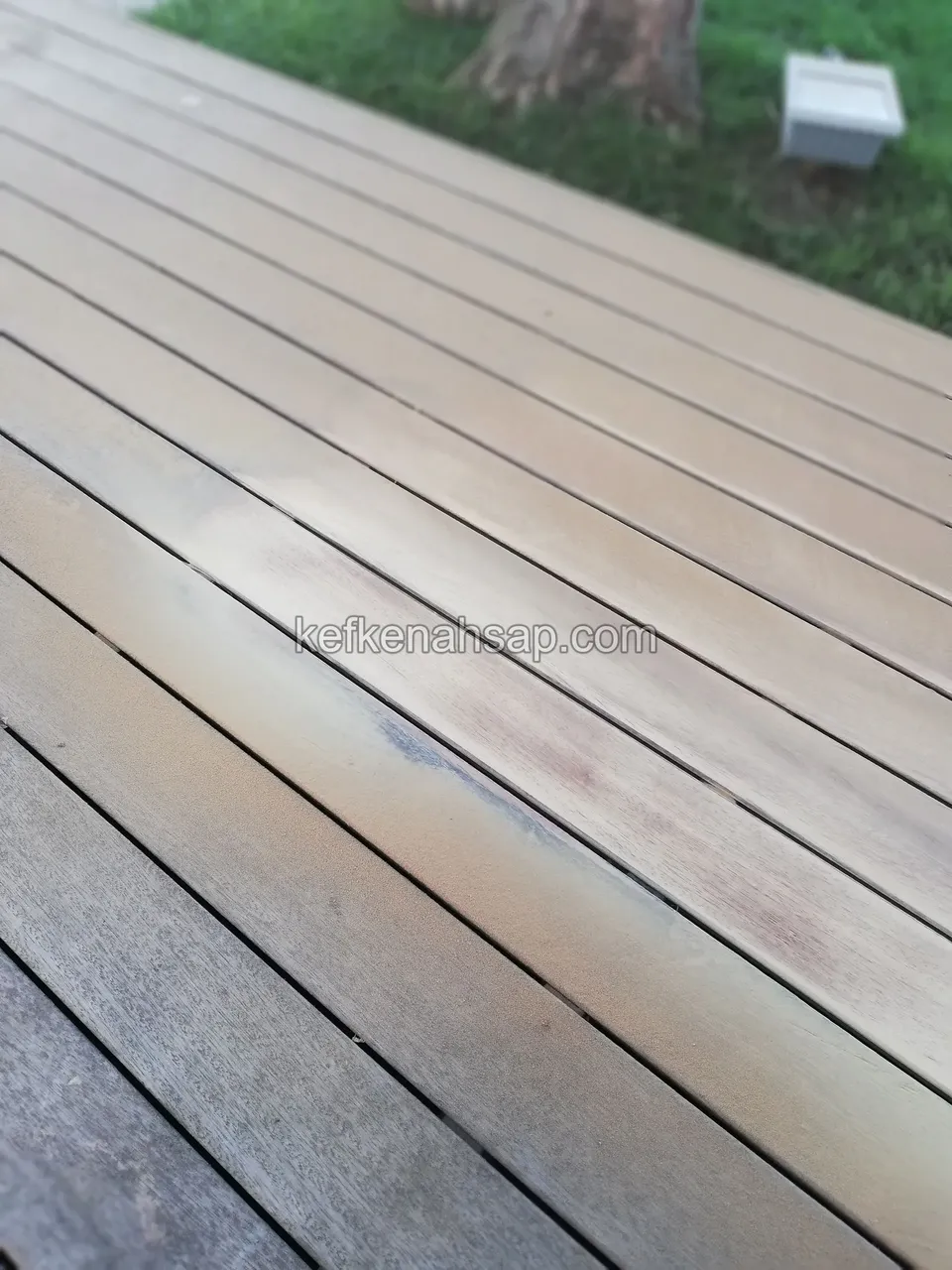
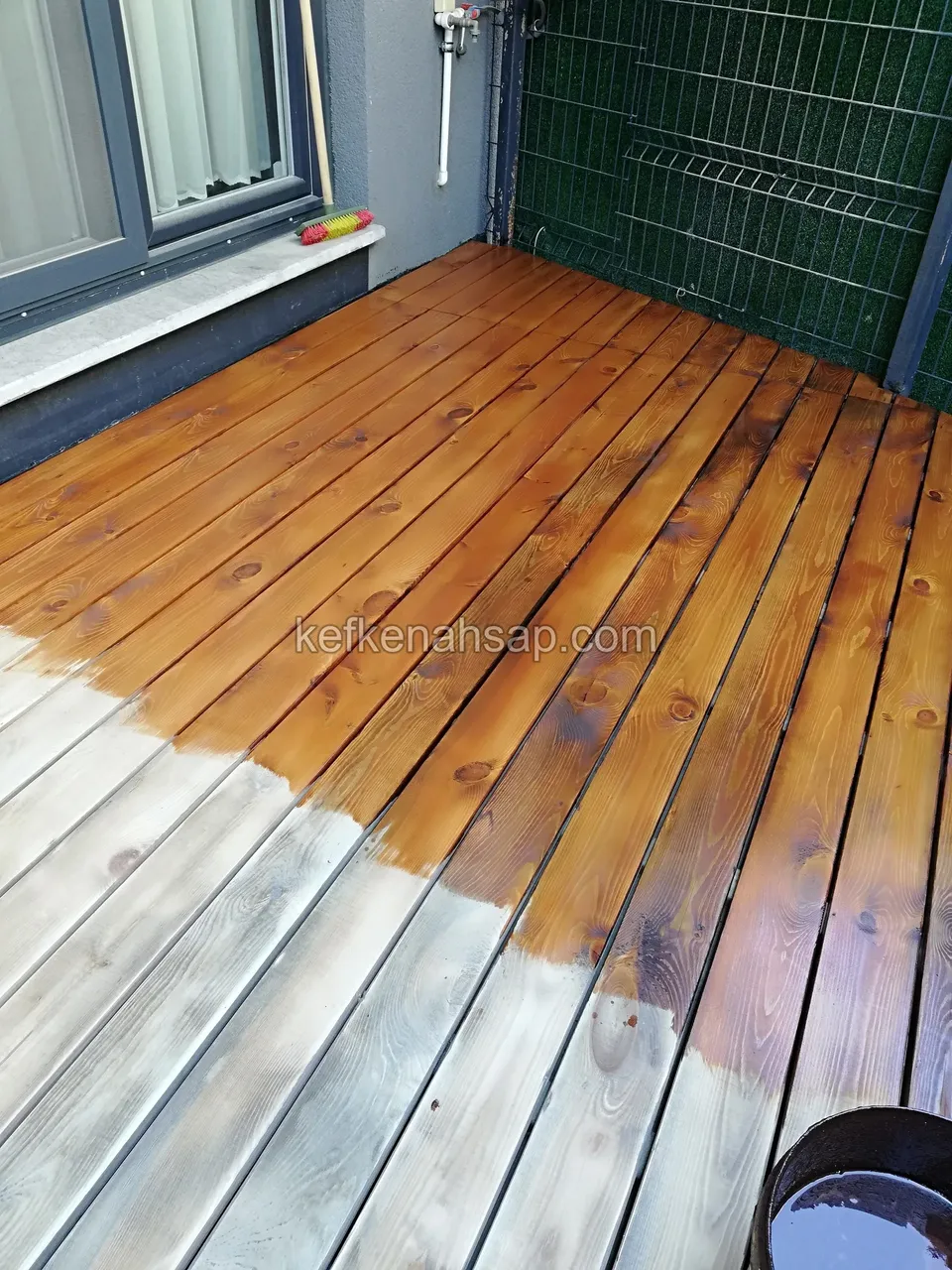
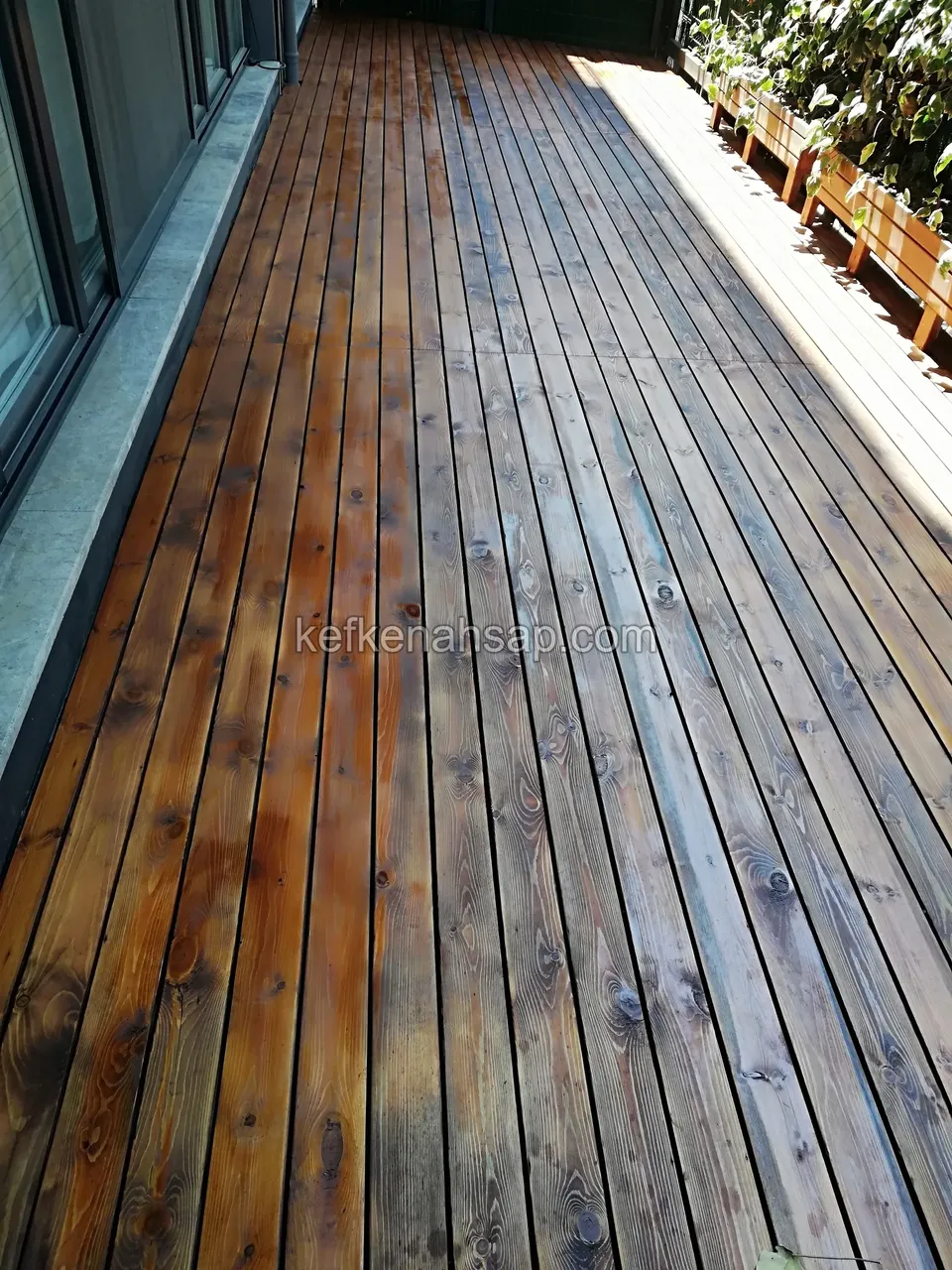
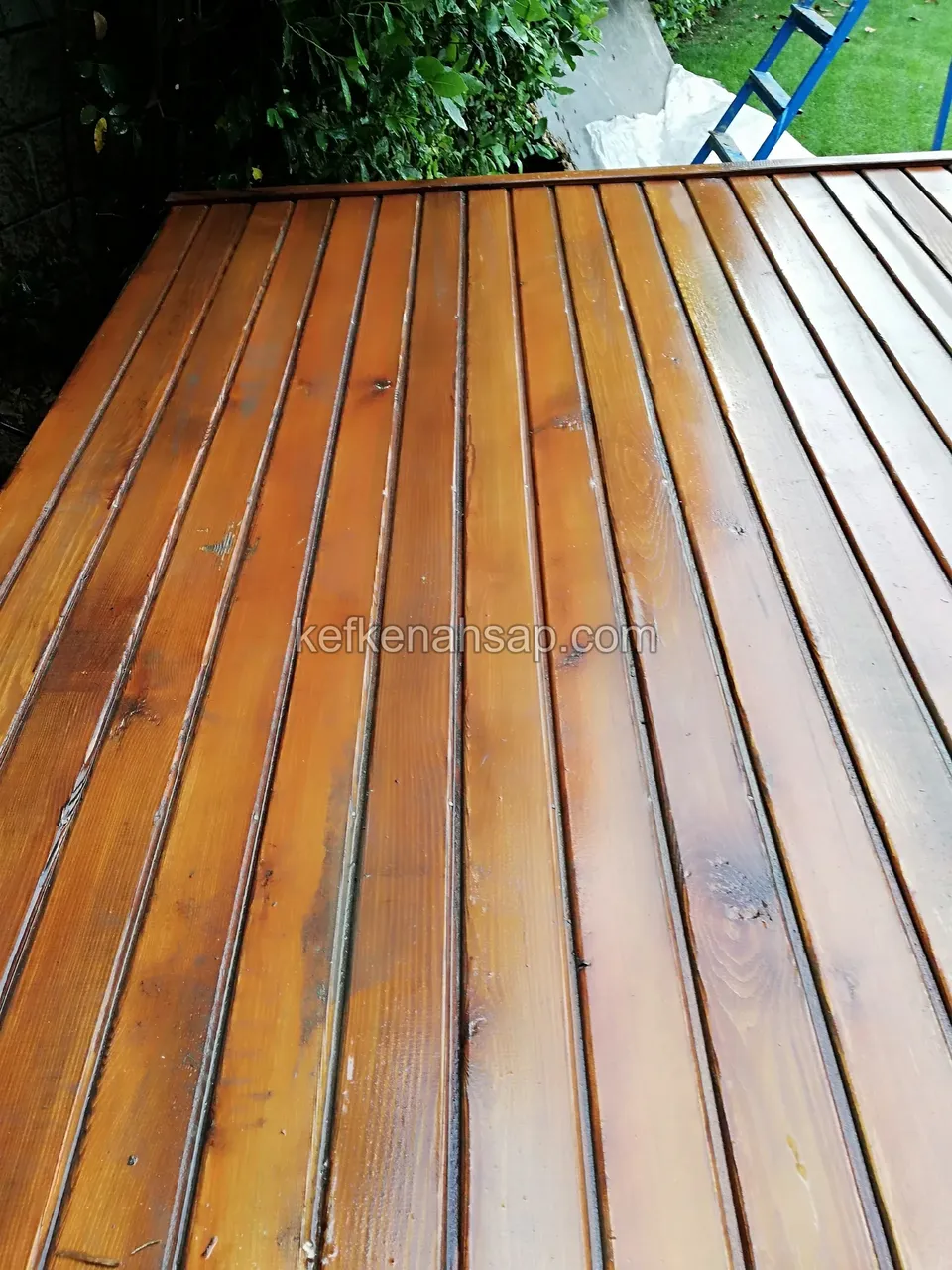
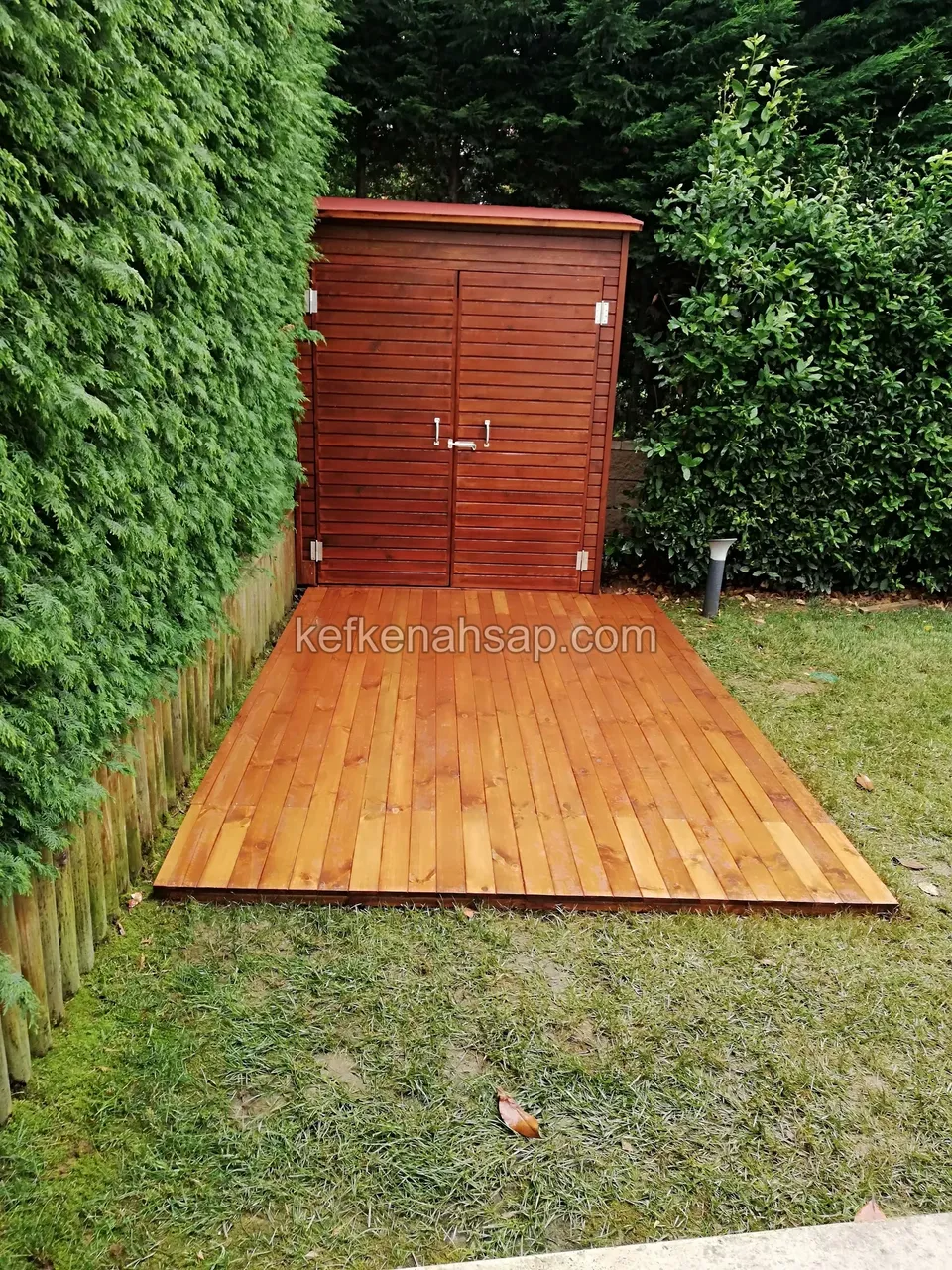
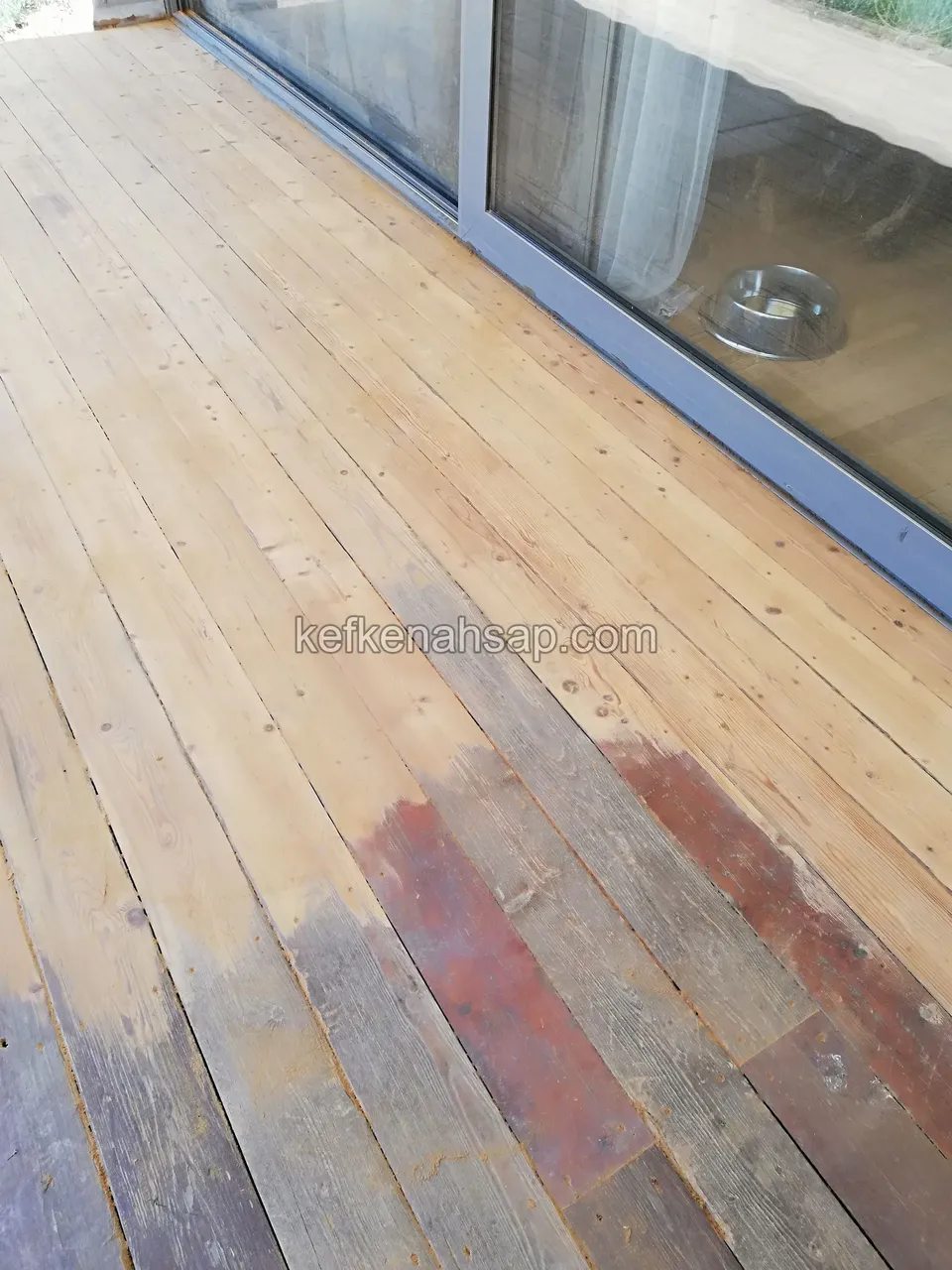
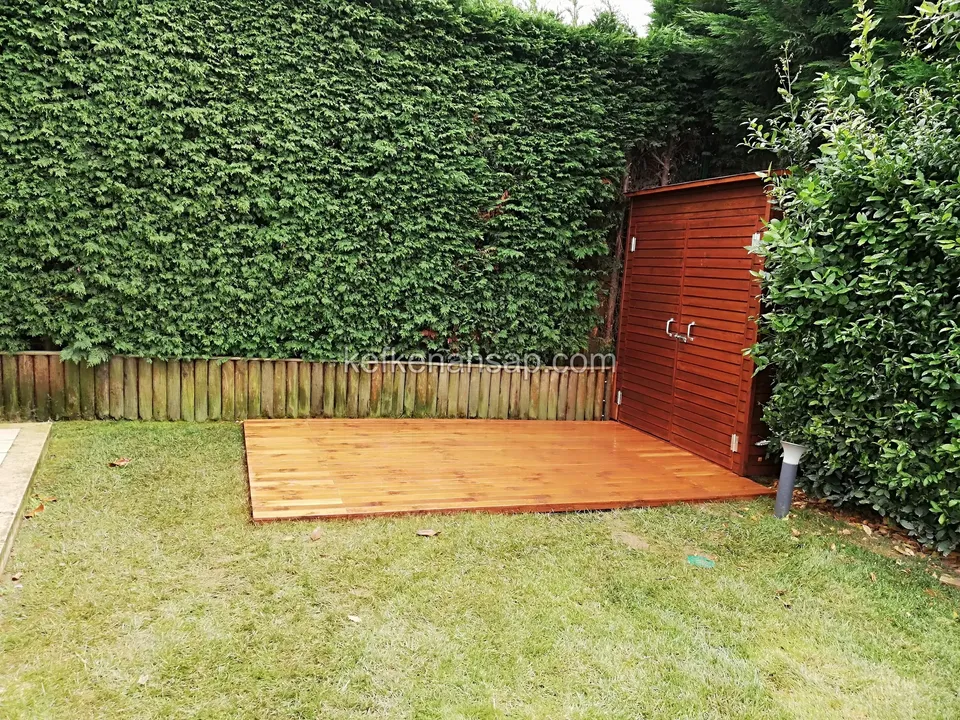
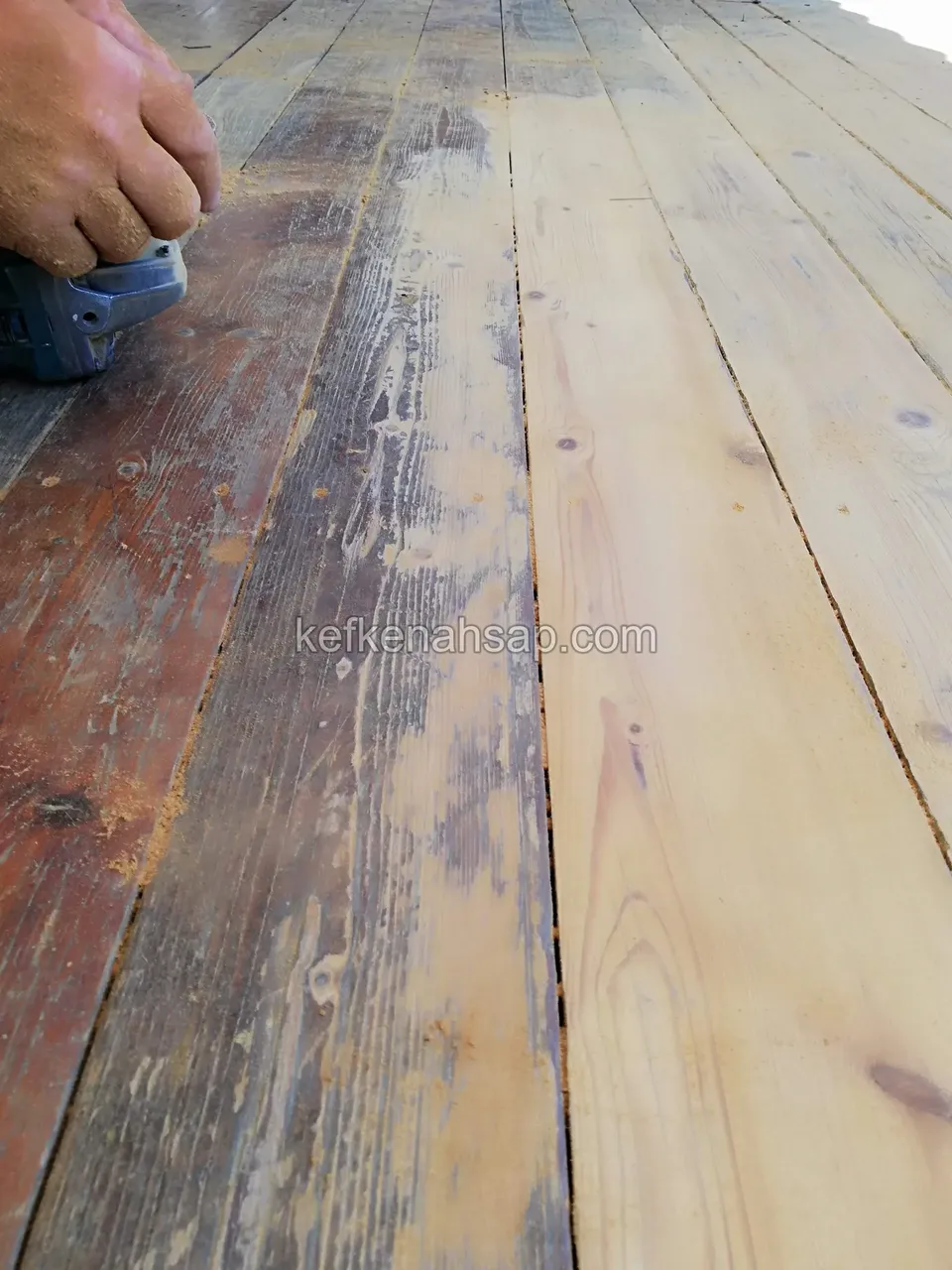
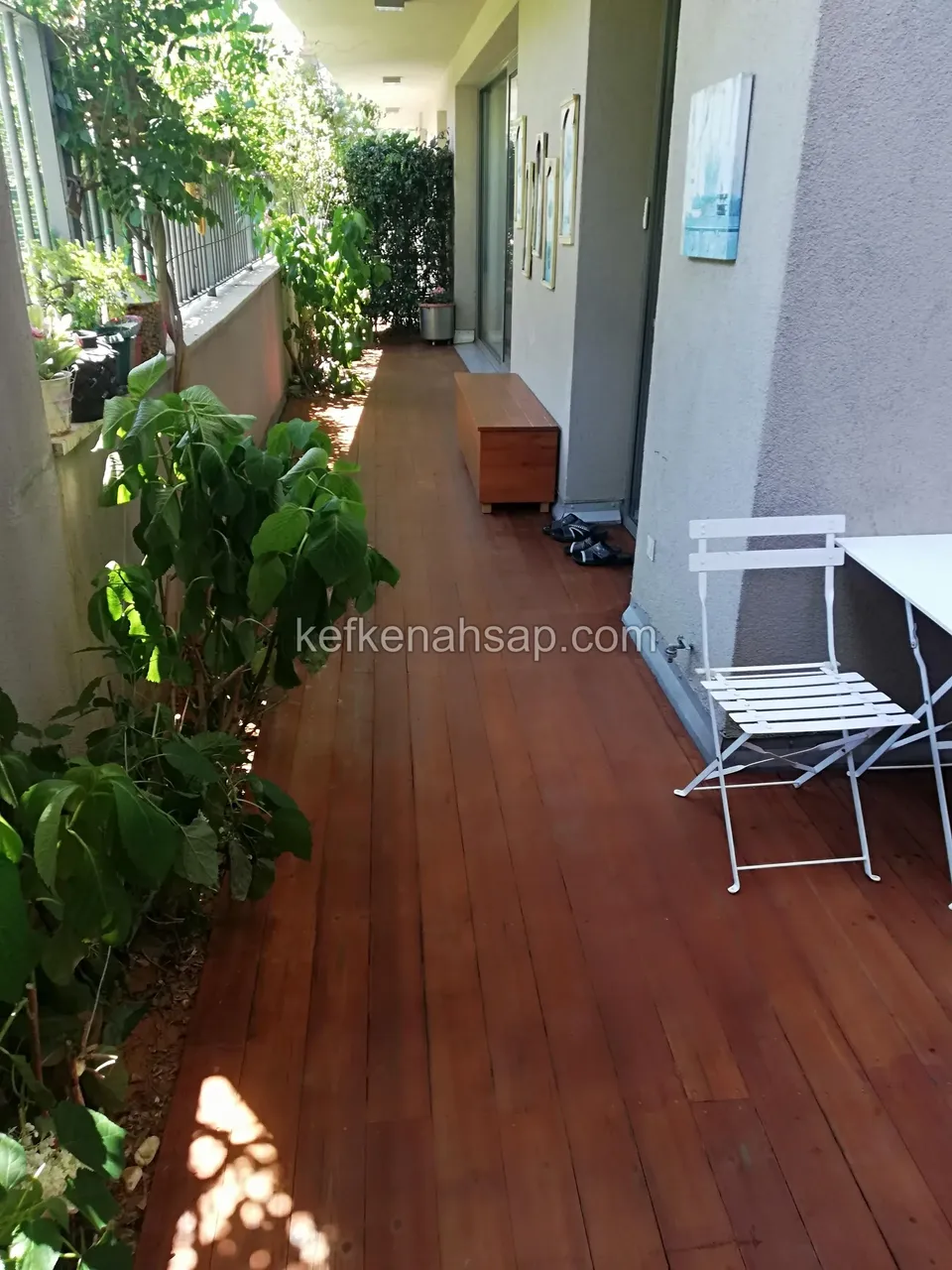
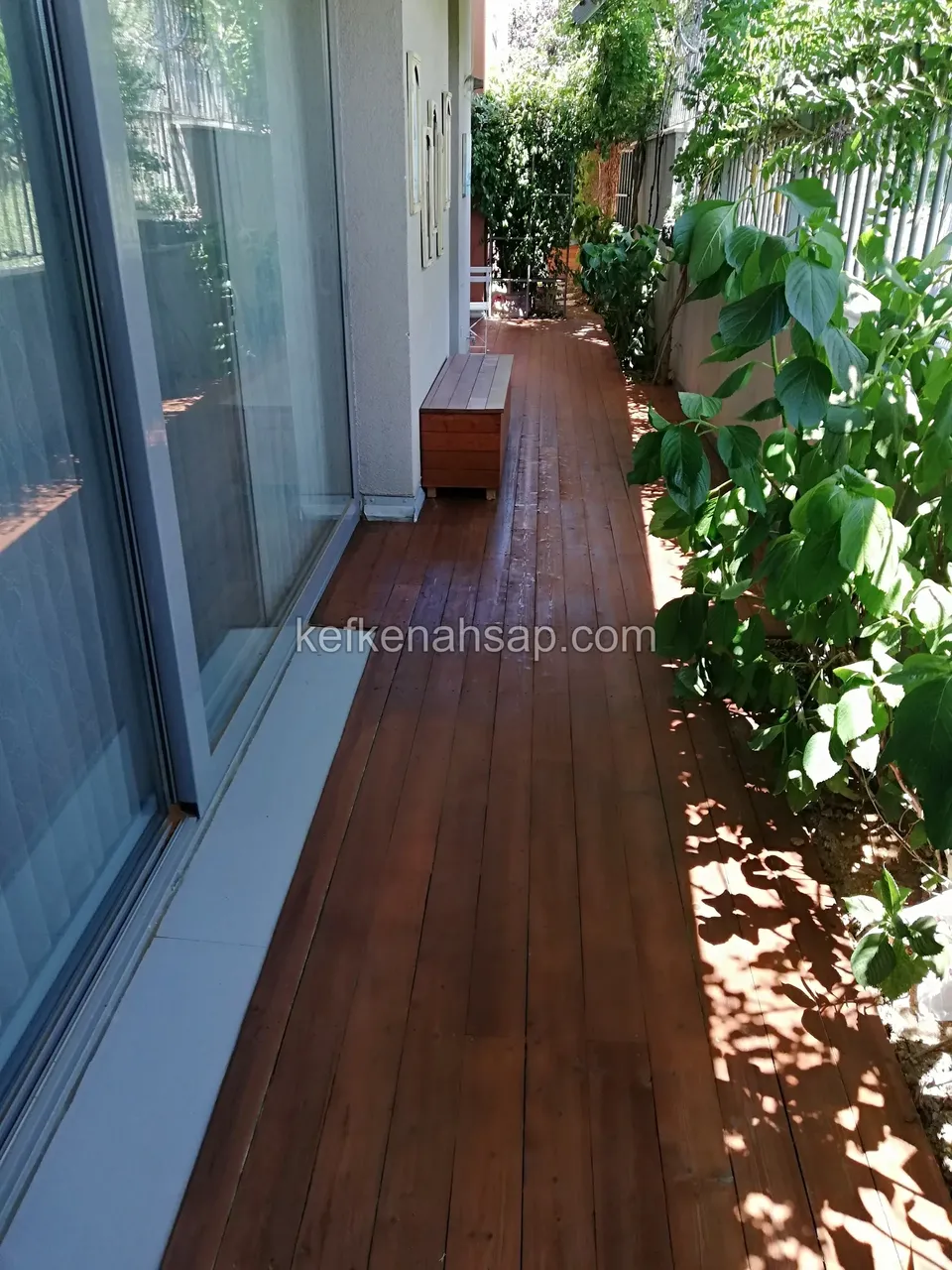
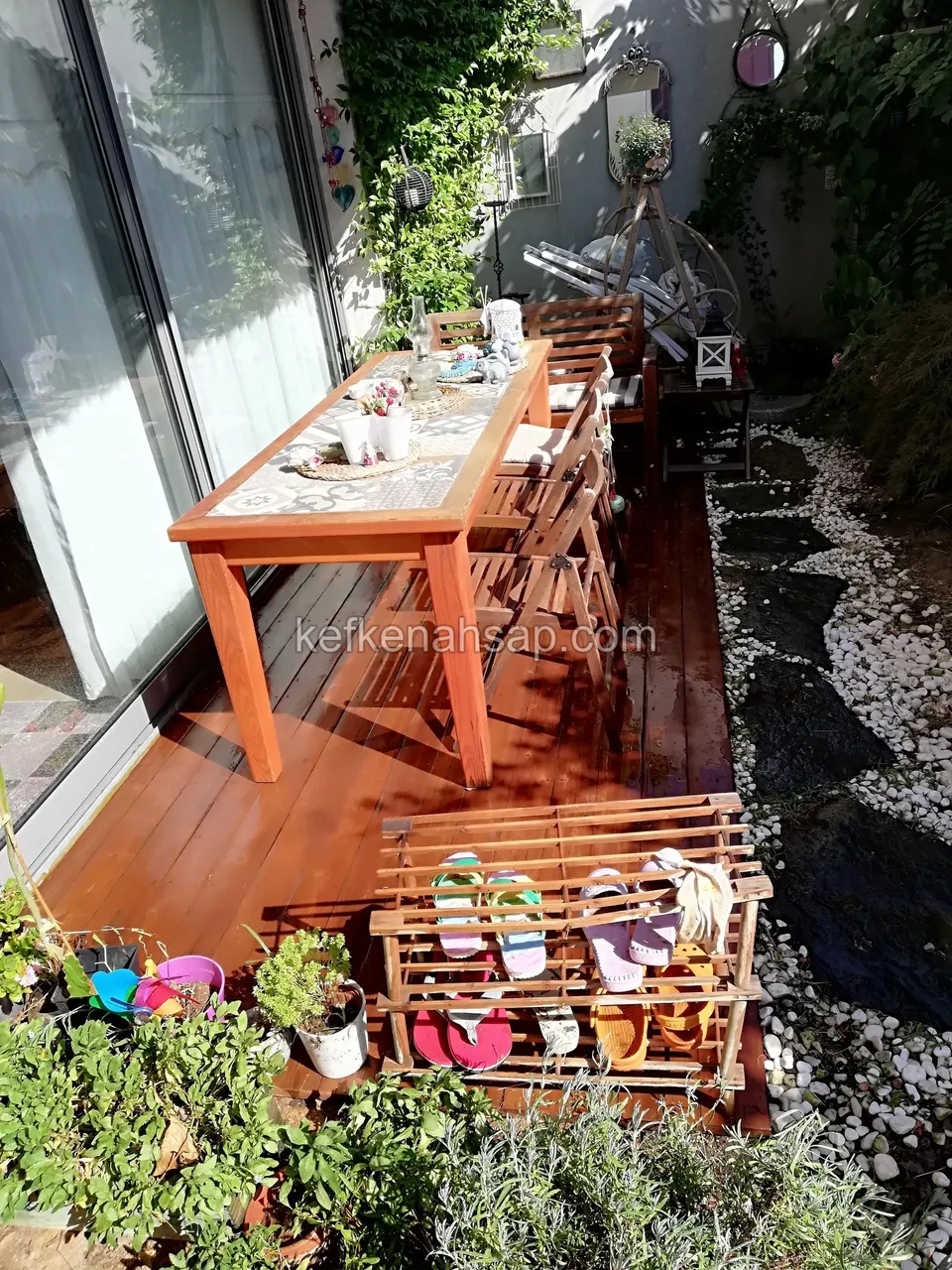
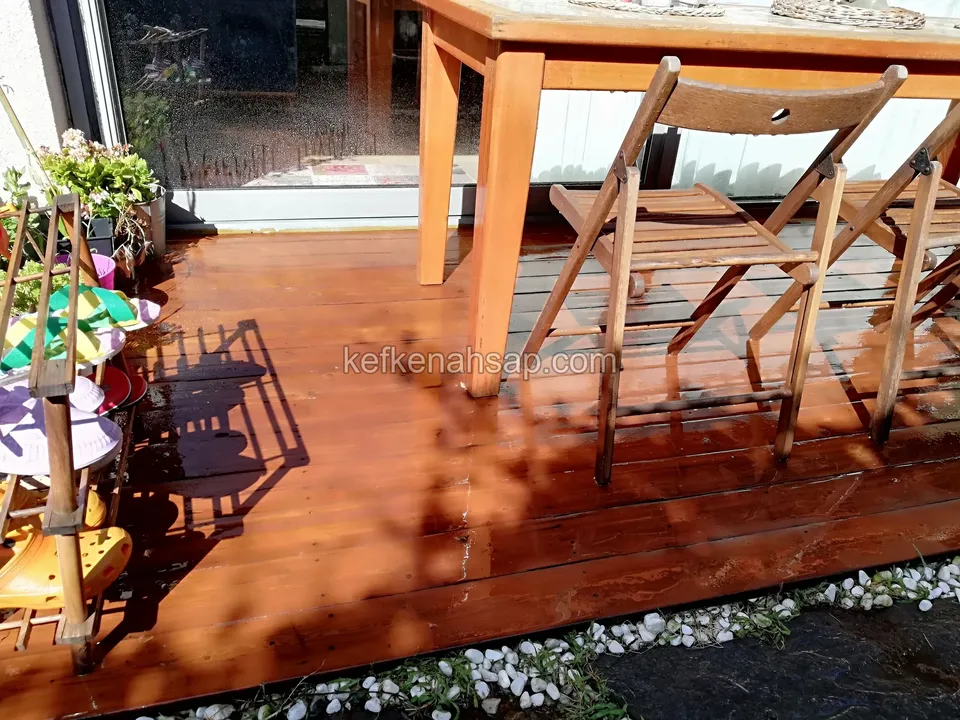
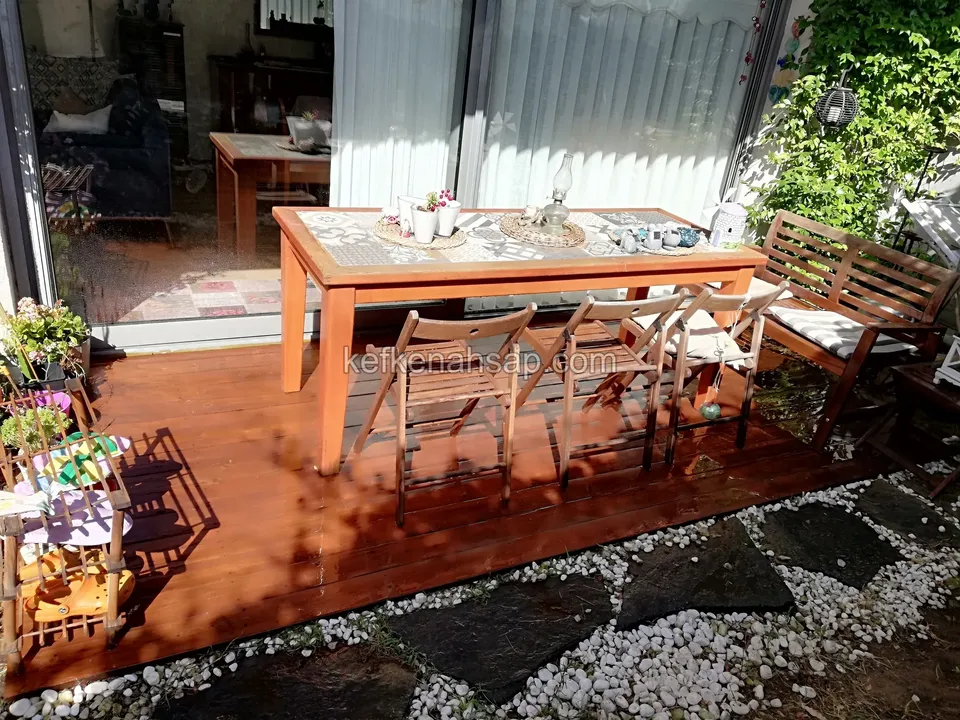
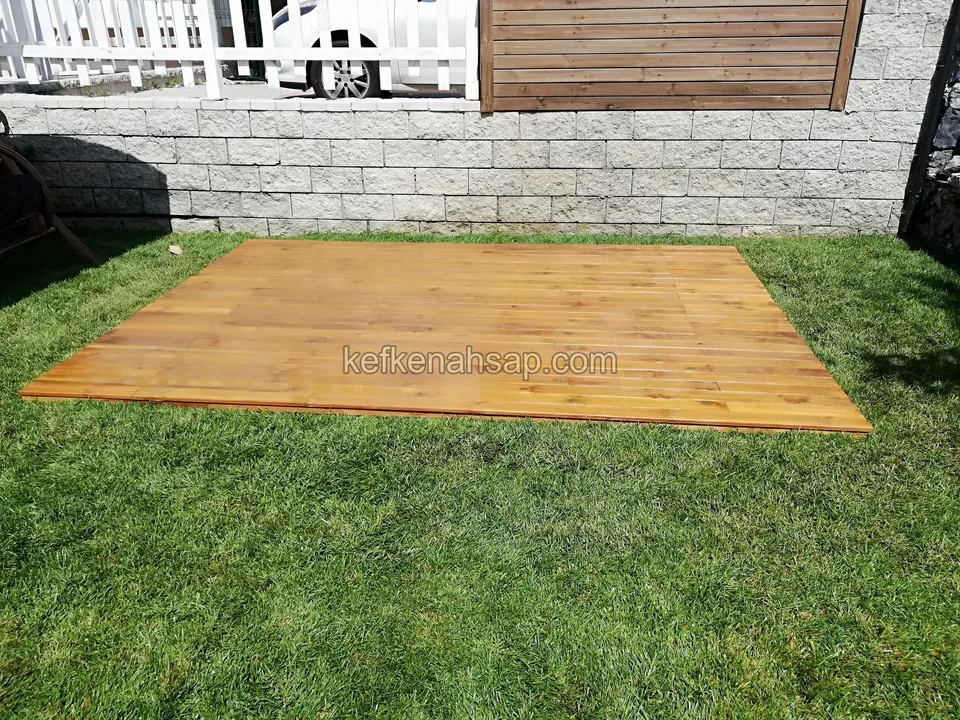
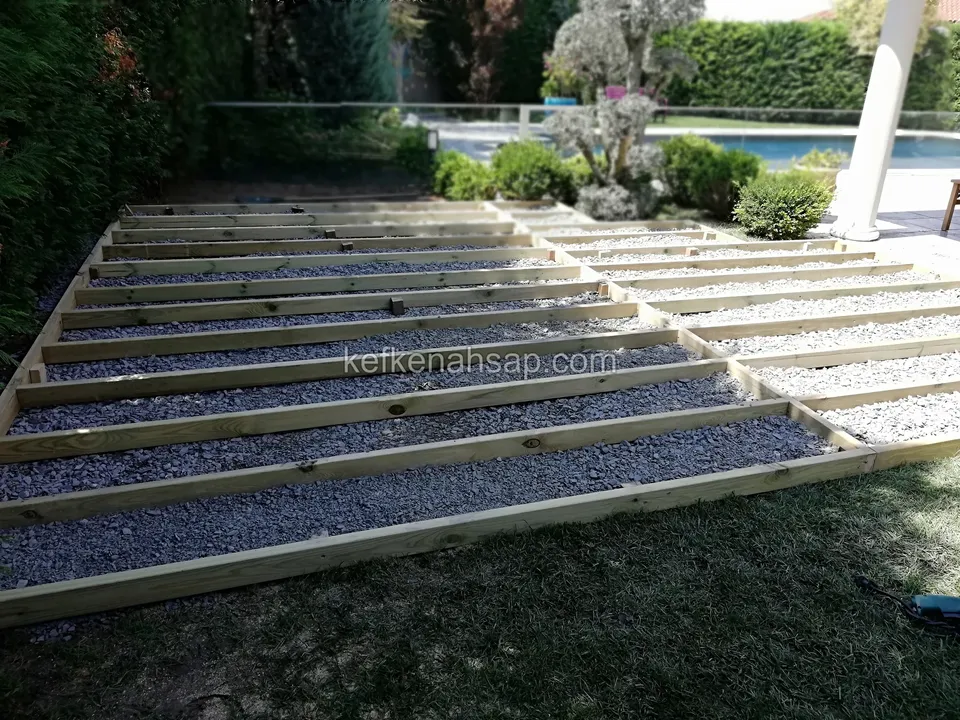
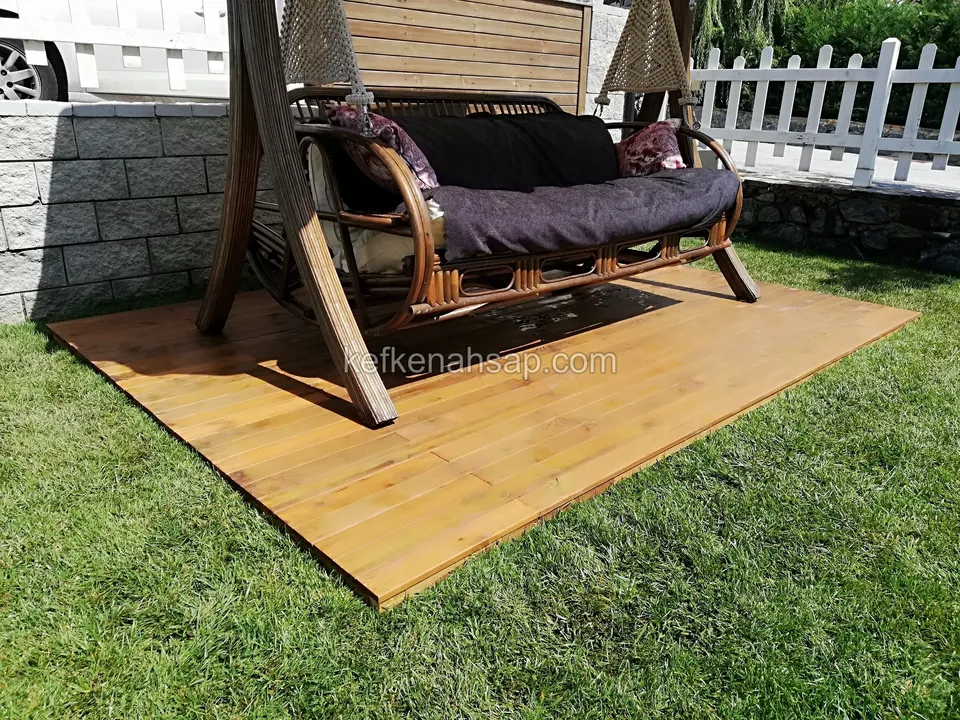
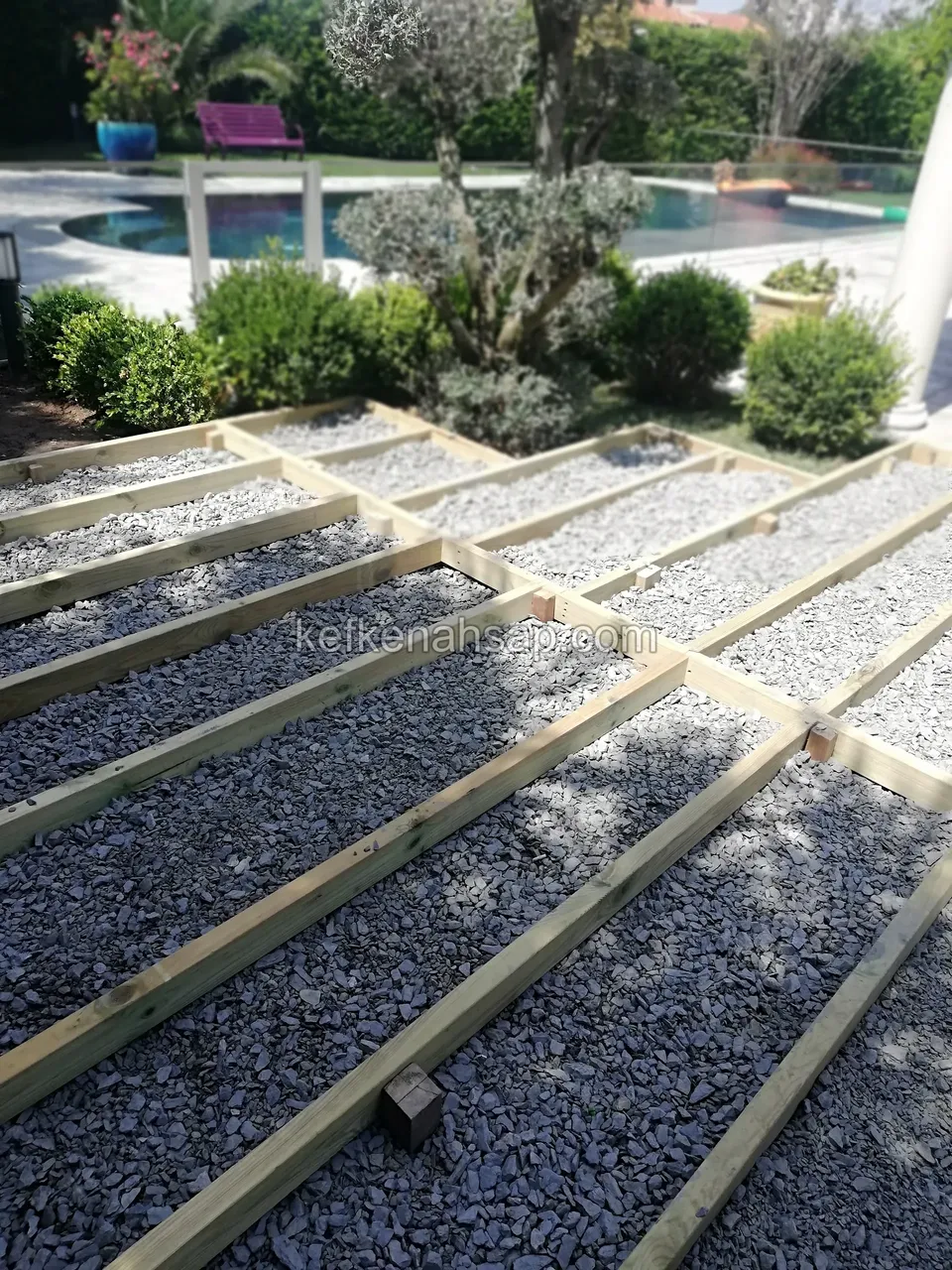
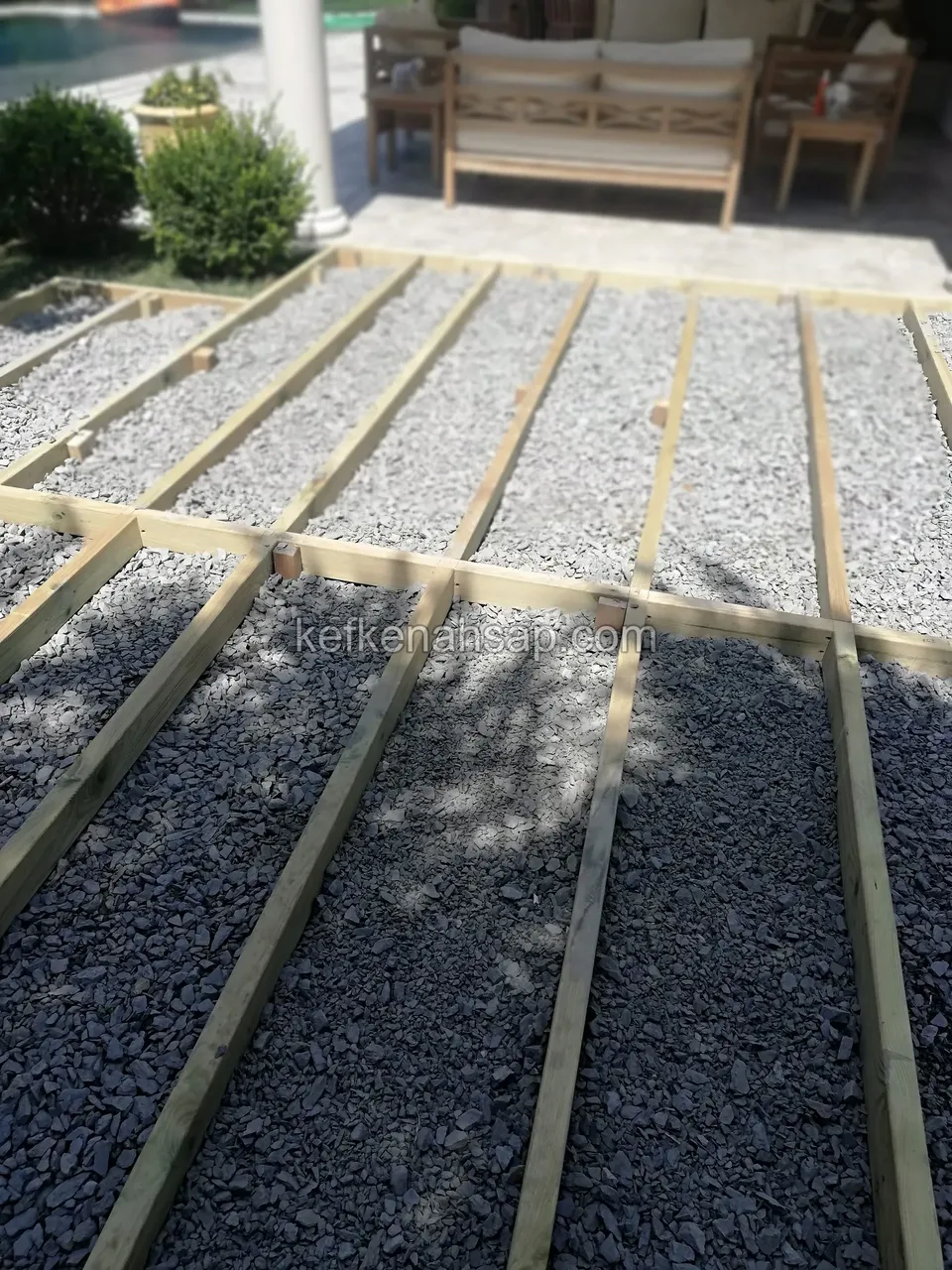
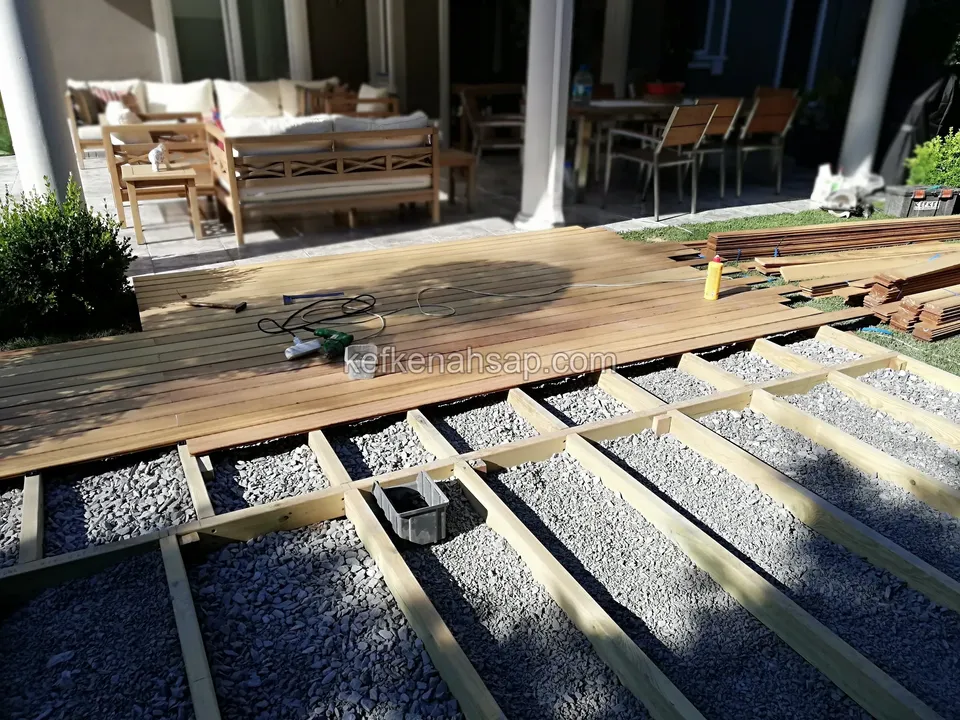
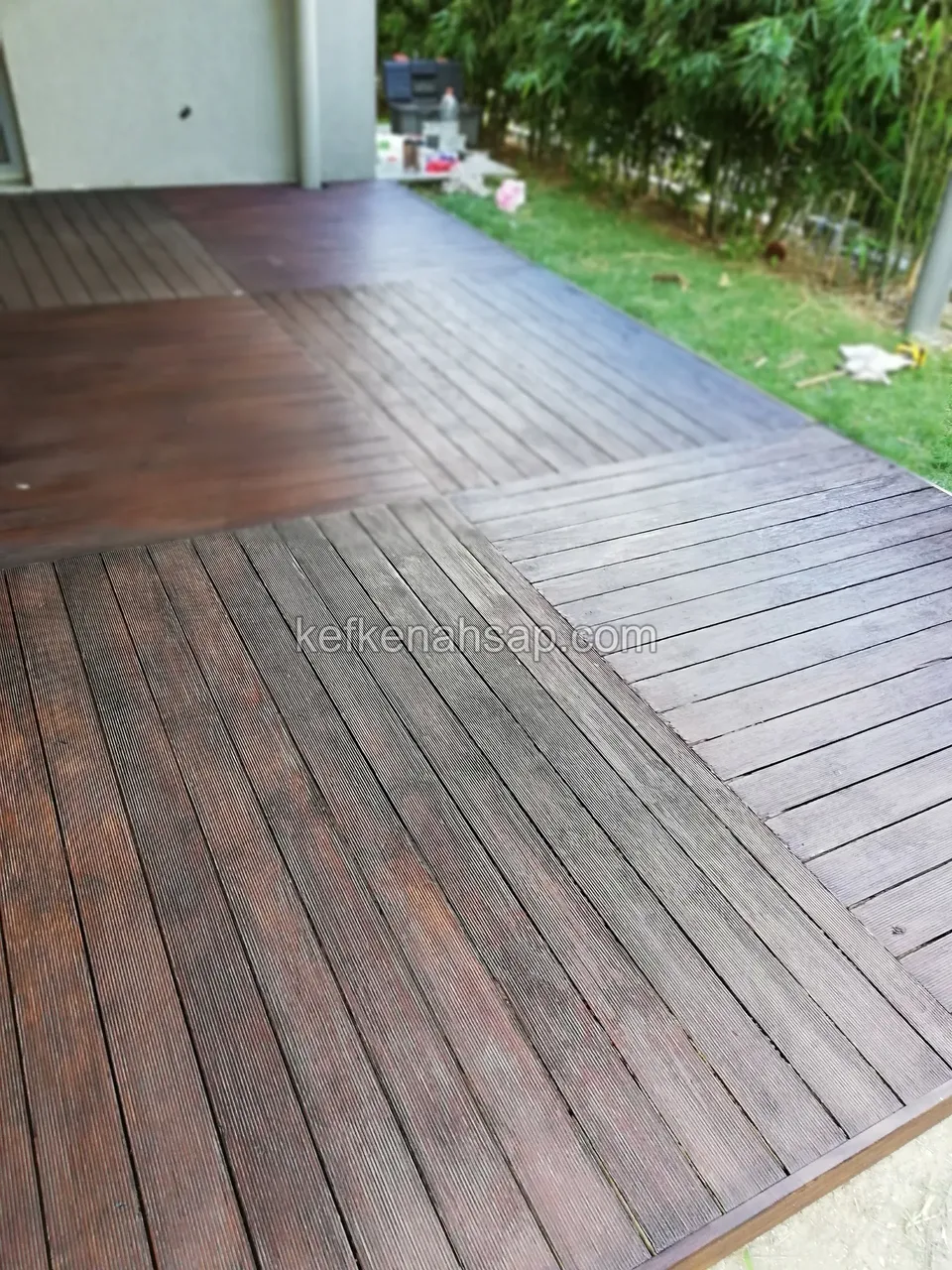
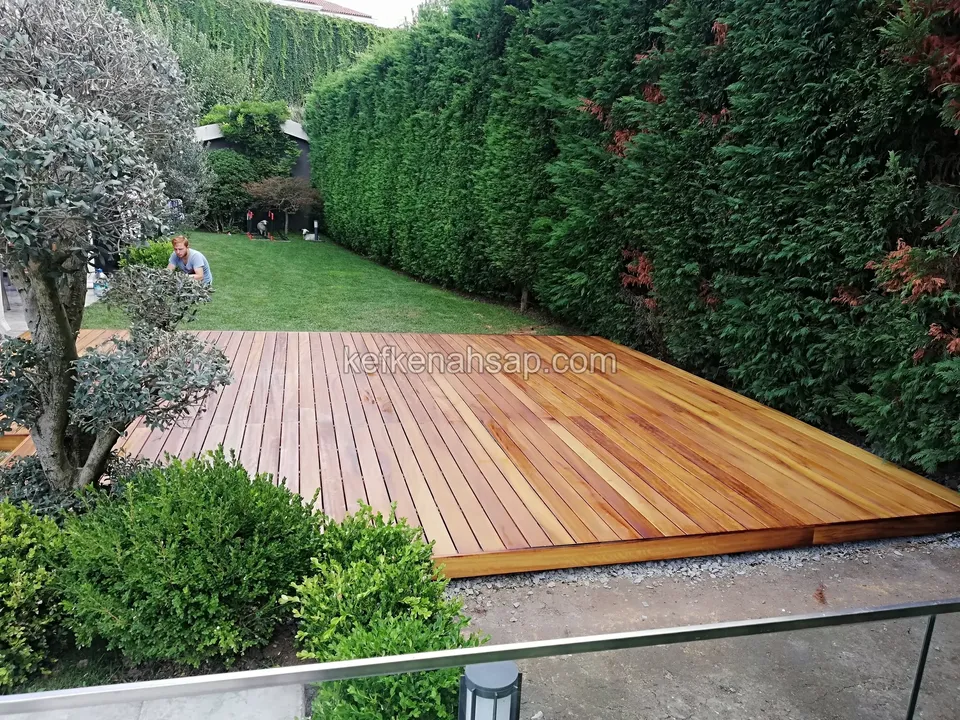
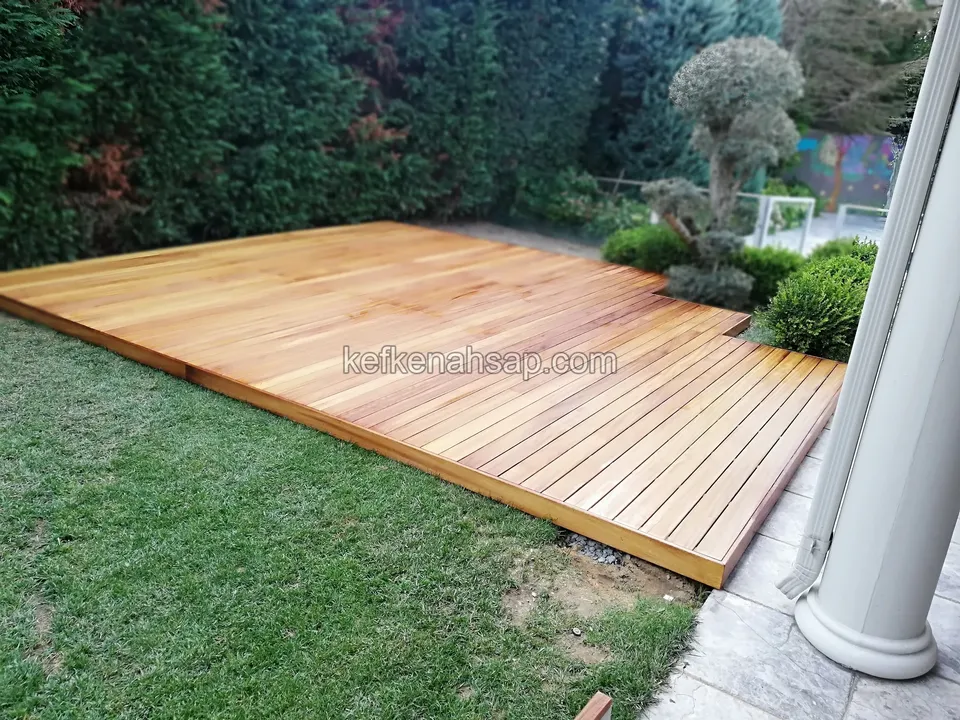
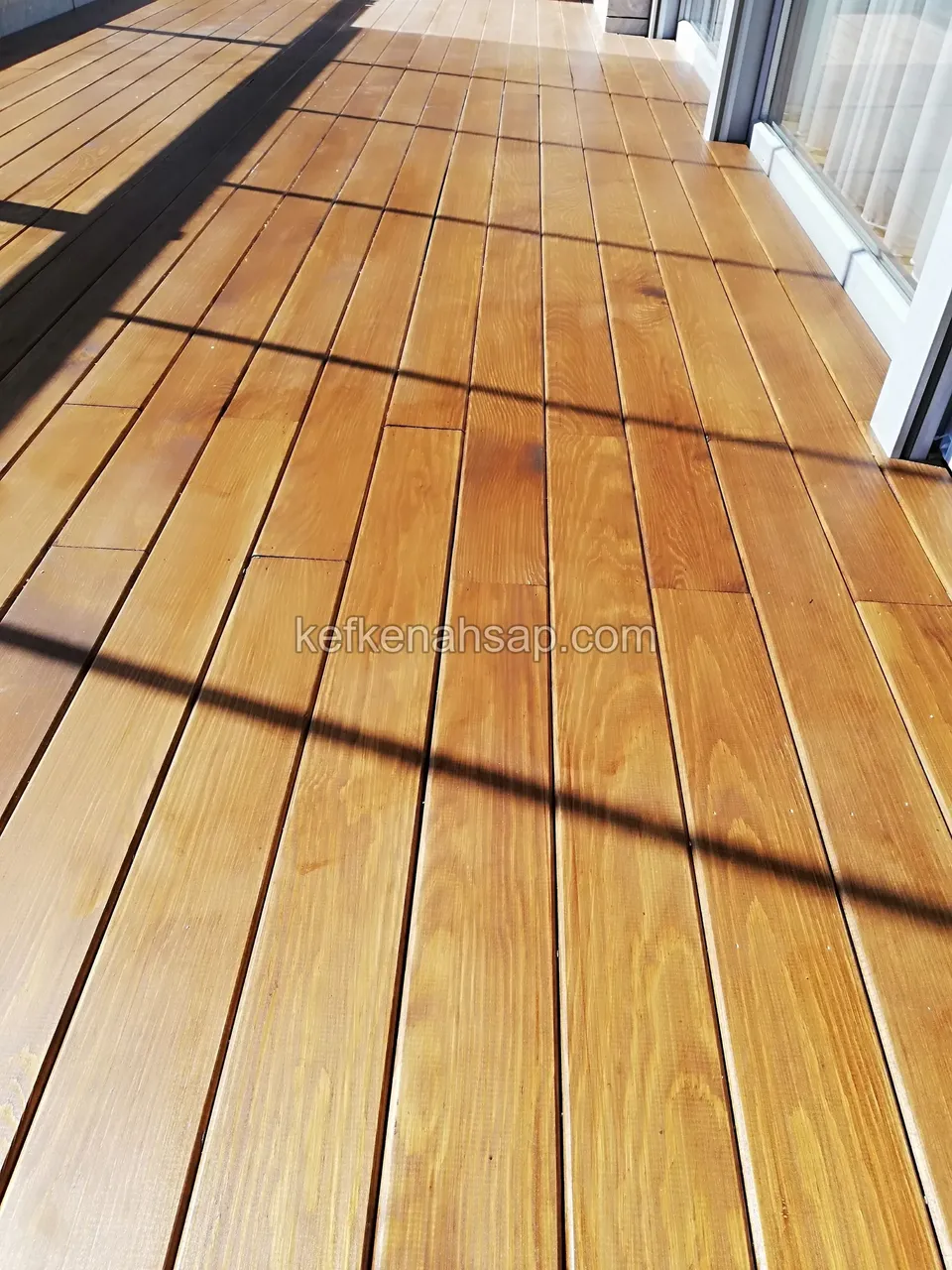
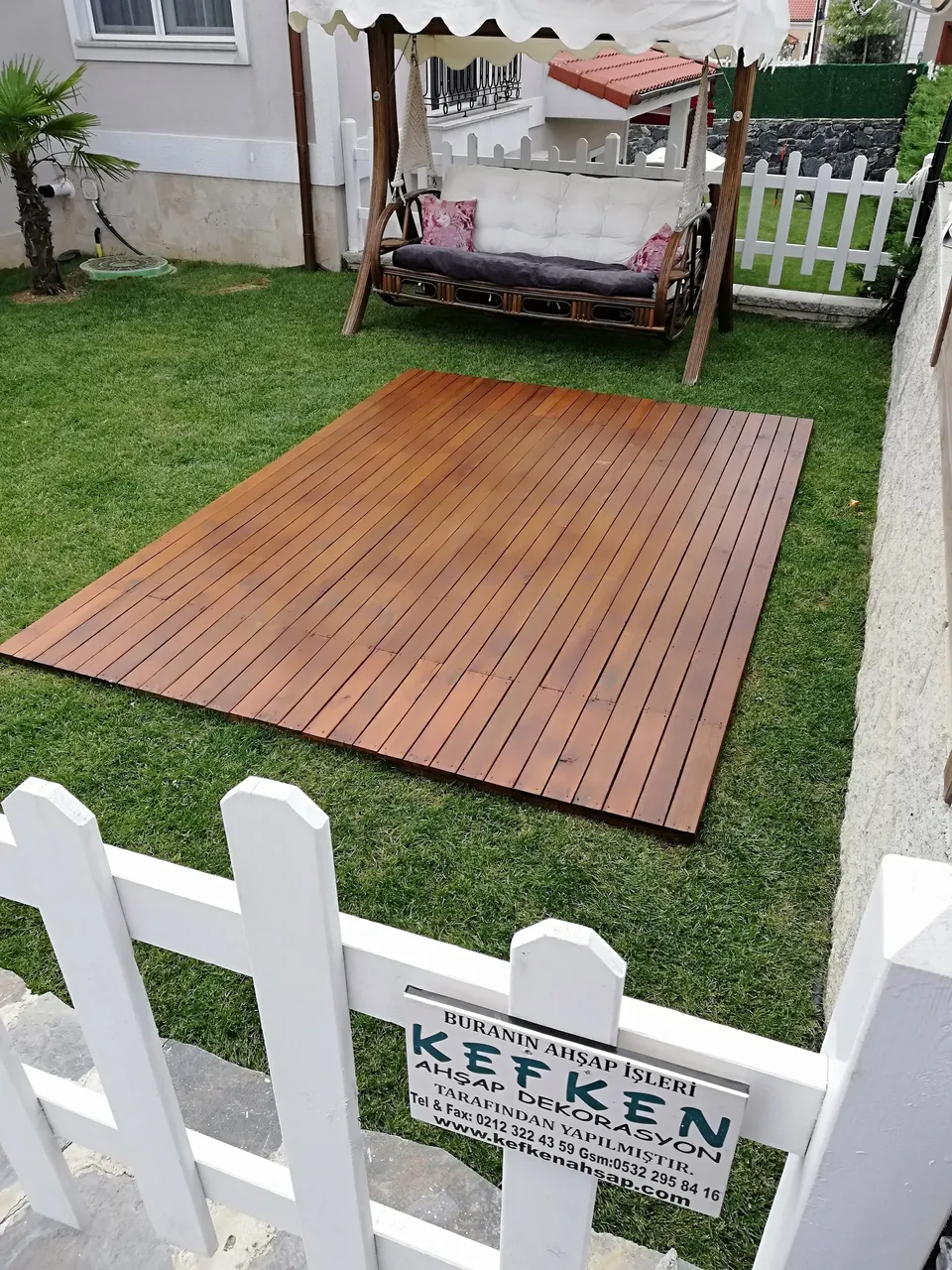
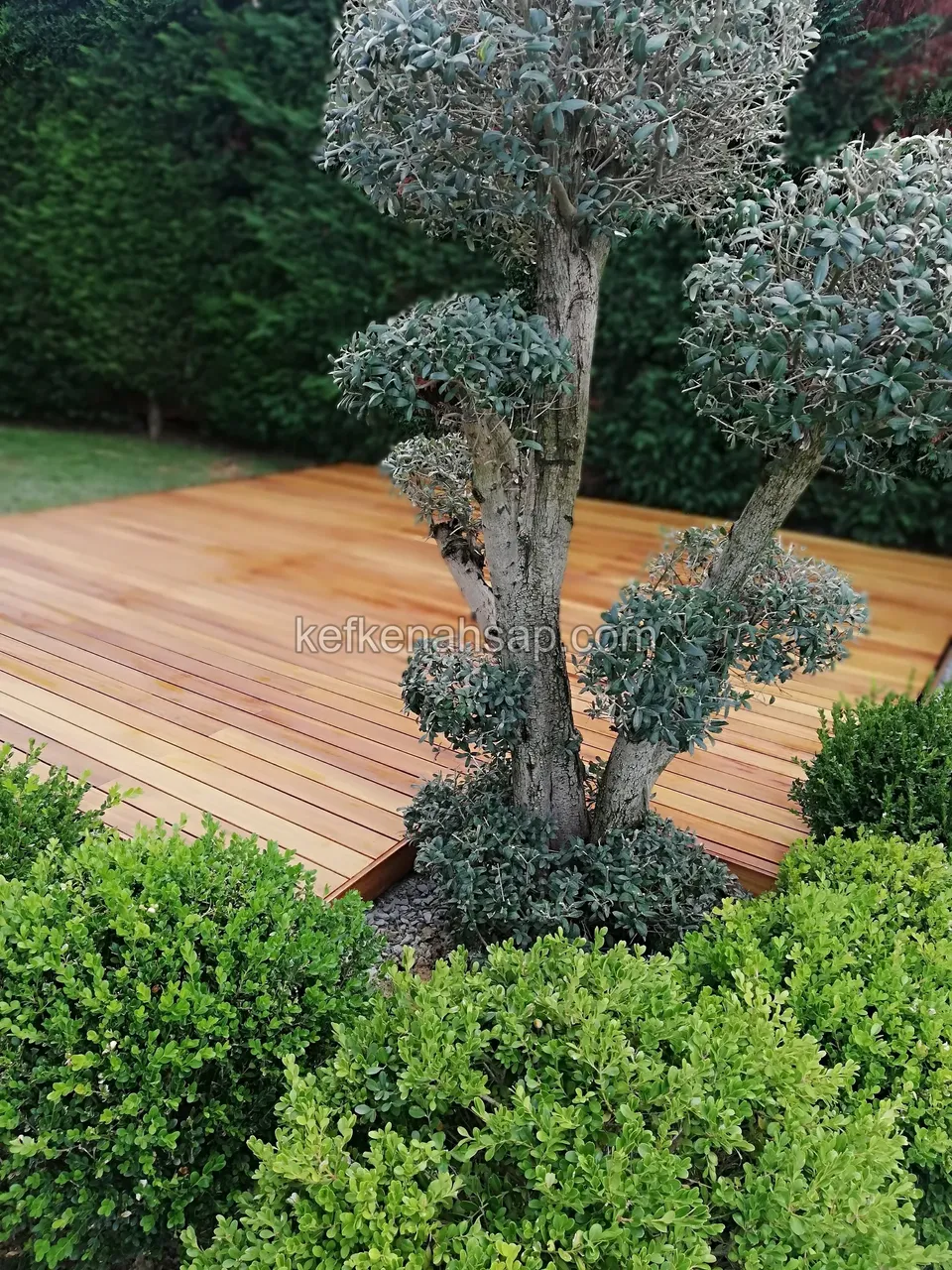
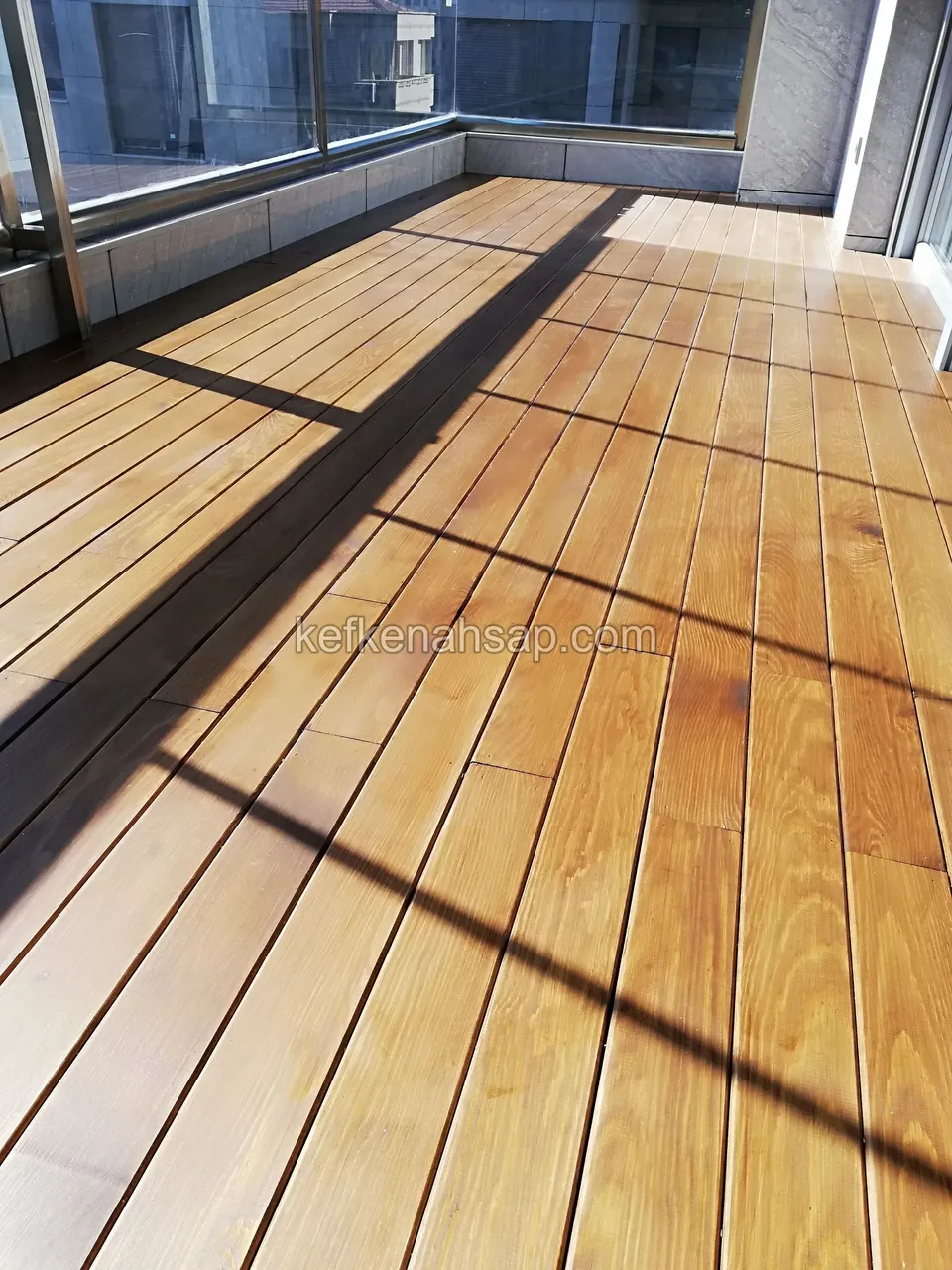
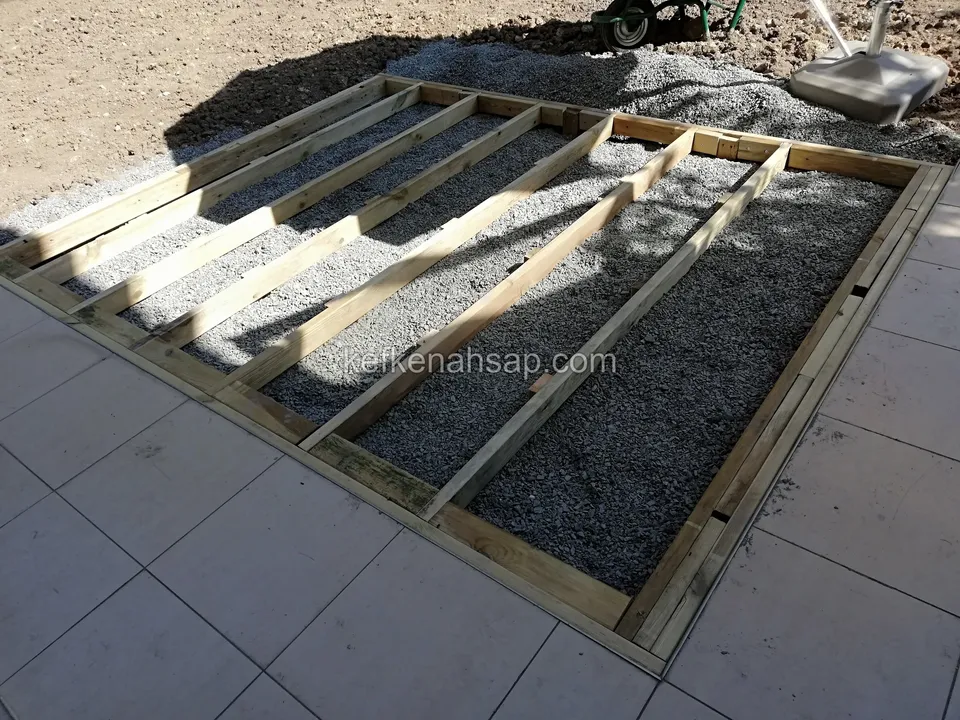
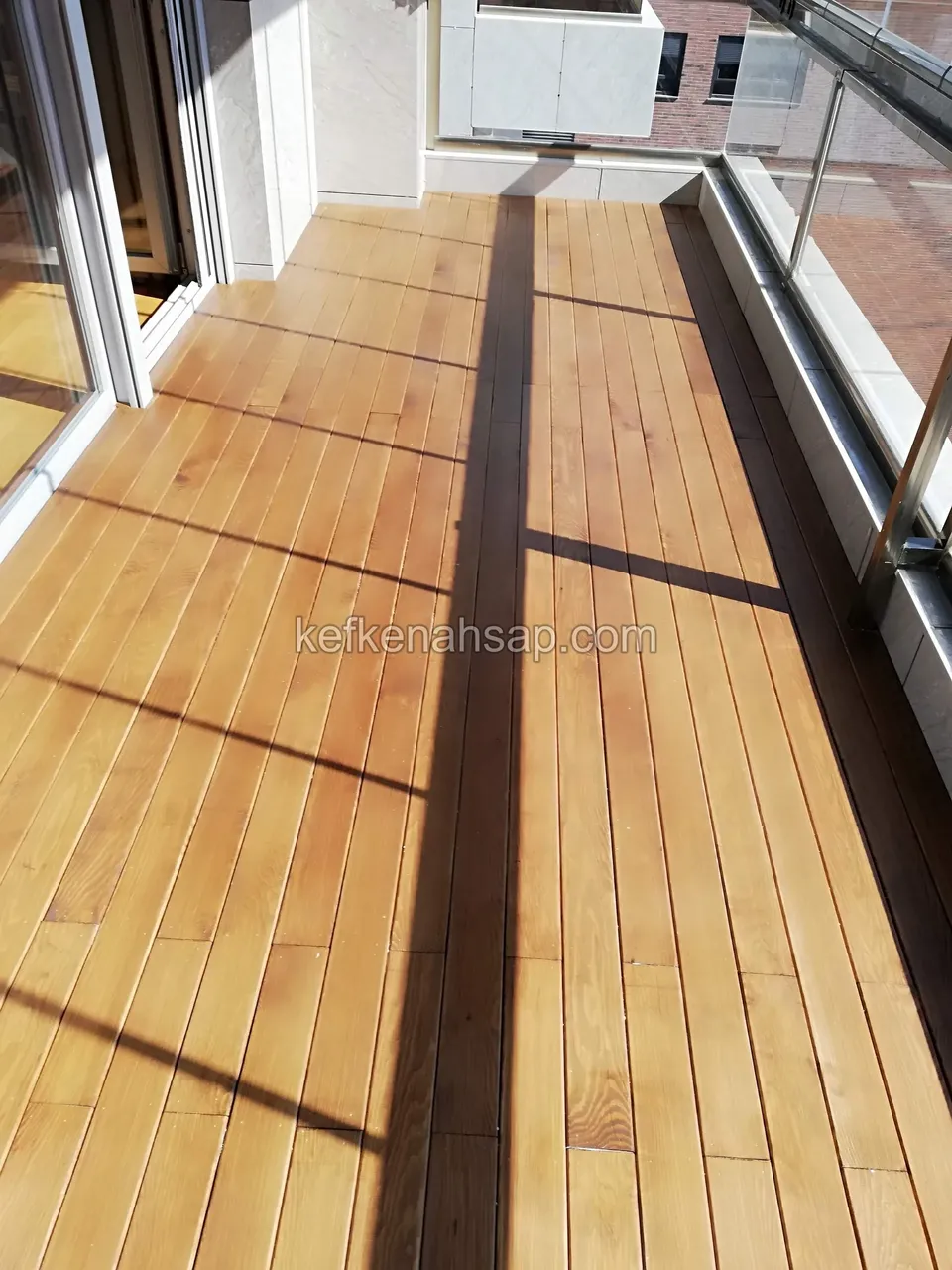
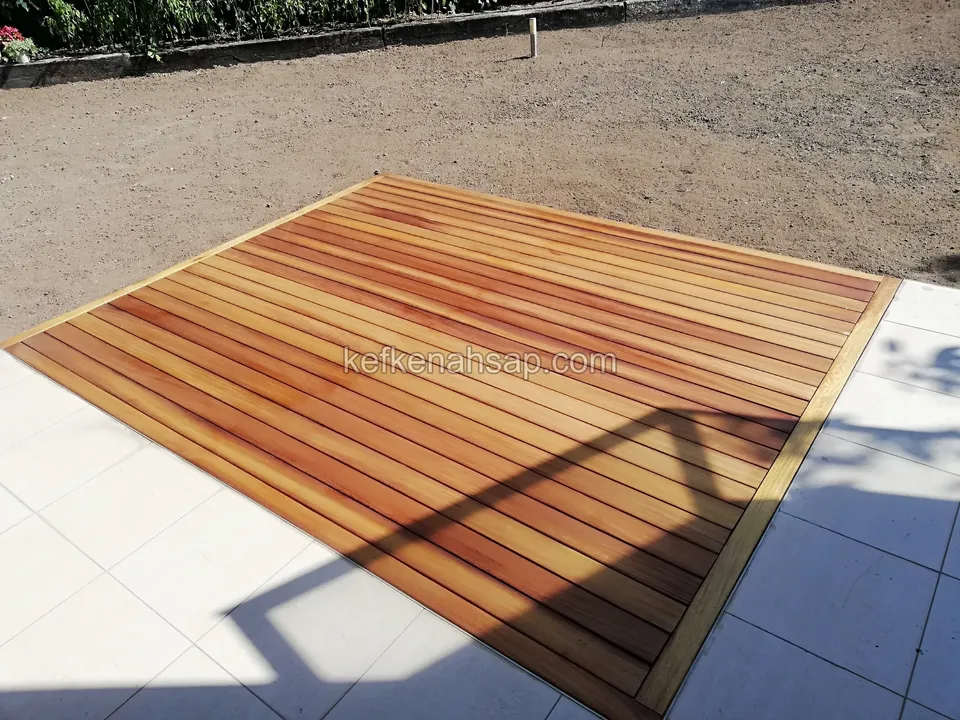
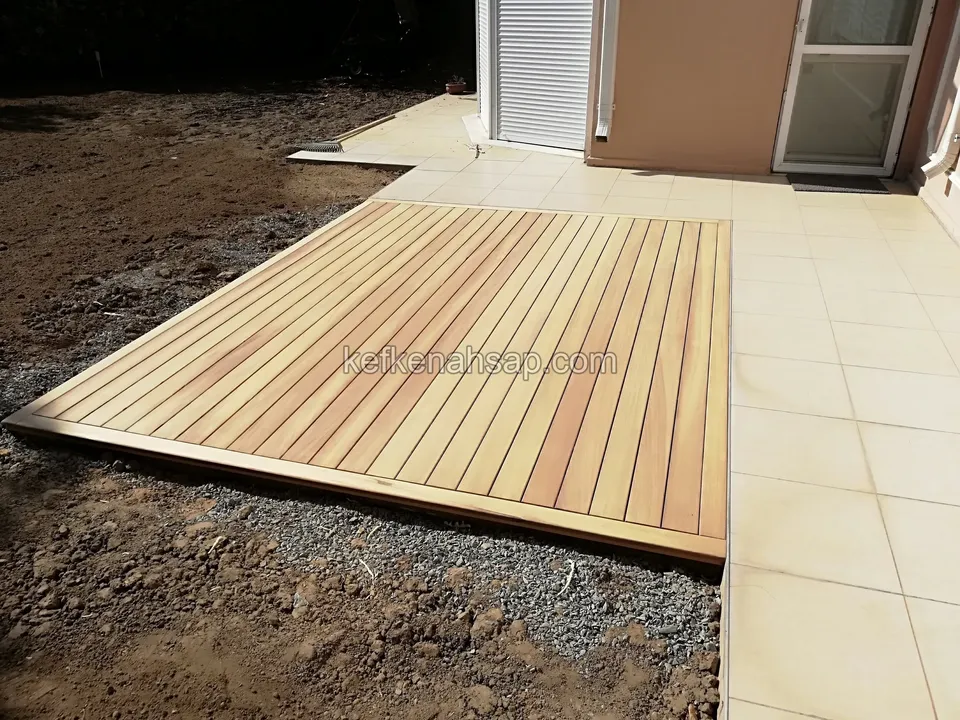
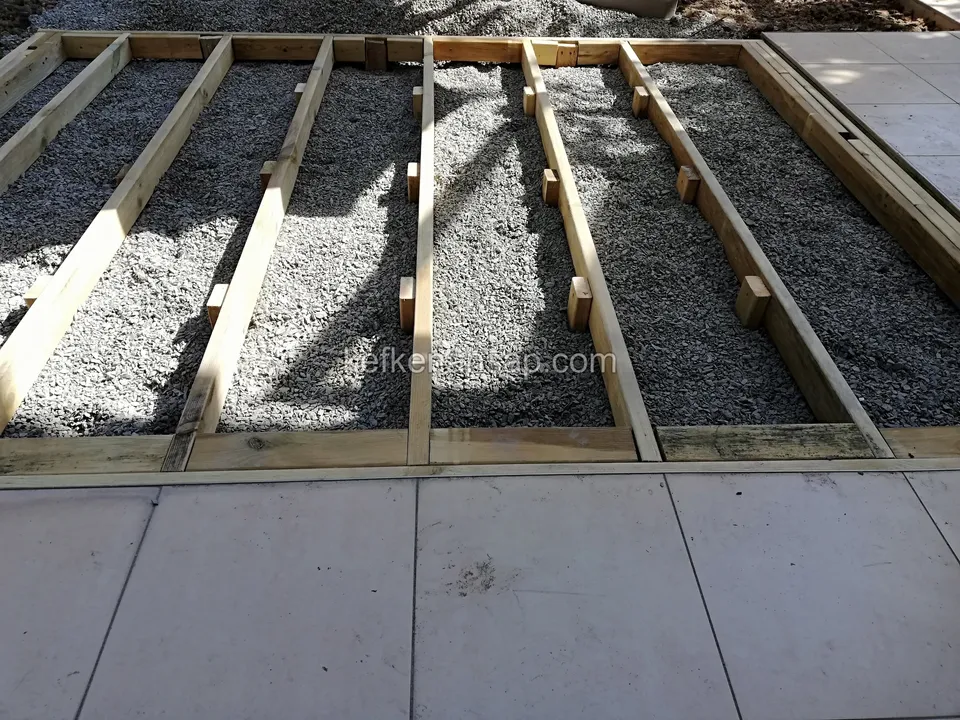
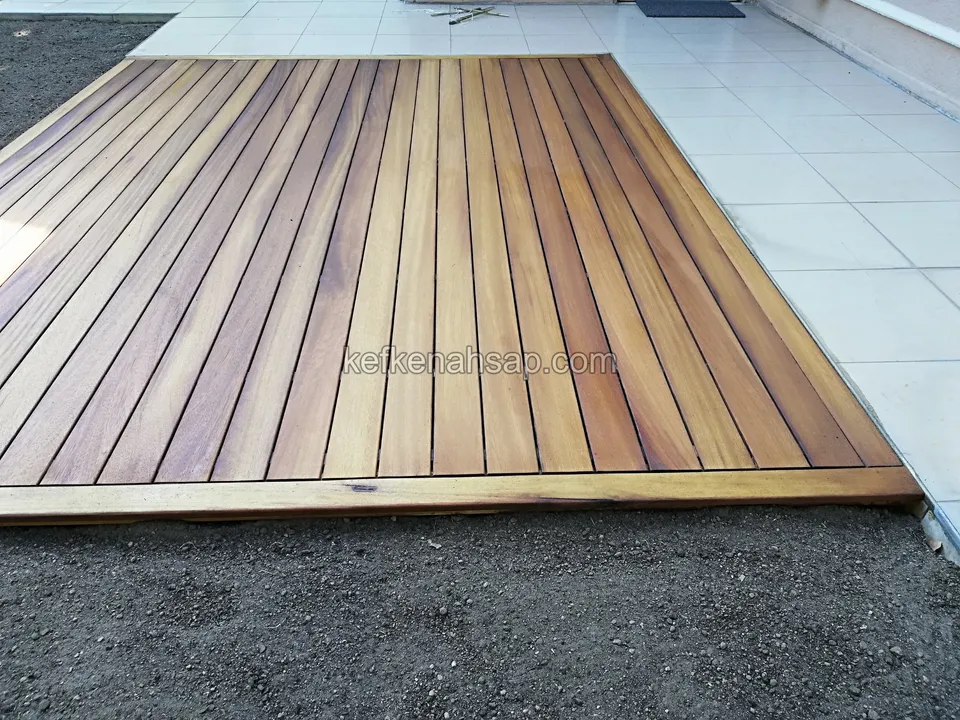
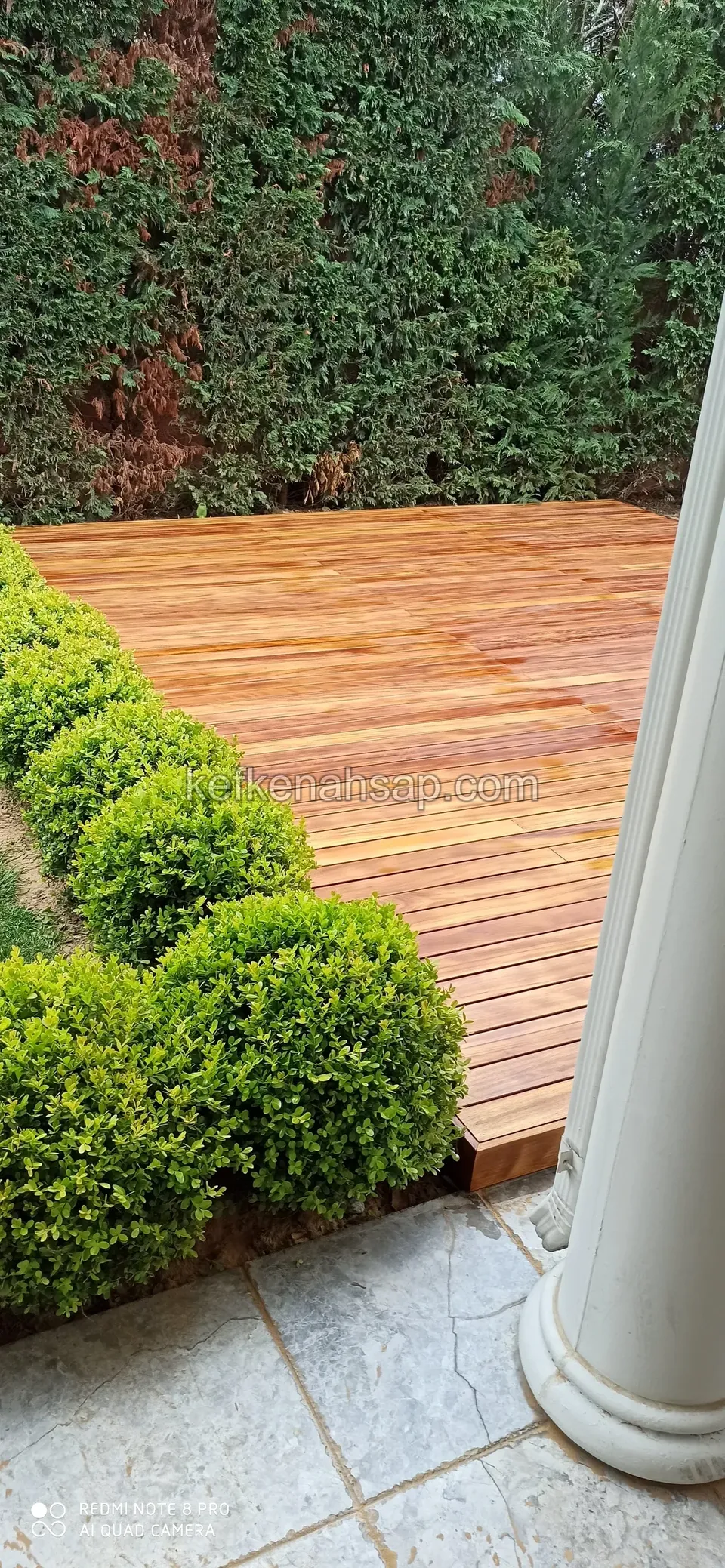
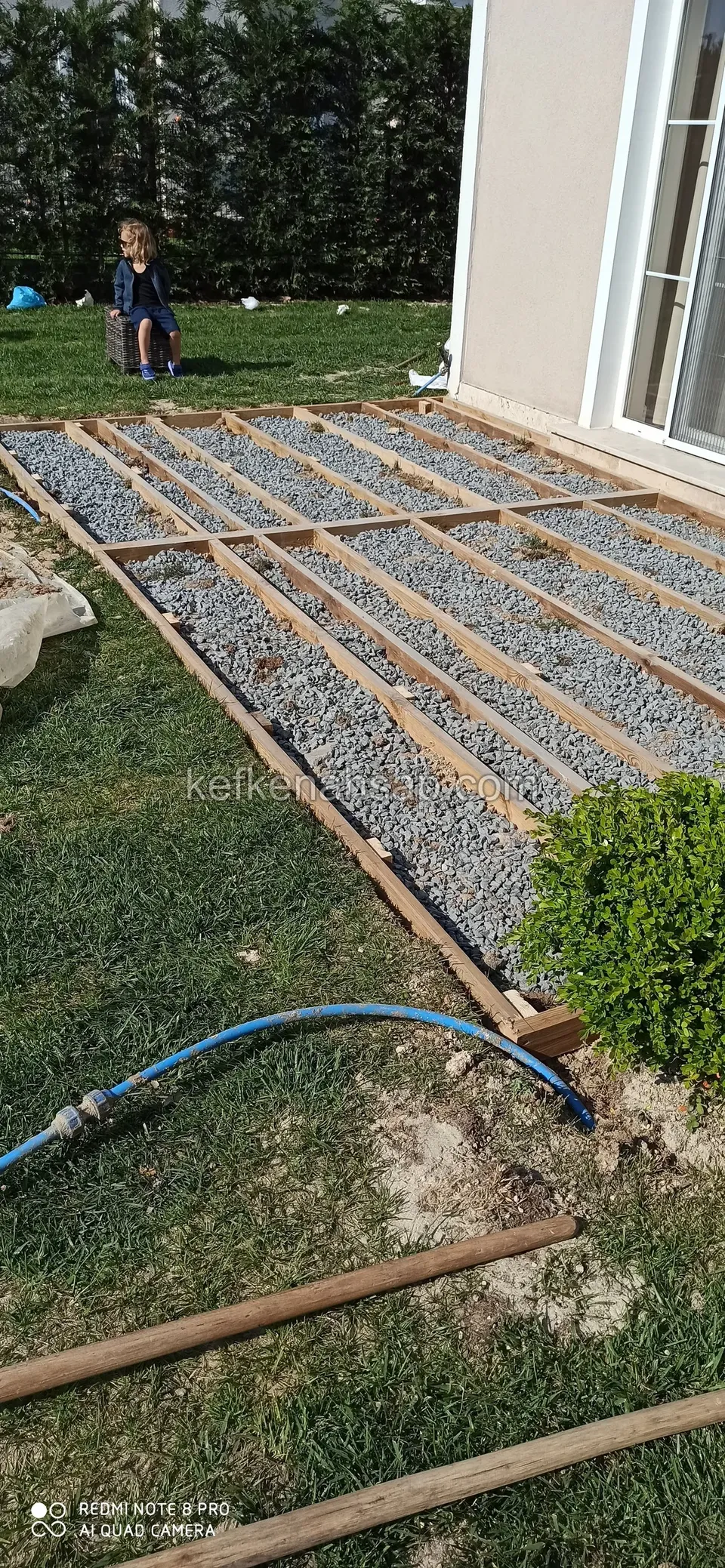
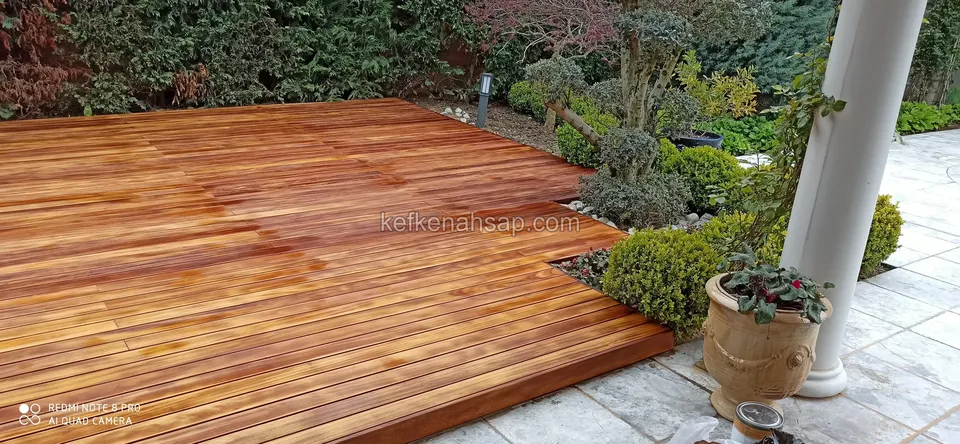
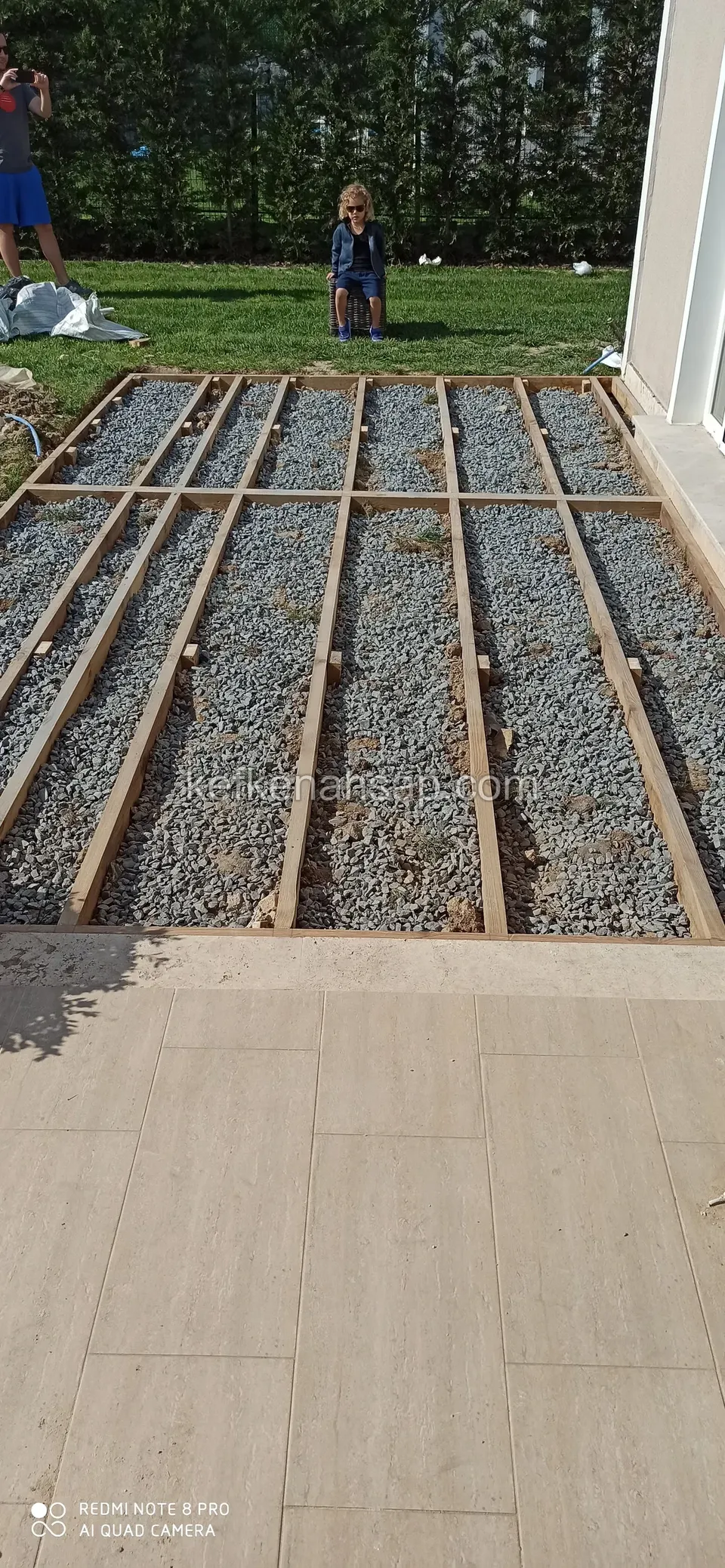
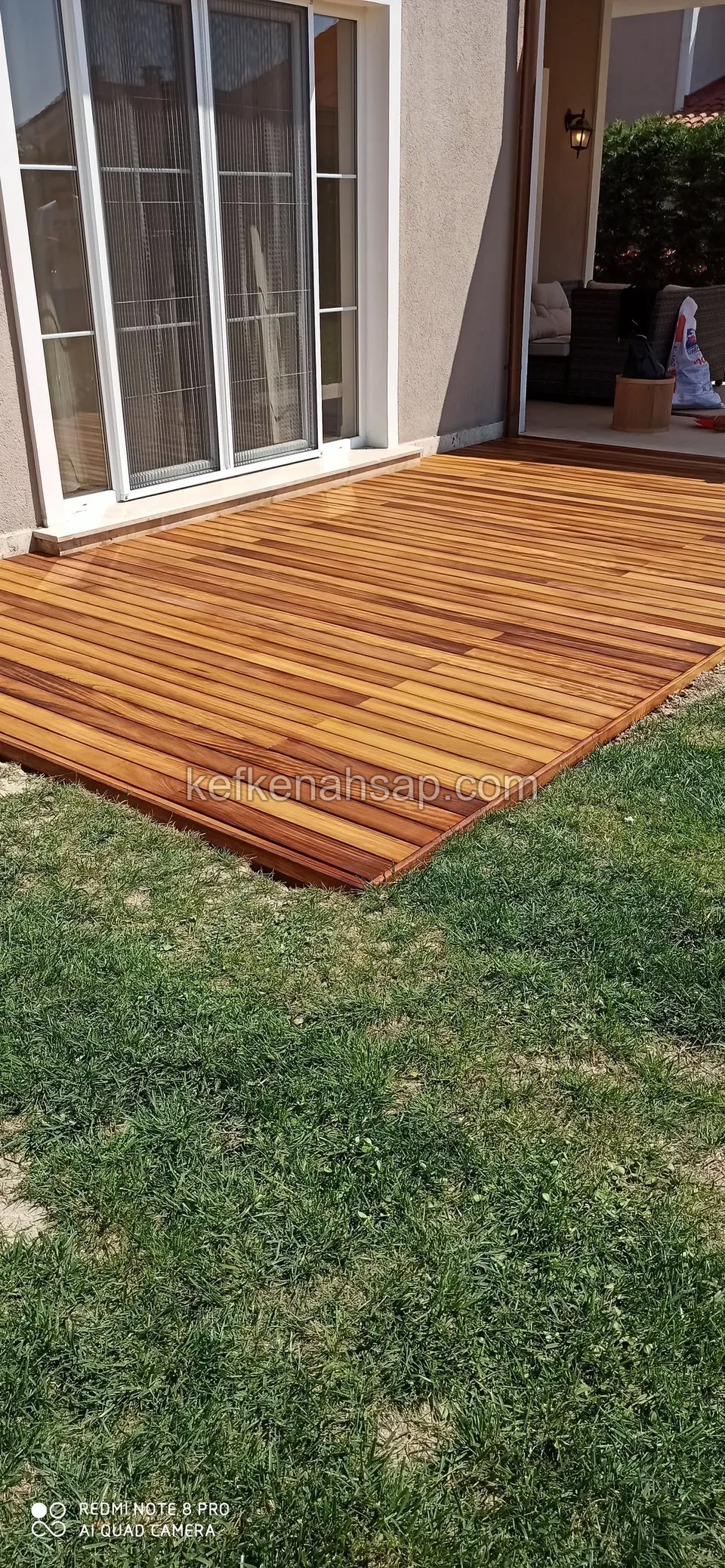
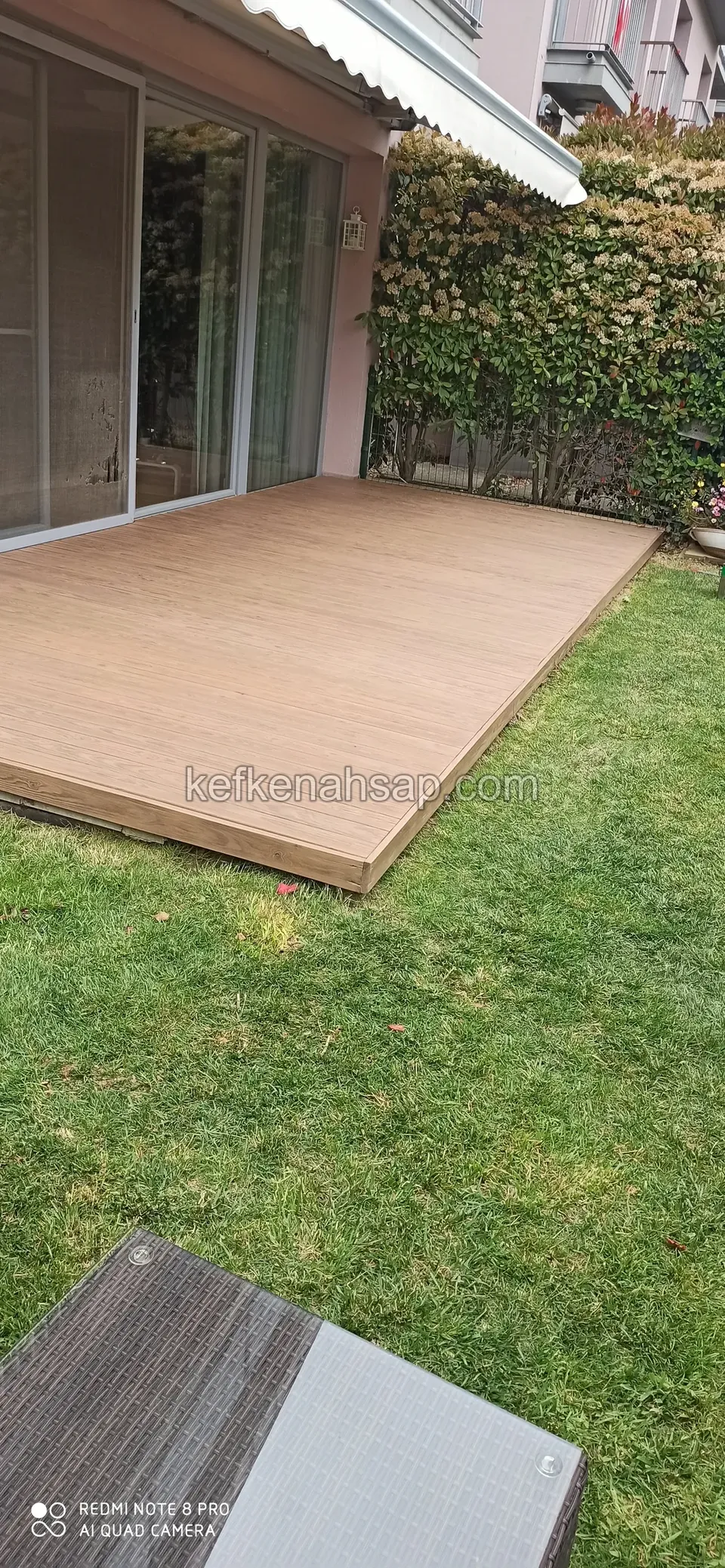
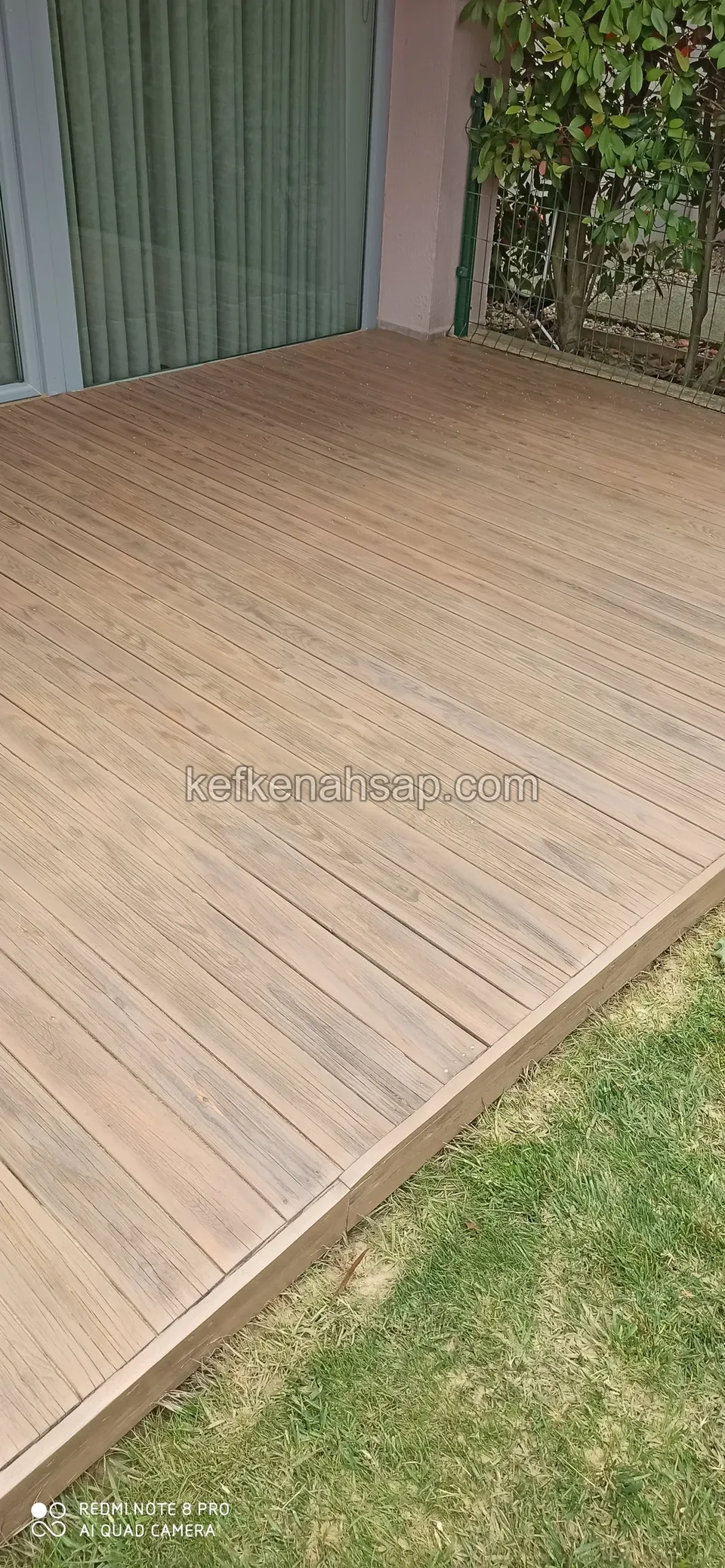
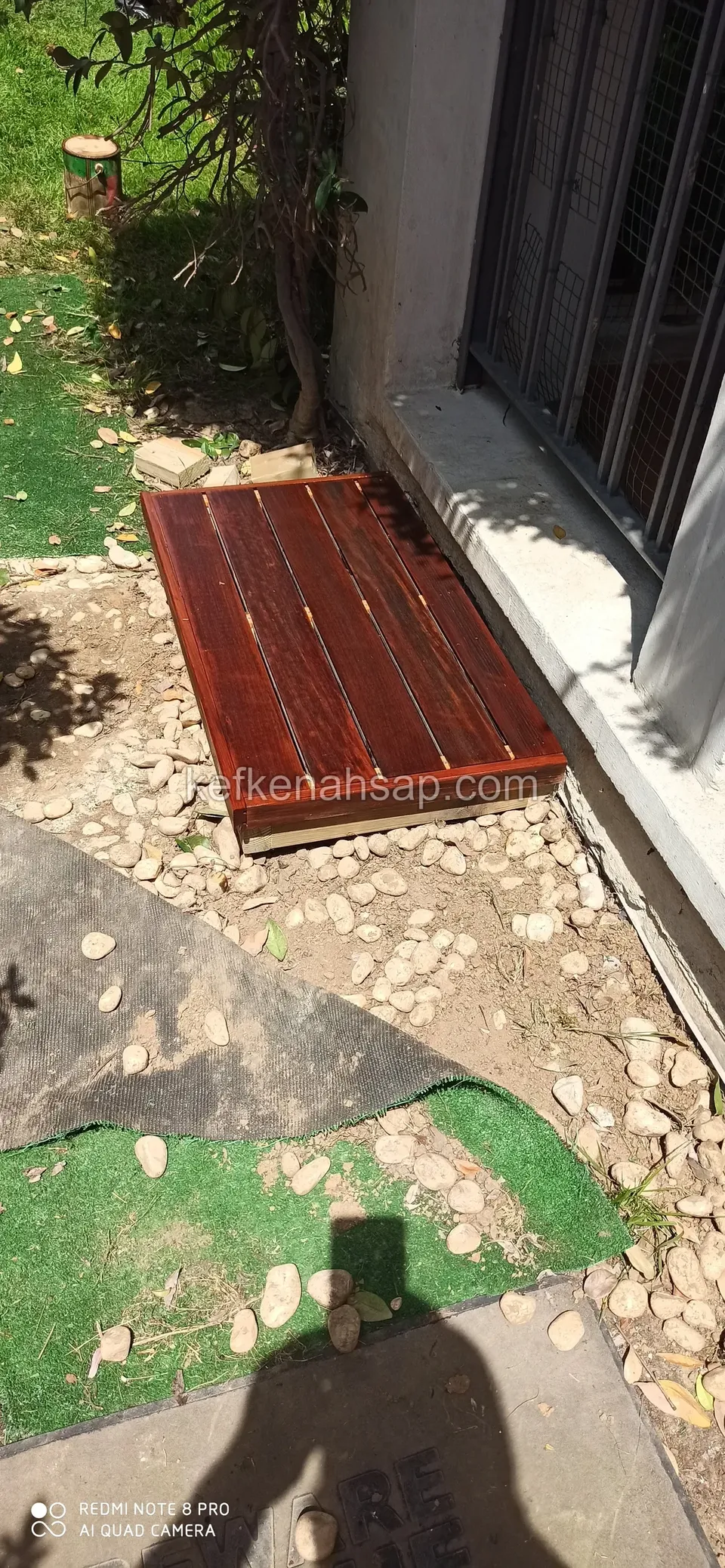
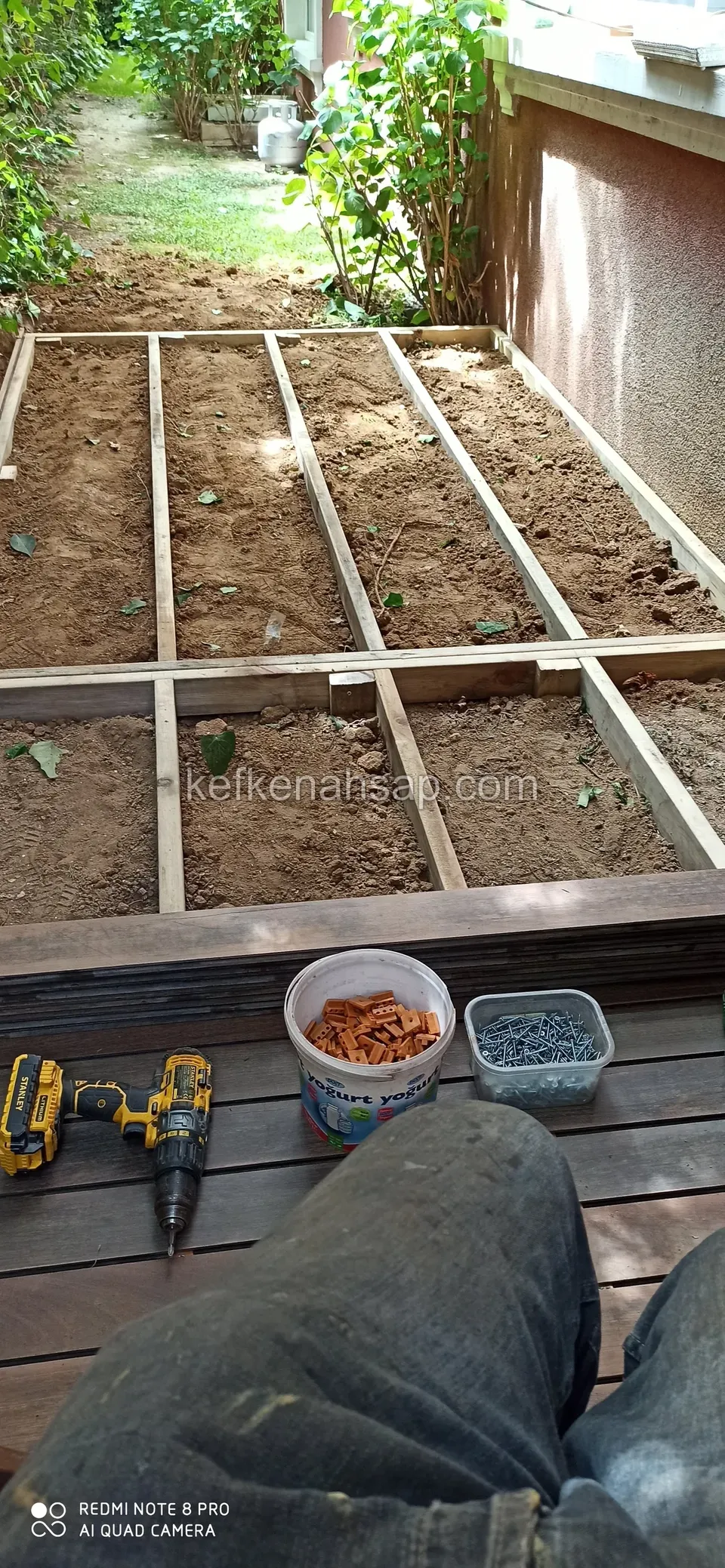
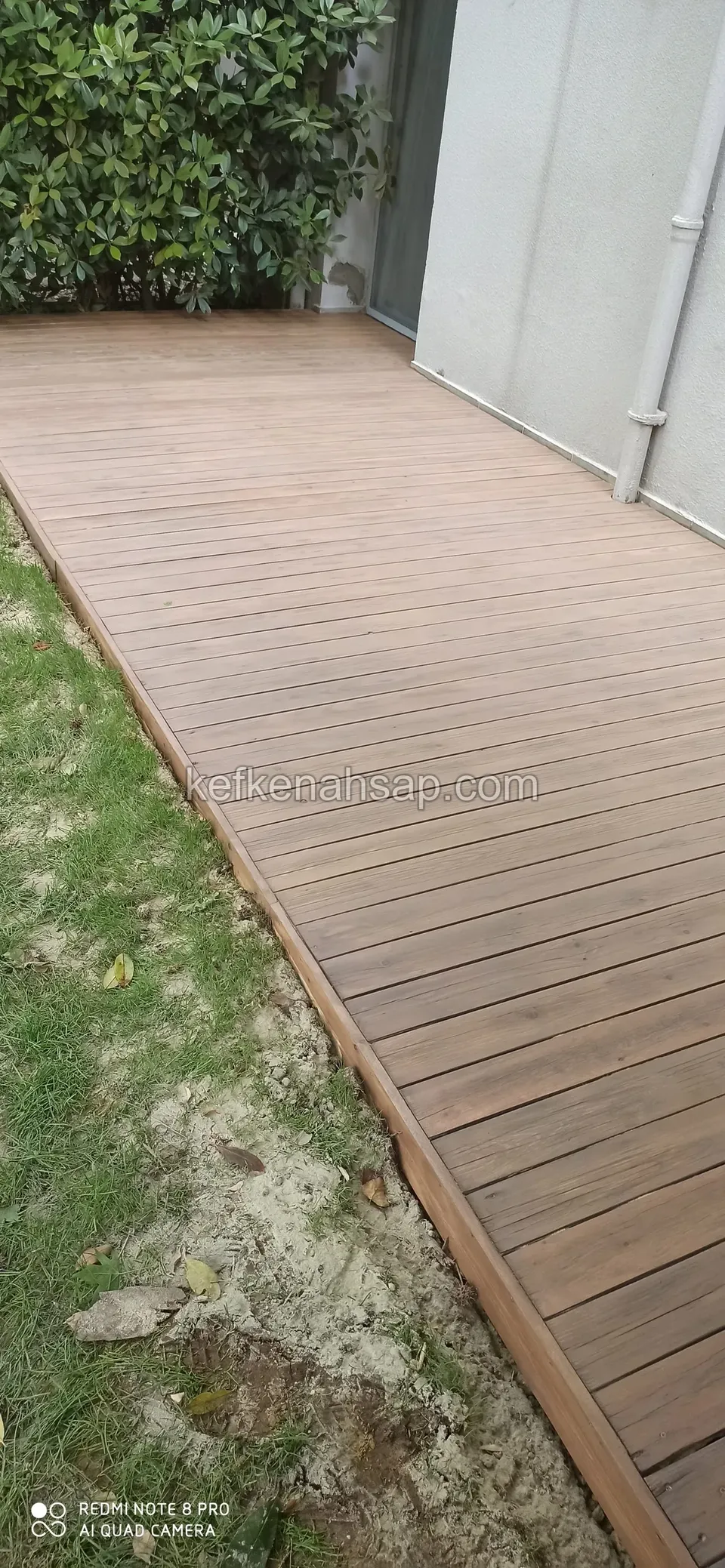
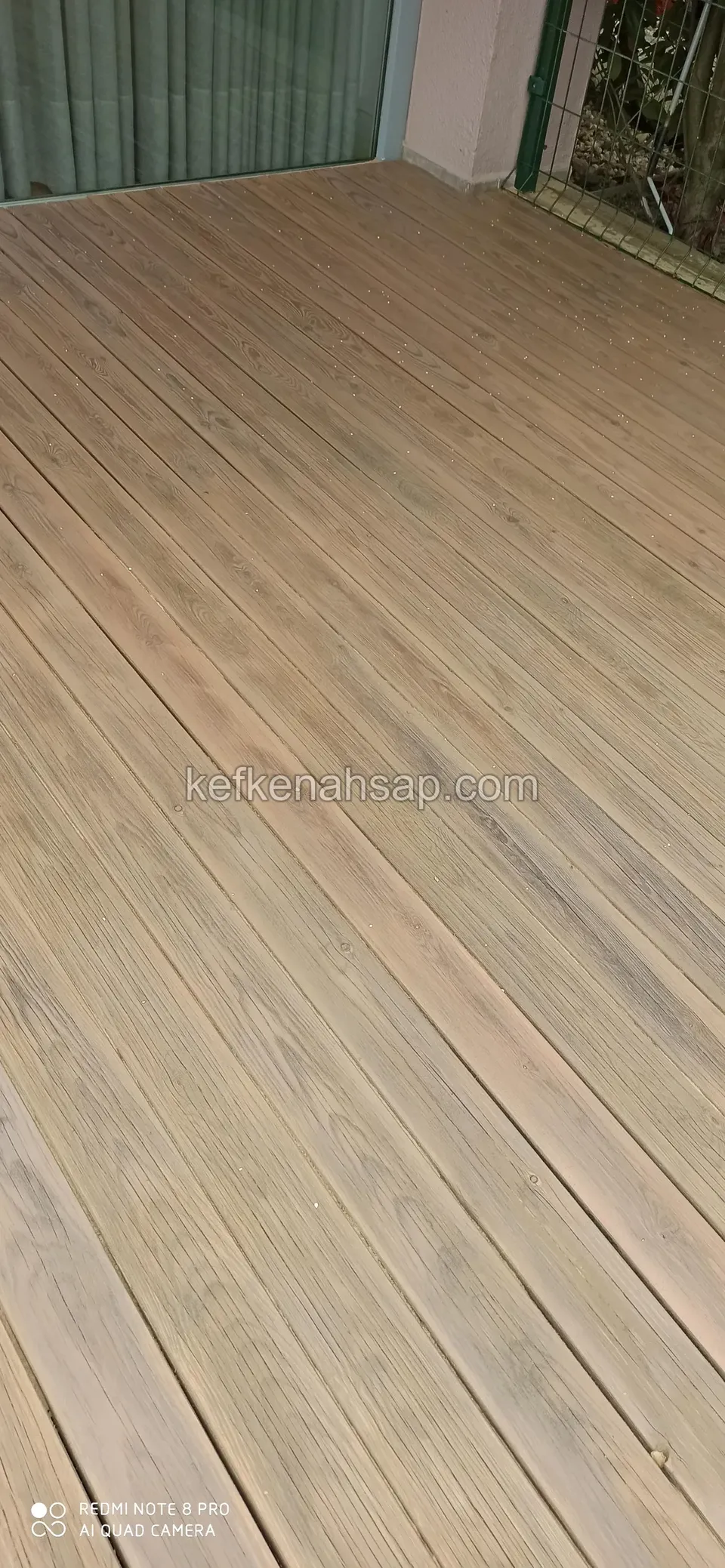
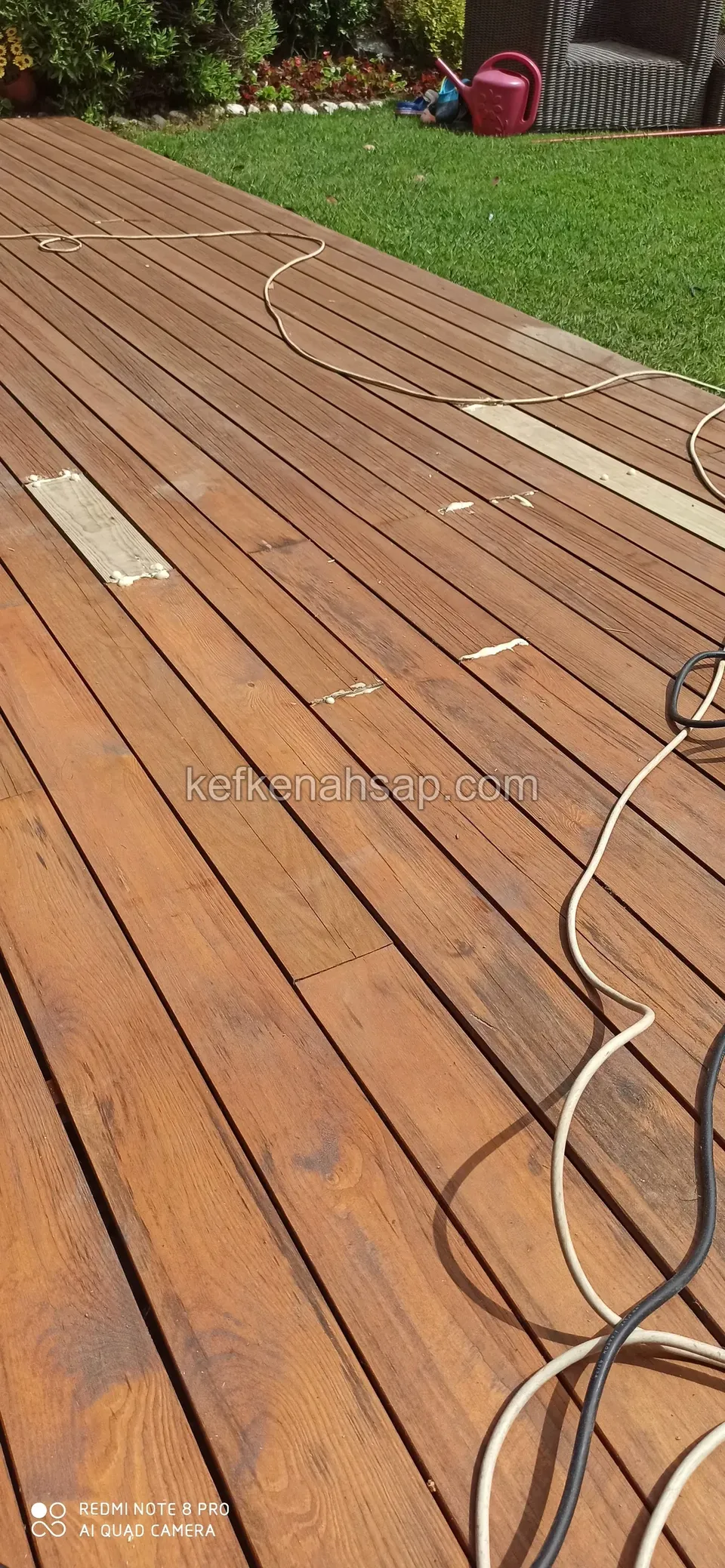
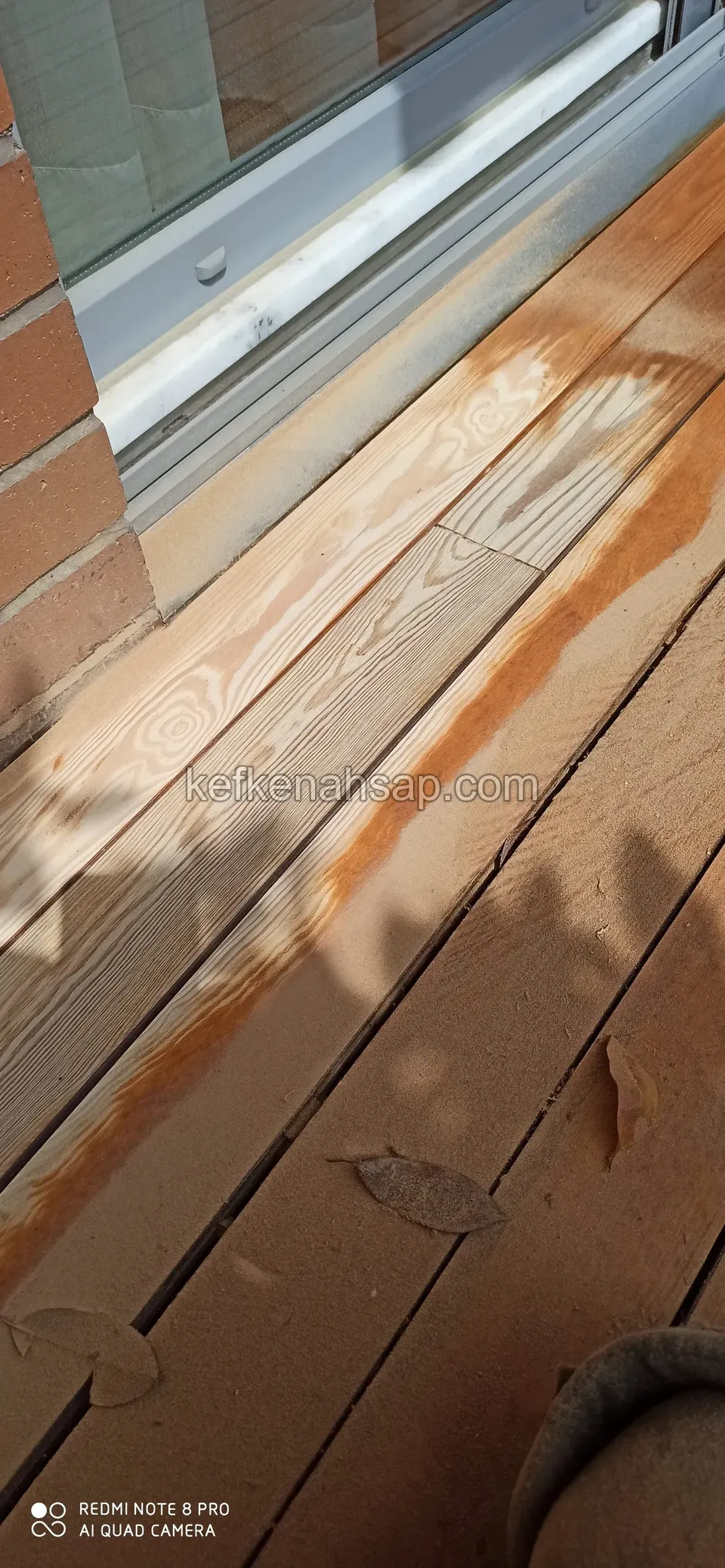
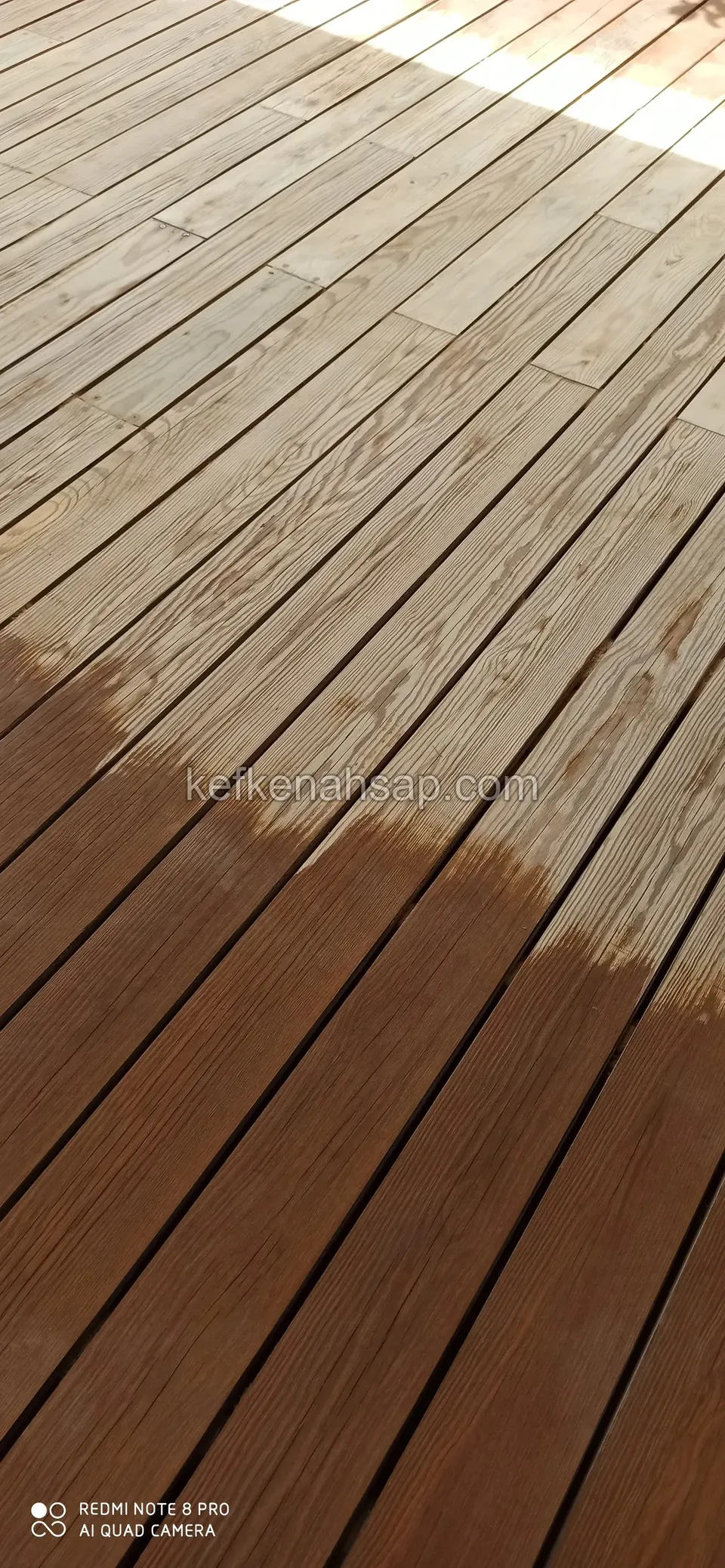
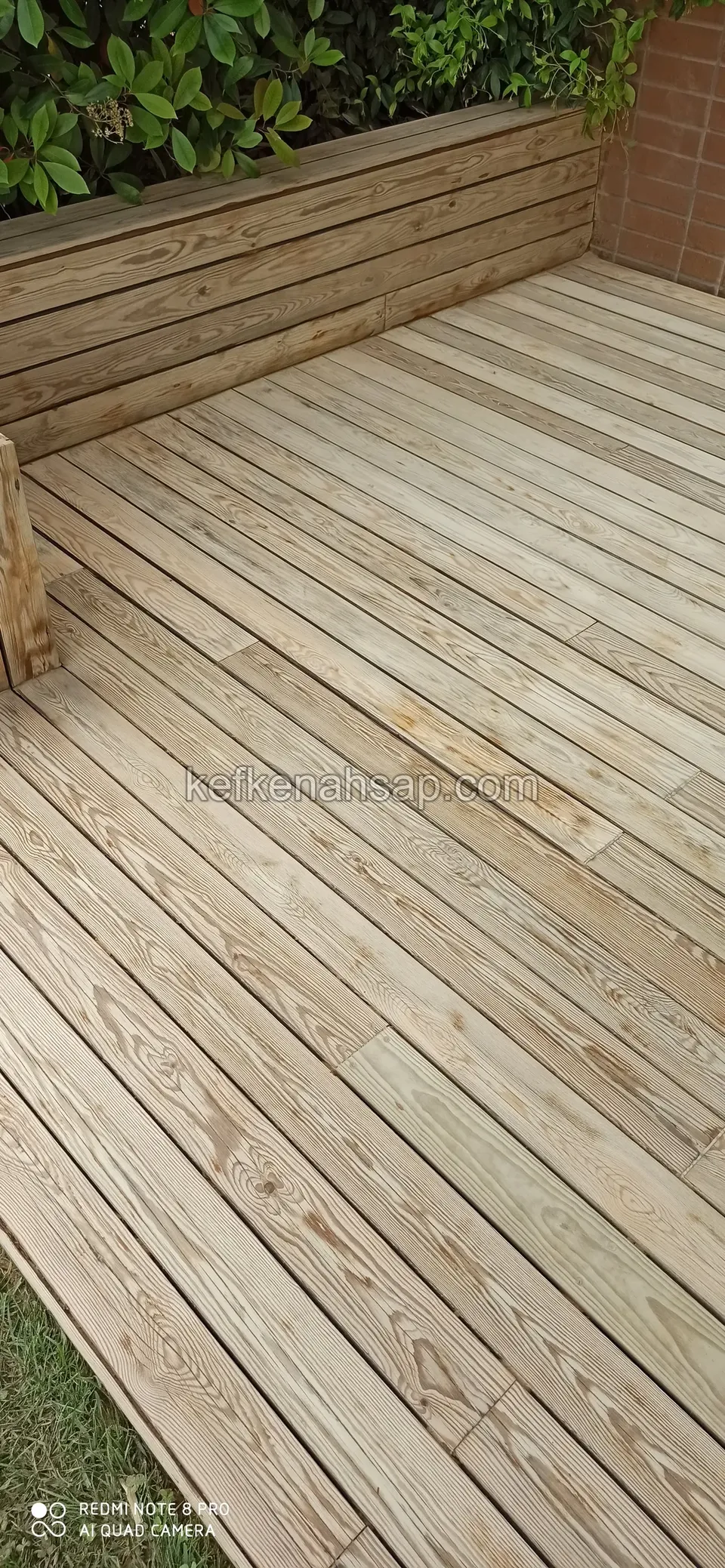
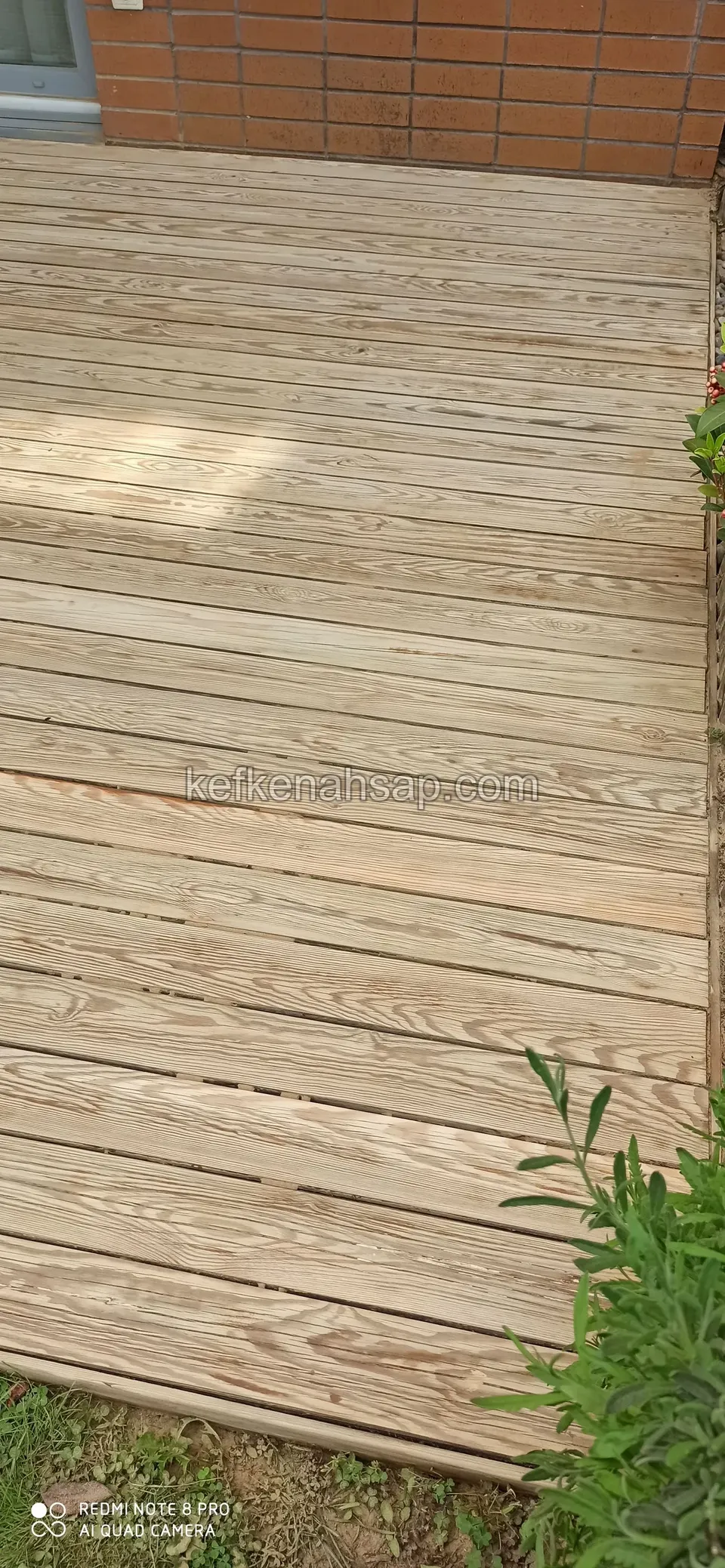
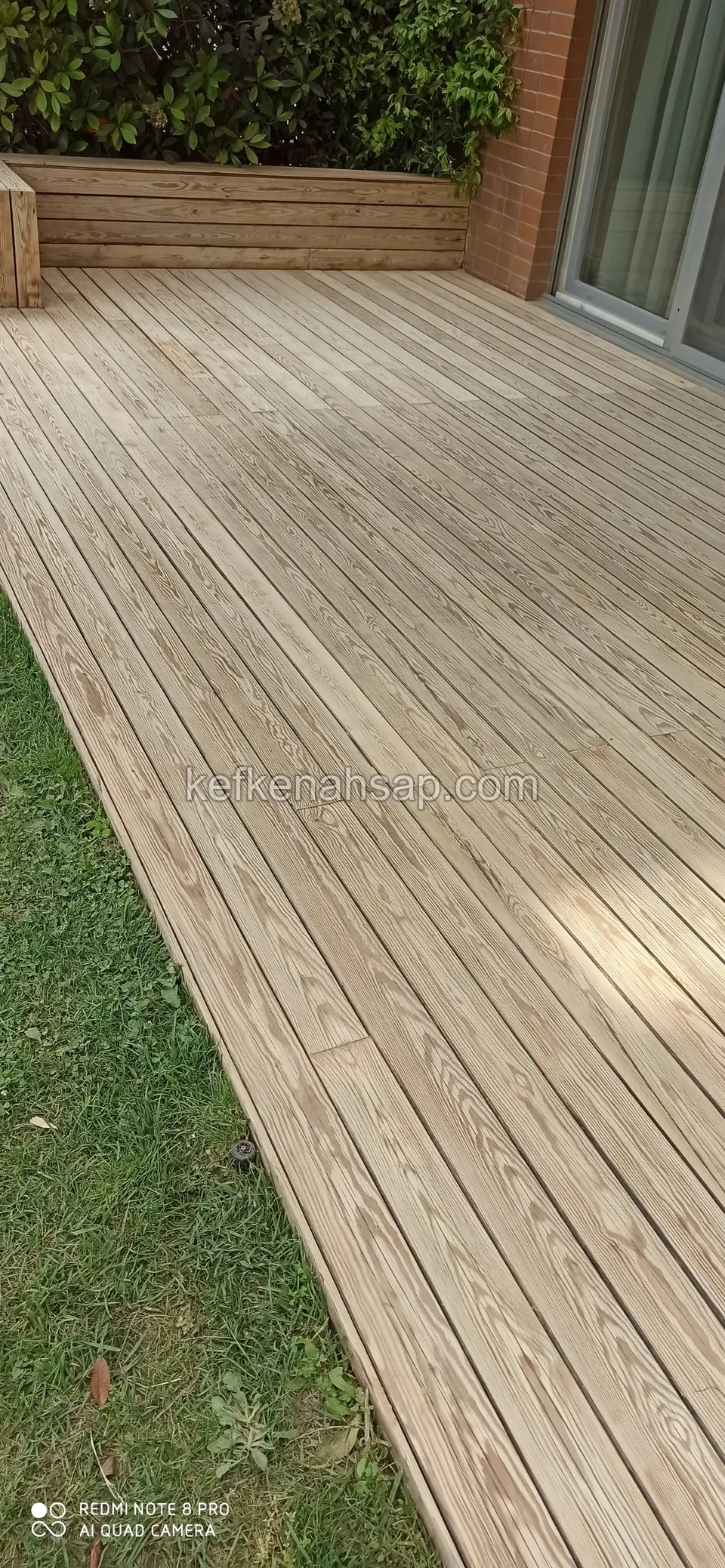
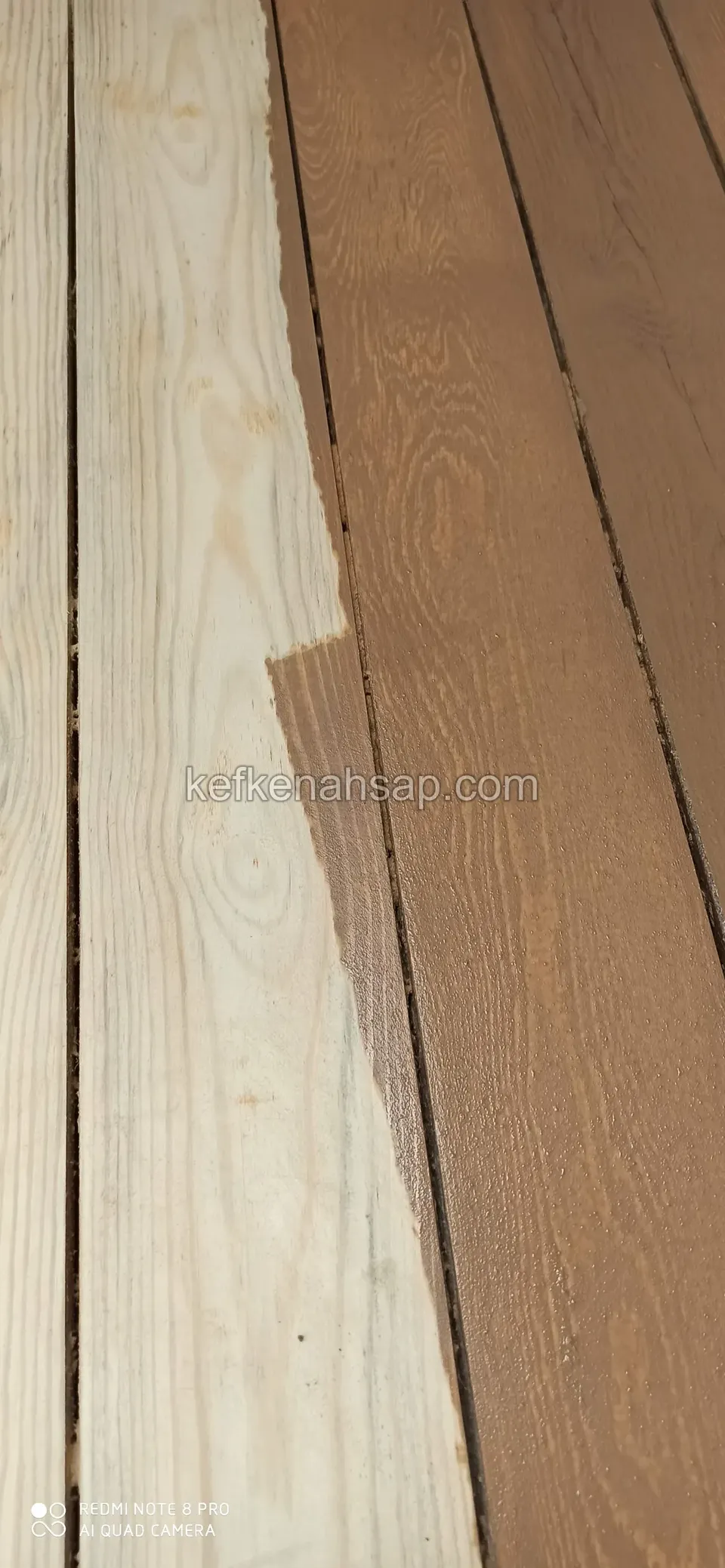
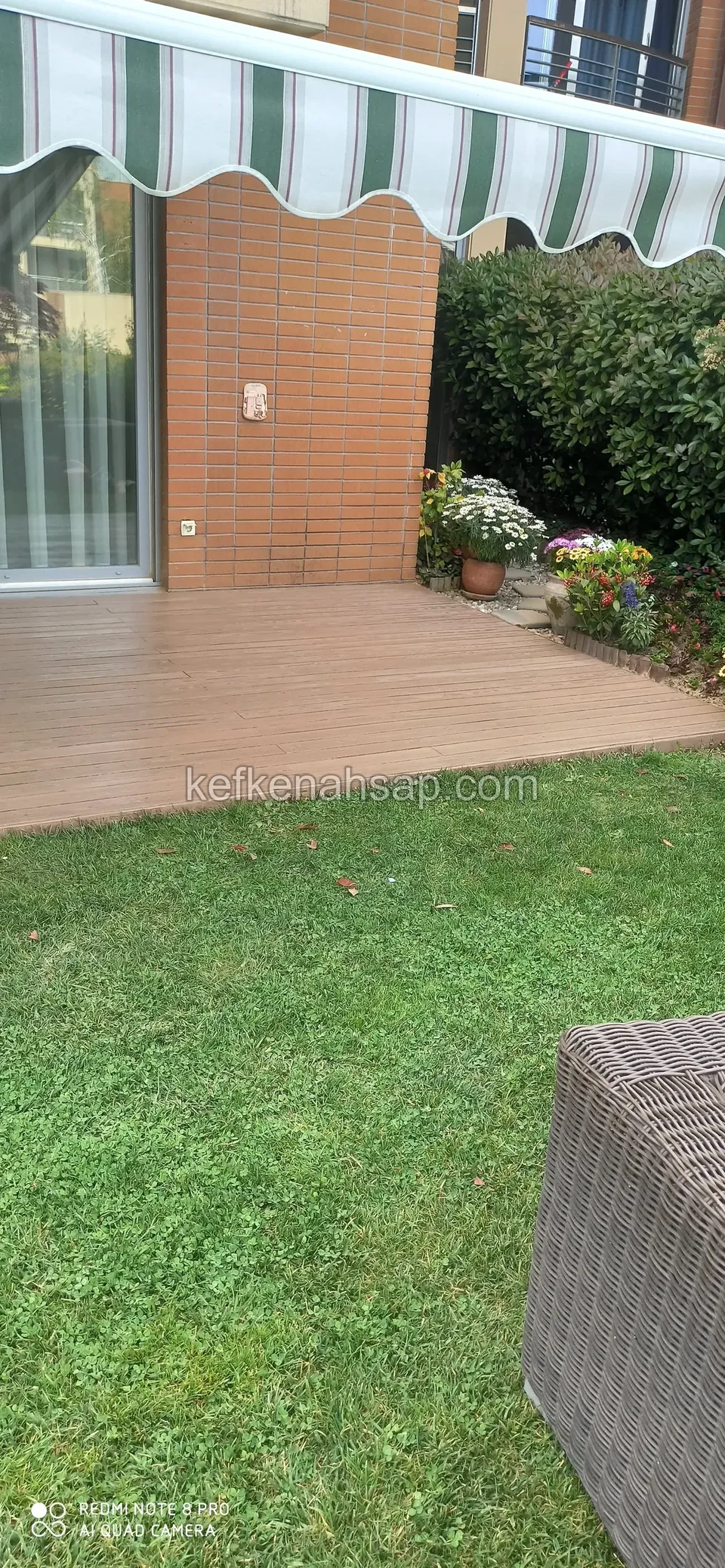
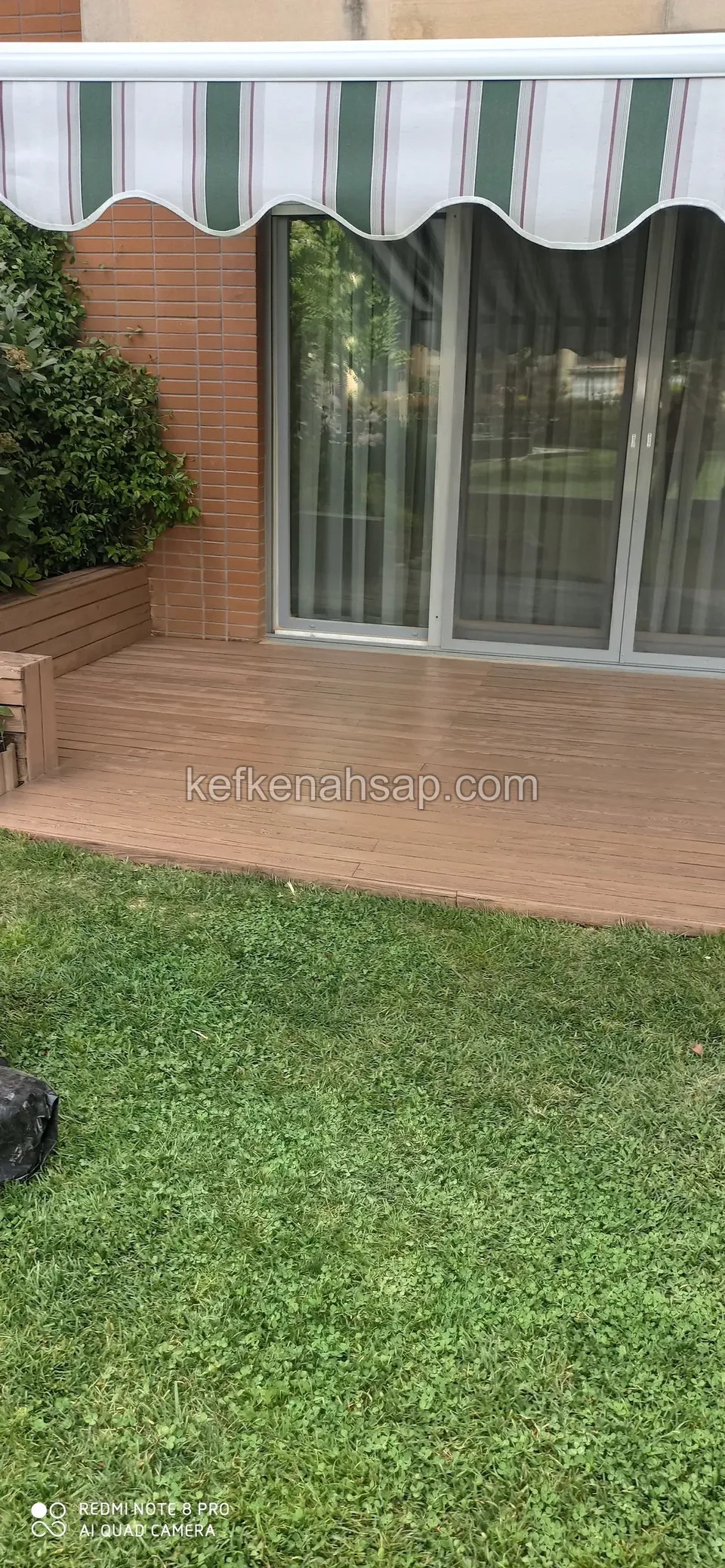
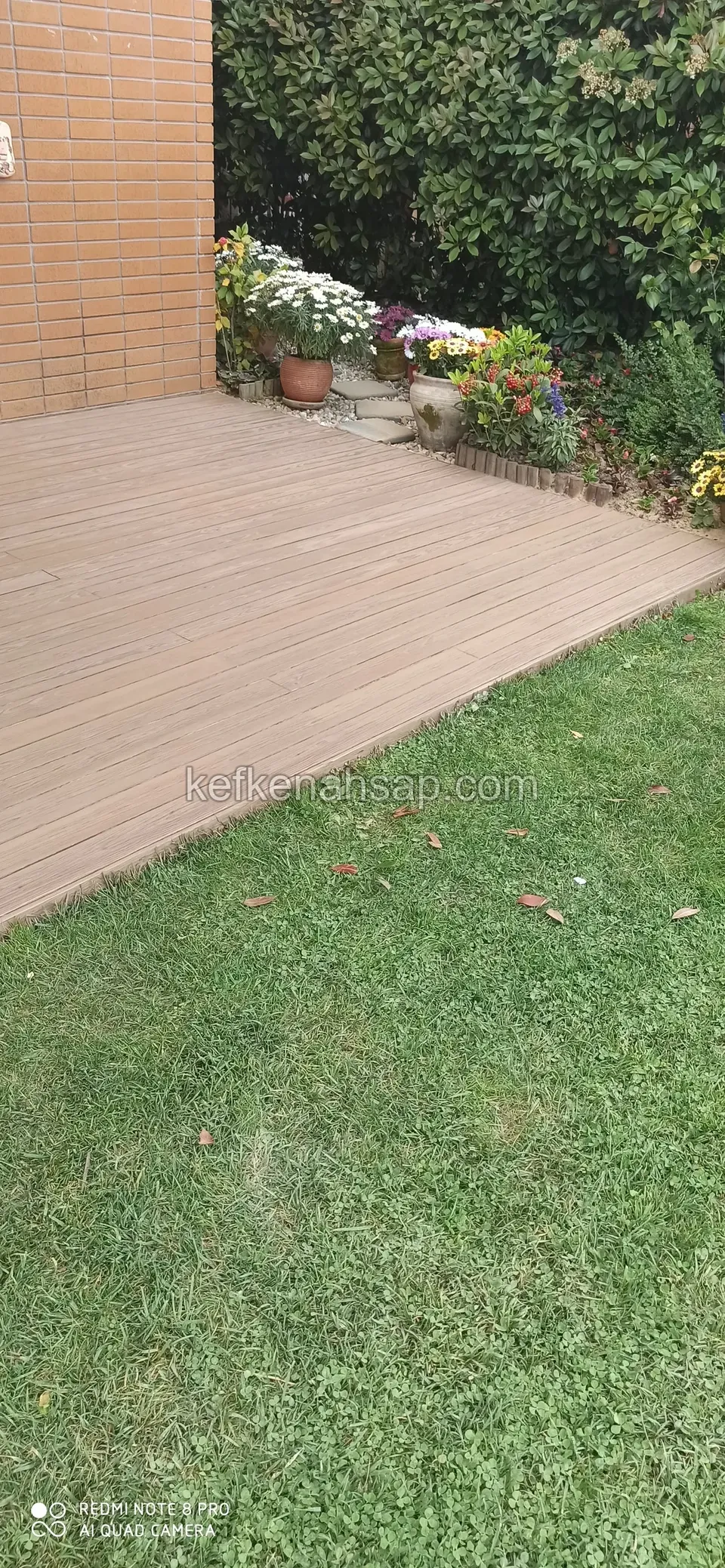
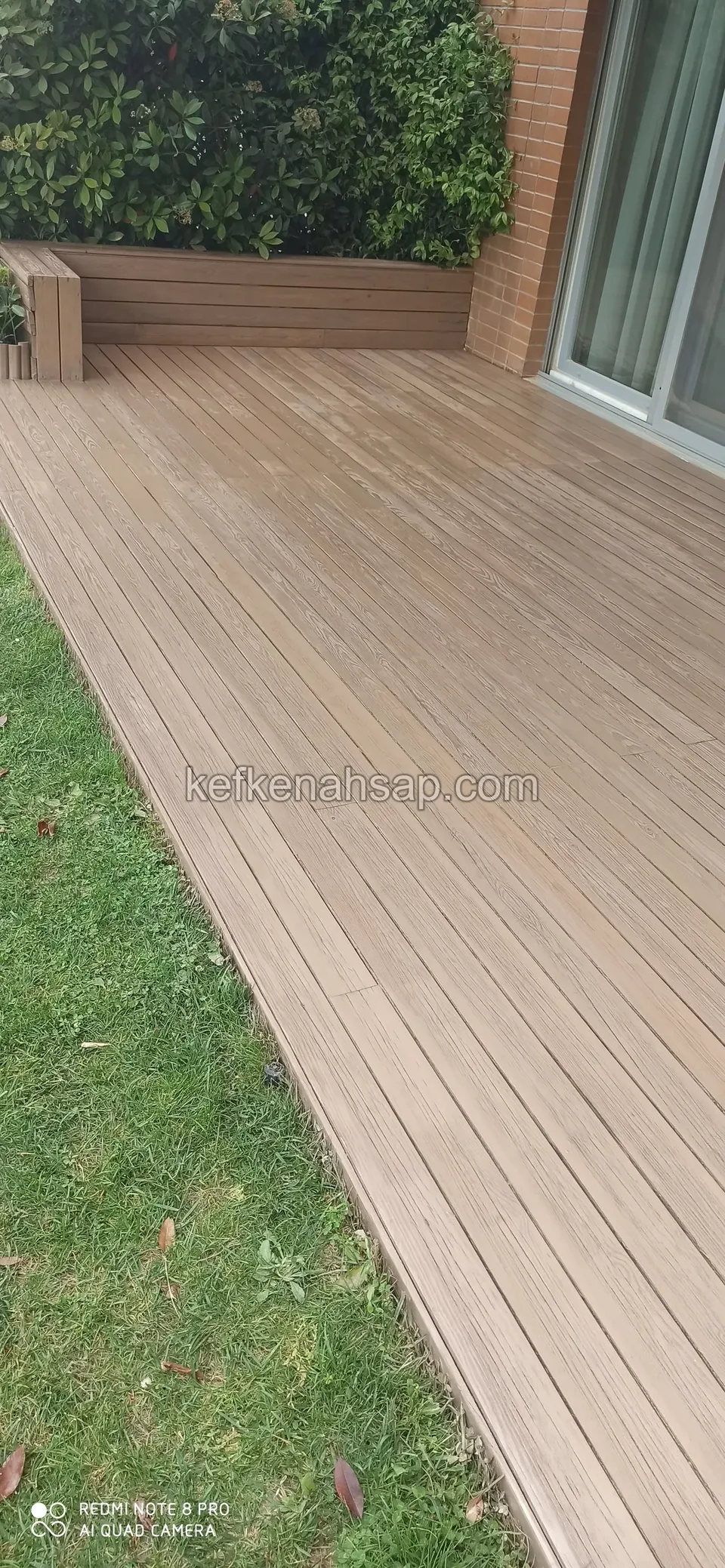
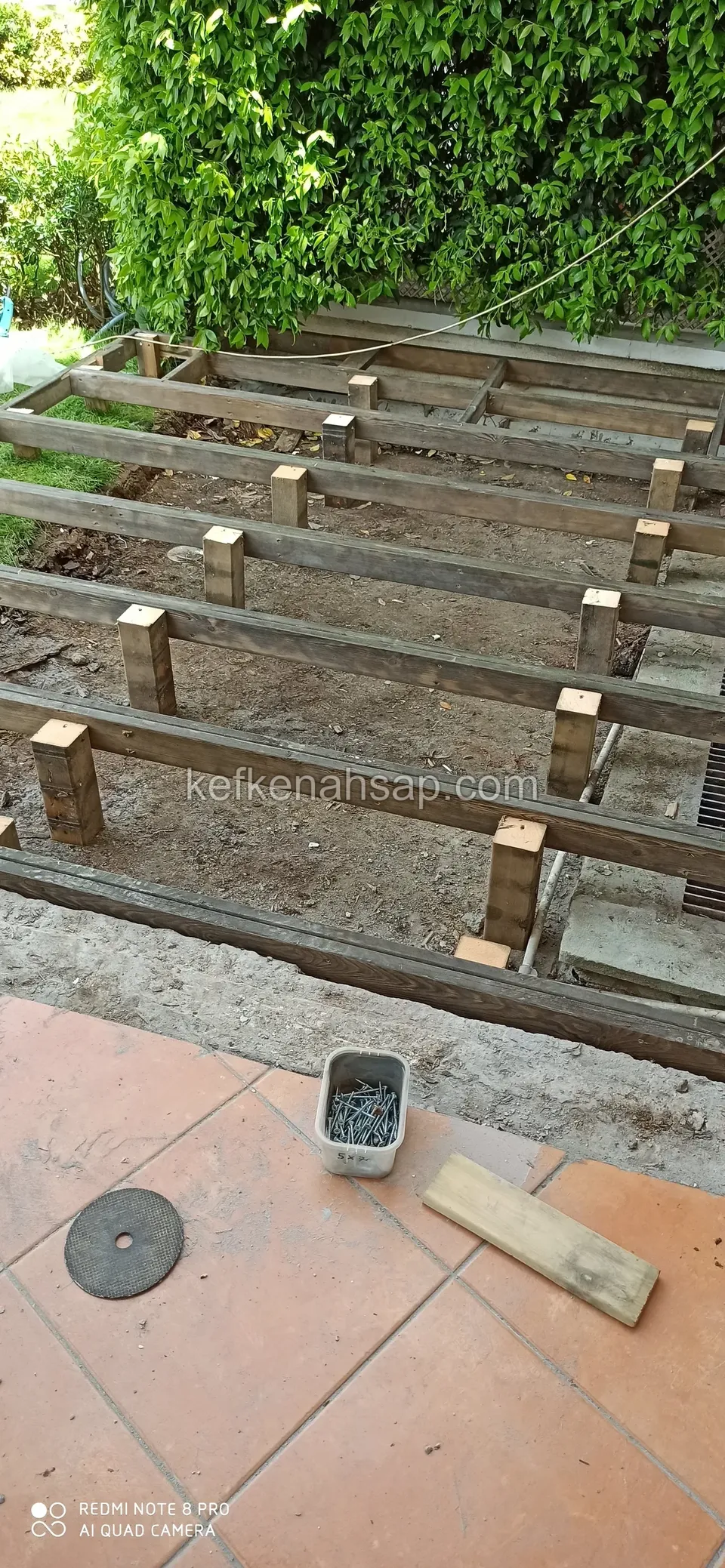
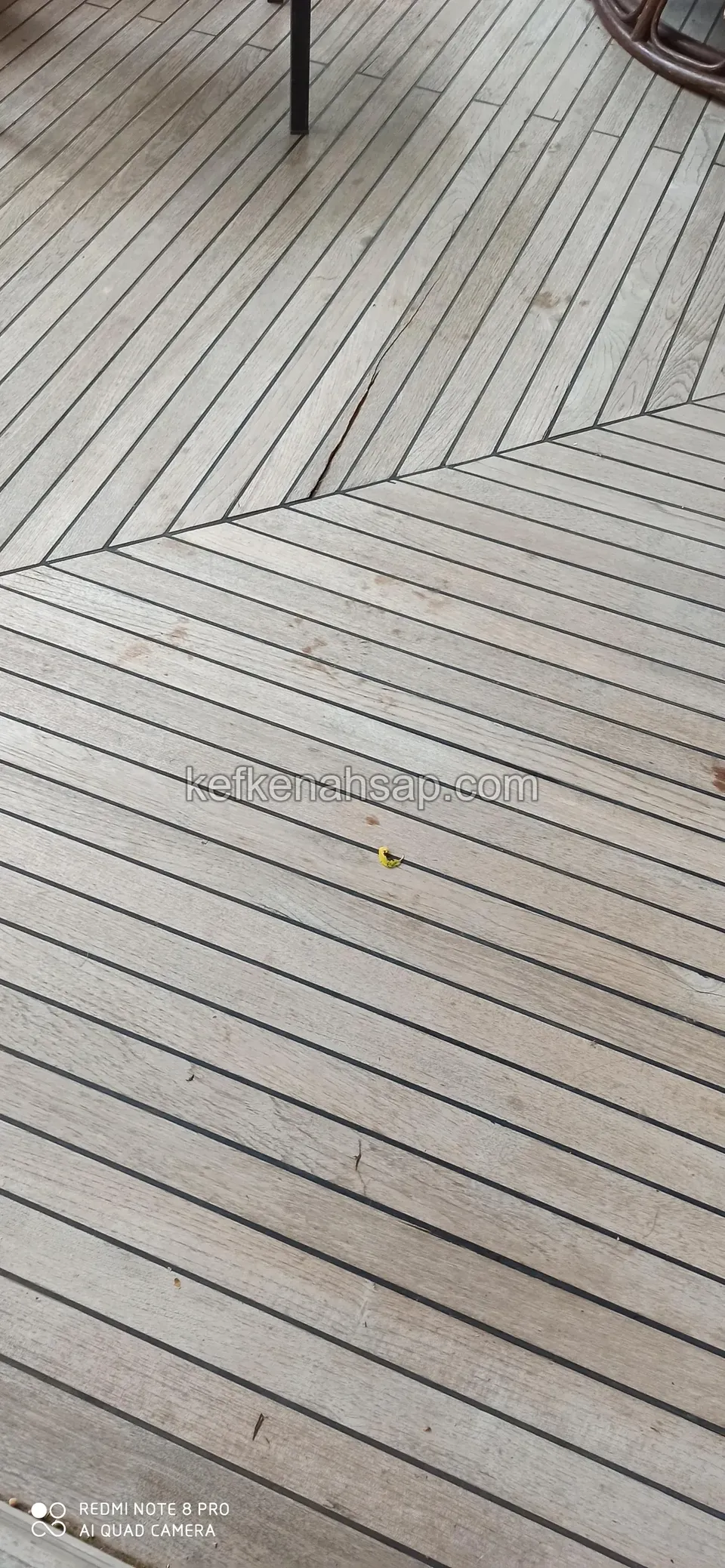
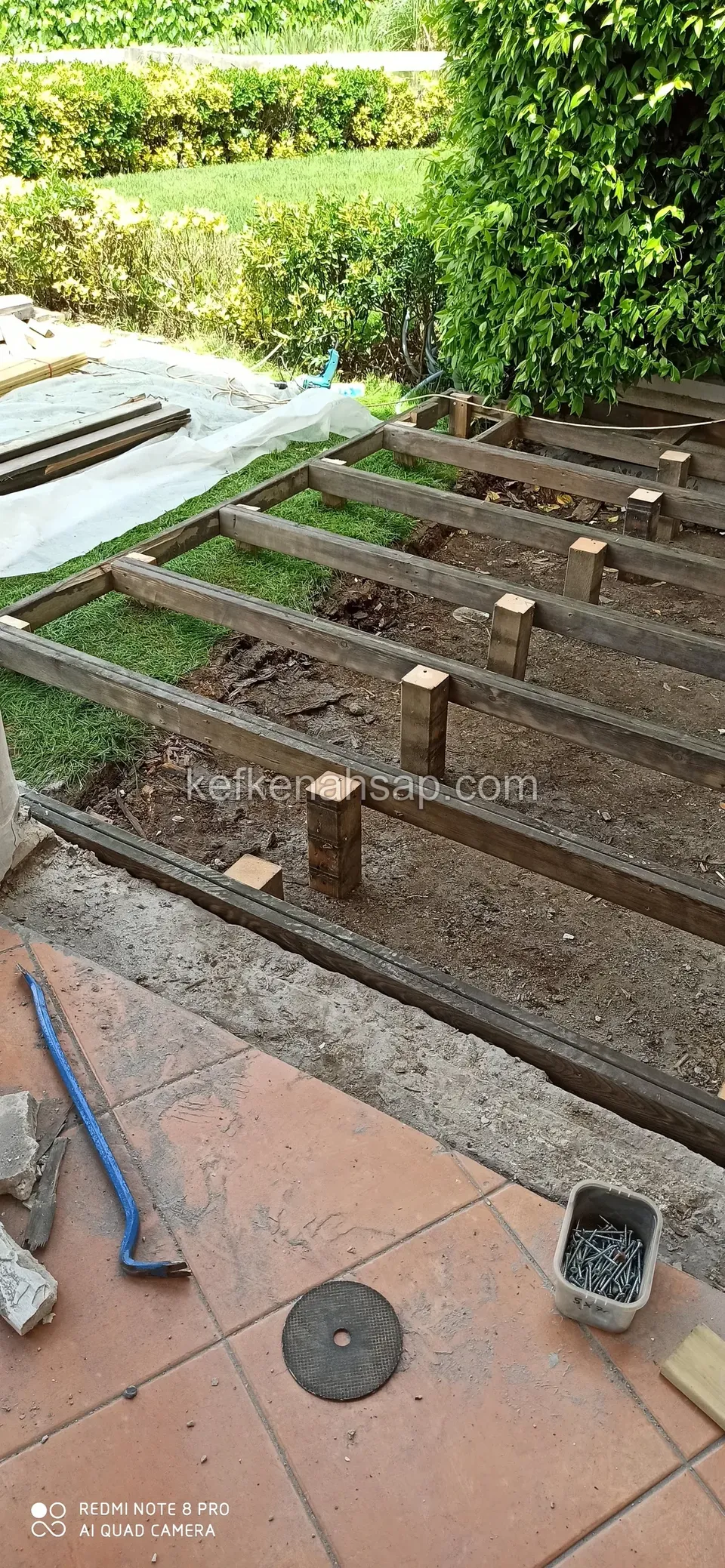
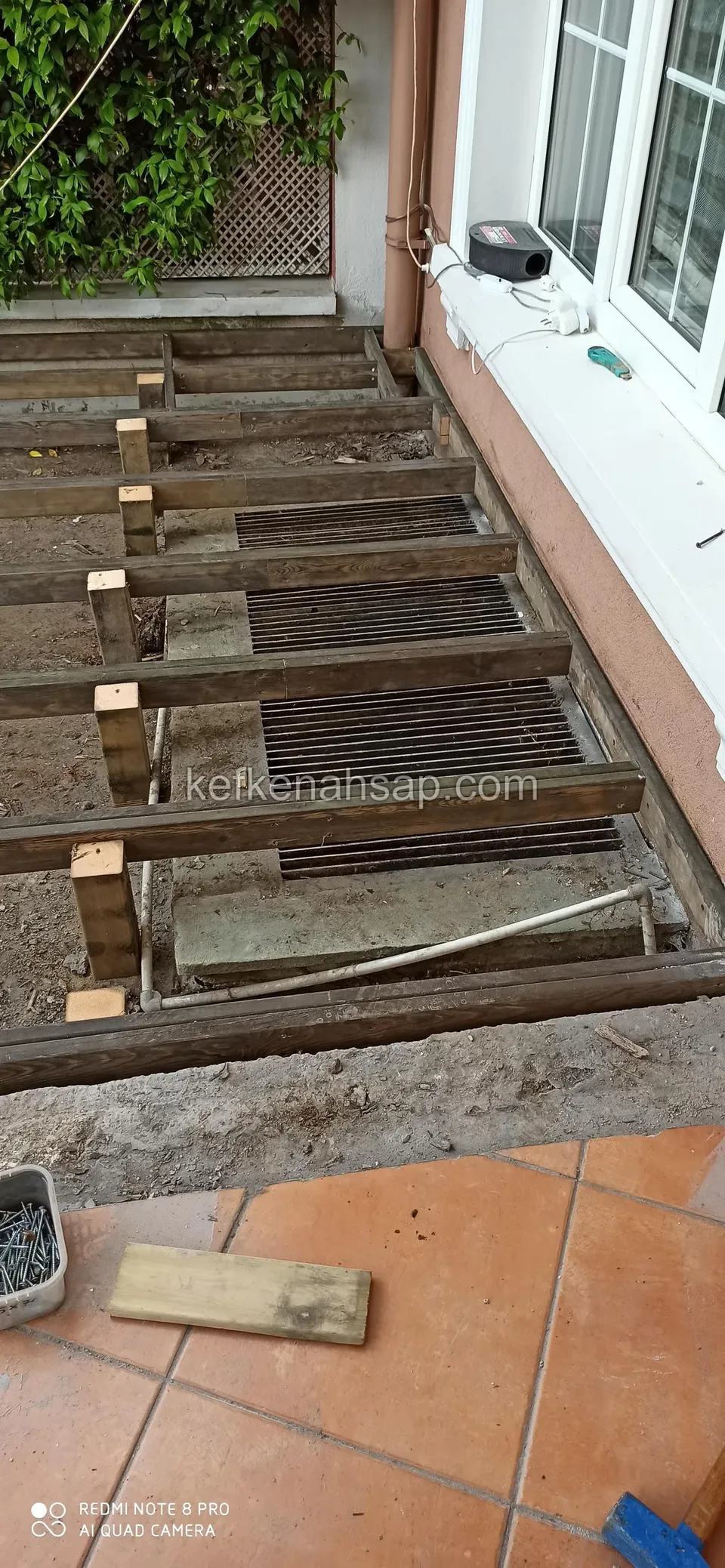
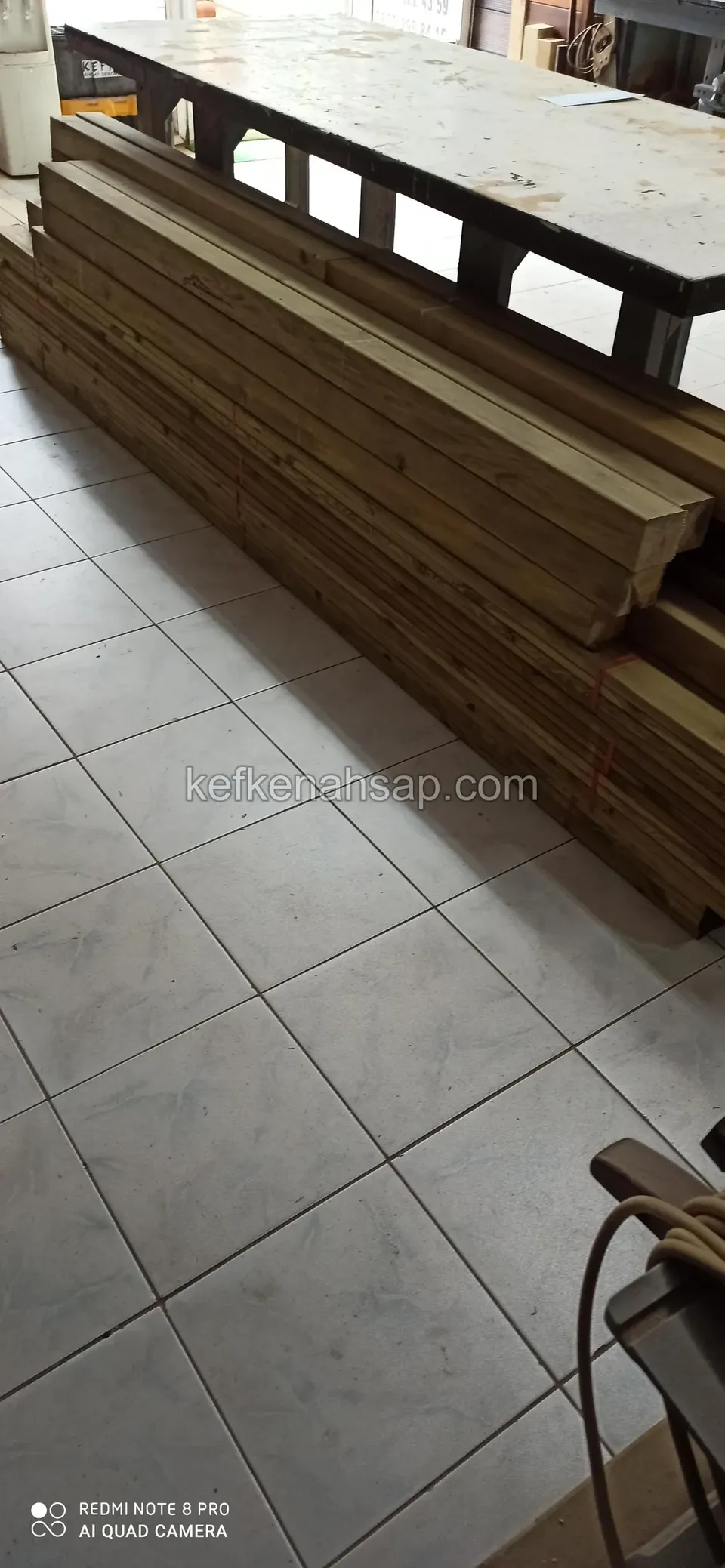
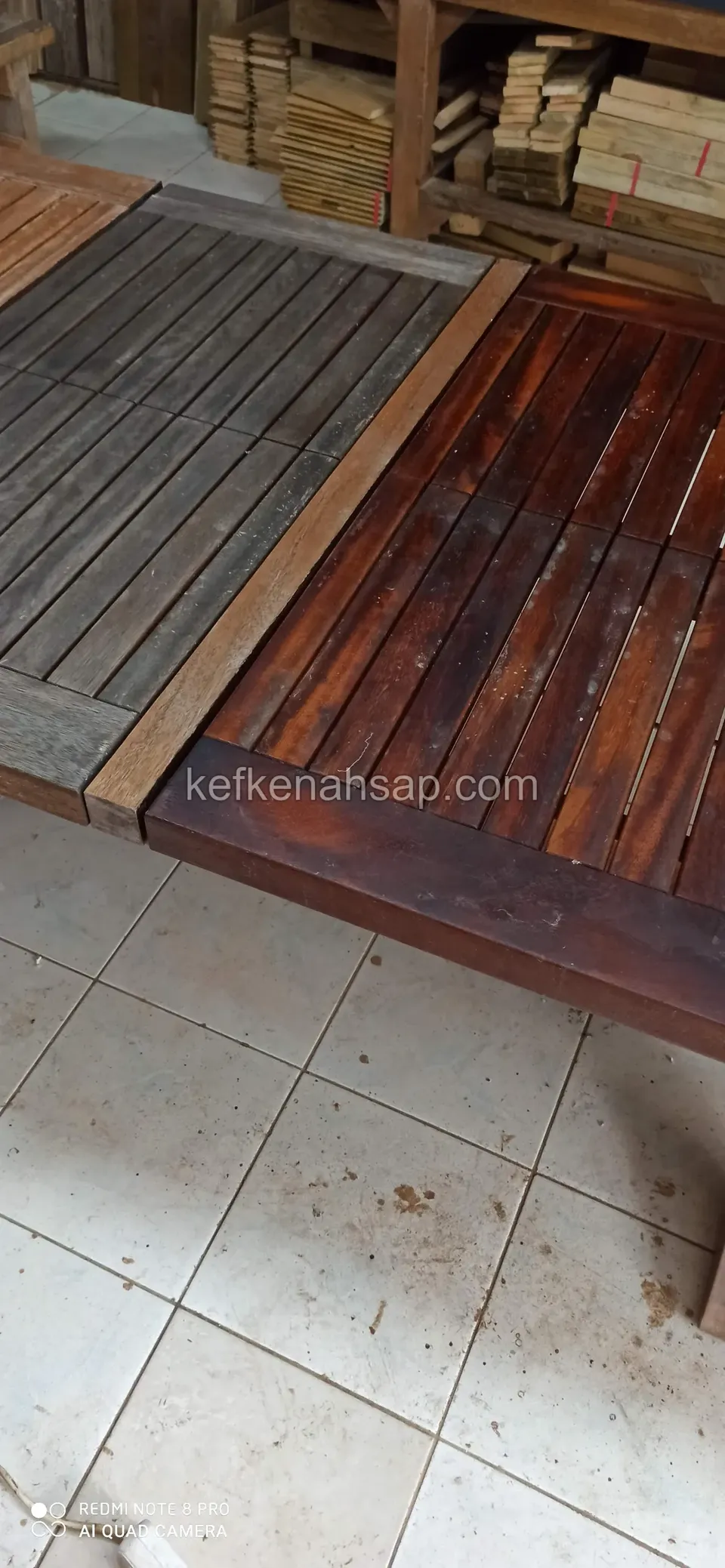
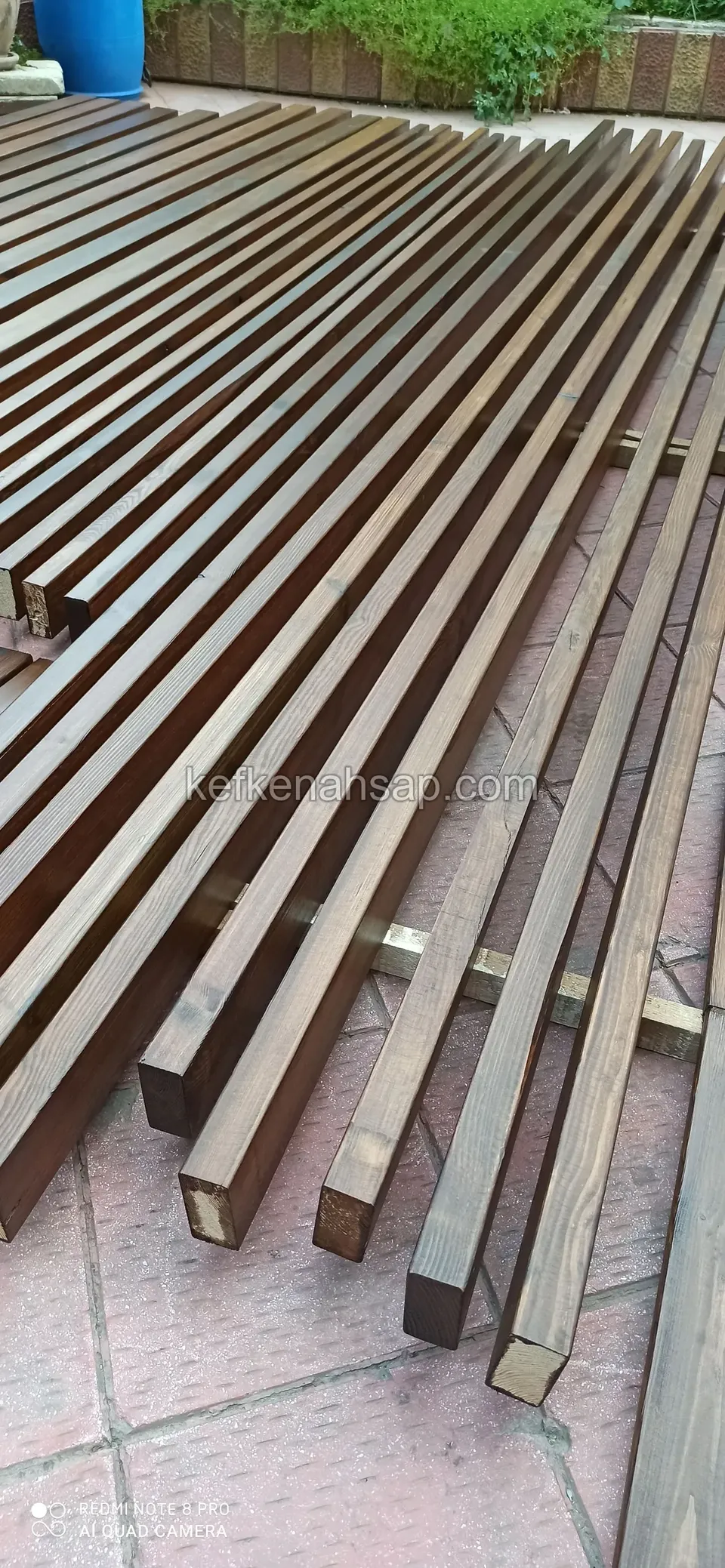
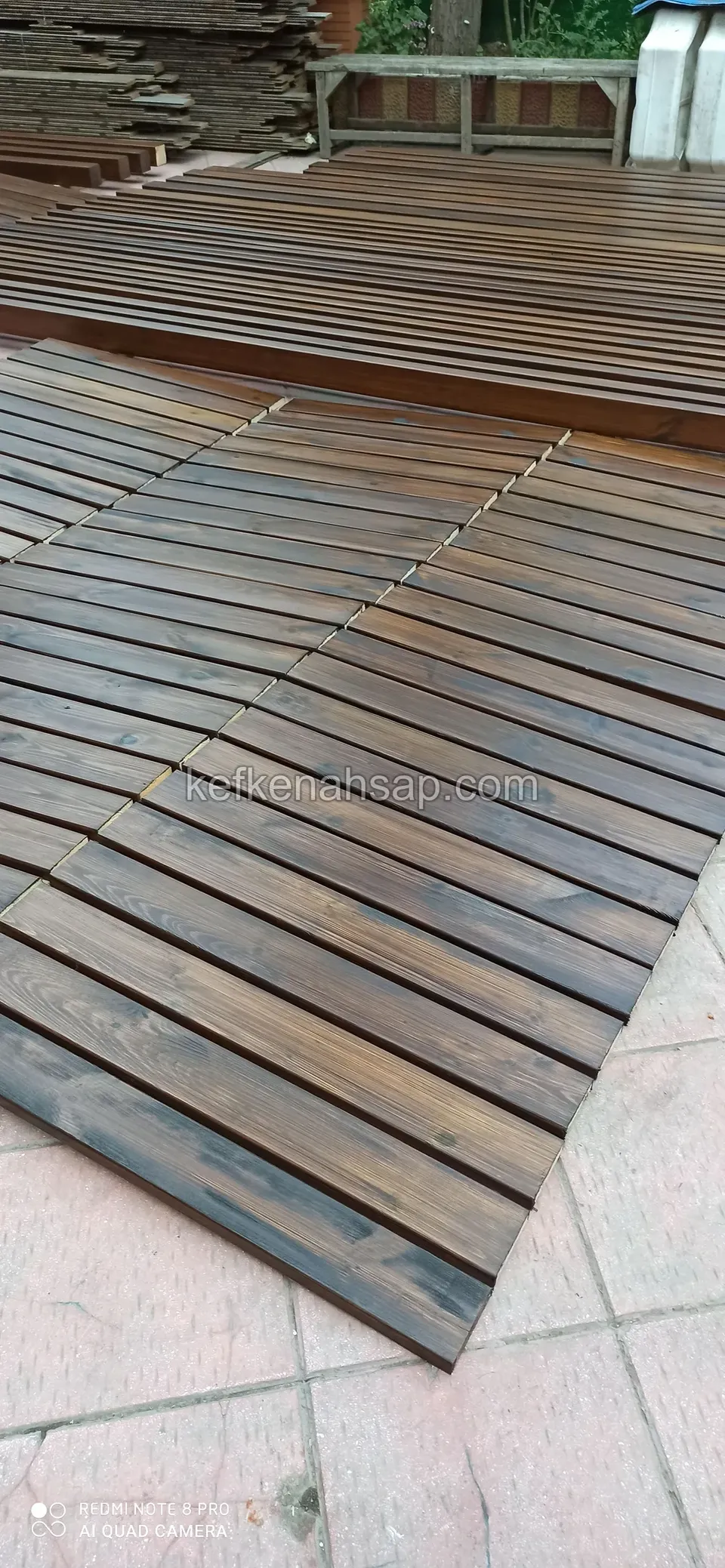
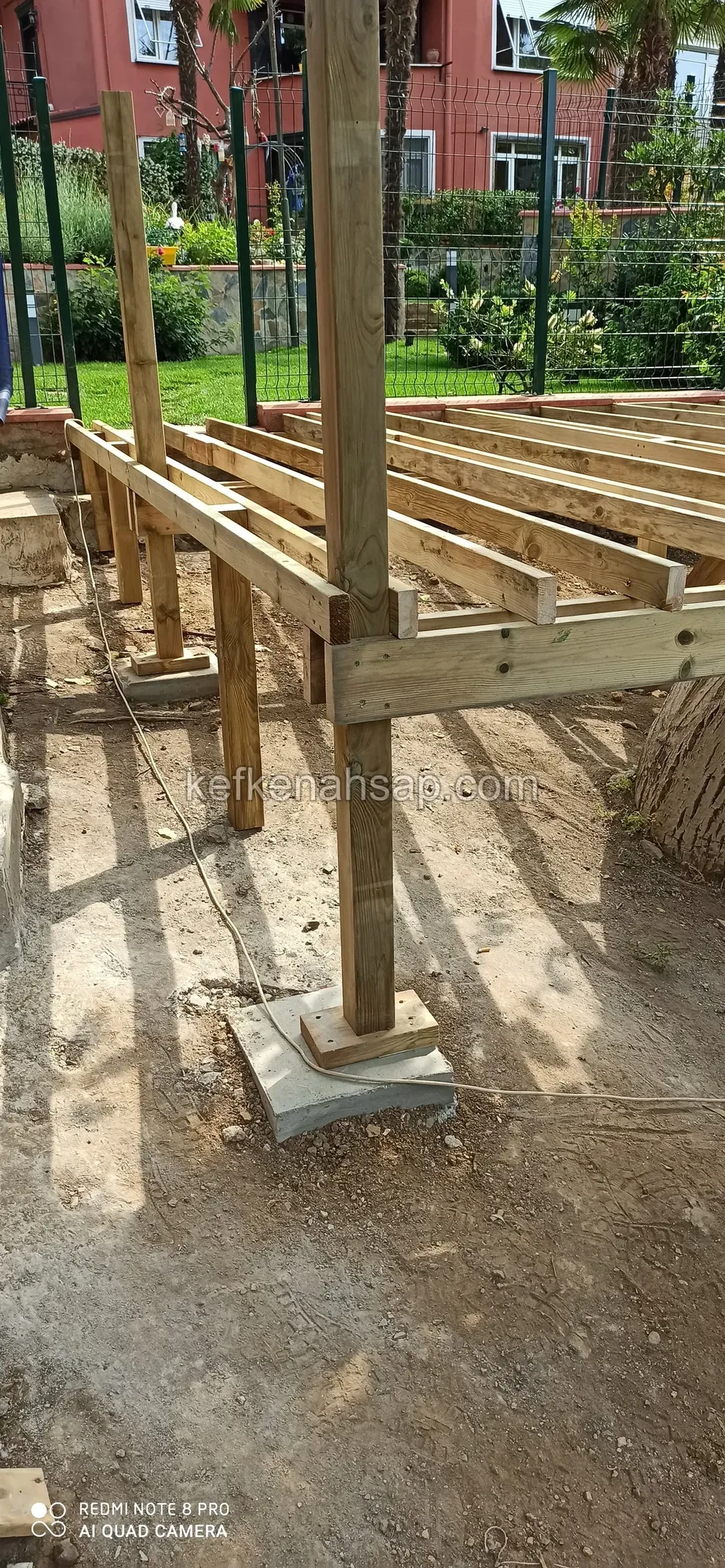
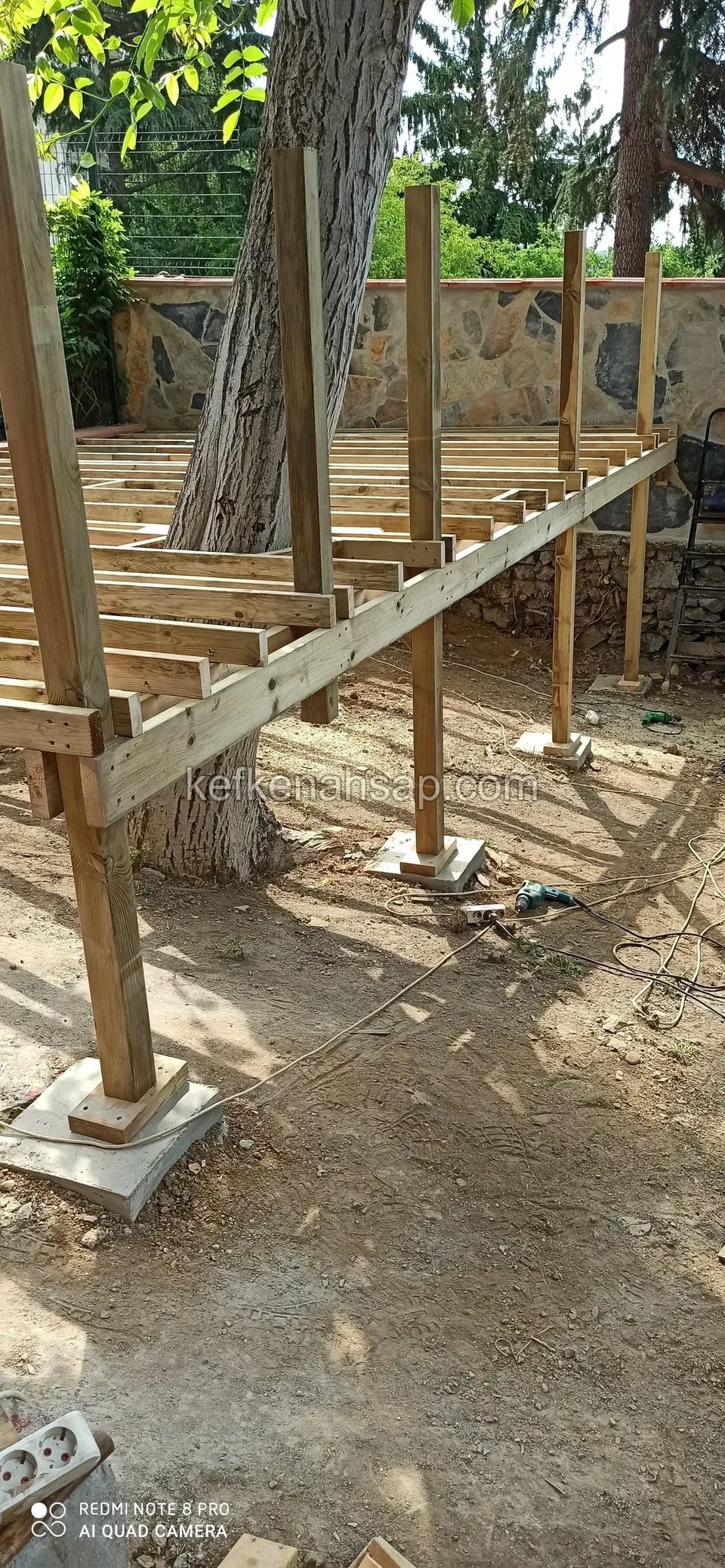
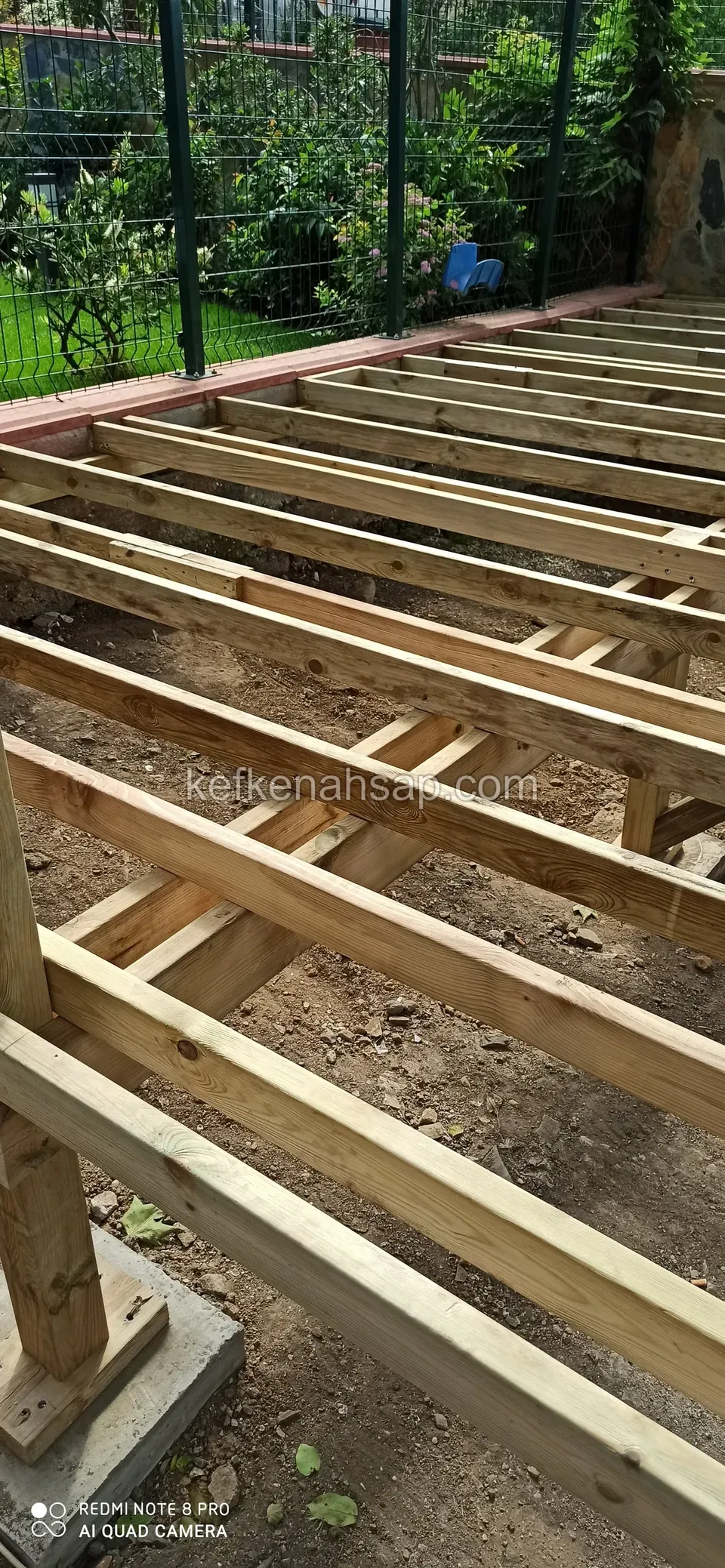
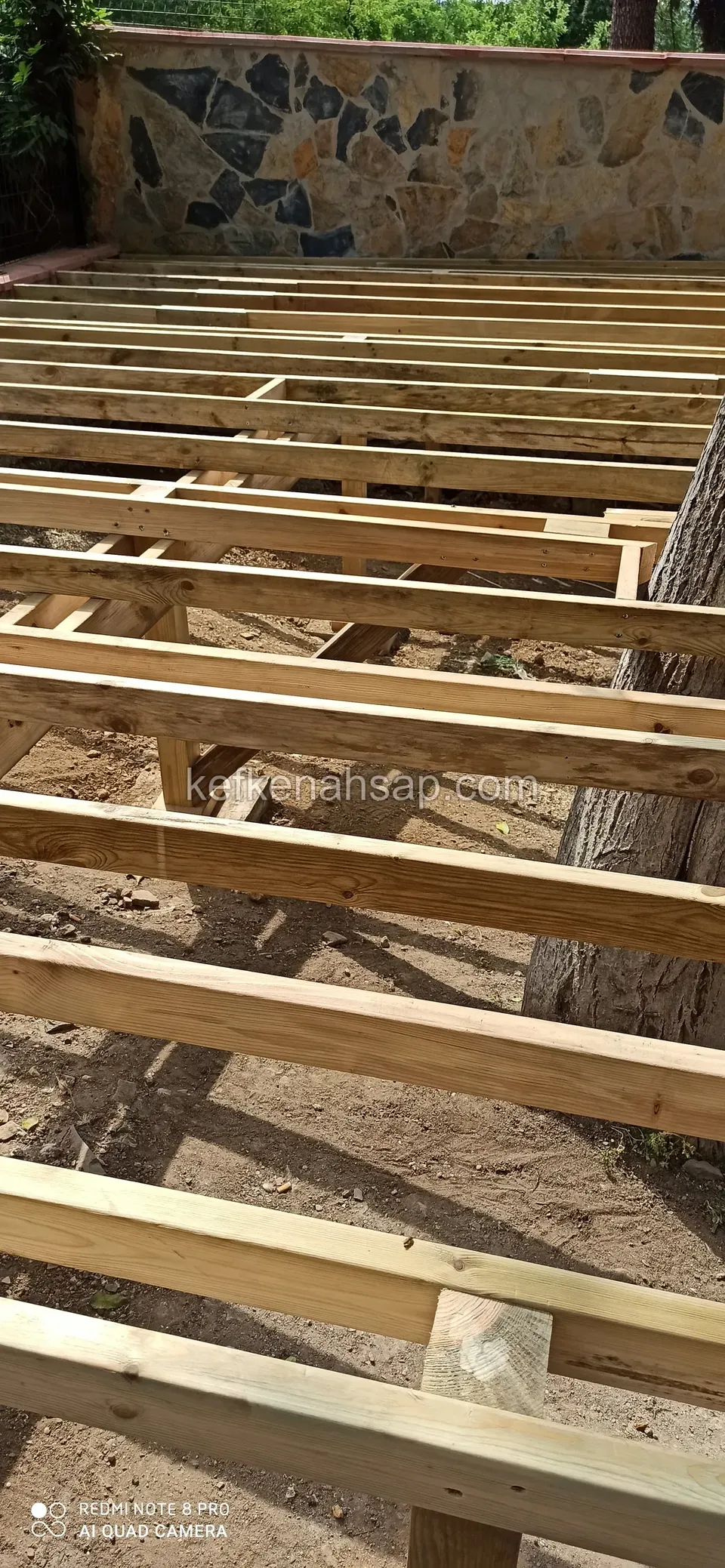
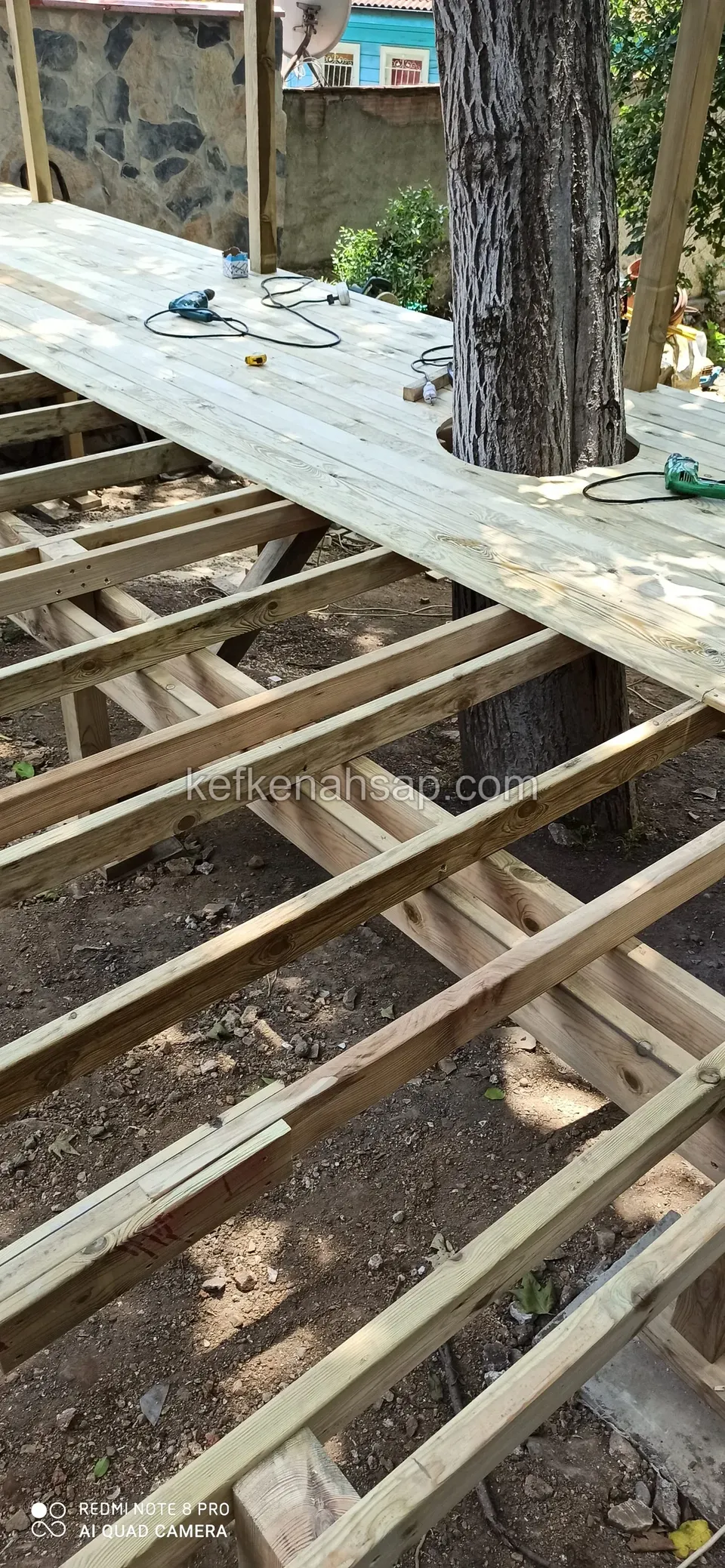
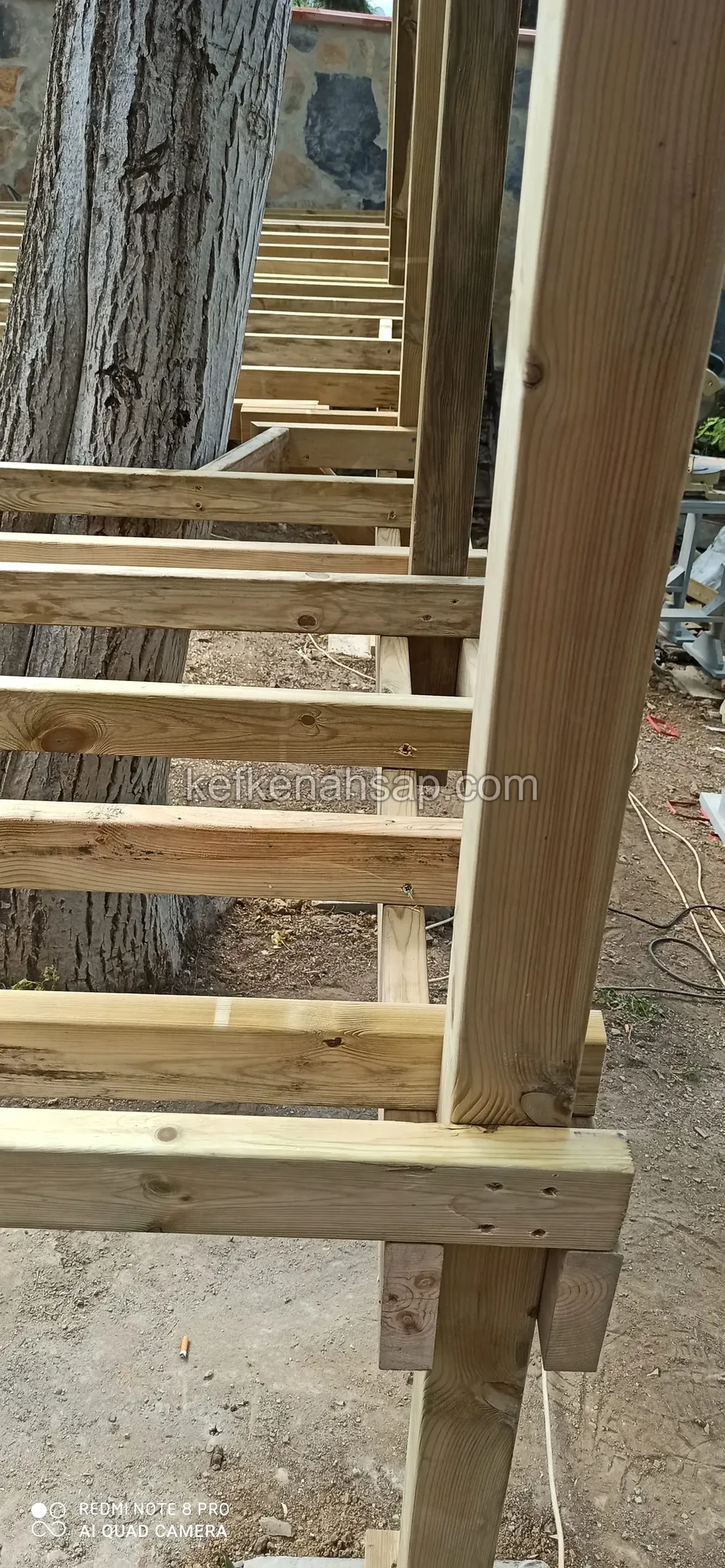
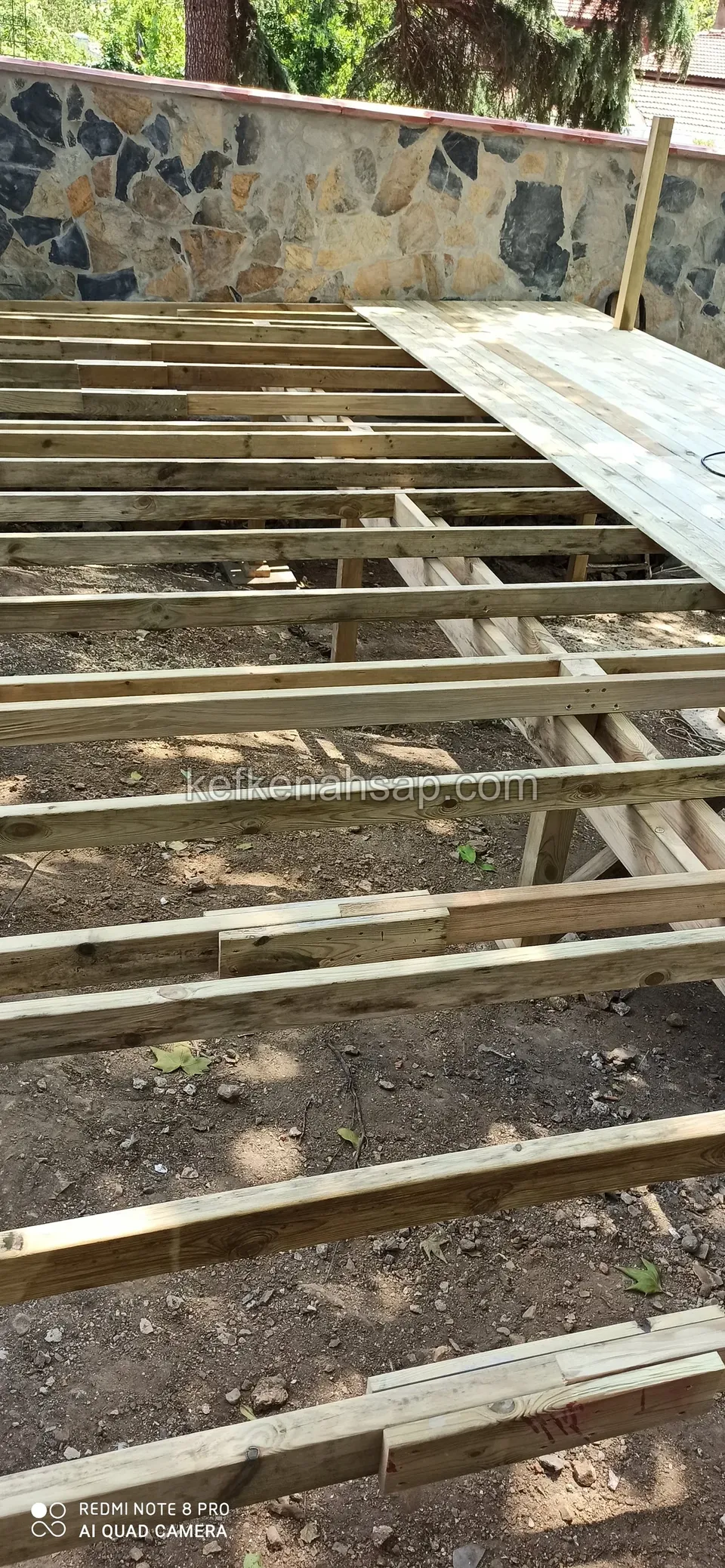
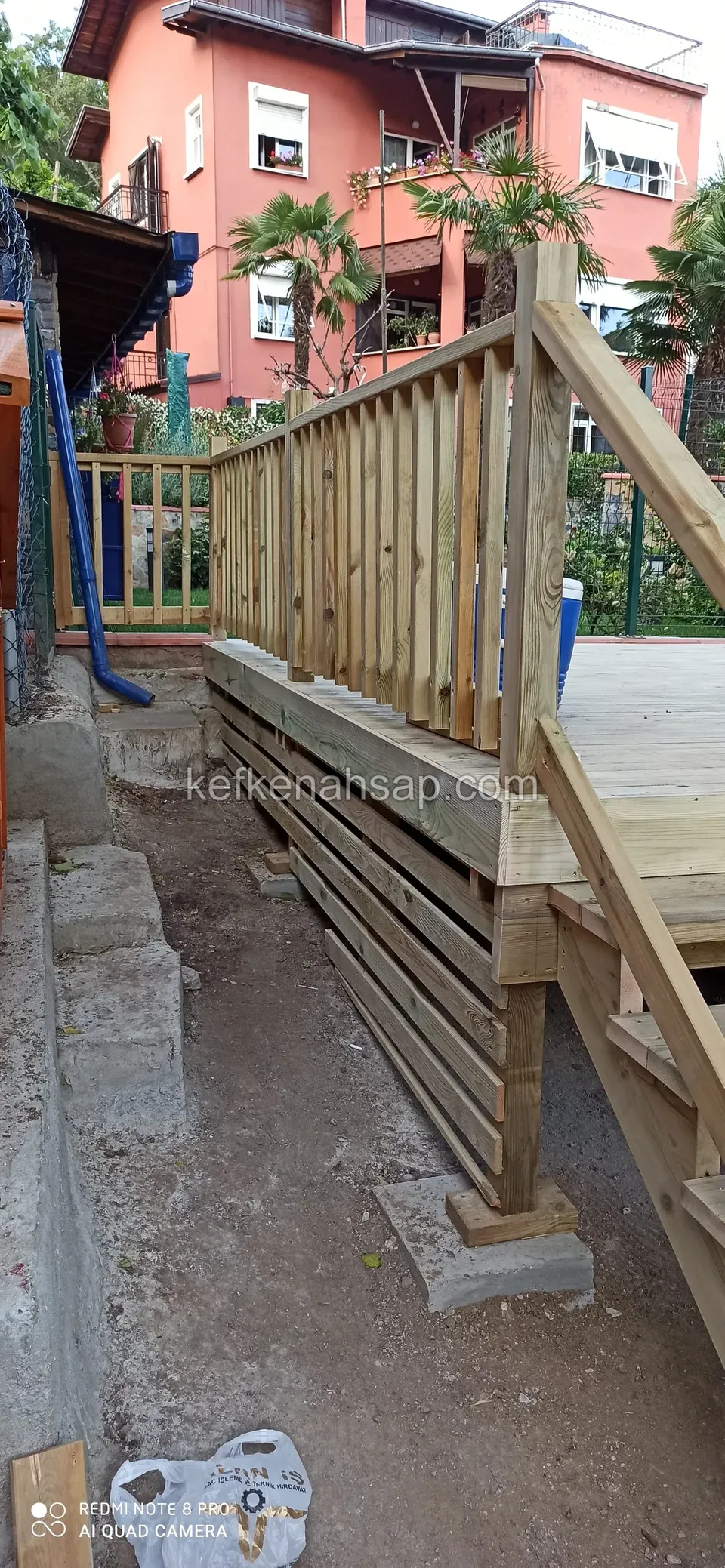
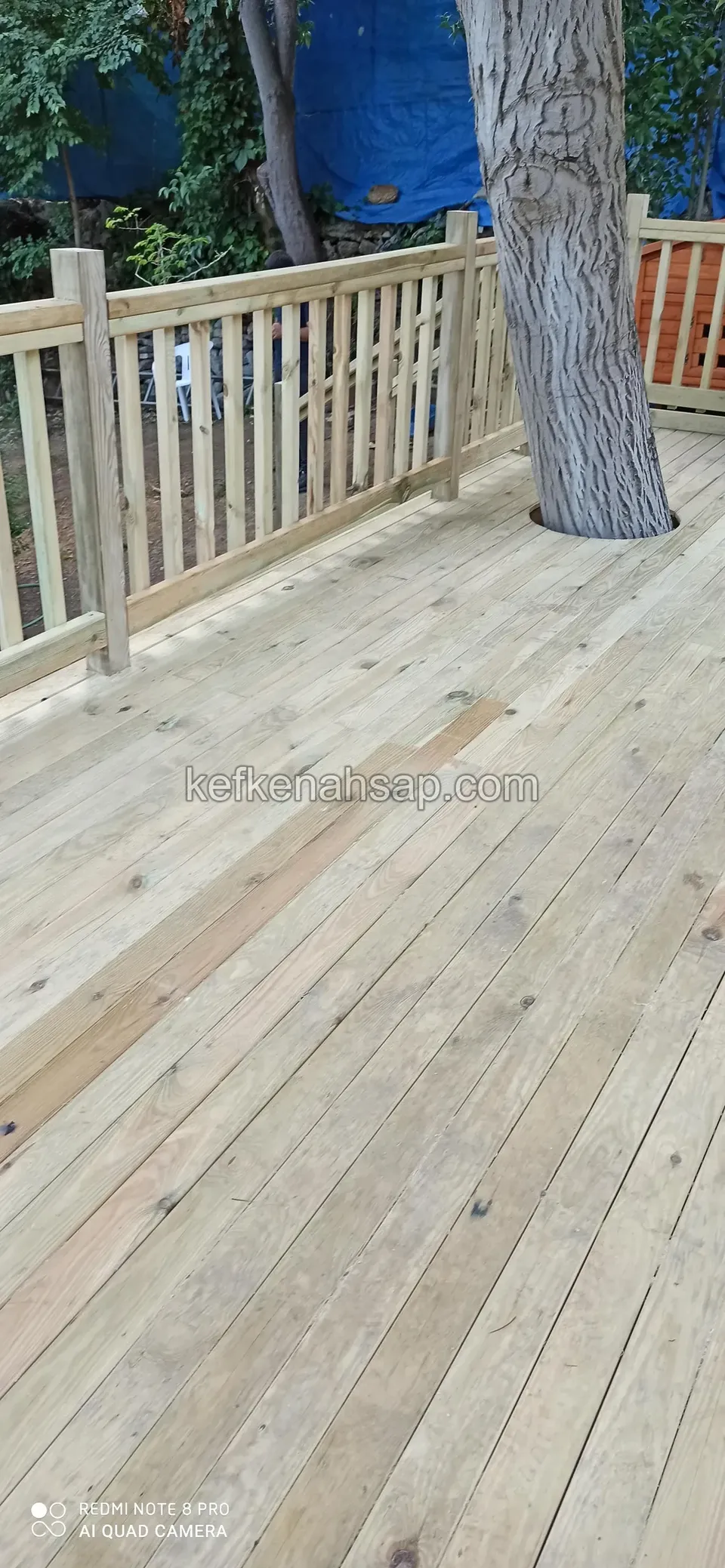
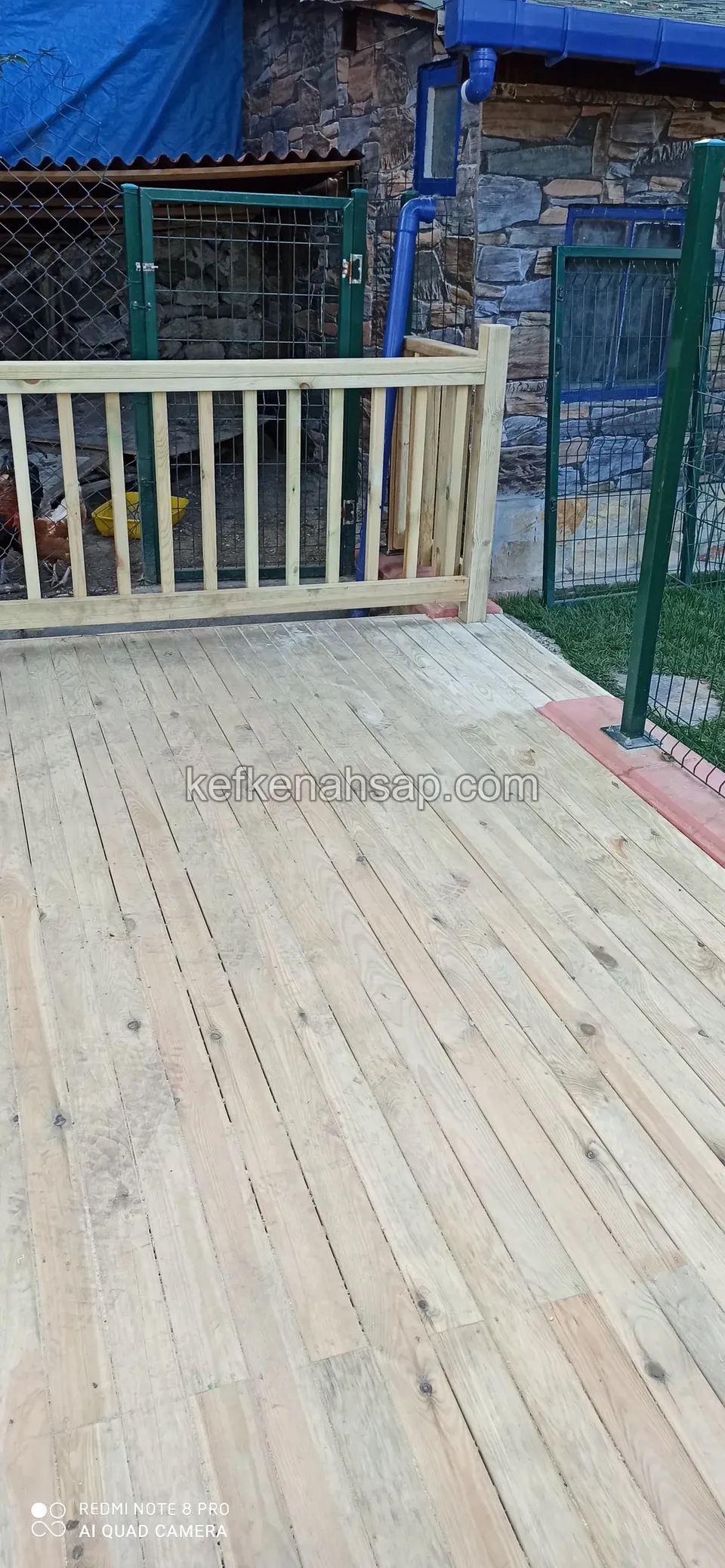
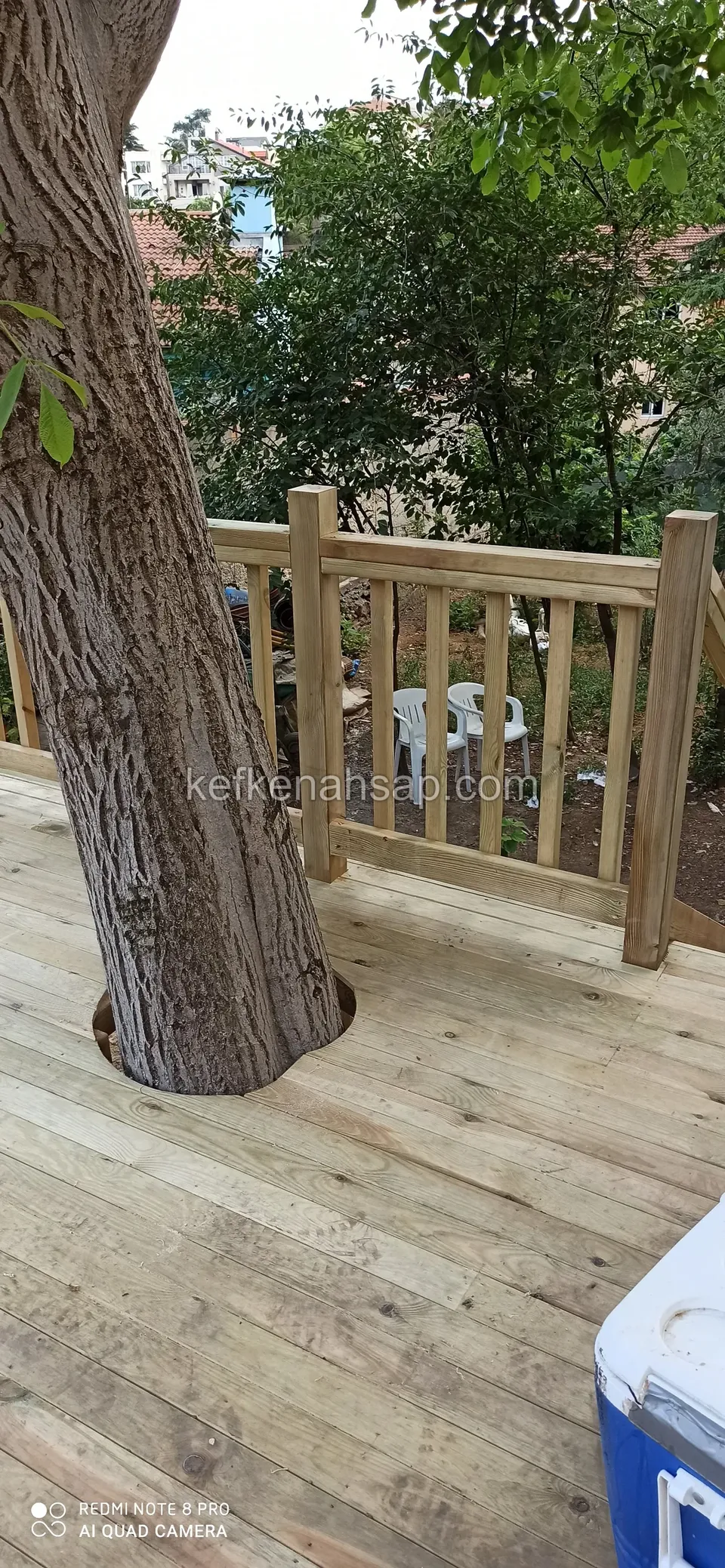
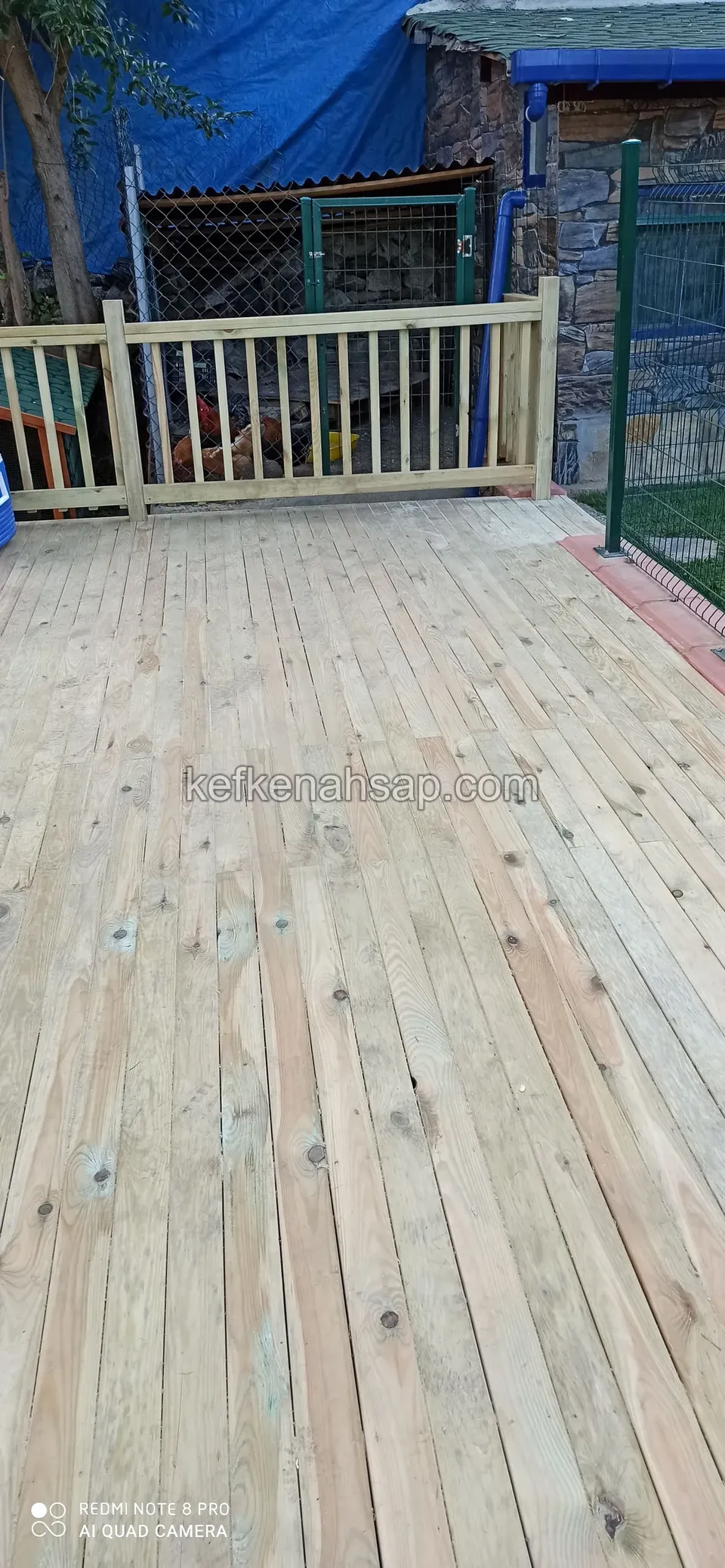
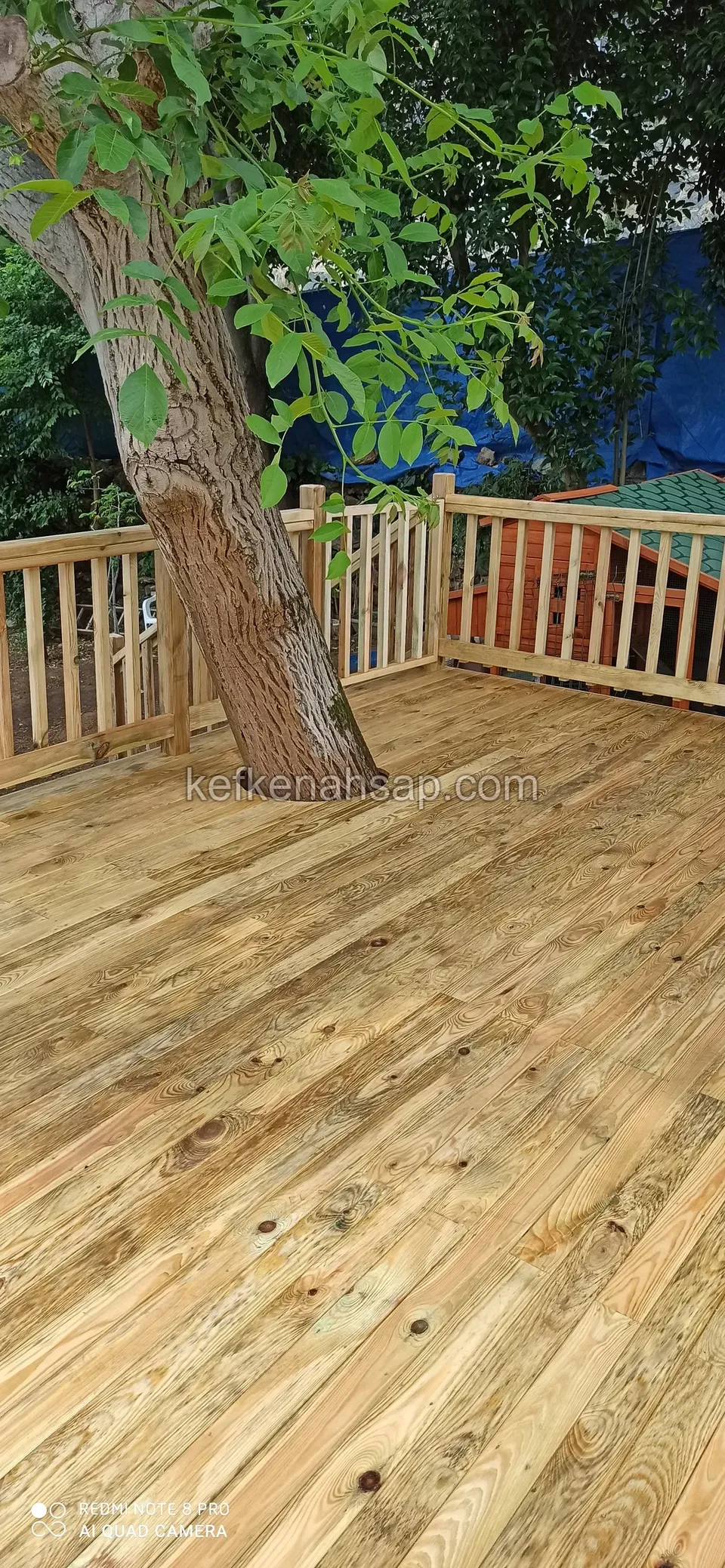
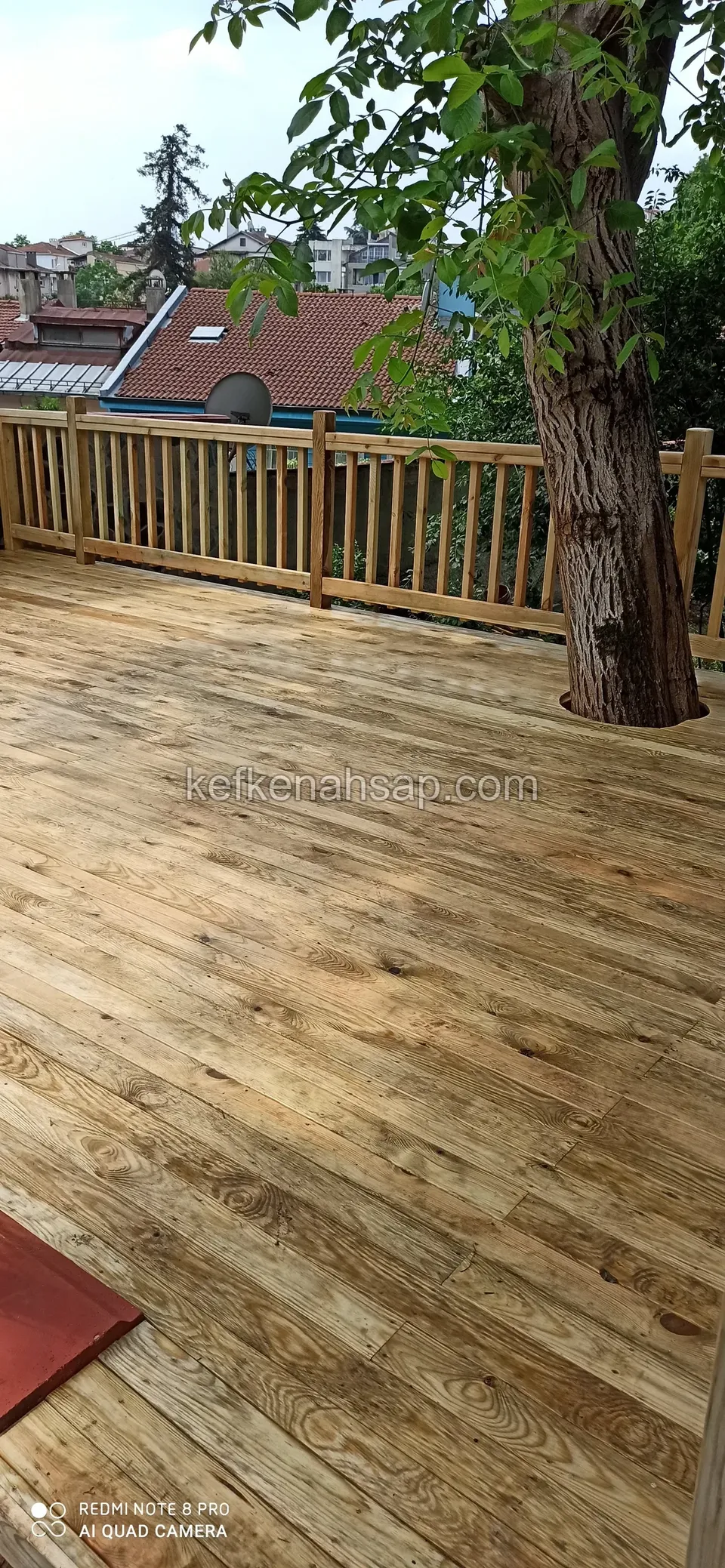
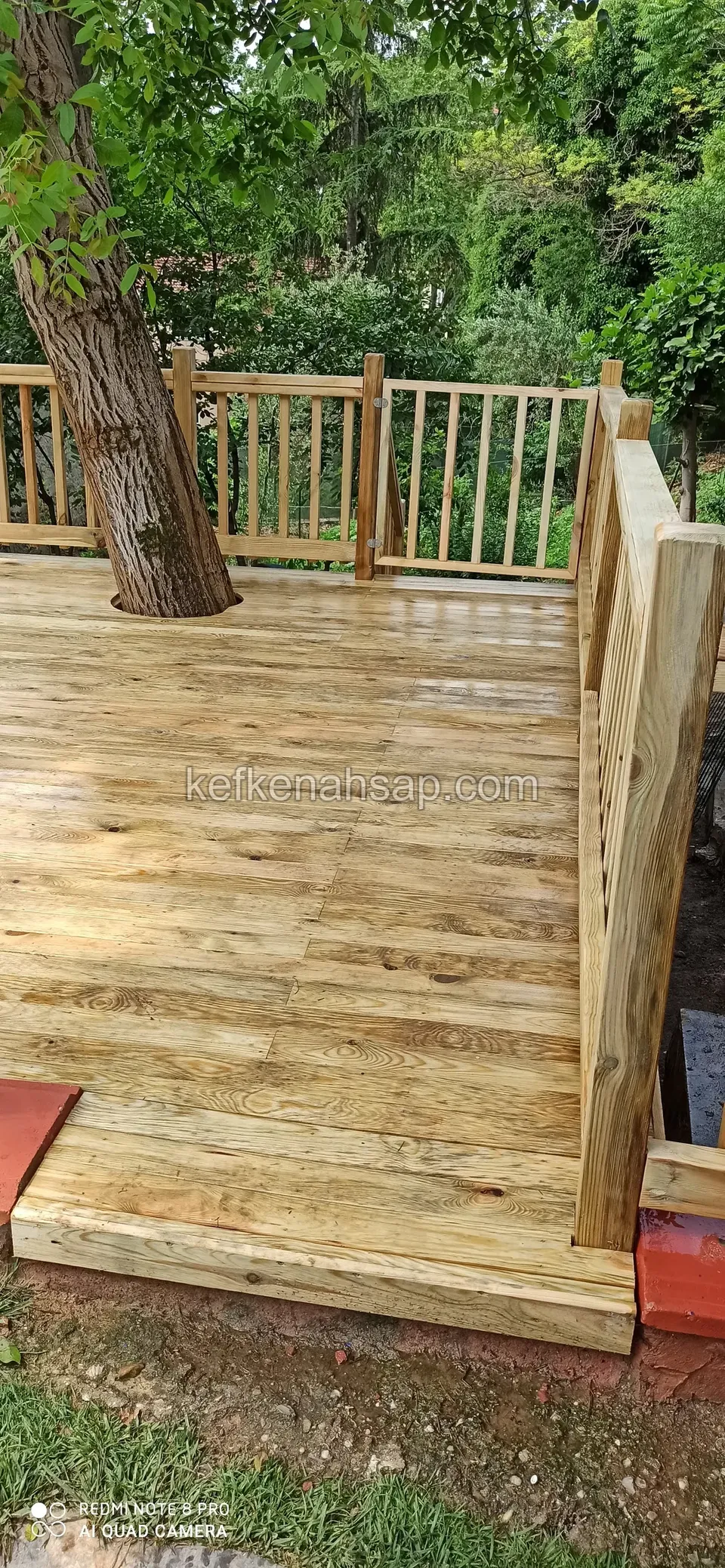
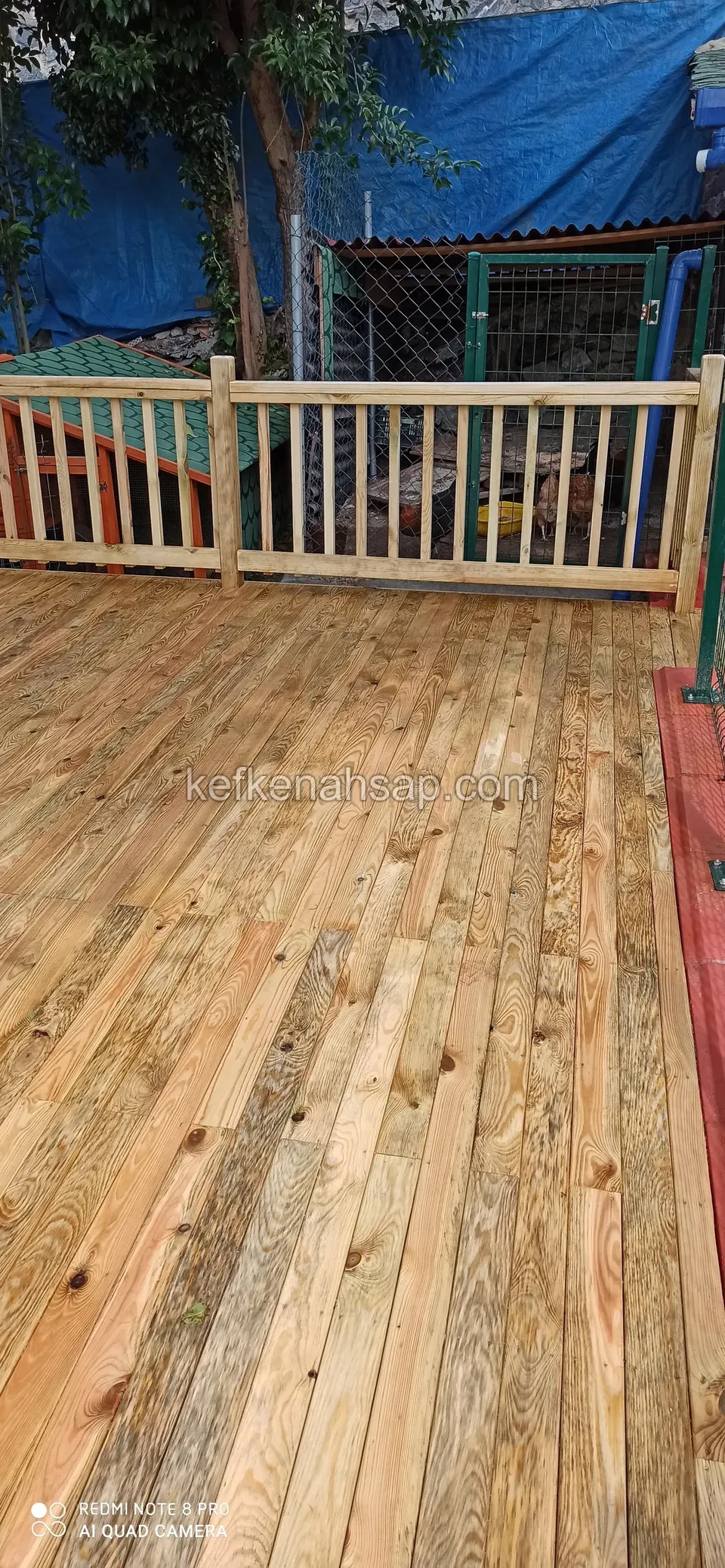
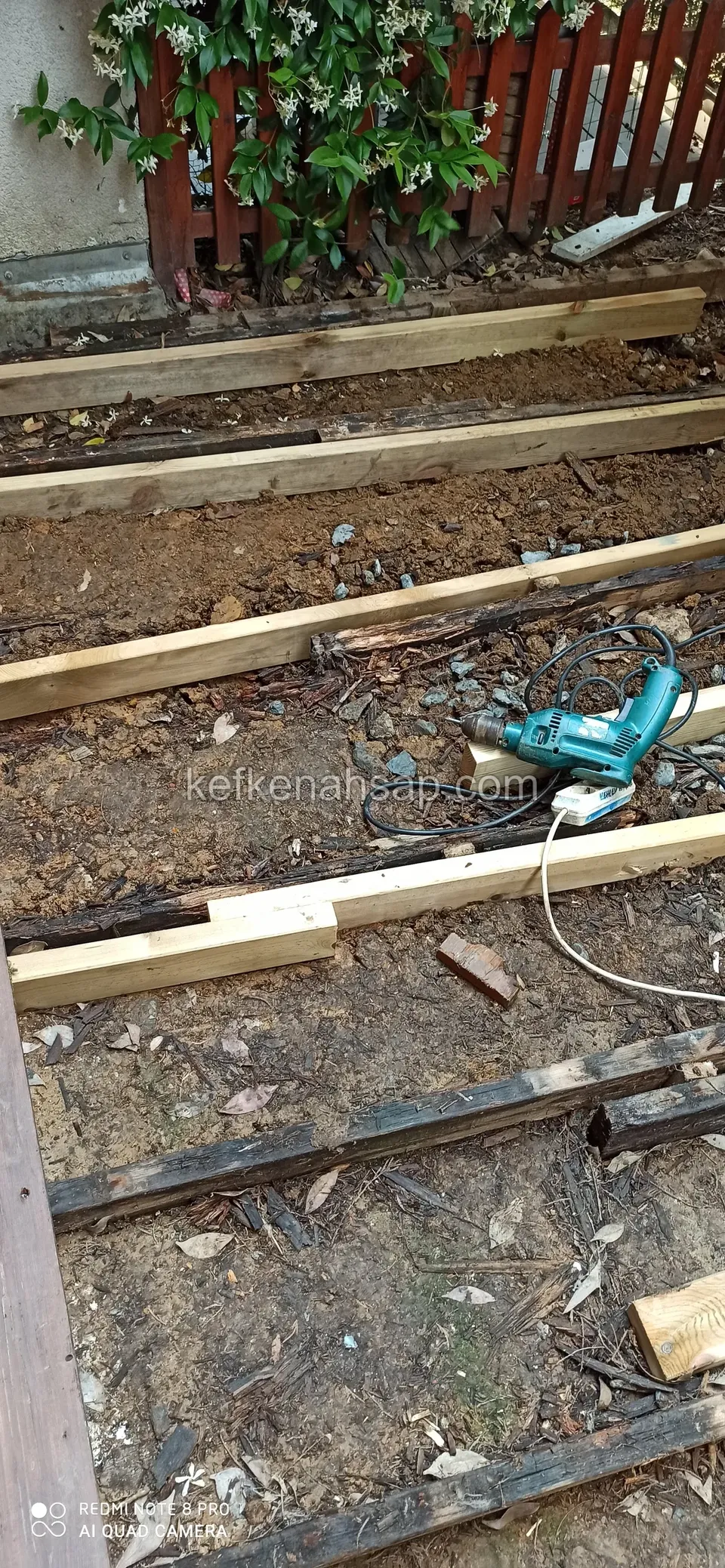
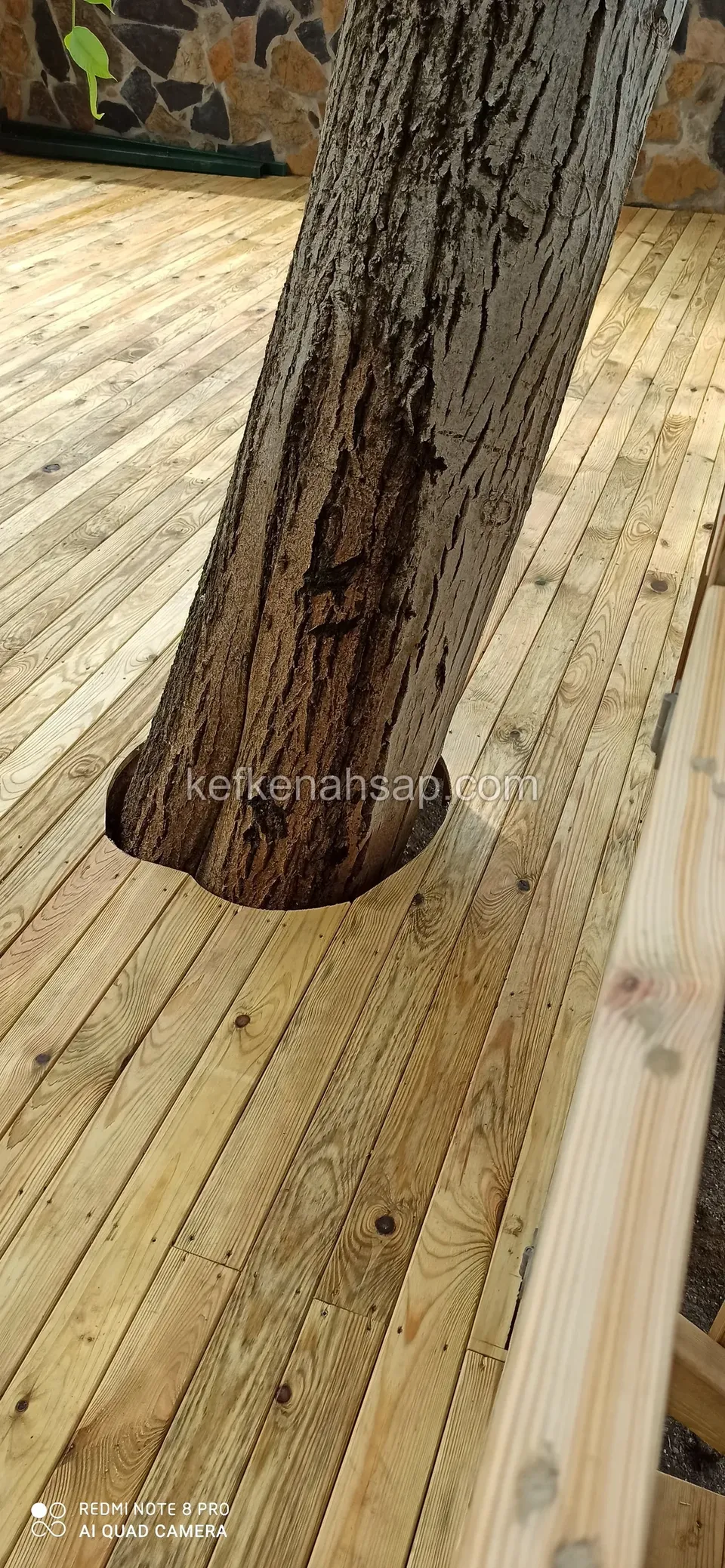
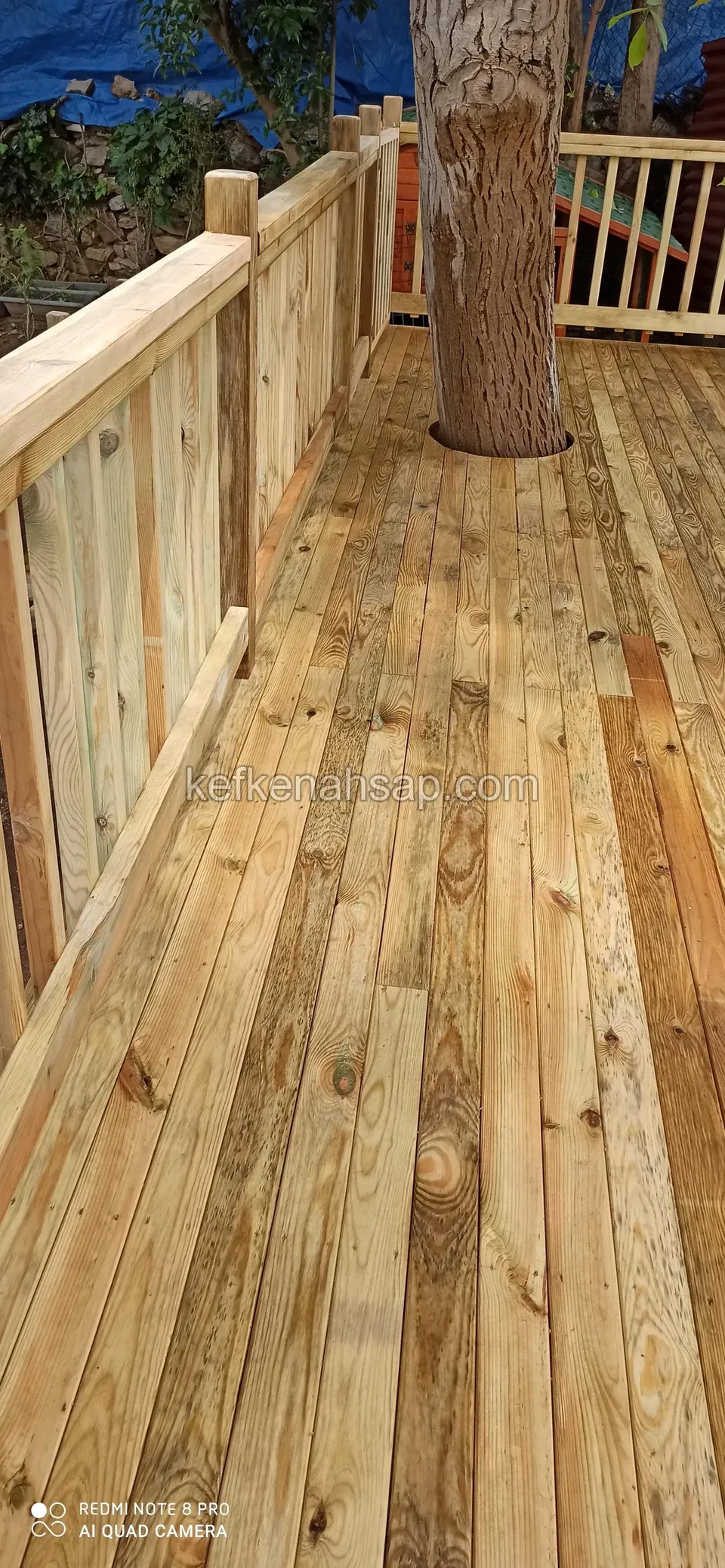
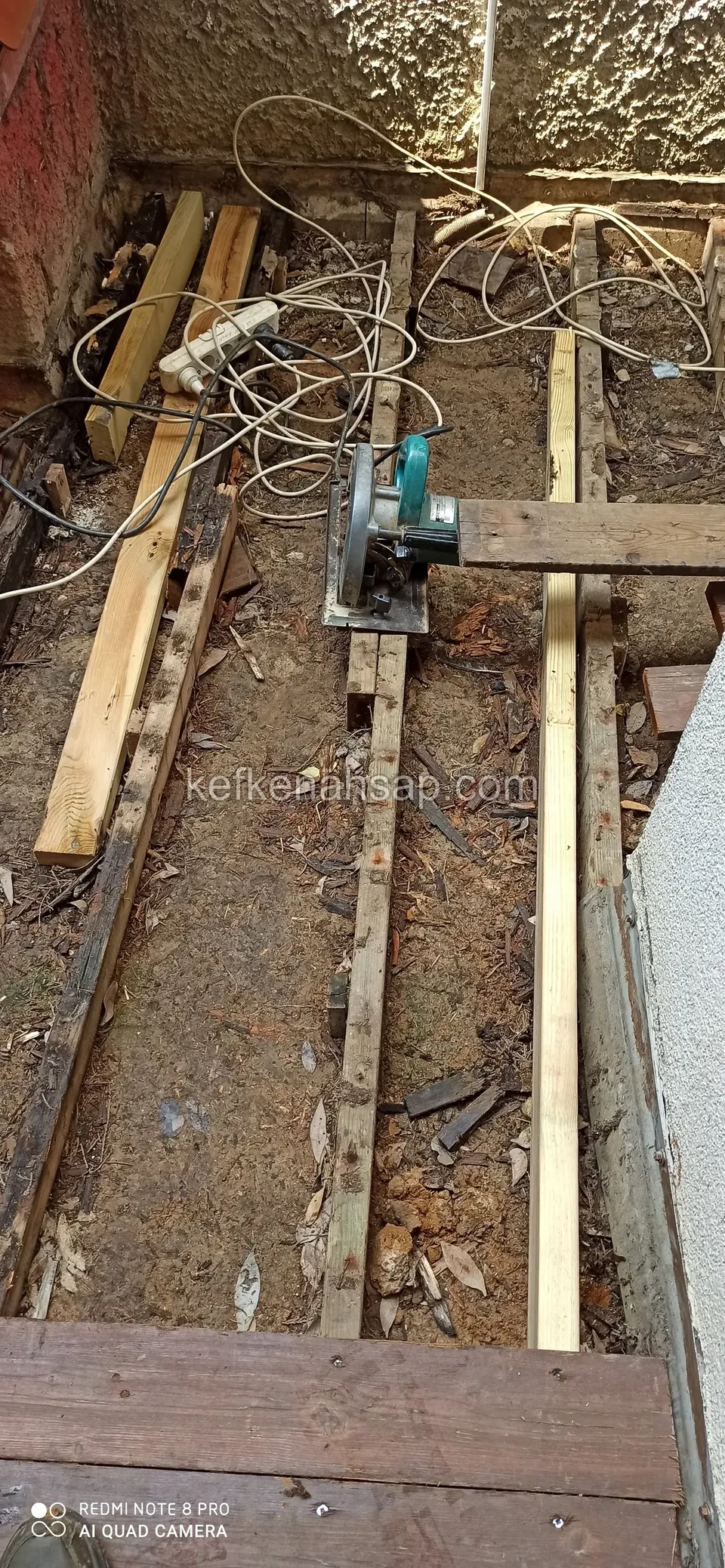
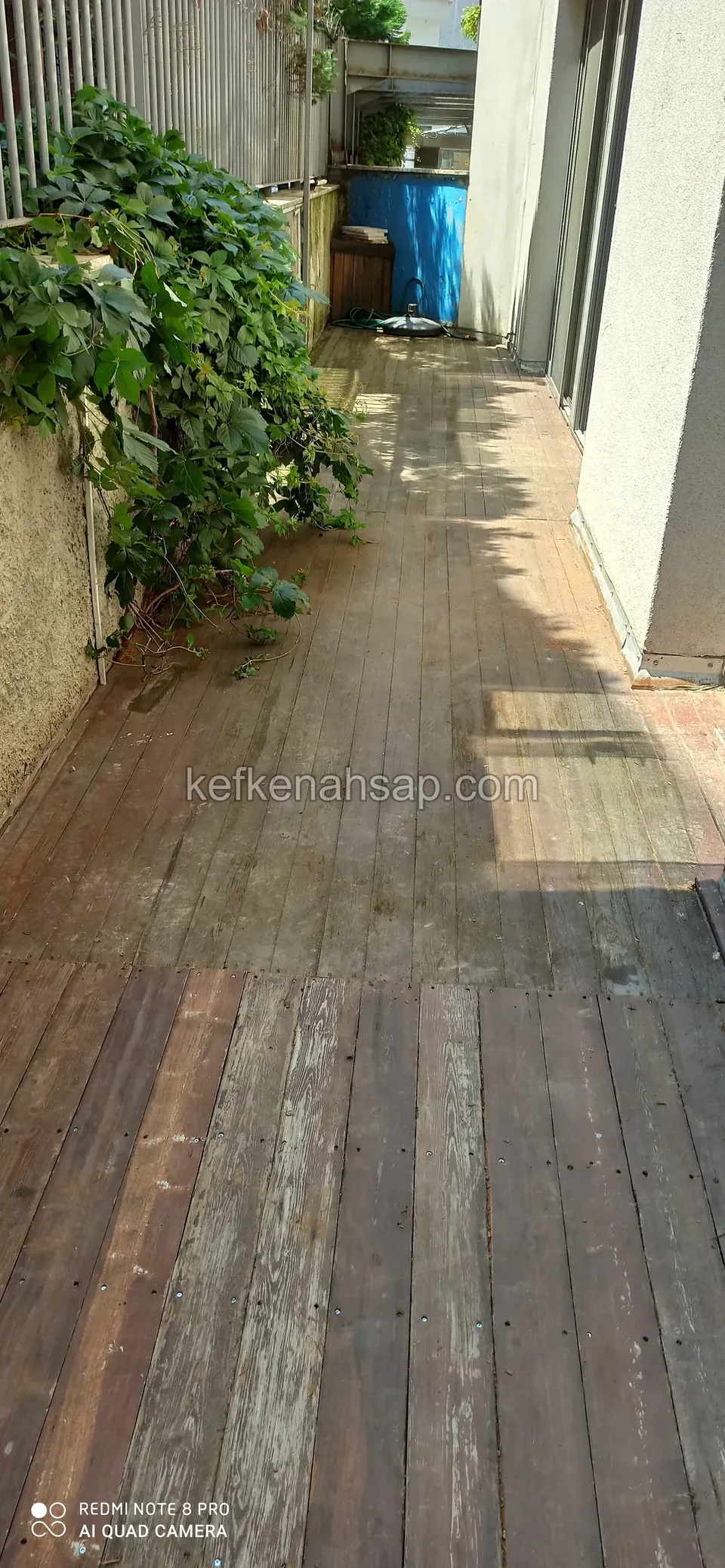
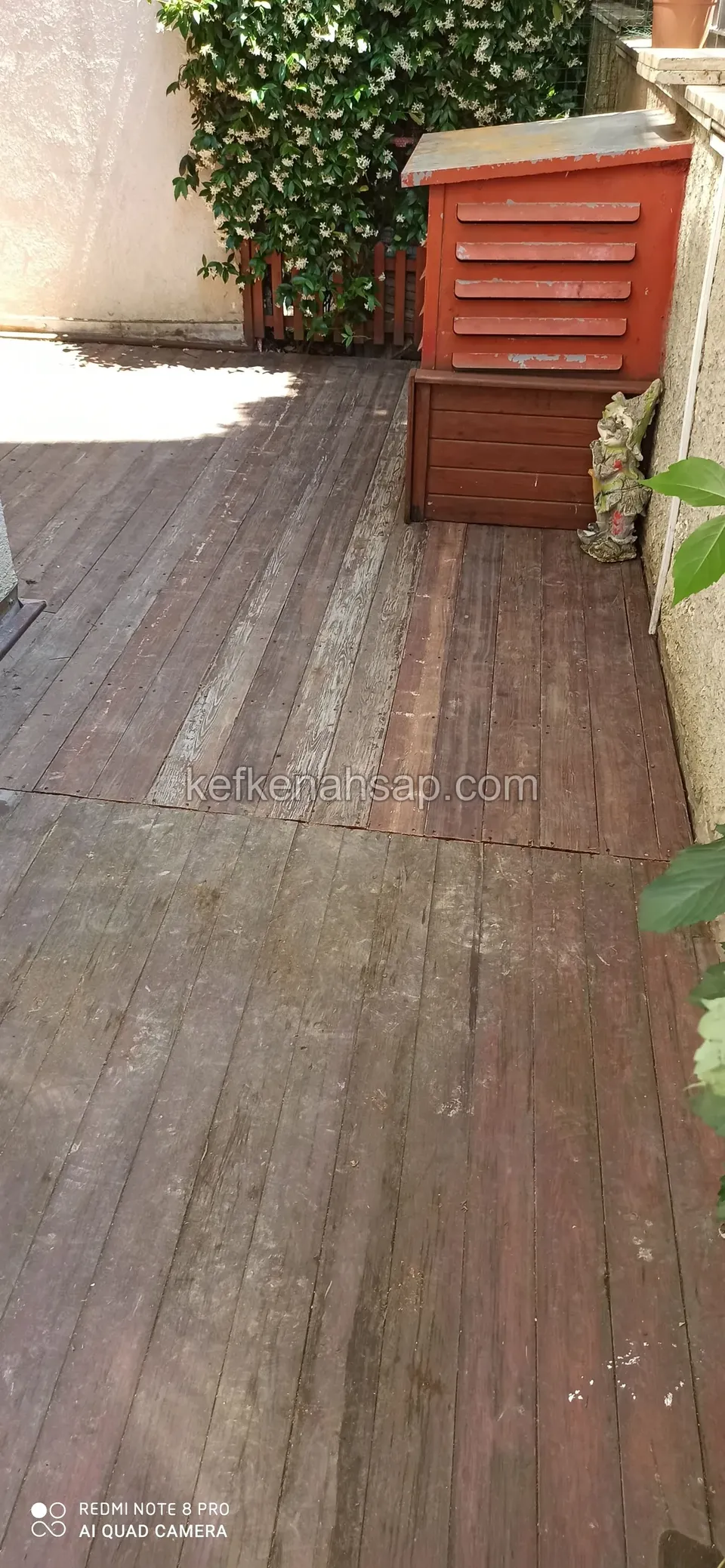
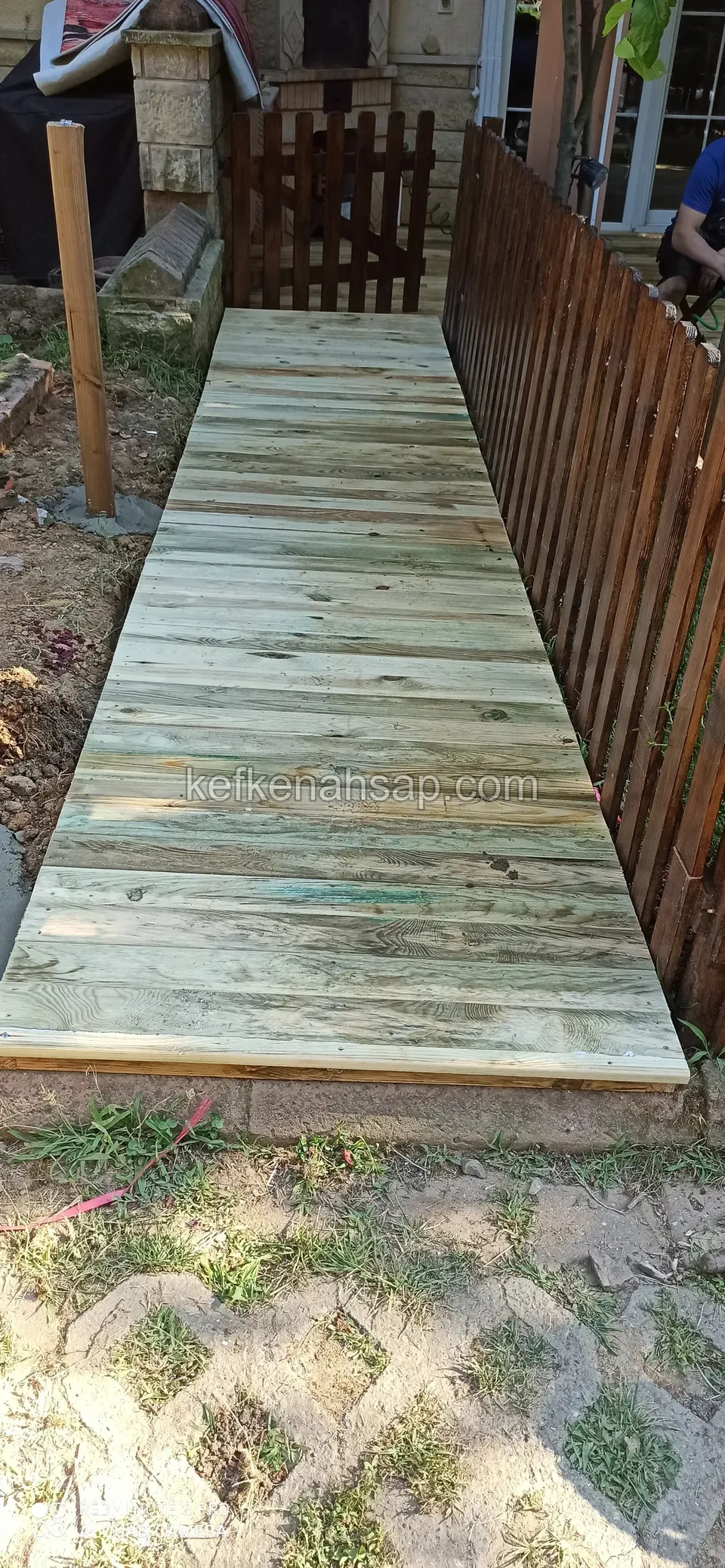
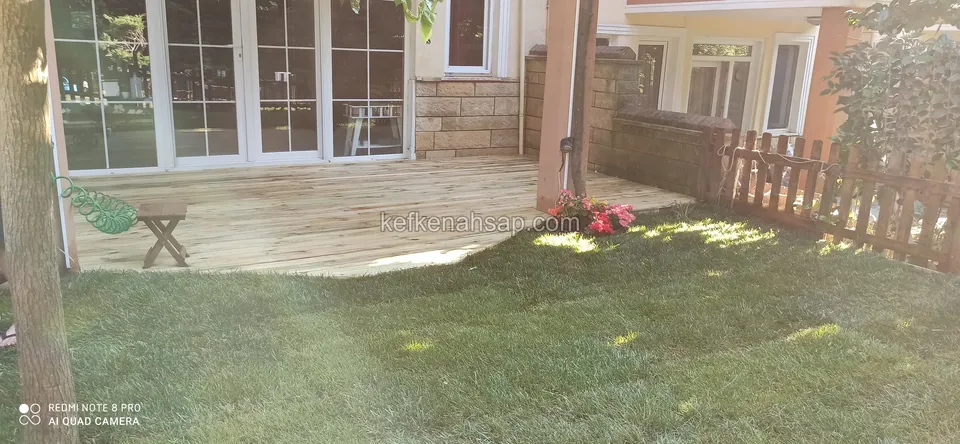
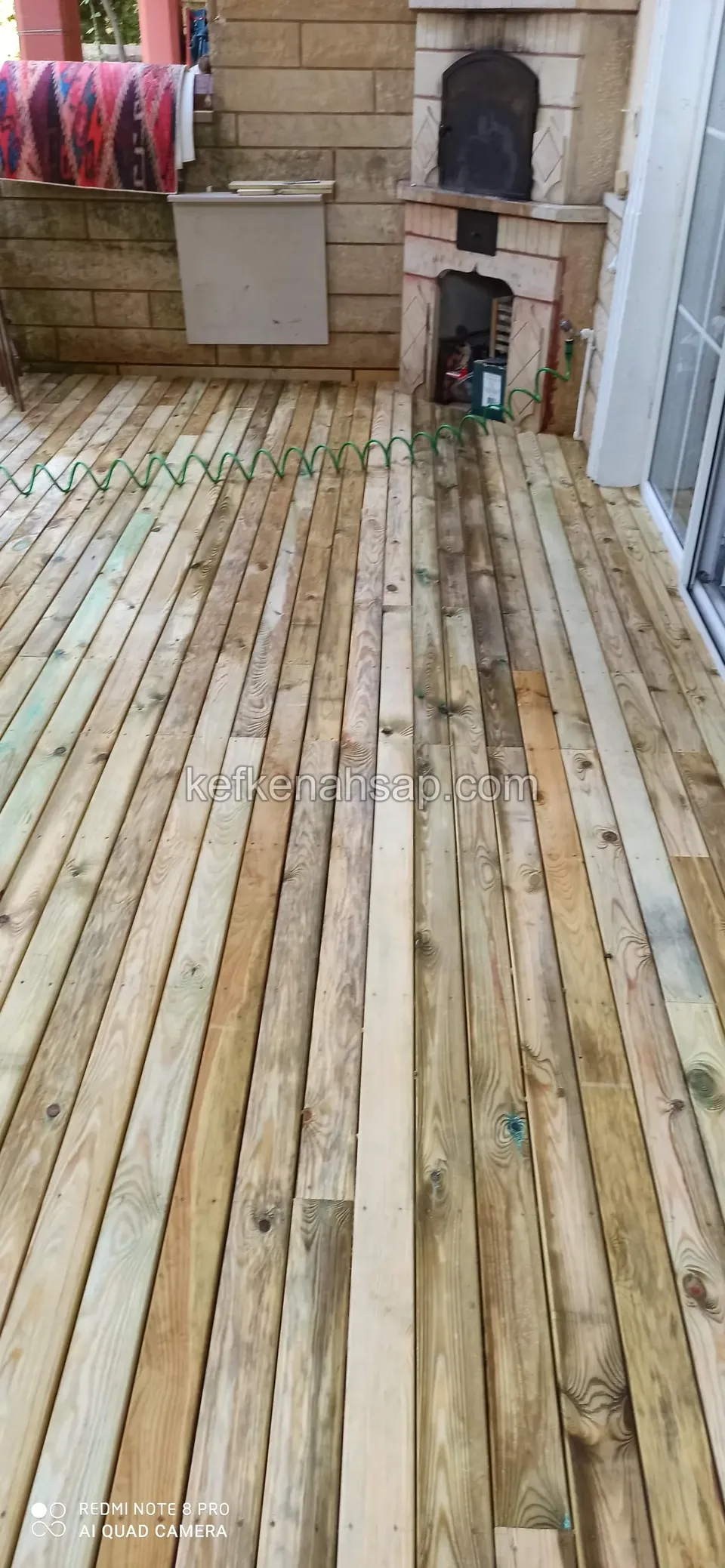
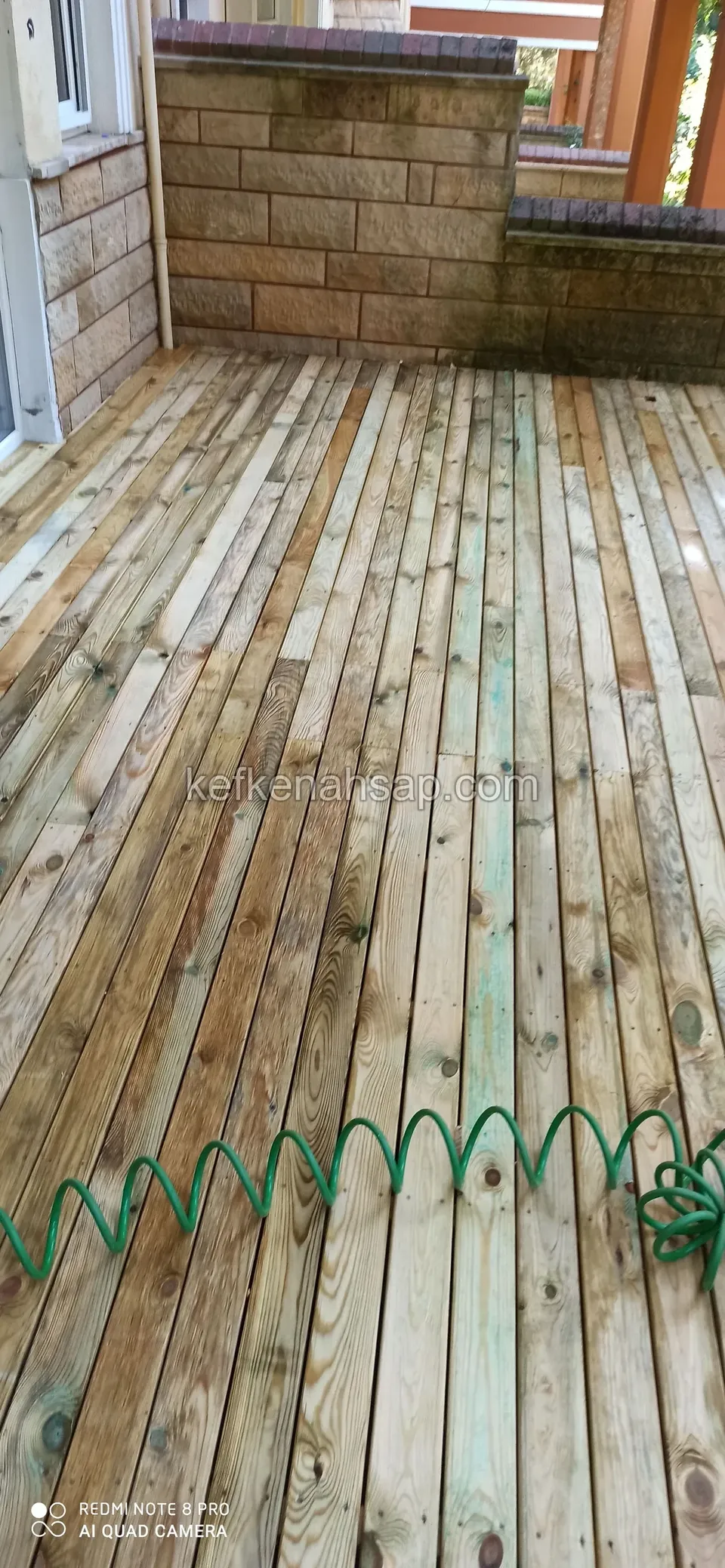
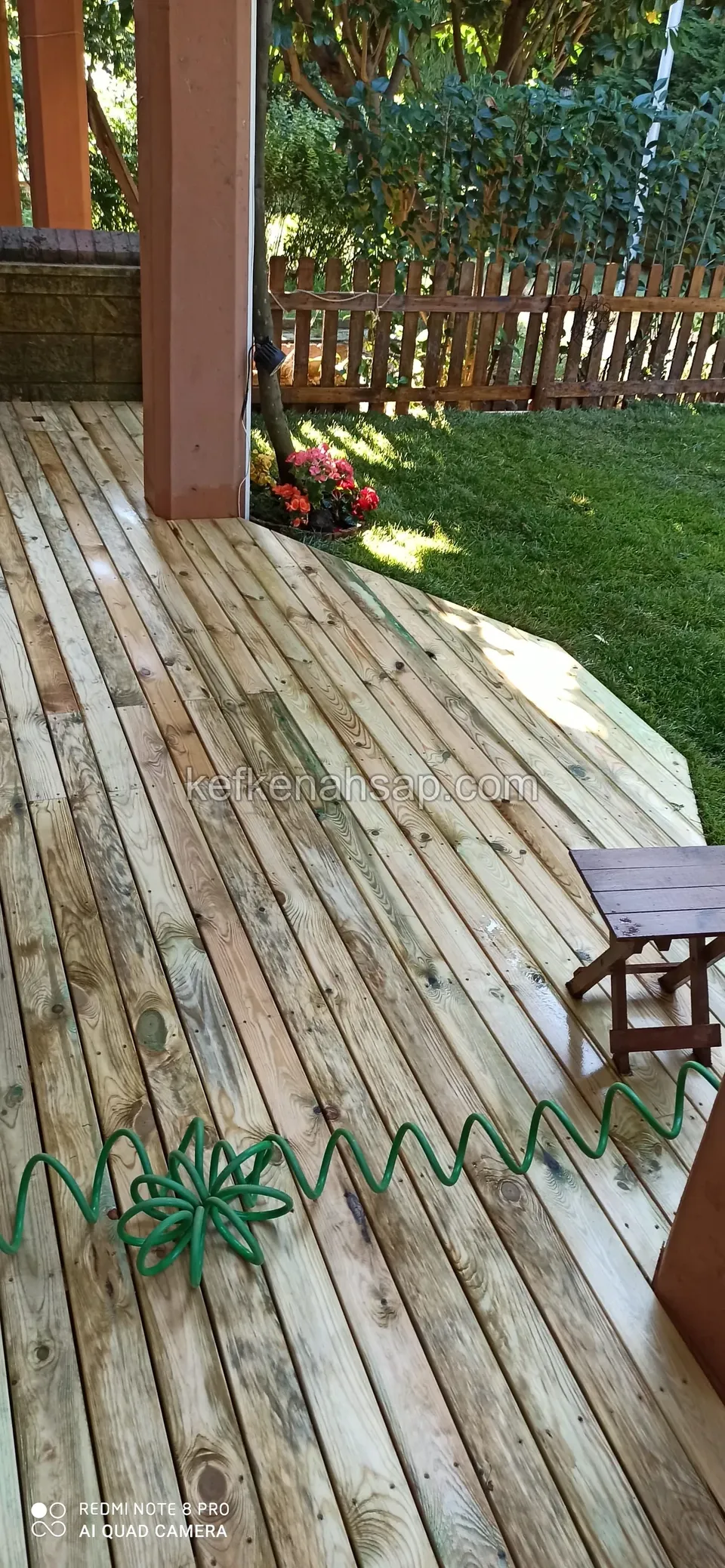
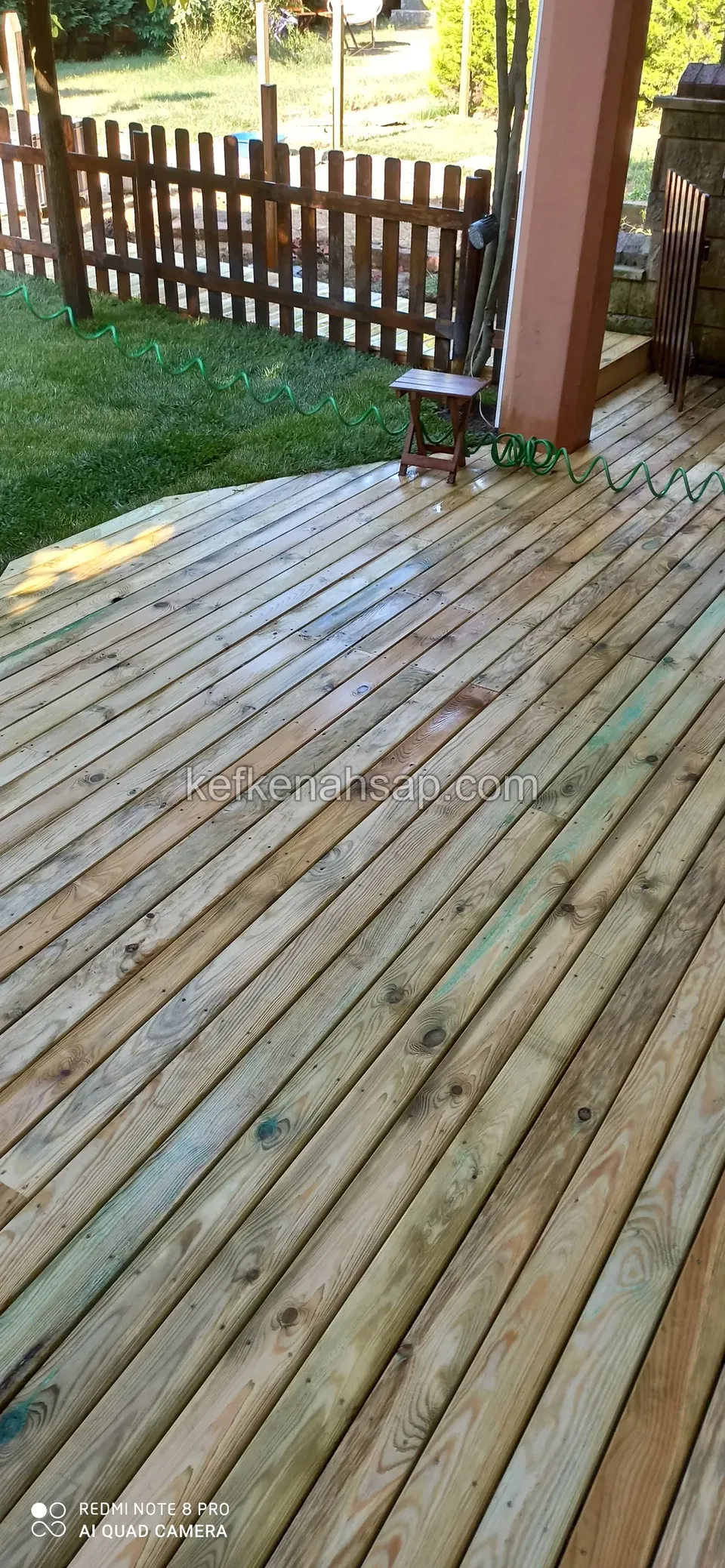
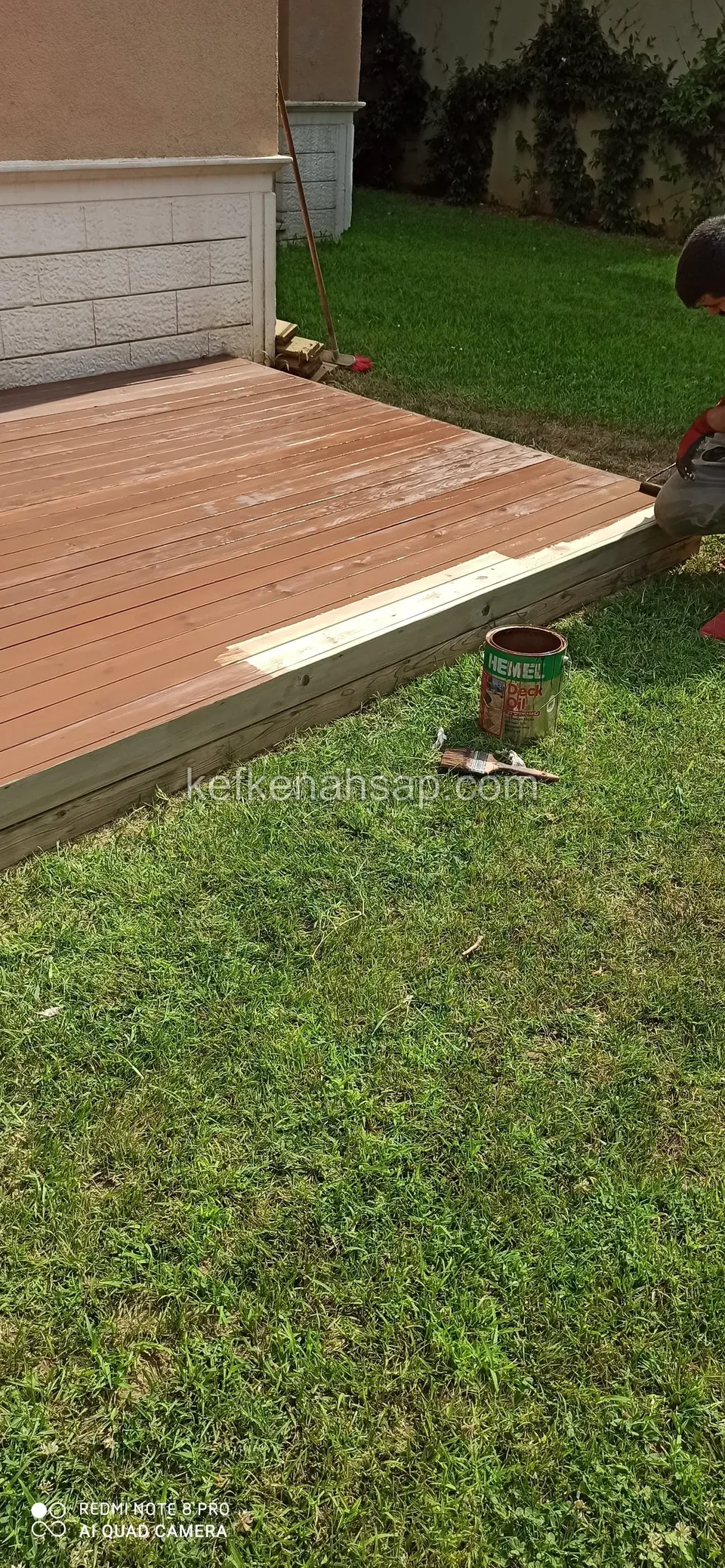
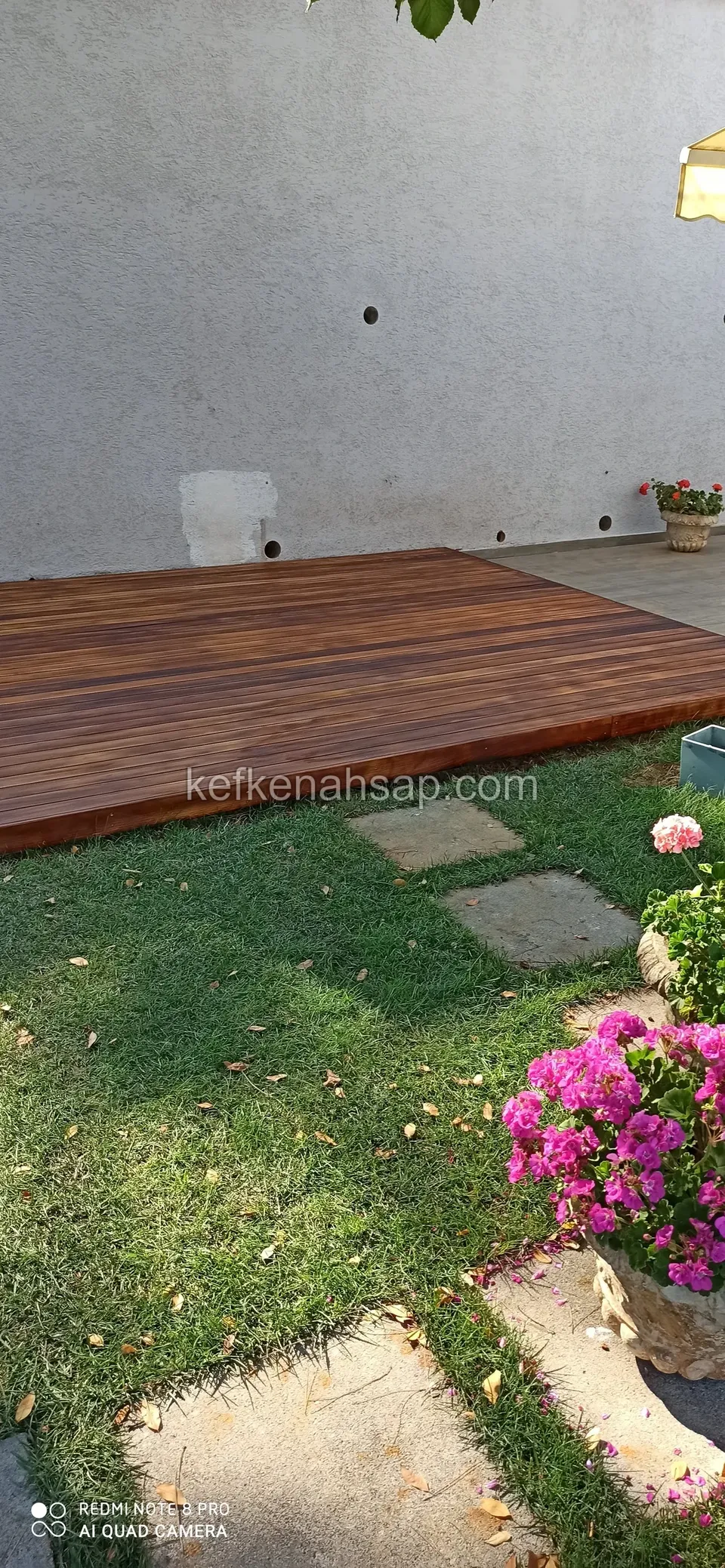
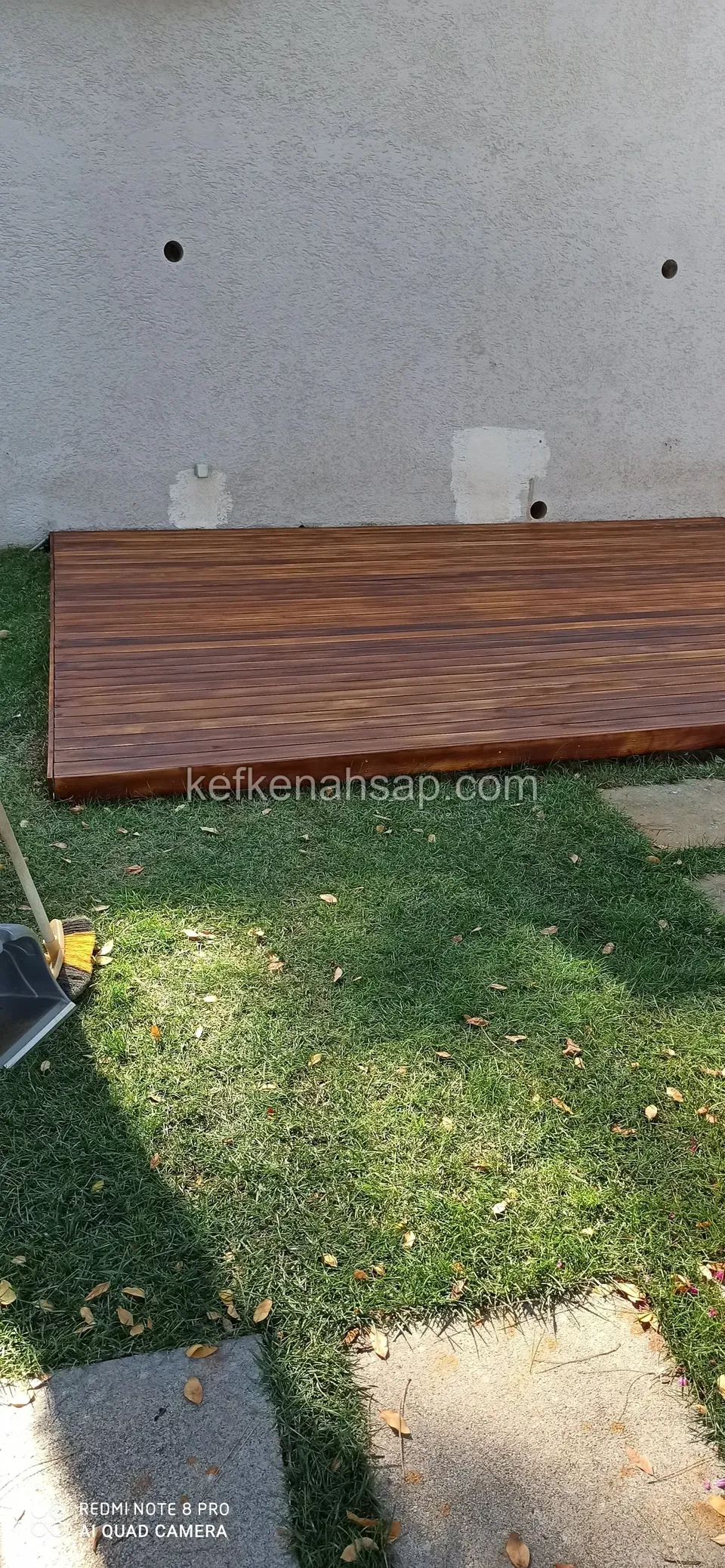
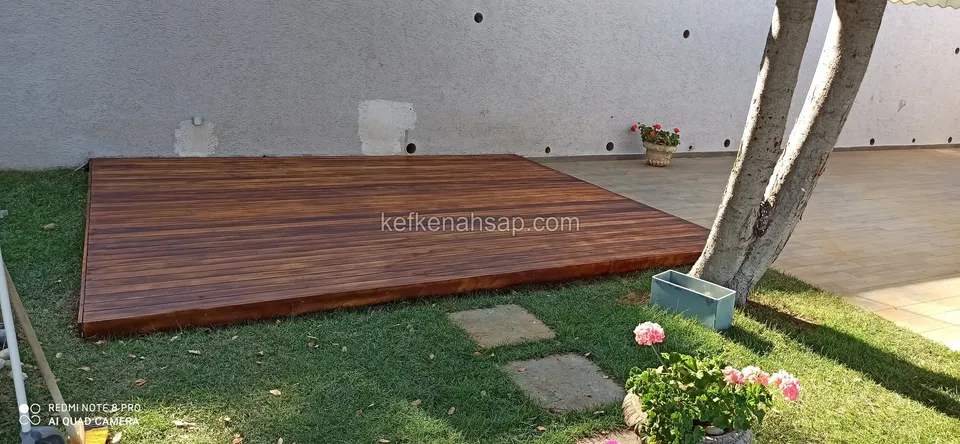
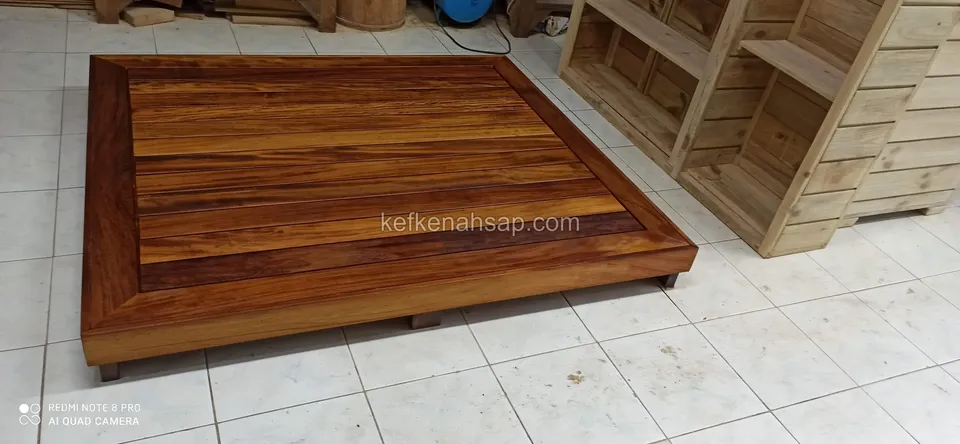
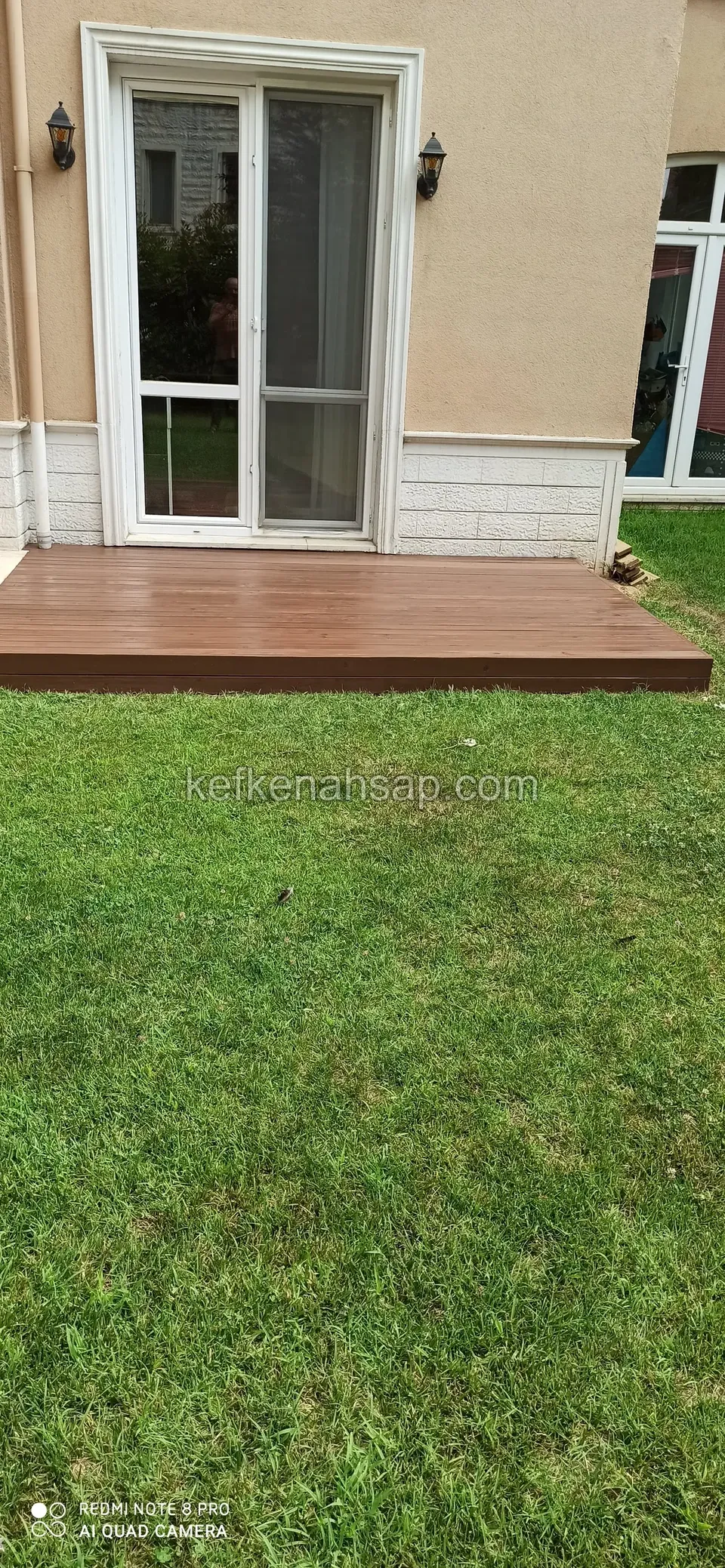
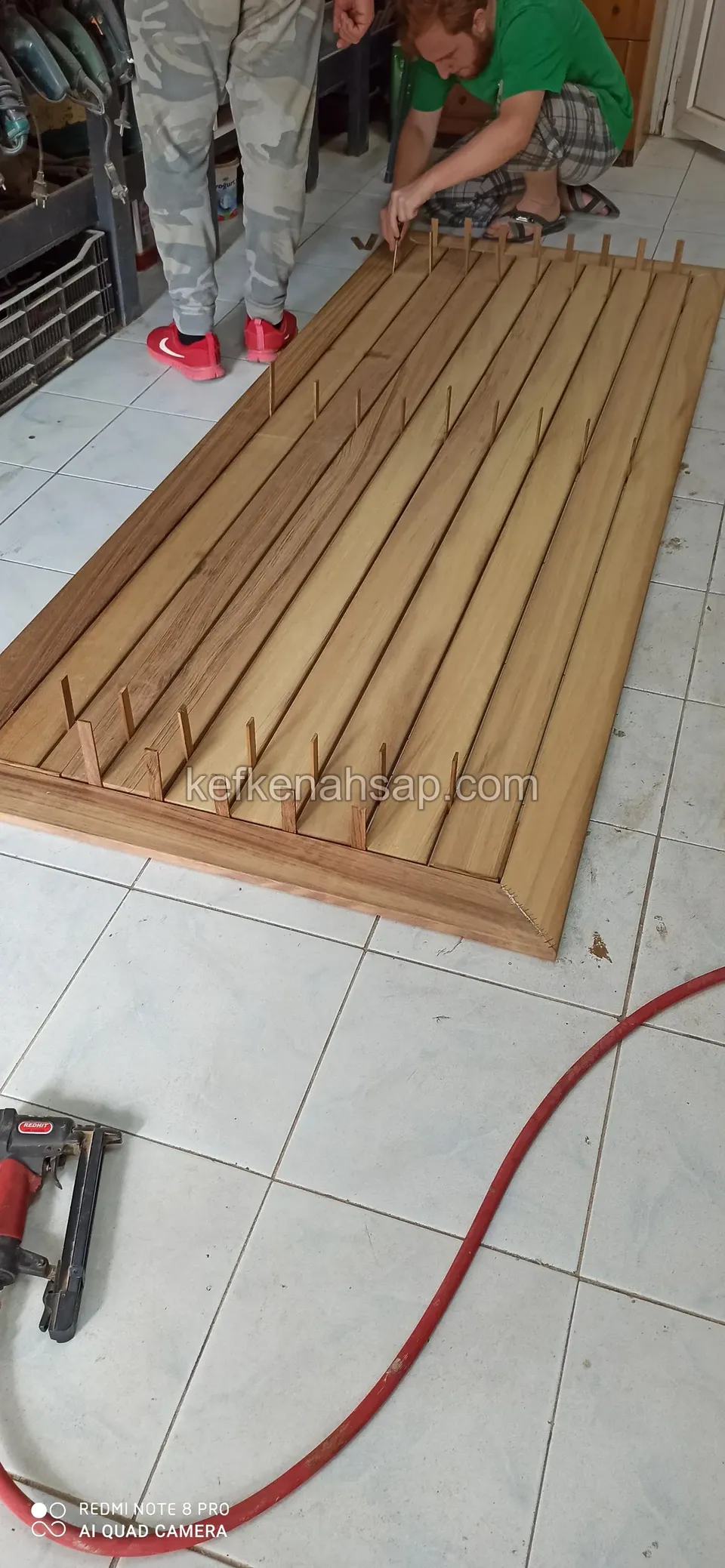
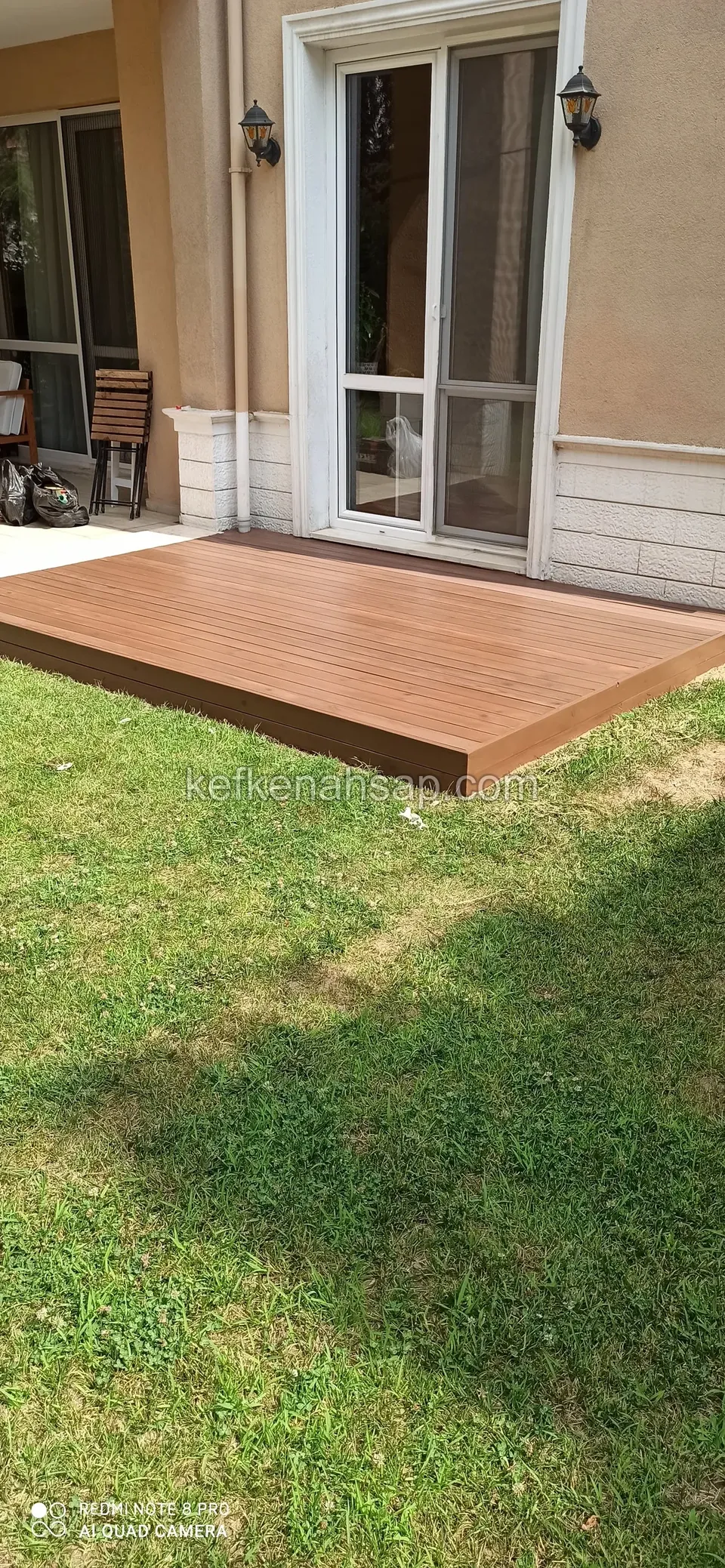
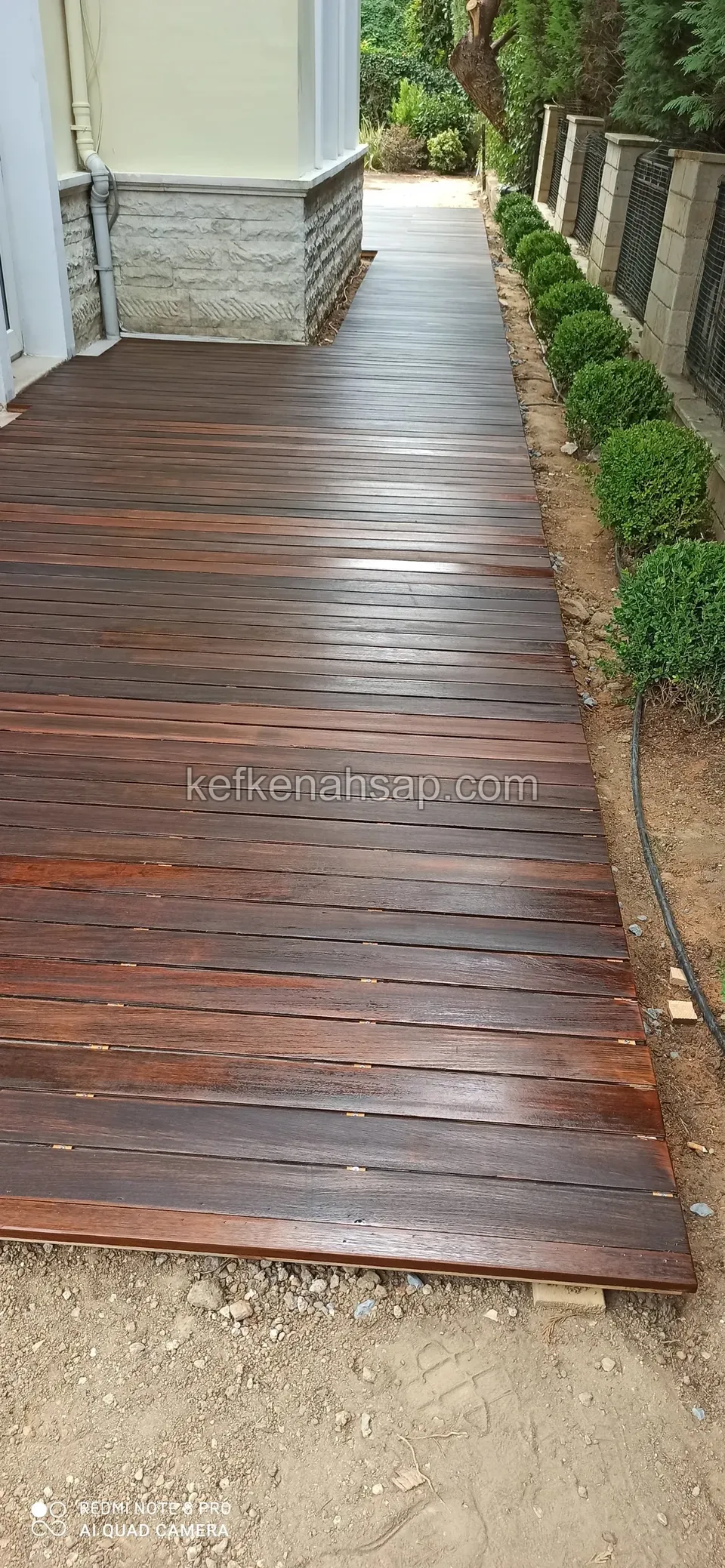
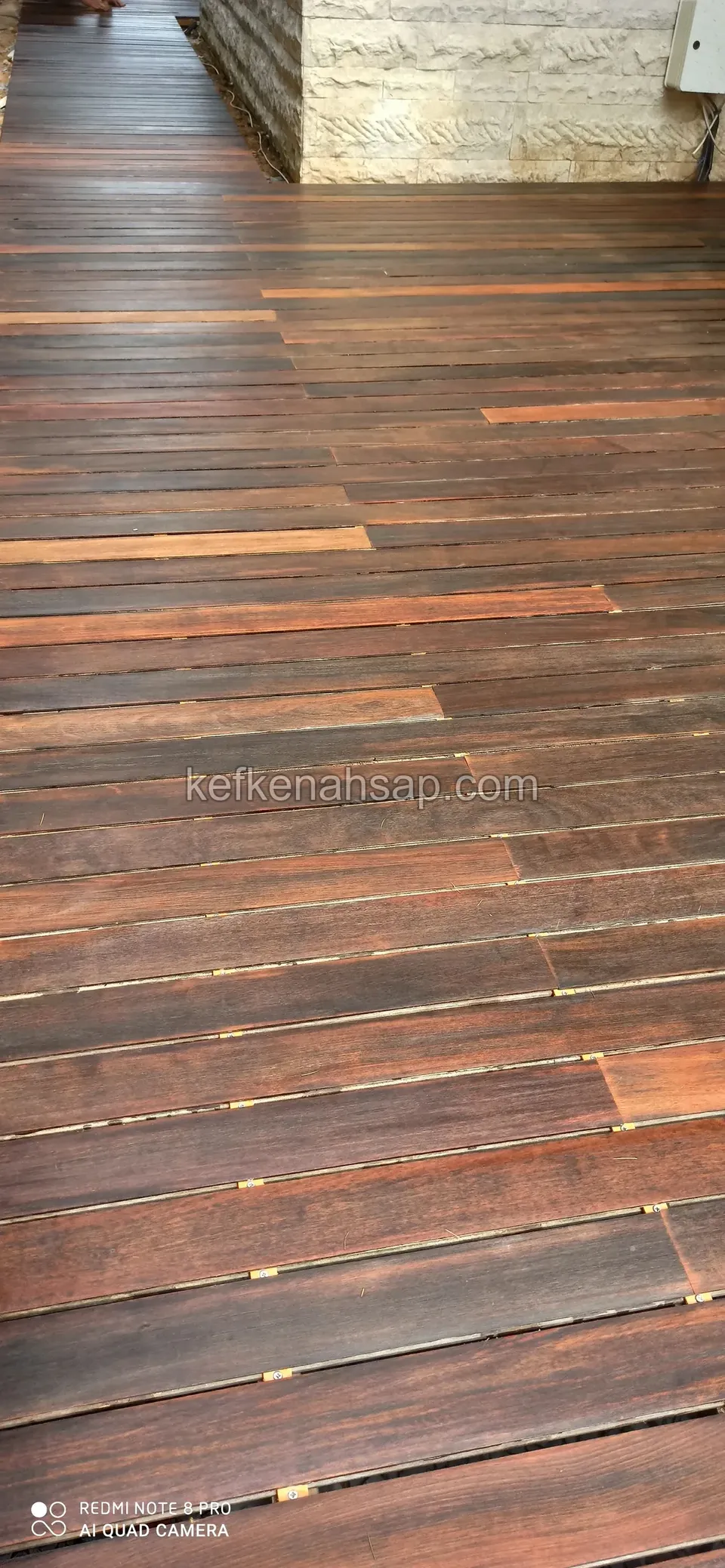
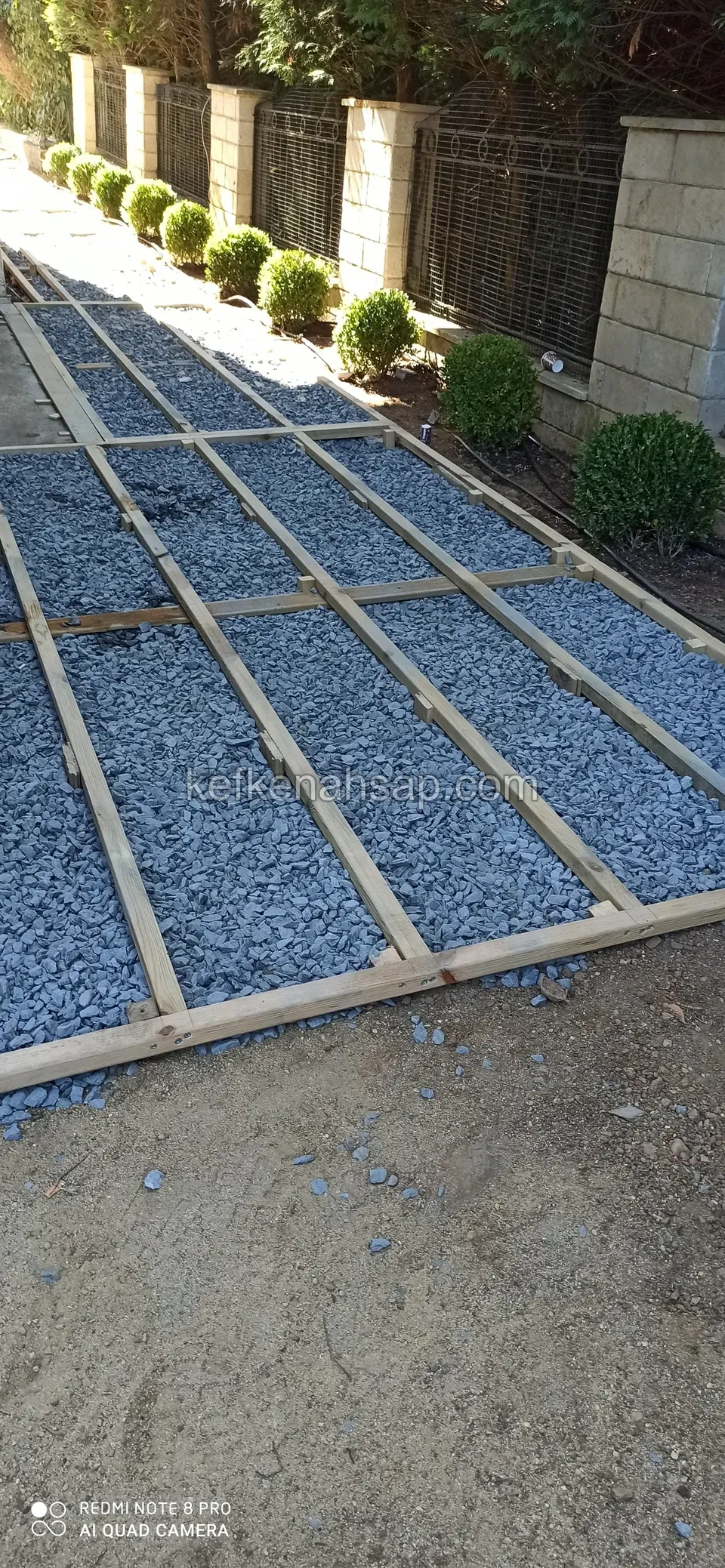
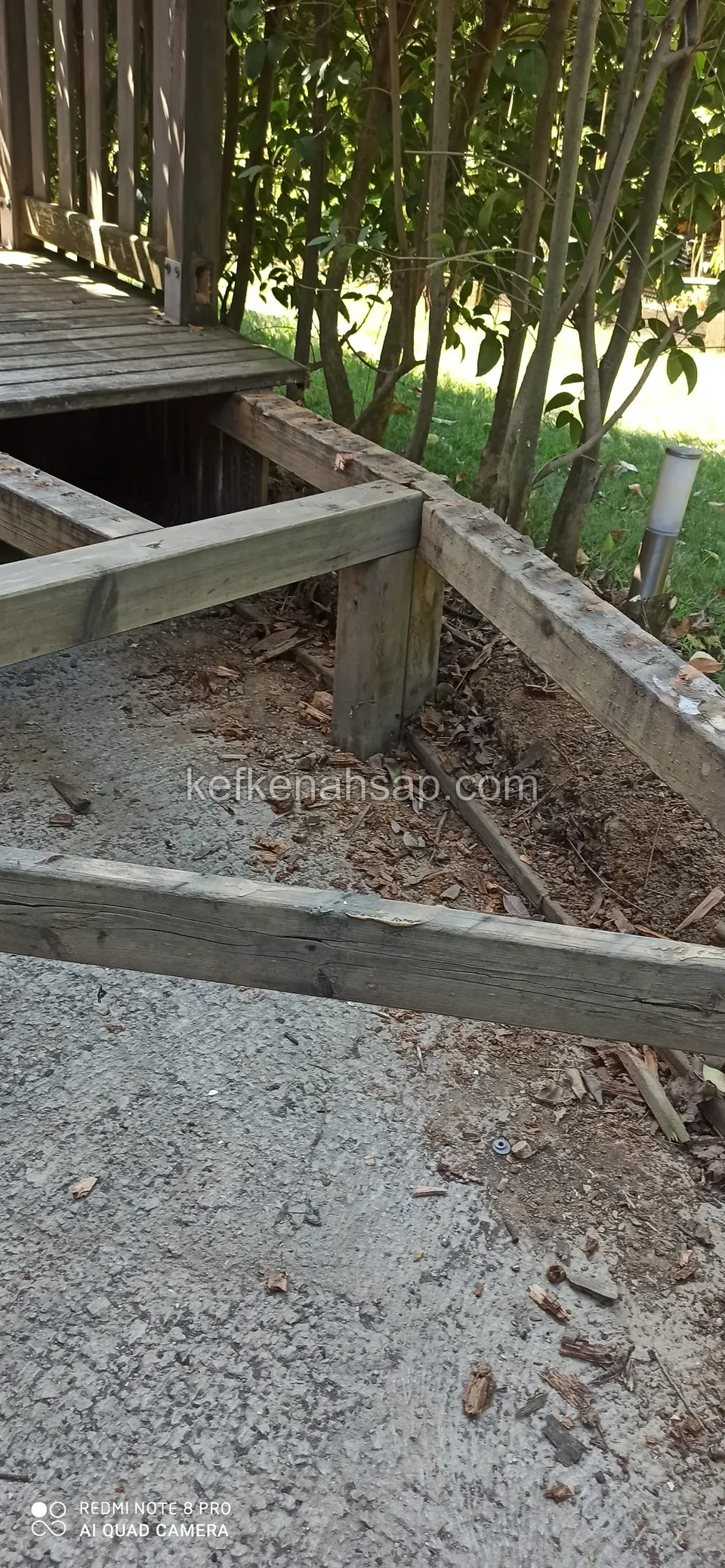
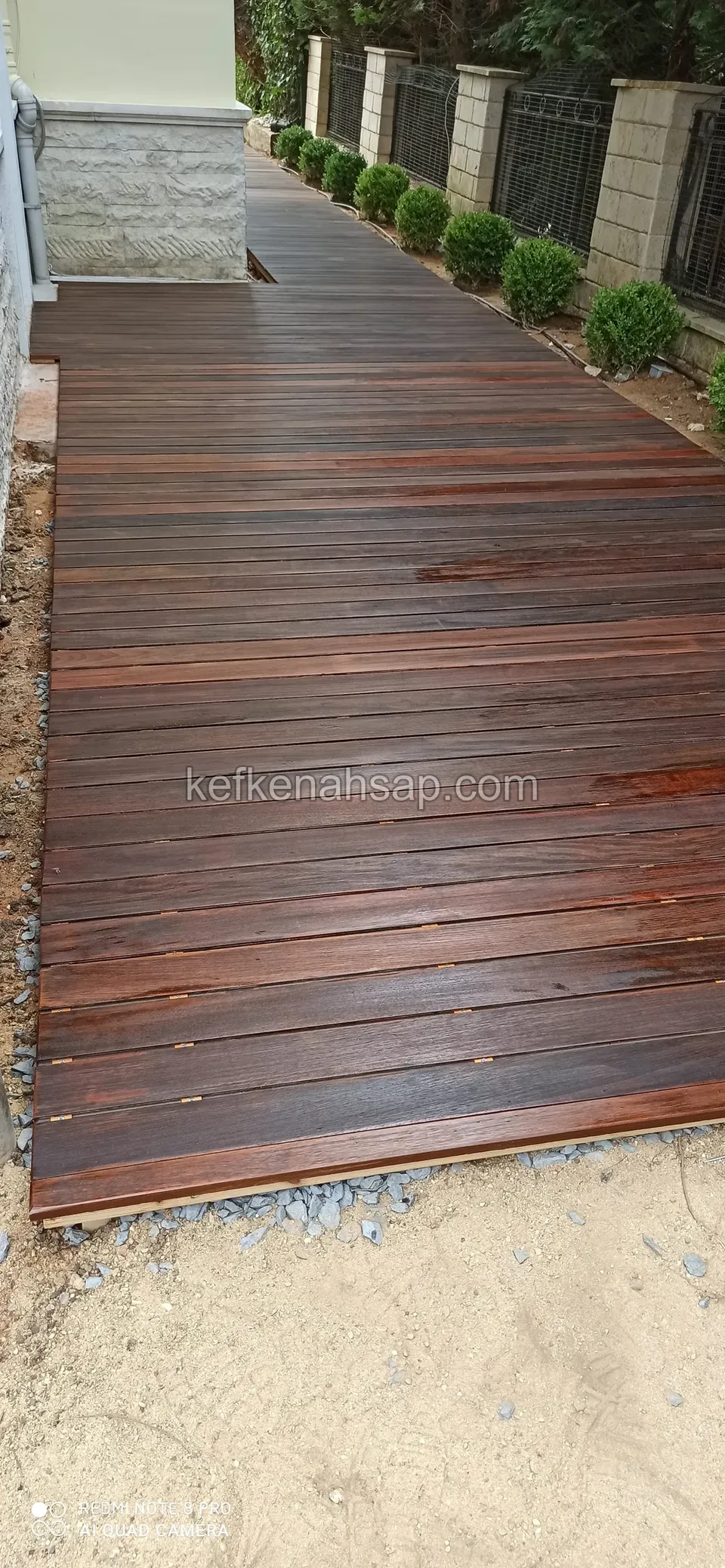
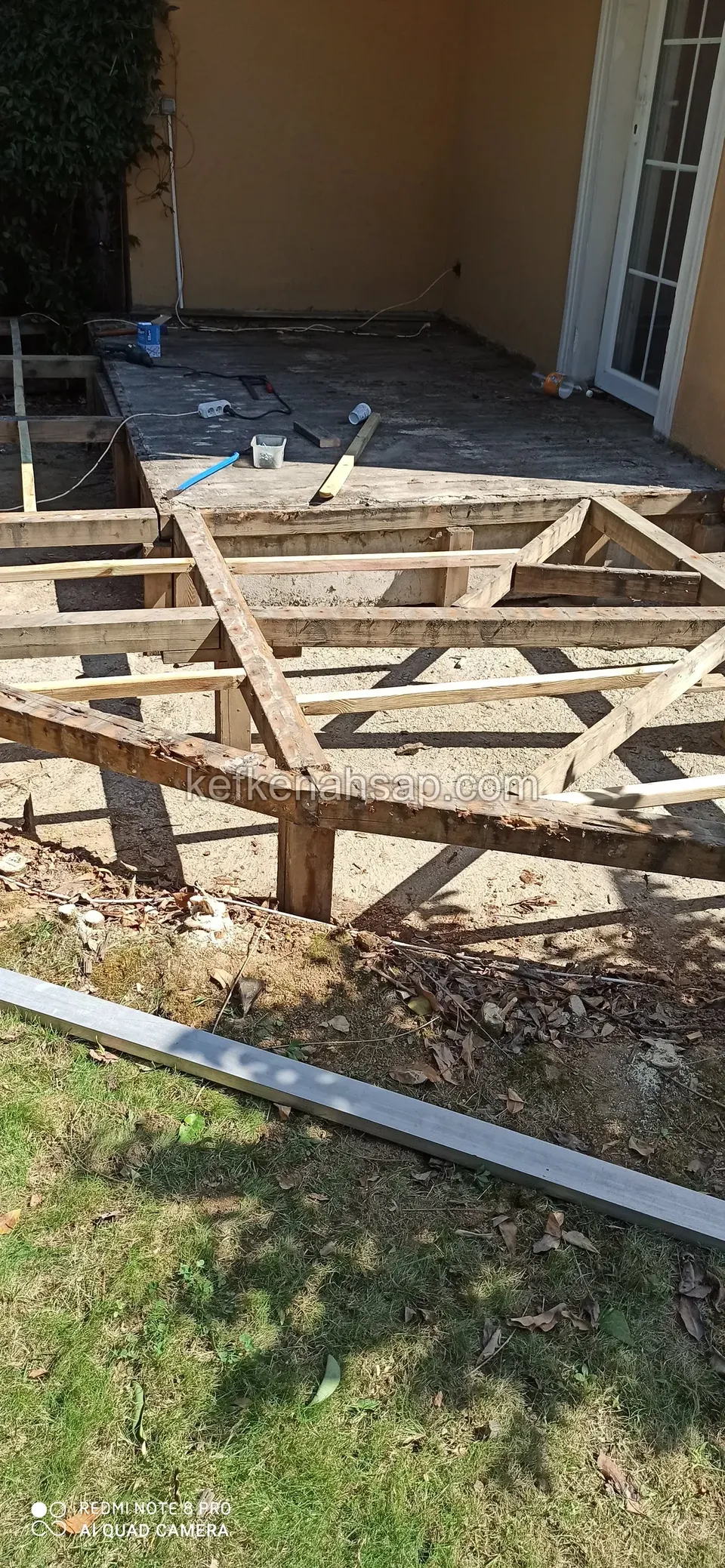
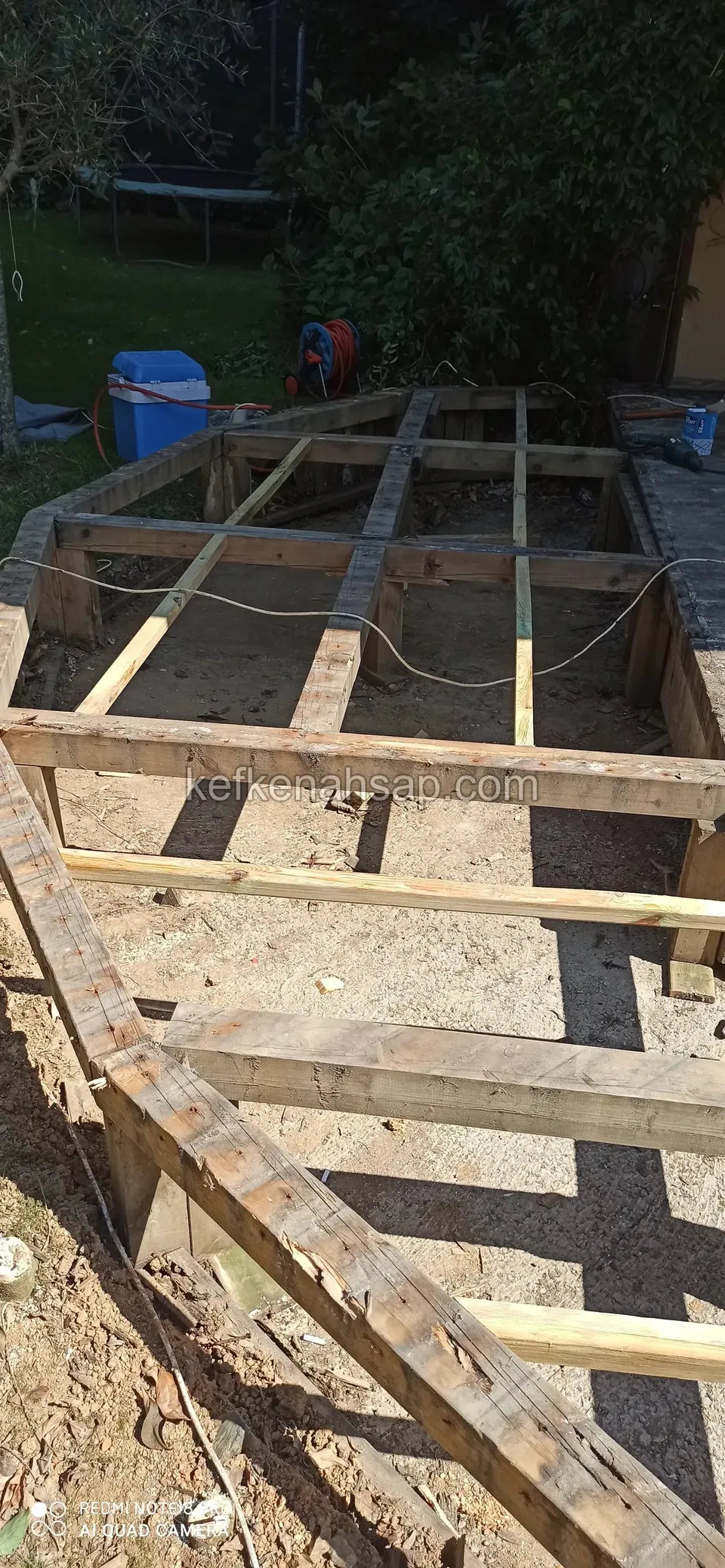
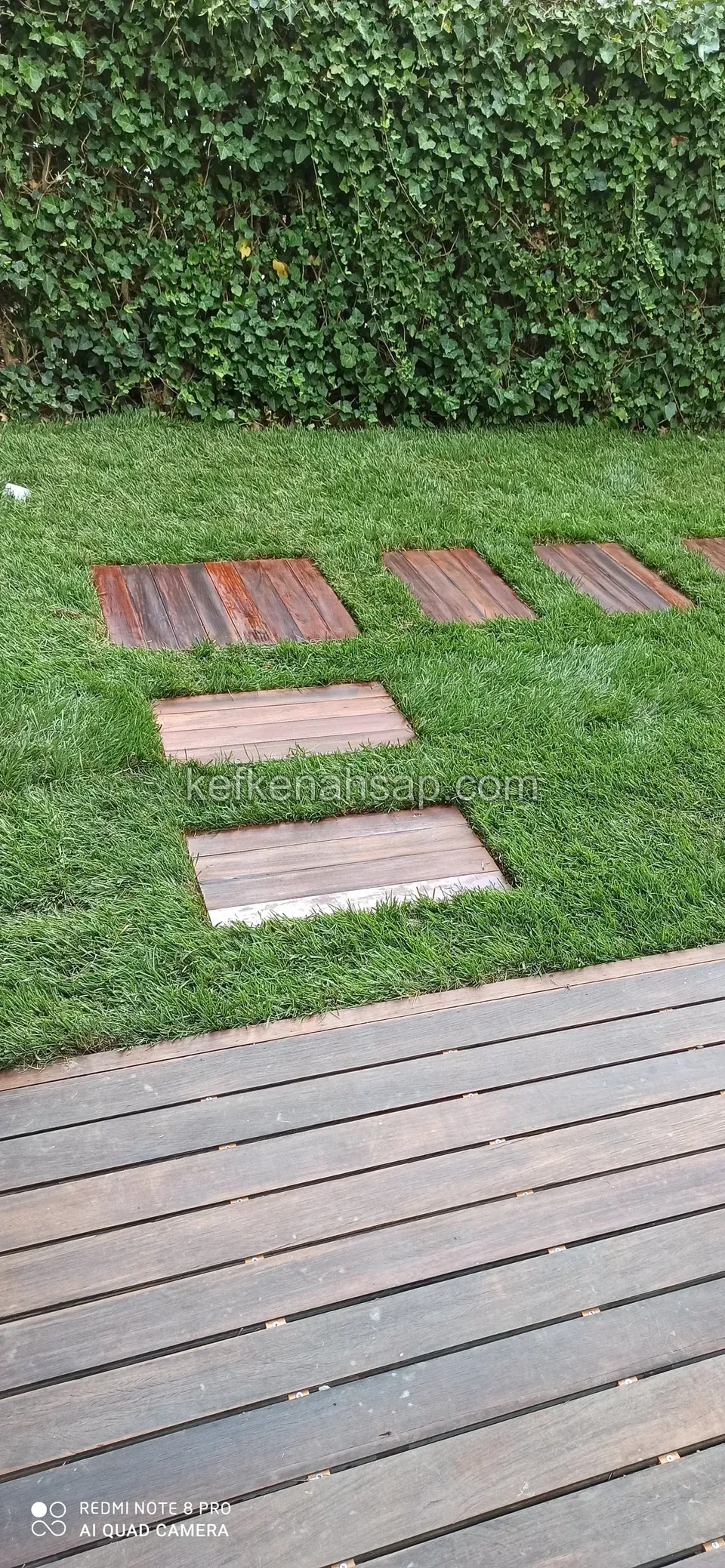
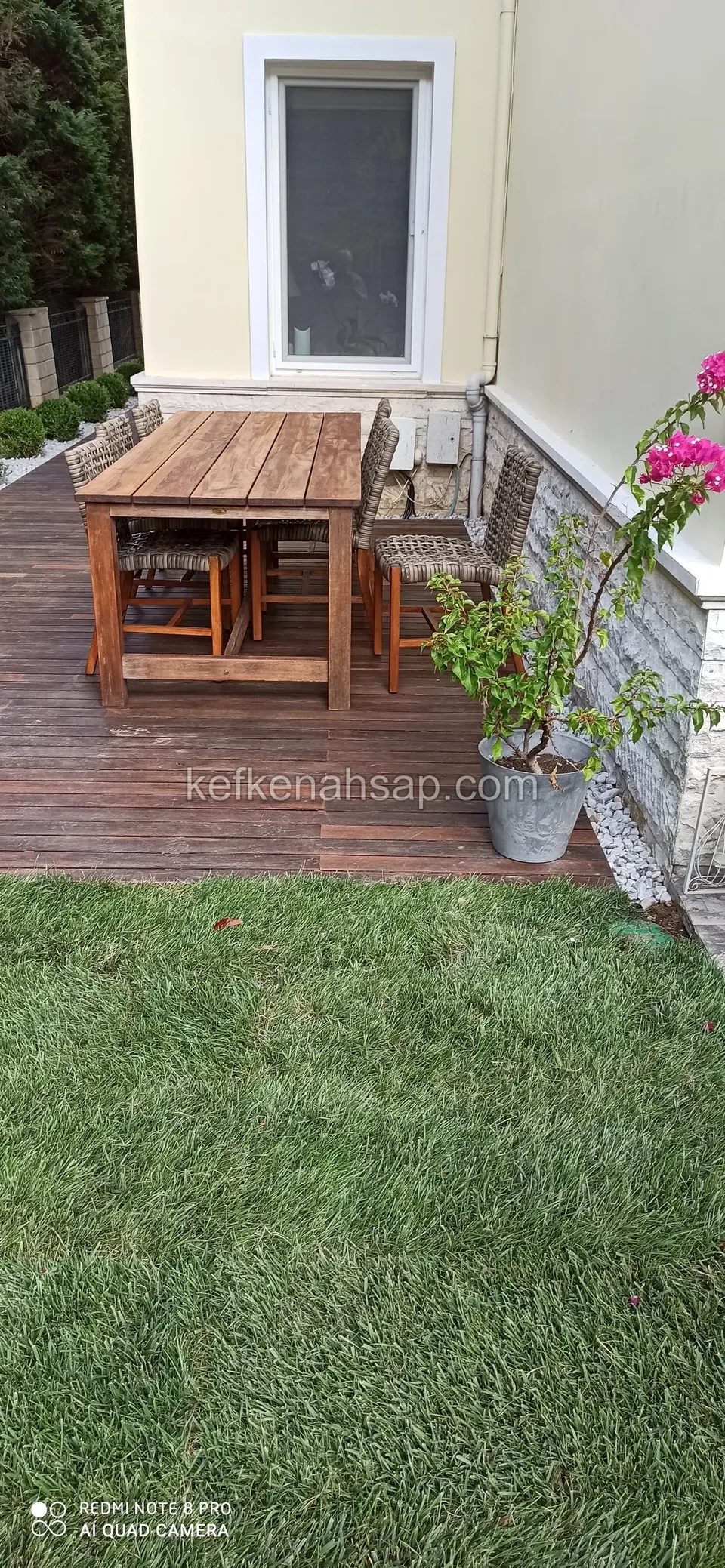
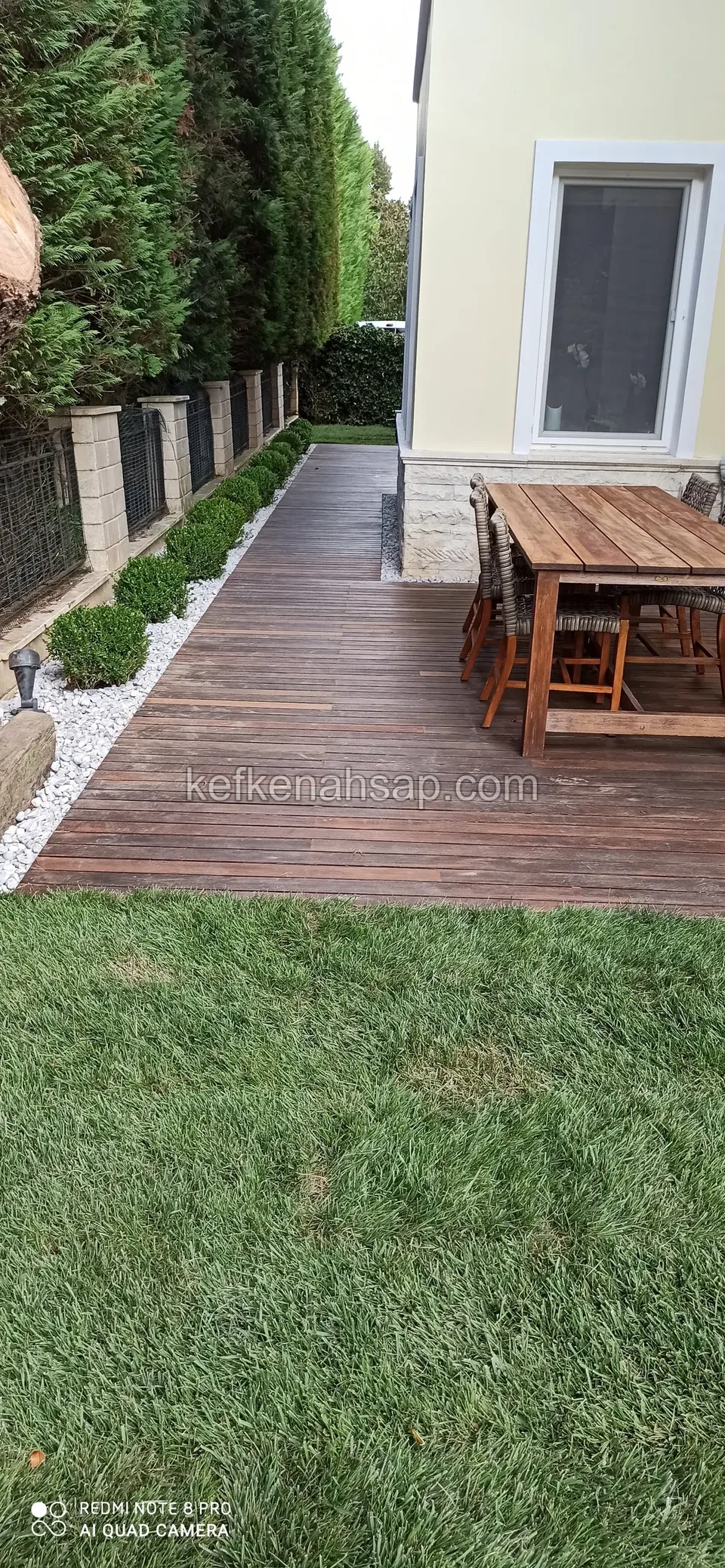
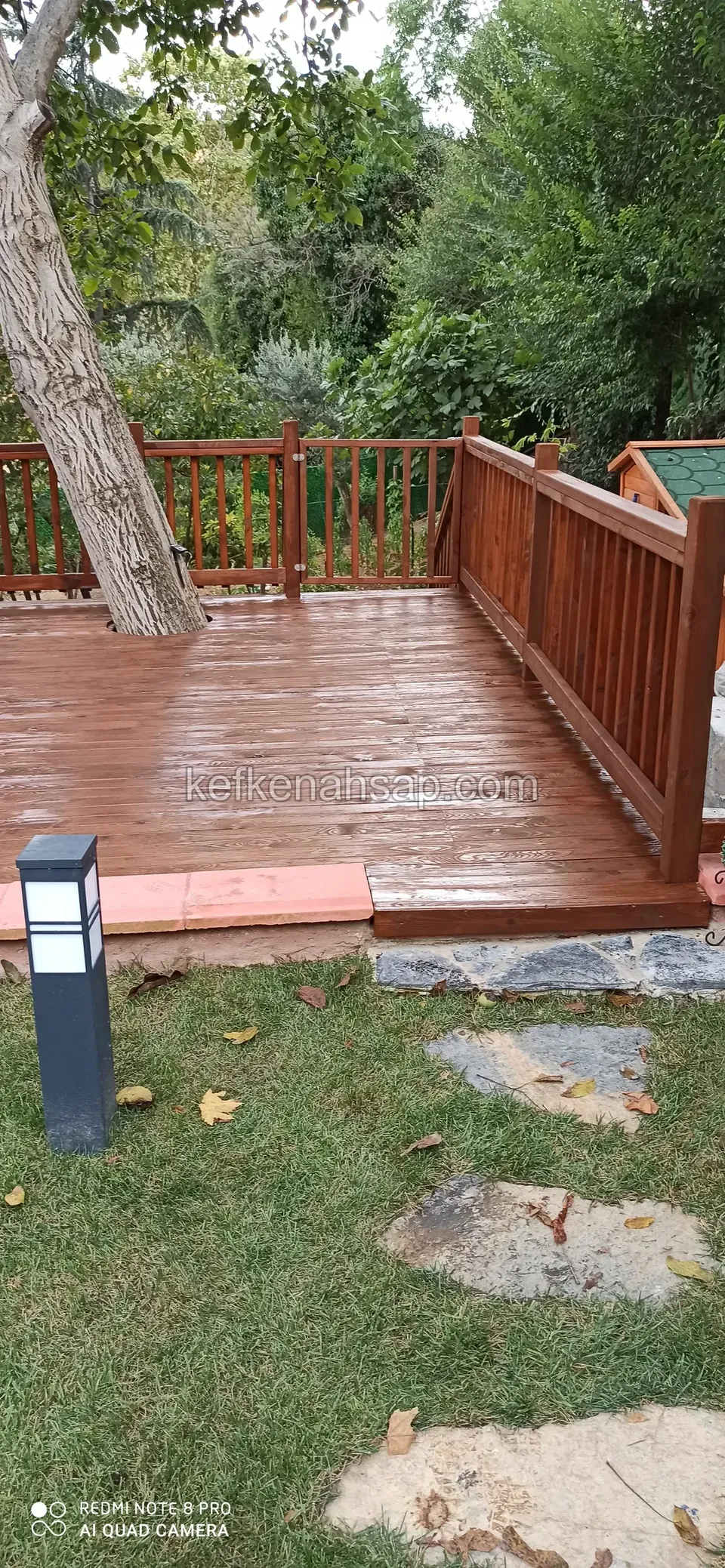
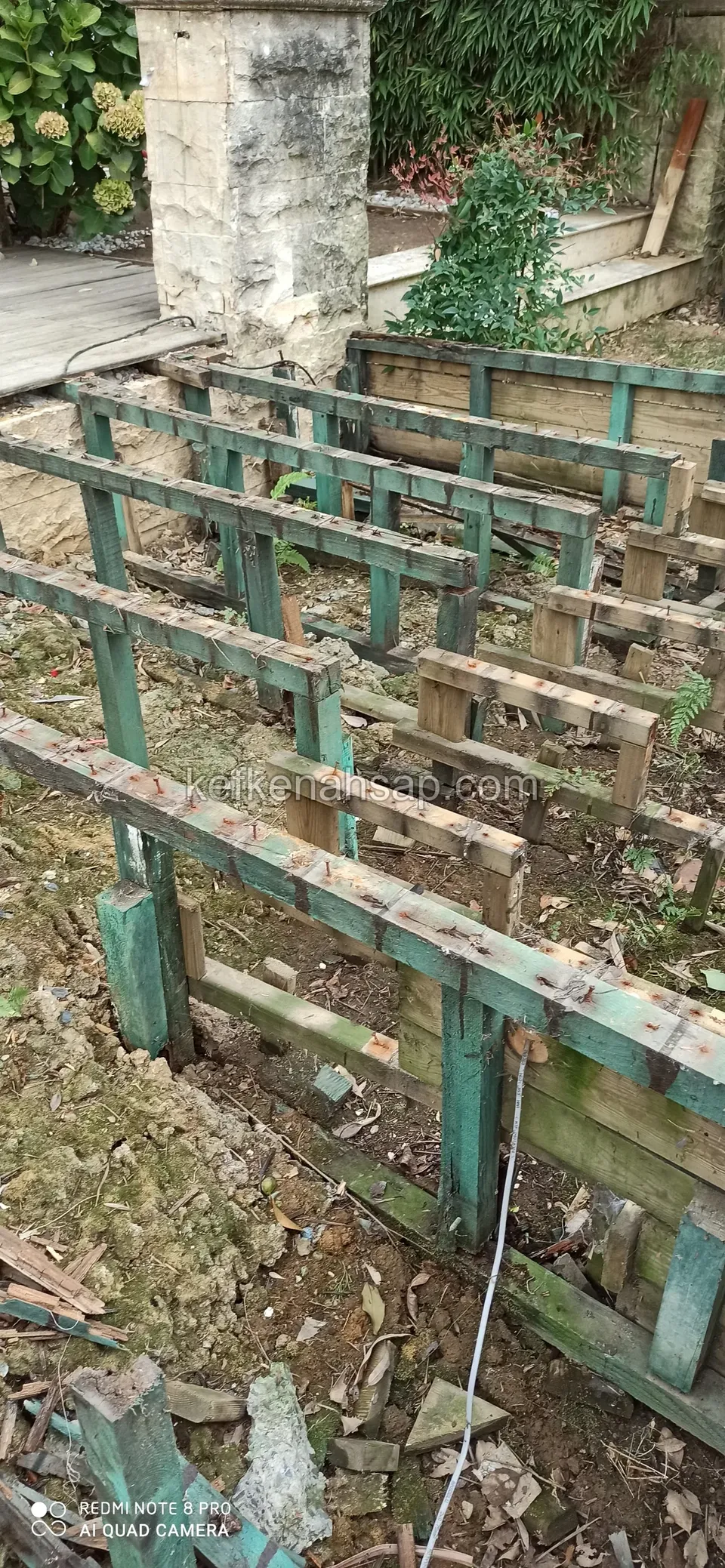
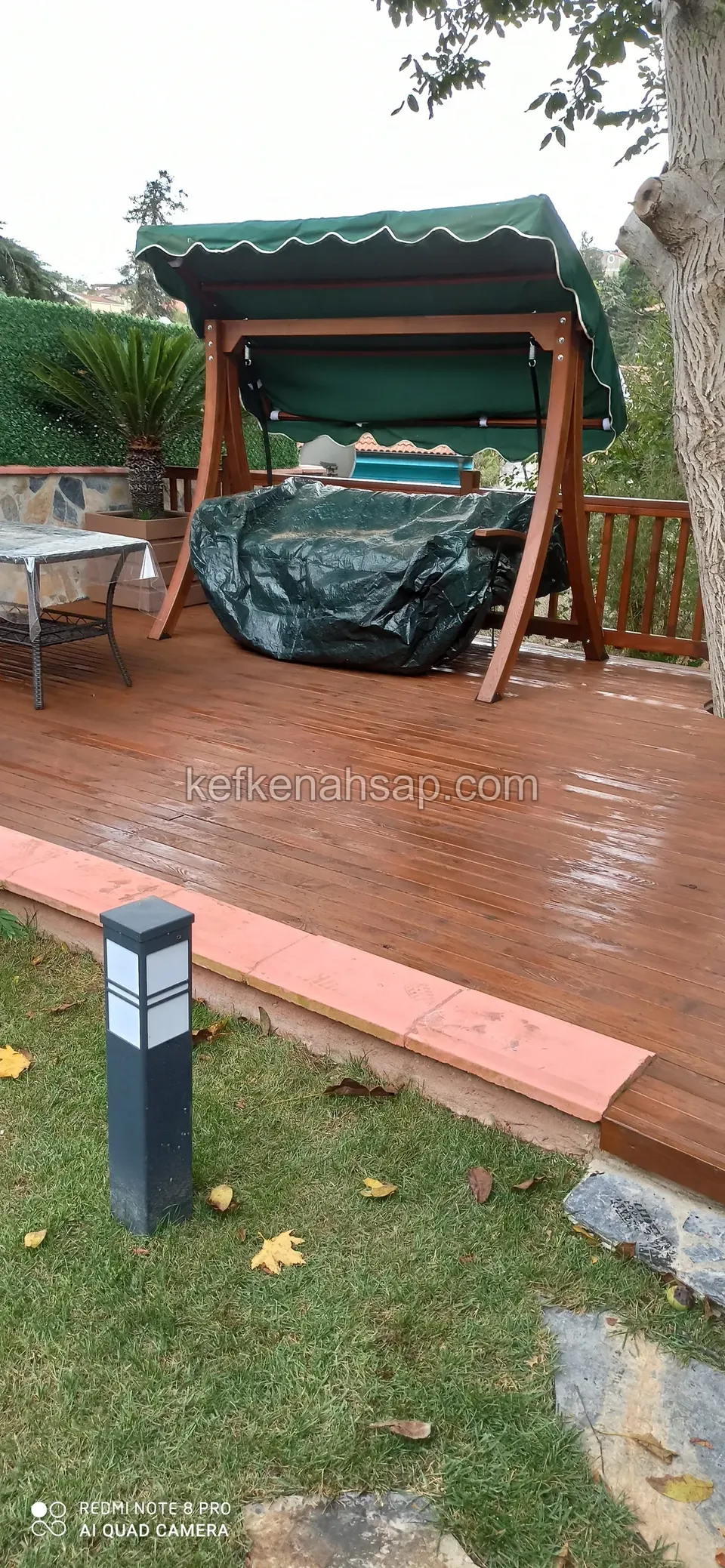
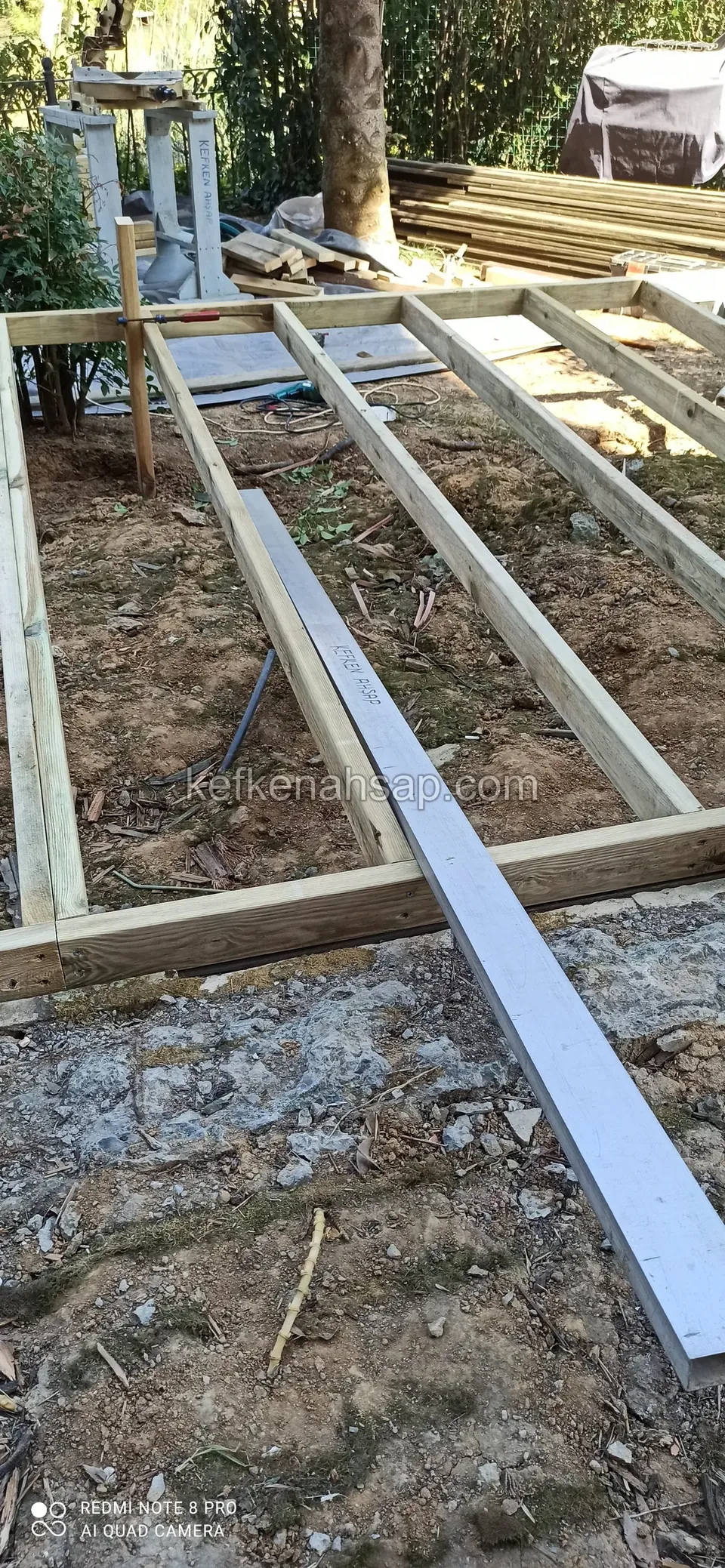
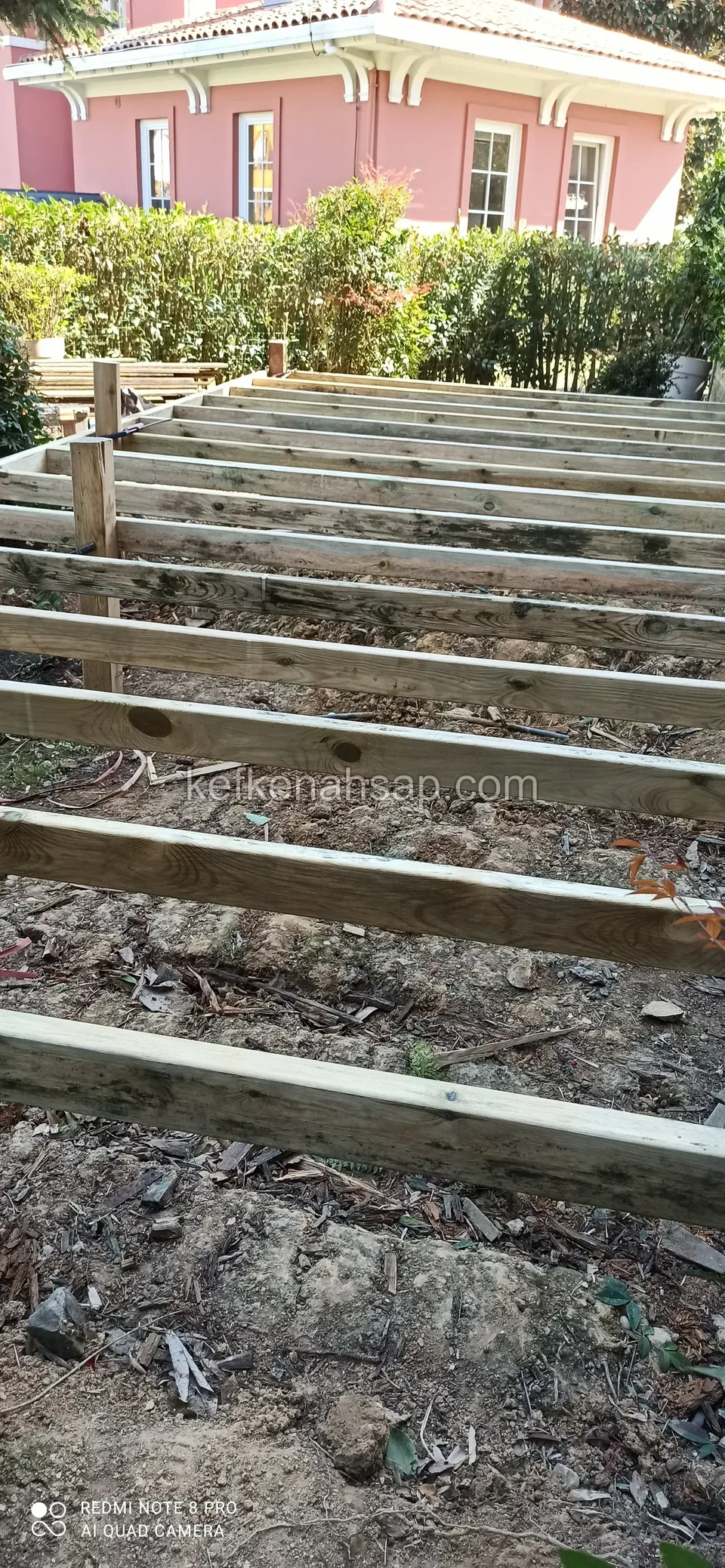
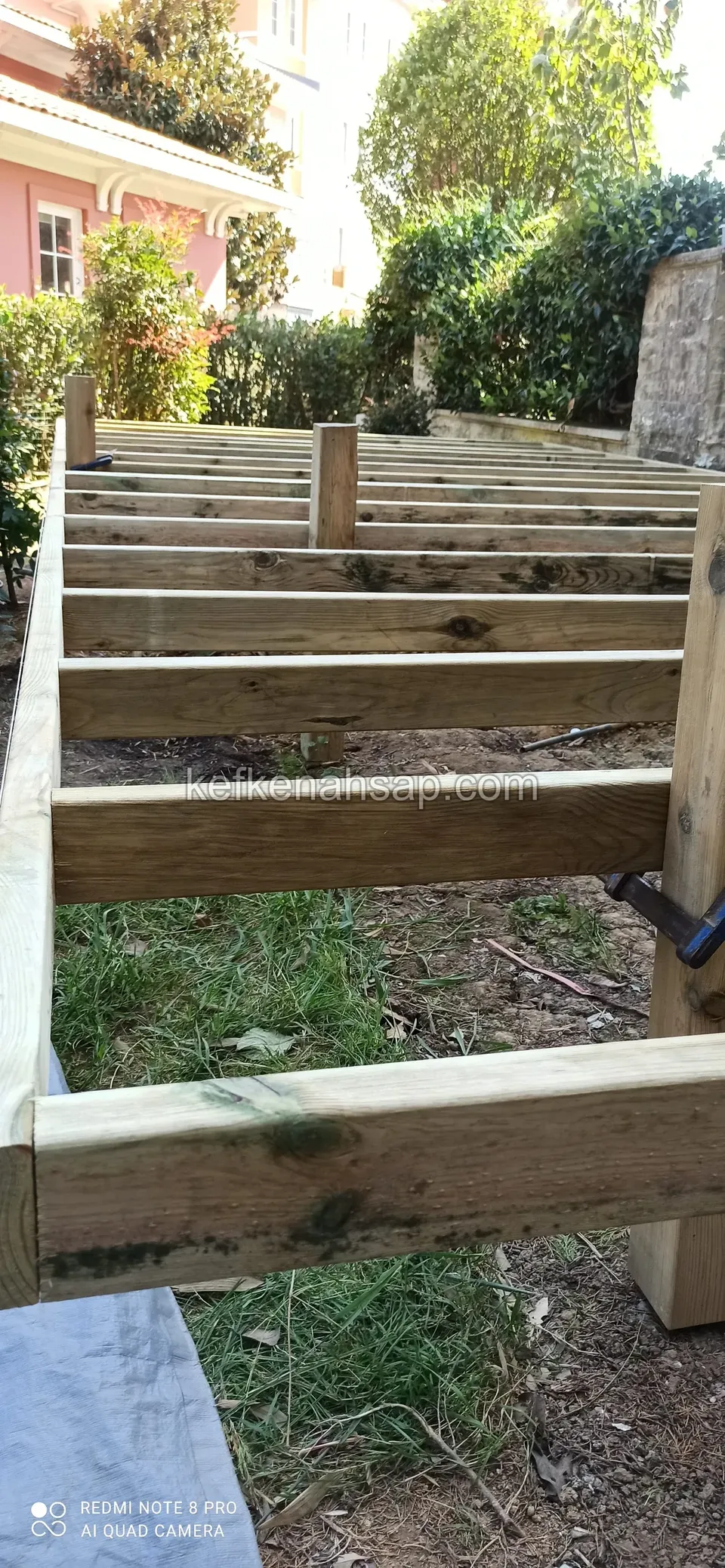
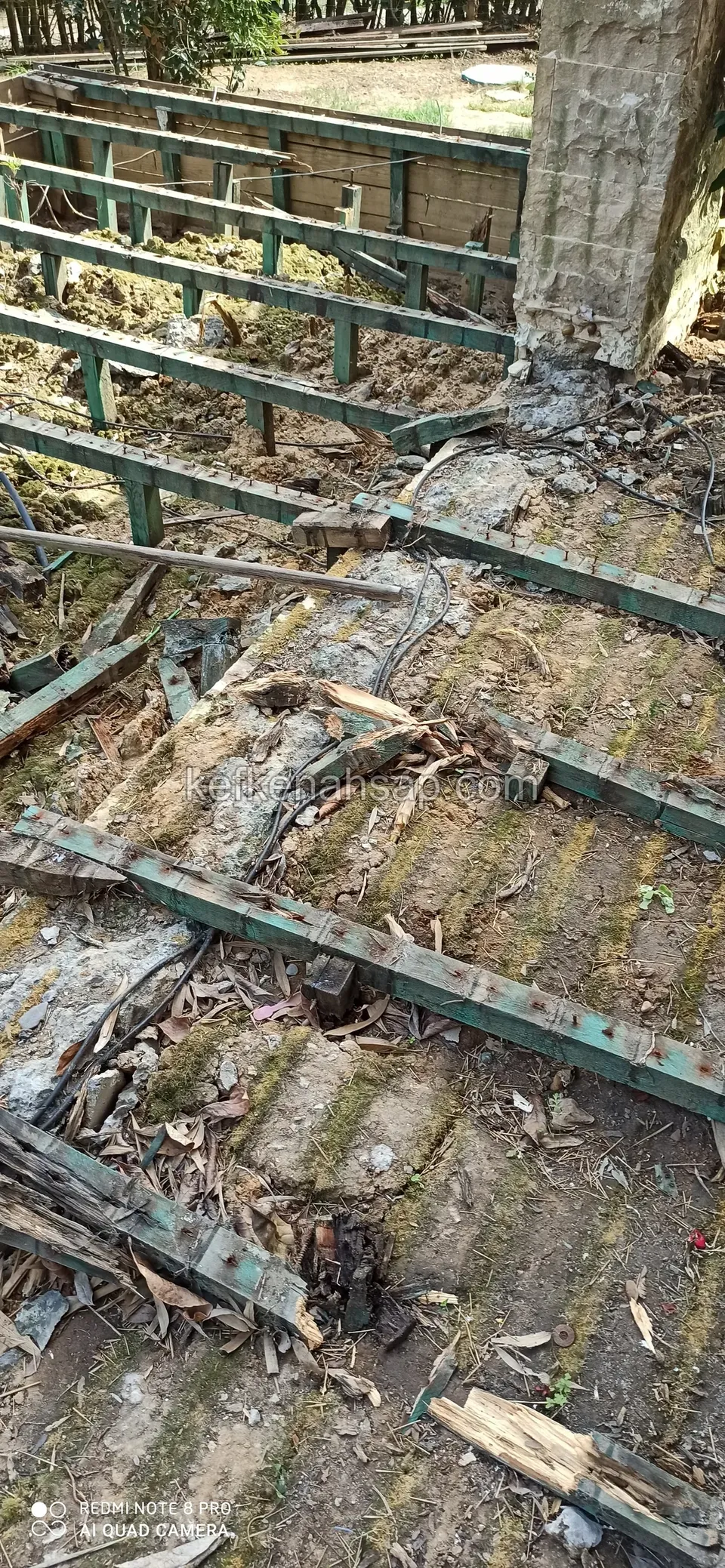
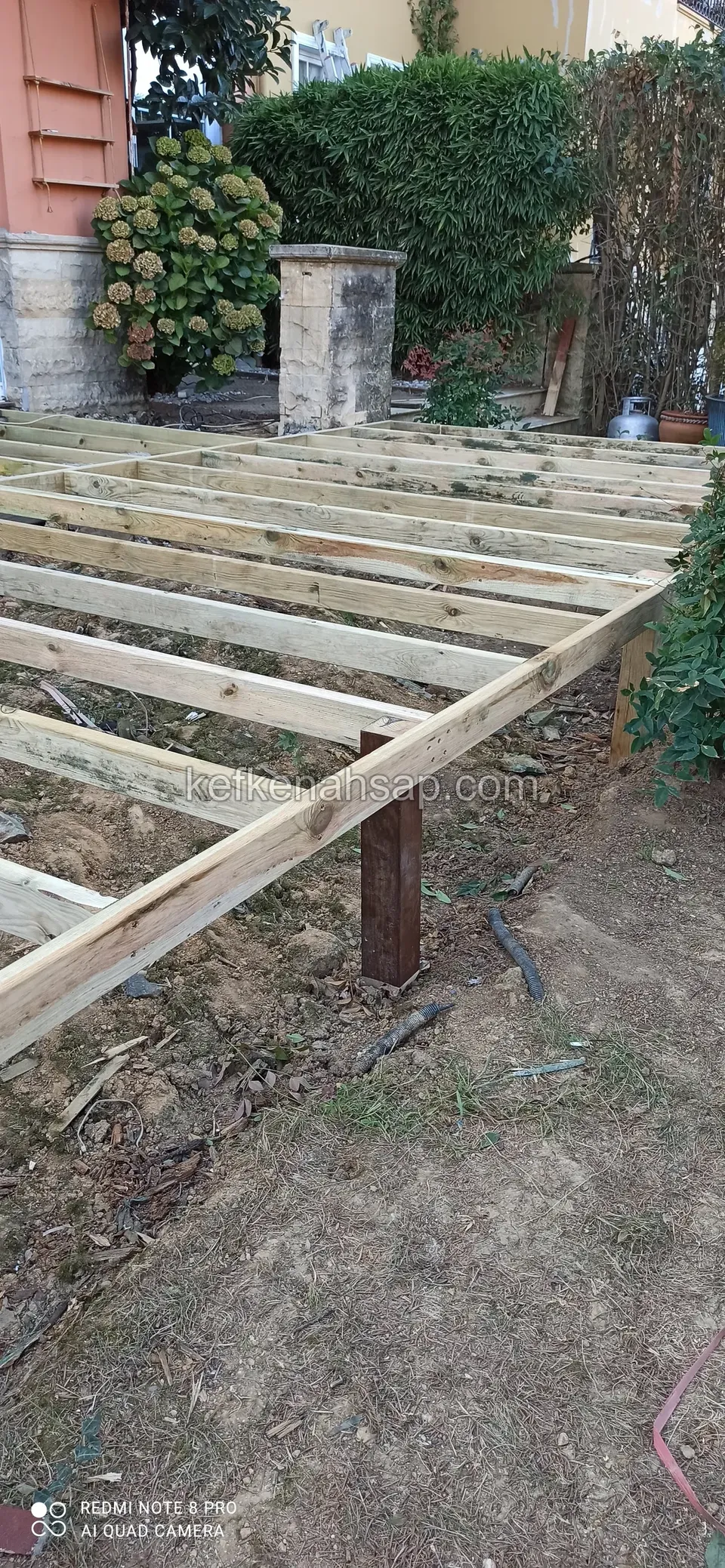
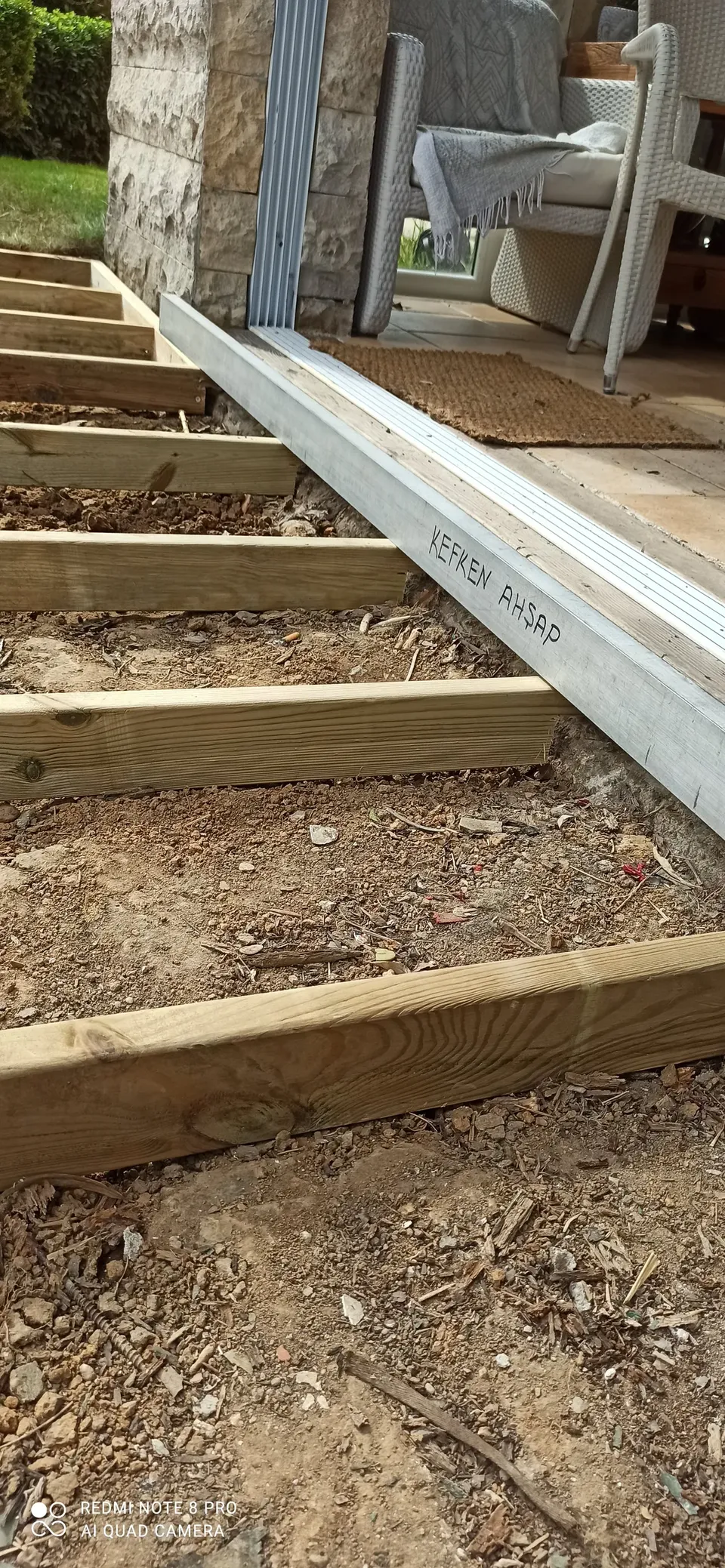
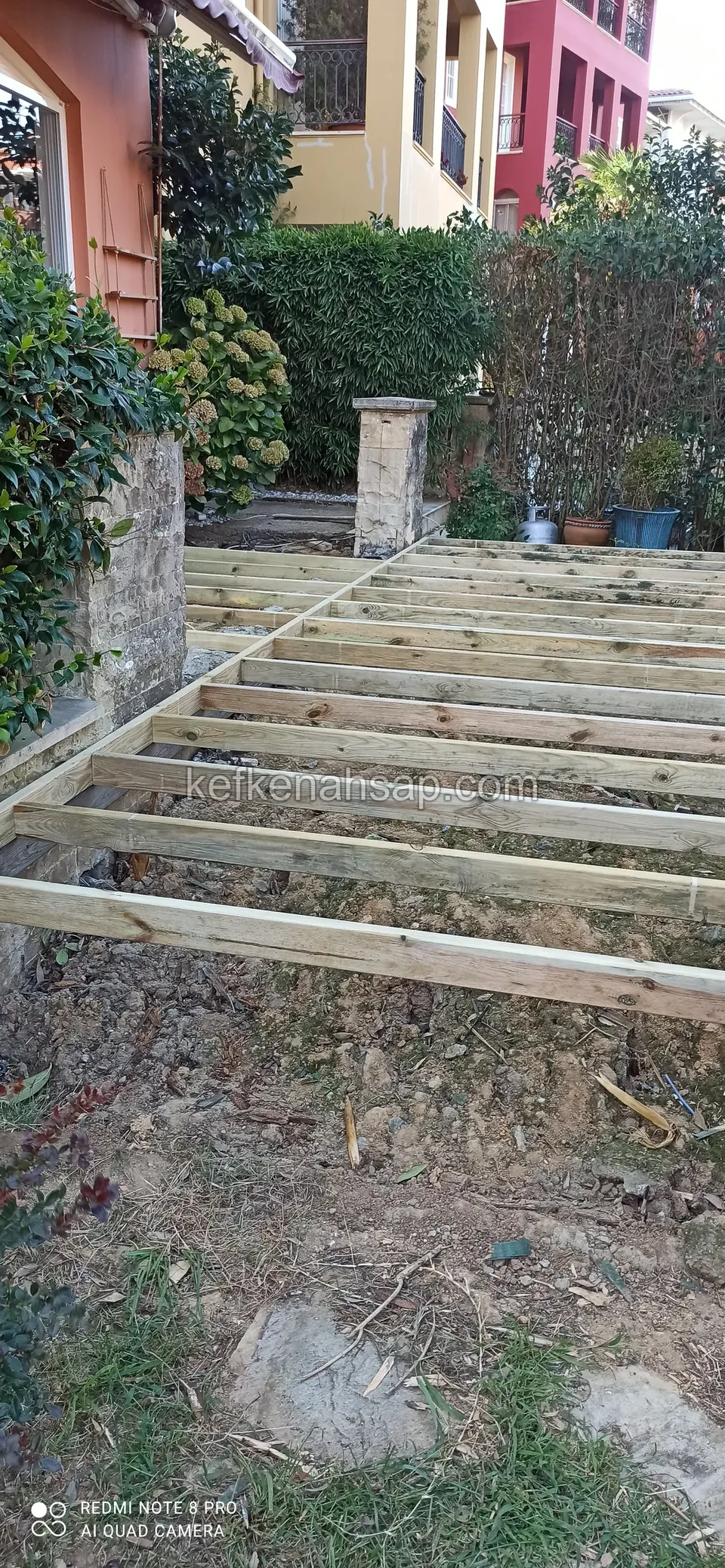
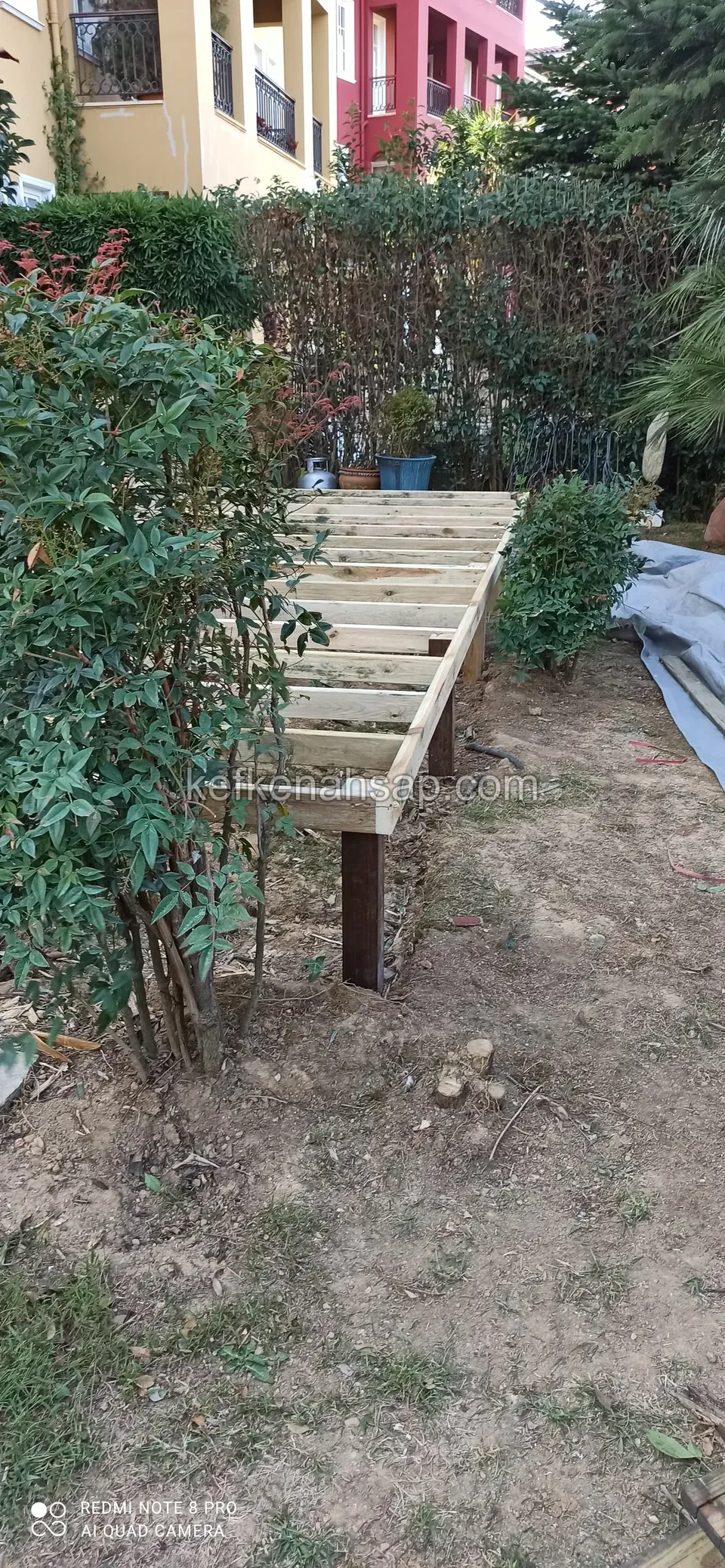
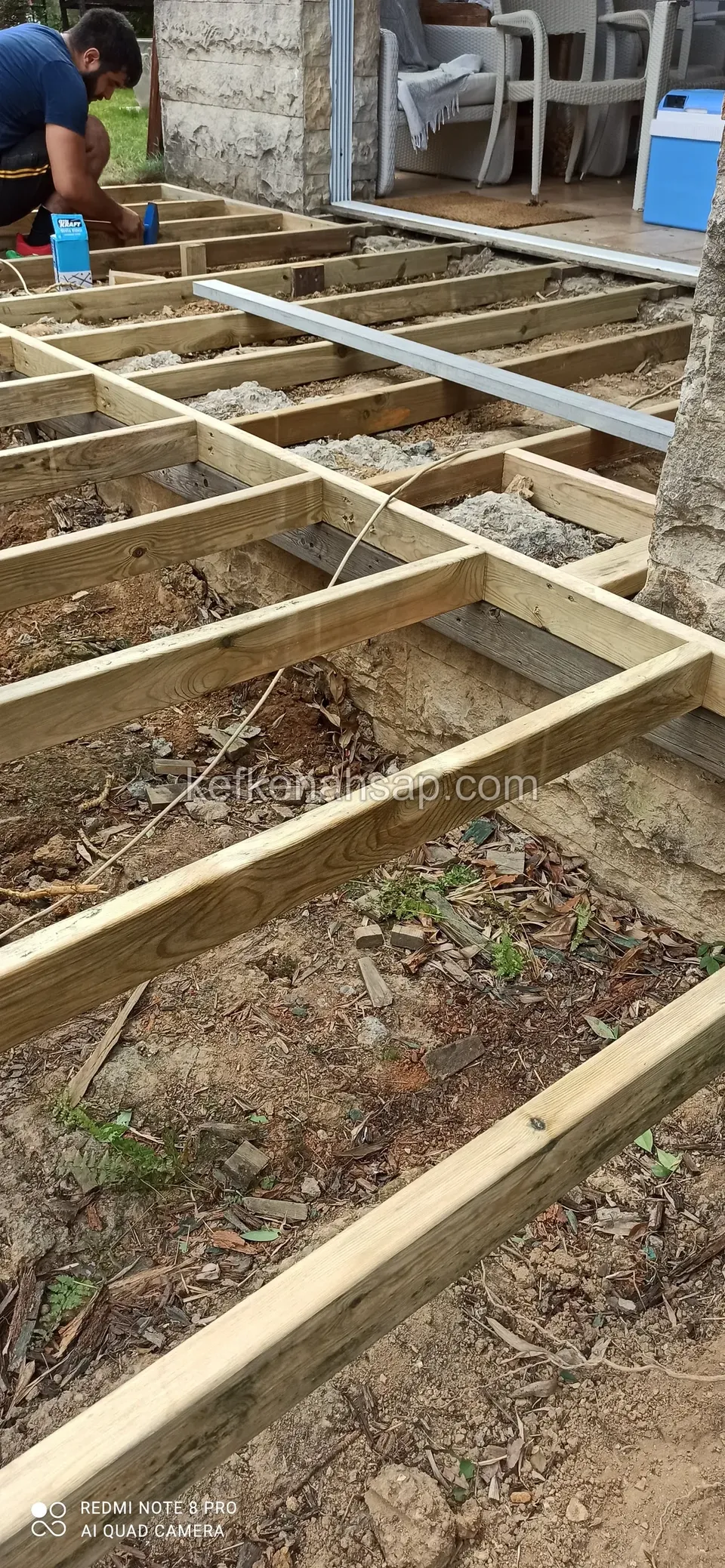
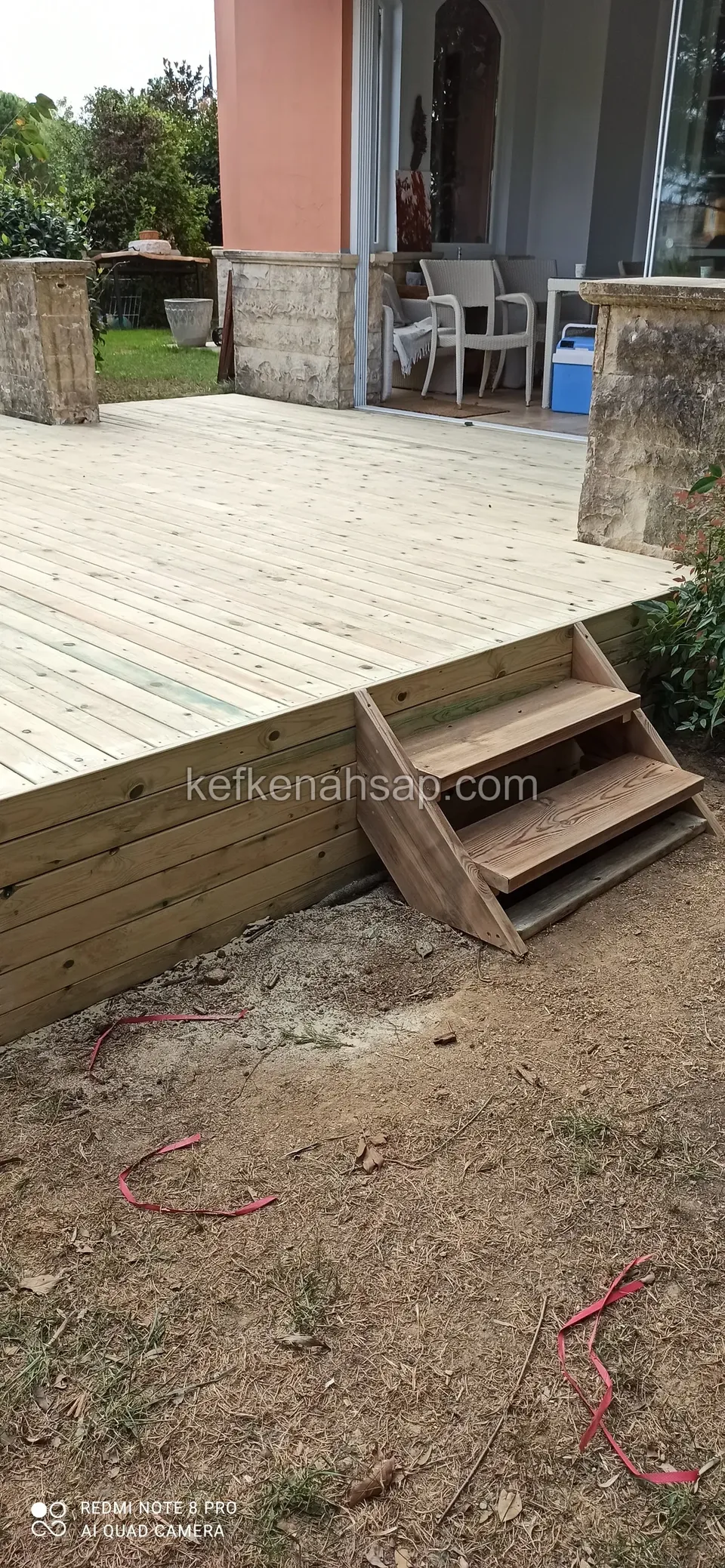
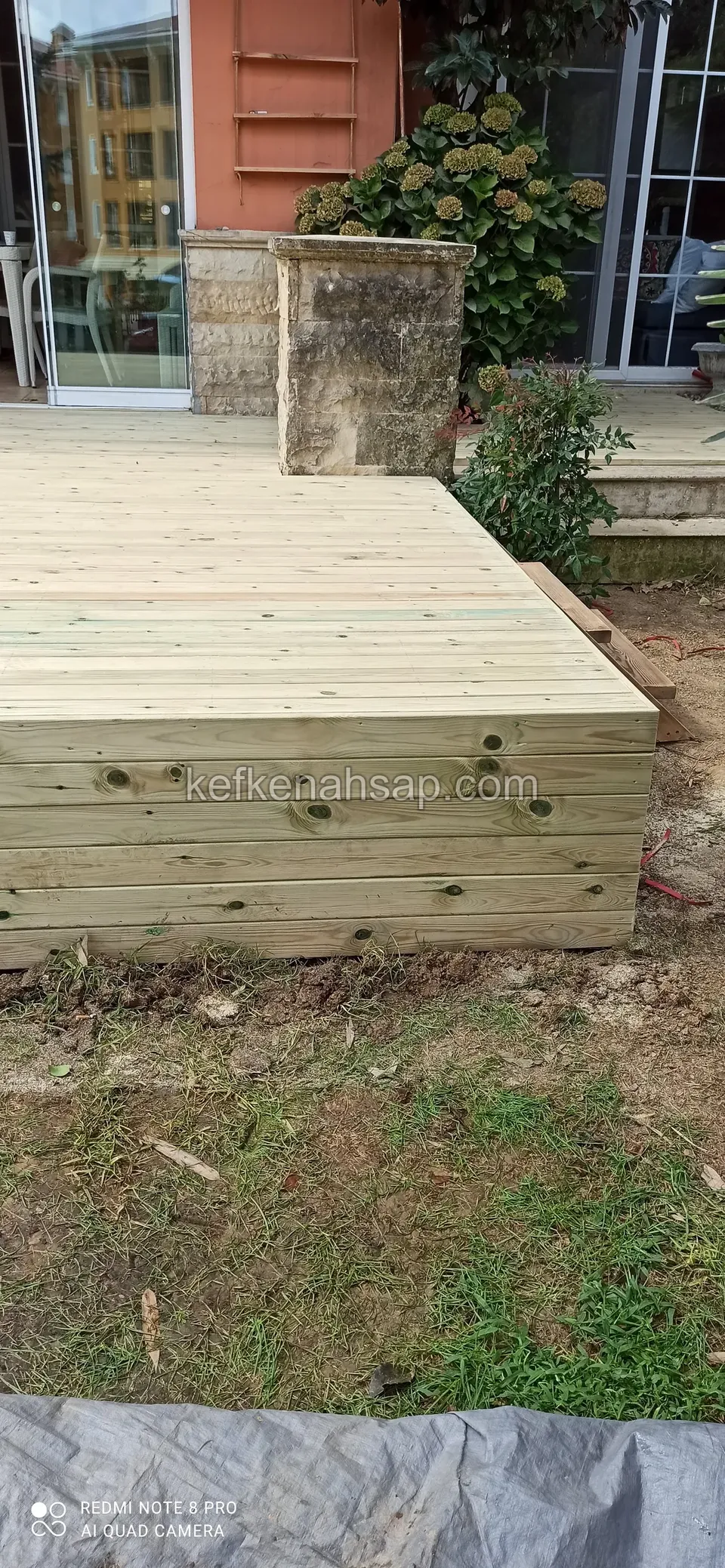
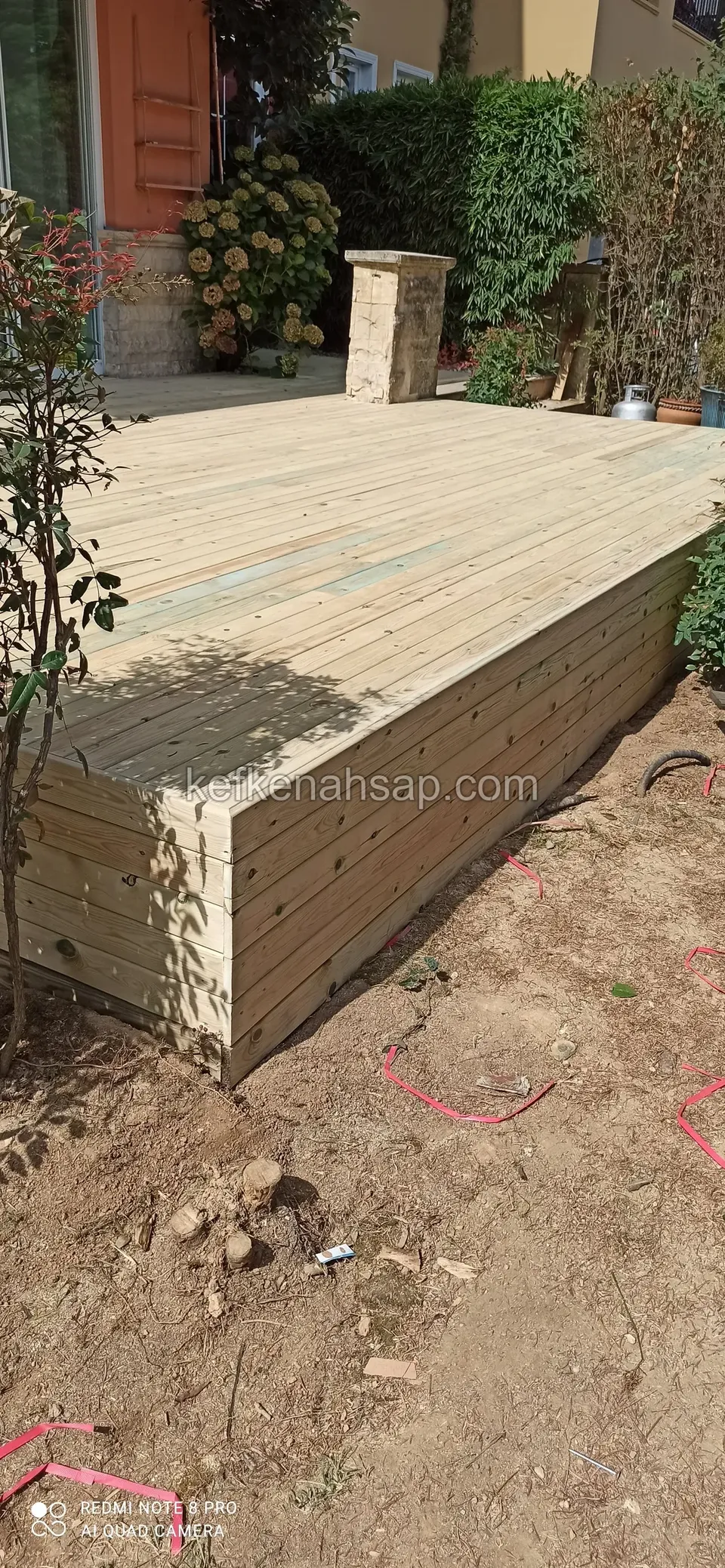
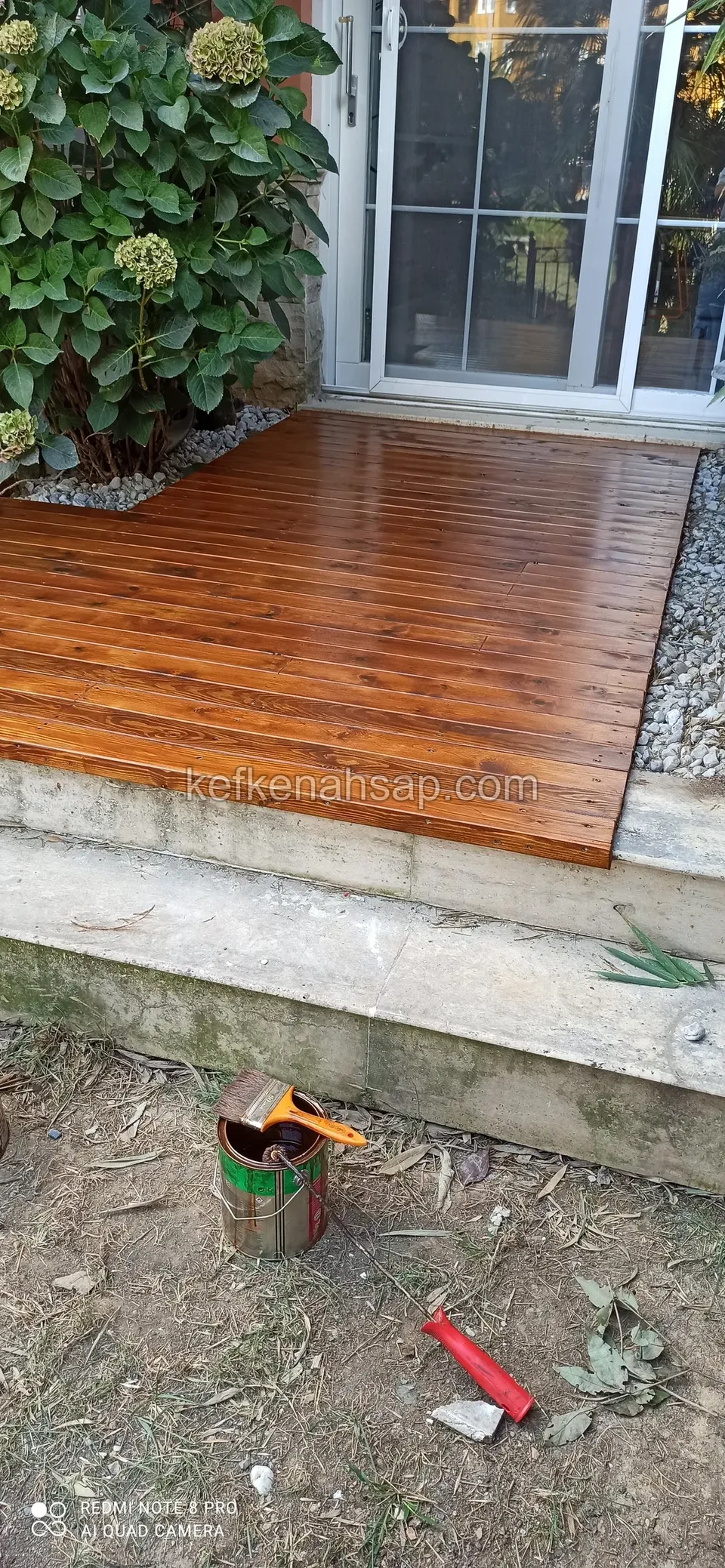
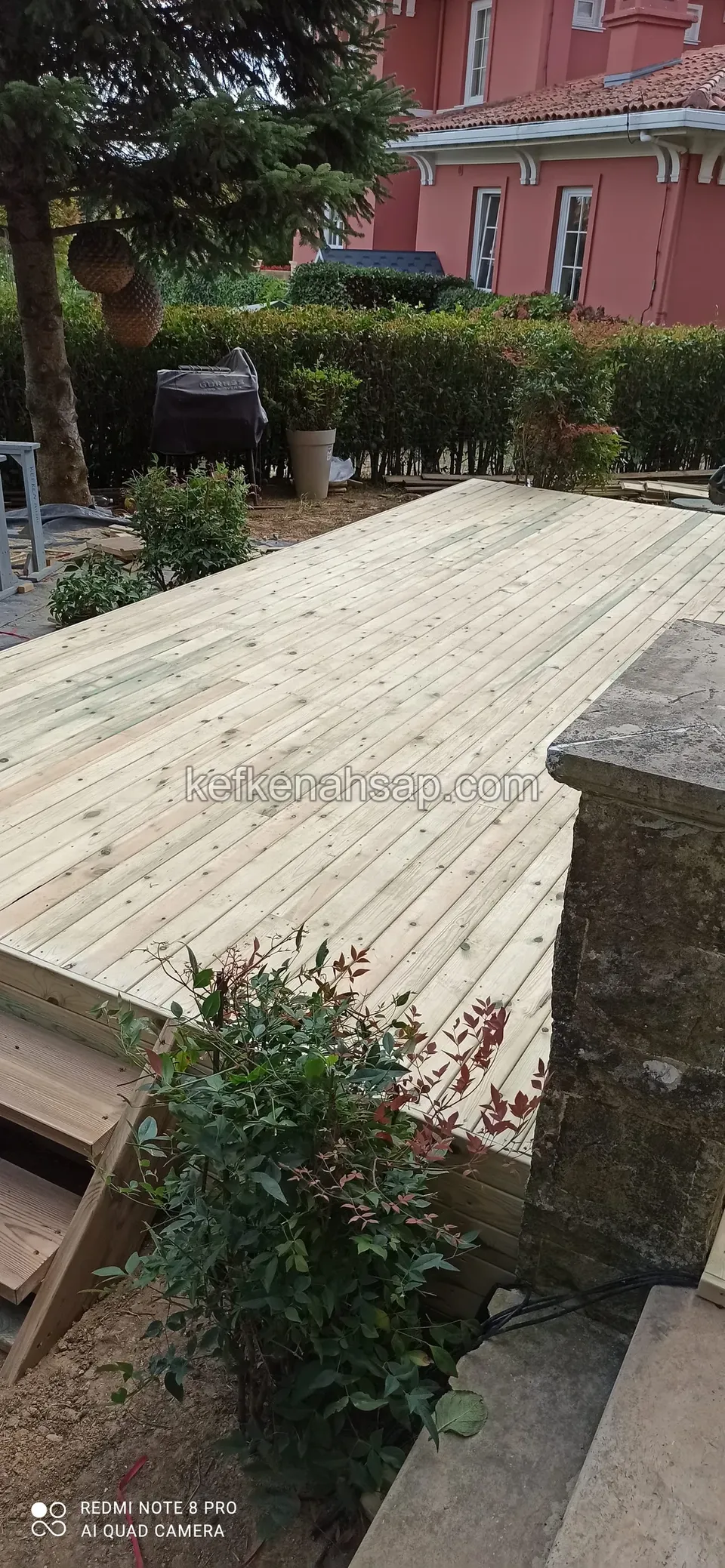
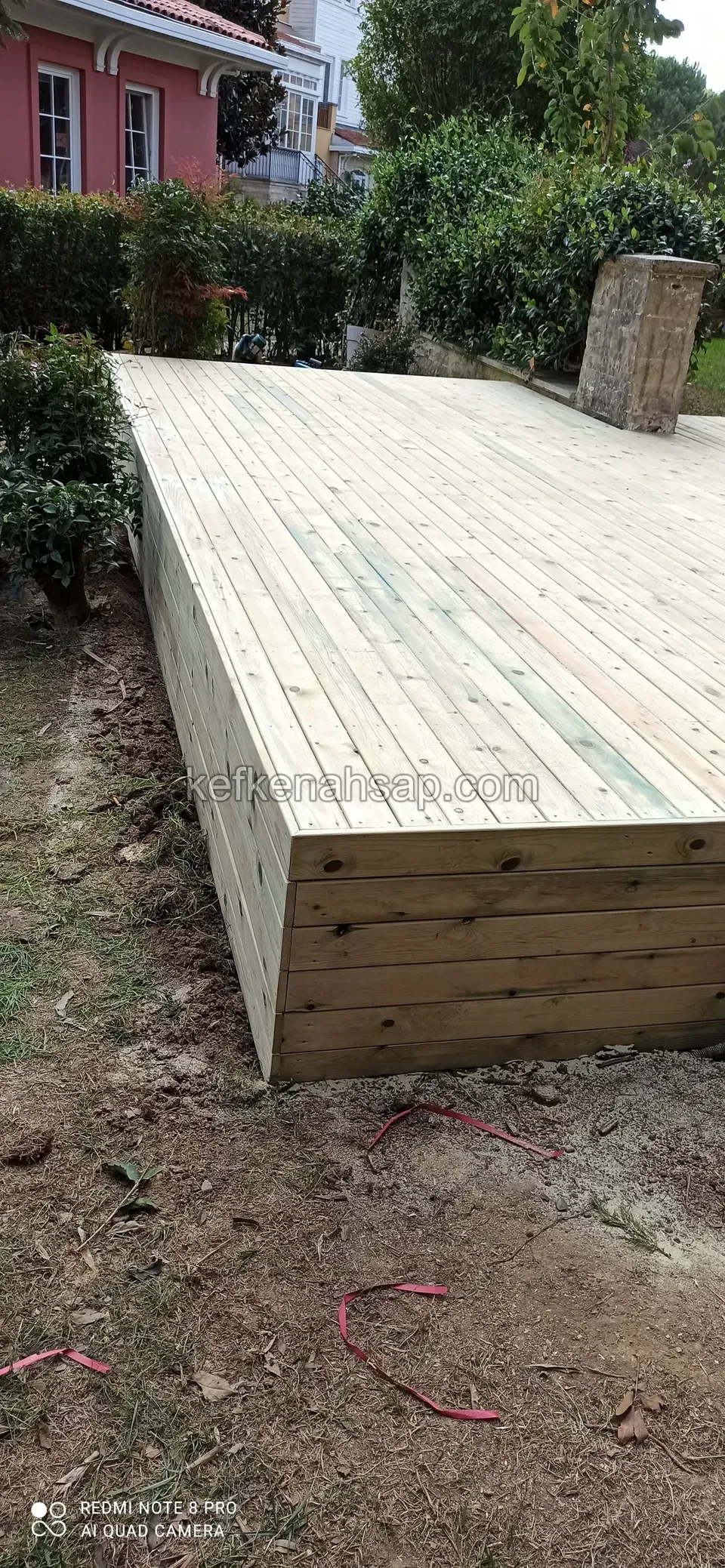
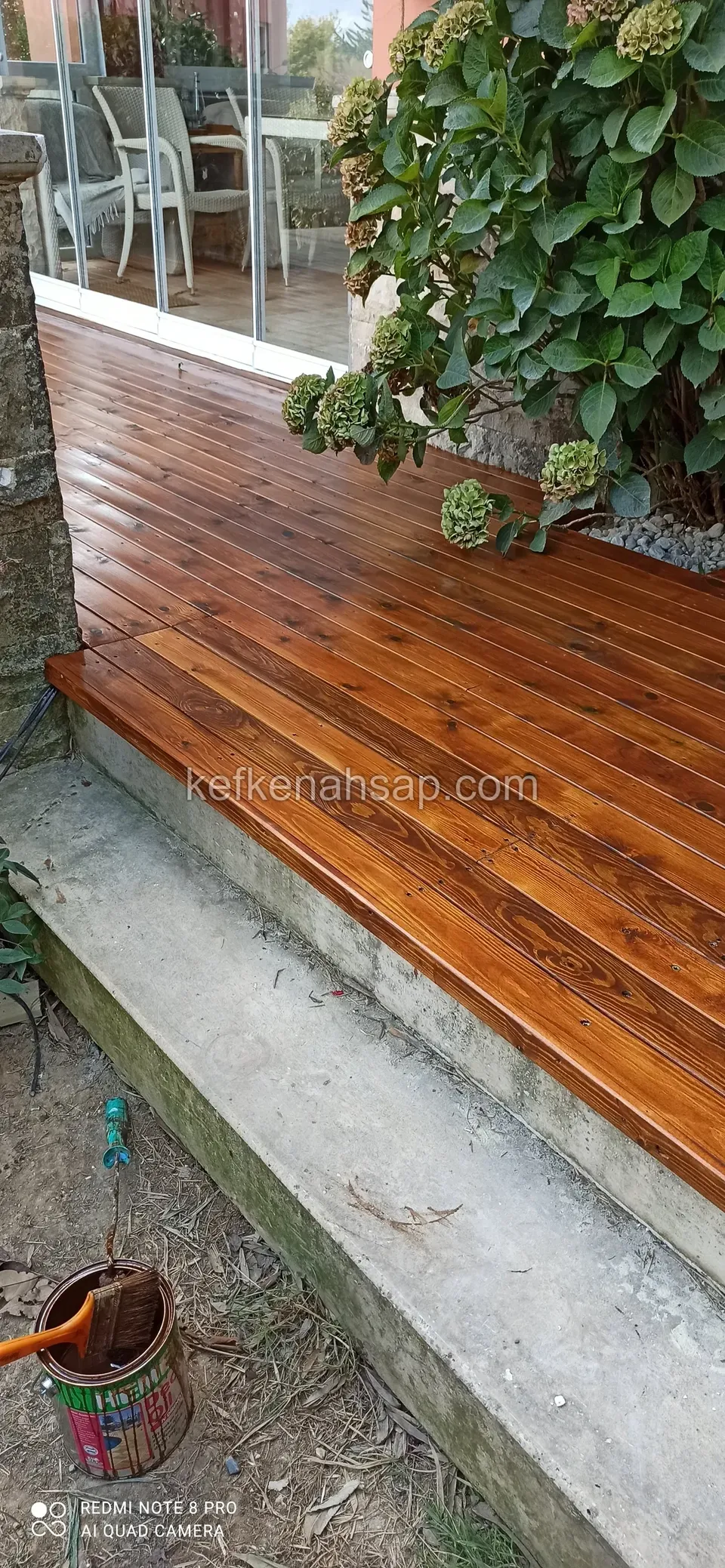
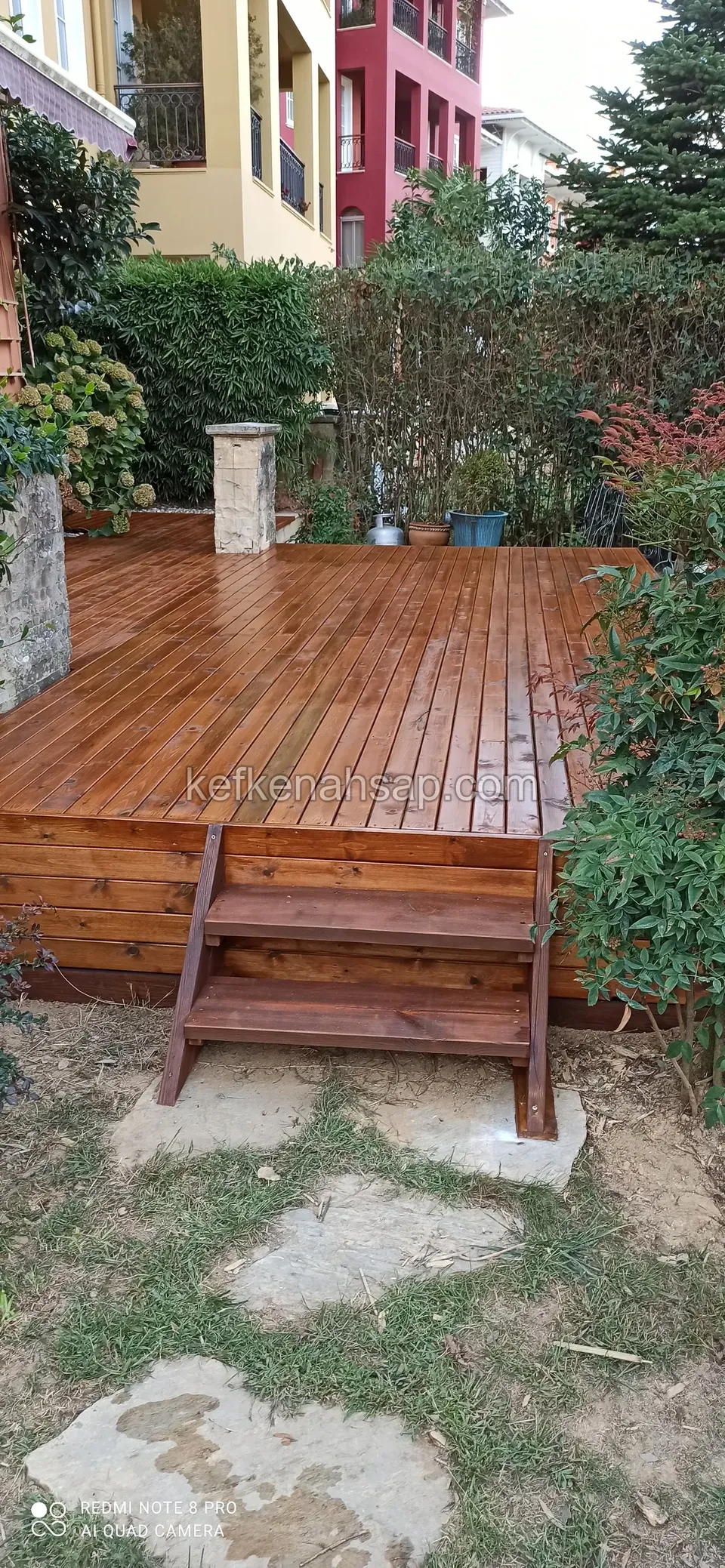
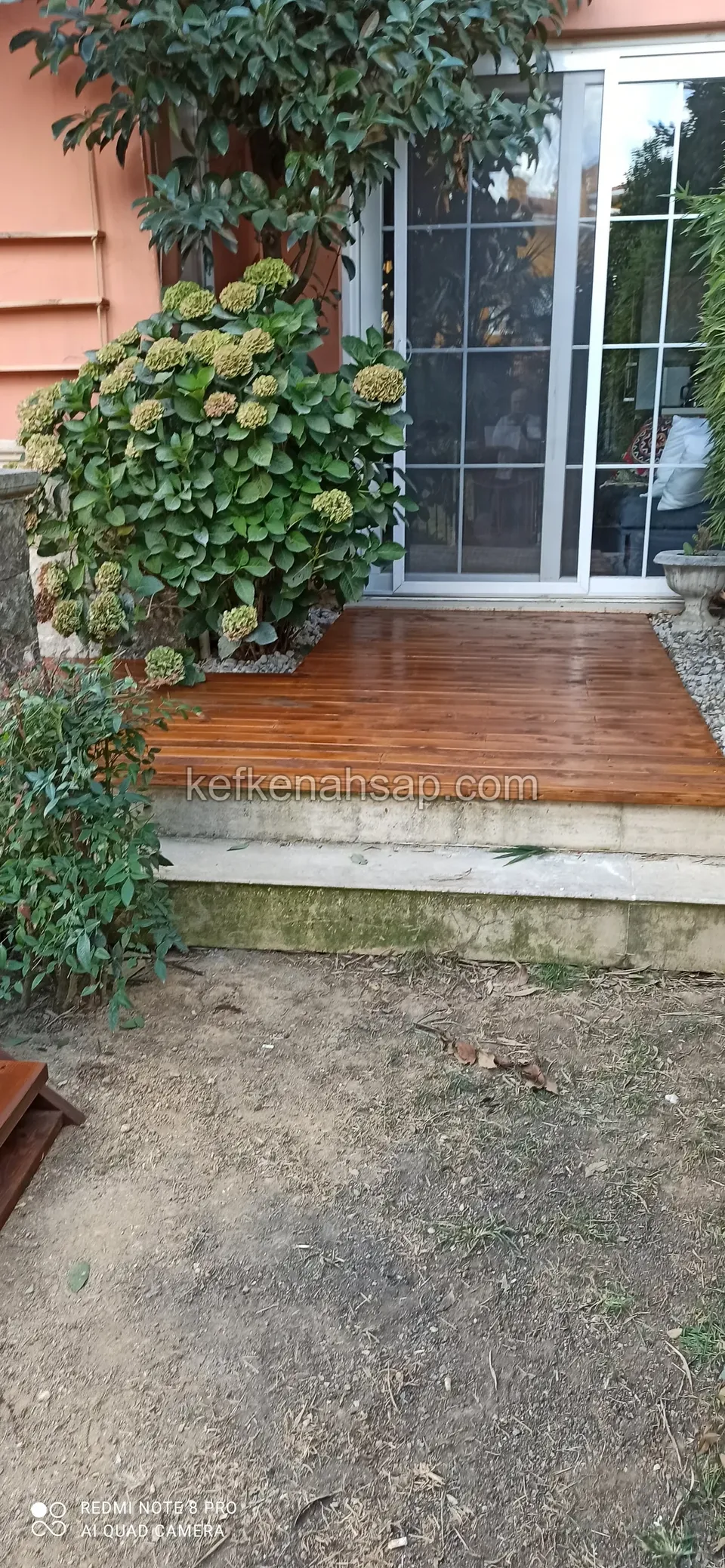
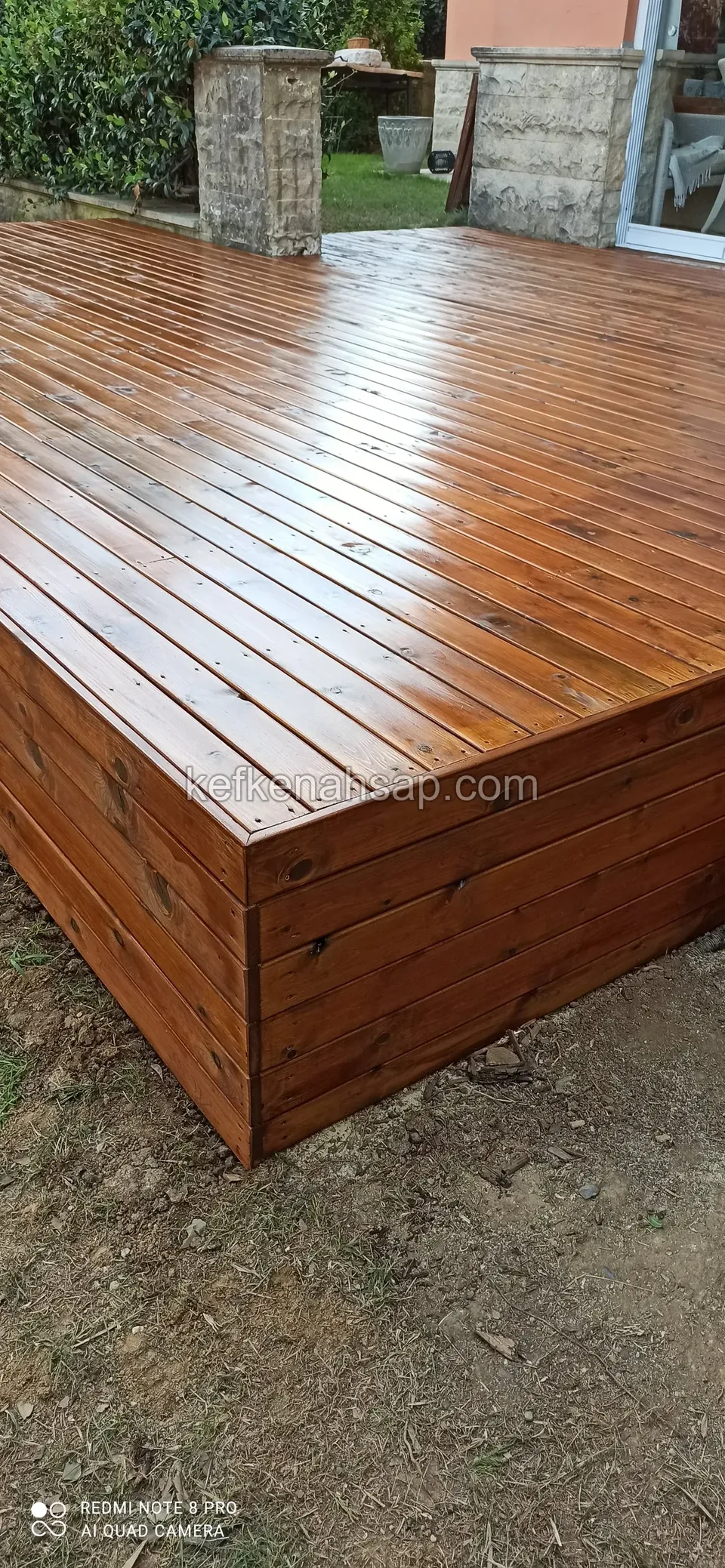
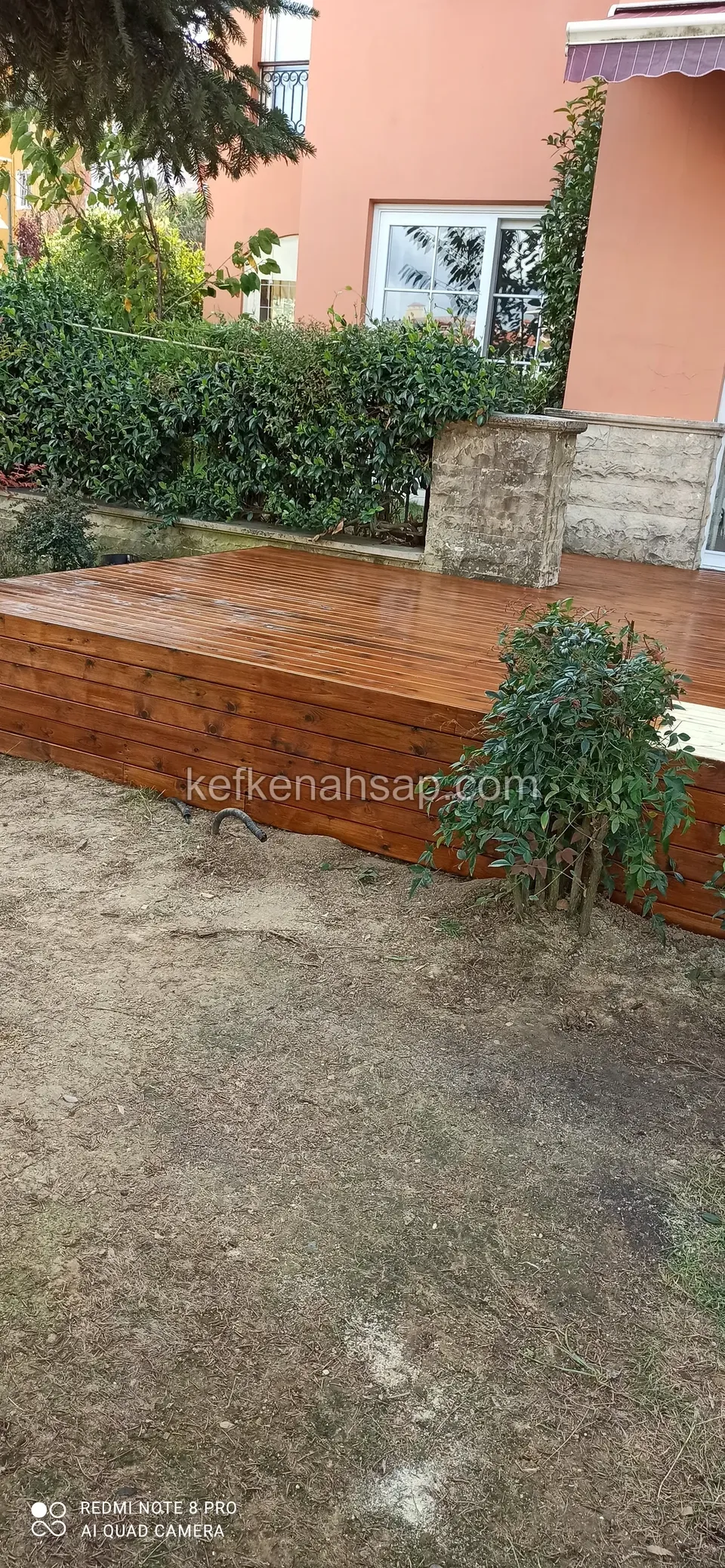
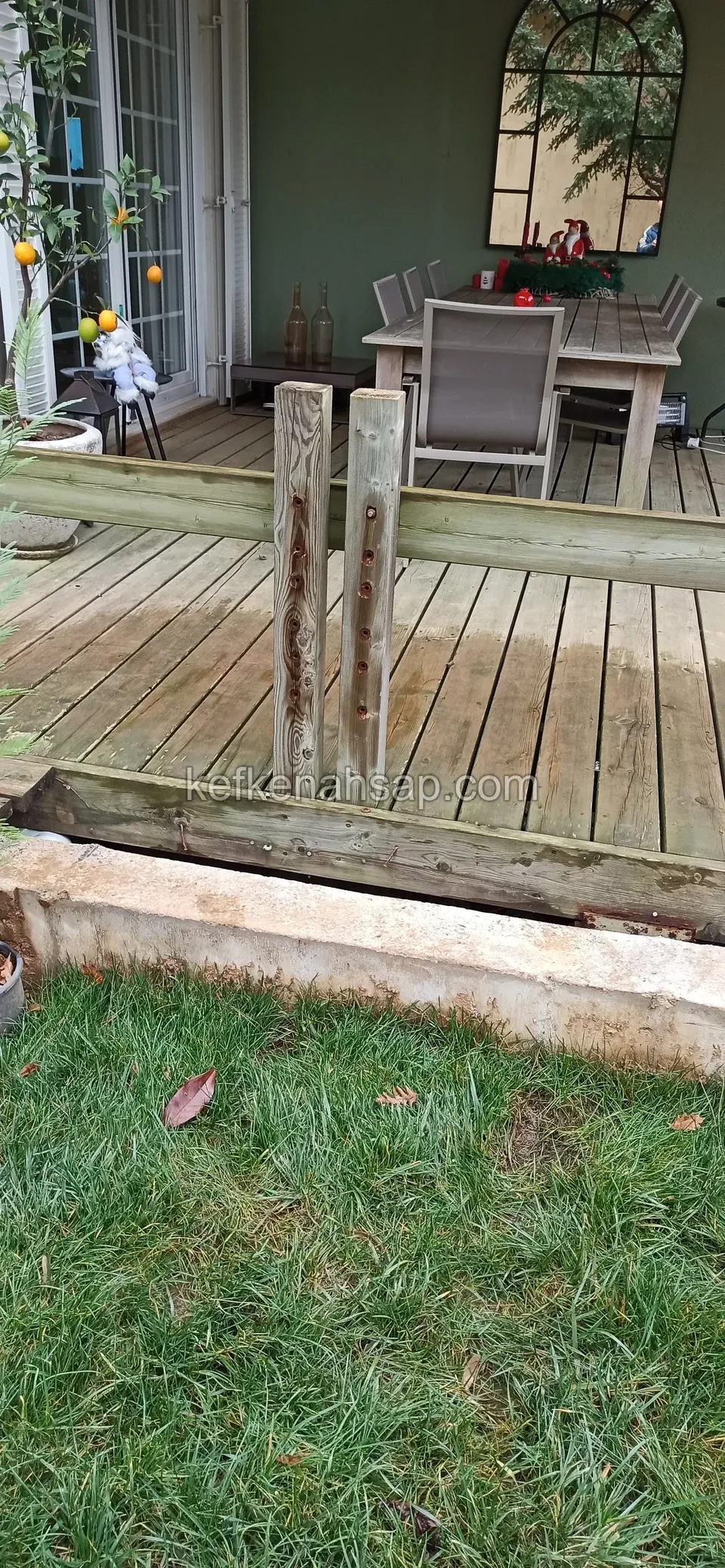
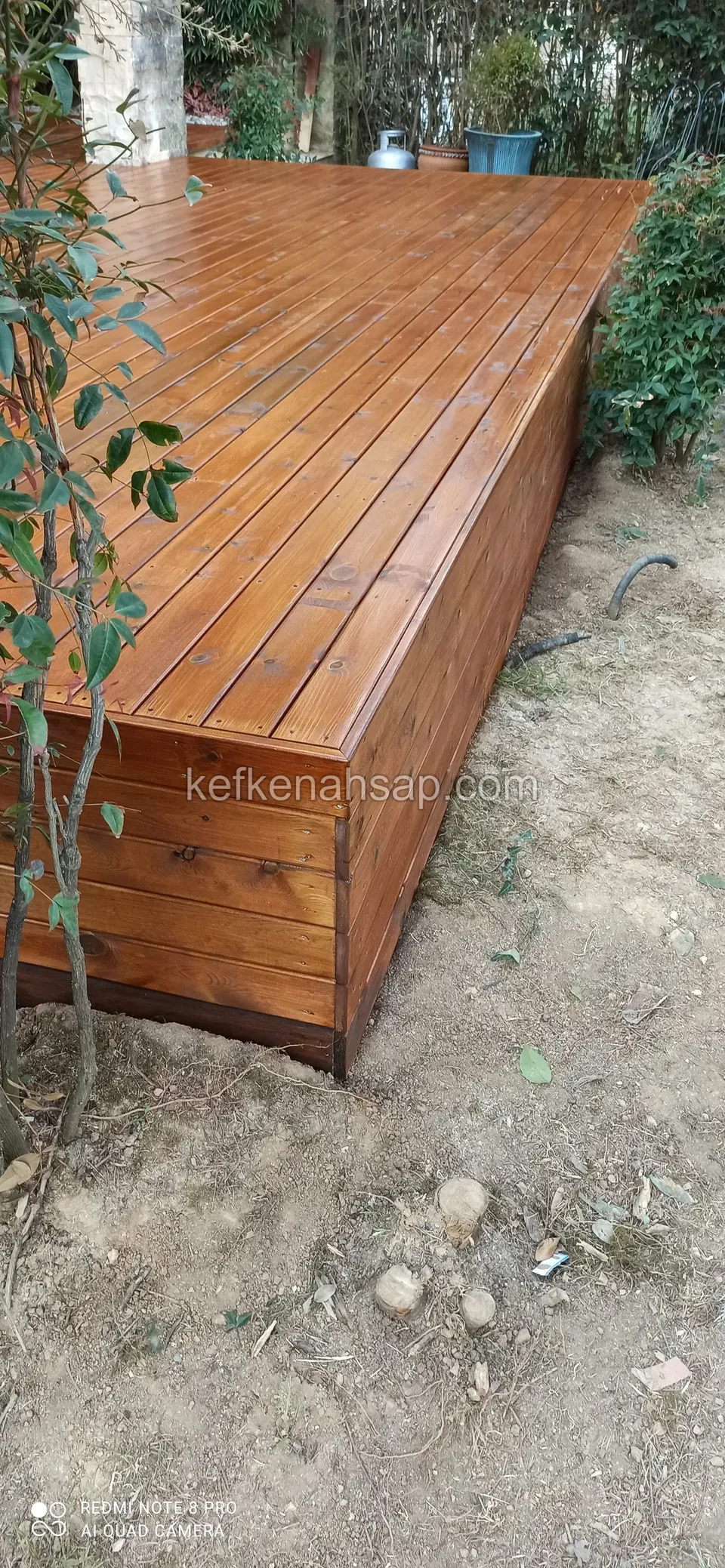
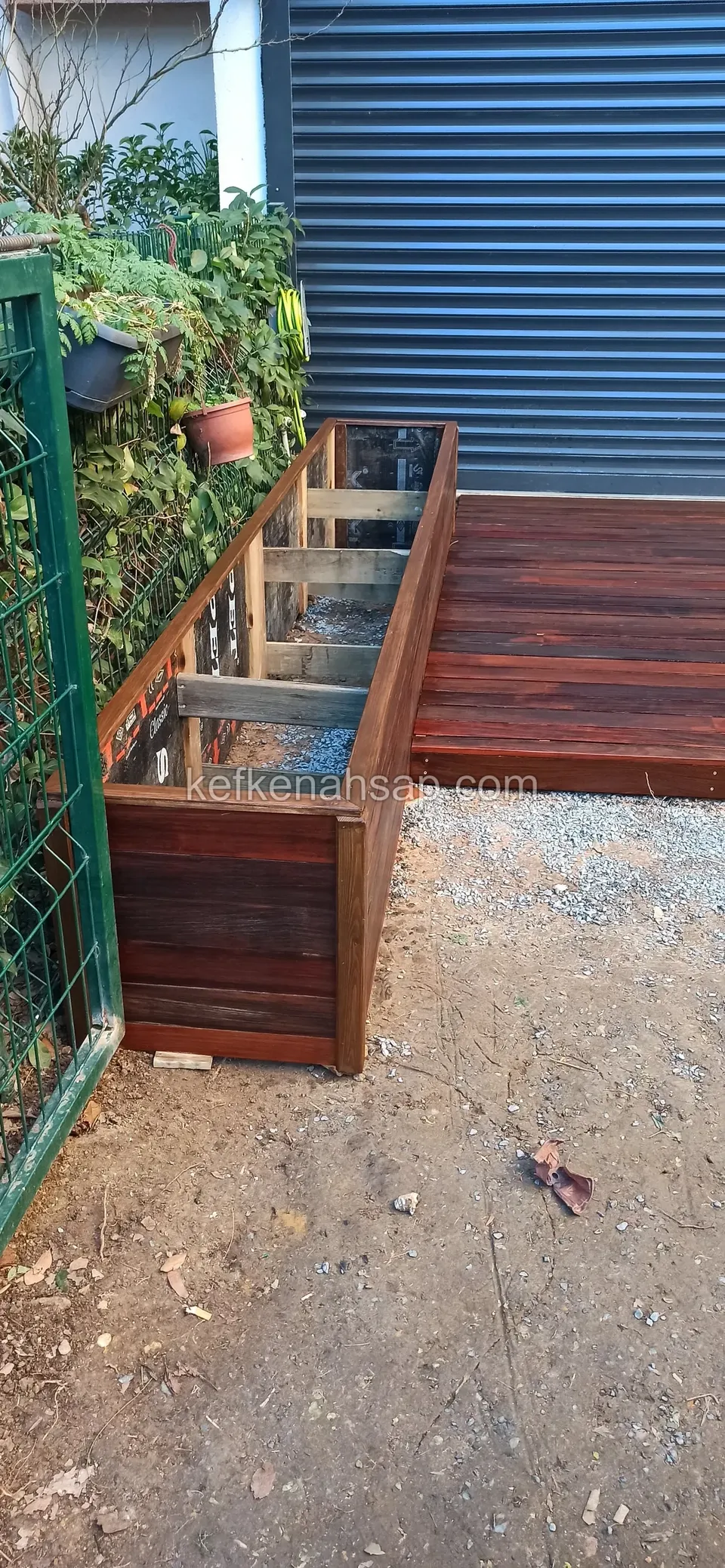
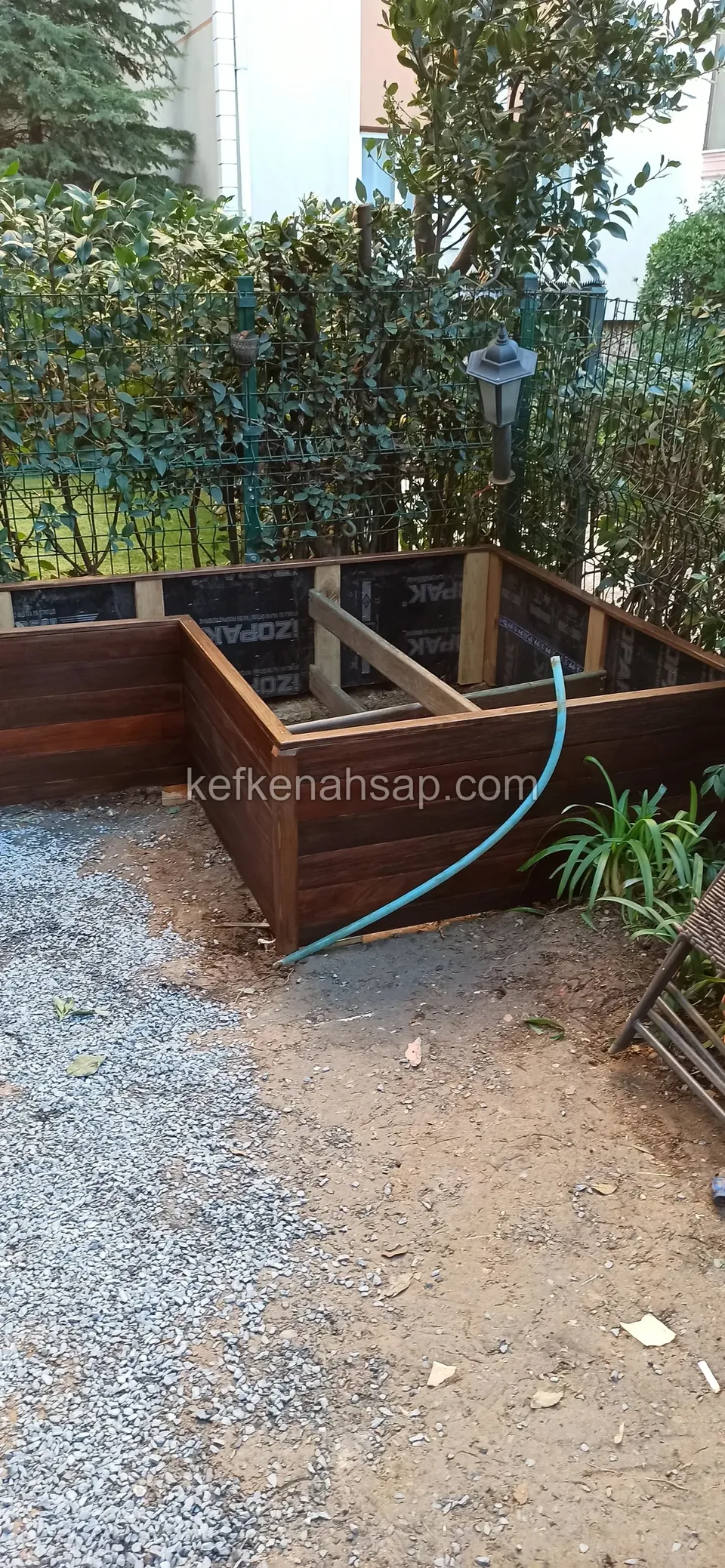
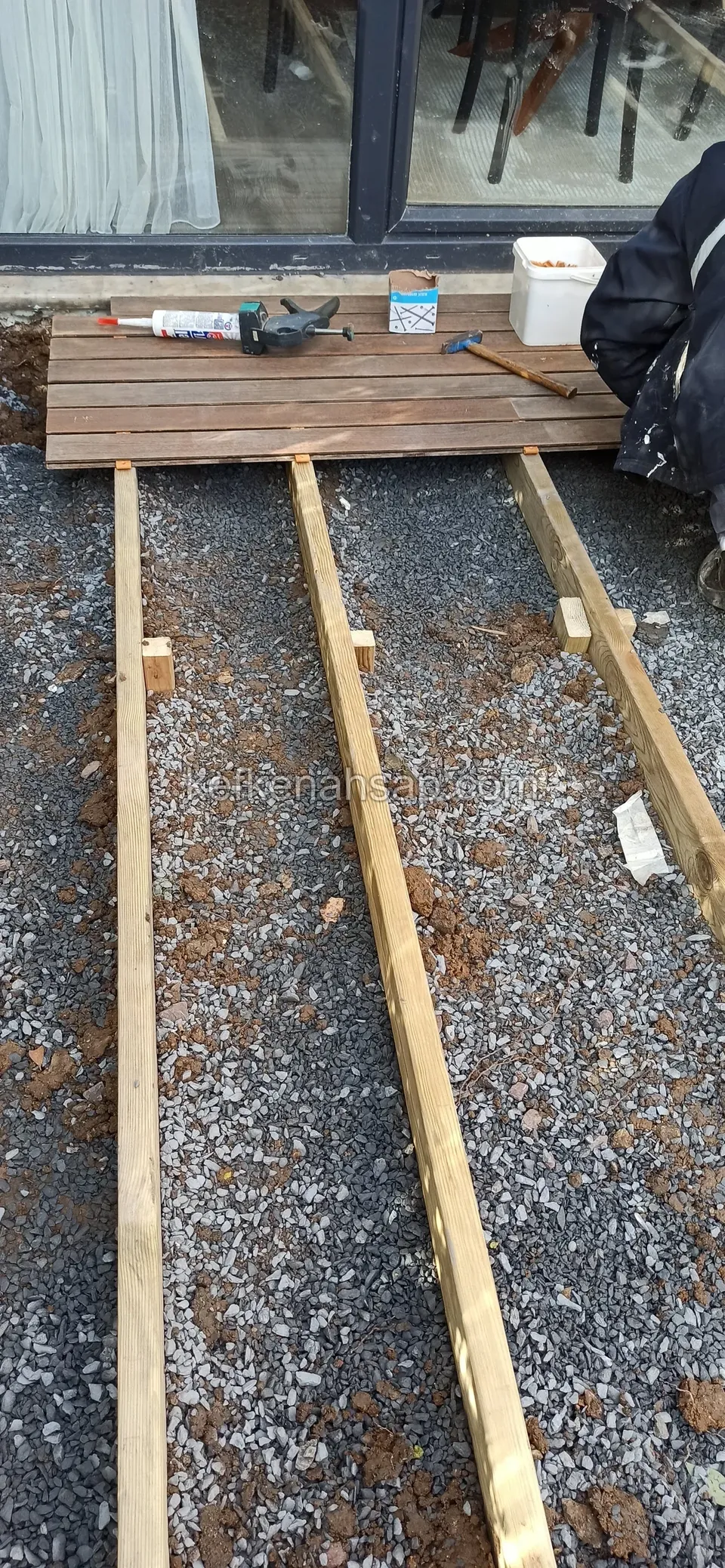
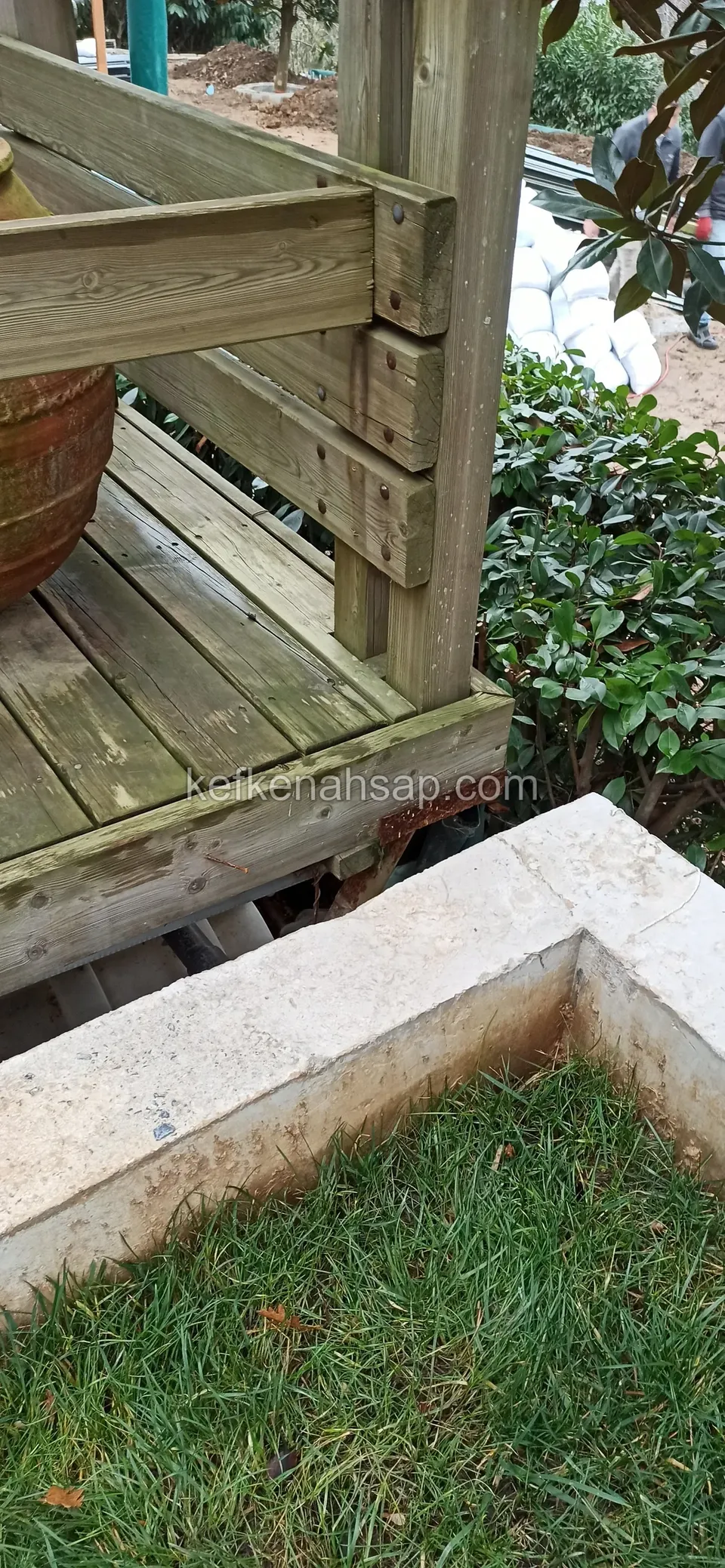
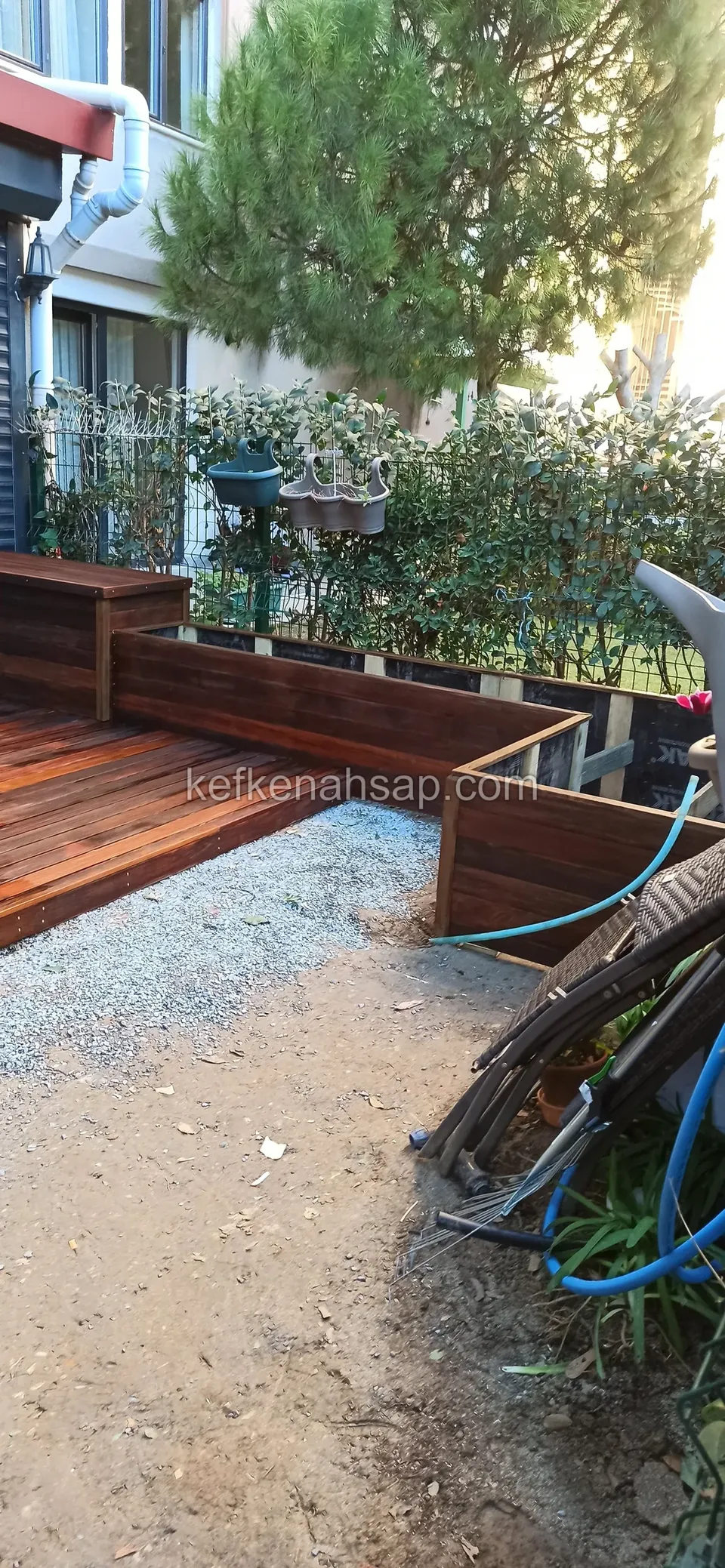
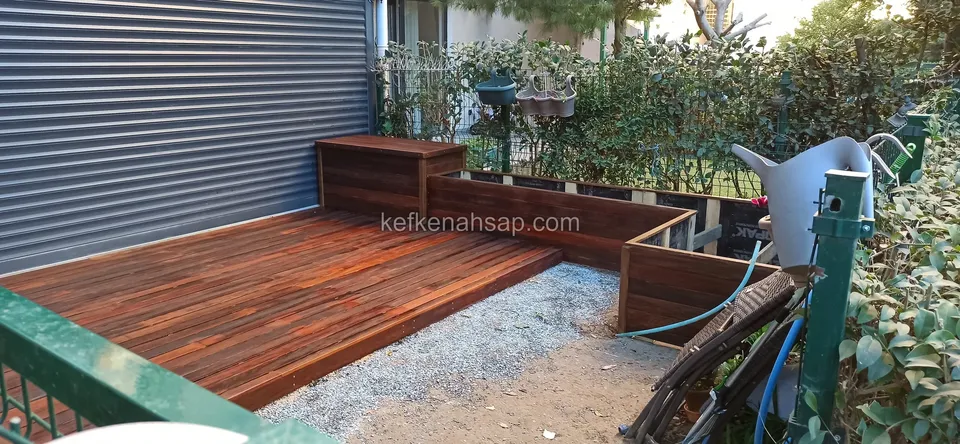
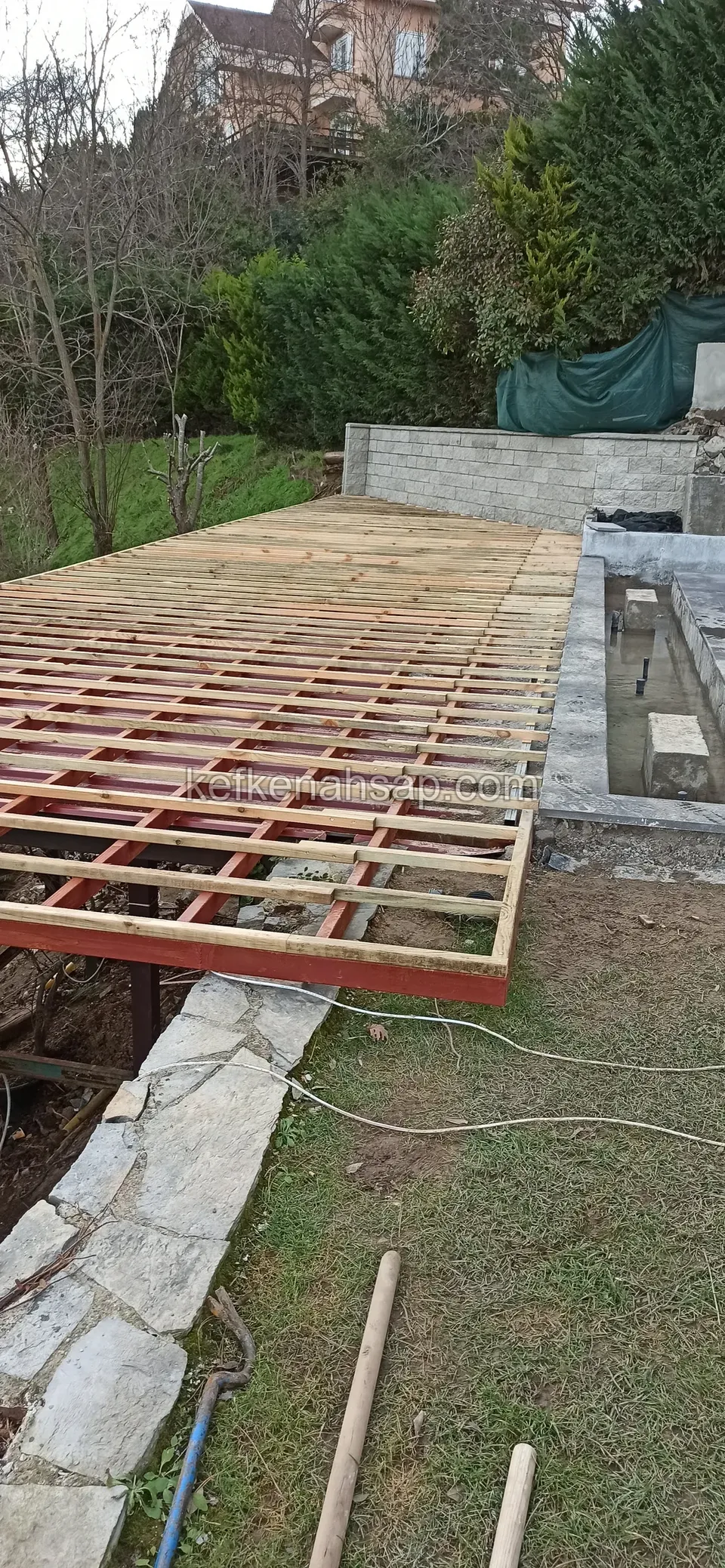
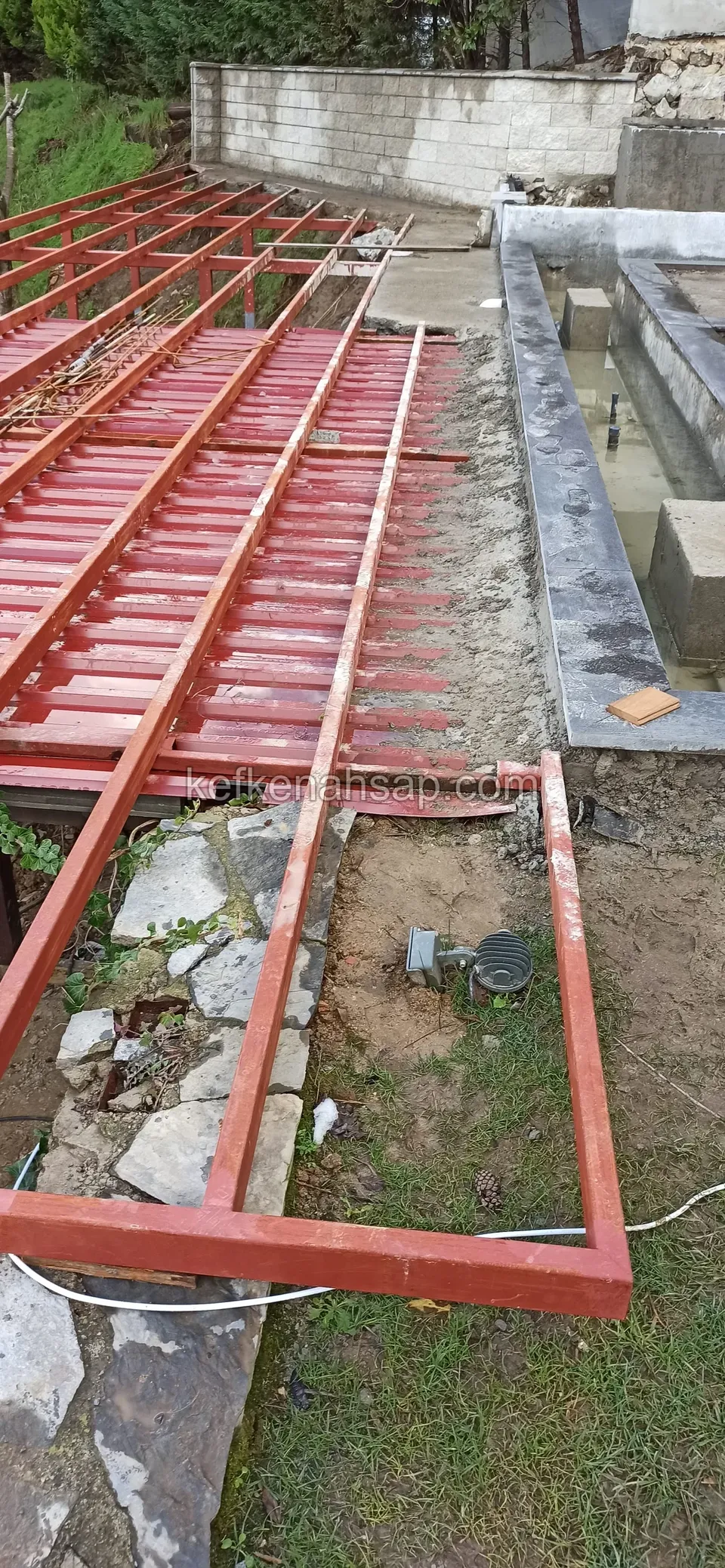
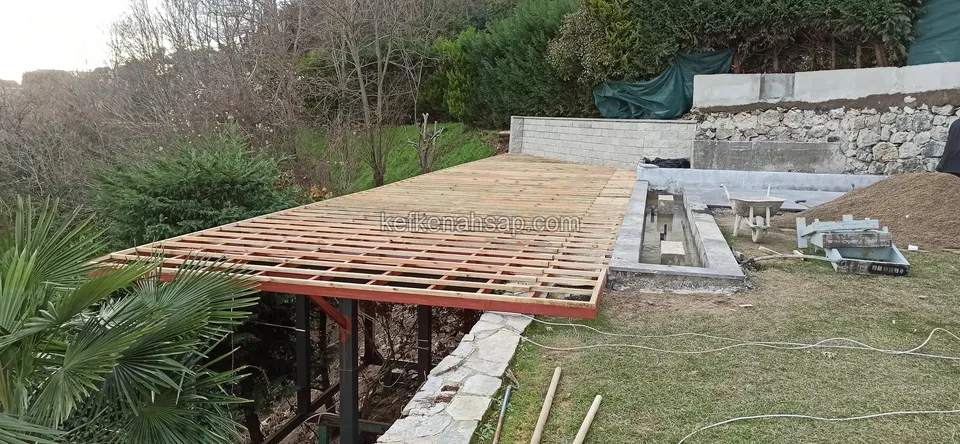
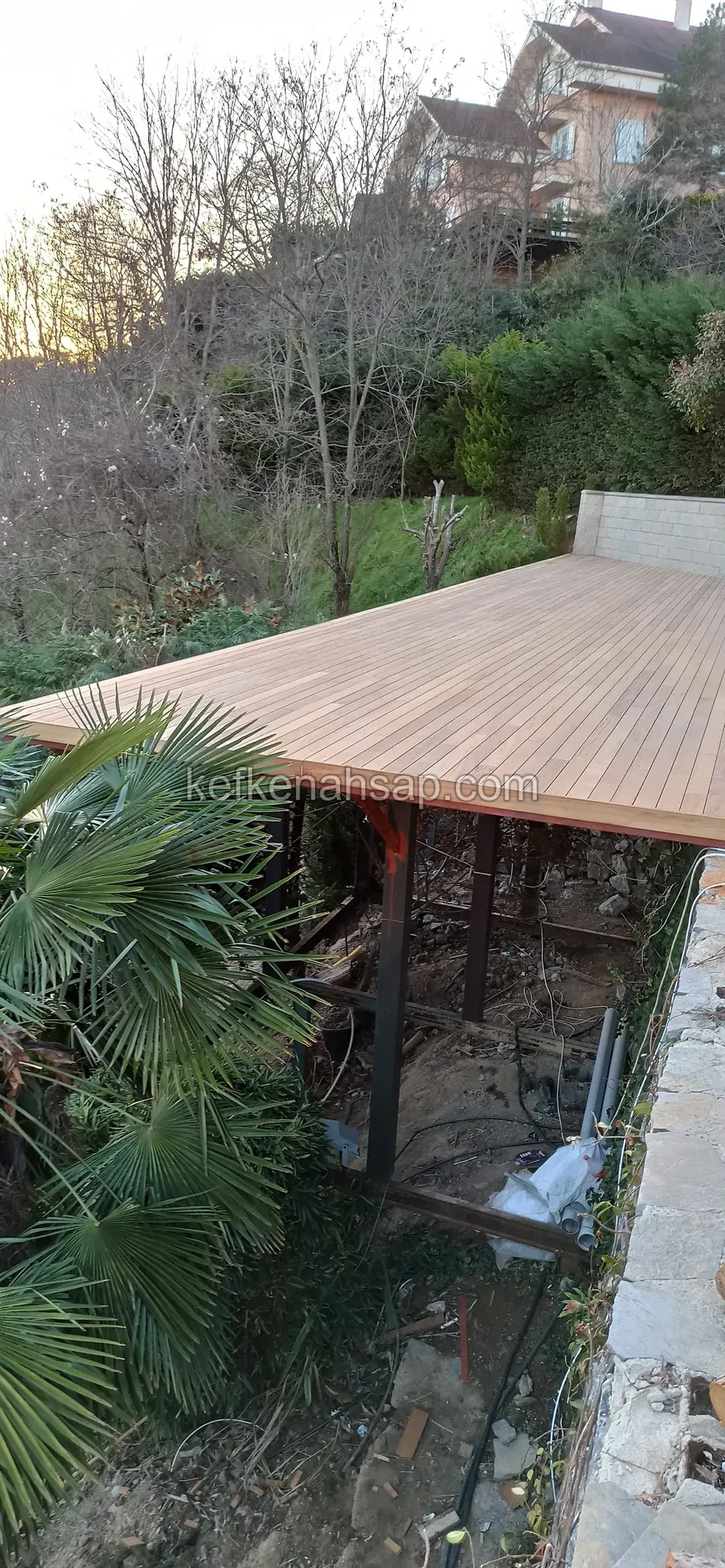
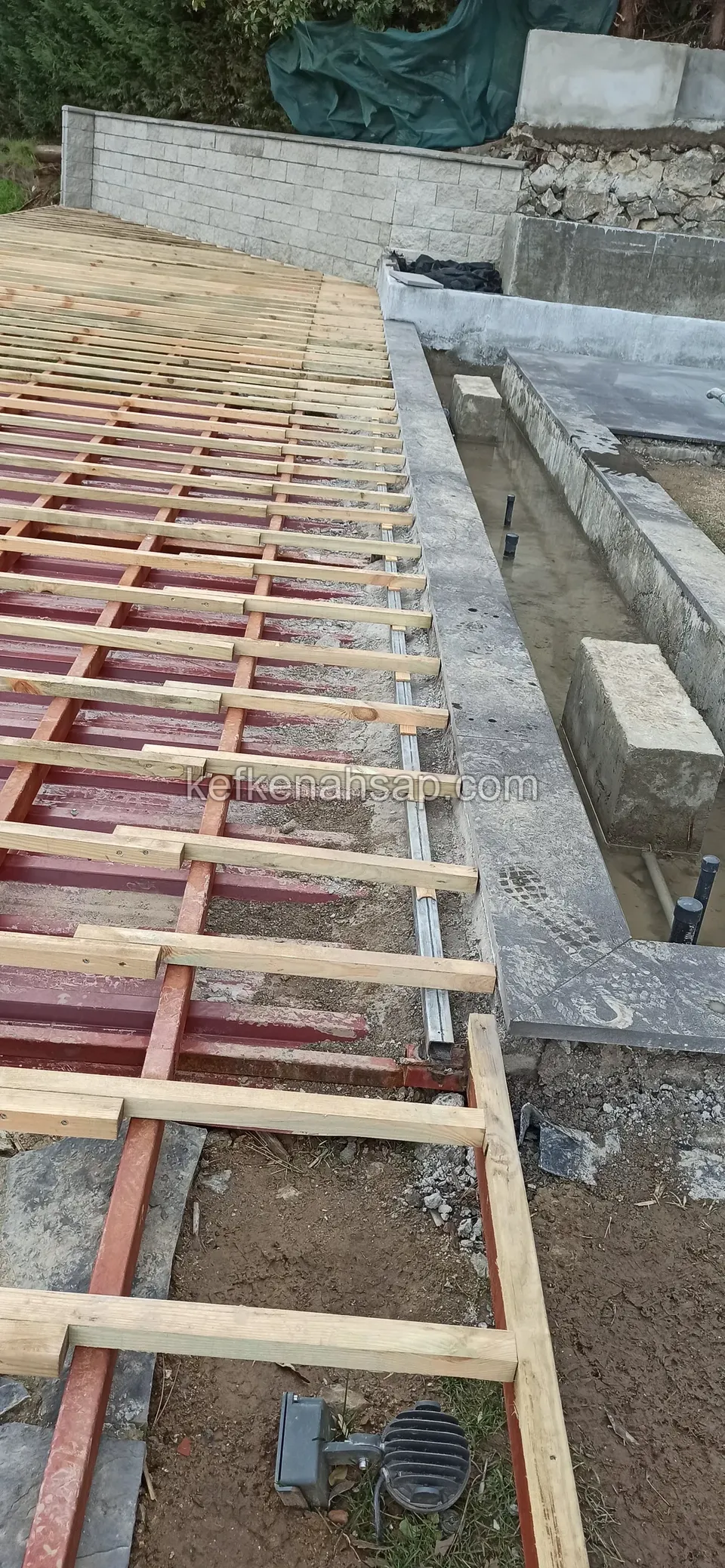
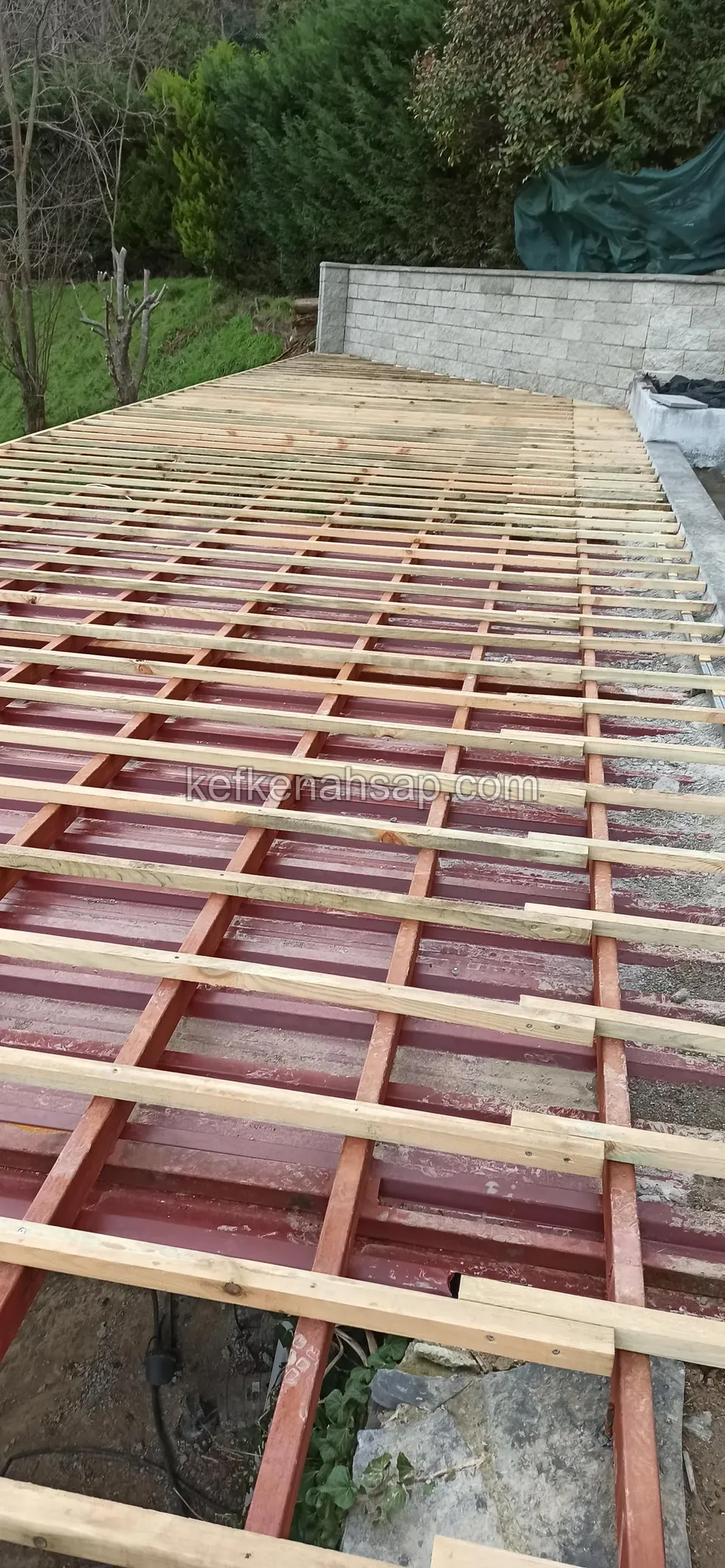
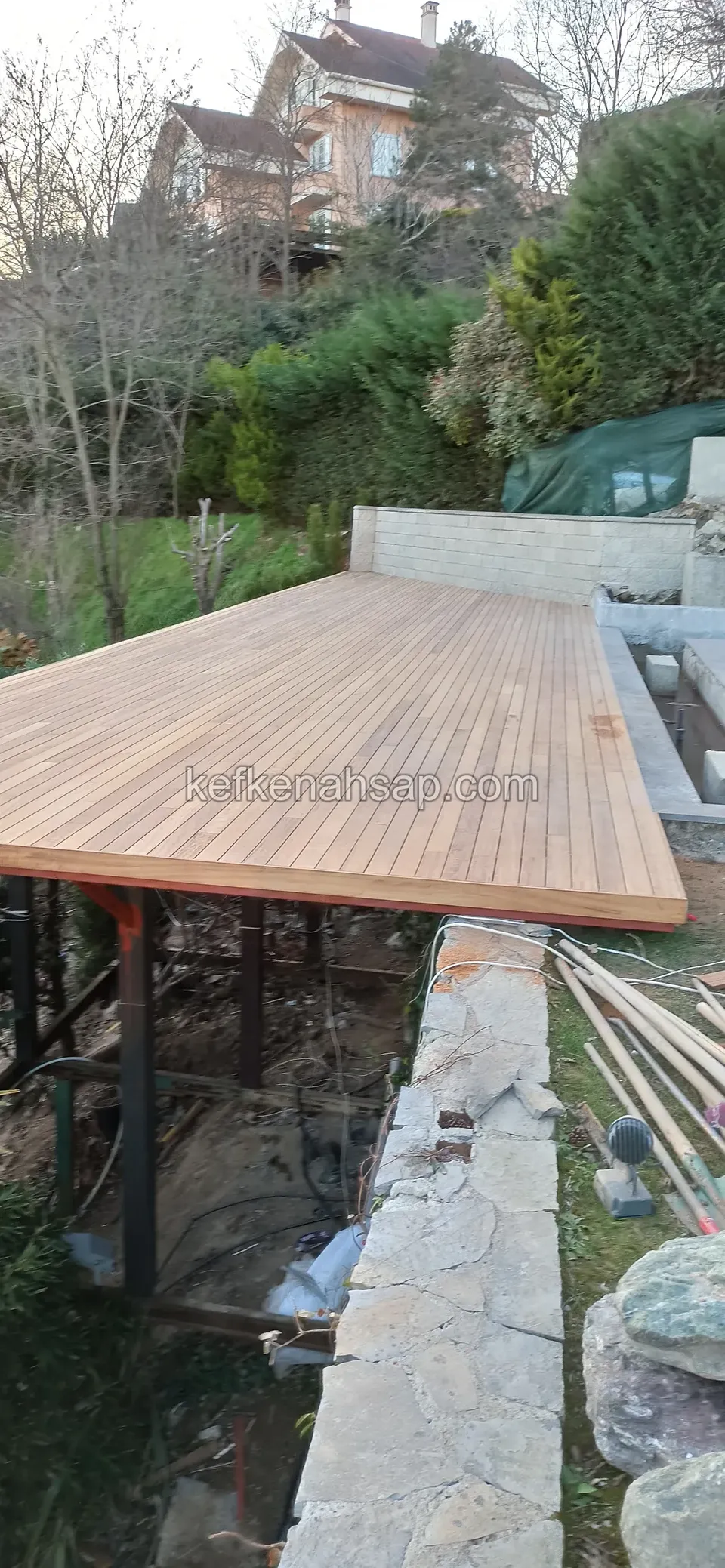
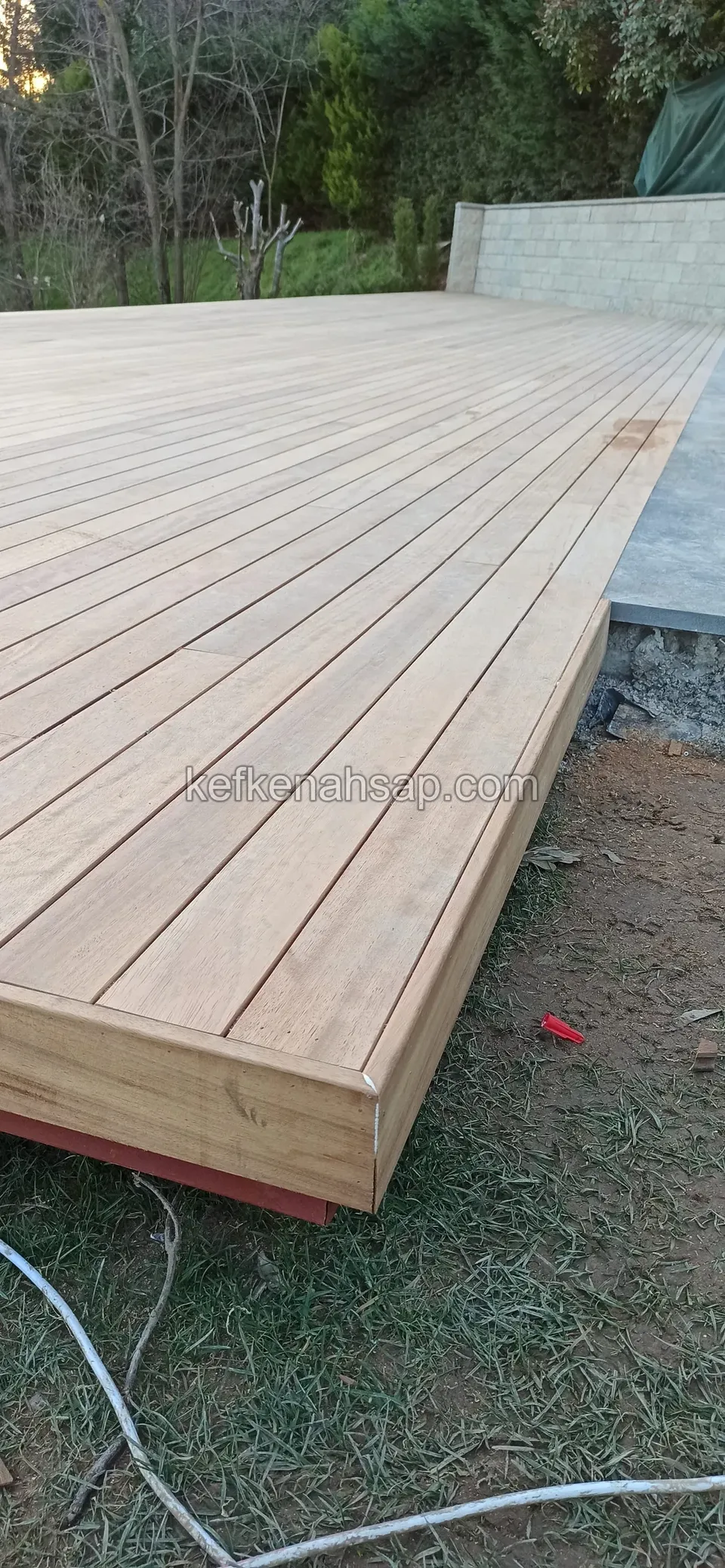
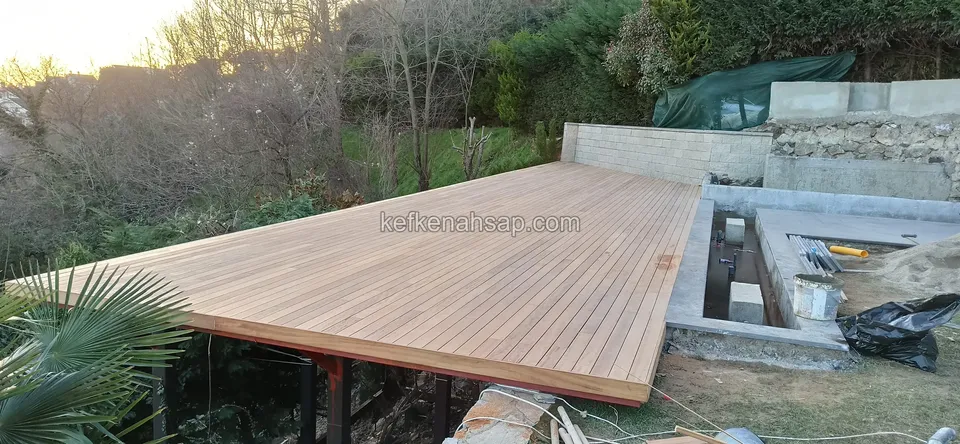
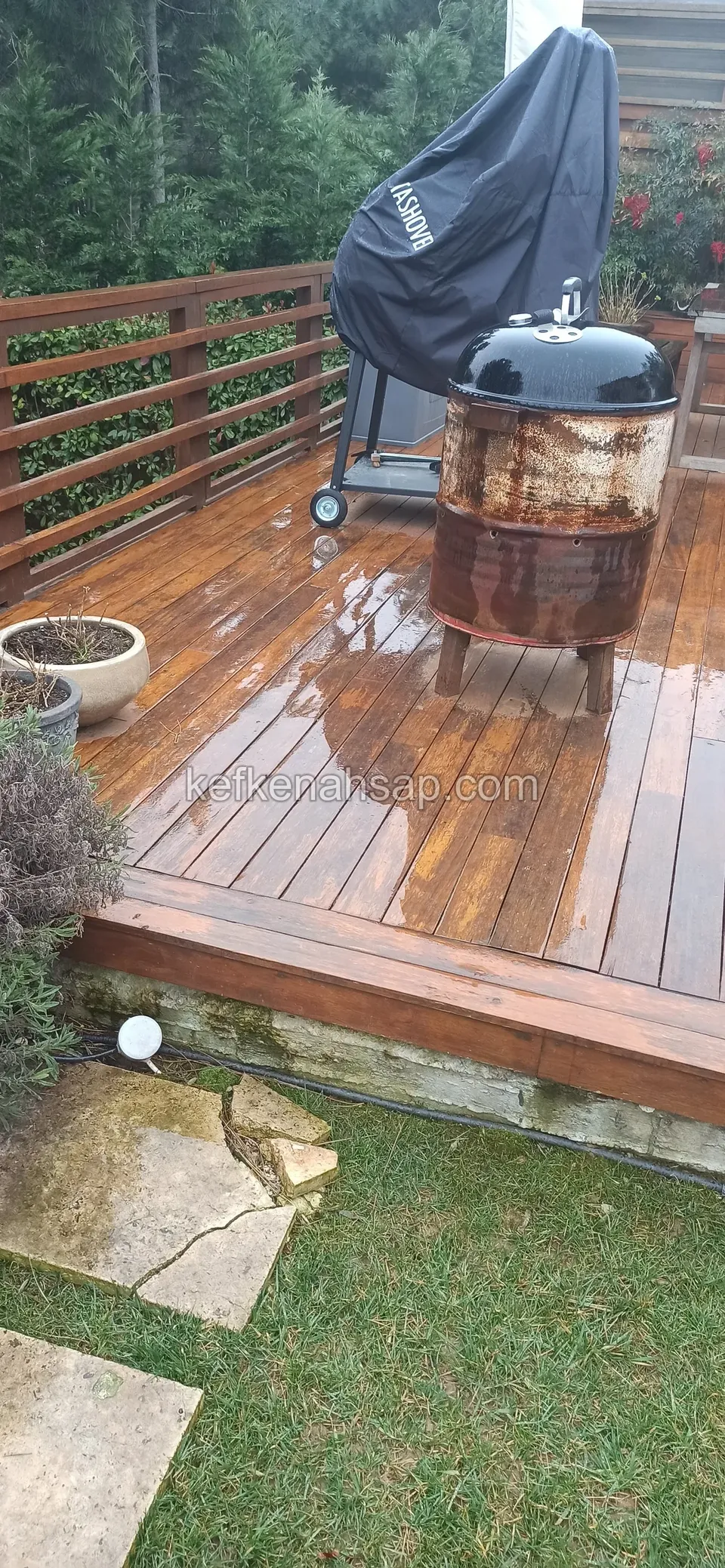
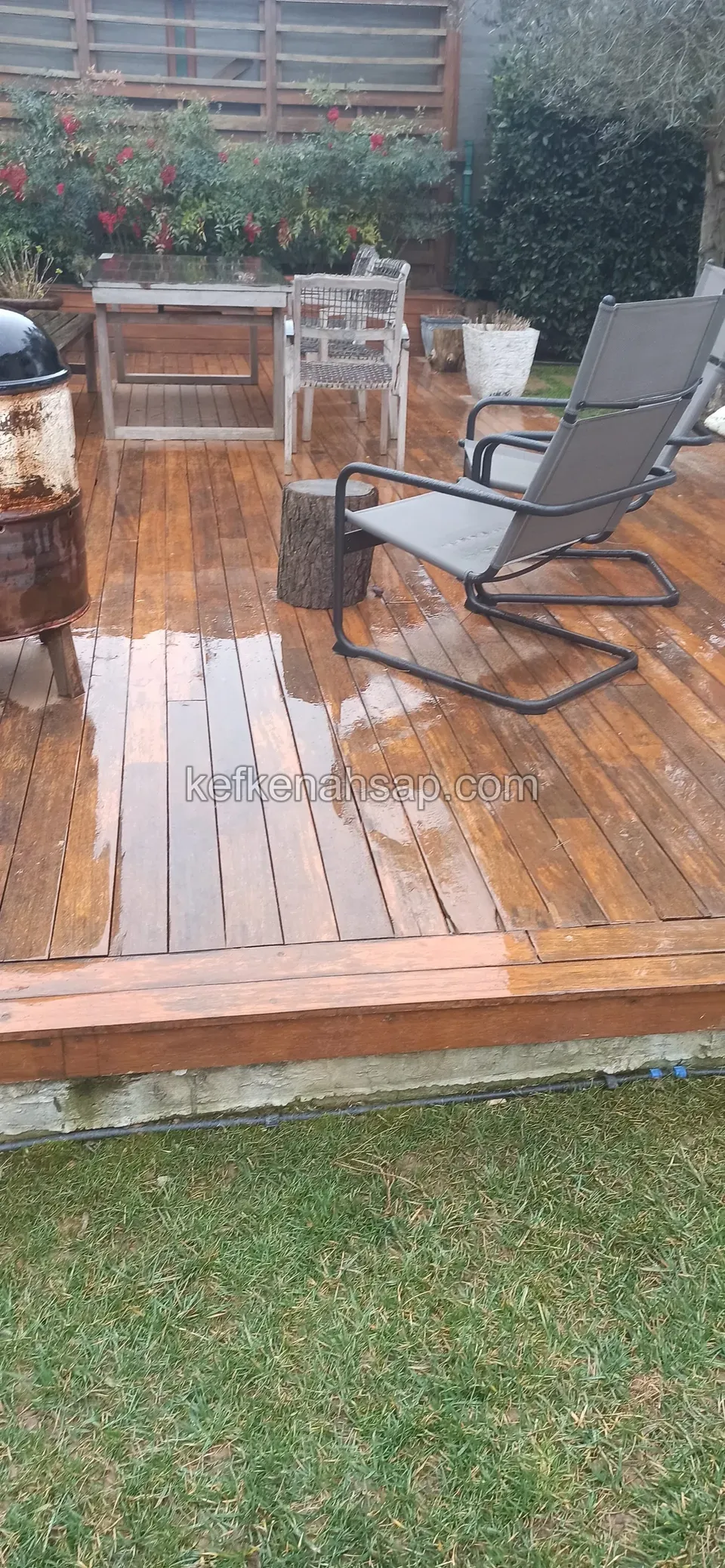
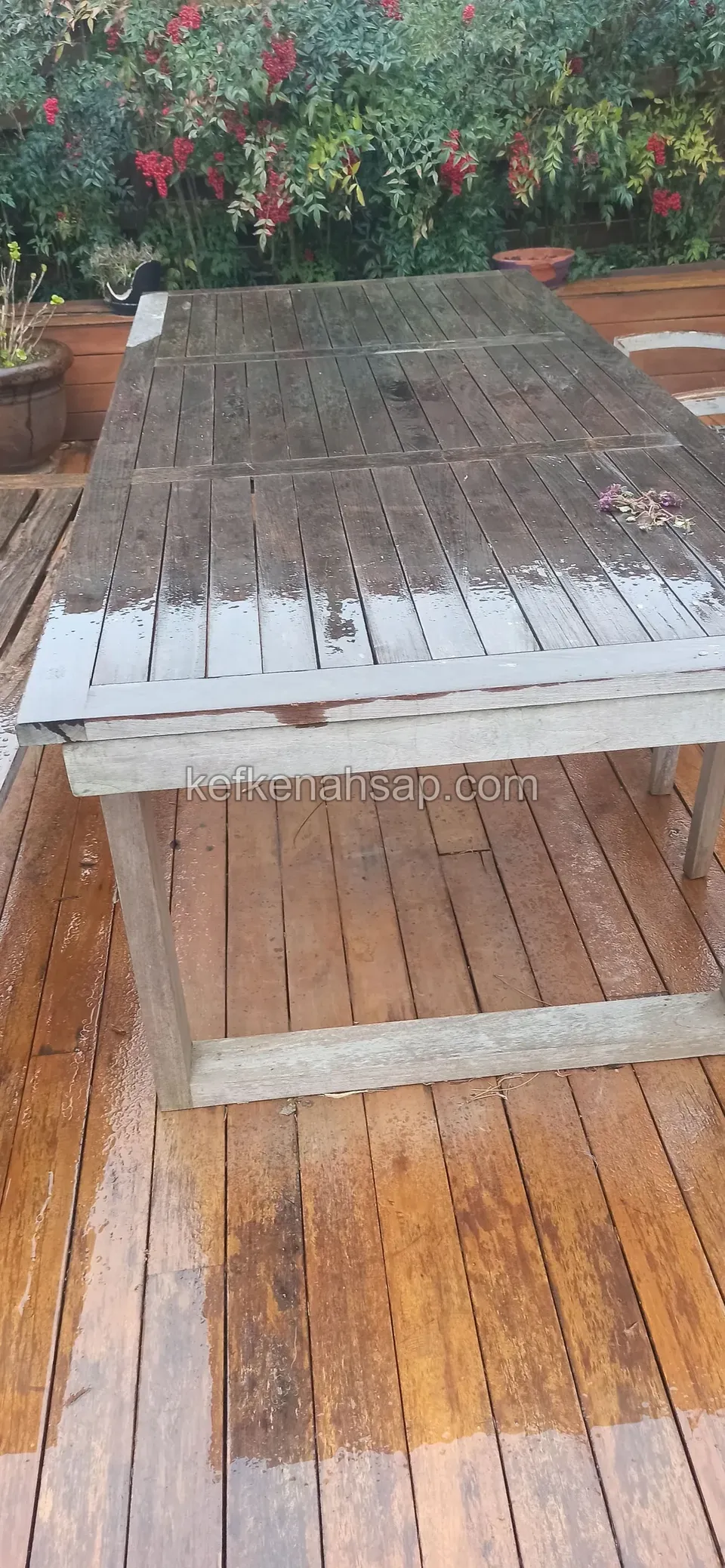
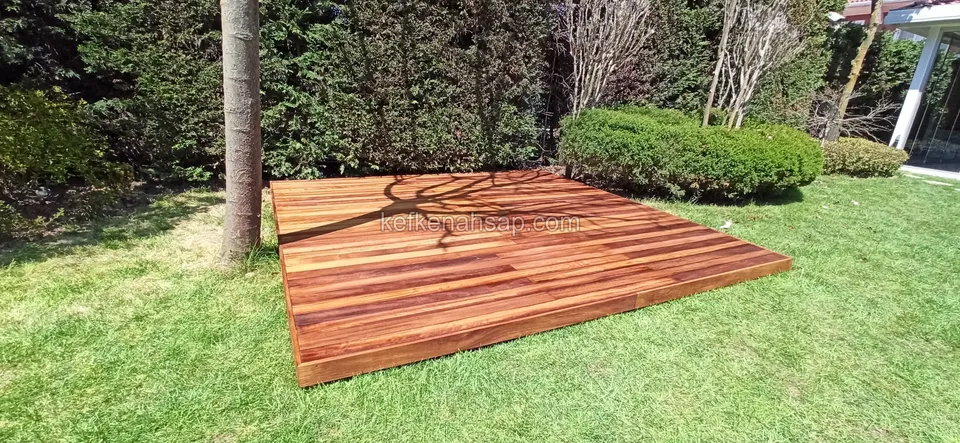
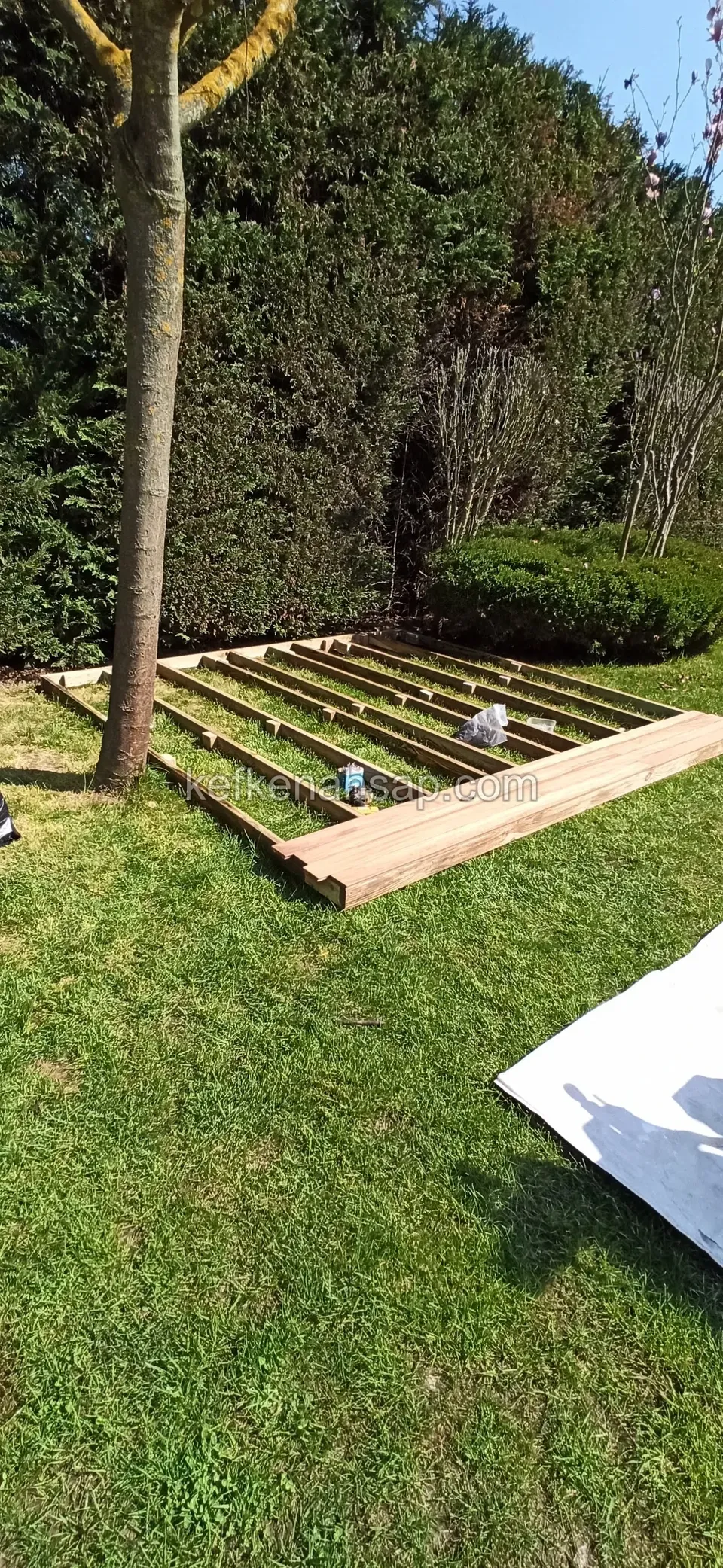
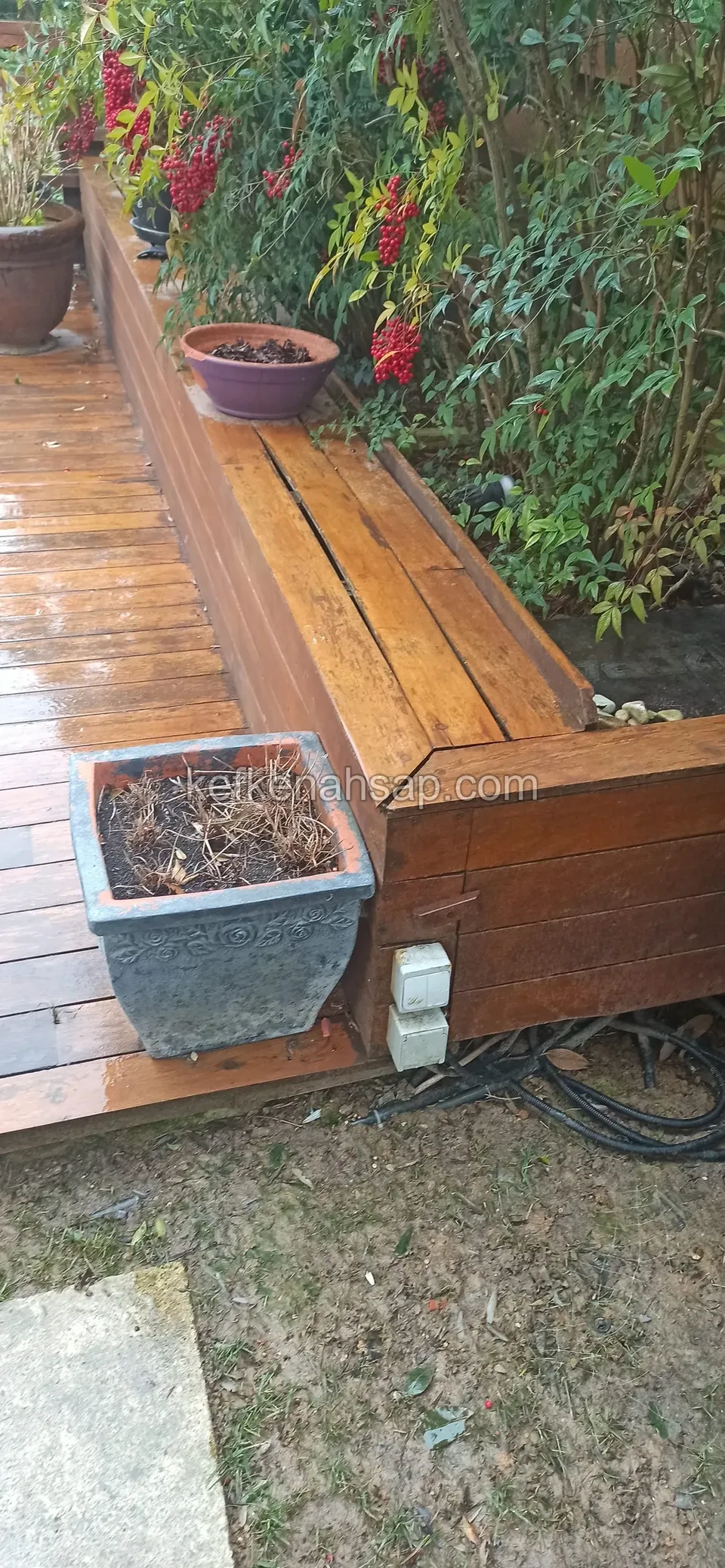
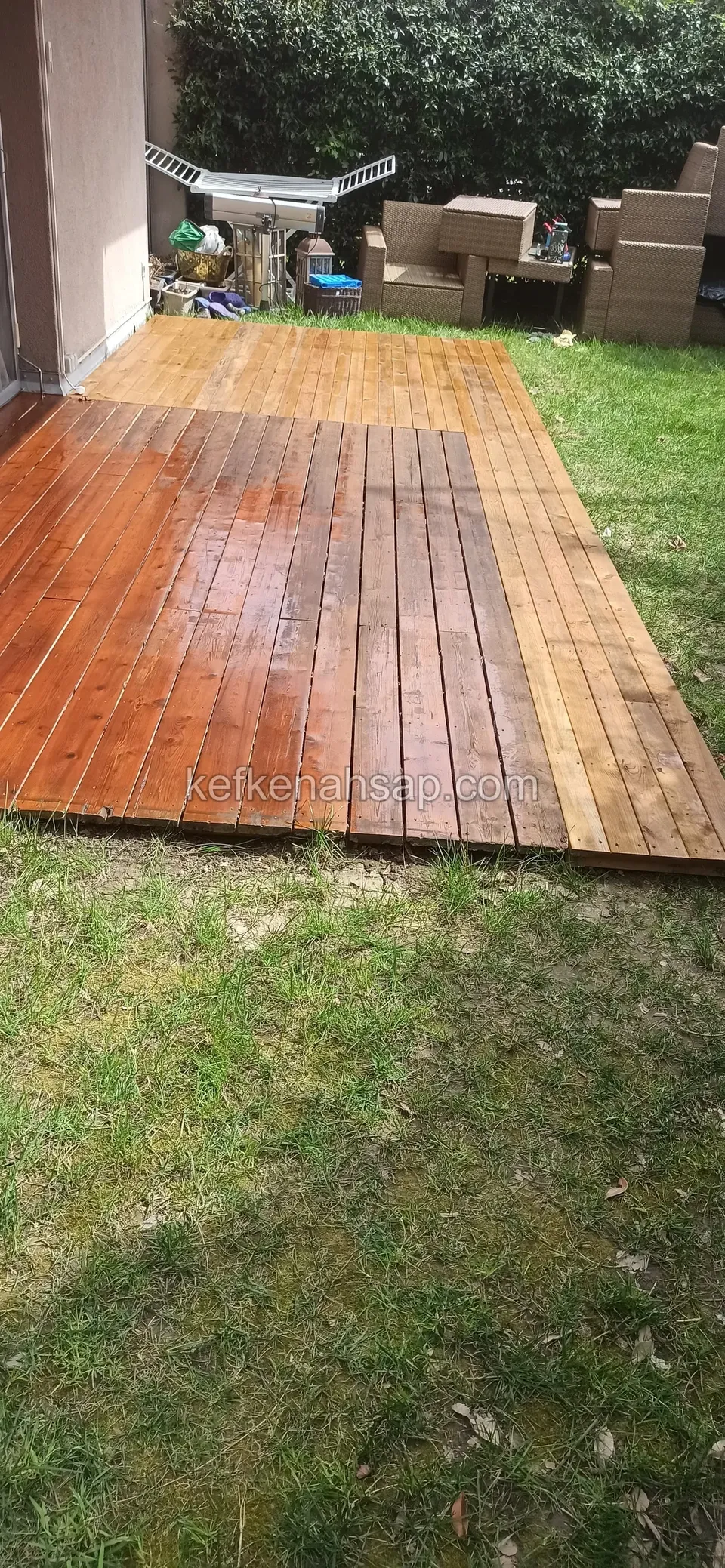
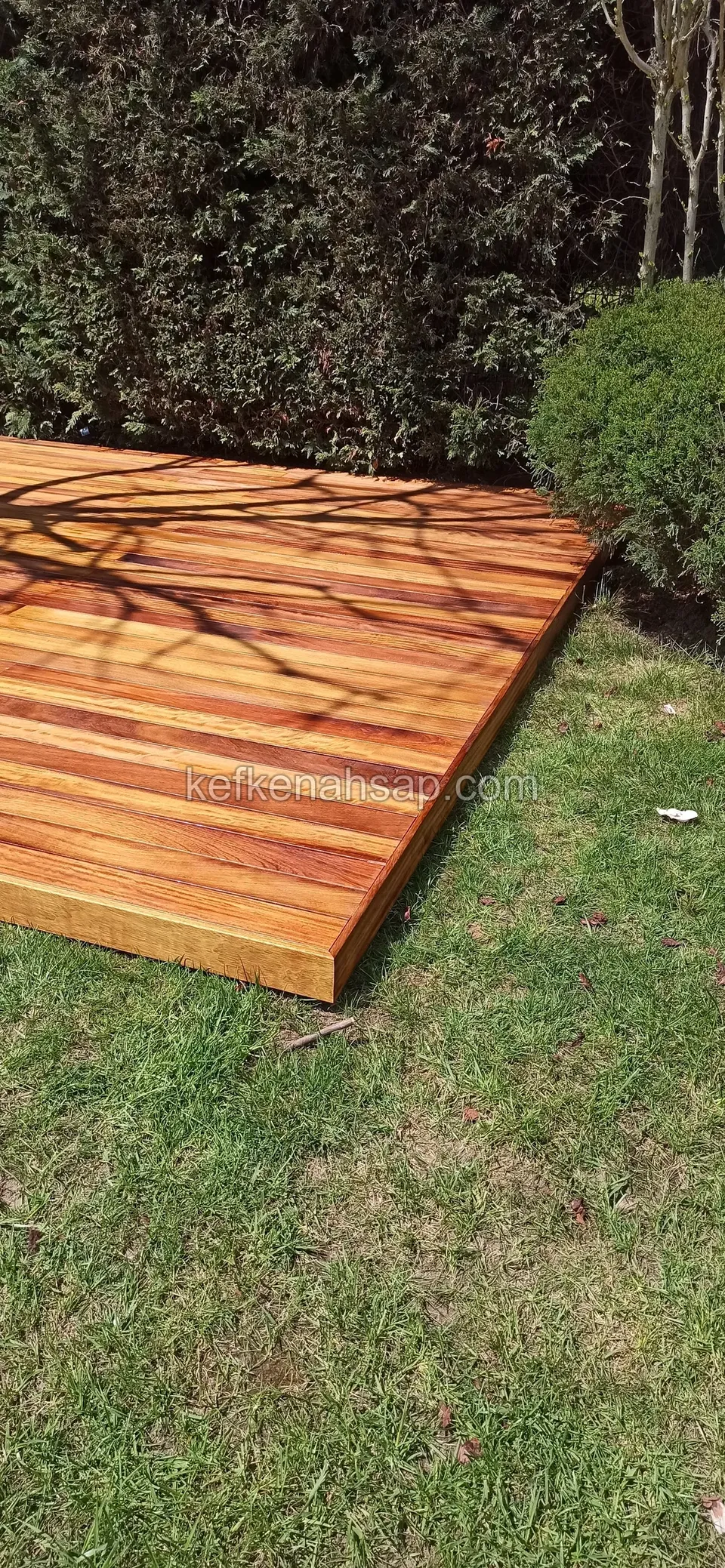
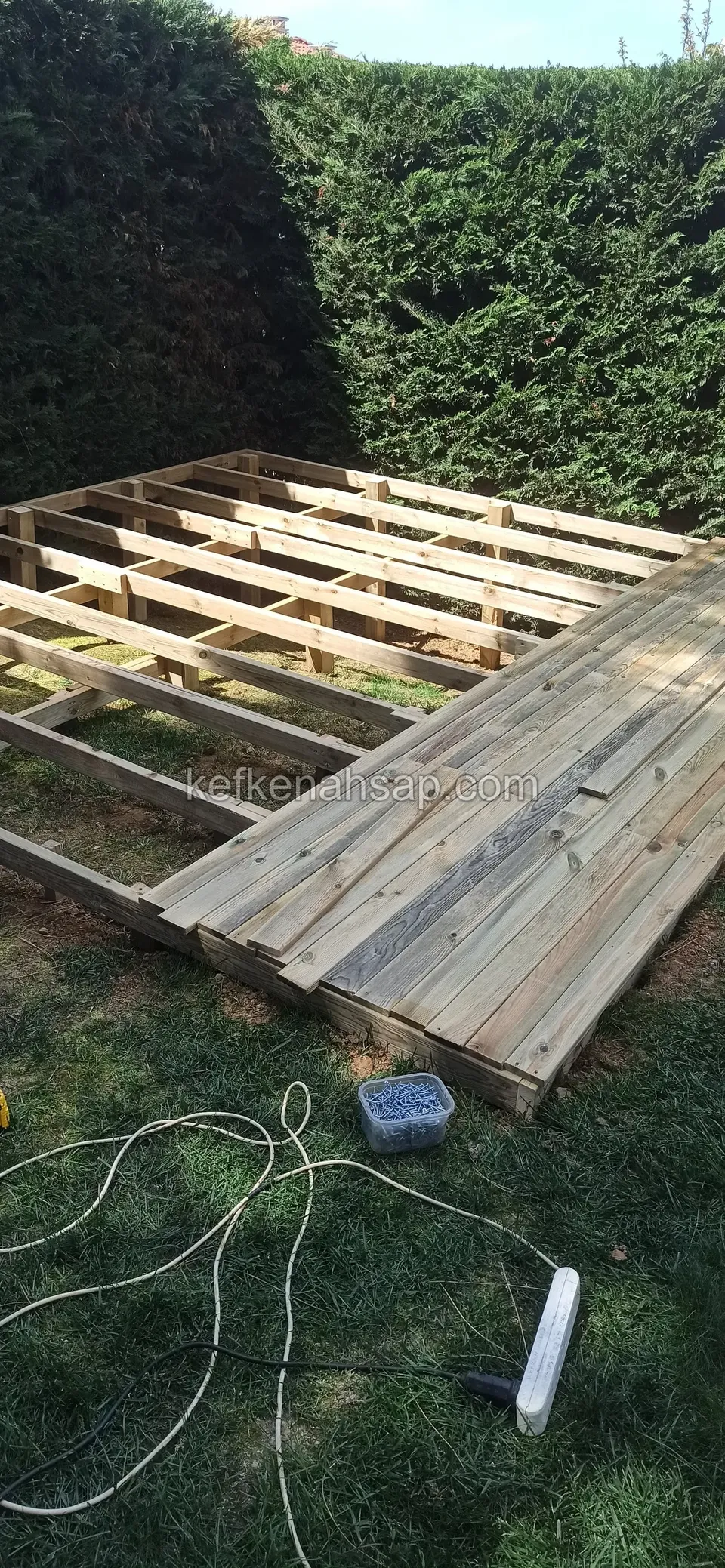
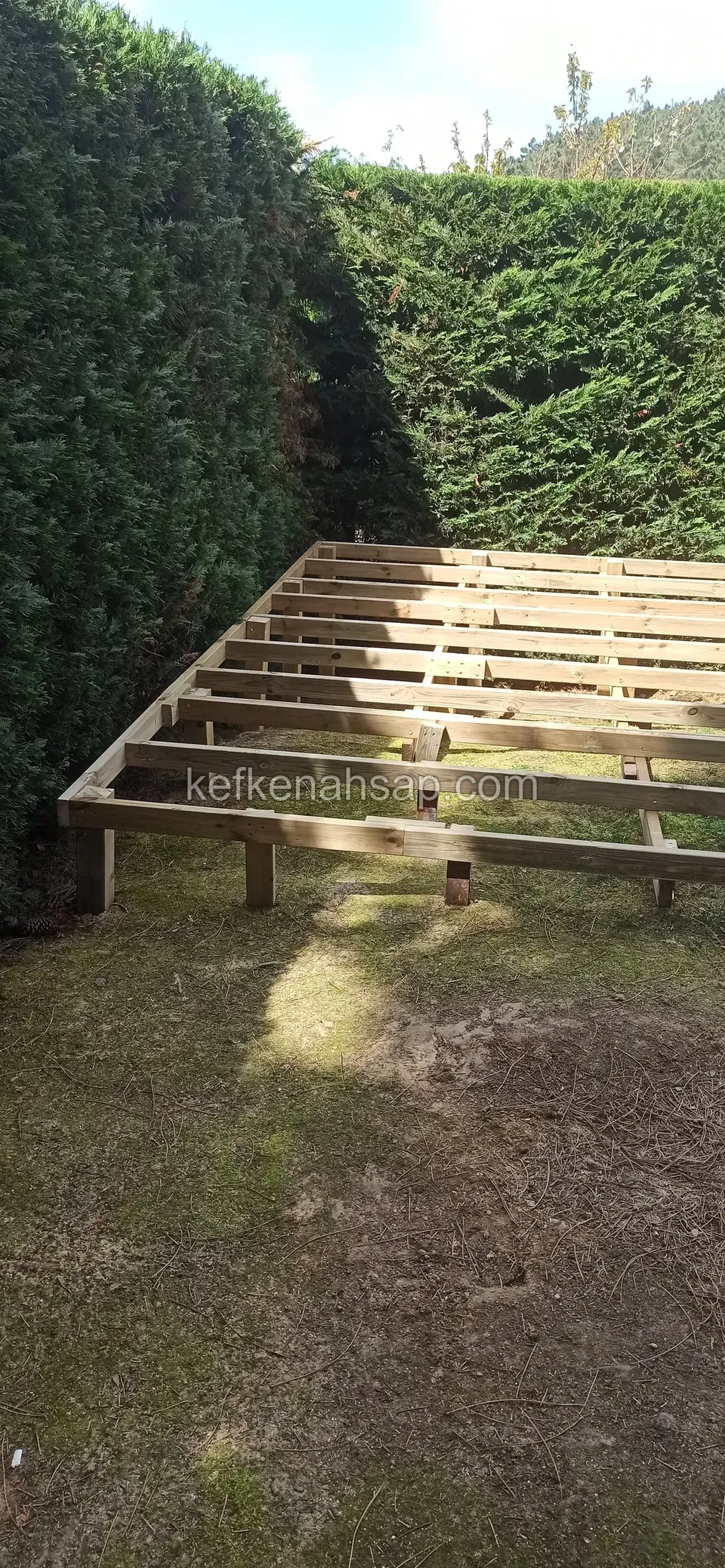
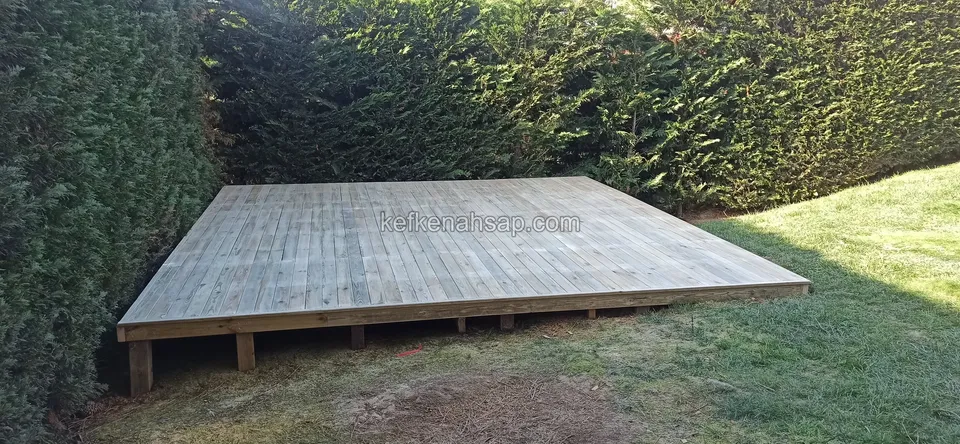
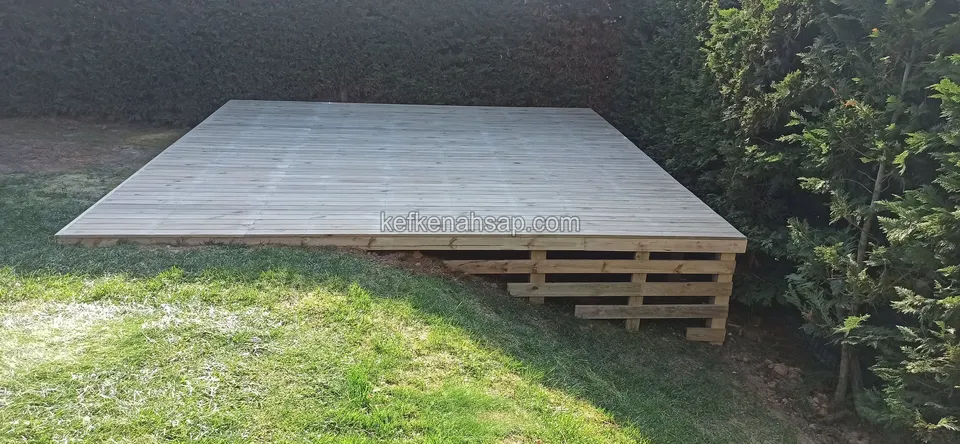
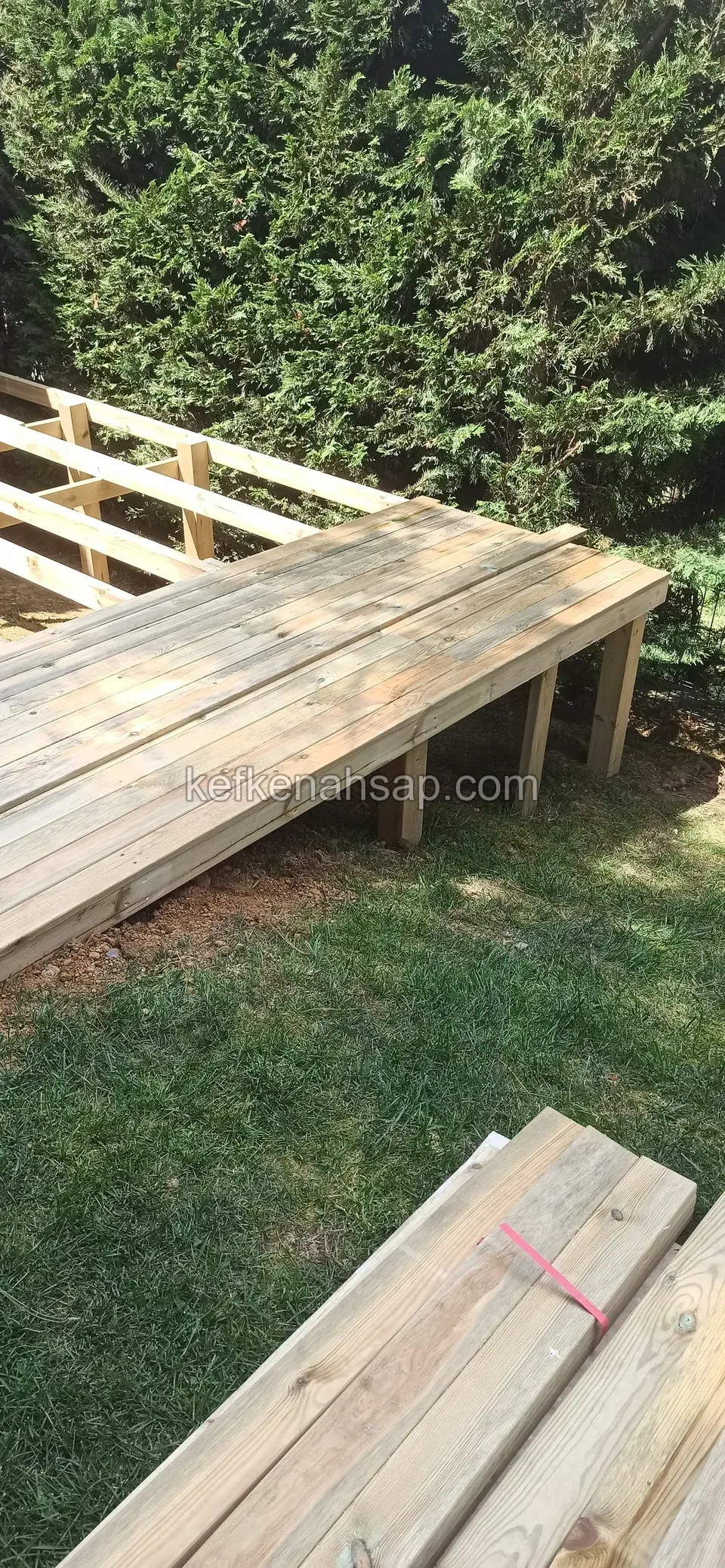
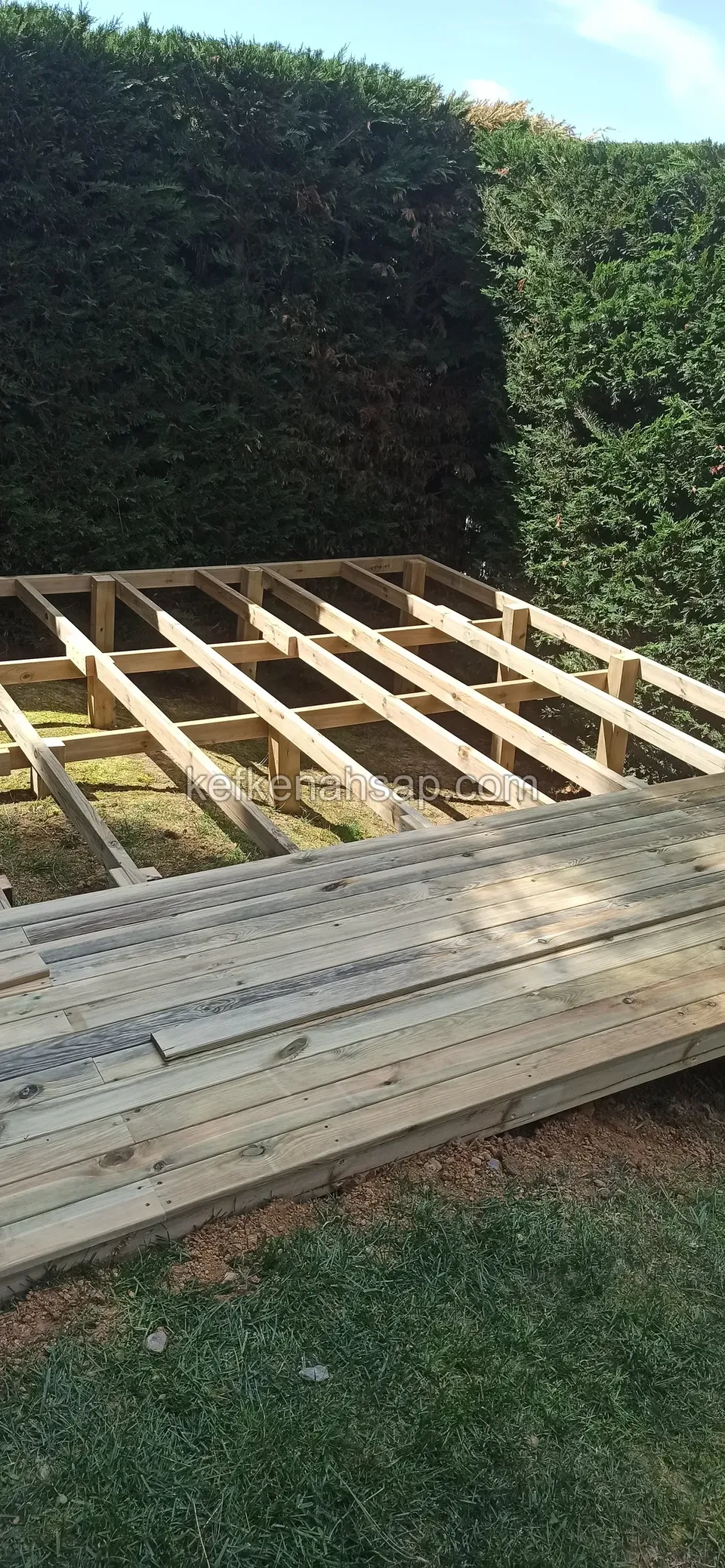
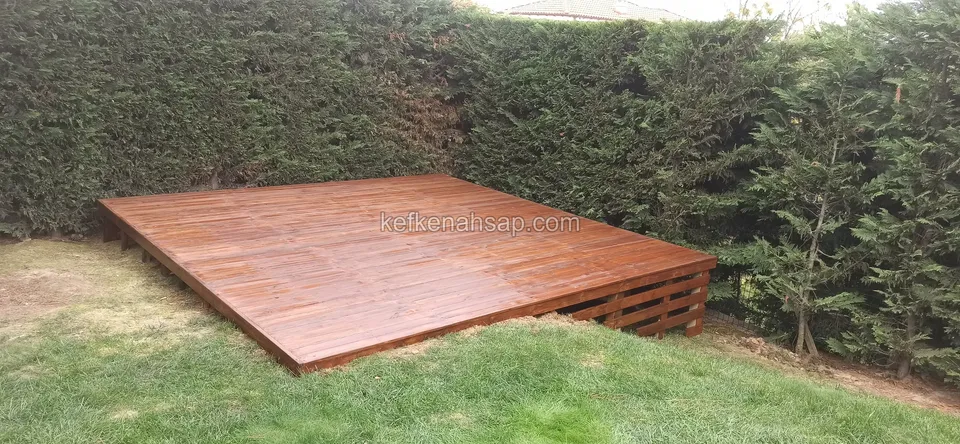
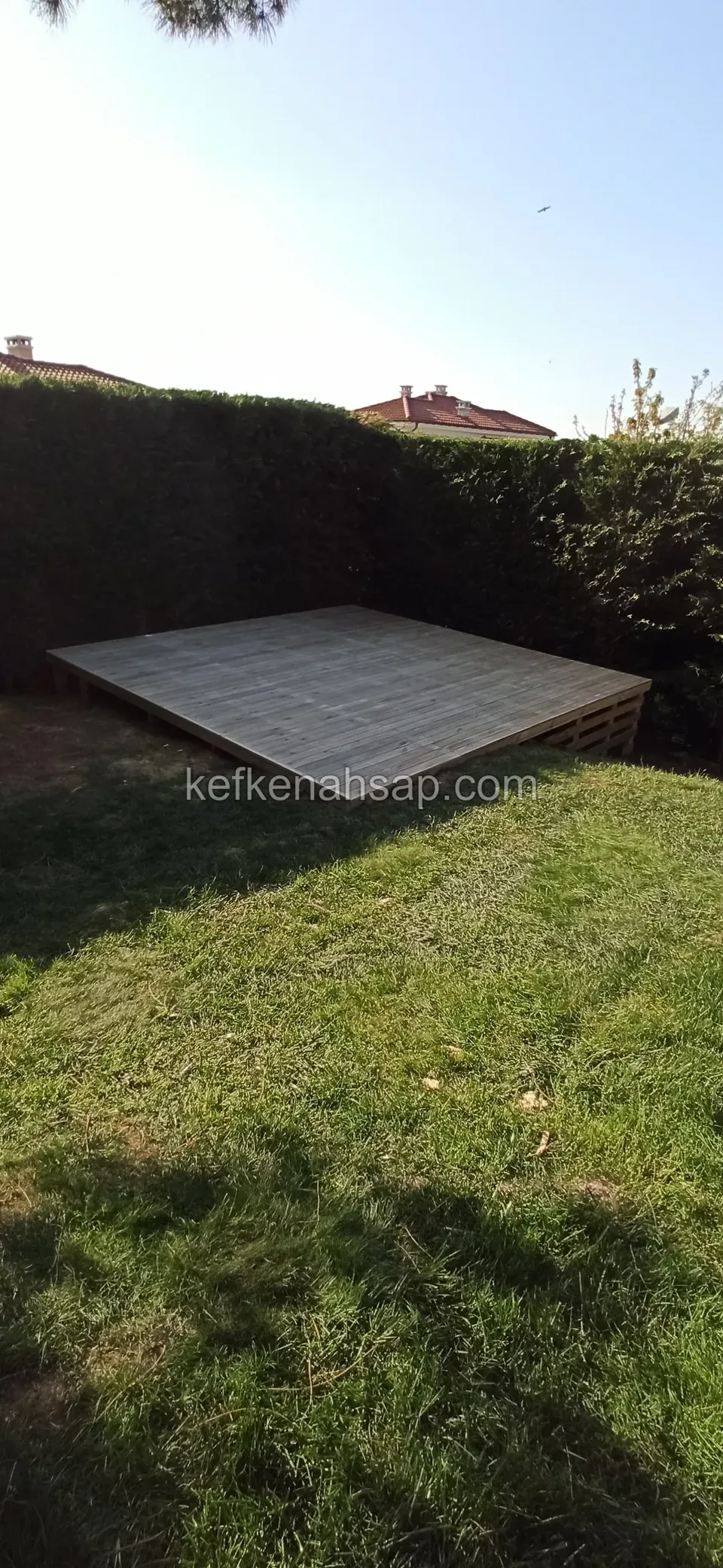
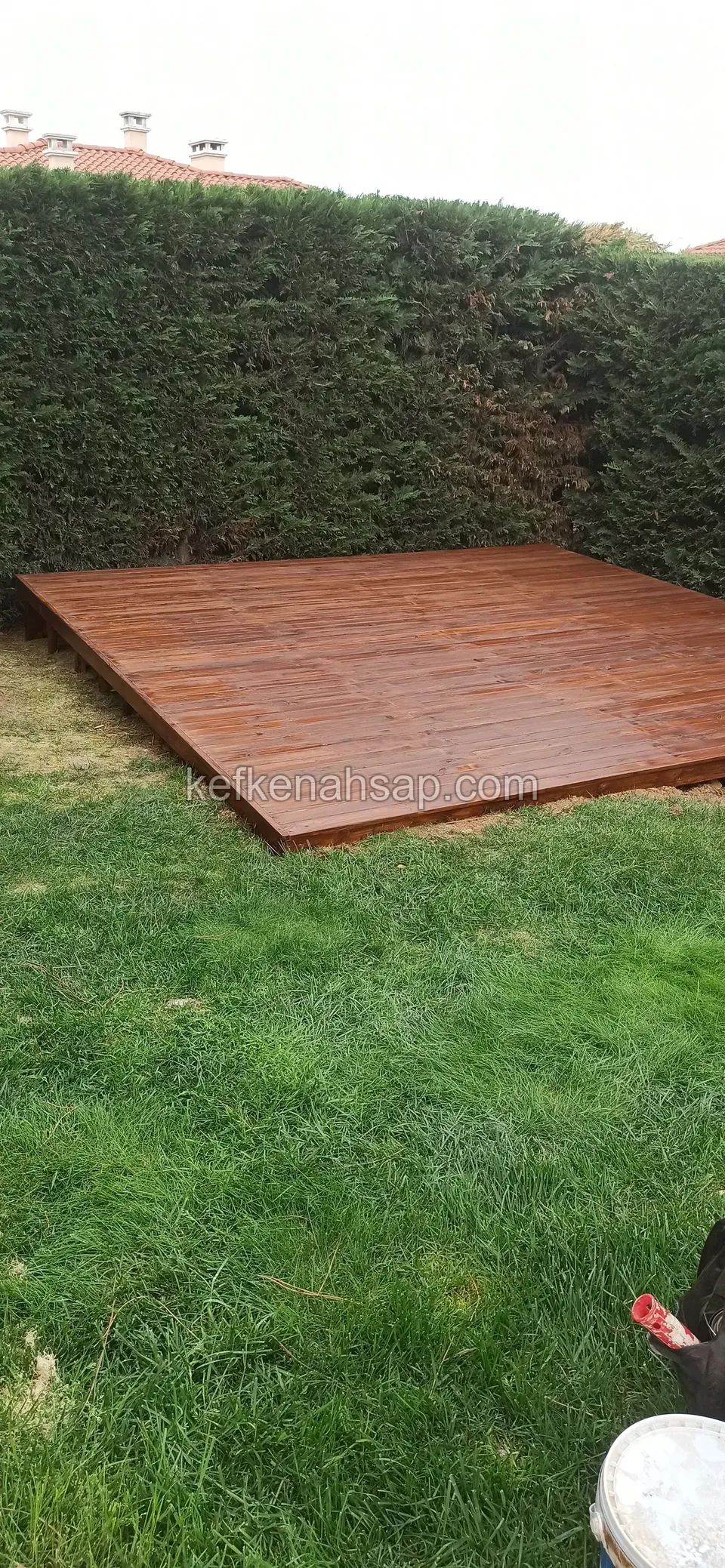
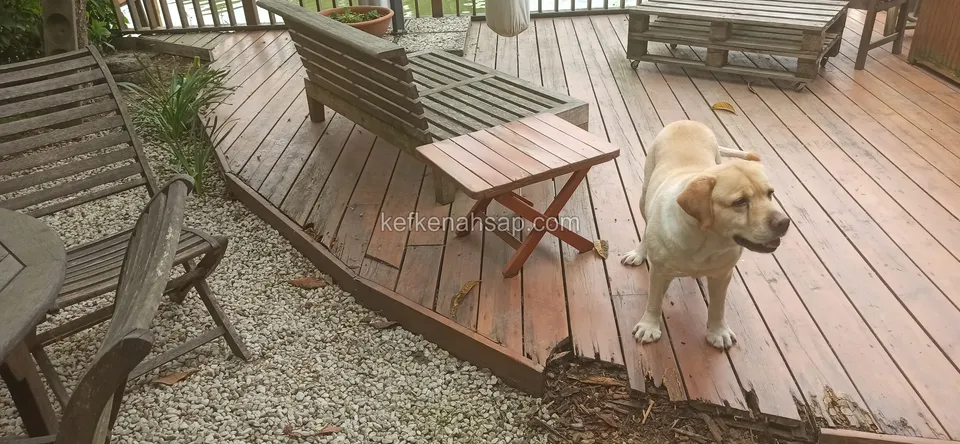
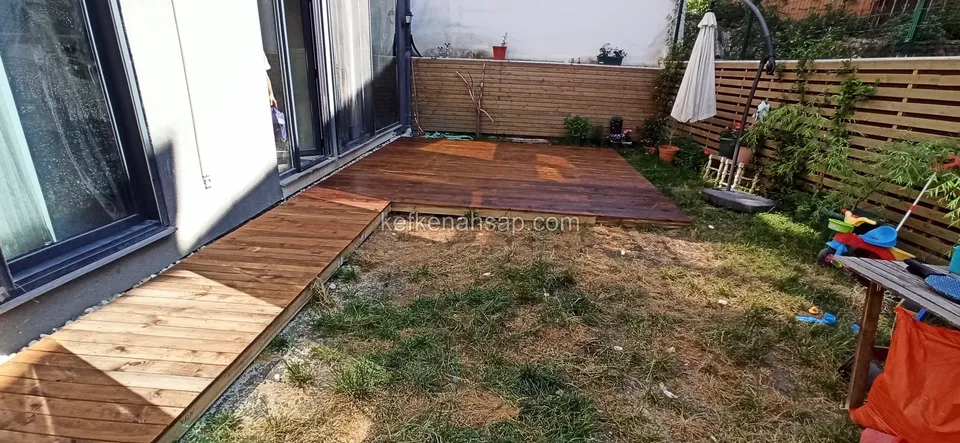
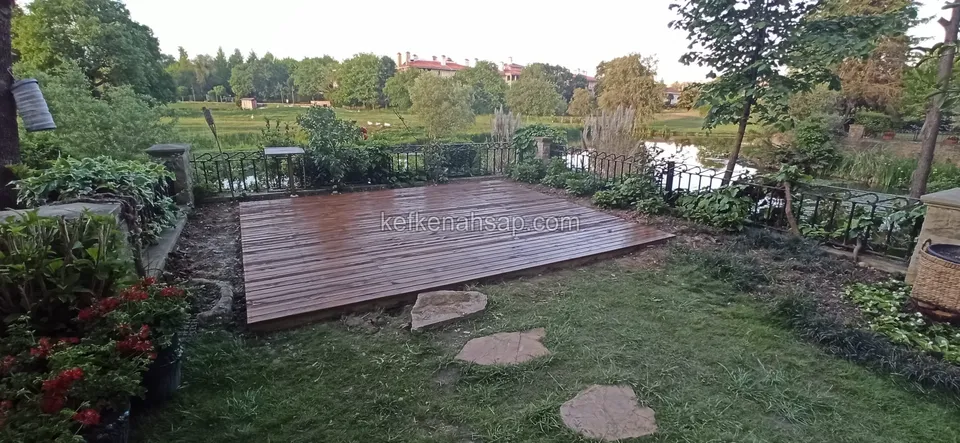
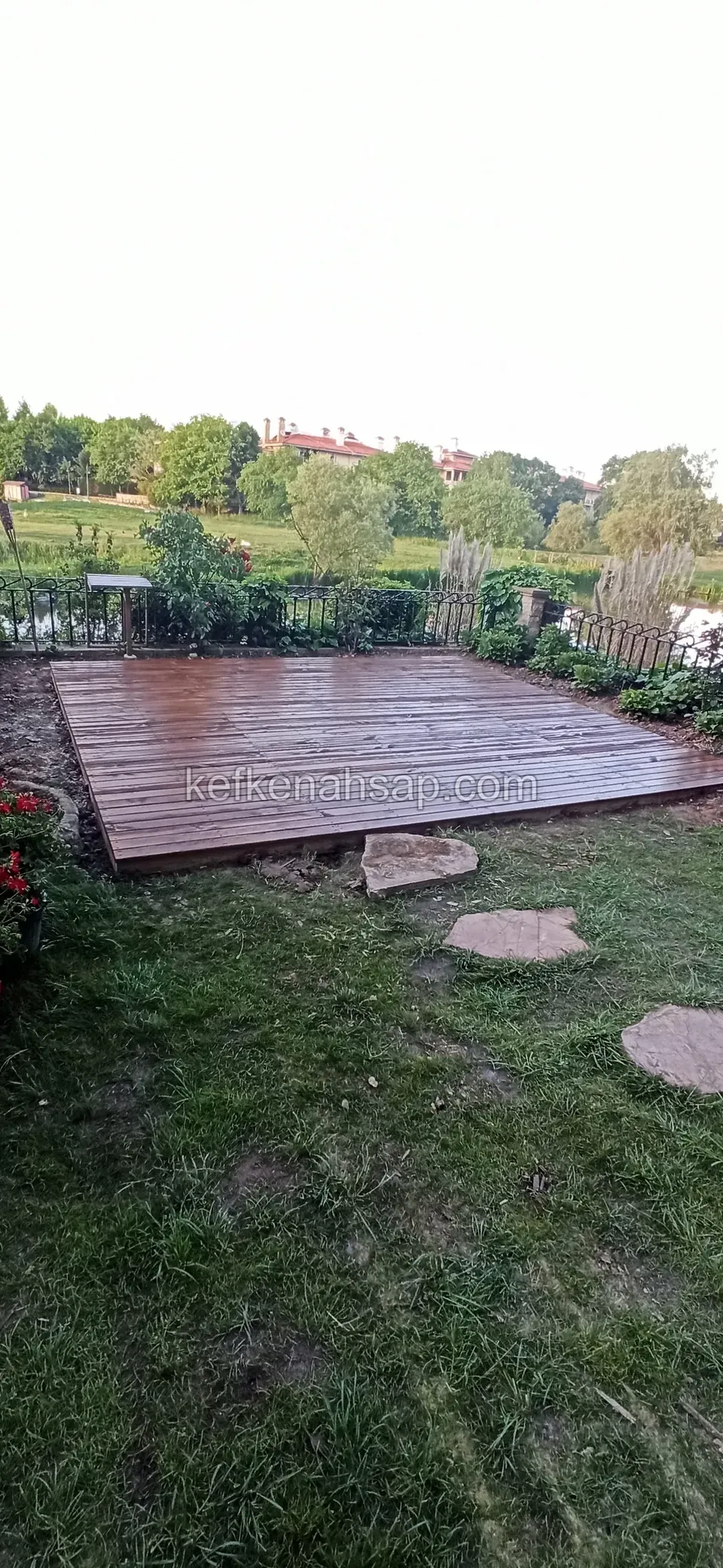
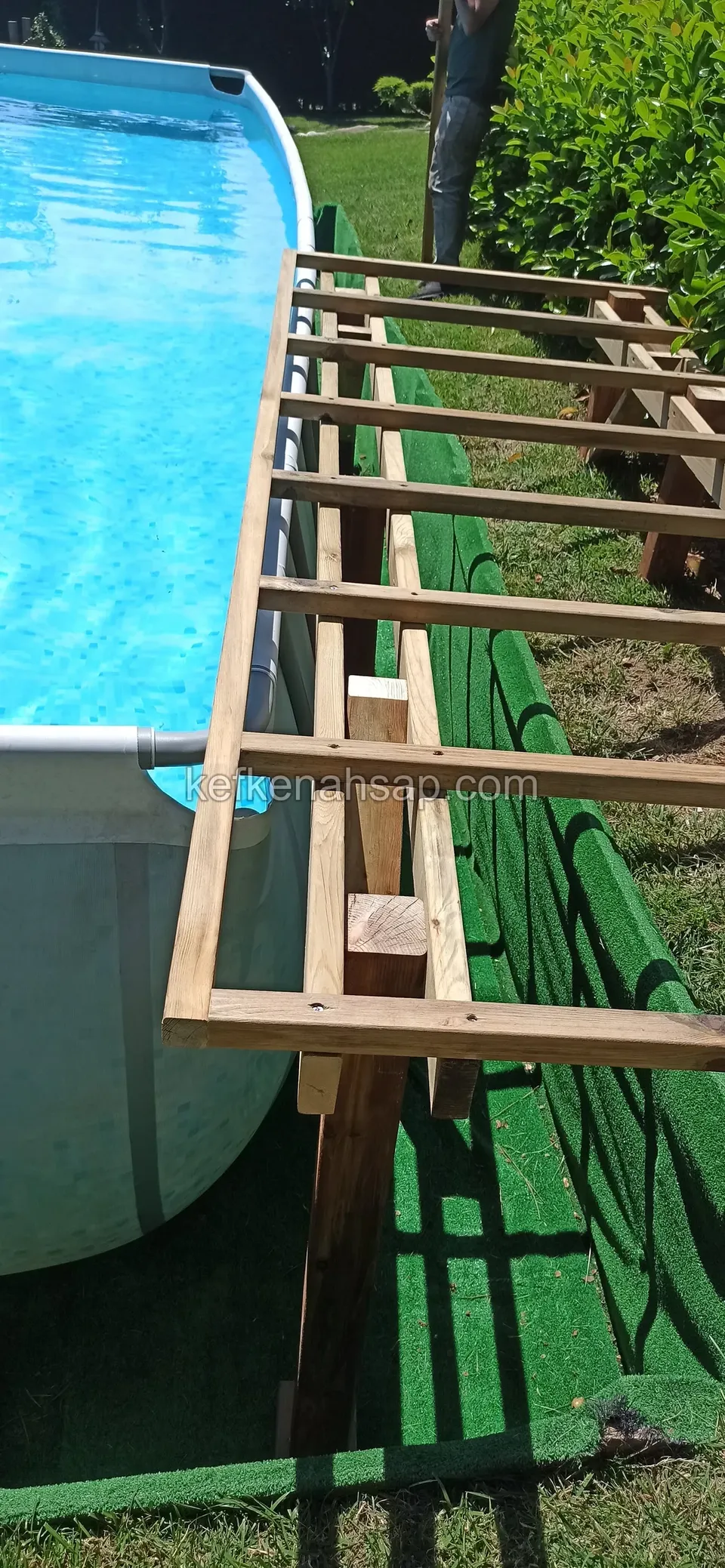
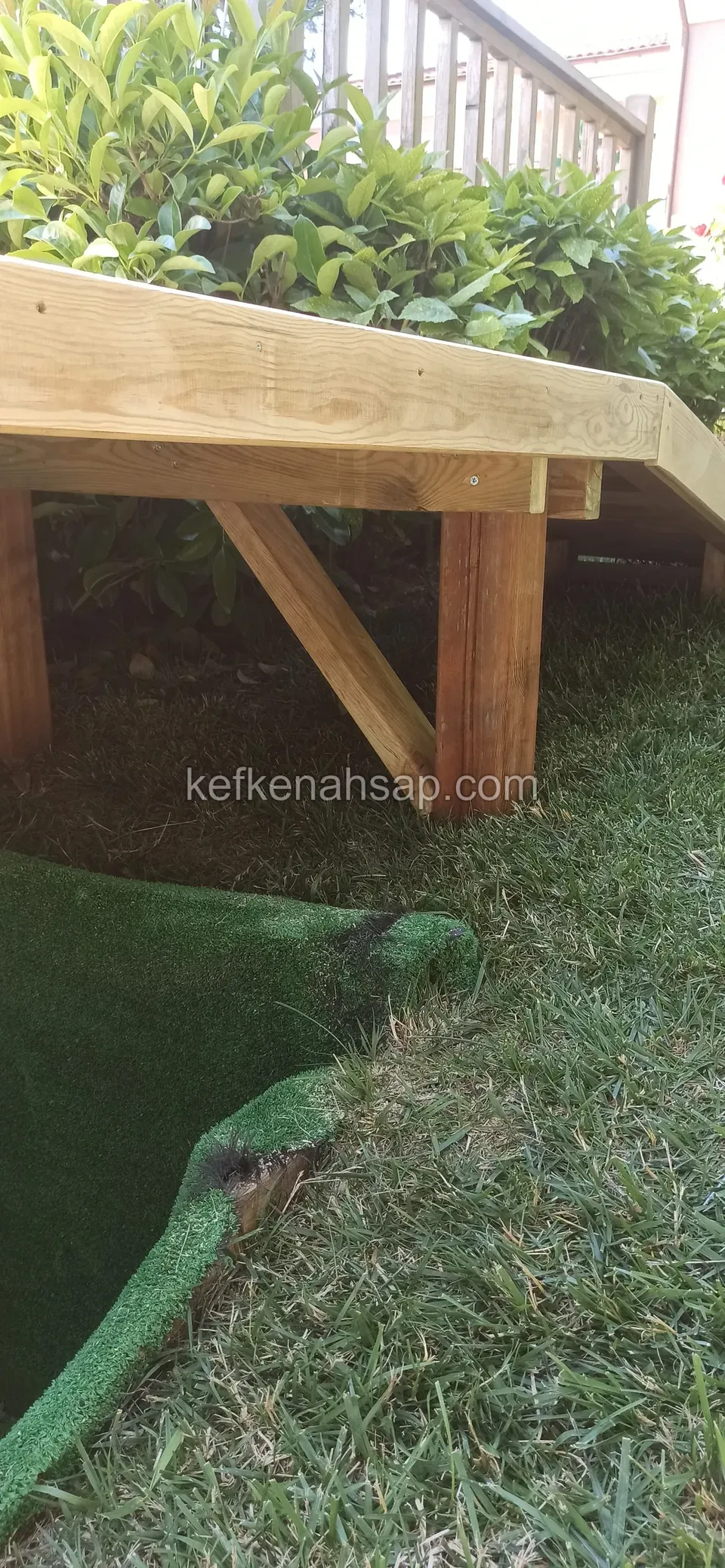
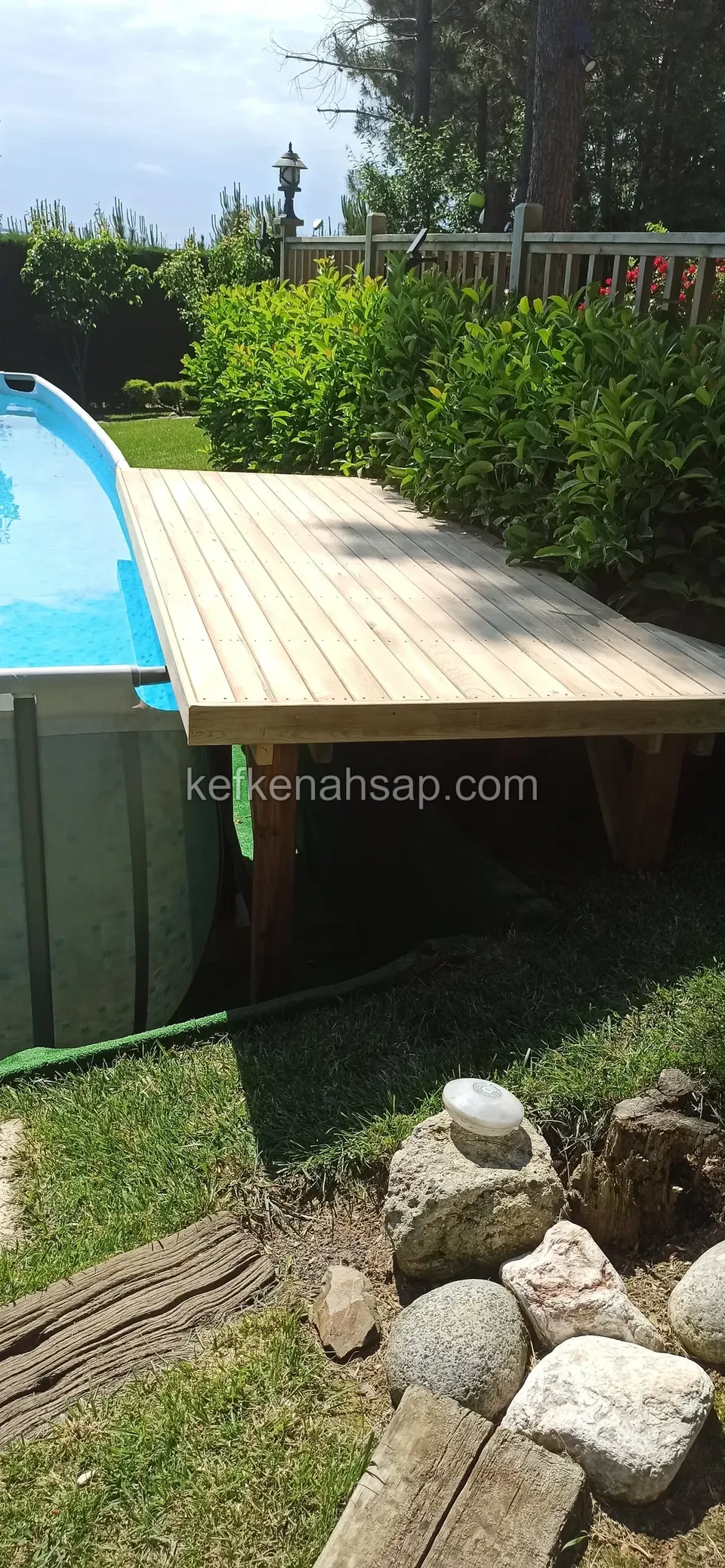
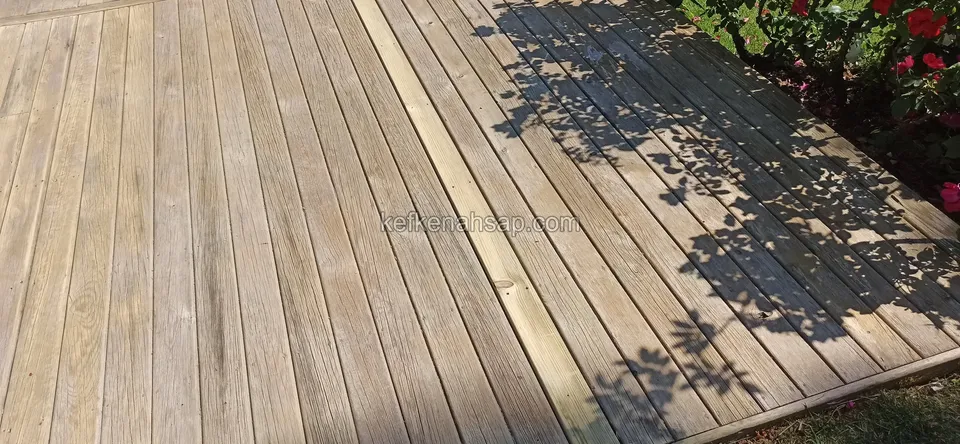
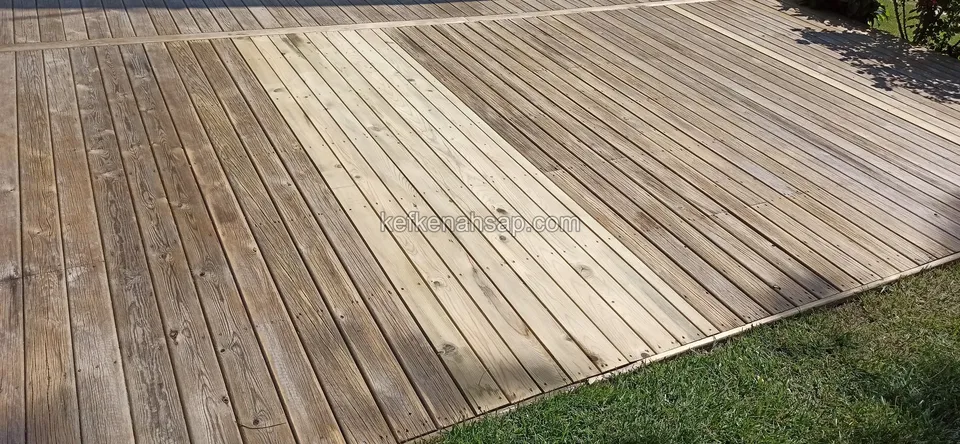
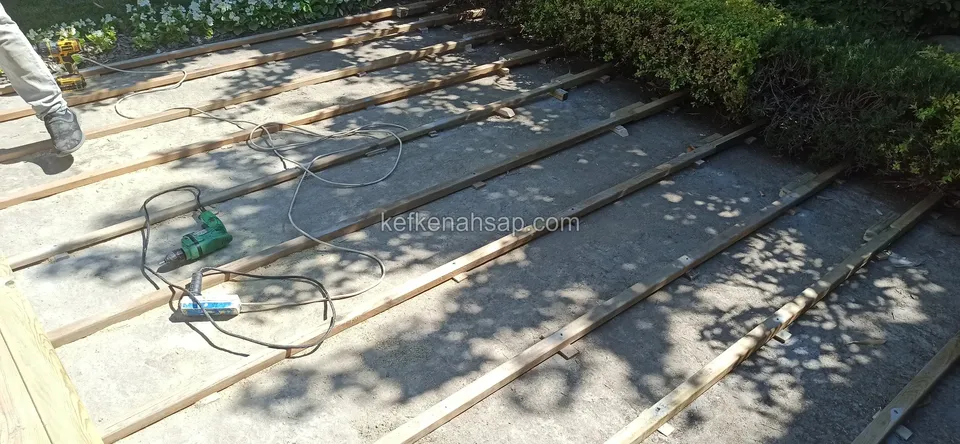
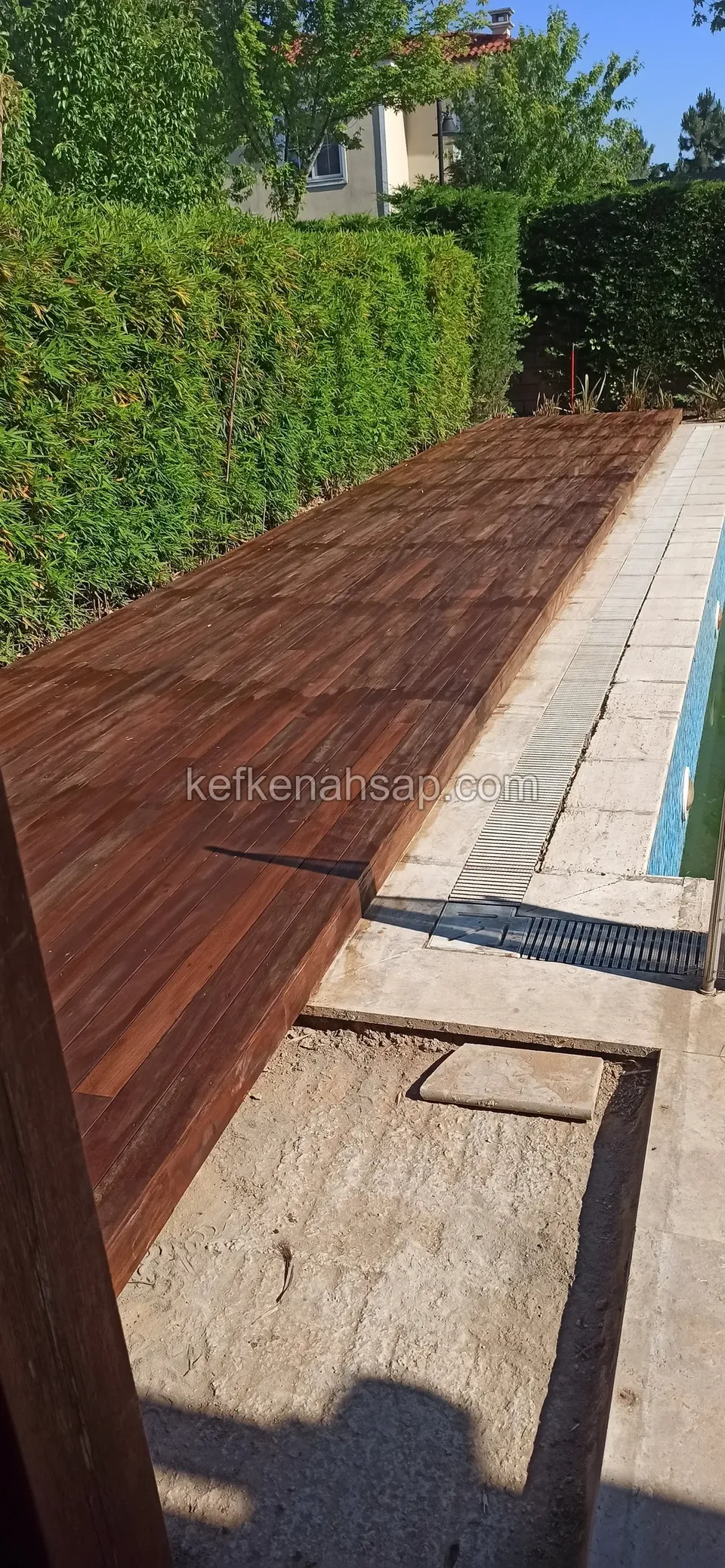
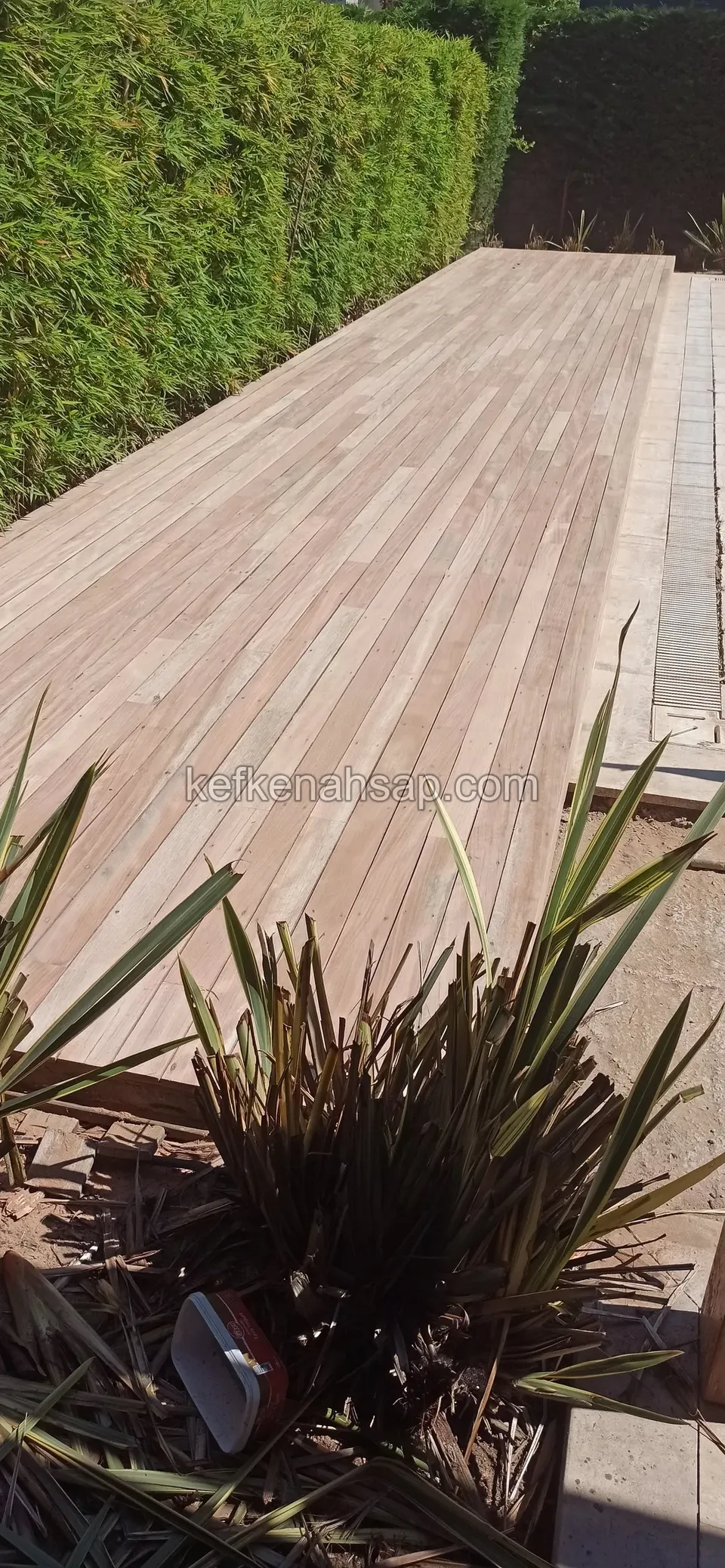
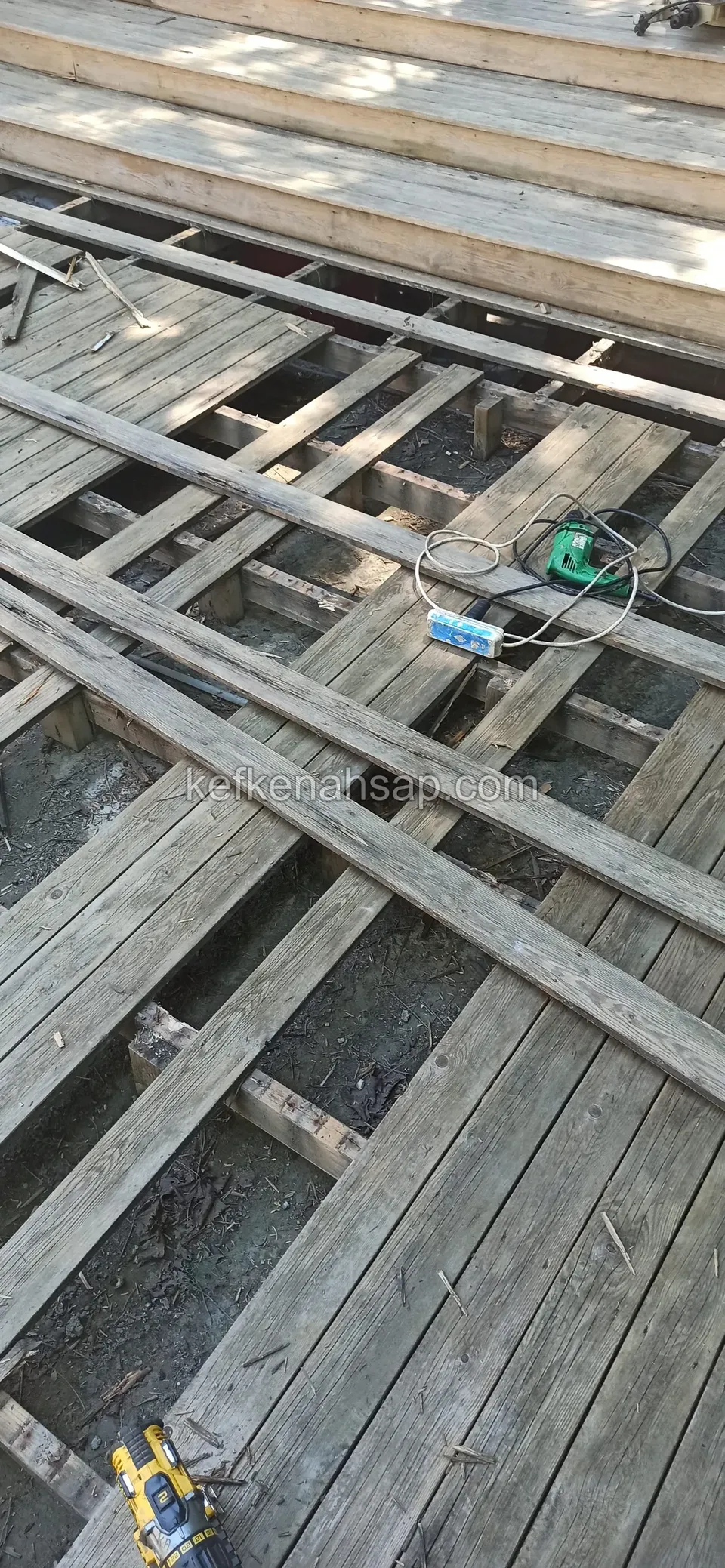
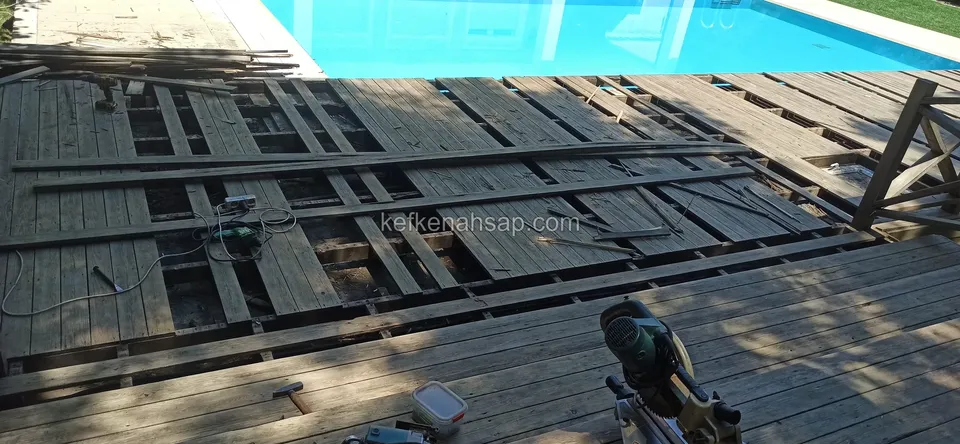
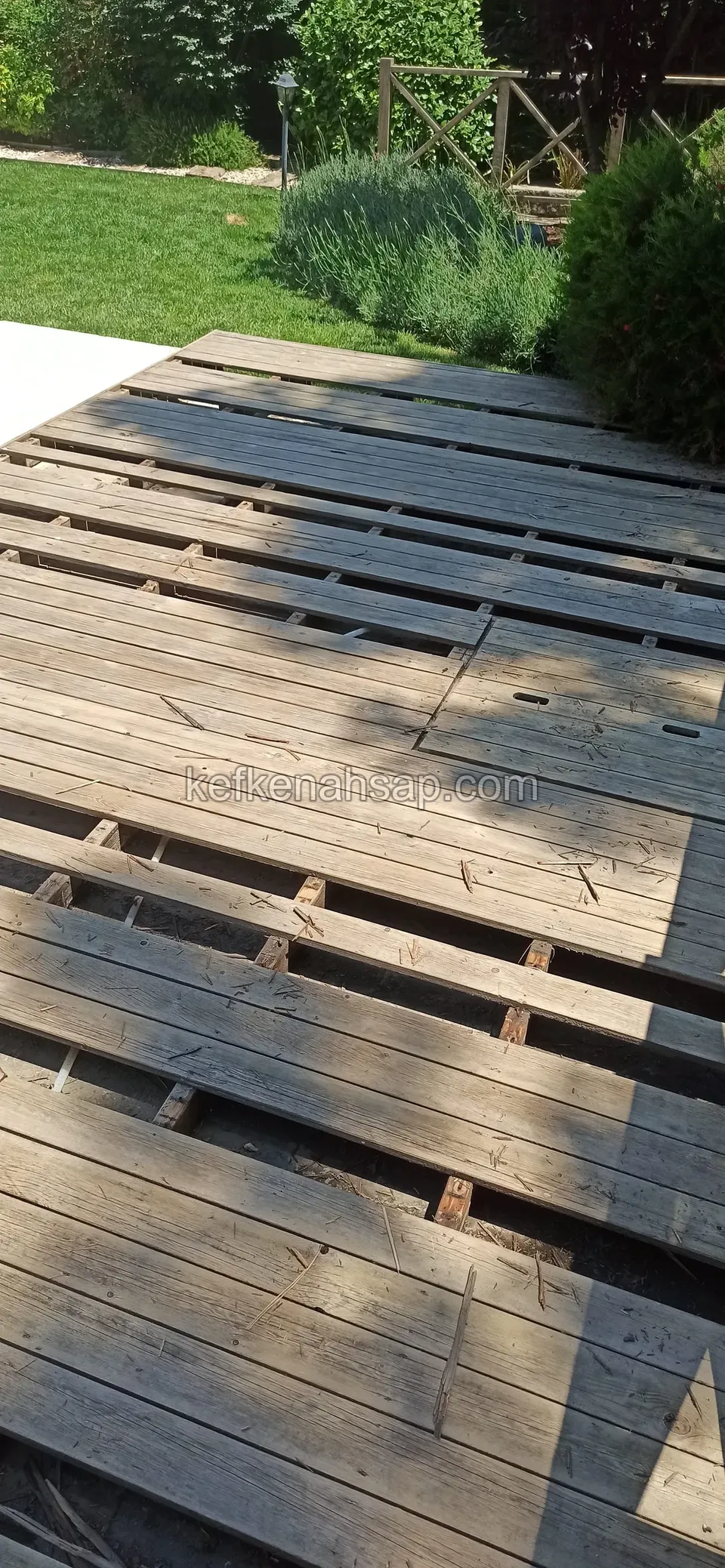
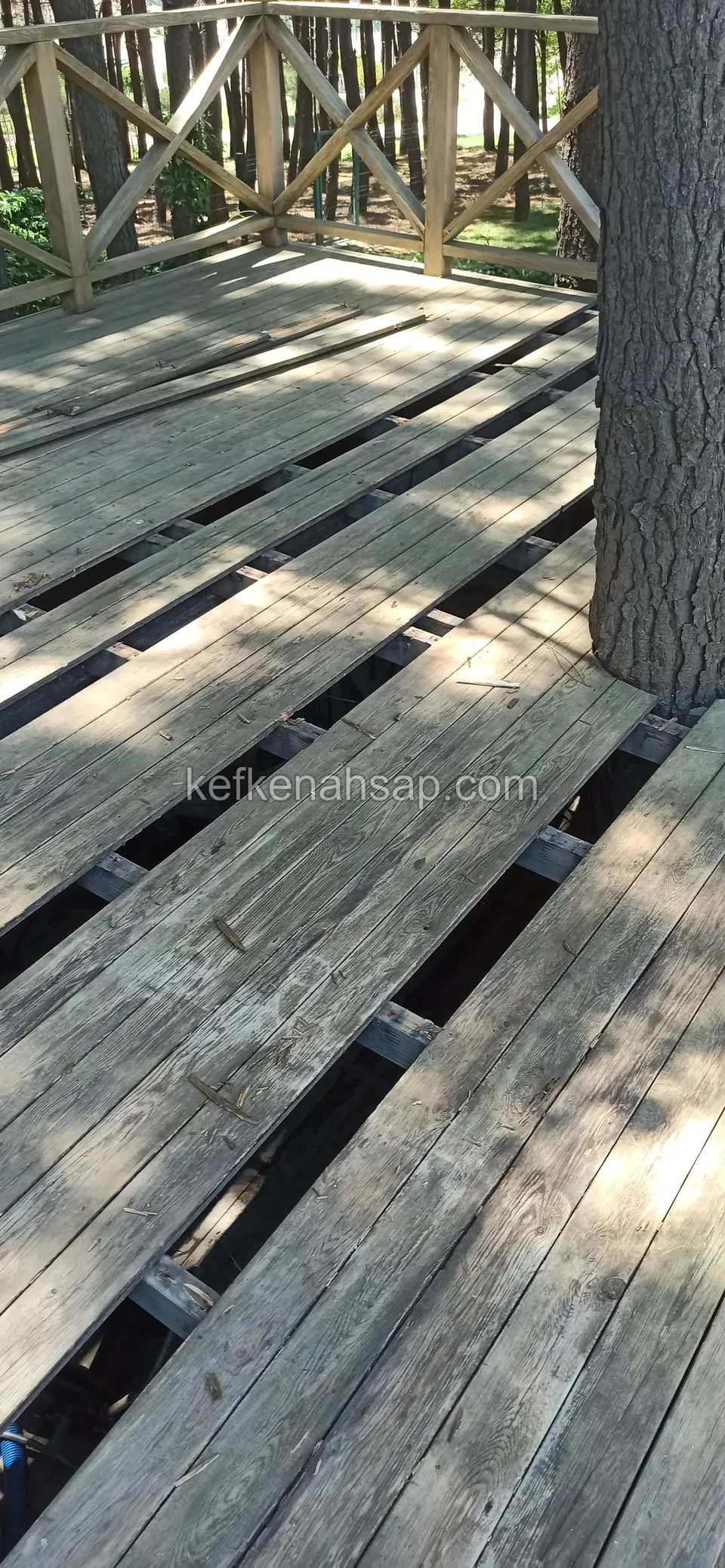
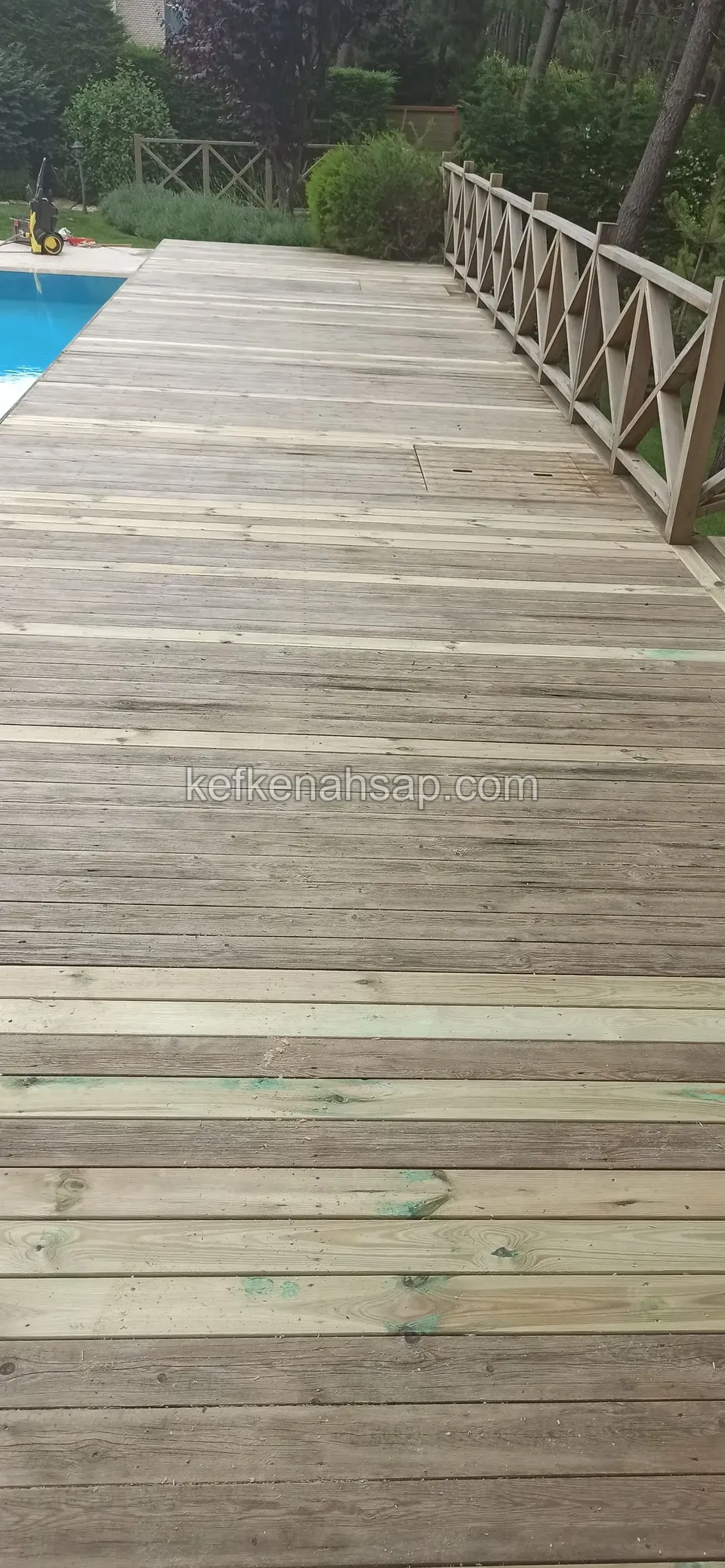
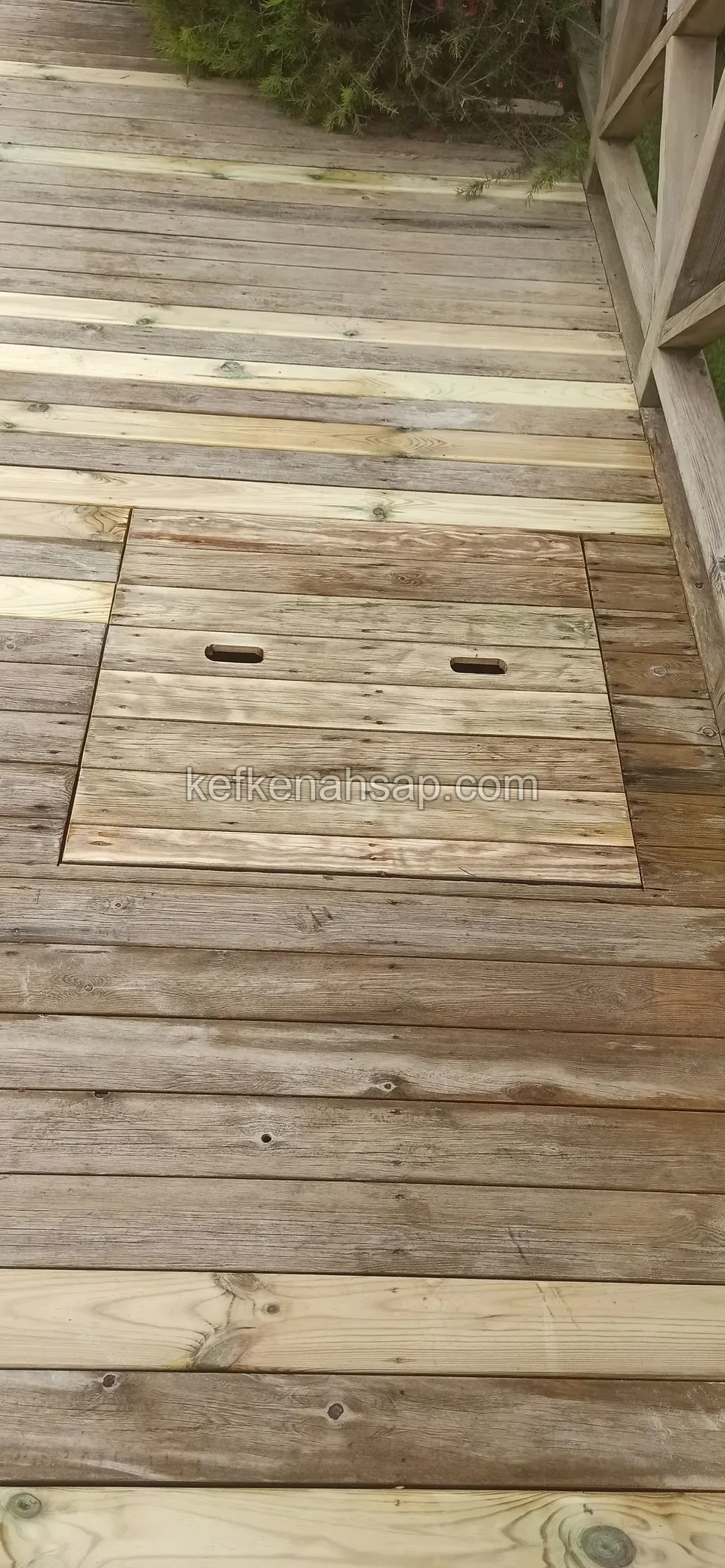
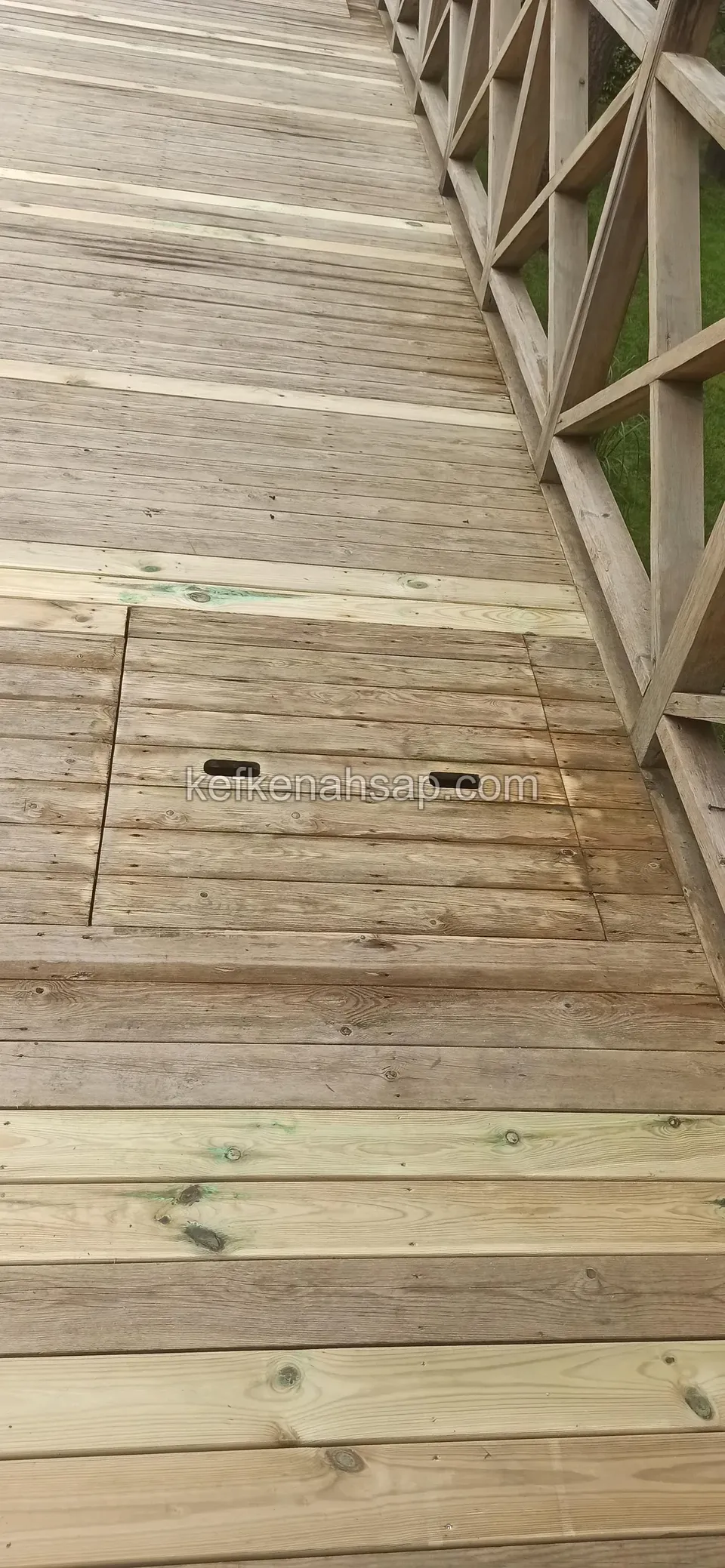
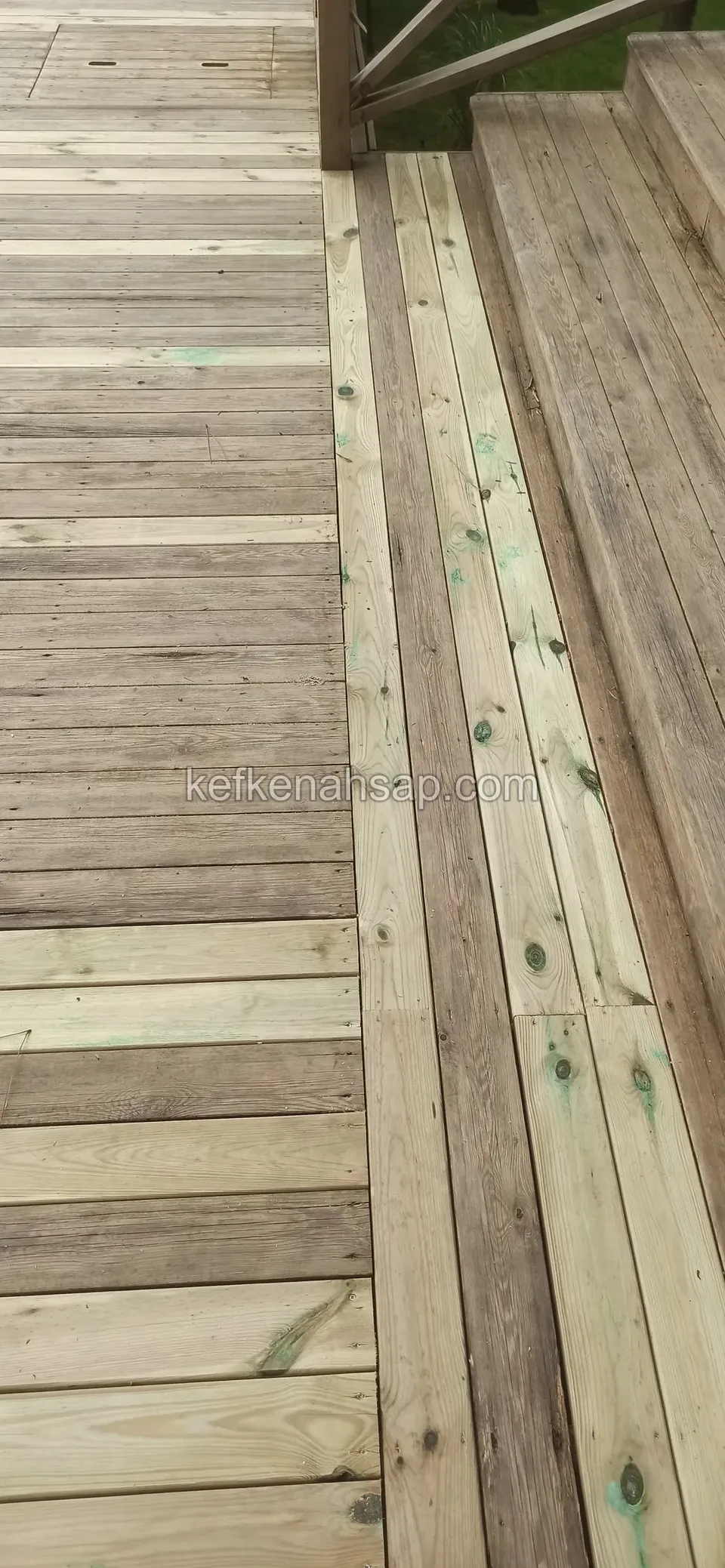
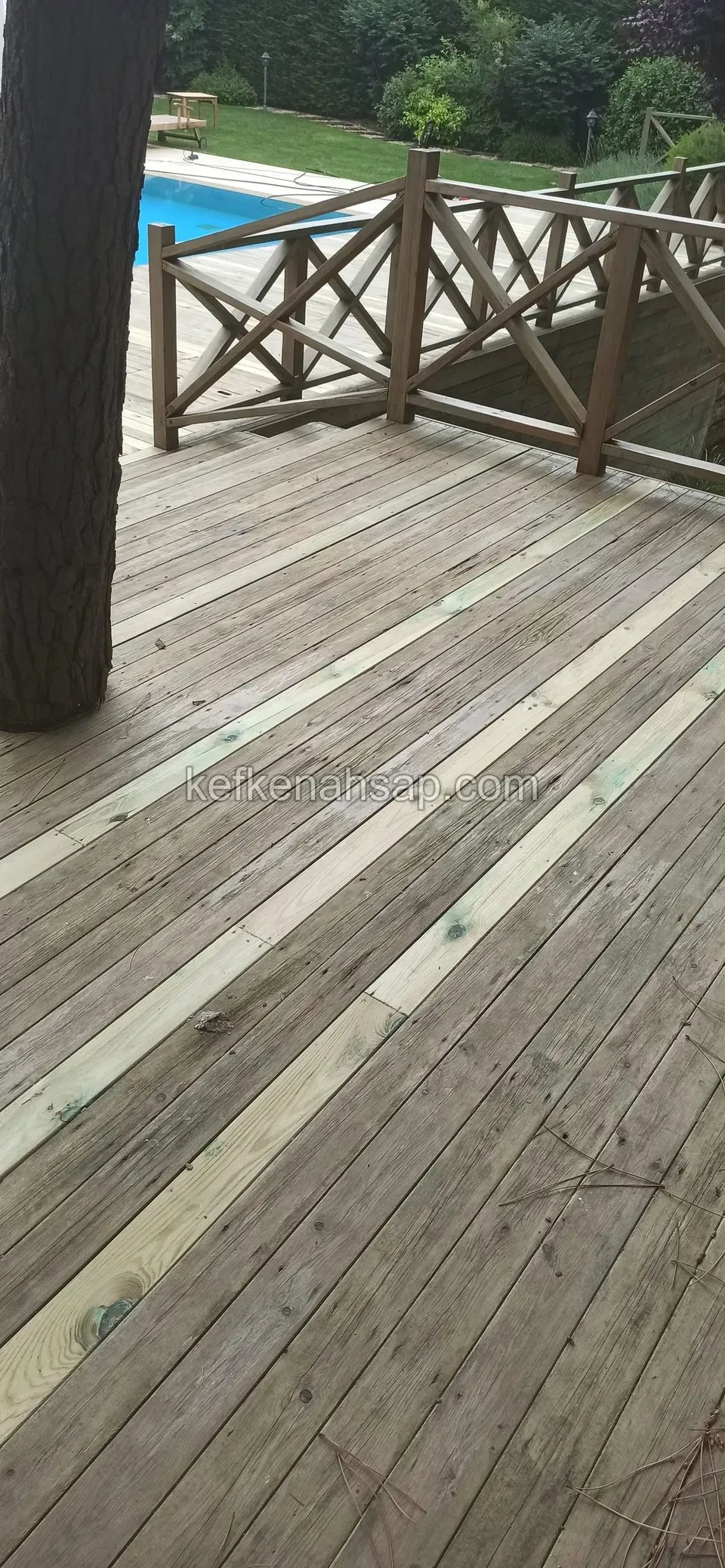
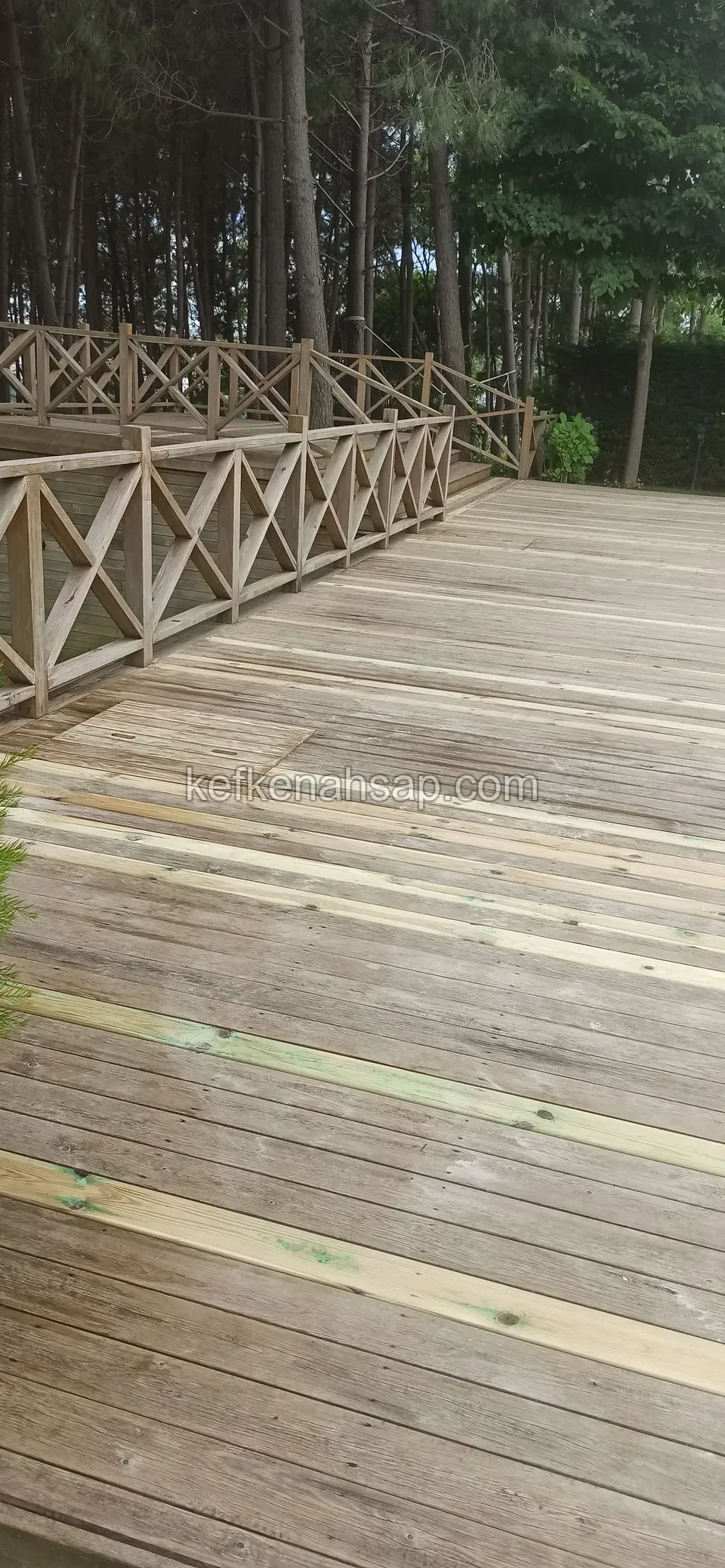
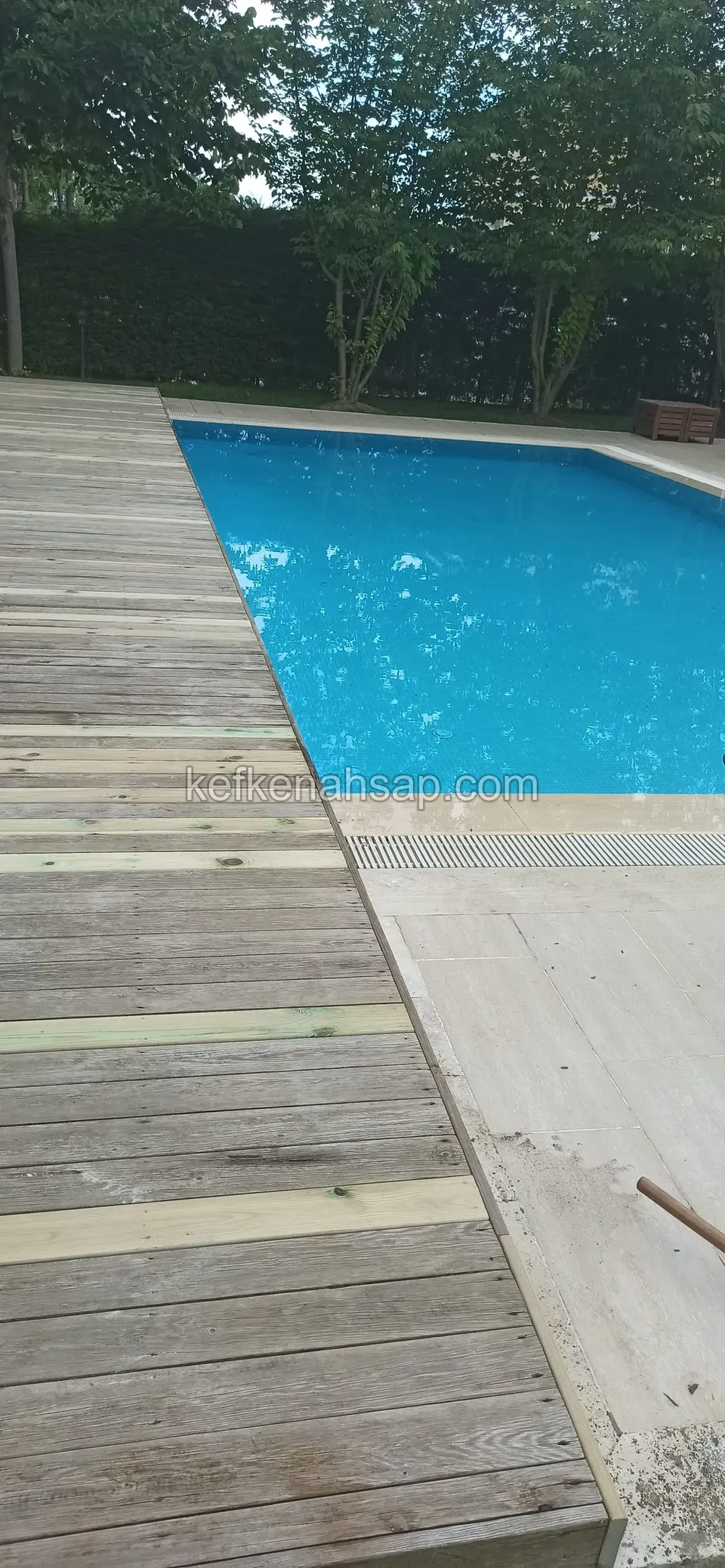
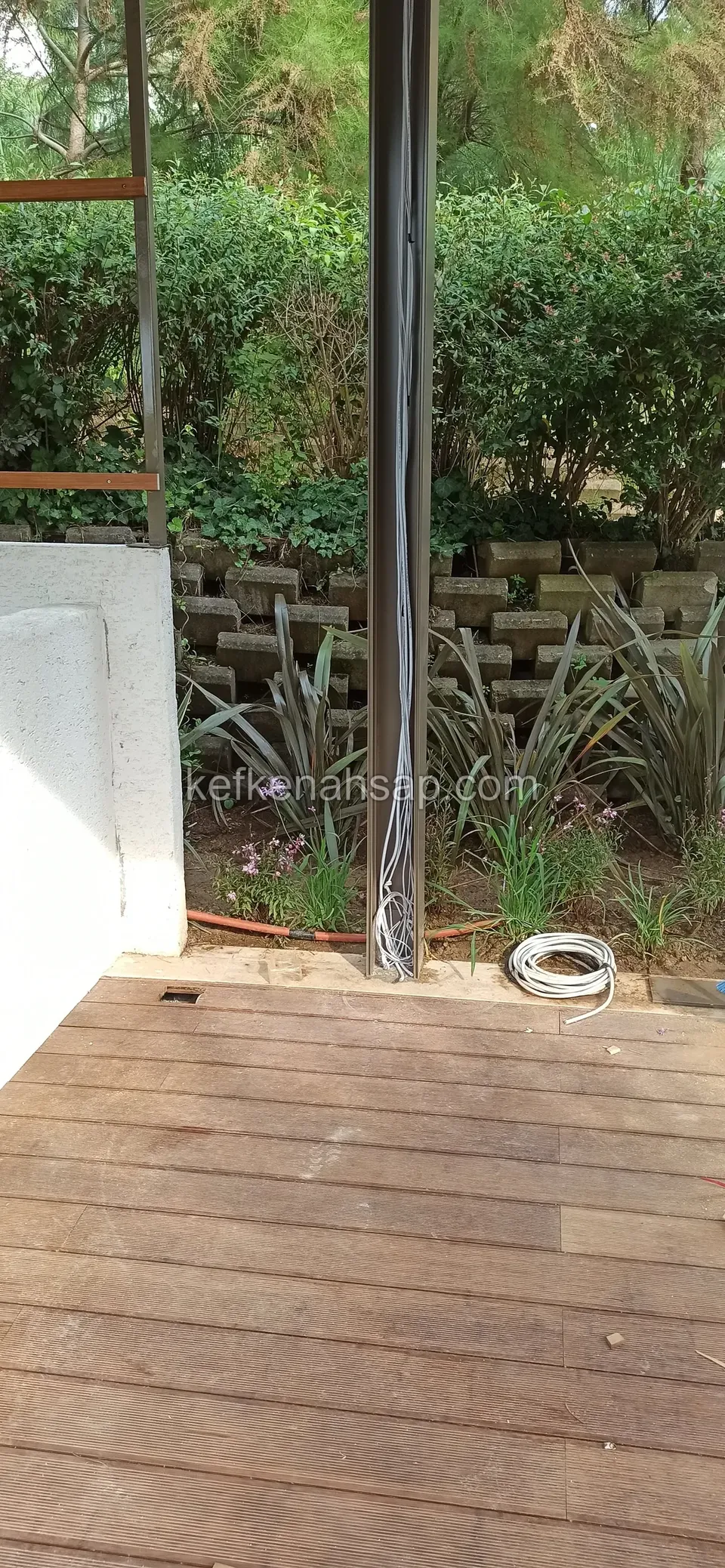
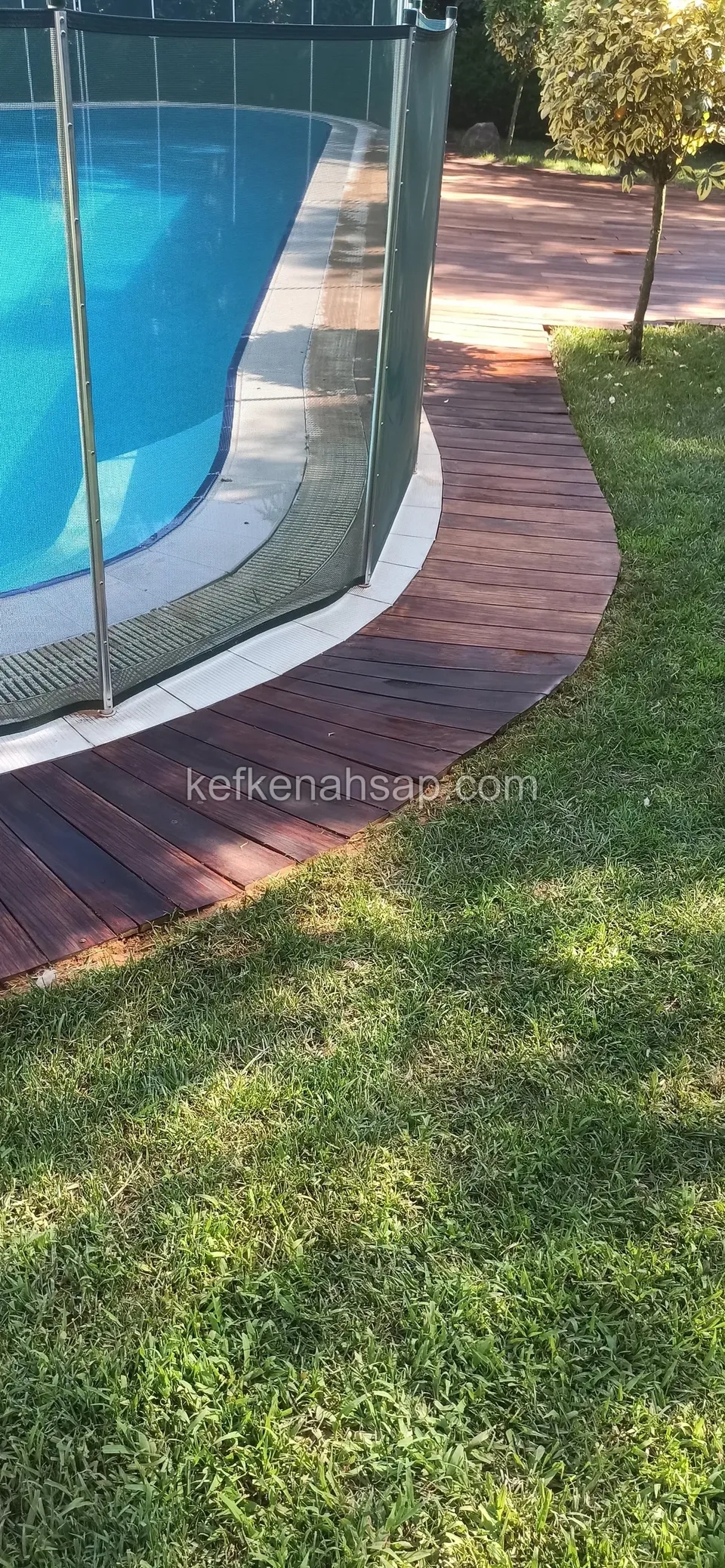
Kefken Ahşap Dekorasyon builds timber decking with its sub-frame for gardens, terraces, pool surrounds and seafronts. The same team takes the measurements, prepares the timber in the workshop and lays the deck.
What is timber decking and where is it used?
A deck is an outdoor floor made of timber boards laid with gaps on a supporting frame slightly raised off the ground. The gaps between the boards let water drain, and the space underneath lets the timber breathe. Villa gardens, terraces, pool and hot tub surrounds, the area outside sliding doors and seaside walkways are where decks are used most. On most jobs we finish the deck with railings, steps or planters.
Which timber should you choose for a deck?
The two most common options for a deck are pressure-treated pine and iroko.
- Pressure-treated pine: The preservative is pressed into the wood. It is more economical and holds up well outdoors with regular oiling or painting.
- Iroko and teak: Hardwoods with high natural durability. They resist water and sun better and cost more. They are a common choice where the deck is wet all the time, such as around a pool.
We choose together during the site visit, based on your budget and how much sun and water the area gets. We also work with thermally modified (thermowood) boards.
How is a deck installed?
- Site visit: We see the ground, the slope and where the water runs.
- Measurement and quote: We measure the area, settle the timber and details, and give a quote.
- Workshop fabrication: Boards and joists are cut to length in our Arnavutköy workshop, with a first protective coat if needed.
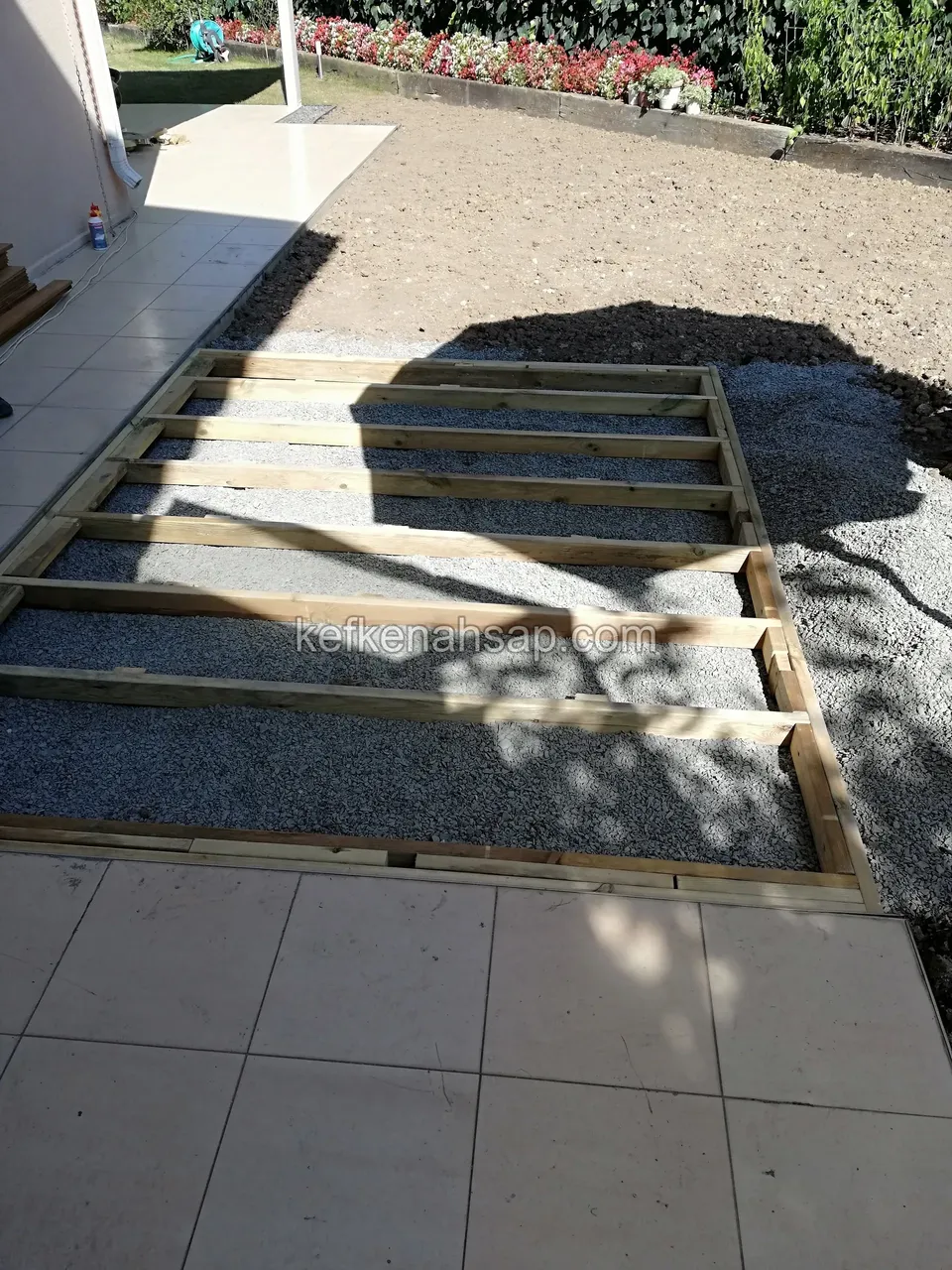
- Installation: The sub-frame goes in first. On soil, gravel is spread underneath and the joists are kept off the ground. Then the boards are screwed down with gaps.
- Maintenance: After handover you can call us for cleaning and oiling.
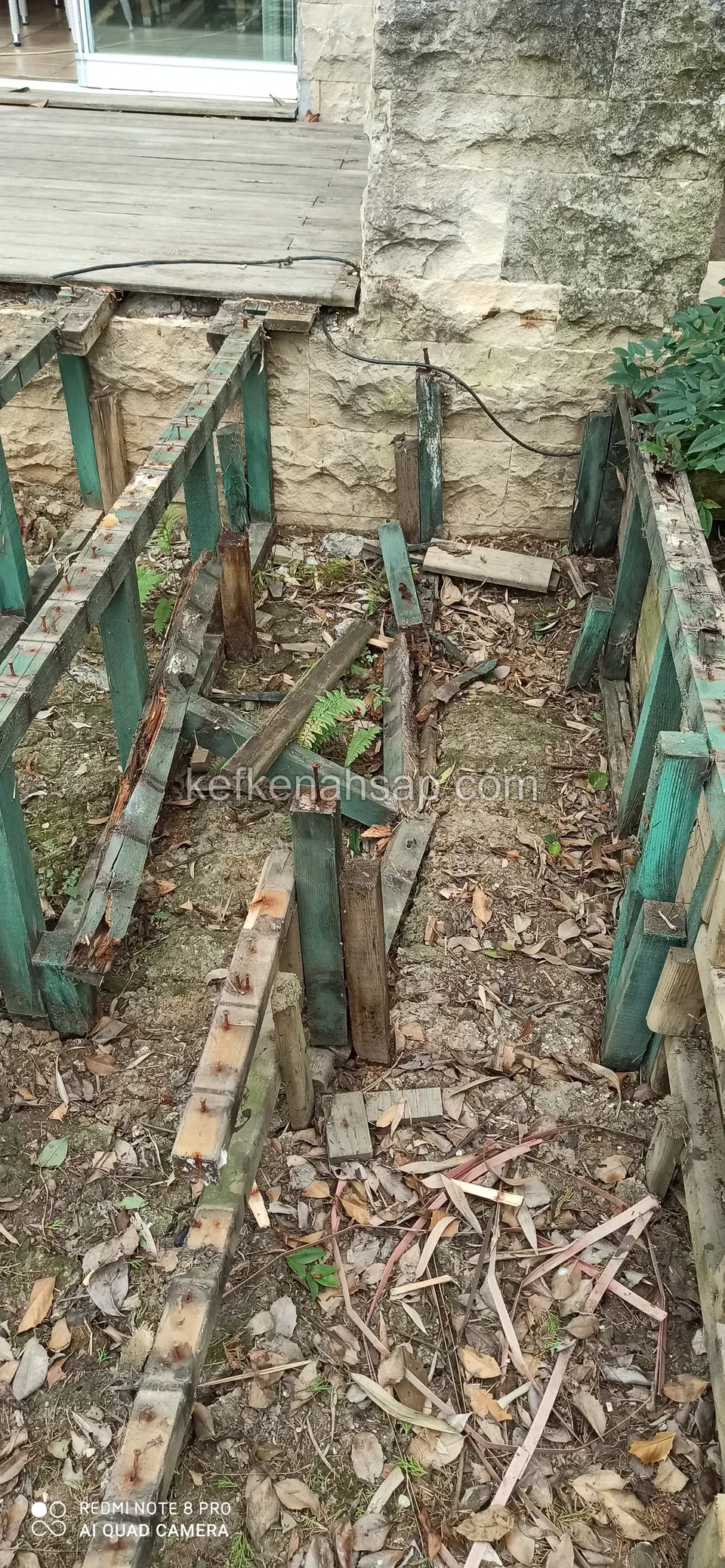
The sub-frame, more than the boards, decides how long a deck lasts. That is why water must not collect underneath and the joists must get air.
How do you maintain a timber deck?
Wash the deck at least once a year and, once it is dry, feed it with an oil suited to the timber. Decks in full sun turn grey faster; when the colour fades or water soaks in instead of beading on the surface, it is time to oil. Raised or cracked boards can be replaced one by one without lifting the whole deck. We also maintain and repair decks laid by other companies.
Frequently asked questions
Should I choose pressure-treated pine or iroko for my deck?
Your budget and how the area is used decide. Pressure-treated pine is more economical and lasts well with regular care. Iroko is harder and more durable and stands out in constantly wet places such as pool surrounds, but it costs more.
Can a deck be built on bare soil?
Yes. The ground is levelled, gravel is spread underneath and the joists are kept off the ground. The timber never touches the soil and air can move underneath.
Can a deck be laid over an existing concrete or tiled terrace?
In most cases, yes. The joists sit on the existing surface; the drainage direction and the door threshold height are checked during the site visit.
How often does a deck need oiling?
Usually once a year is enough. Decks that get a lot of sun and water may need it more often. Fading colour and water soaking into the wood are the signs.
Can you renew my old deck?
Yes. We check the sub-frame first. If it is sound, we replace only the damaged boards and renew the surface with sanding and oil; if the joists have rotted, we rebuild them too.
What determines the price?
The size of the area, the timber species, the state of the ground and extras such as railings or steps. We give an exact figure after the site visit and measurement.
Guides
- How do you maintain a timber deck?Timber deck maintenance has three basic steps: wash the surface with a brush and water, let it dry completely, and apply a suitable wood oil. The interval depends on the product used and how much sun the surface gets; most manufacturers recommend one or two coats a year on surfaces in full sun. It is time when the colour has faded or water soaks in instead of beading on the surface. A deck's life depends on its substructure as much as its boards, so maintenance also means checking the joists and screws.
- Railings: timber or metal?A timber railing gives a deck, timber terrace or garden staircase a warm, unified look. If the rest of the structure is timber, the match comes naturally. In return, a timber railing in the sun needs regular oil or paint. A metal railing blocks less of the view with its slim sections and usually needs less frequent care, but it heats up in the sun and has to be protected against rust. The choice usually comes down to where the railing goes, what the rest of the structure is made of and how much time you can give to maintenance. Mixed railings that combine both materials are also common.
- Pergola or gazebo?A pergola is a shade structure on posts, usually topped with open beams or spaced slats; it is often fixed to the side of the house or a wall. A gazebo is a garden structure with a closed roof that usually stands on its own. An open pergola breaks the sun but does not keep the rain off; a gazebo can be used in the rain too. If you want a shaded seating area in front of the house, a pergola suits better; if you want a corner in the garden you can sit in when it rains, a gazebo does. Because a gazebo has a roof and often a floor, it needs more material and labour.
- What is thermowood and where is it used?Thermowood is timber that has been heat-treated at high temperature in a controlled environment. No preservative is added; the wood is processed with heat and steam alone. The treatment reduces how much moisture the wood takes up and gives off, so thermowood swells and shrinks less and resists rot better. In return it becomes more brittle and loses bending strength. Sources generally recommend it for places with no ground contact, such as cladding, deck boards, fence panels and saunas. It is not recommended for load-bearing joists or for posts set into the ground.
- Wood types: which timber for which job?Timbers commonly used outdoors include pressure-treated pine, iroko, teak and thermowood. Pine is a softwood; outdoors it lasts only with pressure treatment and regular care, but it is the most economical option. Iroko and teak resist water and rot without treatment thanks to natural extractives in their heartwood. Thermowood is timber whose rot resistance has been improved by heat treatment. Indoors, hardwoods such as oak are also used for furniture, doors and stairs. The table below compares the common types.
- How do you choose poolside decking?A poolside deck gets wet often, sits in the sun and is used barefoot. So three things matter: a wood with high resistance to water, a surface that does not splinter or get too slippery when wet, and a substructure where water does not collect underneath. Hardwoods with high natural durability, such as iroko or teak, are usually preferred by the pool. Pressure-treated pine is more economical but needs more frequent care. Chlorine or salt in pool water wears the surface, so regular rinsing and oiling are needed.
Projects in this area
Get a price and timeline for Decking and Flooring
Send a photo and the measurements of the space on WhatsApp and we will get back to you.
Areas we serve: Istanbul and across Türkiye